Comment comparer les options de matériaux des fournisseurs pour les lunettes optiques pour enfants ?
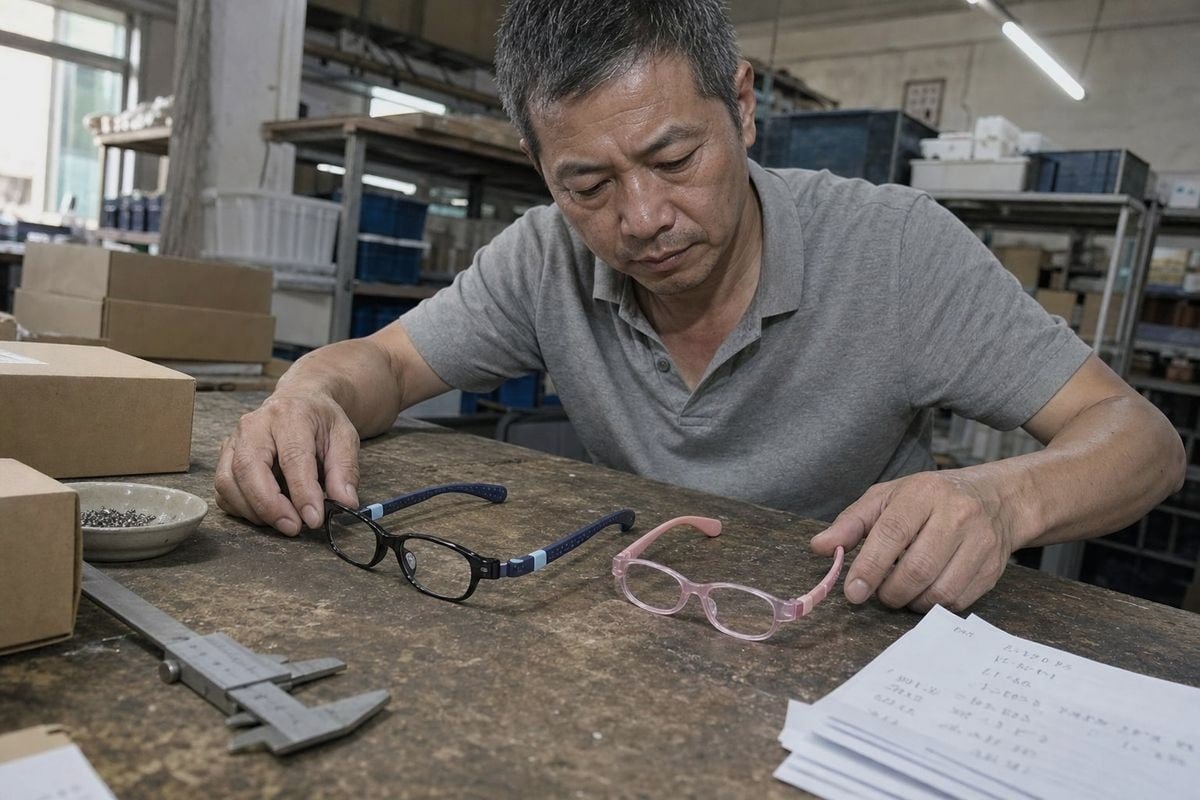
Comparer les options de matériaux des fournisseurs pour les lunettes optiques pour enfants déconcerte de nombreux acheteurs REACH 1. J'ai vu des marques perdre une saison parce qu'une branche s'est cassée lors des tests. Sur notre chaîne de production à Taizhou, nous résolvons ce problème quotidiennement.
Pour comparer les options de matériaux des fournisseurs pour les lunettes optiques pour enfants, faites d'abord correspondre le matériau à l'âge de l'enfant, puis vérifiez les rapports de test tiers de chaque fournisseur, la cohérence des lots, la qualité des charnières et la sécurité du revêtement. Évaluez les fournisseurs sur la documentation et le contrôle qualité, et non sur le prix unitaire seul.
Cette réponse semble simple. La partie difficile est de le faire dans le bon ordre. Ci-dessous, je passe en revue la sécurité des matériaux, les questions aux fournisseurs, les tests pratiques et comment tout cela façonne votre marque. Commençons par la question des matériaux que les acheteurs nous posent le plus souvent.
Comment savoir si le TR90 ou le TPEE est le choix le plus sûr pour la collection de lunettes de mes enfants ?
Un acheteur d'Australie m'a un jour demandé de plier une branche d'échantillon à 180 degrés lors d'un appel vidéo. Je l'ai fait vingt fois. Cette branche en TPEE est revenue en place à chaque fois, et elle a passé sa première commande cette semaine-là.
Ni le TR90 ni le TPEE n'est universellement plus sûr ; le bon choix dépend de l'âge. Le TPEE est plus souple et plus tolérant, il convient donc aux tout-petits et aux très jeunes enfants. Le plastique à mémoire TR90 offre structure et flexibilité, ce qui en fait le choix par défaut, plus sûr et plus pratique, pour les enfants d'âge scolaire.
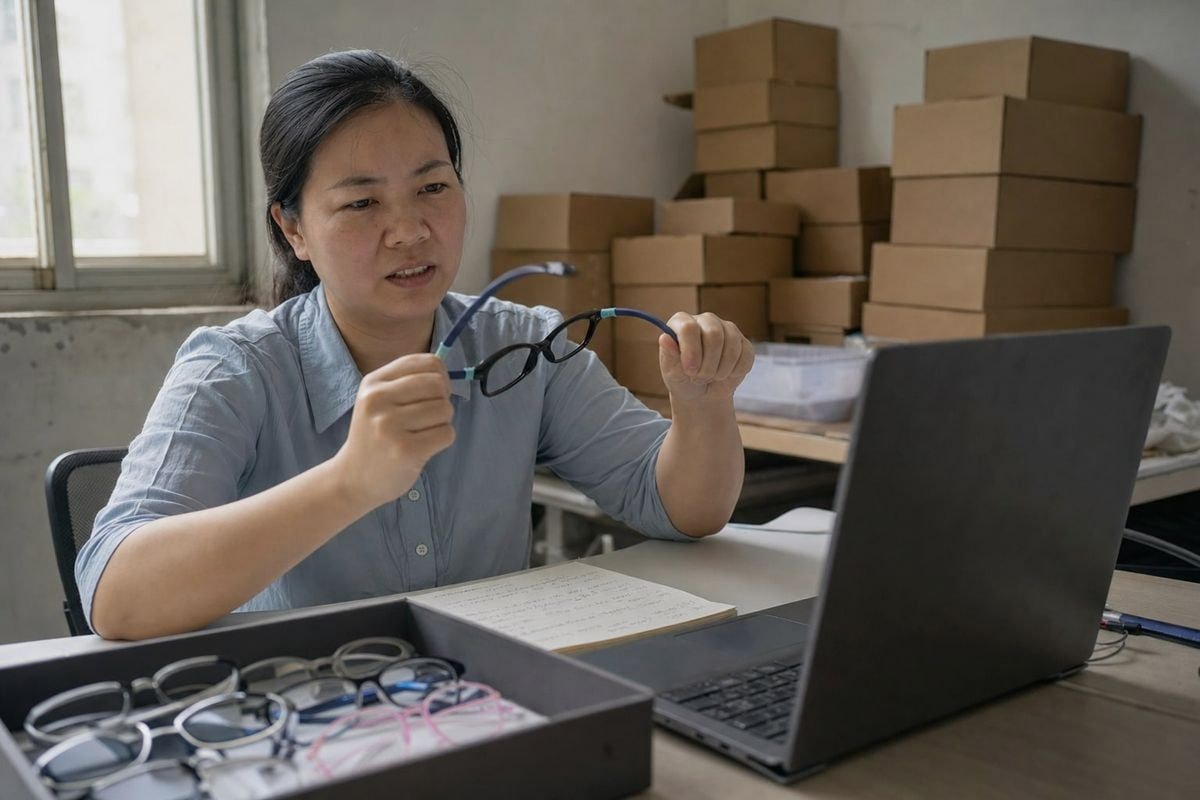
La sécurité des lunettes pour enfants concerne en réalité deux modes de défaillance. La monture peut se casser et créer un bord tranchant. Ou la monture peut appuyer trop fort et irriter la peau jeune. Le TR90 et le TPEE résolvent ces risques de différentes manières, nous les combinons donc souvent.
Faites d'abord correspondre le matériau au groupe d'âge
Nos ingénieurs conçoivent de nombreux styles hybrides : une face en TR90 pour la stabilité des verres, avec Montures flexibles TPEE 2 des branches pour la douceur là où la monture touche le visage. L'un de nos styles optiques populaires pour enfants associe une face en TR90 brillante à des branches caoutchouteuses bicolores et des embouts de branches en silicone, ainsi que des crochets d'oreille réglables pour un ajustement antidérapant pendant le jeu. Cette combinaison n'est pas une décoration. C'est une ingénierie des risques basée sur l'âge.
Voici la comparaison que nous partageons avec les acheteurs :
| Le rétrécissement des montures en acétate est le problème caché des matériaux traditionnels. L'acétate perd lentement ses plastifiants, se contractant avec le temps. Ironiquement, un léger rétrécissement peut resserrer un verre — mais il rend également la monture cassante, et les fils de lunette cassants se fissurent au niveau de la gorge. Il faut également tenir compte de la contraction thermique différentielle : lorsqu'un enfant passe de la chaleur extérieure à la climatisation, la monture et le verre se contractent à des vitesses différentes. Les polymères flexibles absorbent cette inadéquation ; les matériaux rigides transfèrent le stress au siège du verre. | Plastique à mémoire TR90 | TPEE |
|---|---|---|
| Poids typique de la monture | 12–15 g | 10–14 g |
| Flexibilité | Élevé ; reprend sa forme après torsion | Très élevé ; presque comme du caoutchouc |
| Risque de casse | Très faible | Presque zéro |
| Rétention des verres | Excellent ; maintient polycarbonate 3 solidement | Bon, mieux avec une face structurée |
| Meilleure tranche d'âge | Environ 3–16 ans | Environ 0–6 ans, ou comme branches souples |
| Confort de la peau | Bon ; lisse et léger | Excellent ; doux contre la peau |
| Options de style | Large gamme de couleurs et de finitions | Détails plus limités |
Pour le contexte, les montures en silicone pèsent environ 8–12 g et conviennent aux âges de 0 à 4 ans, tandis que l'acier inoxydable flexible 4 pèse environ 14–18 g pour les âges de 7 à 16 ans. La règle pratique est donc : matériaux souples pour les tout-petits, plastique à mémoire de forme TR90 pour les enfants d'âge scolaire, et options structurées ou métalliques uniquement pour les enfants plus âgés.
Un autre point que les acheteurs manquent souvent. Les deux matériaux doivent avoir des propriétés hypoallergéniques et une certification sans BPA, étayées par des rapports de laboratoire, pas seulement une affirmation sur une fiche technique. Un polymère sûr provenant d'une usine négligente peut toujours échouer si le revêtement, la charnière ou le colorant est défectueux. Cela nous amène directement aux questions aux fournisseurs.
Quelles questions devrais-je poser aux fournisseurs pour vérifier leurs certifications de sécurité des matériaux ?
Le compromis que j'évalue le plus souvent est la vitesse par rapport à la preuve. Un acheteur veut des échantillons en une semaine, mais une vérification réelle signifie examiner les rapports de test pour chaque composant. Au cours de nos 15 années d'exportation de lunettes pour enfants vers plus de 20 pays, les acheteurs qui posent des questions difficiles tôt ont toujours des lancements plus fluides.
Demandez aux fournisseurs des rapports de test récents de tiers provenant de laboratoires reconnus tels que SGS, Intertek ou TÜV, des certificats de matériaux pour chaque composant, des preuves de conformité spécifiques au marché telles que CPSIA et REACH, et des échantillons de plusieurs lots de production pour confirmer la cohérence.
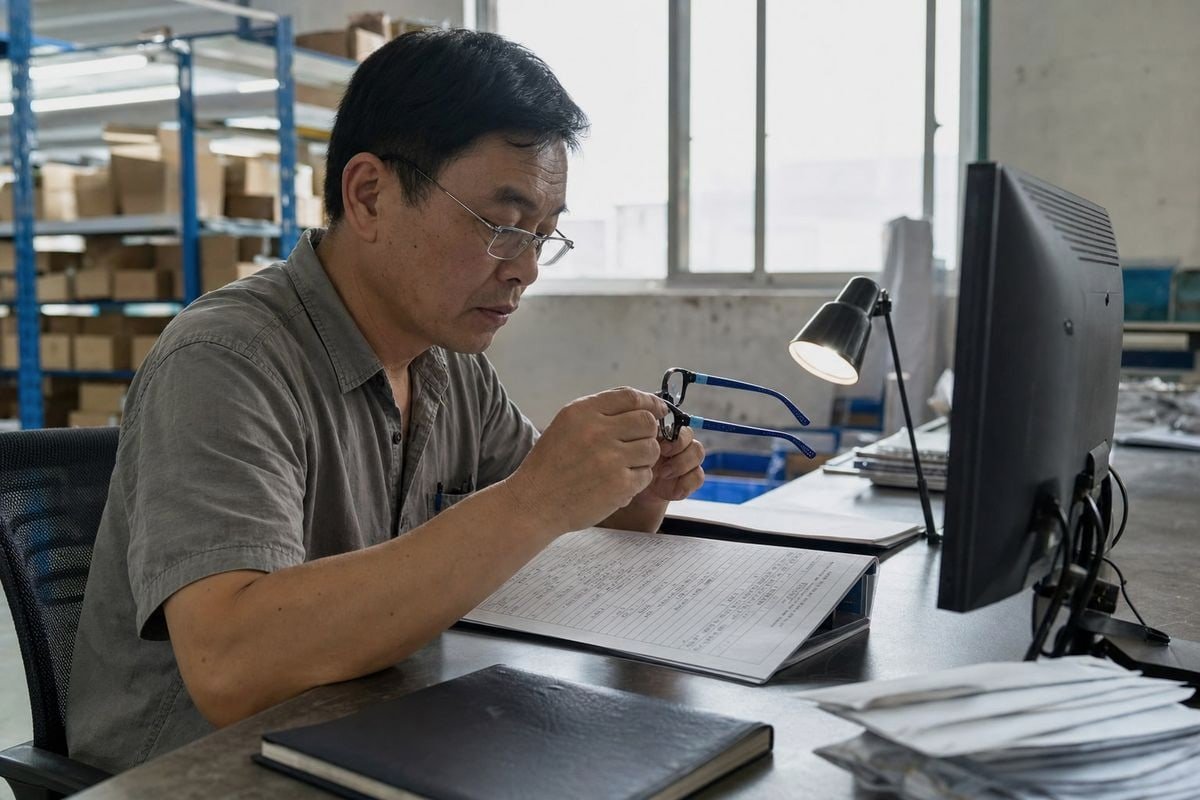
Les certificats sont faciles à revendiquer et faciles à falsifier. Votre travail consiste à vérifier si la documentation correspond au produit que vous avez devant vous. Une usine sérieuse s'attend à ces questions. Une société commerciale qui revend des stocks inconnus trébuche généralement sur celles-ci.
Les questions exactes à envoyer à votre fournisseur
- Pouvez-vous partager les rapports de test tiers datant des 12 derniers mois ? Les anciens rapports peuvent couvrir un lot de résine différent ou une ancienne recette de colorant. Vérifiez le numéro de rapport directement auprès du laboratoire lorsque cela est possible.
- Les rapports couvrent-ils tous les composants ? Corps de la monture, plaquettes de nez, embouts de branches en silicone, charnières, vis et revêtements touchent tous la peau d'un enfant. Une face en TR90 sûre n'a que peu d'importance si le revêtement de l'embout de branche contient des phtalates réglementés 5.
- Quels marchés les rapports couvrent-ils ? exigences CPSIA 6 compte pour les États-Unis. Les normes REACH et EN sont importantes pour l'Europe. Les affirmations génériques de "non-toxique" ne sont pas une conformité. Demandez une préparation spécifique au marché, pas des assurances vagues.
- Pouvez-vous fournir la certification sans BPA et les résultats des tests de métaux lourds pour le colorant exact utilisé dans ma commande ? Les colorants changent d'un lot à l'autre. La traçabilité des lots est le véritable test des protocoles de contrôle qualité du fournisseur.
- Quel contrôle des matières premières entrantes effectuez-vous ? Dans notre atelier géré selon la méthode 5S, les granulés TR90 et TPEE bruts sont vérifiés par rapport aux certificats du fournisseur avant d'entrer en production. Demandez à n'importe quelle usine de décrire le même processus. Des réponses vagues sont un signe d'avertissement.
- Pouvez-vous fournir la documentation sur les normes de résistance aux chocs pour la combinaison monture-verres ? Les verres pour enfants doivent être en polycarbonate ou en Trivex, et le bord de la monture doit maintenir ces verres de sécurité plus épais en toute sécurité. La sécurité de la monture et des verres doit être vérifiée ensemble, et non séparément.
- Quels sont vos délais de fabrication en gros, et changent-ils si je demande des tests de laboratoire avant expédition ? Les fournisseurs honnêtes intègrent le temps de test dans le calendrier. Les fournisseurs qui promettent des délais identiques avec ou sans tests vous disent quelque chose.
Certains acheteurs craignent que ces questions n'offensent une usine. D'après mon expérience, c'est le contraire qui se produit. Les usines qui investissent dans la conformité sont fières de répondre. Celles qui esquivent n'auraient de toute façon jamais protégé votre marque.
Comment puis-je tester la flexibilité et la durabilité avant de m'engager dans une commande en gros ?
Au début de ma carrière, j'ai appris une leçon à mes dépens. Un échantillon a passé tous les contrôles, mais le lot de production utilisait une vis de charnière légèrement différente. Des retours ont suivi. Depuis, notre usine traite les tests au stade de l'échantillon comme une répétition pour la production de masse, jamais comme une formalité.
Testez les échantillons en tordant les branches à 180 degrés, en fléchissant le pont à plusieurs reprises, en vérifiant les cycles des charnières pour détecter tout jeu, et en comparant les échantillons d'au moins deux lots différents. Demandez au fournisseur ses propres données de test de torsion et de cycles de charnières, puis vérifiez-les avec vos propres contrôles pratiques.
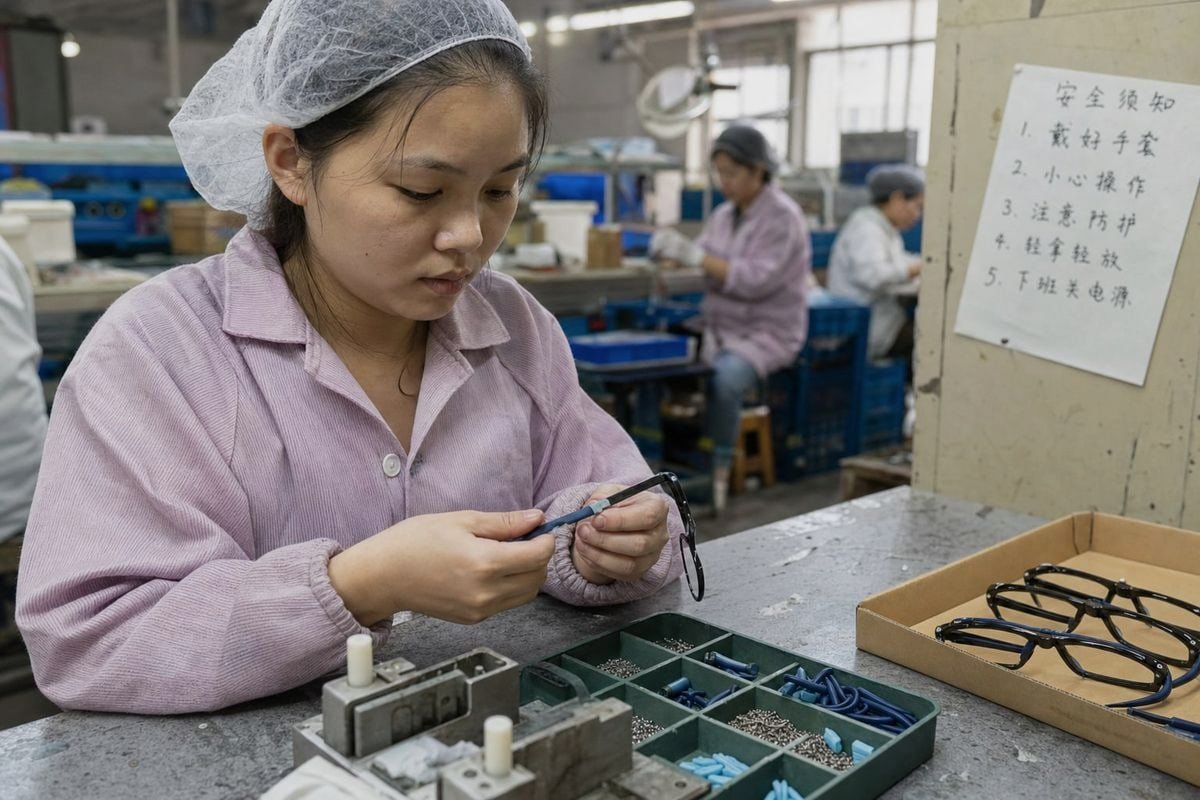
Vous n'avez pas besoin d'un laboratoire pour effectuer un premier contrôle. Vous avez besoin d'une routine répétable et d'échantillons provenant de plus d'un lot. La cohérence entre les lots prédit votre taux de défauts bien mieux qu'un seul échantillon de showroom parfait.
Une routine de test pratique et concrète.
Effectuez chaque vérification sur chaque échantillon et enregistrez les résultats côte à côte :
| Test | Comment faire | Signal de passage |
|---|---|---|
| Torsion de la branche. | Tordez la branche de 180 degrés, 20 fois. | Retour à plat, sans blanchiment ni fissures. |
| Flexibilité du pont. | Écartez les branches bien au-delà de la largeur normale de port. | La monture reprend sa forme d'origine. |
| Cycle de charnière. | Ouvrez et fermez chaque branche plus de 200 fois. | Pas de desserrage, de grincement ou de jeu. |
| Test de chute | Laissez tomber d'une hauteur de table sur un sol dur, 5 fois. | Pas de fissures, les verres restent en place. |
| Rétention des verres | Appuyez fermement sur les verres par derrière. | Les verres ne sortent pas et ne bougent pas. |
| Frottement du revêtement. | Frottez les extrémités des branches avec un chiffon humide, 50 coups. | Pas de transfert de couleur ni d'écaillage. |
| Vérification des bords | Passez le bout du doigt le long de chaque bord et de chaque rivet. | Bords arrondis uniquement, pas de pointes vives. |
Demandez les propres données de test du fournisseur.
Une usine compétente effectue des tests de durabilité de la monture en interne et peut vous montrer les chiffres. Demandez les nombres de cycles de charnière 7 et les résultats de contrainte de torsion calibrés pour la manipulation rude des enfants, et non pour les adultes. Les enfants ajustent, laissent tomber et s'assoient sur leurs lunettes beaucoup plus souvent que les adultes. Vérifiez également les mécanismes de charnières à ressort si le style en utilise ; une charnière à ressort de 180 degrés doit être fluide sur des centaines de cycles, sans résistance granuleuse.
Enfin, insistez pour obtenir des échantillons de deux lots de pré-production ou plus. Lorsque nous développons une couleur personnalisée pour un client, nous envoyons des échantillons de lot précisément pour que l'acheteur puisse confirmer que la flexibilité, la finition et l'ajustement restent constants d'un lot à l'autre. Si un fournisseur refuse d'envoyer des échantillons de plusieurs lots, considérez cela comme votre réponse.
Pourquoi les choix de matériaux affectent-ils la réputation de qualité à long terme de ma marque auprès des parents ?
Un acheteur européen m'a dit un jour quelque chose que je répète à toute notre équipe : les parents pardonnent une lentille rayée, mais ils ne pardonnent jamais une monture qui a blessé leur enfant. Cette phrase façonne la façon dont nous choisissons les matériaux pour chacun de nos quelque 800 modèles existants.
Les parents jugent une marque de lunettes pour enfants à l'aune de la résistance des montures à la vie réelle : jeux turbulents, chutes et torsions quotidiennes. Le choix des matériaux influe sur les taux de casse, le confort et les retours. Ainsi, le bon matériau fidélise la clientèle et génère des recommandations, tandis que le mauvais détruit silencieusement la confiance.
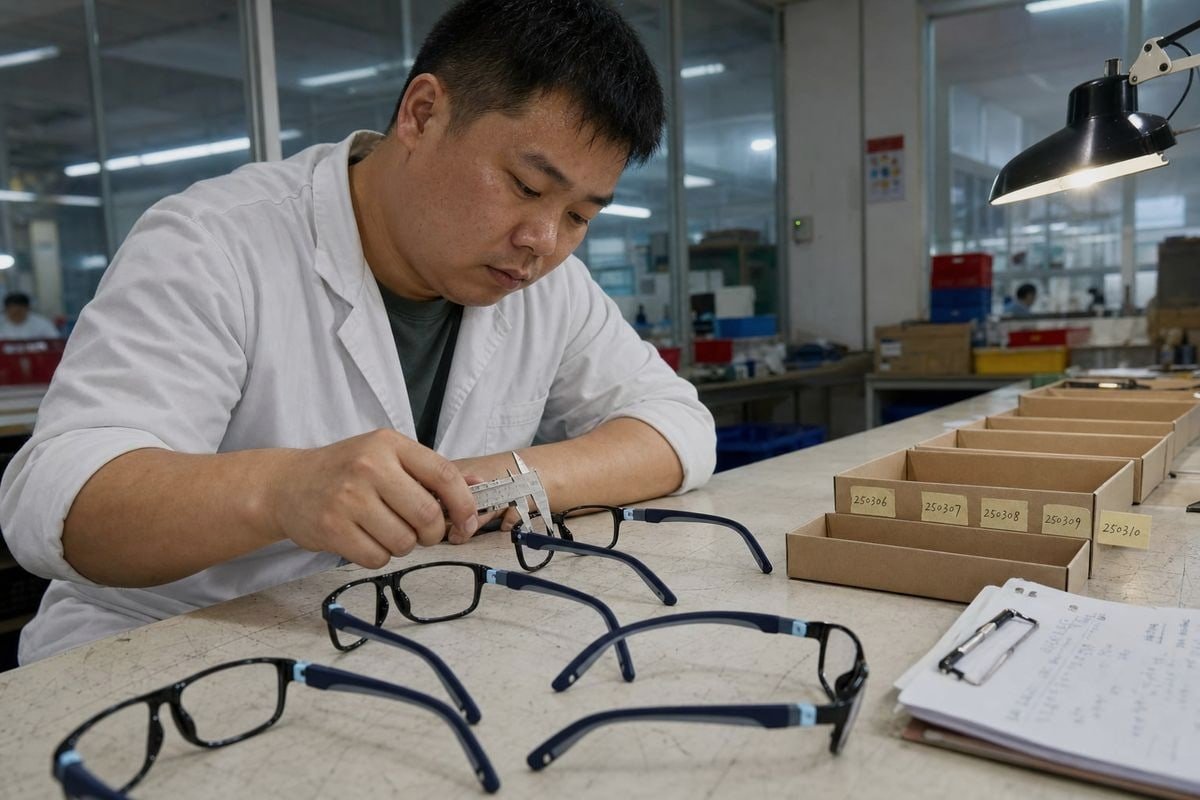
La monture d'un enfant est un produit d'achat répété. Les enfants grandissent, les prescriptions changent et les parents reviennent tous les un ou deux ans. C'est ce cycle de répétition qui fait que les décisions matérielles se transforment en réputation, pour le meilleur ou pour le pire.
Comment les décisions matérielles se reflètent dans l'expérience parentale.
Pensez à la chaîne de cause à effet :
- Le poids influence le port. Une monture lourde glisse sur un pont nasal non développé. L'enfant la remonte toute la journée, puis refuse de la porter. La conception ergonomique légère n'est pas un luxe dans les lunettes pour enfants ; elle détermine si les lunettes sont portées ou non.
- La flexibilité influence les taux de casse. Les montures qui résistent aux torsions et aux chutes signifient moins de réclamations de garantie, moins d'avis négatifs et moins de remboursements qui rongent votre marge.
- Le confort de la peau influence la satisfaction quotidienne. Les matériaux aux propriétés hypoallergéniques authentiques, ainsi que les embouts de branche en silicone souple, évitent les marques rouges derrière les oreilles qui font que les parents blâment votre marque, et non l'ajustement.
- La réparabilité stimule la valeur perçue. Les fournisseurs proposant des pièces modulaires, où les branches ou les ponts peuvent être remplacés indépendamment, aident les parents à prolonger la durée de vie des montures et à se souvenir gentiment de votre marque.
- Le positionnement détermine le niveau de matériau. Si vous vendez une ligne de mode haut de gamme pour les enfants plus âgés, acétate de cellulose 8 la qualité compte, et les acétates biosourcés sans phtalates répondent à la demande croissante des parents pour des matériaux durables. Si vous vendez des montures actives de tous les jours, le TR90 avec des branches en TPEE offre généralement la durabilité pour laquelle les parents paient réellement.
Voici une objection courante : " Des matériaux moins chers me permettent de fixer des prix plus bas et de vendre plus. " Cela fonctionne une fois. Dans les produits pour enfants, la tolérance à la défaillance est bien plus faible que dans les montures de mode pour adultes. Une charnière cassée au bout de deux mois vous coûte les trois prochains achats de la famille et toutes les recommandations qu'ils auraient faites. Certains fournisseurs proposent même désormais des traitements de surface antimicrobiens pour réduire l'accumulation de bactéries due à la manipulation sur les aires de jeux, ce qui donne aux parents une raison de plus de faire confiance au produit. Le choix le plus judicieux aligne la sécurité, la conformité et le positionnement de la marque, et non le prix le plus élevé ou le plus bas.
Conclusion
Comparez d'abord les matériaux en fonction de l'adéquation à l'âge, puis qualifiez les fournisseurs en fonction des certifications, de la cohérence des lots et de la discipline de test. Choisissez la combinaison matériau-fournisseur qui protège les enfants et votre marque ensemble.
Notes de bas de page
Règlement européen sur la sécurité chimique cité comme référence de conformité pour les marchés européens de l'optique. ↩︎
Ressource de l'association professionnelle expliquant les matériaux élastomères thermoplastiques comme le TPEE utilisés dans l'optique. ↩︎
Informations sur le polycarbonate, le matériau de lentille résistant aux chocs recommandé pour les lunettes d'enfants. ↩︎
Informations sur les propriétés de l'acier inoxydable pertinentes pour le tableau comparatif des matériaux de montures. ↩︎
La ressource de l'EPA explique les risques pour la santé des phtalates, le danger chimique mentionné dans les contrôles de sécurité des revêtements. ↩︎
Règlement officiel américain régissant la conformité des produits pour enfants en matière de sécurité, référencé pour les tests spécifiques au marché. ↩︎
Liens vers l'ISO, l'organisme de normalisation pertinent pour la méthodologie de test de durabilité et de cycles de charnières. ↩︎
Explique le matériau acétate référencé pour le positionnement des montures haut de gamme et les revendications de durabilité. ↩︎
Plus d'articles que vous pourriez aimer

27 octobre 2026
Comment les détaillants doivent-ils stocker les montures optiques TR90 pour enfants par âge et par tendances de genre ?
26 octobre 2026
Qu'est-ce que les parents privilégient dans les montures optiques TR90 pour enfants ?
25 octobre 2026
Comment choisir des montures optiques TR90 pour enfants par forme de visage et pont de nez ?
Vous recherchez un partenaire fiable en lunetterie pour enfants ?
Explorez plus de 800 styles prêts et un support OEM/ODM complet adapté à votre marque.
Contactez-nous English
  Español de México
  Deutsch
  Français
  日本語
日本語  العربية
  Português do Brasil