¿Qué rangos de edad y proporciones de tamaño debo elegir para las gafas de sol para niños?
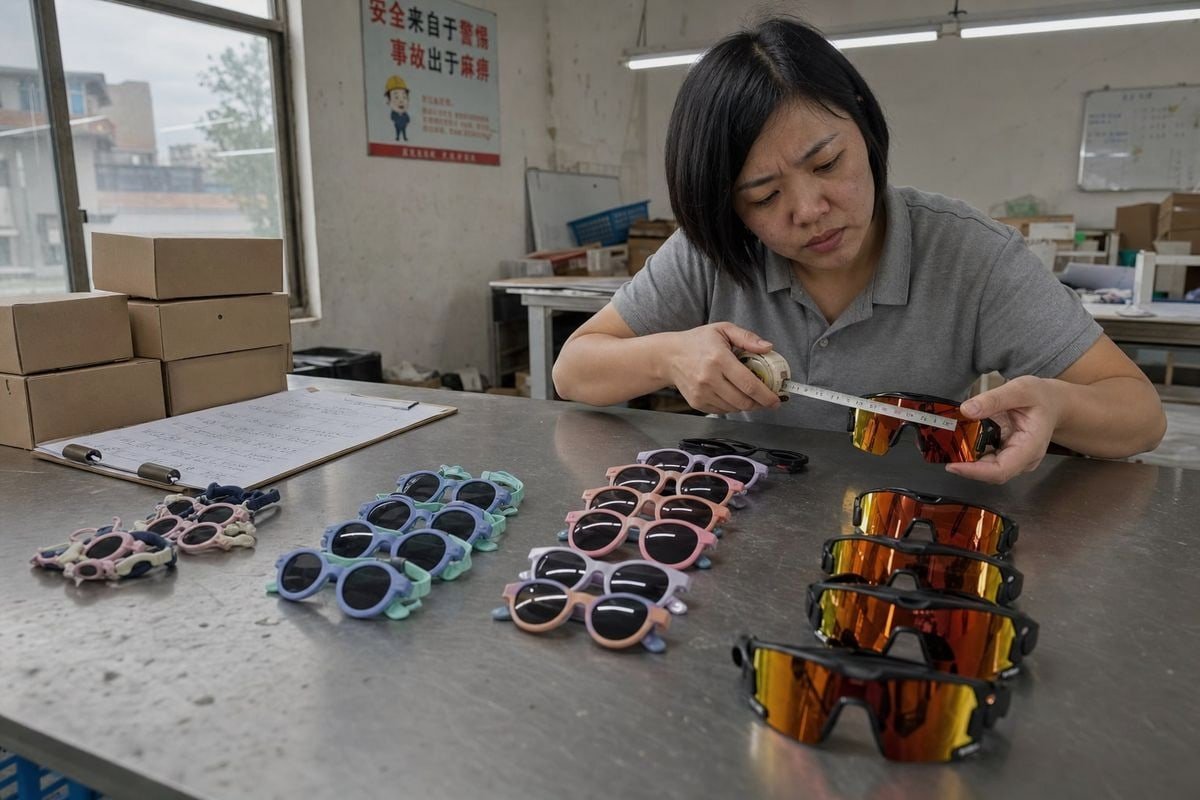
Elegir rangos de edad y proporciones de tamaño para las gafas de sol para niños desconcierta a casi todos los compradores nuevos que contactan a nuestra fábrica de Taizhou gafas de sol sin graduación 1. Si te equivocas, el inventario sin vender se acumula rápidamente. Si aciertas, cada tamaño se vende limpiamente; así es como ayudamos a las marcas a hacer exactamente eso.
Las gafas de sol para niños deben agruparse en cuatro rangos de edad: bebé (0-2), niño pequeño (2-4), niños (5-10) y jóvenes (11-16), con anchos de lente que varían de aproximadamente 35 mm a 52 mm. Una proporción de pedido práctica es aproximadamente 15% bebé, 30% niño pequeño, 40% niños y 15% jóvenes.
Las etiquetas de edad por sí solas no protegerán tus márgenes. A continuación, detallo cómo funciona realmente el dimensionamiento, cómo dividir las cantidades de tu pedido y cuándo las monturas flexibles superan a los tamaños fijos.
¿Cómo determino la talla correcta de gafas de sol para diferentes grupos de edad de niños?
La primavera pasada, un comprador de Australia nos envió una sola muestra y nos pidió que "la hiciéramos para todas las edades". Esa única solicitud se convirtió en un taller de dimensionamiento de dos semanas, porque las gafas de sol para niños no escalan como las monturas para adultos.
Ajusta el tamaño de las gafas de sol a la edad usando el ancho de la lente y el ancho de la montura: los bebés (0-2 años) necesitan lentes de 35-38 mm y monturas de 115-120 mm; los niños pequeños (2-4 años) necesitan lentes de 40-42 mm; los niños (5-10 años) necesitan lentes de 43-47 mm; los jóvenes (11-16 años) necesitan lentes de 47-52 mm en monturas de 135-140 mm.
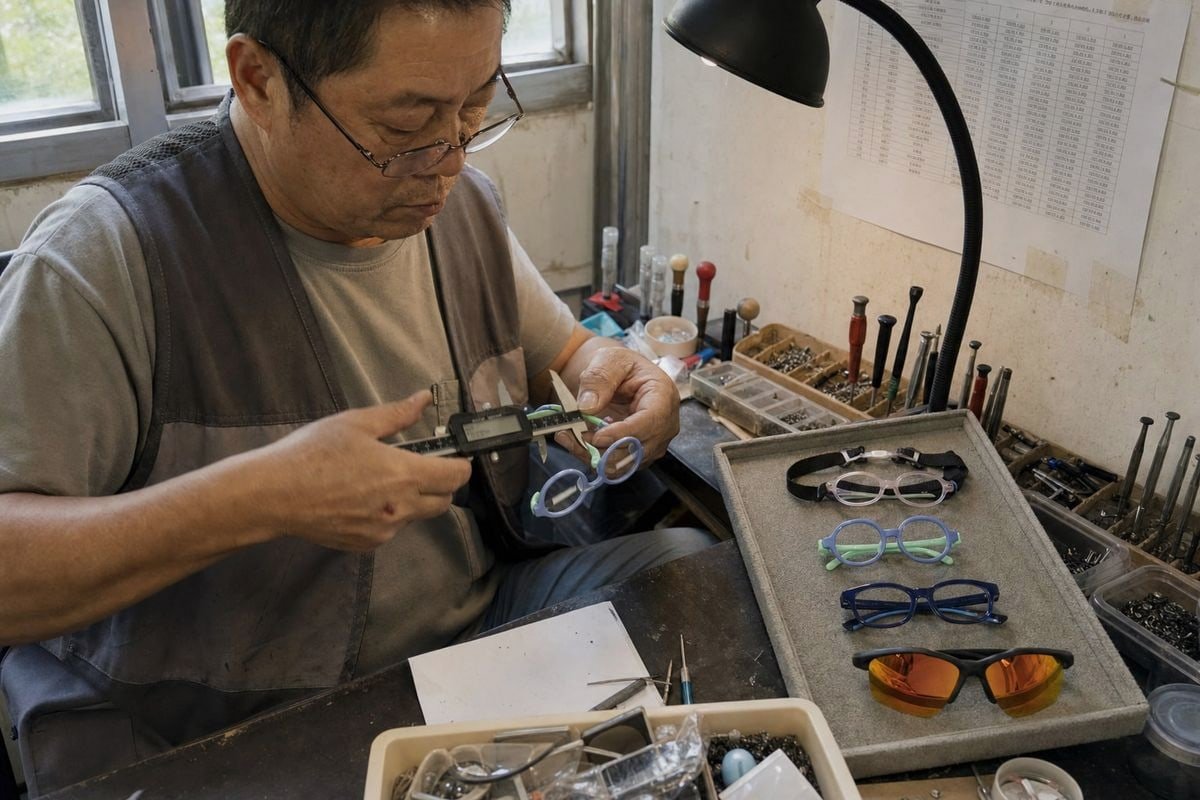
La edad es solo el punto de partida. Dos niños de cuatro años pueden tener anchos de cabeza muy diferentes. Por lo tanto, el verdadero lenguaje de dimensionamiento son las medidas: ancho de lente 2, ancho del puente, ancho frontal de la montura y longitud de la patilla. Cuando desarrollamos un nuevo molde en nuestra fábrica, primero diseñamos en torno a estos cuatro números y luego adjuntamos una etiqueta de edad.
El mapa de tamaño principal que recomendamos
| Rango de edad | Ancho de lente | Ancho de montura | Longitud de la patilla | Etiqueta típica |
|---|---|---|---|---|
| 0–6 meses | Sombra preferida | — | — | No recomendado |
| 6–24 meses | 35–38 mm | 115–120 mm | 105–110 mm | Bebé |
| 2–4 años | 40–42 mm | 120–128 mm | 110–118 mm | Niño pequeño |
| 5–7 años | 43–45 mm | 125–132 mm | 115–122 mm | Niños (pequeños) |
| 7–10 años | 45–47 mm | 132–138 mm | 120–128 mm | Niños (grandes) |
| 11–16 años | 47–52 mm | 135–140 mm | 125–130 mm | Jóvenes / adulto pequeño |
Por qué el ancho del puente importa más de lo que esperan los compradores
El ancho del puente suele oscilar entre 13 y 18 mm para los niños. Los bebés y niños pequeños tienen puentes nasales 3, poco desarrollados, por lo que las almohadillas nasales estándar se deslizan. Es por eso que nuestros estilos para bebés utilizan un puente de silla de montar bajo, a menudo combinado con una correa de neopreno ajustable. Si omites este detalle, las devoluciones aumentarán, sin importar cuán buena sea la lente.
Dos reglas más que compartimos con cada cliente. Primero, si un niño se sienta en la parte superior de una banda de edad indicada, aumenta el tamaño. Las etiquetas de edad del fabricante son amplias y, por lo general, el extremo inferior del rango se ajusta mejor. Segundo, verifica el ajuste con una simple prueba de permanencia: la montura debe mantenerse durante una inclinación de cabeza hacia adelante de 90 grados sin deslizarse por la nariz ni pellizcar las sienes.
¿Qué proporción de tallas debería pedir en mi línea de productos para igualar la demanda real de los clientes?
Las divisiones de pedidos son el compromiso que más discuto con los importadores. Demasiados tamaños para bebés y te quedas con stock; muy pocos tamaños para niños pequeños y pierdes tu segmento de mayor movimiento.
Un primer pedido equilibrado se divide aproximadamente en 15% bebé (0–2), 30% niño pequeño (2–4), 40% niños (5–10) y 15% jóvenes (11–16). La banda de niños se vende más rápido porque cubre la población en edad escolar más amplia y las temporadas de uso más largas.

Las proporciones de tamaño son en realidad pronósticos de demanda. En nuestros quince años suministrando marcas infantiles en más de 20 países, hemos visto un patrón consistente: la banda de niños de 5 a 10 años se mueve más rápido, los niños pequeños vienen en segundo lugar, y los bebés y jóvenes llenan los extremos. Pero tu canal cambia las matemáticas.
Proporción por canal de ventas
| Tipo de canal | Bebé 0–2 | Niño pequeño 2–4 | Niños 5–10 | Joven 11–16 |
|---|---|---|---|---|
| Marca de bebé/maternidad | 35% | 40% | 20% | 5% |
| Minorista general de niños | 15% | 30% | 40% | 15% |
| Marca de exteriores/deportes | 5% | 20% | 45% | 30% |
| Productos promocionales | 0% | 25% | 55% | 20% |
Unas pocas reglas prácticas se sientan detrás de estos números:
- Los niños pequeños superan las monturas más rápido, por lo que las compras repetidas son más altas en la banda de 2 a 4 años. Abastécelo generosamente si vendes directamente a los padres.
- Los tamaños juveniles se superponen con las monturas de adultos pequeñas, por lo que los modelos deportivos de estilo envolvente en lentes de 47–52 mm pueden servir a ambos mercados y reducir el riesgo de tu SKU.
- Los tamaños de bebé necesitan accesorios adicionales — correas para la cabeza, estuches, puentes de silla de montar — que aumentan el costo unitario. Pídelos en colores que fotografíen bien, porque esta banda se vende por emoción.
- Prueba antes de escalar. Dado que tenemos alrededor de 800 estilos existentes, muchos de nuestros clientes lanzan con pedidos pequeños y mixtos en tres tamaños, leen los datos de venta durante una temporada y luego reequilibran. Ese enfoque supera cualquier proporción teórica.
También planifica las proporciones de lentes, no solo las proporciones de monturas. Las lentes polarizadas justifican un precio de venta más alto en las bandas de niños y jóvenes, mientras que las estándar Protección UV400 las lentes tintadas suelen ser suficientes para la banda de bebés, donde el tiempo de uso es más corto.
¿Cómo puedo obtener un tallaje preciso cuando mis compradores están en diferentes países con diferentes patrones de crecimiento?
Un cliente japonés devolvió una vez nuestra muestra estándar para niños con una nota: el puente estaba demasiado alto. Esa conversación de un milímetro remodeló cómo especificamos las monturas para diferentes regiones.
Ajuste para diferencias regionales ajustando el ancho del puente, la altura de las plaquetas y la longitud de las patillas en lugar de crear nuevas etiquetas de edad. Recopile datos de ancho de cabeza de su mercado local, solicite muestras de ajuste regionales y confirme el ajuste con pruebas de uso antes de comprometerse con una tirada de producción completa.

Las tablas de crecimiento difieren según el país, y la estructura facial difiere aún más. El ancho promedio de la cabeza, la altura del puente nasal y la prominencia de los pómulos varían según la región. Una etiqueta de edad que se ajusta bien en Alemania puede deslizarse por las narices en Japón o pellizcar las sienes en Brasil. Las bandas de edad siguen siendo las mismas en todo el mundo; la geometría del ajuste dentro de ellas no debería serlo.
Lo que realmente cambia por región
En nuestra experiencia de exportación, tres dimensiones hacen la mayor parte del trabajo:
- Altura y ancho del puente. Los puentes nasales más bajos son comunes en los mercados de Asia Oriental. Bajamos el puente y ensanchamos las almohadillas nasales para que la lente no descanse sobre las mejillas. Esto es lo más importante en las bandas de niños pequeños y niños.
- Longitud de la patilla. La profundidad de la cabeza varía. Una longitud de patilla que se ajusta bien en un mercado puede presionar detrás de las orejas en otro. Las monturas flexibles de TPEE perdonan pequeñas discrepancias porque las patillas se flexionan hacia afuera en lugar de apretar.
- Ancho del frente de la montura. Las formas de cara más anchas necesitan 2–4 mm más de ancho de montura a la misma edad. A menudo ofrecemos dos anchos de frente en un mismo estilo para clientes que venden en múltiples regiones.
Un proceso simple que funciona
- Envíenos su mercado objetivo y las bandas de edad típicas de sus clientes.
- Seleccionamos estilos comparables de nuestra biblioteca de 800 estilos que ya se ajustan a esa región.
- Usted prueba muestras en niños reales localmente — cinco a diez niños por banda de tamaño es suficiente para detectar problemas.
- Ajustamos el puente, las patillas o el ancho del frente en la etapa OEM antes de la producción en masa.
Una nota más sobre los estándares. Diferentes mercados también hacen referencia a diferentes marcos de calidad. Los compradores que envían a EE. UU. con frecuencia preguntan sobre los estándares ANSI Z80.3 4 para gafas de sol sin receta, mientras que los compradores europeos se centran en las marcas EN ISO. Ambos esperan un bloqueo total de rayos UVA y UVB 5, por lo que por defecto utilizamos lentes con protección UV400 independientemente del destino. El tamaño puede variar según la región; el rendimiento UV no debería.
¿Debería ofrecer opciones de ajuste regulable o flexible en lugar de tallas fijas basadas en la edad?
La flexibilidad es donde nuestros ingenieros dedican la mayor parte de sus horas de desarrollo. TPEE y TR90 son la razón por la que muchos compradores nos encontraron en primer lugar, así que seré directo sobre lo que estos materiales resuelven y lo que no.
Sí — los marcos flexibles y las opciones ajustables extienden el rango de edad utilizable de cada tamaño y reducen las tasas de devolución, pero complementan el tamaño fijo en lugar de reemplazarlo. Las mejores combinaciones combinan tres o cuatro bandas de tamaño fijo con materiales flexibles, bisagras de resorte y accesorios de correa.
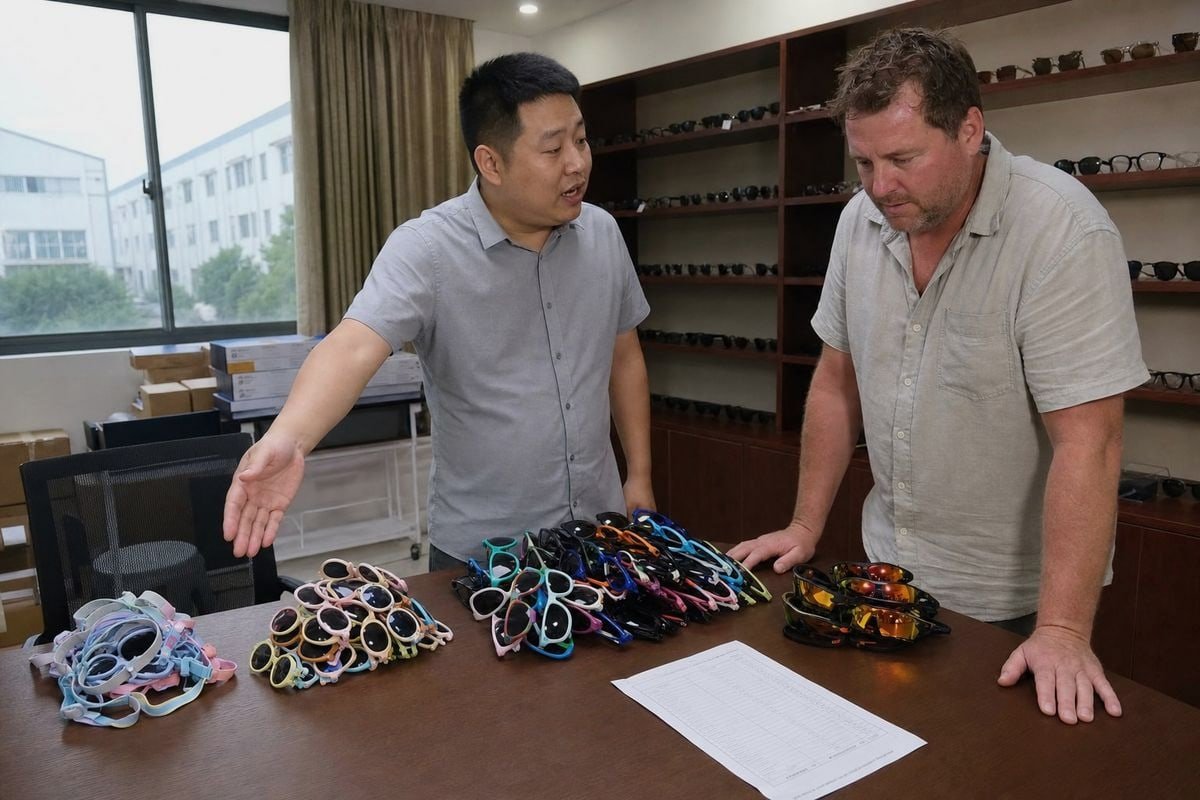
Ninguna montura se adapta a todas las edades de dos a diez años. Pero una flexibilidad inteligente puede ampliar cada banda de tamaño en un año o más en cada extremo. Eso significa menos SKUs, inventario más simple y una ventana de ajuste en el mundo real más amplia por estilo.
Opciones de flexibilidad comparadas
| Opción | Lo que hace | Mejor grupo de edad | Impacto en el costo |
|---|---|---|---|
| Monturas flexibles de TPEE | Se doblan sin romperse; perdonan el manejo brusco | Todas las edades, especialmente 0-7 | Moderado |
| Montura TR90 + patillas TPEE | La parte frontal rígida mantiene la forma de la lente; las patillas blandas se flexionan al ancho de la cabeza | 5–16 | Moderado |
| Bisagras de resorte hacia afuera | Las patillas se abren más de 90° para aliviar la presión lateral durante el rápido crecimiento de la cabeza | 4–9 | Bajo-moderado |
| Correa ajustable de neopreno | Mantiene las monturas en bebés y niños pequeños con puentes nasales subdesarrollados | 0–4 | Baja |
| Puntas de patillas recubiertas de goma | Añaden agarre para que las monturas pasen la prueba de permanencia | Todas las edades | Baja |
Dónde la flexibilidad justifica su coste
La resistencia al impacto es la primera recompensa. Los niños tiran, se sientan y lanzan sus gafas de sol. Las monturas flexibles se doblan y recuperan, y combinadas con policarbonato 6, toda la unidad sobrevive al abuso del patio de recreo que agrietaría el acetato estándar. Menos roturas significan menos quejas en su departamento de atención al cliente.
La cobertura es la segunda recompensa. Los niños miran constantemente hacia arriba a los adultos, por lo que sus lentes necesitan más altura vertical de lo que sugieren las proporciones de los adultos. Los estilos deportivos envolventes y flexibles, como los diseños de escudo en nuestra línea de rendimiento, bloquean la luz periférica de los lados, mientras que una lente más alta bloquea la luz de arriba. Para las formas redondas o retro de uso diario, mantenemos la relación lente-cara generosa por la misma razón.
Una advertencia: no fuerce la oscuridad de las lentes como sustituto del ajuste. Tintes muy oscuros Categoría 4 de tintes 7 son innecesarios para el uso diario y limitan la luz natural que un niño en desarrollo necesita. Las monturas bien ajustadas con lentes UV400 de calidad protegen mejor que cualquier tinte extremo en una montura suelta.
Conclusión
Los rangos de tamaño incorrectos agotan silenciosamente el lanzamiento de gafas para niños: stock muerto en una banda, agotados en otra. La solución es simple: cuatro bandas de edad basadas en mediciones, ratios ajustados por canal, ajuste regional y construcción flexible de TPEE. Construya sobre estos cuatro pilares, y su línea de gafas de sol se ajustará a los niños reales y a la demanda real. Si desea un plan de tallas adaptado a su mercado, nuestro equipo está a un correo electrónico de distancia.
Notas al pie
Visión general de los tipos de gafas de sol y sus funciones protectoras. ↩︎
Explica las mediciones estándar de gafas, incluyendo el ancho de la lente y el tamaño del puente. ↩︎
Define la estructura anatómica del puente nasal y su desarrollo. ↩︎
Resumen accesible de Wikipedia de los requisitos ANSI Z80.3 para la seguridad y calidad de las gafas sin receta. ↩︎
Guía de la Organización Mundial de la Salud sobre la radiación ultravioleta y la salud ocular. ↩︎
La Academia Estadounidense de Oftalmología detalla los beneficios de seguridad de las lentes de policarbonato. ↩︎
Norma internacional que define las categorías de filtros para lentes de gafas de sol. ↩︎
Más artículos que te podrían gustar



¿Buscas un socio confiable en gafas para niños?
Explore más de 800 estilos listos y soporte OEM/ODM completo adaptado a su marca.
Ponte en contacto English
  Español de México
  Deutsch
  Français
  日本語
日本語  العربية
  Português do Brasil