Can TR90 & TPEE Kids Sunglasses Use Recycled or Bio-Based Materials?
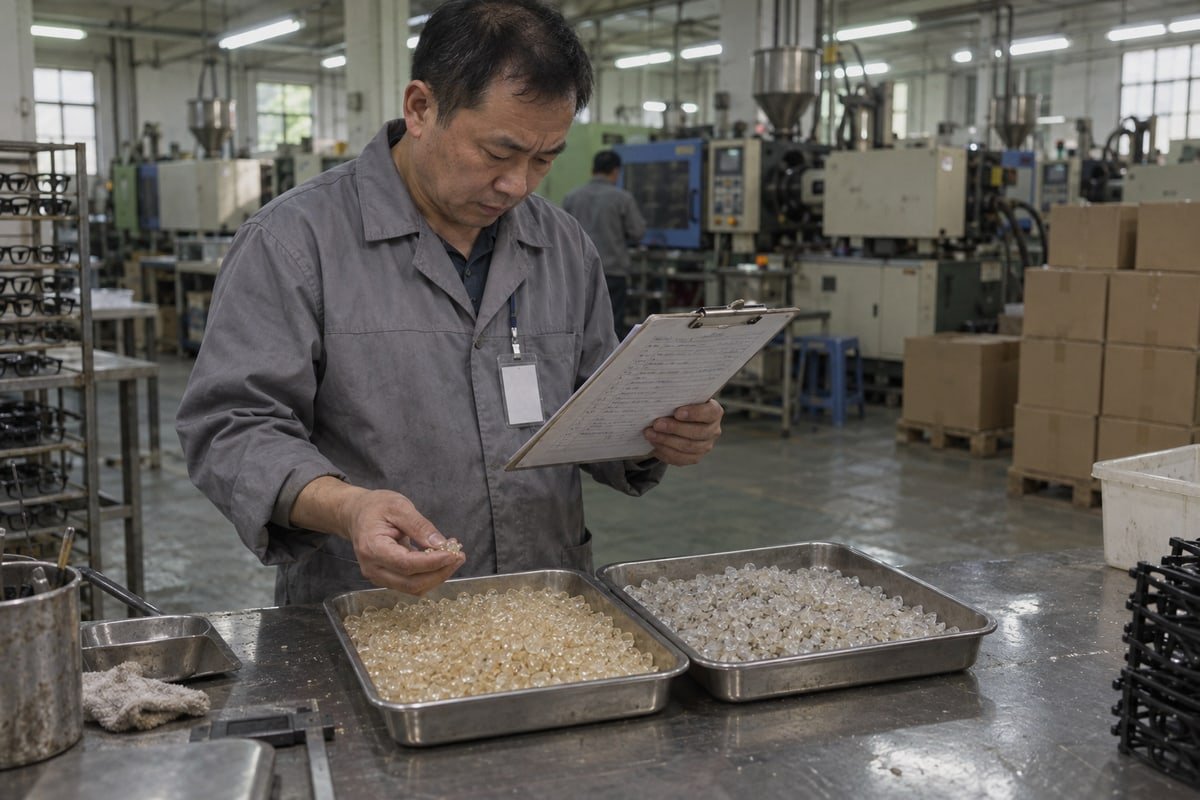
Buyers ask our Taizhou team weekly whether TR90 & TPEE kids sunglasses 1 can go recycled or bio-based. Get the answer wrong, and a greenwashing complaint can sink a launch.
Yes. TR90 and TPEE kids sunglasses can use recycled or bio-based inputs. Bio-based TR90 uses castor-oil feedstock, often around 45% renewable content, and rTR90 reuses post-industrial waste. Neither is sustainable by default, so brands must specify the resin grade and verify content documentation.
That is the short version. The longer version matters more, because the resin you choose changes safety, flexibility, paperwork, and price. Below, I walk through each of those in turn, using what we see every day on our production line.
How do I know if TR90 and TPEE materials can be sourced from recycled or bio-based inputs?
A procurement manager from Australia once sent our team a spec sheet that simply read "eco TR90". We asked her one question: which resin grade? She did not know yet.
You know by checking the resin grade, not the material name. Bio-based TR90 such as Grilamid BTR is made partly from castor oil, and rTR90 uses post-industrial regrind. TPEE can also be formulated with recycled or bio-based inputs, but that depends on the supplier's documentation.
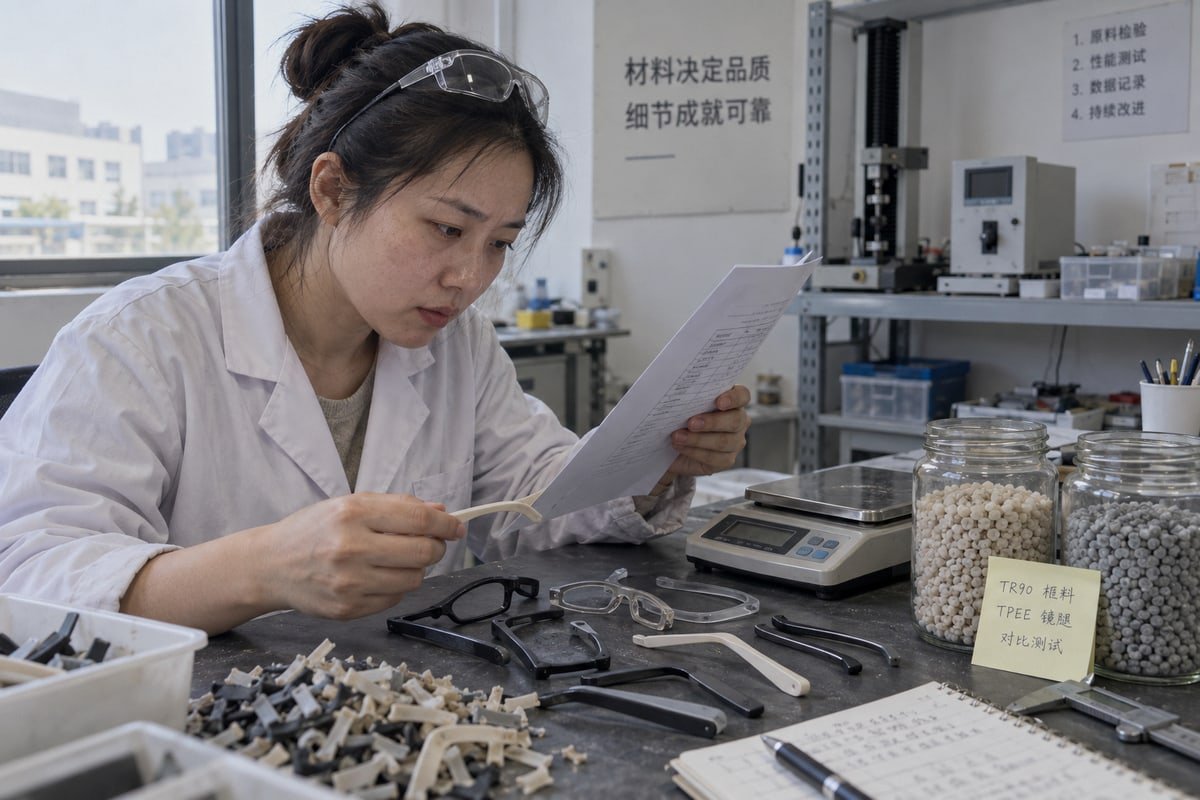
That spec sheet story is common. The material name tells you the polymer family. It does not tell you where the carbon came from. So the first thing I do with any buyer is separate the words that get mixed up.
Recyclable is not the same as recycled
TR90 is a thermoplastic polyamide, a type of nylon. TPEE is a thermoplastic ether-ester elastomer 2 that sits between rubber and plastic. Both can be remelted. That makes them recyclable in an industrial stream. It does not mean the frame in your hand contains one gram of recycled resin. Post-consumer eyewear recycling barely exists. Most "recycled" claims in eyewear refer to post-industrial waste, ocean-bound plastic 3, or bottles, not old frames coming back. Newer molecular (chemical) recycling can break TR90 and TPEE blends back into virgin-quality monomers, which fixes the quality problem of mechanical regrind. But it is still an emerging supply, not a default.
The four terms buyers mix up
| Término | What it means for a kids frame | What it does not mean |
|---|---|---|
| Recycled | Contains a stated share of reprocessed resin (post-industrial, ocean-bound, rPET) | That the frame will be recycled after use |
| Bio-based | Part of the feedstock is plant-derived, usually castor oil | Biodegradable or fully renewable |
| Biodegradable | Breaks down under specific conditions | Safe to litter, or a good choice for a frame a child chews |
| Compostable | Breaks down in a certified composting facility | Home-compostable or durable enough for eyewear |
Where TR90 and TPEE stand today
| Resin option | Typical source | Market maturity | Notes for kids sunglasses |
|---|---|---|---|
| Standard TR90 | Petroleum | Mature | Lightweight, memory-flex, our main frame material |
| Bio-based TR90 (Grilamid BTR, "Eco-TR90") | Castor oil, roughly 45% bio-based | Commercially available | Same chemistry as bio-nylon frames, clarity preserved |
| rTR90 | Post-industrial waste | Growing | Best for opaque colors; verify the percentage |
| Standard TPEE | Petroleum | Mature | Softest option, ideal for baby and toddler temples |
| Recycled or bio-based TPEE | Supplier-dependent | Early | Documented kids-grade supply is thin; ask before promising |
| Recycled nylon-6 | Up to 85% recovered fishing nets in some lines | Available | Adjacent material, proves recycled-performance frames work |
One more nuance. Some bio-TR90 supply is produced under mass balance accounting, where castor-oil feedstock is co-processed with fossil feedstock and the renewable share is allocated on paper. That is legitimate when audited. But it changes how you word the claim on your packaging.
Will switching to sustainable materials affect the safety and flexibility my brand needs?
Every material change on our line forces a trade-off between resin source and memory-flex performance. Bio-based TR90 keeps most of it. Low-grade recycled blends can lose it.
Not necessarily. Bio-based TR90 keeps the same impact resistance, lightweight feel, and shape memory as standard TR90 because the polymer chemistry is the same. Risk comes from poorly sorted recycled content, which can reduce flexibility and clarity, so brands should request virgin-grade or certified rTR90 for children.
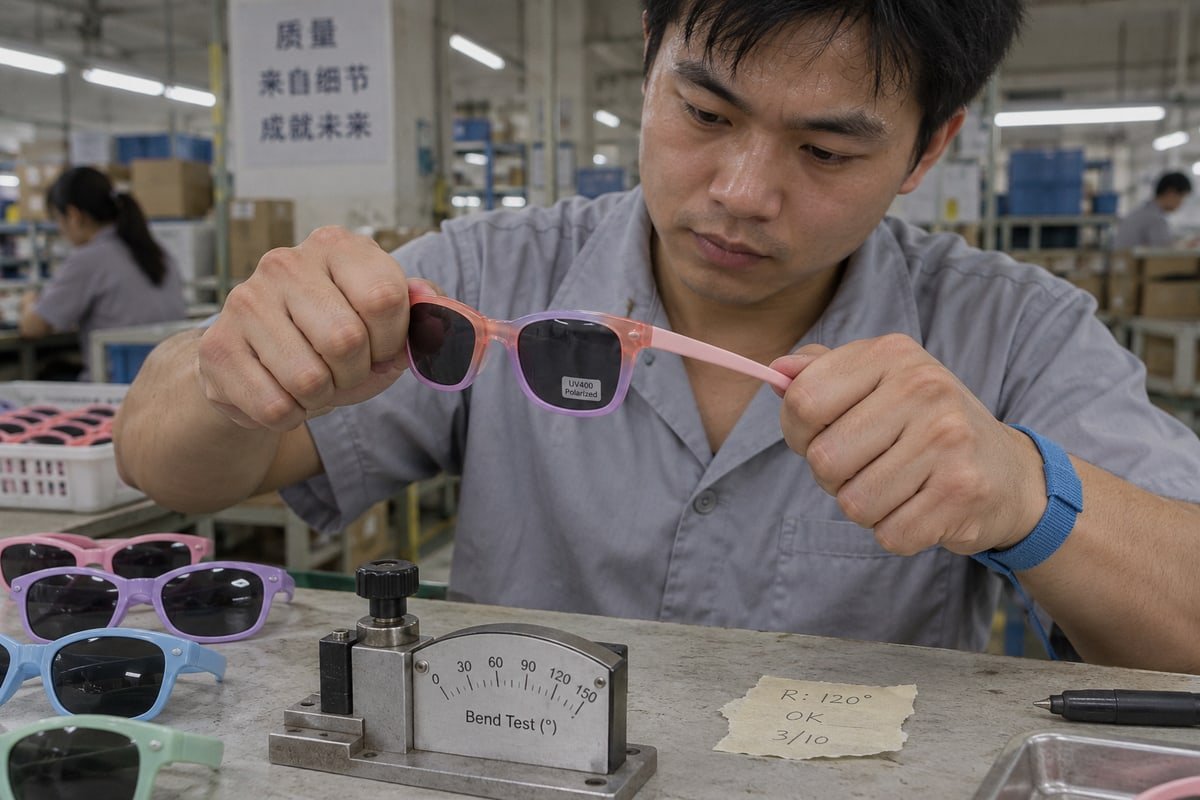
Parents buy TR90 and TPEE kids sunglasses for one reason. The frames bend, twist, get sat on, and come back. If a sustainable resin loses that, the sustainability story does not matter. So I look at each option through the eyes of a two-year-old who chews temples.
What actually changes when the feedstock changes
With bio-based TR90, very little. The castor-oil route produces the same monomer that the petroleum route produces. The finished polymer is the same nylon, so impact resistance, weight, and hinge memory 4 stay where they were. Our engineers found that our translucent styles, like a coral-pink gradient wayfarer or a crystal sky-blue frame, still mold clear and bright in bio-nylon frames. That matters because color clarity is often the first thing a buyer notices on a sample.
With recycled content, the picture depends on the source. Post-industrial regrind from our own sprues and runners is clean, single-material, and traceable. Mixed or ocean-recovered feedstock is not. Mechanical recycling shortens polymer chains, which can make a frame stiffer and more brittle. It also carries pigment from earlier batches, so it suits an opaque slate-blue chunky frame far better than a see-through one.
Where the real risks sit for young children
| Propiedad | Standard TR90 / TPEE | Bio-based TR90 | Mechanically recycled blend |
|---|---|---|---|
| Resistencia al impacto | Alta | High, same polymer | Can drop if chains degrade |
| Flexibility and memory | Alta | Alta | Variable by batch |
| Color clarity | Excelente | Excelente | Limited to opaque shades |
| Microplastic shedding when chewed | Baja | Low, high-purity polymer | Higher risk with low-grade regrind |
| BPA-free, phthalate-free, PVC-free | Yes with certified resin | Yes with certified resin | Must be re-verified per lot |
That fourth row is the one I stress with baby-product brands. Toddlers chew temples. High-purity bio-based polymers are emerging as the safer route for that age group because they avoid the unknown contamination of lower-grade recycled plastics. This is why we keep Templo TPEE on our TR90 fronts for the youngest sizes and steer buyers toward bio-based rather than recycled for those SKUs.
How we check a new resin on the line
Every new grade goes through the same routine before it reaches a customer sample. We run repeated bend cycles on the temples, twist the front, cycle the hinges, and check the frame returns to shape. We run the same chemistry paperwork we run for BPA-free frames and REACH compliance. If a recycled lot fails any step, it does not go into a kids order. That discipline is why we treat flexible-material expertise, not resin sourcing, as the thing that keeps a child safe.
What should I ask my manufacturer to verify eco-friendly material claims are genuine?
Fifteen years of eyewear work taught us one lesson: a resin certificate should travel with every order. Without that paper trail, an eco claim is a word on a hangtag.
Ask for the resin manufacturer's name and grade code, the exact recycled or bio-based percentage, the accounting method such as mass balance, third-party certification like Global Recycled Standard, REACH compliance and BPA-free test reports, and batch traceability from resin lot to finished frame.
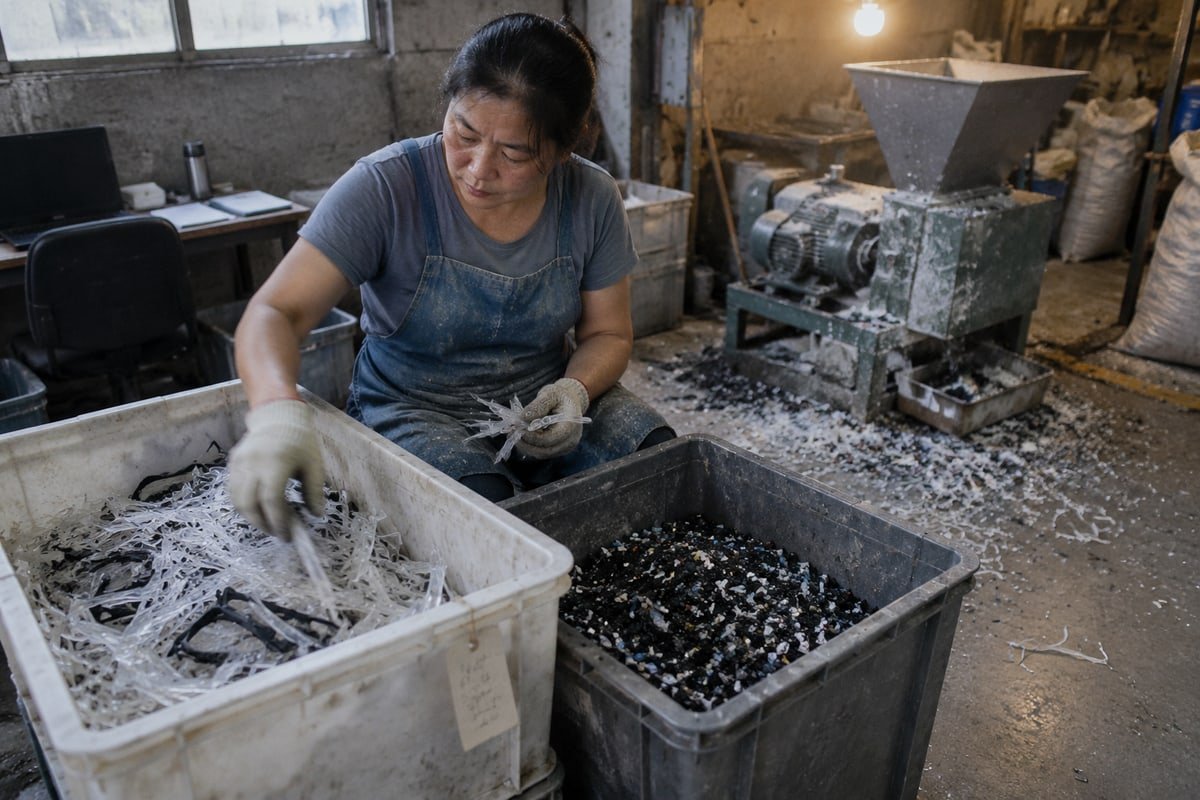
The skeptical buyer is right to be skeptical. "Eco" and "green" cost nothing to print. Real sustainable eyewear materials cost something to prove. Here is the exact sequence I recommend, in the order we handle it inside our own workshop.
Seven questions, in order
- Which resin supplier and which grade code? A real answer names a producer and a grade, for example a Grilamid BTR grade for bio-based TR90. "Eco TR90" is not an answer.
- What is the stated percentage? Bio-based content is usually partial, often around 45%. Recycled content should be a number with a source: post-industrial, ocean-bound, or rPET.
- How is that percentage accounted? Physical segregation or mass balance. Both can be valid, but mass balance must be audited and worded carefully on packaging.
- Which third-party scheme backs it? Norma Mundial de Reciclaje for recycled content, and a recognized bio-based content certification for renewable share. Ask to see the certificate, not a logo.
- Are safety documents current for this exact lot? REACH compliance, BPA-free, phthalate-free, DEP-free, and PVC-free reports must match the resin batch, not an older sample.
- Can you trace resin lot to my carton? Our 5S-managed workshop logs each resin lot against the work order. A supplier who cannot do this cannot support a claim later.
- What is the end-of-life plan? Take-back, spare temples, or recycling guidance. This is where the circular economy story becomes real instead of decorative.
Why mass balance needs a careful label
Mass balance lets a resin producer feed castor oil and petroleum into the same reactor and allocate the renewable share to specific output. It is the main way bio-based TR90 scales today. But a "45% bio-based" mass-balance claim is a supply-chain allocation, not a lab measurement of your frame. Your marketing copy should say so. Regulators are moving toward exactly this kind of precision.
Prepare now for Digital Product Passports
The EU Ecodesign for Sustainable Products Regulation (ESPR) is expected to bring Digital Product Passports to categories including eyewear. That means recycled content, material composition, and end-of-life instructions will need to be trackable per product. Brands selling into Europe, Japan, or Australia should build that data trail now. When we prepare retail-ready packaging for a client, we already design space for a QR code that can link to this information later. It costs nothing today and avoids a relabel tomorrow.
Can I offer recycled or bio-based kids sunglasses without increasing my production costs too much?
Last season our Taizhou workshop ran a bio-based TR90 batch on an existing wayfarer mold. The molding parameters barely moved. The resin invoice did.
Yes, if you plan it well. Bio-based and recycled TR90 cost more per kilogram, but resin is a small share of a finished frame's cost. Using existing molds from an 800-style catalog, sharing colors across runs, and skipping new tooling keeps the total increase modest.
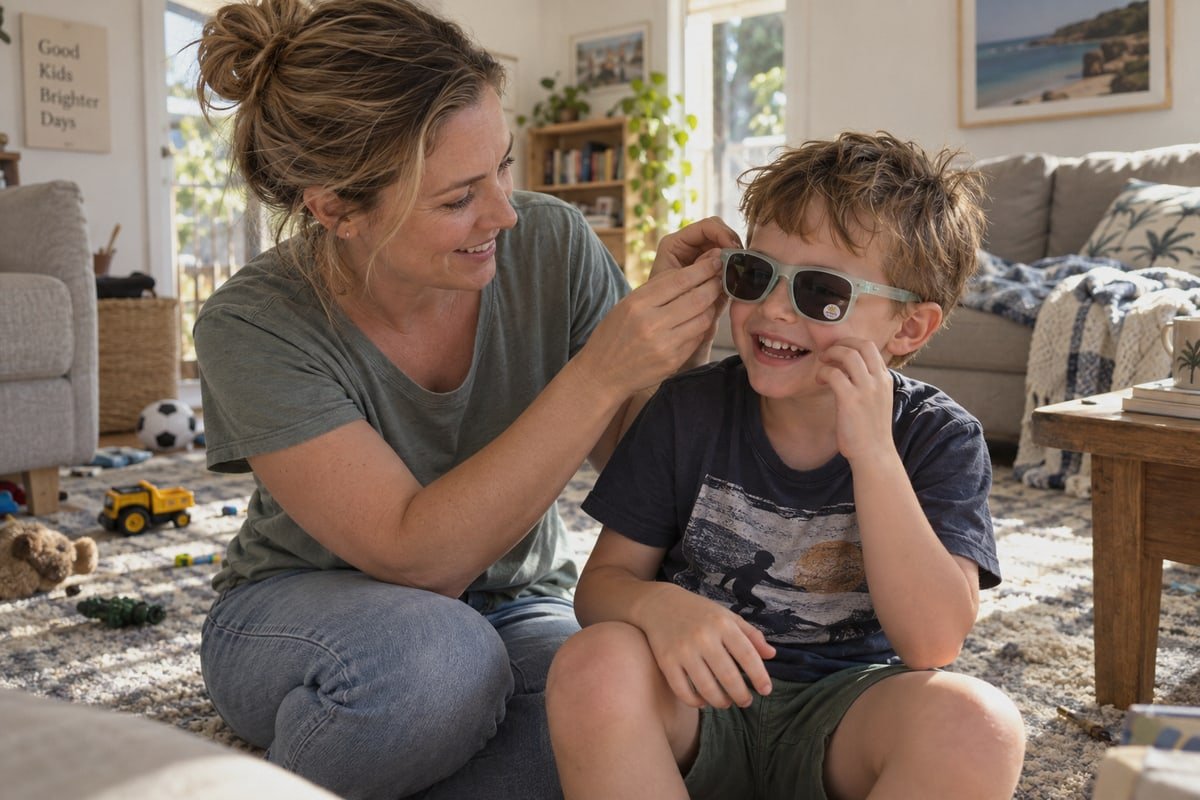
Cost is the objection that usually ends the conversation before it starts. It should not. A kids frame weighs very little. The resin inside it is one line on a cost sheet that also includes lenses, hinges, molding time, assembly, quality control, packaging, and freight. When only that one line moves, the finished price moves far less than buyers expect.
Where the cost actually sits
| Factor de costo | Conventional TR90 / TPEE | Bio-based or recycled option | How to keep it under control |
|---|---|---|---|
| Resin per kilogram | Línea de base | Higher, especially bio-based | Frame weight is low, so impact per unit stays small |
| Tooling | Zero if using an existing mold | Zero, same molds work | Pick from our ~800 existing styles instead of opening new tools |
| Molding parameters | Norma | Minor adjustment | One setup trial per new resin, then normal cycle |
| Color development | Norma | Opaque colors easiest for recycled; bio-based takes translucent | Reuse existing color masters where possible |
| Lenses (UV400, polarized) | Norma | Unchanged | No cost change here at all |
| Certification and paperwork | Standard safety set | Added resin certificates | Ask the resin producer to supply them; do not pay for duplicate testing |
| Minimum order | Normal | Resin suppliers may set higher minimums | Group several colorways on one resin lot |
Circular economy wins that cost almost nothing
The cheapest sustainability gain in kids eyewear is often not the resin. It is product life. A frame that survives two summers halves the carbon footprint of a frame that lasts one. That is where flexible-material expertise pays back. Our TR90 fronts with TPEE temples exist because they do not snap, so they do not get thrown away. Add spare temples, a repair-friendly hinge, and a take-back note on the packaging, and you have a credible circular story built on durability rather than only on feedstock.
Carbon footprint reduction also comes from consolidation. Fewer, larger resin lots, shared color masters, and combined shipments from one factory all cut emissions and cost at the same time.
A phased approach that works for smaller brands
- Start with one hero SKU. Choose a best-selling opaque or bio-clear style and move only that one to bio-based TR90.
- Keep lenses and packaging identical. UV400 and polarized lens options do not change, so you protect what parents already trust.
- Extend to optical frames next. Eco-friendly optical frames use the same resin logic and often carry higher margins, which absorbs the resin premium more easily.
- Add recycled content for opaque colors last, once your rTR90 supply and its Global Recycled Standard paperwork are stable.
This path lets a founder test the market with lower risk, the same reason we built a large existing-style catalog in the first place.
Conclusión
TR90 and TPEE kids sunglasses can use recycled or bio-based resin. Vague claims risk your brand. Specify the grade, verify the paperwork, protect flexibility, and launch one SKU first.
Interested in sourcing the products mentioned in this article? See details and request a quote here:
Notas al pie
1. General reference for the product category discussed in the article. ↩︎
2. Technical definition of the TPEE material used in flexible kids eyewear. ↩︎
3. Authoritative source for definitions of recycled material streams like post-industrial waste. ↩︎
4. Scientific overview of nylon properties relevant to TR90 performance and durability. ↩︎
Más artículos que te podrían gustar
¿Buscas un socio confiable en gafas para niños?
Explore más de 800 estilos listos y soporte OEM/ODM completo adaptado a su marca.
Ponte en contacto English
  Español de México
  Deutsch
  Français
  日本語
日本語  العربية
  Português do Brasil