¿Qué suele cubrir la garantía de las gafas de sol para niños?
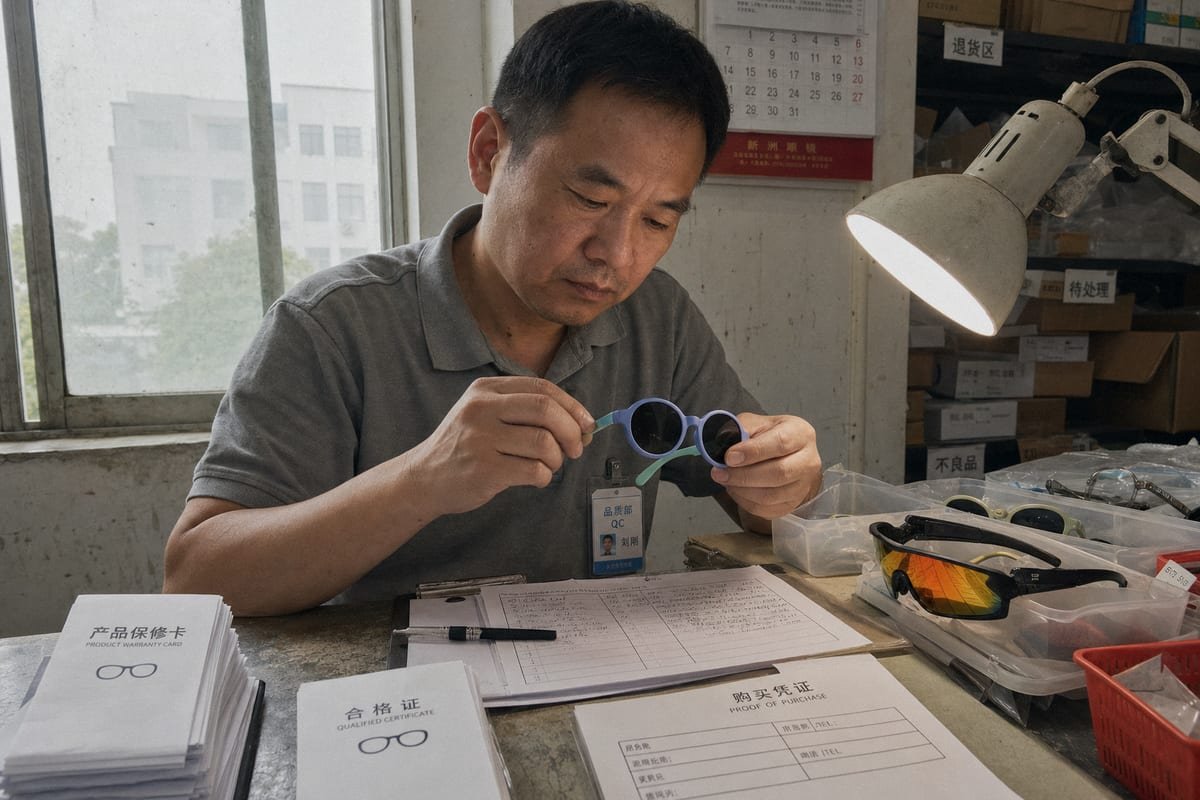
Los compradores preguntan sobre la garantía de las gafas de sol para niños en casi todas las solicitudes de presupuesto que recibe nuestra fábrica. Una disputa por una bisagra rota puede agotar una asociación. Los términos claros evitan ese dolor por completo.
Una garantía para gafas de sol infantiles suele cubrir defectos de fabricación en las monturas, lentes, bisagras y recubrimientos durante uno o dos años, con comprobante de compra. Los daños accidentales, arañazos, pérdidas y el desgaste normal suelen excluirse a menos que se adquiera un plan de protección o reemplazo por separado.
Esa respuesta corta oculta muchos detalles. La cobertura varía ampliamente entre marcas, minoristas y fábricas. Permítame guiarlo a través de lo que realmente está cubierto, lo que no, y cómo los compradores B2B pueden dar forma a mejores términos.
¿Qué defectos o problemas suelen incluirse en la garantía de unas gafas de sol para niños?
El año pasado, una inspección por lotes 1 en nuestro taller de Taizhou detectó un problema de tolerancia en el tornillo de la bisagra antes del envío. Ese es exactamente el tipo de problema para el que existe una garantía adecuada.
Una garantía de gafas de sol para niños suele incluir defectos de fabricación como fallos en las bisagras, monturas deformadas o agrietadas sin impacto, recubrimientos de lentes descascarillados o con burbujas, delaminación de lentes, patillas sueltas y almohadillas nasales defectuosas. La cobertura se aplica solo a fallos en los materiales o en la mano de obra, no a daños causados por el niño.
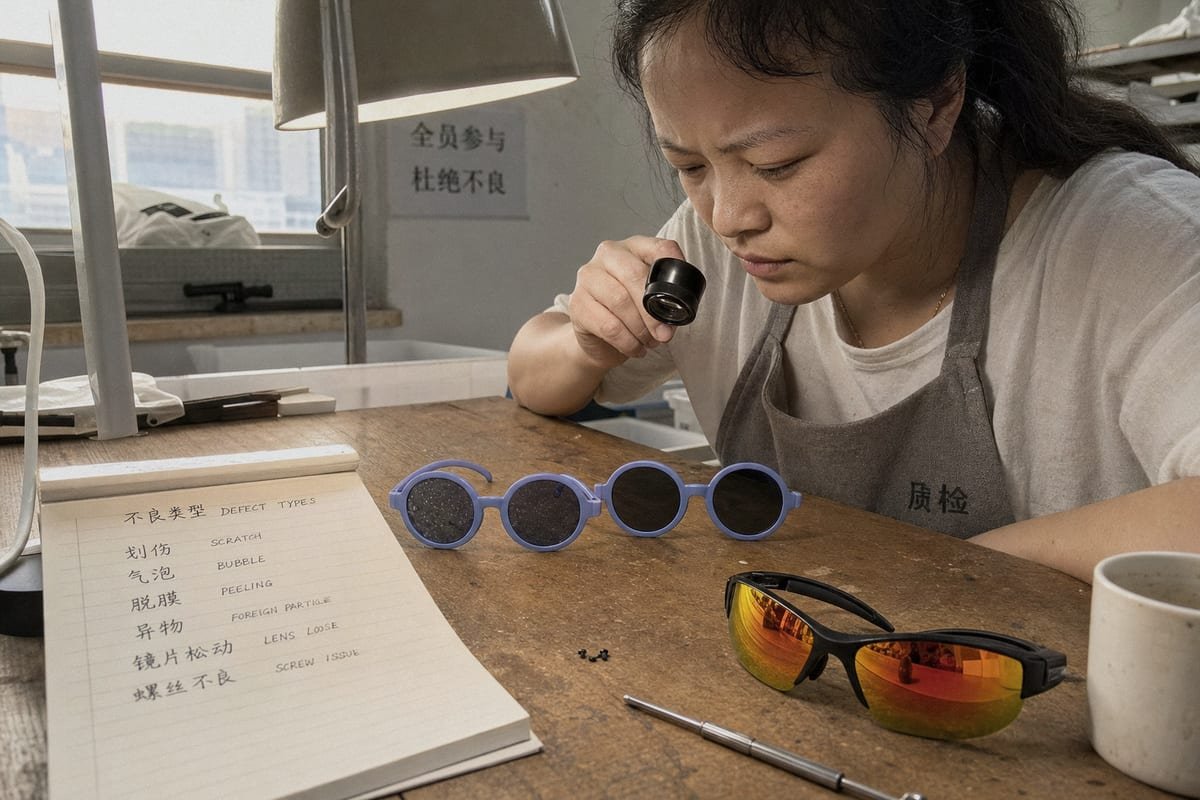
El principio fundamental detrás de cualquier garantía estándar es simple. Si el producto falla debido a cómo se fabricó, el fabricante es responsable. Si falla debido a cómo se usó, el fabricante generalmente no lo es. Esa línea suena clara en el papel. En la práctica, los niños la desdibujan todos los días.
Defectos comunes cubiertos
De nuestros quince años produciendo gafas infantiles, estos son los tipos de defectos que la mayoría de las garantías cubren de manera confiable:
| Tipo de defecto | Cómo se ve | ¿Típicamente cubierto? |
|---|---|---|
| Fallo de la bisagra | El tornillo se afloja o la junta se rompe sin impacto | Sí |
| Fallo del recubrimiento | La capa UV o antirreflectante se despega, se ampolla o se agrieta | Sí |
| Deformación de la montura | La montura se tuerce o pierde forma en condiciones normales | Sí |
| Delaminación de la lente | Las capas de la lente se separan por sí solas | Sí |
| Fallos de soldadura o juntas | La patilla se desprende en el punto de conexión | Sí |
| Rayones por uso | Marcas superficiales de parques infantiles o mochilas | Raramente |
| Marcas de mordeduras | El niño pequeño mastica las puntas de las patillas | No |
| Pérdida o robo | Gafas de sol dejadas en la playa | No |
Por qué la elección del material cambia el panorama de los defectos
Aquí hay algo que muchos compradores pasan por alto. La tasa de defectos depende en gran medida del material. Fabricamos la mayoría de nuestras monturas infantiles en TR90 y TPEE precisamente porque los plásticos rígidos 2 se rompen en puntos de tensión. La durabilidad de la montura flexible significa que la montura se dobla y regresa en lugar de romperse. Una patilla de TPEE bien hecha puede soportar una torsión que haría añicos una montura barata moldeada por inyección. Menos defectos legítimos significan menos reclamaciones de garantía, lo que importa enormemente cuando se venden miles de unidades bajo su propia marca.
Los recubrimientos también merecen especial atención. Un recubrimiento resistente a los arañazos 3 que falla por sí solo, al despegarse o nublarse, es un defecto de fabricación. Un rasguño causado por arena en una bolsa de playa no lo es. Las garantías trazan esa distinción cuidadosamente, y también deberían hacerlo sus documentos de producto.
¿Cuánto tiempo debo esperar que dure un período de garantía para gafas infantiles?
Un distribuidor en Australia nos preguntó una vez si un período de garantía más largo justificaría un precio minorista más alto. Nuestra respuesta lo sorprendió: la duración importa menos que lo que cubre realmente el período.
Las garantías de gafas para niños suelen durar de uno a dos años desde la fecha de compra. Un año es el estándar de la industria para gafas de sol infantiles, mientras que las marcas premium pueden extenderse a dos años u ofrecer una garantía limitada de por vida solo por defectos de fabricación. Los planes de daños accidentales suelen durar doce meses.
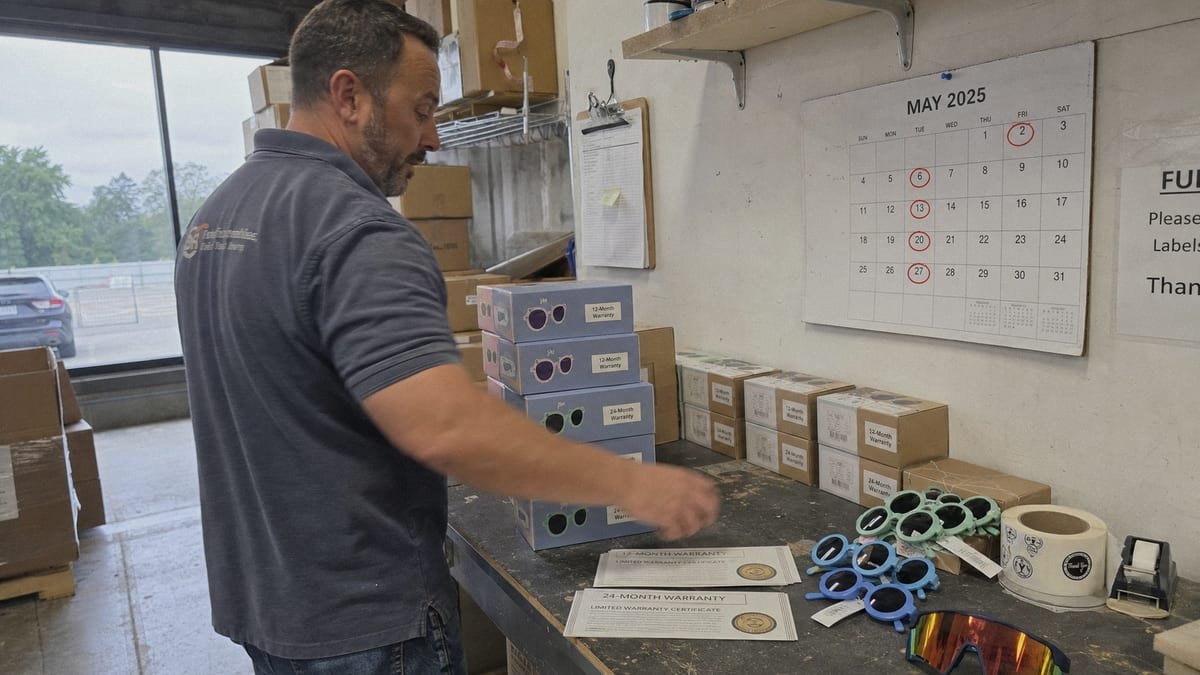
Los límites de tiempo existen porque los materiales envejecen. La exposición a los rayos UV 4, el protector solar, el sudor y el calor degradan los plásticos y los recubrimientos con el tiempo. Después de uno o dos años de uso intensivo, se vuelve casi imposible separar un defecto genuino del desgaste normal. Por lo tanto, la industria se conformó con ventanas que son justas para ambas partes.
Duraciones típicas de garantía por tipo de cobertura
| Tipo de cobertura | Duración común | Notas |
|---|---|---|
| Garantía estándar contra defectos | 12 meses | La base de la mayoría de las marcas de gafas para niños |
| Garantía extendida contra defectos | 24 meses | Común en los mercados de la UE debido a la legislación de consumo |
| Garantía limitada de por vida | Vida útil del producto | Solo defectos; el daño accidental todavía está excluido |
| Plan de daños accidentales | 6–12 meses | A menudo un reemplazo por período |
| Ventana de cambio de prescripción | 60–90 días | Se aplica a las monturas ópticas para niños, no a las gafas de sol sin graduación |
Por qué los productos para niños a veces obtienen términos más cortos o diferentes
Curiosamente, algunas líneas juveniles tienen una cobertura más corta que sus equivalentes para adultos, limitada a dos años, incluso cuando la línea para adultos ofrece una garantía limitada de por vida. La razón es contundente. Los niños superan las monturas, las tratan con rudeza y rara vez conservan un par más allá de dos temporadas. Una promesa de por vida en un producto con una vida útil de dos años es principalmente marketing.
Hay un detalle más sobre los plazos que los compradores deben conocer. La prueba de compra casi siempre inicia el reloj. Sin un recibo o registro del pedido, la mayoría de las marcas rechazarán una reclamación de plano. Cuando apoyamos a nuestros clientes B2B, les recomendamos que incluyan un simple paso de registro en el folleto de su embalaje. Protege al cliente final y, al mismo tiempo, le da a la marca un punto de contacto de marketing. Algunas marcas incluso vinculan la protección contra pérdida o robo a esa ventana de registro, ofreciendo un reemplazo con descuento solo si el producto se registró dentro de los treinta días.
¿Puedo negociar términos de garantía personalizados al hacer un pedido a un fabricante?
Negociar los términos es una de mis conversaciones favoritas con los nuevos clientes de marca, porque obliga a ambas partes a definir la calidad en números en lugar de adjetivos.
Sí, los compradores B2B pueden negociar términos de garantía personalizados con un fabricante. Los puntos negociables comunes incluyen el umbral de tasa de defectos, la política de reemplazo, la asignación de piezas de repuesto, los requisitos de evidencia de reclamo y quién paga las tarifas de procesamiento y envío. Los términos suelen redactarse en el acuerdo de compra antes de que comience la producción.
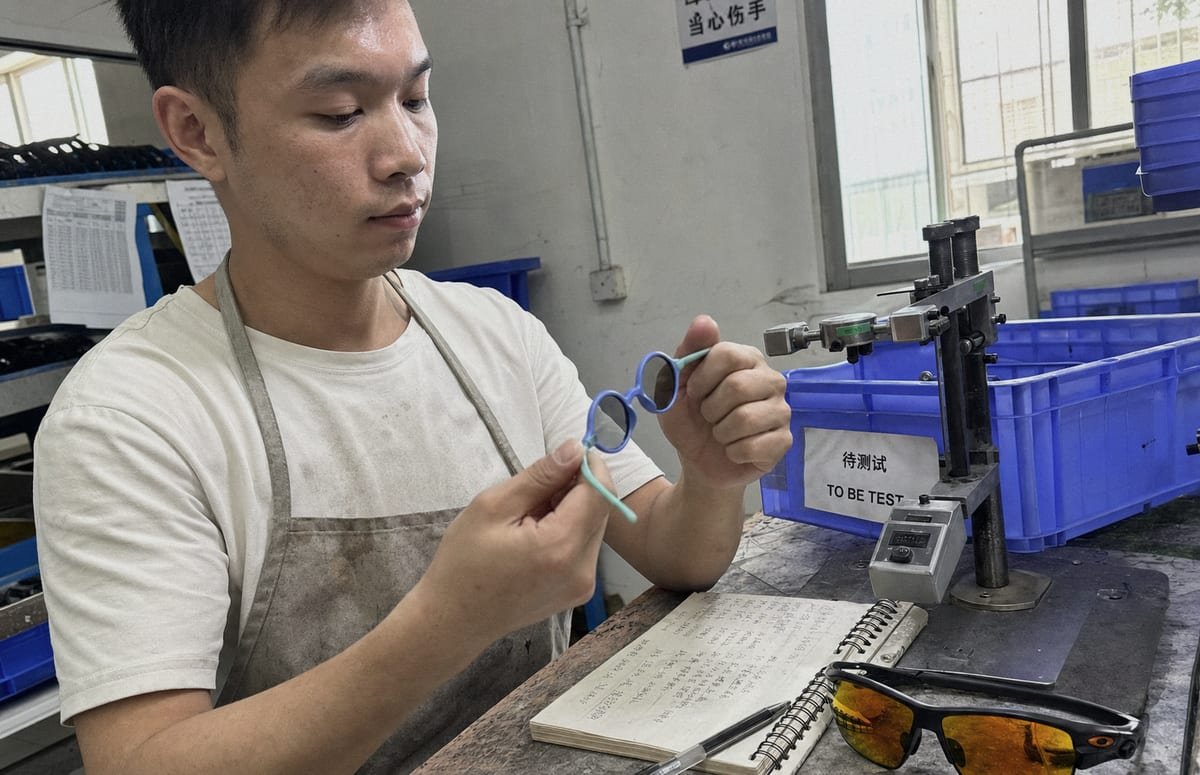
Cuando se pide a una fábrica en lugar de comprar en una tienda, la garantía deja de ser una tarjeta impresa y se convierte en una cláusula contractual. Ese cambio le favorece. En nuestras instalaciones, las discusiones sobre la garantía ocurren durante el muestreo, no después de que aparece un problema. Así es como suele desarrollarse la negociación.
Las cinco palancas que puede negociar
- Tasa de defectos aceptable. Acordar un estándar AQL para la inspección. Cualquier cosa por encima del umbral activa la responsabilidad de la fábrica.
- Tipo de remedio. Decidir si las unidades defectuosas se reemplazan en el próximo envío, se acreditan contra la próxima factura o se reembolsan. El reemplazo en el próximo pedido es lo más común y eficiente para ambas partes.
- Asignación de piezas de repuesto. Muchos de nuestros clientes solicitan un pequeño porcentaje de unidades adicionales o brazos de patilla de repuesto enviados gratis con cada pedido. Esto les permite gestionar las reclamaciones de los clientes finales al instante sin esperar el transporte internacional.
- Estándares de evidencia. Definir qué cuenta como prueba. Fotos claras y números de lote suelen ser suficientes. Requerir la devolución física de cada par roto a través del océano no ayuda a nadie.
- Asignación de costos. Especificar quién cubre las tarifas de procesamiento y envío de los reemplazos. Dividir el flete en reclamaciones pequeñas y el flete pagado por la fábrica en defectos a nivel de lote es un punto intermedio justo.
Lo que una fábrica acepta y lo que no
Una fábrica seria respaldará los defectos de fabricación sin dudarlo. Nuestro proceso de control de calidad en taller gestionado con 5S 6 existe precisamente para que podamos hacer ese compromiso con confianza. Lo que ninguna fábrica honesta aceptará es una responsabilidad ilimitada por la cobertura de daños accidentales a nivel del consumidor. Si su marca quiere comercializar una promesa de reemplazo único a prueba de niños, esa es una estrategia minorista inteligente, pero debe incluirse en su margen, no trasladarse al costo unitario. A menudo ayudamos a los clientes a modelar esto: un costo de llegada ligeramente más alto con inventario de repuesto incorporado suele ser mejor que perseguir reclamaciones individuales a través de las fronteras.
Una lección de años de exportación a más de veinte países: ponga todo por escrito antes del depósito. Las garantías verbales se evaporan. Un anexo de garantía de una página al pedido de compra ahorra a ambas partes correos electrónicos incómodos más adelante.
¿Qué debo tener en cuenta en la política de garantía de un proveedor antes de realizar un pedido al por mayor?
Al principio de mi carrera, vi a un importador prometedor perder un contrato minorista porque la política de garantía de su proveedor anterior eran dos frases vagas. Los abogados del minorista se retiraron.
Antes de un pedido a granel, verifique la lista de defectos definida por el proveedor, el umbral de tasa de defectos, el período de reclamación, los requisitos de evidencia, el método de reparación, el tiempo de entrega de reemplazo y la responsabilidad de los costos de envío. Confirme que la política esté escrita en el contrato y verifique si los recubrimientos de las lentes y las bisagras están explícitamente cubiertos.
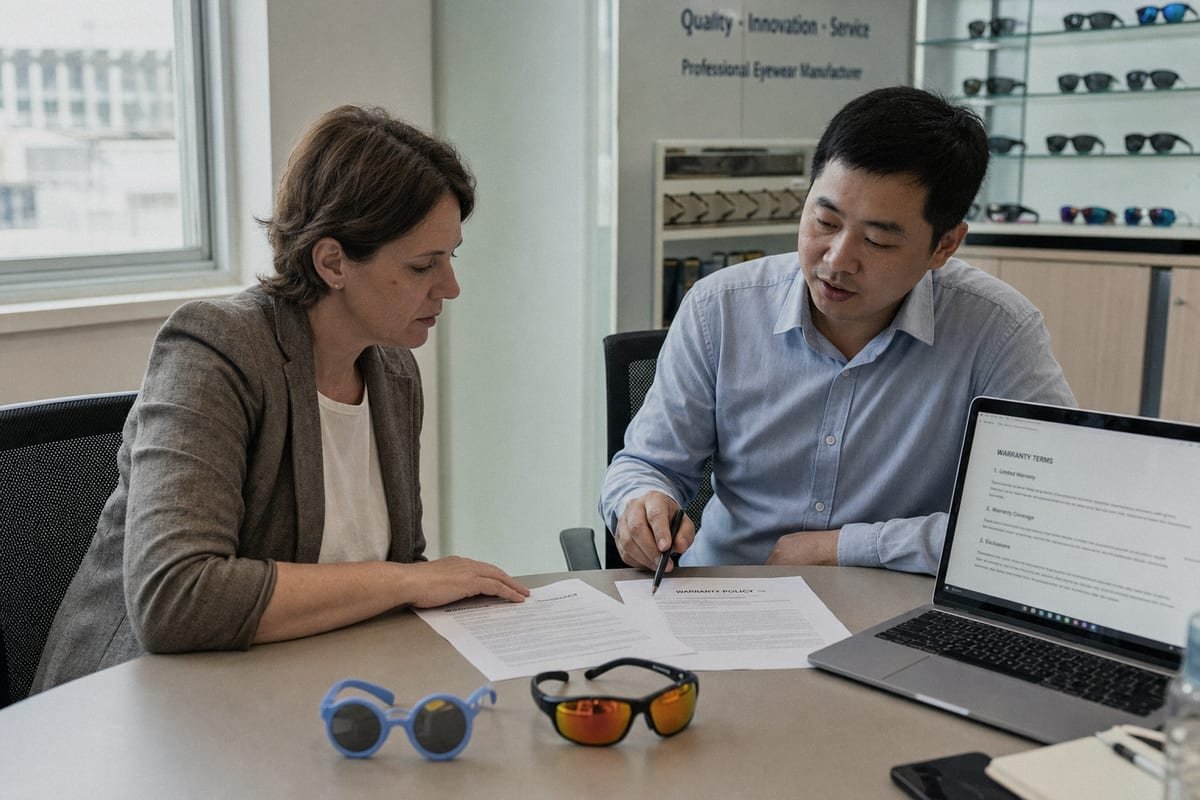
La política de garantía de un proveedor le dice más sobre su cultura de calidad que cualquier visita a la sala de exposición. Los términos vagos suelen indicar a un comerciante que espera que los problemas nunca salgan a la luz. Los términos precisos indican una fábrica que mide su propia producción. Utilice la lista de verificación a continuación al comparar cotizaciones.
Lista de verificación de evaluación de garantía de pedidos a granel
| Elemento de la lista de verificación | Qué se ve bien | Señal de alerta |
|---|---|---|
| Definición de defecto | Lista detallada: bisagras, recubrimientos, monturas, lentes | Defectos manejados caso por caso |
| Ventana de reclamación | Indicado en meses desde la llegada, por ejemplo, 12 meses | No se menciona plazo |
| Evidencia requerida | Fotos más número de lote o PO | Se exige la devolución física de todas las unidades |
| Remedio | Reemplazo, crédito o reembolso claramente indicado | Descuento solo en el próximo pedido |
| Plazo de entrega para reemplazos | Días definidos para repuestos o reenvío | Ya veremos |
| Responsabilidad del costo | Tarifas de procesamiento y envío asignadas por escrito | Silencio sobre los costos de flete |
| Cobertura del recubrimiento | Fallo del recubrimiento resistente a los arañazos incluido explícitamente | Recubrimientos excluidos por completo |
| Estándares de lentes | Construcción de montura TR90 7 cumpliendo las normas de su mercado | No se hace referencia a ningún estándar de seguridad |
Mire más allá de la política hacia la prevención
Una garantía es una compensación después de un fallo. La prevención es más barata que la compensación, siempre. Así que pregunte cómo el proveedor evita las reclamaciones en primer lugar. ¿Realizan controles de materiales entrantes en los gránulos de TR90 y TPEE? ¿Prueban los ciclos de las bisagras? ¿Verifican rendimiento UV400 8 lote por lote? ¿Utilizan lentes resistentes a los impactos adecuados para niños activos? En nuestra fábrica, preferimos detectar un problema en el banco de trabajo que resolverlo mediante transferencia bancaria seis meses después.
Verifique también si la política distingue entre la cobertura de la montura y la de las lentes. Algunos proveedores cubren silenciosamente solo la montura y excluyen las lentes rotas. Para productos infantiles, esa brecha es importante, porque las lentes sufren el mayor abuso. Finalmente, pregunte cómo el proveedor respalda sus promesas de cara al consumidor. Si planea ofrecer a los padres una política de reemplazo de una sola vez o un cambio de ajuste de crecimiento, un proveedor con aproximadamente 800 estilos existentes y producción repetida constante puede reabastecer rápidamente las monturas a juego. Un proveedor con un molde y tiradas irregulares no puede.
Conclusión
Las garantías poco claras crean disputas, contratos minoristas perdidos y padres infelices. La solución es conocimiento más documentación: sepa qué significa la cobertura de defectos, luego escriba términos precisos con su proveedor.
Una garantía estándar para gafas de sol infantiles protege contra defectos de fabricación, no contra el caos de la infancia. Los arañazos, las mordeduras, la pérdida y los accidentes en el patio de recreo entran dentro del desgaste normal o requieren un plan de daños accidentales por separado. La cobertura suele durar de uno a dos años, comienza con el comprobante de compra y varía en si se incluyen las monturas, las lentes o ambas. Para los compradores B2B, la verdadera oportunidad está río arriba. Negocie los umbrales de defectos, los mecanismos de reemplazo, los repuestos y la asignación de costos de envío antes de que comience la producción. Luego, elija una fábrica cuyos materiales y control de calidad reduzcan las reclamaciones en la fuente. Ese es el enfoque que tomamos con cada marca con la que nos asociamos, y es la diferencia entre una garantía que vende confianza y una que solo gestiona quejas. Si está desarrollando una línea de gafas para niños y desea términos de garantía que pueda imprimir con confianza en su empaque, nos complace hablar sobre los detalles.
Notas al pie
Explicación de los procedimientos de inspección y muestreo de lotes utilizados para mantener los estándares de calidad en la producción en masa. ↩︎
Descripción general de los materiales termoplásticos y sus propiedades físicas, incluida la rigidez y la falla en puntos de tensión. ↩︎
Descripción profesional de las tecnologías de mejora de lentes, incluidos los recubrimientos resistentes a los arañazos y antirreflectantes. ↩︎
<span id="
Más artículos que te podrían gustar


¿Buscas un socio confiable en gafas para niños?
Explore más de 800 estilos listos y soporte OEM/ODM completo adaptado a su marca.
Ponte en contacto English
  Español de México
  Deutsch
  Français
  日本語
日本語  العربية
  Português do Brasil