How to Test Compression Resistance and Drop Protection for Kids’ Sunglasses Packaging?
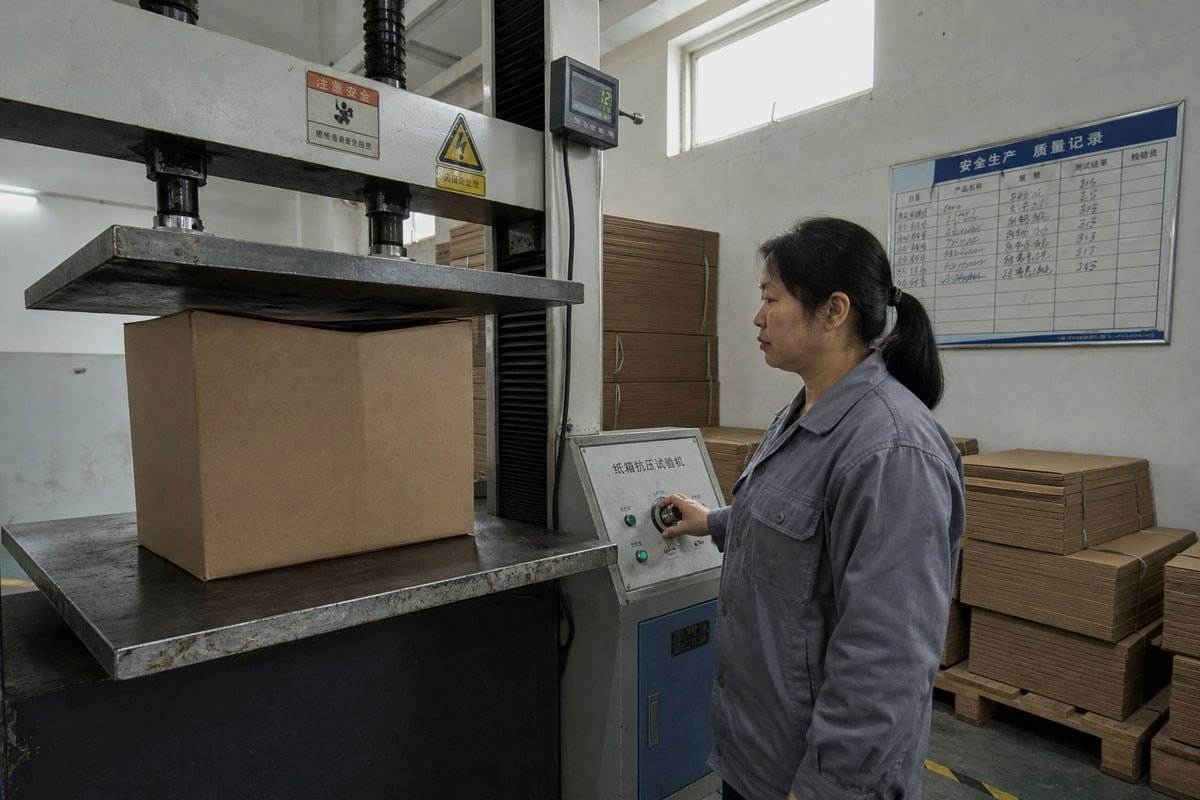
Compression resistance and drop protection for kids’ sunglasses packaging is a problem I see buyers underestimate constantly. On our production line in Taizhou, one crushed carton can ruin a whole launch.
Test compression resistance with a Box Compression Test under ISO 12048 or ASTM D642, and validate drop protection with multi-orientation drop tests per ASTM D5276 or ISTA 3A. Always test filled, final packaging, then inspect both the box and the sunglasses inside for damage.
That is the short answer. Now let me walk you through how each test works, which standards matter, and how to make sure your supplier actually runs them before your goods ship.
What standards or lab tests should I use to check compression resistance for my kids' sunglasses packaging?
A buyer from Australia once asked me why her display boxes arrived flattened when the sample looked sturdy. The answer was simple: nobody had ever measured the carton's stacking strength.
Use the Box Compression Test (BCT) under ISO 12048, ASTM D642, or DIN 55440-1 to measure the maximum vertical force your carton withstands before failing. Support it with an Edge Crush Test on the corrugated board and atmospheric pre-conditioning per ASTM D4332 for realistic humidity exposure.
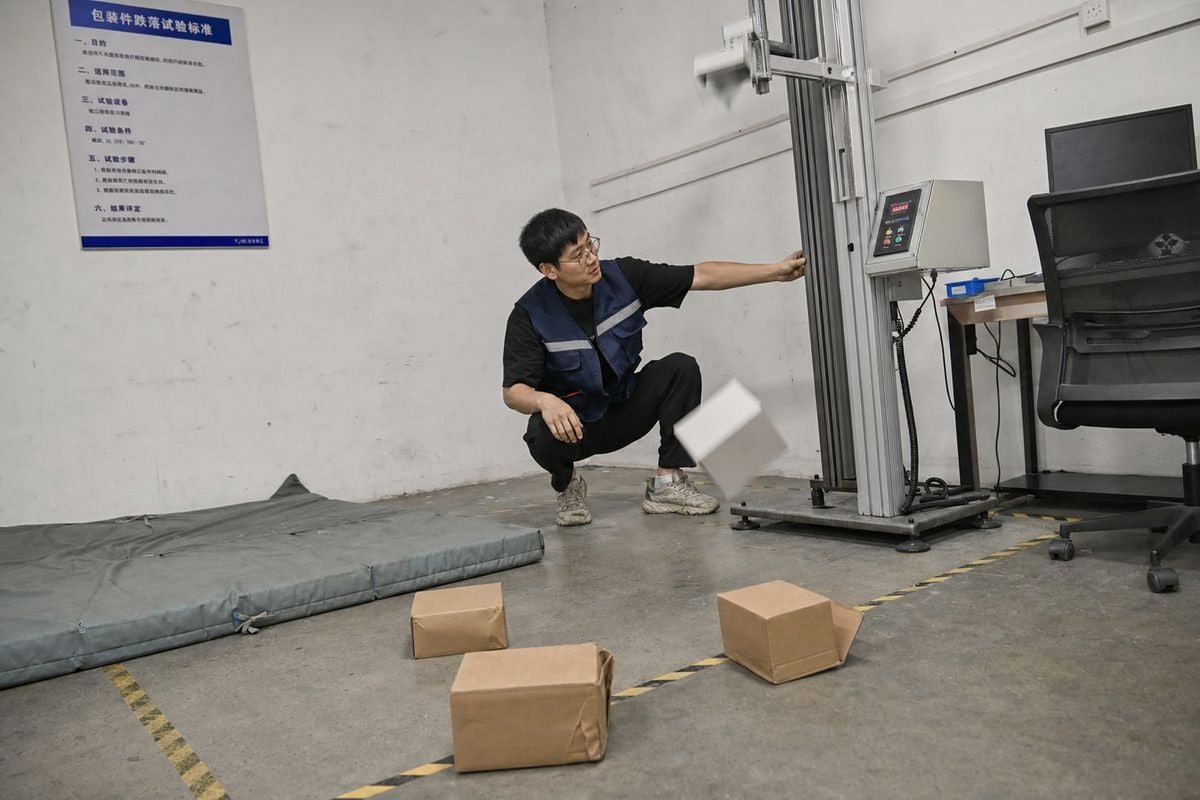
Compression resistance sounds technical, but the concept is plain. Your master cartons get stacked in warehouses, in containers, and on pallets. The boxes at the bottom carry the weight of everything above them. If they buckle, the retail boxes inside deform, and the sunglasses inside those boxes can shift, scratch, or crack. So a compression test measures how much vertical force a package can take before it deforms or collapses.
The two tests that matter most
El Edge Crush Test (ECT) 1 checks the raw corrugated material. It tells you the vertical strength of the board itself. The Box Compression Test 2 checks the finished, assembled box. It places the carton between two flat platens and presses down at a constant speed, typically around 10 mm/min, until the box fails or reaches a preset limit. In our experience exporting kids' eyewear to 20+ countries, you need both. Good board can still become a weak box if the structure or gluing is poor.
Key standards at a glance
| Norma | Qué cubre | Why It Matters for Kids' Eyewear |
|---|---|---|
| ISO 12048 | Compression and stacking of complete, filled transport packages | Tests the real shipping scenario, not an empty box |
| ASTM D642 | Compressive resistance of shipping containers and unit loads | The most widely accepted BCT method for export cartons |
| DIN 55440-1 | Box compression procedure with defined speed and sample size | Common reference in European buyer specifications |
| ASTM D4332 | Atmospheric conditioning before testing | Humidity can cut paperboard strength dramatically |
One common procedure uses ten boxes per sample, a constant platen speed, and a post-test inspection for visible damage. Results are reported as maximum force in newtons plus the deformation distance at peak load. But here is my honest advice: the raw number matters less than the interpretation. Ask one question. Can this carton survive your real stacking height, in your real shipping humidity, without compromising the sunglasses inside? Conditioning the samples first is essential, because a carton tested in a dry lab can lose a large share of its strength in a humid container crossing the equator. If you use molded-pulp inserts for sustainability, also ask about compression creep, since pulp can sag over weeks in humid retail environments and let products shift.
How can I simulate real shipping drops to make sure my packaging protects the frames inside?
Early in my fifteen years in eyewear, we shipped a lovely rigid gift box that passed every stacking check, then failed a single corner drop at the courier depot. That lesson shaped how we test today.
Simulate shipping drops with multi-orientation drop testing per ASTM D5276 or ISTA 3A, dropping the filled package on all faces, edges, and corners from a defined drop test height. Then open the package and inspect the sunglasses for scratches, hinge damage, and frame deformation.
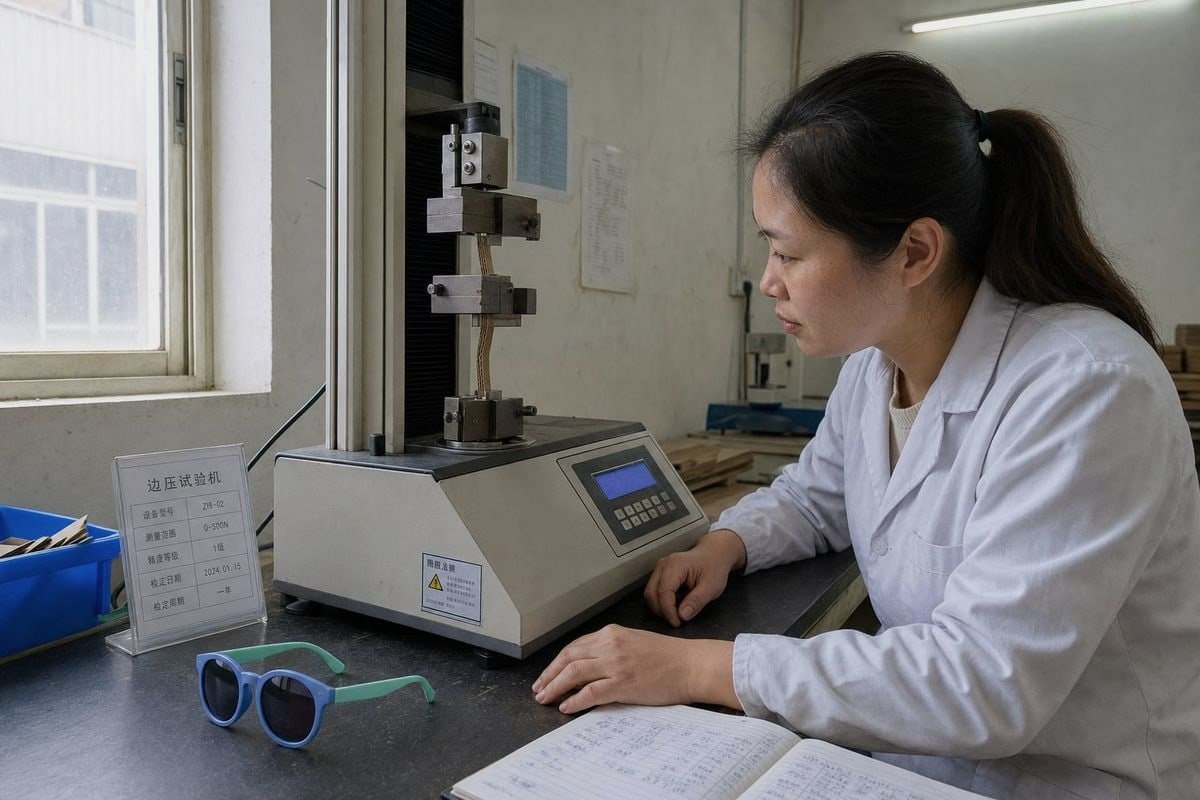
Drop testing answers a different question than compression testing. Compression checks sustained load. Drop testing checks sudden impact. Both matter, and passing one says nothing about the other. For e-commerce especially, ISTA 3A 3 testing is the benchmark, because it simulates the shocks, vibration, and handling abuse of the parcel delivery environment. ASTM D5276 defines the free-fall drop method itself, and ASTM D4169 4 gives a broader framework of distribution cycles if your goods travel by mixed routes.
How a proper drop sequence works
- Condition the filled package to standard temperature and humidity.
- Set the drop test height based on package weight and the chosen standard or distribution profile.
- Drop the package in a defined sequence: flat on each face, on edges, and on corners. Corner impacts are the harshest and the most often skipped.
- Repeat drops where the protocol demands it, because a real parcel is rarely dropped only once.
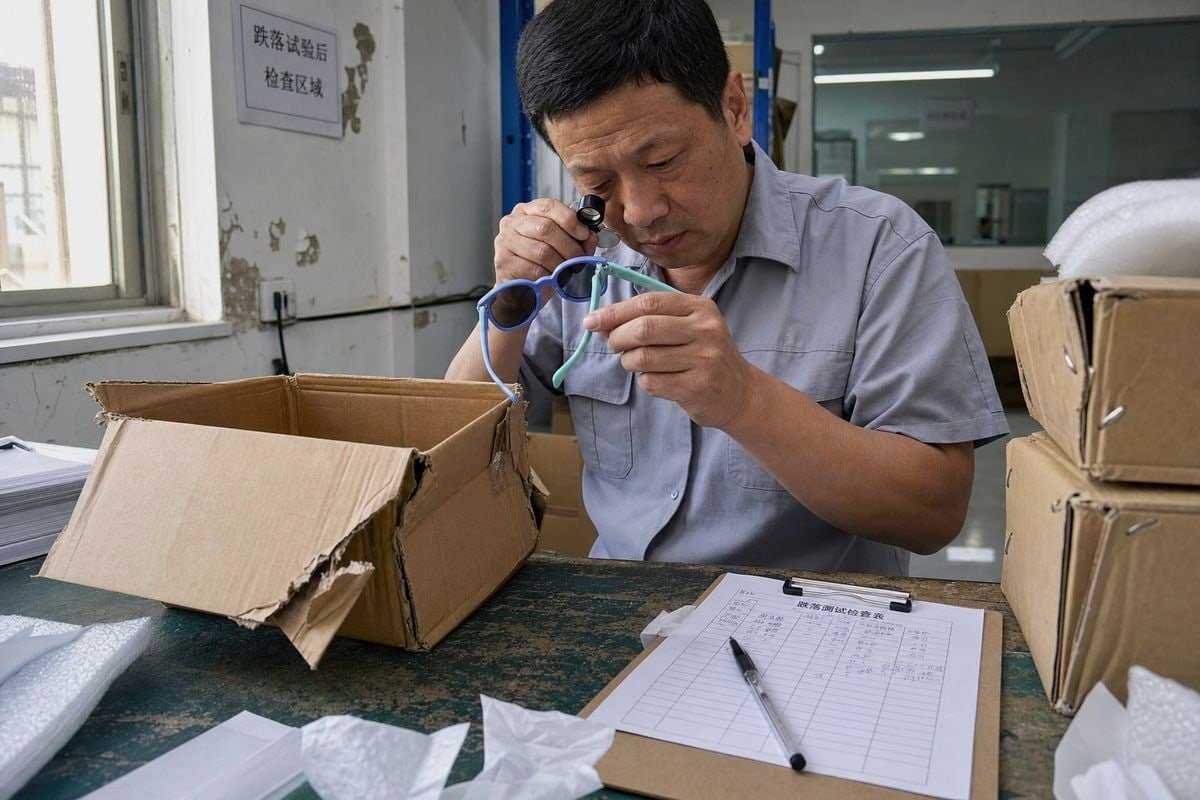
- Open every package and inspect the sunglasses inside, not just the box.
For children's sunglasses, the failure modes we look for after a drop are specific: lens scratching, lenses popping out of the frame, hinge damage, frame deformation, and decorative parts loosening. That last one deserves emphasis. After impact, we run a small-part check to confirm that no plastic window, staple, or trim piece has broken free inside the box, because a liberated small part in a child's product is a genuine hazard. Some advanced labs even use high-speed cameras to spot "bottoming out," where the sunglasses strike the outer box wall despite the cushioning. You may not need that level of transit simulation for every order, but you should never accept a supplier who only drops the box flat on its base and calls it a pass. Impact angle changes everything.
Which packaging materials and structural designs actually improve durability for children's eyewear boxes?
When we develop retail-ready packaging for our TR90 y TPEE 6 kids' frames, the trade-off we weigh most often is weight versus protection. Lighter, greener packaging saves cost, but only smart structure keeps it strong.
Choose corrugated or rigid paperboard with adequate burst strength, add snug protective packaging inserts that immobilize the frames, reinforce corners, and design the retail box to fit the master carton tightly. Structure and fit matter more than raw material thickness alone.
Material choice is only half the story. I have seen thick, heavy boxes fail because the sunglasses rattled around inside, and I have seen lightweight designs pass ISTA 3A comfortably because the insert held the frame perfectly still. Cushioning material performance depends on how well the insert matches the product's shape, not just on how soft it is.
Comparing common material and insert options
| Opción | Debilidades | Watch-Outs for Kids' Sunglasses |
|---|---|---|
| Corrugated E-flute retail box | Good crush resistance, printable, lightweight | Check burst strength and ECT grade before approving |
| Rigid paperboard gift box | Premium look, strong retail packaging integrity | Heavier; corners still need internal reinforcement |
| Molded pulp insert | Sustainable, recyclable, custom-shaped | Prone to compression creep in high humidity |
| Die-cut cardboard insert | Cheap, recyclable, easy to tool | Rough edges can micro-abrade lens coatings |
| Foam or fabric-lined cradle | Best scratch protection for mirrored lenses | Less sustainable; verify it does not shed fibers |
Design details that quietly decide the outcome
A snug fit is the single biggest durability factor. The frame should not move when you shake the closed box. Vibration during long-distance transit can cause micro-abrasion, and on mirrored gradient lenses like our sport wraparound styles, that shows up as visible hazing on the coating. Soft-touch insert surfaces prevent this. Corner protection comes next, because corners take the worst drop energy. Then closure security: a lid that pops open on impact exposes the product completely. Finally, think about the system. The retail box, the inner carton, and the master carton must fit together with minimal void space, so compression load transfers through the structure rather than through your products. Sustainability pressure is real, and I support it, but thinner paperboard doing a harder job means validation testing becomes more important, not less.
How do I confirm my manufacturer tests packaging strength before mass production and shipment?
Buyers visiting our 5S-managed workshop often ask the same smart question: how do I know this testing actually happens when I am not standing here? Fair question, and there are concrete answers.
Request written test reports referencing named standards, require pre-production packaging validation with photos or video, define pass/fail criteria in your quality agreement, and use lot-based sampling such as ISO 2859-1 during final inspection. A serious factory will welcome all four requests.
Trust is built through documents and process, not promises. Over fifteen years of OEM/ODM work with children's brands, I have learned that the buyers who get consistent quality are the ones who make testing a formal requirement, in writing, before the deposit is paid.
Una lista de verificación de verificación práctica
| Paso | Ley de seguridad de productos de consumo | Señal de alerta si falta |
|---|---|---|
| 1. Pre-production | BCT and drop test reports on the final packaging design, with named impact resistance standards | Vague claims like "our boxes are very strong" |
| Documentación | Test parameters: sample size, drop test height, platen speed, conditioning method | Reports with results but no methodology |
| 3. Evidence | Photos or video of the tests, plus post-test product inspection photos | Only pictures of intact boxes, never opened ones |
| 4. Sampling plan | ISO 2859-1 style acceptance sampling at final inspection | No defined AQL for packaging defects |
| 5. Product-level check | Lens impact verification separate from packaging tests | Treating one test as covering both |
That last row deserves a clear explanation, because it is a misconception I correct often. Drop-ball testing 7 under FDA guidance addresses the impact resistance of the lenses themselves. It says nothing about whether your carton survives a fall. These are two separate validation problems. A shipment can carry fully compliant lenses and still arrive with crushed boxes, and a bulletproof carton cannot fix a lens that fails product-level requirements. Ask your supplier to show evidence for both. Also insist that packaging tests use production-grade materials, real inserts, and real sunglasses, not empty mock-ups. In our own process, we run transit simulation checks on the first article of the final packed configuration and share the results with the buyer before we release mass production. Any factory serious about long-term partnership can do the same.
Conclusión
Crushed cartons and scratched lenses destroy launches quietly. Validate compression resistance with BCT under ISO 12048 or ASTM D642, prove drop protection with ISTA 3A, and demand documented evidence from your factory.
Más artículos que te podrían gustar
¿Buscas un socio confiable en gafas para niños?
Explore más de 800 estilos listos y soporte OEM/ODM completo adaptado a su marca.
Ponte en contacto English
  Español de México
  Deutsch
  Français
  日本語
日本語  العربية
  Português do Brasil