How to Tell If Your Child’s Sunglasses Need Replacing?

Figuring out when your child’s sunglasses need replacing is harder than it looks. On our production line in Taizhou, I have seen how quickly kids’ frames take abuse — and how quietly protection fades.
Your child’s sunglasses need replacing when lenses show scratches, haze, or peeling coatings; when frames are bent, loose, or outgrown; or when UV400 protection can no longer be verified. Inspect them monthly and replace based on condition and fit, not just age.
Below, I will walk you through each warning sign in plain terms. You will learn what to check, how to check it, and when a new pair is the safer choice.
What signs show my child's sunglasses lenses are too scratched or damaged to protect their eyes?
During a quality audit last spring, I pulled a returned sample from a distributor in Australia. The lenses looked fine from arm's length. Under our inspection lamp, the scratched lens coating told a very different story.
Replace the lenses when you see visible scratches in the line of sight, cracks or chips at the edges, cloudiness or yellowing, or peeling coatings. If vision stays blurry or distorted after a proper cleaning, the damage is permanent and the pair should go.

Lens damage matters more for children than for adults. Kids' eyes are still developing, and pediatric eye health depends on clear, consistent filtering of rayos UVA y UVB 1. A scratched or crazed lens scatters light instead of blocking it cleanly. That means more glare, more squinting, and in some cases weakened protection where the coating has been rubbed away.
The cleaning test comes first
Before you decide anything, clean the lenses properly. Use lukewarm water and a microfiber cloth. Many "damaged" lenses are just dirty. If clarity returns, you have a cleaning problem, not a replacement problem. If haze, streaks, or distortion remain, the damage sits inside the lens or its coating — and no cloth will fix that.
What each type of damage means
| Damage You See | Qué significa realmente | Replace? |
|---|---|---|
| Fine scratches outside the line of sight | Cosmetic wear, protection mostly intact | Monitor monthly |
| Scratches across the center of the lens | Distorted vision, possible coating breach | Sí |
| Cracks or chips, even small ones | Compromised impact resistance | Yes, immediately |
| Yellowish tint or cloudiness | Chemical lens degradation from sun and heat | Sí |
| Peeling or bubbling coating | UV or mirror layer failing | Sí |
| Spider-web micro-cracks (thermal crazing) | Heat damage, often from a hot car | Sí |
One more point from our factory floor: quality policarbonato 2 are naturally UV-blocking through the material itself, so light surface scratches do not always destroy UV performance. But scratches still distort vision and scatter glare, and a child who cannot see clearly will simply take the glasses off. Either way, heavily scratched lenses have stopped doing their job.
How do I know if my child's sunglasses frame no longer fits their growing face properly?
A buyer from Japan once asked me why we produce our kids' frames in so many size gradations. The answer is simple: children's faces change fast, and an outgrown frame fails quietly long before it breaks.
A frame no longer fits when the temples bow outward, red pressure marks appear on the nose or behind the ears, the glasses slip during play, or the eyes sit near the lens edges instead of the centers. Any of these signs means it is time for a new size.
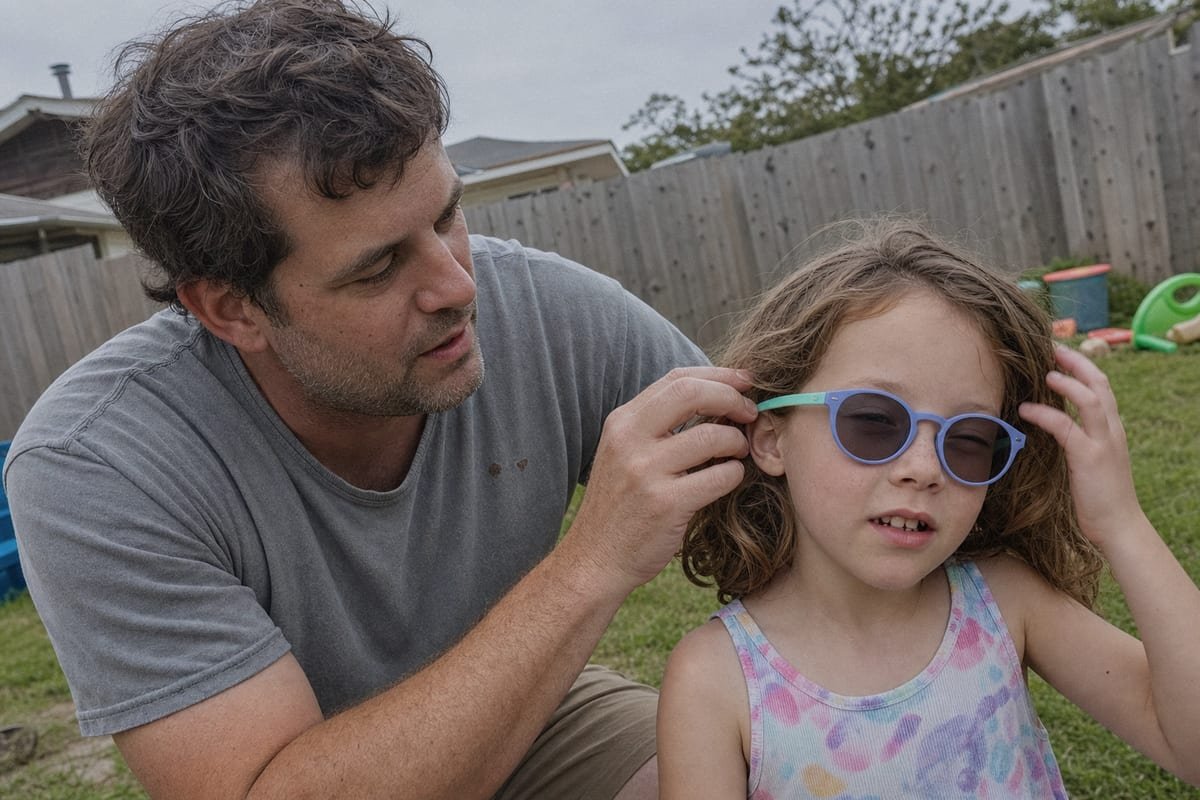
Fit is one of the most reliable replacement indicators for children's eyewear. When we design TR90 frames with flexible TPEE temples at our workshop, we build in some forgiveness — the material flexes and springs back. But no material can compensate for a head that has grown two sizes. Outgrown frames create real problems: discomfort, gaps that let sunlight leak in from the sides, and a child who refuses to wear the glasses at all.
A simple three-step fit check
- Look from above. The temples should run straight back, not splay outward like a tent. Bowed temples mean the frame is stretched beyond its intended width.
- Check the skin. After thirty minutes of wear, look for red marks on the nose bridge, temples, or behind the ears. Pressure marks signal a frame that is too small.
- Watch the eyes. The pupils should sit roughly at the center of each lens. As a child grows, their pupillary distance 3 widens. If the eyes drift toward the lens edges, the optics no longer align, which can create subtle visual distortion.
Frame damage versus outgrowing
There is a difference between a frame that is broken and a frame that is outgrown. Stretched hinges, a cracked bridge, or warped material that causes a crooked fit are frame durability failures. A snug-but-intact frame on a bigger face is a sizing issue. Both end the same way — replacement — but knowing the cause helps you choose the next pair better. And if the plastic feels sticky or tacky, the polymer itself is breaking down, which can irritate skin. That pair is done, regardless of size.
Can worn-out UV protection in old sunglasses put my child's eyes at risk without me noticing?
Here is the uncomfortable trade-off I explain to new brand buyers: dark tint and UV protection are two separate things. A lens can look perfectly dark while its invisible UV defense has quietly degraded.
Yes. UV protection can degrade without any visible change, especially in cheap tinted lenses where the coating wears off over 12 to 24 months of sun exposure. A dark lens without working UV filtering is worse than no sunglasses, because dilated pupils admit more harmful rays.
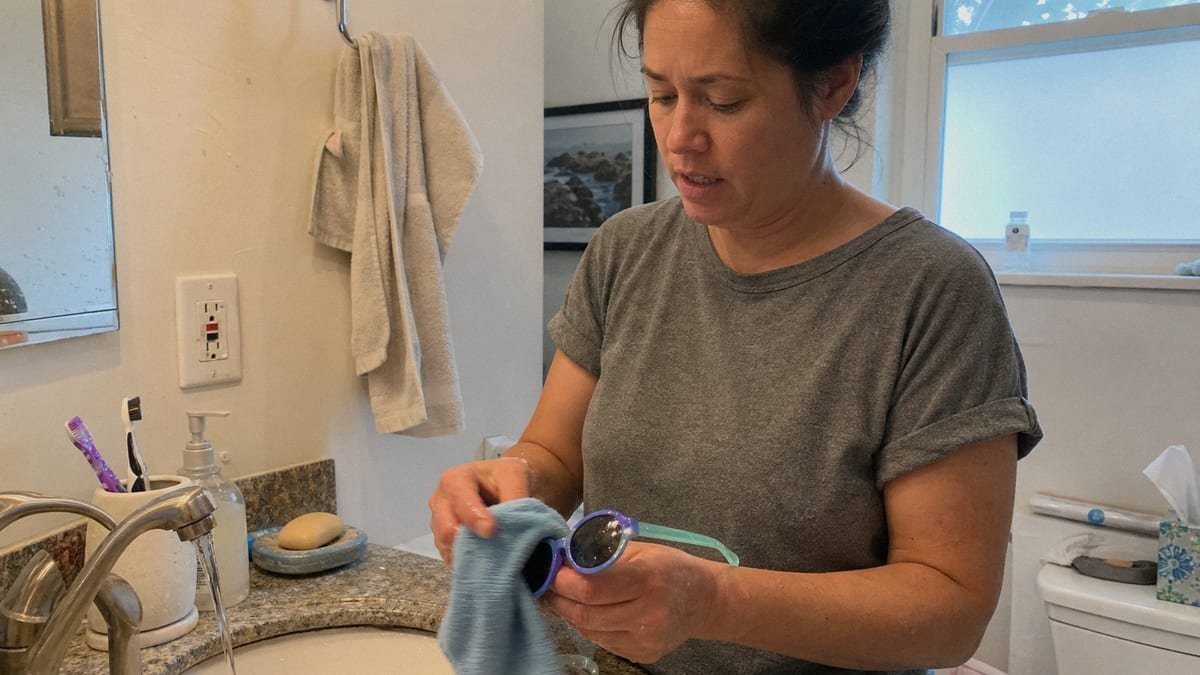
This is the risk that worries me most, because parents cannot see it. Tint is cosmetic. UV filtering is chemical. When a low-quality coating breaks down, the lens stays dark, the child's pupils stay dilated behind it, and more UVA and UVB rays reach the developing retina. That is the exact opposite of protection.
Why lens material matters here
Not all lenses degrade the same way. This is why we specify lens material carefully for every OEM order we produce.
| Lens Type | How UV Protection Works | Degradation Risk |
|---|---|---|
| Lentes de policarbonato | UV blocking is built into the material itself | Very low — protection lasts the life of the lens |
| Quality coated CR-39 4 or acrylic | UV layer bonded to the lens surface | Moderate — fails if coating scratches or peels |
| Cheap tinted plastic | Thin sprayed-on coating, sometimes none | High — may fade within one to two seasons |
How to verify protection you cannot see
You have a few options. Some parents try home checks, like shining a UV flashlight through the lens onto a banknote watermark. These tests are interesting but not conclusive. The reliable route is an optical shop, where a UV transmission meter takes seconds and is usually free. The same visit can include polarized lens testing if the pair claims glare reduction from a polarizing film.
My practical rule: if you cannot verify Protección UV400 — meaning the lens blocks wavelengths up to 400 nanometers — treat the pair as unprotected. And when you buy the next pair, look for a clear UV400 or 100% UVA/UVB label, and ideally compliance with recognized standards such as ANSI Z80.3 certification 5 for nonprescription sunglasses. Newer lenses also increasingly address High-Energy Visible 6 blue-violet light, which older UV-only lenses ignore. For a child who will wear these glasses for years of outdoor play, that verification is worth five minutes of your time.
How often should I be replacing my child's sunglasses to keep up with their active lifestyle?
Fifteen years of making children's eyewear has taught me one lesson about replacement schedules: there is no single magic number. Condition and fit beat the calendar every time — but the calendar still helps.
There is no fixed rule, but inspect kids' sunglasses monthly and expect to replace heavily used pairs every 6 to 12 months. Replace immediately whenever you find lens damage, a poor fit, frame failure, or unverifiable UV protection — regardless of the pair's age.
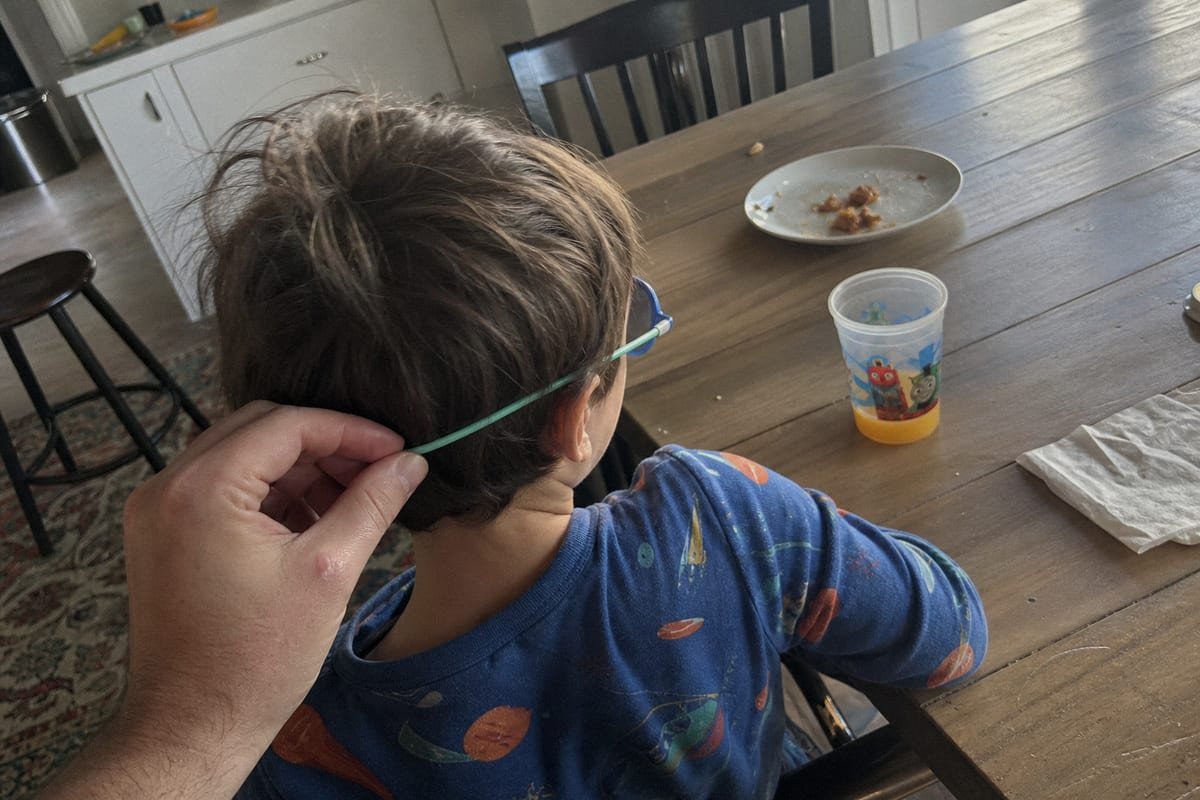
Some consumer guides push a strict six-month replacement cycle for children. Others say replace only when you see damage. Both views have merit, and I think the honest answer sits in between. A pair worn daily at the beach, dropped on concrete, and stuffed into backpacks will wear out far faster than a pair used on weekend walks. Impact resistance standards 7 give a frame and lens a fighting chance, but no pair is indestructible.
A realistic replacement timeline by usage
| Patrón de uso | Inspection Frequency | Typical Replacement Window |
|---|---|---|
| Daily outdoor use (sports, beach, playground) | Monthly | Every 6–12 months |
| Regular but moderate use | Every 2 months | Every 12–18 months |
| Occasional use, stored in a case | Seasonally | When outgrown or damaged |
| Any pair after a hard impact or hot-car exposure | Immediately | Replace if crazing, cracks, or warping appear |
Watch the child, not just the glasses
Children rarely announce vision problems. They adapt, or they quit wearing the glasses. So your best inspection tool is behavior. Persistent squinting in bright light, frequent eye rubbing, headaches after outdoor play, or a child who constantly pulls the glasses off — these are all replacement signals, even when the pair looks fine. When we develop new styles at our factory, comfort is the priority for exactly this reason: an uncomfortable pair delivers zero protection because it stays in the bag.
One more practical tip. Growth itself is a replacement trigger. Between roughly ages two and ten, most children move through two or three frame sizes. Budget for that. A well-fitting, properly protective pair that gets worn every day is a far better investment than a premium pair that pinches and gets abandoned.
Conclusión
Damaged pairs protect no one, and kids will not tell you when protection fails. Check lenses, frames, fit, and UV status monthly — and replace on condition, not sentiment.
Here is the short version of everything above. If the lenses are scratched, cloudy, or peeling, replace them. If the frame is bent, sticky, or outgrown, replace it. If you cannot verify UV400 protection, replace the pair. When you buy next, choose verified 100% UVA/UVB filtering, shatter-resistant polycarbonate lenses, and a flexible, comfortable frame your child will actually wear. From our side of the industry, I can tell you that the best children's sunglasses are not the ones that survive forever — they are the ones that fit well, protect fully, and get worn every single sunny day until it is genuinely time for the next pair.
Notas al pie
1. WHO explains UV radiation health effects relevant to eye protection needs. ↩︎
2. Background on polycarbonate material properties supporting UV-blocking lens claims. ↩︎
3. Wikipedia clarifies the optical concept used to explain lens-eye alignment. ↩︎
4. Background on CR-39 plastic lens material referenced in the comparison table. ↩︎
5. ANSI is the standards body defining nonprescription sunglasses safety requirements. ↩︎
6. Authoritative medical source from the American Academy of Ophthalmology explaining HEV light and eye health. ↩︎
7. CDC resource on eye safety standards relevant to impact-resistant protective eyewear. ↩︎
Más artículos que te podrían gustar
1 de agosto de 2026
¿Debería la fábrica encargarse del embalaje y etiquetado de las gafas de sol para niños, o utilizar un proveedor designado?

1 de agosto de 2026
Almacén propio vs. Cumplimiento directo del proveedor: ¿Qué reduce los costos de devolución para las marcas de gafas de sol para niños?

1 de agosto de 2026
Directo al almacén del puerto o staging en el extranjero: ¿Cuál ahorra más en el envío de gafas de sol para niños?
¿Buscas un socio confiable en gafas para niños?
Explore más de 800 estilos listos y soporte OEM/ODM completo adaptado a su marca.
Ponte en contacto English
  Español de México
  Deutsch
  Français
  日本語
日本語  العربية
  Português do Brasil