¿Cómo elegir el tamaño de las gafas de sol para niños por edad y circunferencia de la cabeza?
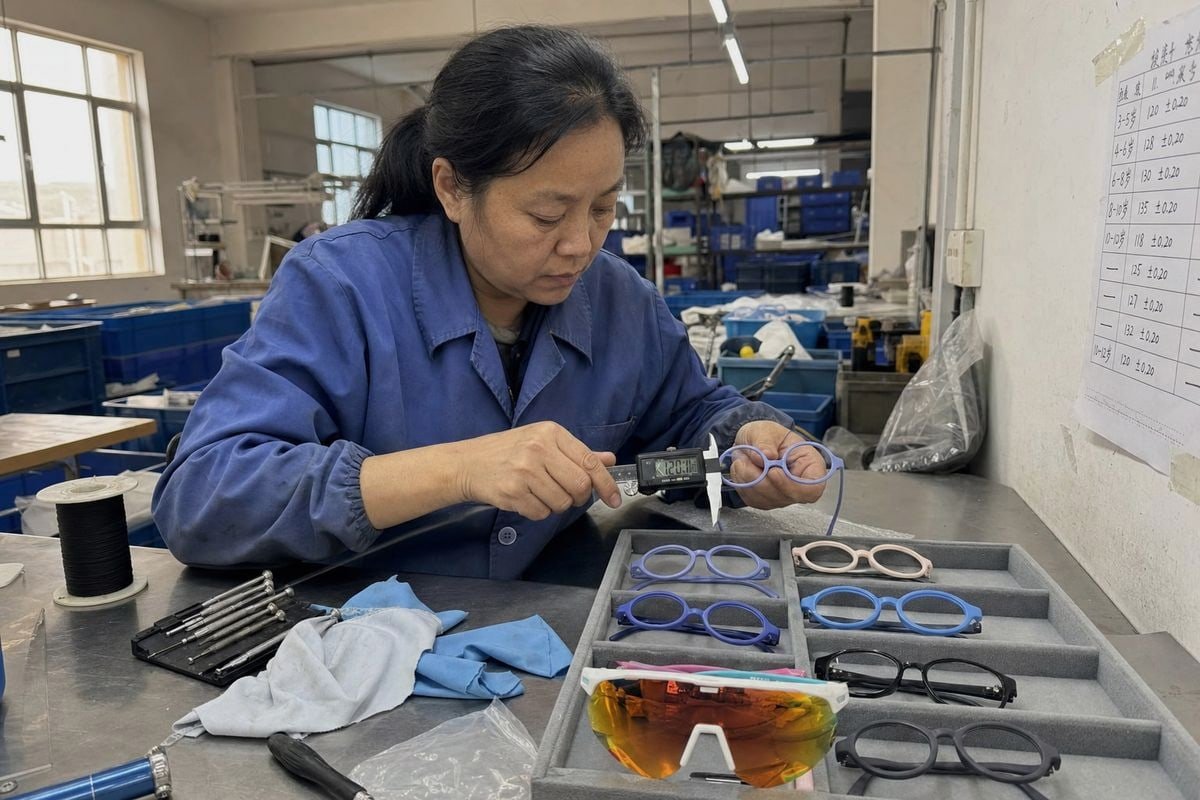
Elegir el tamaño de las gafas de sol para niños por edad y circunferencia de la cabeza 1 suena simple hasta que un lote sale “demasiado apretado”. En nuestra línea de producción, vemos cómo un milímetro equivocado arruina un lanzamiento.
Para elegir el tamaño de las gafas de sol para niños, use bandas de edad para reducir el rango, luego confirme con la circunferencia de la cabeza y el ancho de la cara de sien a sien. Compare esos números con el ancho del marco, el ancho de la lente, el ancho del puente y la longitud de la patilla. Las medidas siempre anulan la edad cuando las dos difieren.
[Gráficos de edad](https://okayeyewear.com/what-age-ranges-size-ratios-choose-kids-sunglasses/) son un punto de partida, no el final. A continuación, detallo los números exactos, las comprobaciones de ajuste y los pasos de abastecimiento que hacen que el dimensionamiento sea confiable.
¿Qué medidas de circunferencia de la cabeza debo usar para cada grupo de edad de niños?
Un comprador de Australia me preguntó una vez por qué sus probadores de 4 años no podían usar marcos etiquetados como "3-8 años". Nuestros datos de ajuste en la fábrica de Taizhou respondieron: misma edad, cabezas muy diferentes.
Usa aproximadamente 44–48 cm de circunferencia de cabeza para 6–24 meses, 48–52 cm para 2–5 años, 50–54 cm para 6–10 años y 53–56 cm para preadolescentes y adolescentes. La circunferencia de la cabeza es más importante para los bebés, cuyos puentes nasales aún no pueden soportar monturas estándar.
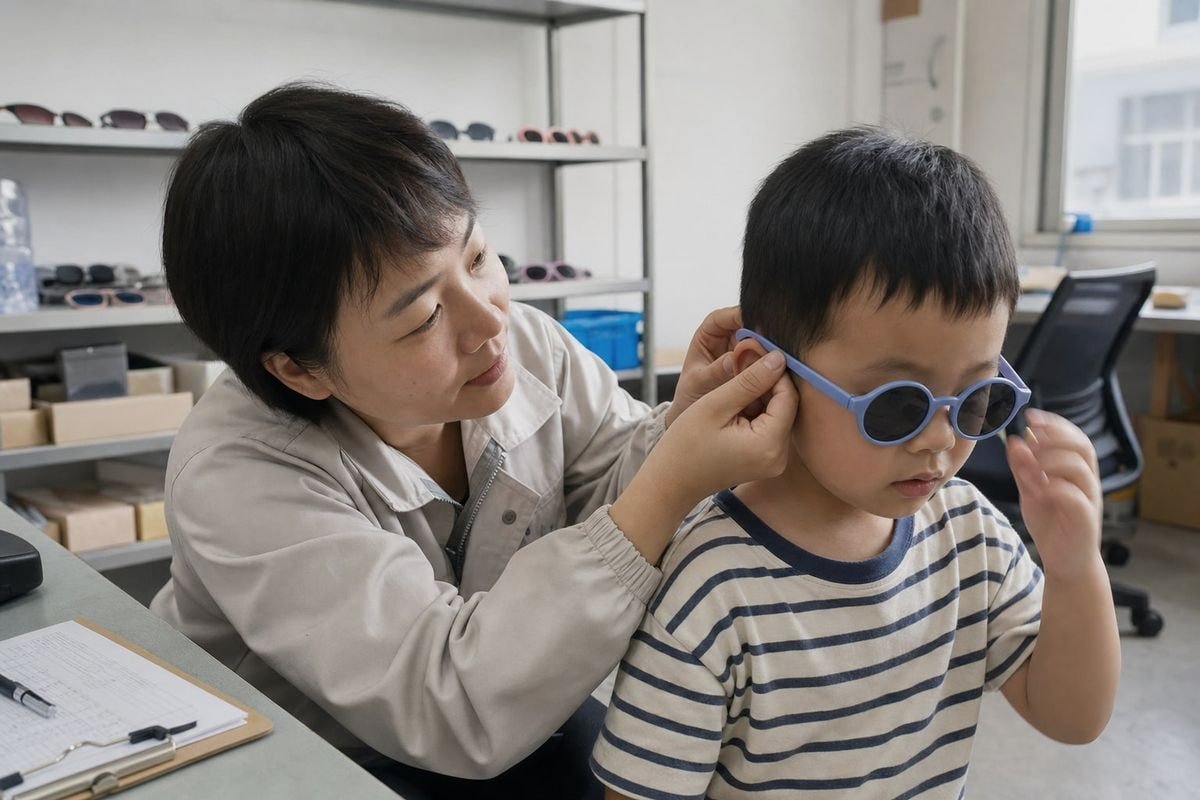
La circunferencia de la cabeza es la métrica más confiable para bebés menores de 24 meses. Sus puentes nasales son planos y subdesarrollados, por lo que el marco no puede anclarse en la nariz como lo hacen las gafas para adultos. En cambio, el ajuste depende de la tensión de la envoltura de la cabeza y, muy a menudo, de una correa ajustable para la cabeza. A medida que los niños crecen más allá de los dos años, el ancho de la cara a través de las sienes se convierte en el número más práctico, porque ahí es donde realmente se asientan los brazos del marco.
Una referencia práctica de edad a medida
Aquí está el gráfico sintetizado que compartimos con los compradores de marcas. Combina la circunferencia de la cabeza con los números del marco que importan para el pedido.
| Grupo de edad | Circunferencia de la cabeza (aprox.) | Ancho de la lente | Ancho del marco | Longitud de la patilla 2 |
|---|---|---|---|---|
| 0–1 años | 44–47 cm | 35–37 mm | 110–115 mm | 105–110 mm |
| 1–2.5 años | 46–49 cm | 37–39 mm | 115–120 mm | 105–115 mm |
| 5–4 años | 48–51 cm | 40–42 mm | 120–128 mm | 115–120 mm |
| 4–7 años | 50–53 cm | 43–45 mm | 125–132 mm | 118–125 mm |
| 7–10 años | 51–54 cm | 45–47 mm | 130–138 mm | 122–128 mm |
| 10–16 años | 53–56 cm | 47–52 mm | 135–145 mm | 128–140 mm |
Dos advertencias importantes. Primero, muchas tablas publicadas provienen de dimensiones de marcos ópticos para niños, no específicamente de gafas de sol, por lo que siempre verifique con la hoja de especificaciones real de las gafas de sol. Segundo, los niños experimentan estirones de crecimiento de manera desigual. Un niño alto de 5 años puede necesitar la banda de 7 a 10 años. Es por eso que les decimos a los compradores: la edad reduce el rango; la medida confirma el ajuste.
¿Cómo sé si el tamaño del cuadro se ajustará cómodamente y de forma segura a mi hijo?
Durante las pruebas de ajuste para un nuevo estilo de montura redonda, el modelo azul lavanda y verde menta en nuestro catálogo actual, aprendimos que los fallos de comodidad aparecen en los primeros sesenta segundos de uso.
Un marco se ajusta cuando su ancho total coincide con el ancho de la cara del niño de sien a sien, el puente queda al ras sin deslizarse, la curva de la patilla descansa justo detrás de la oreja y las gafas de sol permanecen en su lugar cuando el niño mira hacia abajo o sacude la cabeza.
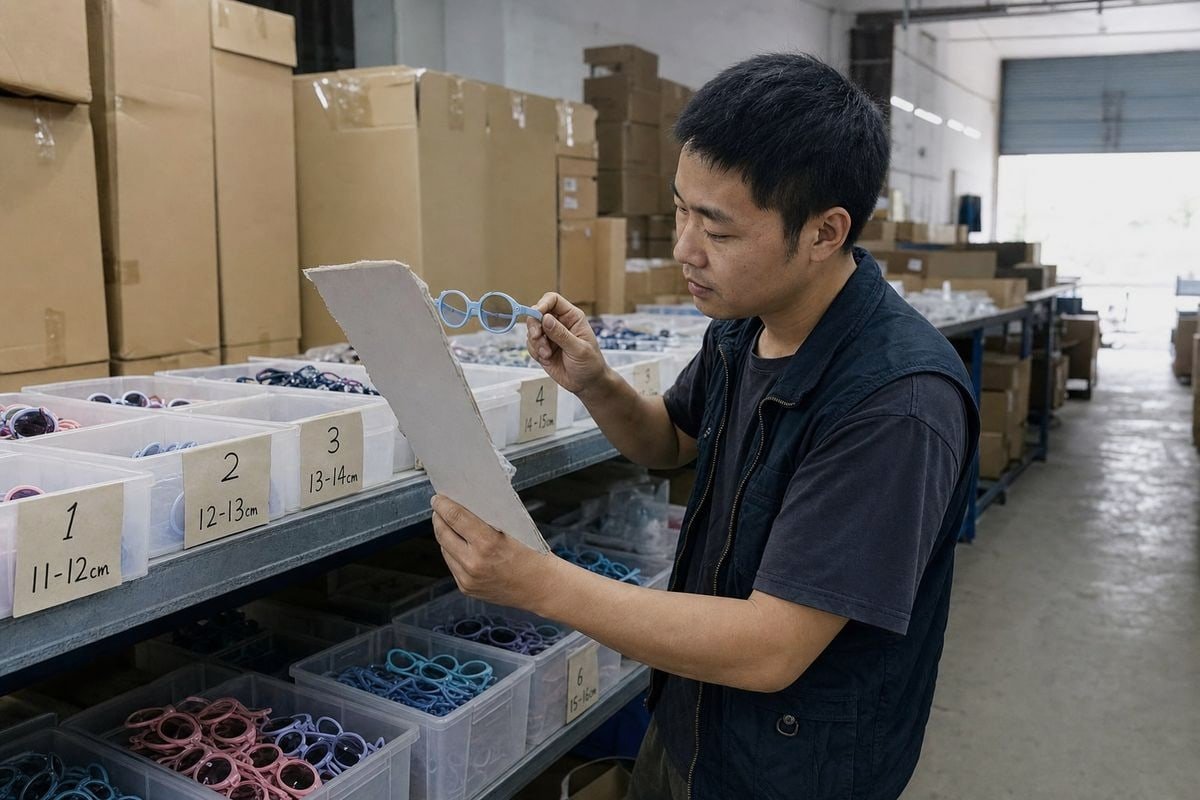
El ajuste se reduce a cuatro medidas que trabajan juntas. Si falla una, todo el par falla.
Los cuatro números que deciden el ajuste
Ancho de montura es el ancho frontal total. Debe igualar el ancho de la cara del niño a través de las sienes, medido justo debajo de los ojos y por encima de los pómulos. Si el niño aún no usa gafas, agregue aproximadamente 5-10 mm al ancho de la cara medido al estimar. Demasiado ancho, y el marco se desliza; demasiado estrecho, y los brazos se curvan hacia afuera y pellizcan.
Ancho del puente es el principal determinante del ajuste vertical. Para los niños, los puentes cómodos suelen estar entre 11 y 19 mm, y la mayoría de los niños se encuentran en la zona de 14-18 mm. Un puente demasiado ancho permite que las lentes queden demasiado bajas, lo que expone los ojos a los rayos UV superiores, lo que anula el propósito de Protección UV400 3 por completo.
Longitud de la patilla debe colocar la curva de la patilla precisamente detrás de la oreja. Esa curva proporciona la palanca que mantiene los marcos seguros durante la carrera y el salto. Los niños también tienen más prominentes huesos mastoides 4 detrás de la oreja, por lo que diseñamos puntas de patilla de cero presión para prevenir dolores de cabeza tensionales.
Ancho de lente impulsa la cobertura. Los tamaños de ojos pediátricos generalmente caen entre 31 y 53 mm; úselo como una verificación de cordura.
Señales rápidas de un mal ajuste
| Síntoma | Causa probable | Solucionar |
|---|---|---|
| Se desliza por la nariz | Puente demasiado ancho o montura demasiado grande | Ancho de puente más pequeño o cinta para la cabeza |
| Marcas rojas en las sienes | Ancho de montura demasiado estrecho | Subir una banda de ancho de montura |
| La montura descansa sobre las mejillas | Insuficiente espacio para los pómulos | Elegir una montura con una medida B más alta |
| Se cae al mirar hacia abajo | Doblado de la sien en la posición incorrecta | Ajustar o alargar la longitud de la sien |
| Las lentes se empañan rápidamente | La parte inferior de la montura toca la piel | Más espacio para los pómulos |
Un punto más que los compradores a menudo omiten: incluso las lentes sin graduación deben alinear sus centros ópticos cerca de la distancia interpupilar del niño. Una gran discrepancia crea un efecto de prisma 5 que fuerza los ojos jóvenes durante el uso prolongado.
¿Qué materiales de montura me ayudan a conseguir un mejor ajuste en diferentes formas de cabeza?
Existe una compensación real que sopesamos en cada molde nuevo: una montura más rígida mantiene su forma en los estantes, pero una montura flexible se adapta a más formas de cabeza por SKU. Después de quince años fabricando gafas para niños, casi siempre elegimos la flexibilidad.
Marcos flexibles de TPEE y marcos de TR90 se adaptan a la más amplia gama de formas de cabeza porque se flexionan hacia afuera bajo tensión sin presionar fuertemente las sienes. Este ajuste por tensión acomoda superposiciones de tamaño entre grupos de edad, reduce la rotura y evita la presión sobre los huesos mastoides sensibles de los niños.
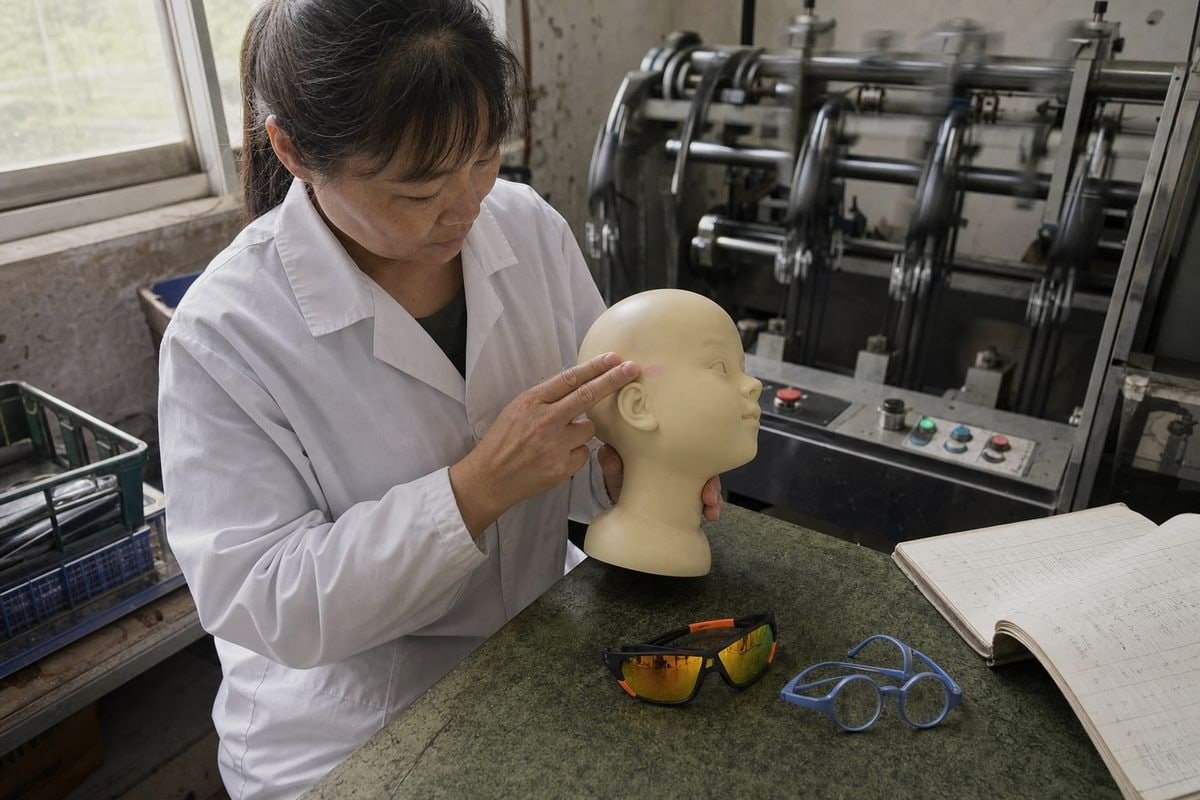
La elección del material es realmente una estrategia de ajuste, no solo una decisión de durabilidad. Una montura rígida se adapta a una banda estrecha de anchos de cabeza. Una flexible cubre un rango. Para las marcas que venden en línea, donde nadie puede probar antes de comprar, ese rango reduce directamente las devoluciones.
Cómo se comparan los materiales principales
| Material | Flexibilidad | Peso | Mejor para | Ventaja de ajuste |
|---|---|---|---|---|
| TPEE | Muy alta, casi irrompible | Muy ligero | Bebés, niños pequeños | El ajuste de tensión absorbe la superposición de tamaños; seguro si se mastica o se pisa |
| TR90 | Alto, flexión de memoria | Ligero | De preescolar a adolescente | Vuelve a su forma; uso cómodo durante todo el día |
| Frente rígido, brazos blandos | Frente estructurado, brazos blandos | Ligero | Todas las edades | Plataforma de lente estable con agarre suave y sin presión |
| Barato, fácil de colorear | Baja | Medio | Adolescentes mayores, adultos | Barato, pero con una ventana de ajuste estrecha y mayor rotura |
En nuestro taller, la combinación de frente de TR90 con patillas de TPEE es la construcción más solicitada por las ópticas y las marcas infantiles. El frente de TR90 mantiene las lentes estables —importante al combinarlas con lentes resistentes a impactos policarbonato 6 o polarizadas— mientras que las patillas de TPEE se flexionan suavemente alrededor de cabezas más anchas.
Opciones de materiales para uso activo y deportivo
Los estilos de gafas de escudo deportivo, como nuestros modelos envolventes de lente única con lentes degradadas espejadas, añaden otra consideración: la compatibilidad con el casco. Los niños que usan cascos de bicicleta o esquí necesitan brazos de patilla ultrafinos y planos que se deslicen debajo del sistema de retención del casco sin crear puntos de presión. Los materiales flexibles hacen esto posible sin aflojar el ajuste diario. Para los bebés, combinamos monturas blandas de TPEE con una cinta para la cabeza ajustable, porque las cintas hacen el trabajo de anclaje que el puente nasal subdesarrollado no puede.
¿Cómo puedo crear una tabla de tallas fiable al obtener gafas de sol para niños de un fabricante?
Al principio de mi carrera de exportación, dejé que un cliente publicara una etiqueta de tamaño solo por edad en su embalaje. La tasa de devolución nos enseñó una lección a ambos, y reconstruimos su tabla basándonos en medidas reales de montura en una temporada.
Crea tu tabla de tallas emparejando cada grupo de edad con las medidas de montura verificadas — ancho de montura, ancho de lente, ancho de puente y longitud de patilla — extraídas de las hojas de especificaciones de tu fabricante. Luego, valida con muestras físicas en niños reales antes de finalizar el embalaje y las páginas de producto.
A un gráfico de tamaño fiable se construye en pasos, no se copia de un competidor. Aquí está el proceso que seguimos con los compradores.
Un proceso de abastecimiento de cinco pasos
- Solicitar hojas de especificaciones completas, no solo etiquetas de edad. Cada estilo debe indicar el ancho de la lente, el ancho del puente, el ancho de la montura y la longitud de la patilla. Si un proveedor solo puede decirle "se adapta a niños de 3 a 8 años", eso es una señal de advertencia. Los rangos de edad amplios sin medidas ocultan problemas de ajuste.
- Muestrear en todo el rango de tamaños. Mantenemos alrededor de 800 estilos existentes en nuestro catálogo precisamente para que las marcas puedan probar múltiples tamaños y formas sin pagar por moldes nuevos. Pida muestras de al menos dos bandas de tamaño adyacentes.
- Realice una prueba de uso con niños reales. Ponga muestras en niños en los extremos de cada banda de edad. Verifique los cuatro puntos de ajuste: ancho de la patilla, asiento del puente, posición de la curva de la patilla y espacio para los pómulos. Observe el empañamiento y el deslizamiento durante el juego.
- Bloquea tu tabla con la edad y la medida. Publica la edad como atajo de compra, luego enumera el ancho de la montura y la longitud de las patillas para que los padres atentos puedan verificar. Esta tabla de dos capas coincide con la forma en que las guías de mejor rendimiento presentan el tamaño.
- Confirma las especificaciones de seguridad junto con el tamaño. El ajuste y la protección van de la mano. Verifica la protección UV400 en cada lente, confirma policarbonato resistente a impactos donde el mercado lo requiera y asegúrate de que Las afirmaciones de durabilidad cumplen una doble función. Prometen seguridad y prometen que el padre no necesitará volver a comprar en dos semanas. Redacciones como "se dobla, no se rompe" o "hecho para la vida en el patio de recreo" traducen la resistencia a impactos en lenguaje cotidiano. Si sus lentes son 7 cumplan con el uso previsto.
Algunos compradores se oponen: "Las etiquetas solo de edad son más sencillas para los compradores". Cierto, y no eliminamos las etiquetas de edad. Superponemos las medidas debajo de ellas. Otros temen que las tablas basadas en medidas asusten a los compradores ocasionales. En la práctica, sucede lo contrario: los números claros reducen las conjeturas y las devoluciones disminuyen. Como socio OEM/ODM, también imprimimos la tabla finalizada directamente en el embalaje personalizado, por lo que la guía de tallas se envía con cada unidad lista para la venta. Y dado que los rostros de los niños cambian rápidamente, aconsejamos a las marcas que recuerden a los clientes que vuelvan a medir cada temporada en lugar de confiar en las afirmaciones de "crecer conmigo".
Conclusión
El tamaño incorrecto significa devoluciones, quejas y pérdida de confianza. La solución es simple: usa la edad para acotar, la medida para confirmar y valida las muestras antes del lanzamiento. Así es como nuestra fábrica ayuda a las marcas a dimensionar correctamente las gafas de sol para niños.
Notas al pie
<span
Más artículos que te podrían gustar



¿Buscas un socio confiable en gafas para niños?
Explore más de 800 estilos listos y soporte OEM/ODM completo adaptado a su marca.
Ponte en contacto English
  Español de México
  Deutsch
  Français
  日本語
日本語  العربية
  Português do Brasil