¿El uso frecuente acorta la vida útil de las monturas de gafas de sol para niños?
Los compradores me hacen esta pregunta sobre las monturas de gafas de sol para niños casi en cada feria comercial. Su verdadero temor son las devoluciones: monturas que se aflojan, se rompen o ’mueren“ después de un verano de uso diario.
Sí, el uso frecuente acorta la vida útil de las monturas de gafas de sol para niños, pero solo modestamente por sí solo. El uso diario fatiga las bisagras y las patillas, sin embargo, el manejo brusco, la mala elección de materiales y el rápido crecimiento de la cabeza son las razones principales por las que las monturas de los niños fallan o dejan de ajustarse en uno o dos años.
Así que la respuesta es matizada. Permítanme desglosar lo que realmente le sucede a una montura bajo el uso diario, y lo que usted puede controlar como comprador.
¿Cuánto tiempo deberían durar realmente las monturas de gafas de sol duraderas para niños con el uso diario?
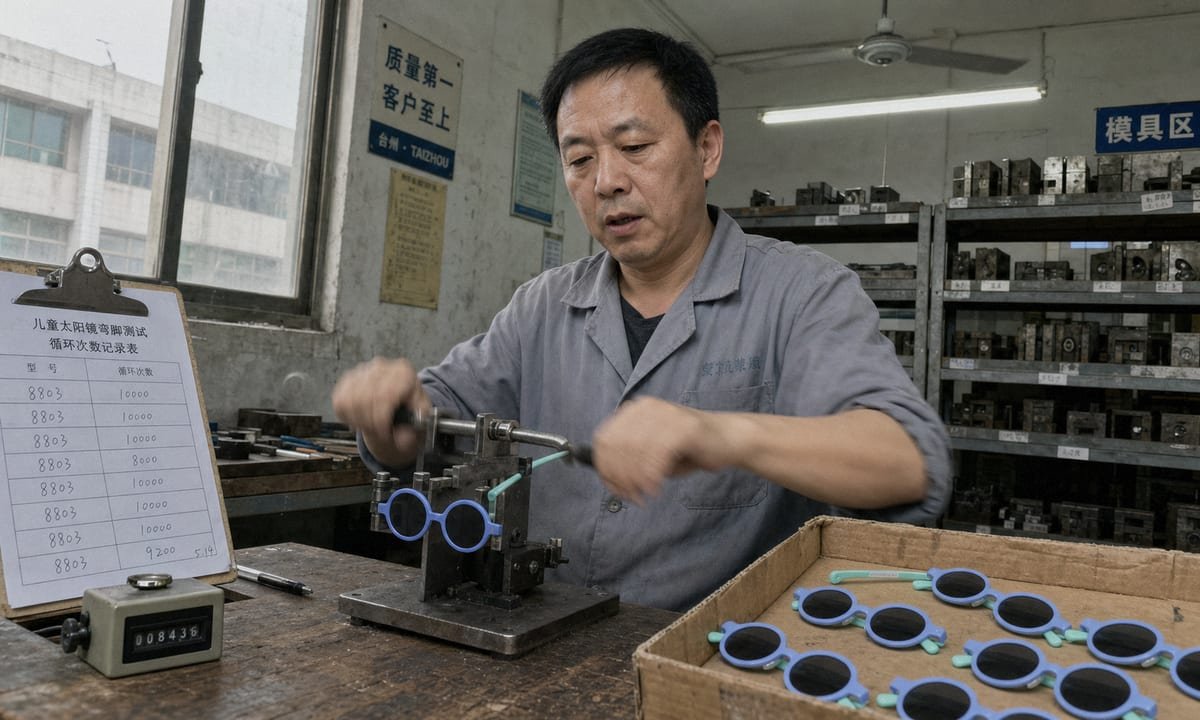
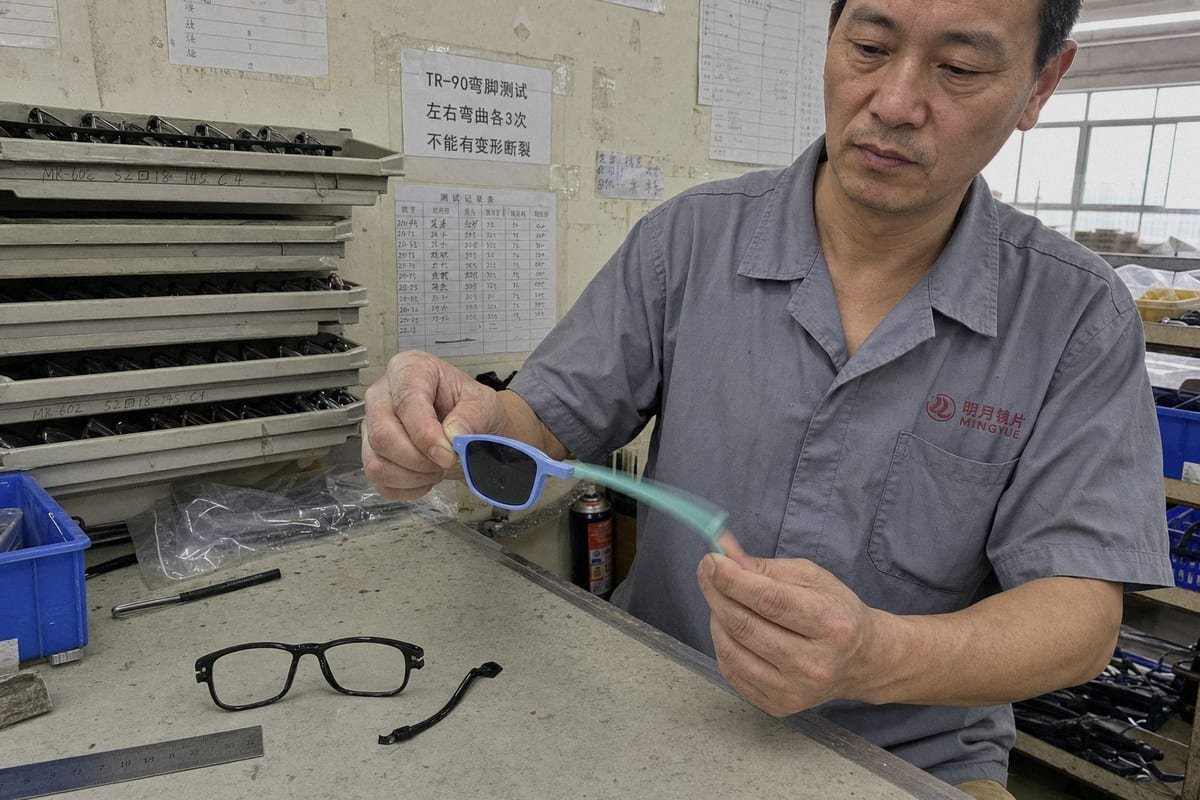
En nuestra línea de producción en Taizhou, probamos la flexión de las patillas miles de ciclos antes de que un estilo se envíe. Esa prueba existe porque "cuánto durará" es la pregunta detrás de cada orden de compra.
Las monturas de gafas de sol para niños bien hechas suelen durar de uno a tres años con el uso diario, mientras que las de plástico económicas a menudo fallan en menos de un año. En la práctica, los estirones y los cambios de ajuste suelen poner fin a la vida útil de una montura antes de que el material en sí se degrade.
La respuesta honesta tiene dos relojes funcionando al mismo tiempo. Un reloj es mecánico: cuánto tiempo hasta que el desgaste diario degrade la montura. El otro reloj es biológico: cuánto tiempo hasta que el niño supere el ajuste. Para la mayoría de los niños, el segundo reloj corre más rápido.
Las dos vidas útiles de una montura para niños
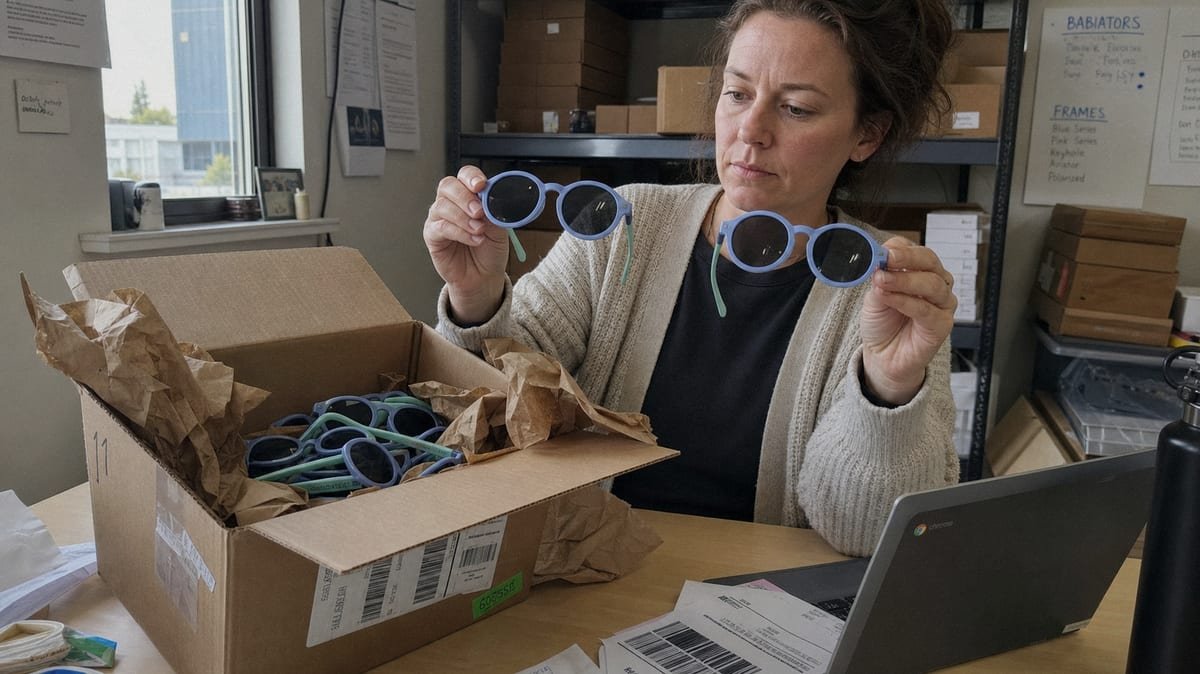
El uso frecuente crea un estrés real. Cada vez que un niño se pone y se quita las gafas de sol, las patillas se flexionan hacia afuera. Durante cientos de ciclos, esto puede aflojar los tornillos de las bisagras, estirar los brazos de las patillas y causar fatiga del material de la montura en plásticos más baratos. El uso diario al aire libre también añade exposición al sol, sudor, arena y la ocasional caída sobre el pavimento. 1 Pero esto es lo que vemos cuando las muestras desgastadas regresan de nuestros clientes en el extranjero: la mayoría de las monturas están estructuralmente intactas. Se deslizan por la nariz porque la cabeza del niño creció. El puente de la nariz se ensanchó. La distancia de patilla a oreja cambió. La montura parece "desgastada" para un padre, pero en realidad está "superada".
Nivel de calidad de la montura"
| Vida útil típica con uso diario | Modo de fallo habitual | Plástico rígido económico |
|---|---|---|
| Patillas rotas, aros agrietados | 6–12 meses | Monturas de inyección de gama media |
| 12–18 meses | Bisagras flojas, ajuste estirado | Monturas flexibles de TPEE / TR90 |
| Superadas antes de que falle el material | 1–3 años | Para una marca, la conclusión práctica es esta: construya mensajes de producto en torno a un ciclo de reemplazo de uno a dos años. Los padres aceptan el reemplazo impulsado por el crecimiento. Lo que no aceptan es una montura que se agrieta en el segundo mes. La calidad determina qué historia cuenta su cliente. |
La mayoría de las monturas para niños se vuelven inutilizables debido a cambios en el ajuste antes de que el material realmente falle.
¿Qué materiales de montura aguantan mejor cuando los niños de mis clientes usan gafas de sol todos los días?
, rota limpiamente en la bisagra, y una montura flexible, todavía funcionando después de dos veranos. La elección del material explicó la diferencia. montura de acetato 2, La selección del material es donde el uso diario se convierte en un problema o en una cuestión irrelevante. Los niños no manejan las gafas con delicadeza. Se quitan las gafas de sol con una mano. Las meten en las mochilas. Se duermen usándolas. Un material que tolera la torsión durará más que un material más rígido cada vez, incluso si ambos se ven idénticos en un estante.
Flexible TPEE y TR90 son los materiales de montura más duraderos para el uso diario de los niños. Ambos se doblan bajo tensión y vuelven a su forma, resistiendo la fatiga del material de la montura. Las monturas rígidas de PC o acetato se agrietan antes, mientras que el policarbonato irrompible sigue siendo la opción más segura para las lentes.
Por qué la flexibilidad supera a la dureza en los niños.
Los plásticos rígidos resisten bien los arañazos, pero concentran el estrés en la bisagra y el puente. Cuando un niño se sienta sobre ellos, se rompen. Los flexibles
absorben la misma fuerza deformándose y volviendo a su forma. El TR90, un termoplástico ligero, ofrece una propiedad de memoria de flexión similar con una sensación ligeramente más firme, por lo que a menudo construimos frentes de TR90 con patillas de TPEE: el frente mantiene las lentes estables mientras que las patillas soportan la flexión diaria. Monturas de TPEE 3 Recuperación de la flexión.
| Material | Mejor uso para niños | Peso | Excelente: se dobla 180° y se recupera |
|---|---|---|---|
| TPEE | Niños pequeños y niños pequeños activos | Muy ligero | Muy buena: memoria de flexión |
| TR90 | Niños mayores, monturas ópticas y de sol | Ligero | Pobre: quebradizo bajo torsión |
| Montura de PC estándar | Solo líneas económicas | Ligero | Moderado: puede agrietarse en las bisagras |
| Acetato | Estilos de moda, usuarios cuidadosos | Más pesado | No olvide las lentes y los recubrimientos |
Las monturas son solo la mitad de la historia de la durabilidad.
las lentes de policarbonato irrompibles protegen los ojos durante las caídas, y un recubrimiento resistente a los arañazos evita que el manejo diario empañe la visión. Construcción de montura TR90 4 deben incorporarse en el propio material de la lente, no aplicarse como una fina capa superficial, para que el uso frecuente no degrade la protección real. Cuando desarrollamos especificaciones de lentes personalizadas para un cliente, tratamos estos tres puntos como innegociables para los niños. Protección UV400 5 Para la durabilidad de las gafas para niños pequeños específicamente, las construcciones más suaves y completamente flexibles importan aún más, porque los usuarios más jóvenes mastican, doblan y dejan caer las monturas constantemente. Los materiales flexibles y respetuosos con el medio ambiente manejan este abuso mientras se mantienen seguros contra las caras pequeñas.
Para la durabilidad de las gafas para niños pequeños específicamente, las construcciones más suaves y totalmente flexibles importan aún más, porque los más pequeños mastican, doblan y dejan caer las monturas constantemente. Los materiales flexibles y ecológicos soportan este abuso y al mismo tiempo son seguros para las caritas.
¿Qué puntos de tensión debo revisar para ver si el desgaste frecuente está dañando los cuadros?
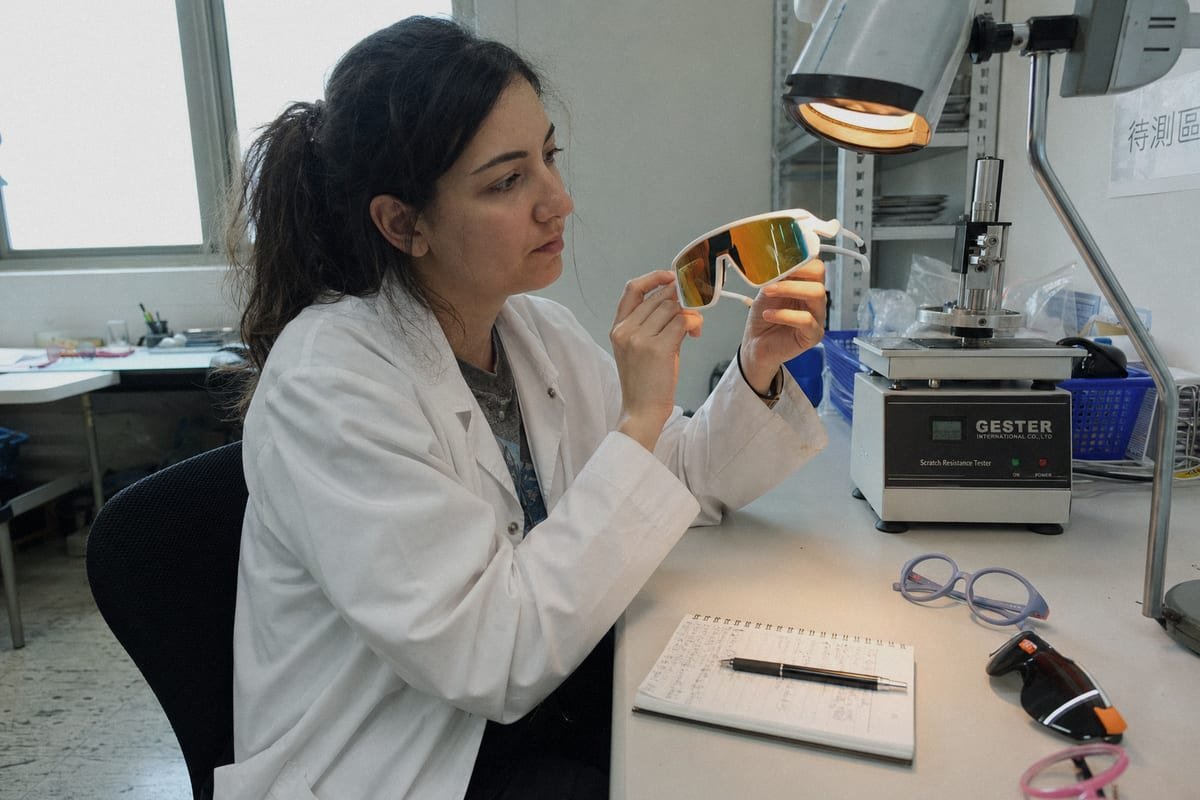
Durante la recepción Auditorías de control de calidad 6 en nuestro taller gestionado por 5S, inspeccionamos las mismas cinco zonas en cada lote. Esas zonas son exactamente donde el desgaste diario se nota primero en la montura de un niño.
Compruebe cinco puntos de estrés: tornillos de las bisagras para ver si están flojos, las patillas para ver si están separadas hacia afuera, el puente de la nariz para ver si hay blanqueamiento por estrés o craquelado, la ranura de la lente para ver si las lentes están flojas y los recubrimientos de goma para ver si están pegajosos. Daños en cualquiera de estos puntos indican fatiga por desgaste acumulada.
El uso frecuente rara vez destruye una montura en un momento dramático. Se acumula silenciosamente. Saber dónde buscar le permite diagnosticar si las monturas devueltas o muestreadas fallan por desgaste, por abuso o por un defecto de fabricación. Esa distinción importa cuando evalúa proveedores o maneja reclamaciones de garantía.
Una rutina de inspección de cinco puntos
- Bisagras y tornillos. Abra y cierre las patillas lentamente. El chirrido, el bamboleo o un tornillo que se afloja significan que la junta se está fatigando. Las bisagras de resorte resisten esto mucho mejor porque absorben la hiperextensión en lugar de transferirla al tornillo.
- Separación de las patillas. Coloque las gafas de sol boca abajo sobre una mesa plana. Si las patillas ya no quedan paralelas, los ciclos repetidos de ponerse y quitarse las han estirado hacia afuera. En las monturas flexibles de TPEE, esto a menudo se recupera solo; en las monturas rígidas es permanente.
- Agrietamiento del puente. Mire el puente de la nariz bajo una luz brillante. Las líneas de estrés blancas microscópicas en el plástico —agrietamiento— son puntos de fractura tempranos causados por la tensión continua hacia afuera de una cabeza en crecimiento.
- Ranura de la lente. Presione cada lente suavemente. Si hace clic o se mueve, la microvibración y la flexión han ensanchado la ranura, y la lente puede salirse durante una caída menor. Las lentes resistentes a los impactos deben quedar firmes sin moverse.
- Recubrimientos de superficie. El sudor, los aceites de la piel y el protector solar pueden atacar lentamente los acabados suaves al tacto, dejándolos pegajosos o calcáreos. Un acabado degradado es cosmético, pero le dice que la montura ha absorbido una fuerte exposición diaria.
El calor es un acelerador oculto en los cinco puntos. Una montura dejada en un coche caliente envejece más rápido que una montura usada todos los días, porque las altas temperaturas ablandan los polímeros y pueden delaminar los recubrimientos de las lentes. Cuando los padres informan de fallos "repentinos", un salpicadero caliente suele ser la causa real.
¿Cómo puedo elegir un socio de fabricación que construya marcos que resistan el uso diario de los niños?
Una lección de quince años de exportación de gafas para niños a compradores en más de veinte países: la durabilidad se decide en la fábrica, mucho antes de que un niño use la montura.
Elija un socio con experiencia probada en materiales flexibles, pruebas de ciclos de flexión y bisagras internas, materiales certificados a prueba de niños y control total OEM/ODM sobre lentes y recubrimientos. Una fábrica con una amplia biblioteca de estilos existente también le permite lanzar productos duraderos sin una gran inversión en moldes.

Dos monturas pueden verse idénticas en una foto de catálogo y comportarse de manera completamente diferente después de tres meses en la cara de un niño. La diferencia reside en el abastecimiento de materiales, la precisión del molde, la construcción de las bisagras y la disciplina de control de calidad. Por lo tanto, cuando evalúe proveedores, evalúe el proceso, no la foto de la muestra.
Qué preguntar a un proveedor potencial
Empiece por los materiales. Pregunte si la fábrica trabaja genuinamente con TPEE y TR90, o si simplemente etiqueta plástico genérico. La experiencia genuina en materiales flexibles se nota en los detalles: paredes de las patillas lo suficientemente gruesas como para flexionarse sin agrietarse, bisagras diseñadas para el movimiento del material y colores que permanecen estables en polímeros flexibles. En nuestra fábrica, aproximadamente 800 estilos existentes permiten a una marca probar el mercado con construcciones probadas primero, y luego pasar a moldes personalizados una vez que las ventas justifiquen la inversión.
Luego, observe las pruebas y el control de calidad. Un socio serio prueba las bisagras, flexiona las patillas y realiza pruebas de caída de las lentes como pasos rutinarios, no como solicitudes especiales. Pregunte cómo verifican la protección UV400 y cómo se comprueba la adhesión del recubrimiento resistente a los arañazos lote por lote.
| Área de evaluación | Señal de proveedor débil | Señal de socio fuerte |
|---|---|---|
| Materiales | Afirmaciones vagas de "plástico seguro para niños" | Grados TPEE / TR90 con nombre, abastecimiento ecológico |
| Pruebas | Inspección visual solamente | Pruebas de flexión, ciclo de bisagra y retención de lente |
| Personalización | Solo colores | Lentes personalizadas, logotipos, embalaje, accesorios |
| Accesorios | Montura vendida desnuda | Estuche protector para llevar 7 y embalaje listo para la venta incluido |
| Identidad | Empresa comercial revendedora | Fábrica con taller visible y fuerza laboral estable |
Finalmente, piense más allá de la montura. Un estuche protector para llevar, una bolsa de limpieza e instrucciones claras de cuidado en el embalaje extienden materialmente la vida útil del producto en manos del cliente, y cuestan poco añadirlos en la etapa de fabricación. Un socio que propone estos detalles está pensando en la reputación de su marca, no solo en el precio unitario.
Conclusión
El uso frecuente envejece las monturas de las gafas de sol para niños, pero el crecimiento y el manejo deciden su vida útil real. Elija materiales flexibles, revise los puntos de tensión y asóciese con una fábrica construida para la durabilidad.
Notas al pie
Explica la fatiga mecánica en plásticos, relevante para por qué las monturas más baratas se agrietan bajo flexión repetida. ↩︎
El contexto del acetato de celulosa aclara por qué las monturas rígidas de acetato se agrietan en las bisagras bajo tensión. ↩︎
El contexto de los elastómeros termoplásticos explica por qué el TPEE se flexiona y recupera su forma repetidamente. ↩︎
La CPSC supervisa las normas de seguridad de productos infantiles relevantes para los requisitos de gafas resistentes a impactos. ↩︎
La OMS explica los riesgos para la salud de la radiación UV que la protección de lentes UV400 está diseñada para prevenir. ↩︎
La gestión de calidad ISO 9001 sustenta las prácticas sistemáticas de auditoría de control de calidad descritas en la fábrica. ↩︎
Sección de Wikipedia que explica la importancia de usar un estuche para proteger las gafas de arañazos y daños estructurales. ↩︎
Más artículos que te podrían gustar
28 de septiembre de 2026
¿Pueden las gafas de sol para niños TR90 y TPEE utilizar materiales reciclados o de base biológica?
28 de septiembre de 2026
¿Son reciclables las gafas de sol para niños TR90 y TPEE? Explicación de los consejos de eliminación.
28 de septiembre de 2026
¿Cómo evitar deformaciones y arañazos al enviar gafas de sol para niños TR90 y TPEE?
¿Buscas un socio confiable en gafas para niños?
Explore más de 800 estilos listos y soporte OEM/ODM completo adaptado a su marca.
Ponte en contacto English
  Español de México
  Deutsch
  Français
  日本語
日本語  العربية
  Português do Brasil