How Do Temple Width and Length Affect Kids’ Sunglasses Comfort?
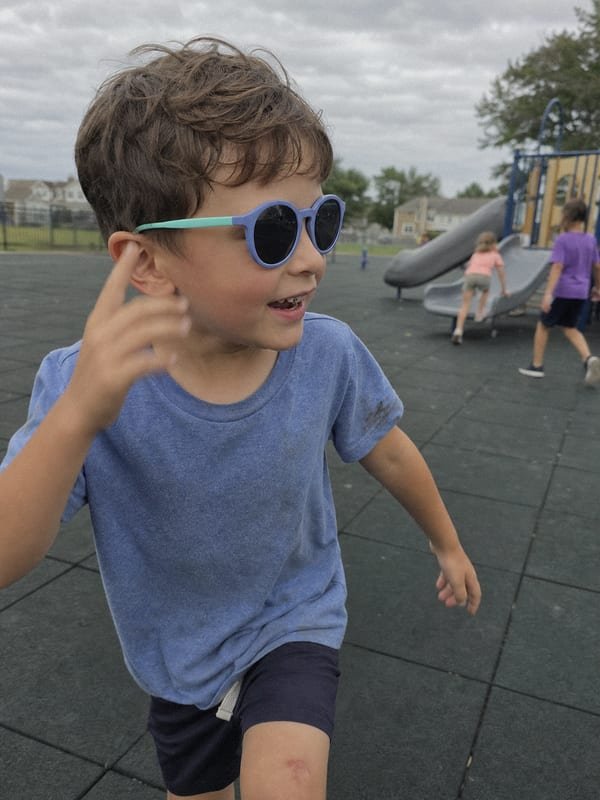
Temple width and length in Kinder-Sonnenbrillen 1 decide whether a child wears them or throws them off. On our production line, we have seen perfect lenses fail because the temples pinched.
Temple width and length control how kids’ sunglasses grip the head. Correct temple length lets the arm curve just behind the ear without digging in, while proper temple width prevents inward pinching or loose slipping. Together, they determine stability, pressure points, and all-day comfort during active play.
Most buyers focus on lens quality and color first. That is understandable. But temple fit is where comfort is won or lost. Let me walk you through exactly how it works.
How do I measure the right temple length for different kids' age groups?
A procurement manager from Australia once asked me why her toddler line kept slipping off during playground tests. The answer was temple length, not the bridge. We had to re-check her frame measurements together.
Measure temple length from the hinge screw to the temple tip in millimeters. As a rough guide, ages 0–2 need about 110–120 mm, ages 3–5 need 120–130 mm, ages 6–8 need 125–140 mm, and ages 9–12 need 140–150 mm, then confirm the bend rests at the top of the ear.
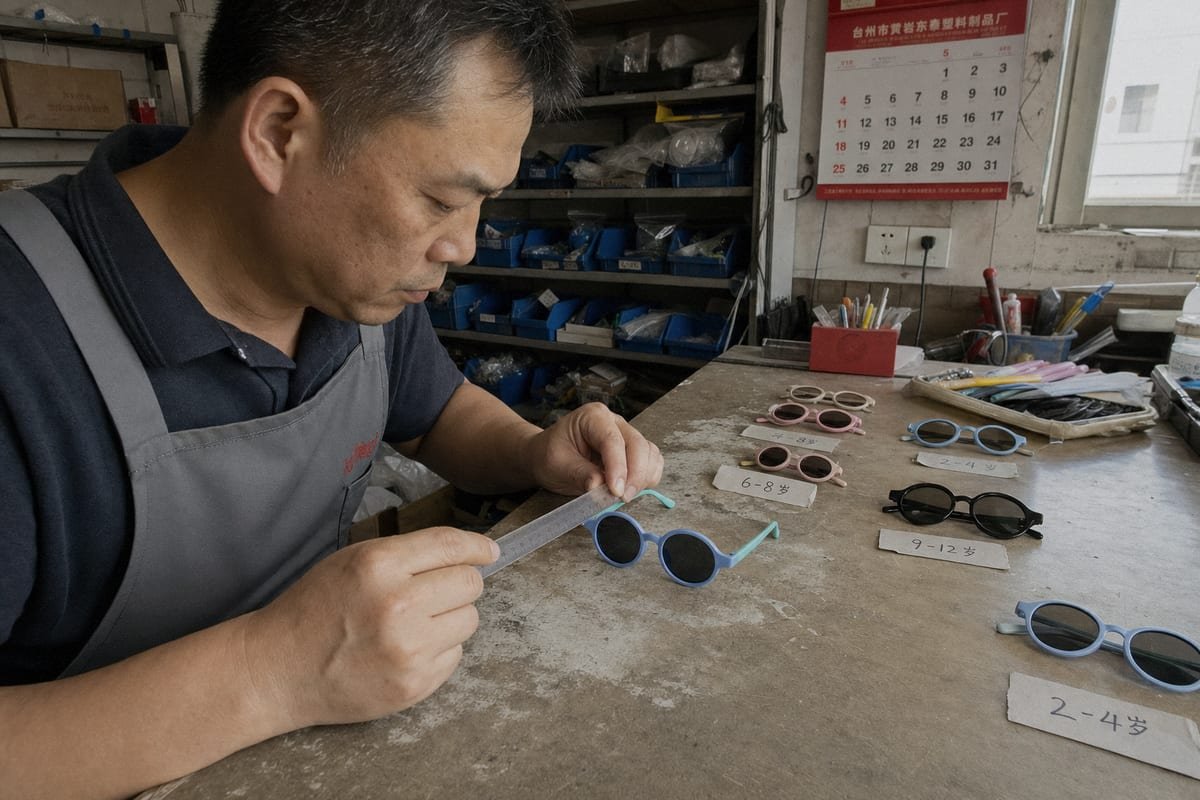
Temple length is the single biggest fit driver in kids' sunglasses. It is the arm that runs from the hinge, over the ear, and curves down behind it. If that curve lands in the wrong place, comfort collapses fast.
Reading Frame Measurements the Right Way
Kids' frames are usually described with three numbers, such as 48-16-125. The first is eye size, meaning the lens width. The second is bridge width 2. The third is temple length. All three matter for pediatric eyewear sizing, but the third number tells you how the frame anchors to the head.
Here is the age-based reference table we share with new B2B buyers:
| Altersgruppe | Typische Bügellänge | Typical Eye Size | Anmerkungen |
|---|---|---|---|
| 0–2 Jahre | 110–120 mm | 38–42 mm | Consider adjustable head straps for babies |
| 3–5 Jahre | 120–130 mm | Silikon-Ohrhaken, | Flexible frame materials matter most here |
| 6–8 Jahre | 125–140 mm | 45–48 mm | Growth spurts make flex tolerance useful |
| 9–12 Jahre | 140–150 mm | 48–52 mm | Approaching small adult dimensions |
Treat these ranges as starting points, not rules. Head shape varies widely at every age. In our 15 years of eyewear work, we have measured children of the same age with head circumferences that differed by two full frame sizes.
The Bend Point Test
The most reliable check is simple. The temple bend should sit precisely at the top of the ear. If the bend starts too early, the tip floats and the frame slides down the nose. If the bend starts too late, the tip digs into the skull behind the ear. Ask the child to look down, then up. If the frame moves, the length is wrong.
What happens if temple width doesn't match a child's face shape?
Während einer Qualitätskontrollrunde in unserem 5S-verwalteten Werkstatt 3, we rejected a sample batch because the temples bowed outward on our child head forms. That small flare would have translated into pinching on real kids.
When temple width is too narrow for a child's face, the arms bow outward and press inward on the skull, causing red marks, pinching, and headaches. When too wide, the frame loses grip, slides during play, and shifts the lenses out of proper alignment with the eyes.
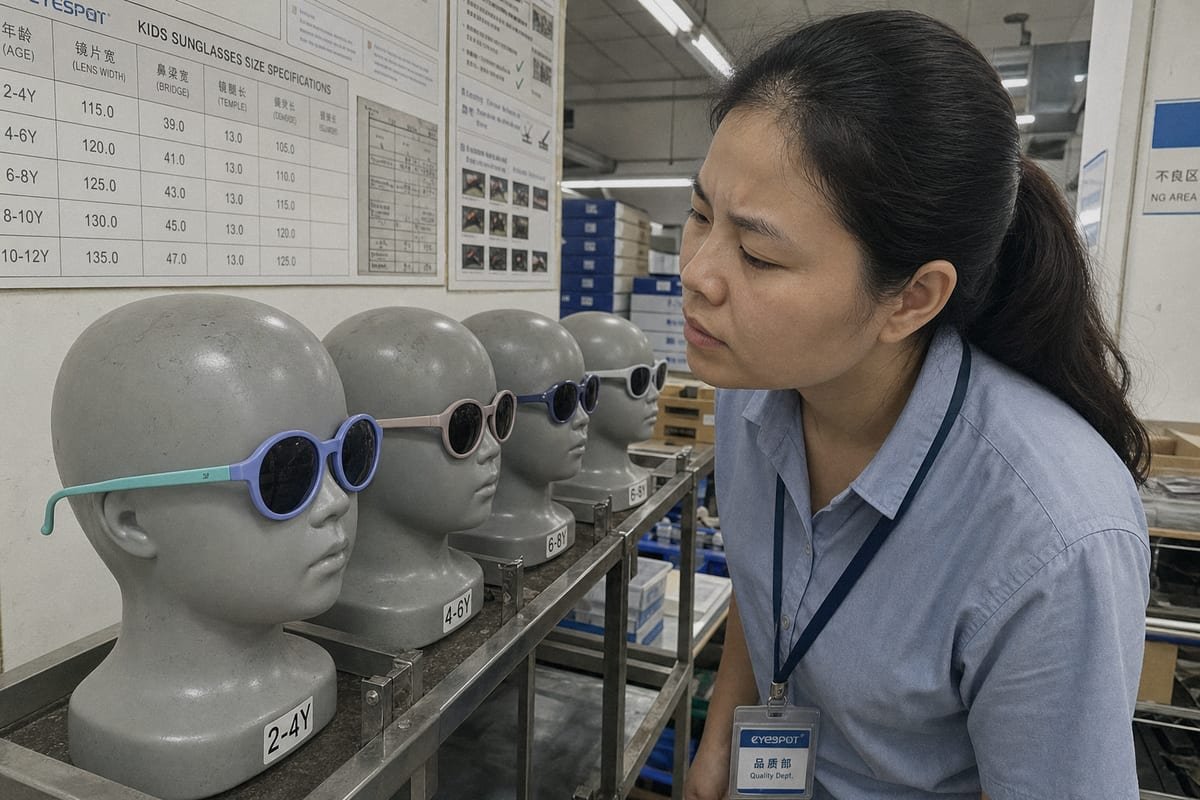
Temple width is less standardized than length, so let me define it plainly. It is the effective side-to-side fit: how the two arms sit against the sides of the head, and how much inward or outward force they create. Kids describe a bad width fit as "pinchy" or "itchy." Those words are meaningful comfort signals, and parents should take them seriously.
Too Narrow: The Pressure Problem
A frame that is too narrow forces the temples to splay outward just to fit on the head. The material then springs back, squeezing the sides of the skull constantly. This creates pressure points above the ears and at the temples of the head. Red marks after only ten or fifteen minutes of wear are the classic warning sign. Over a school day, that constant lateral pressure can cause genuine headaches, and the child simply stops wearing the sunglasses.
Too Wide: The Stability Problem
The opposite mismatch is quieter but just as damaging. Temples that sit away from the head provide no grip at all. The full weight of the frame then rests on the nose and the tops of the ears. Every jump, sprint, or head turn makes the frame slide. Poor width fit also changes vertex distance, the gap between the lens and the eye, which reduces visual comfort and UV coverage at the edges.
Face Shape Changes Everything
Children’s heads taper toward the back in different ways. A biometric-driven temple curvature 4, one that mimics that natural tapering, gives a secure wrap without needing a restrictive strap. This is why we test our designs on multiple head forms, not just one average shape.
How can flexible TPEE temples improve fit compared to rigid materials?
Als wir unsere TR90-Rahmen 5 with TPEE temple 6s, we ran a simple stress trial: twist the temples through a full range daily for weeks. Rigid acetate samples cracked. The TPEE arms bounced back every time.
Flexible TPEE temples bend outward to match each child's head width, then return to shape without losing grip. Unlike rigid plastics, TPEE spreads contact pressure evenly, eliminates hard pressure points behind the ears, tolerates rough handling, and adapts slightly as the child grows.
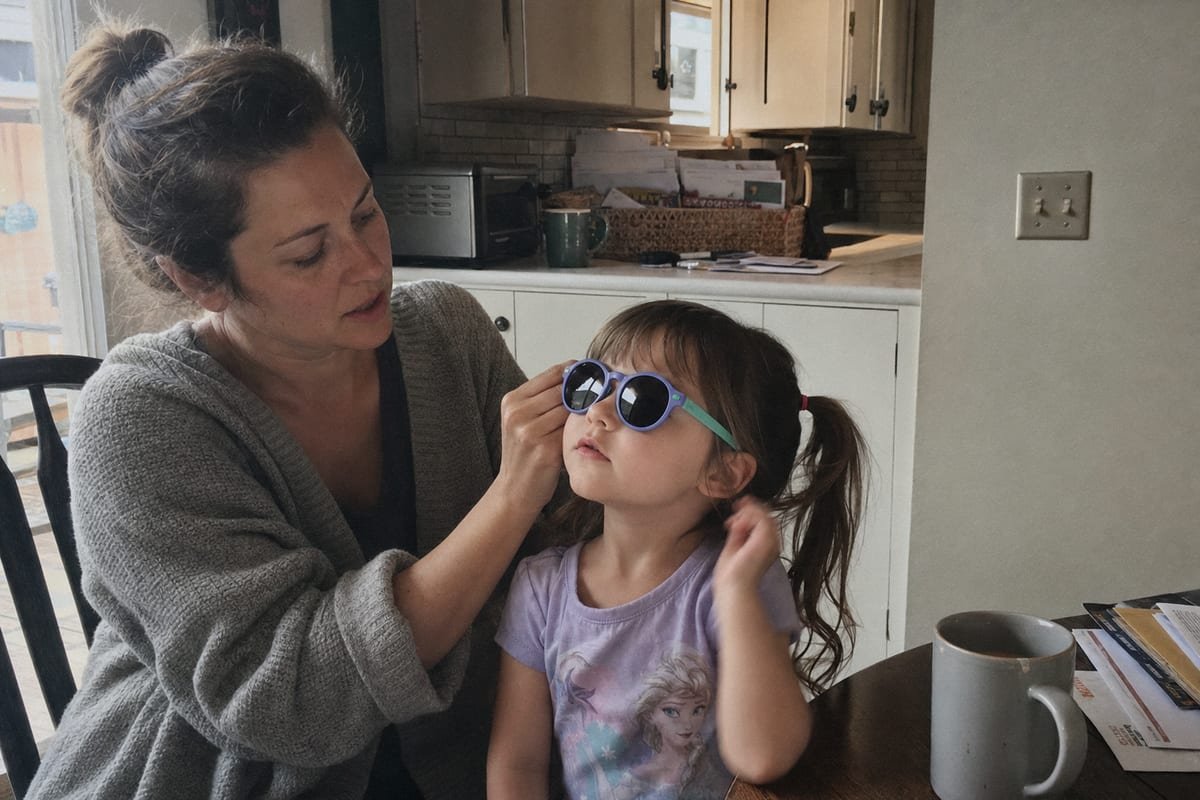
Material choice is where temple width and length problems get solved or multiplied. A rigid temple that is 3 mm too narrow will pinch all day. A flexible TPEE temple with the same nominal width simply flexes open and distributes the load. That forgiveness is the core reason our factory specialized in flexible frame materials for children.
How the Materials Compare
| Eigenschaft | TPEE-Bügel | TR90-Fassungen | Rigid Acetate / Standard Plastic |
|---|---|---|---|
| Flexibilität | Very high, bends and recovers | High, semi-flexible | Low, holds fixed shape |
| Pressure distribution | Even along the whole arm | Gut | Concentrated at contact points |
| Break resistance when twisted | Ausgezeichnet | Sehr gut | Poor, can snap into sharp edges |
| Gewicht | Sehr leicht | Sehr leicht | Mittel bis stark |
| Growth tolerance | Expands slightly with head growth | Some tolerance | Keine |
| Safety for active kids | Hoch | Hoch | Niedriger |
Flexibility Works Like a Built-In Spring Hinge
Federscharniere 7 improve comfort because they let temples flex outward instead of pressing rigidly against the head. TPEE achieves a similar effect through the material itself, along the entire arm rather than at one hinge point. Some of our styles combine both. The result is a snug, forgiving grip that survives being sat on, yanked off one-handed, and stuffed into a backpack.
Lightweight Means Less Perceived Pressure
Weight and flexibility work together. A lighter temple presses less on the ear, and even the frame's center of gravity behaves better. Slim, flexible temples with soft tips also help slippage prevention during sports, and their low, flat profile fits under a bike helmet without creating painful hotspots. For children with sensory sensitivities, the vibration-dampening softness of these polymers reduces the tactile "noise" of a frame moving against the skull.
Why does proper temple sizing matter for my brand's return and safety rates?
One lesson we learned early in exporting to 20+ countries: buyers rarely return kids' sunglasses because of lens color. They return them because children refuse to wear them. Fit drives the commercial outcome.
Proper temple sizing directly lowers return rates because comfortable sunglasses get worn, not rejected. It also reduces safety risks: well-fitted temples prevent frames from falling during activity, avoid pressure injuries behind the ears, and keep UV400 lenses correctly positioned over the eyes.
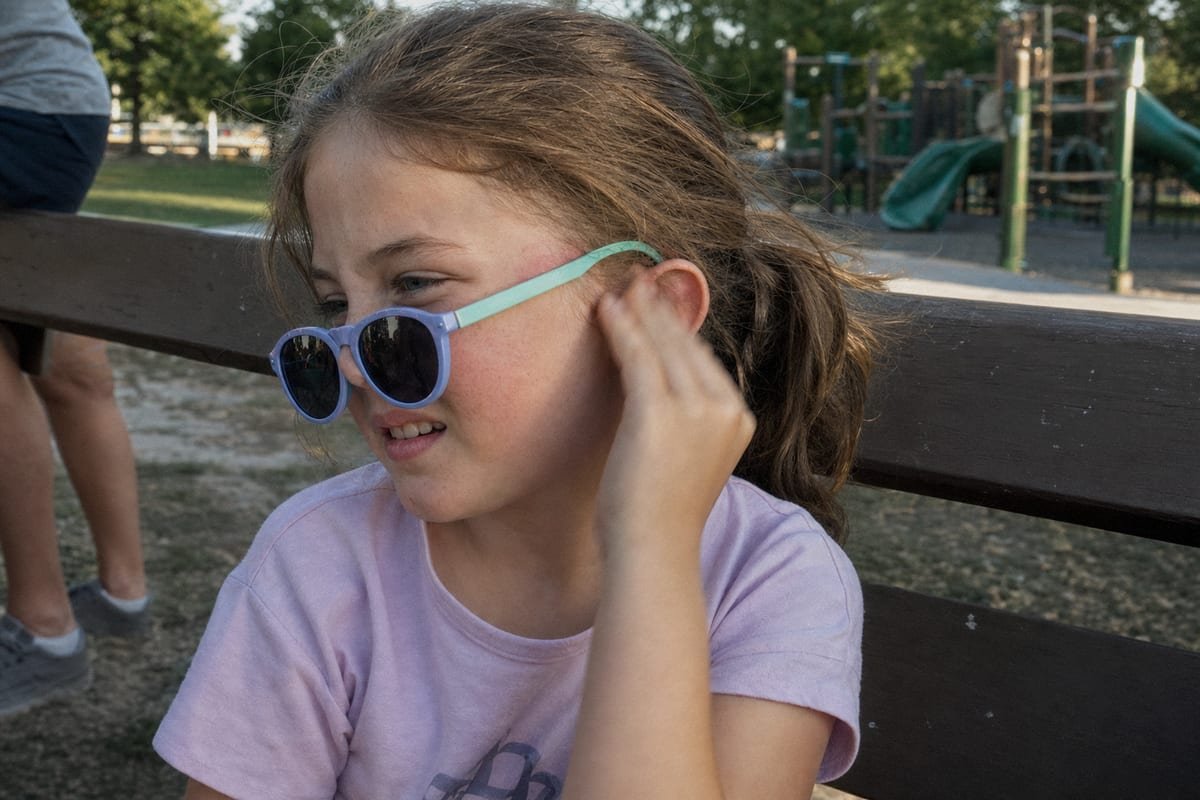
For a founder or product manager, temple sizing is not a design detail. It is a business metric. Let me break down the chain of cause and effect that we discuss with our B2B partners before every new program.
The Cost Chain of a Bad Temple Fit
- The child feels pinching or sliding within the first wear.
- The child resists wearing the sunglasses, or takes them off outdoors.
- The parent concludes the product is faulty or low quality.
- The parent requests a refund, leaves a negative review, or both.
- Your return rate rises and your review score falls, which hurts every future listing.
Each step follows naturally from the one before it. Fix the temple fit, and you break the chain at step one.
The Safety Dimension
Safety is the quieter risk. Sunglasses that slide off mid-activity leave a child's eyes exposed to UV exactly when protection matters most. Frames that fall get stepped on, and a rigid frame can snap into sharp fragments. Temples that dig in can cause skin irritation behind the ears. This is why behind-the-ear fit and soft, flexible materials sit at the center of our quality checks, alongside frame flex tests and hinge cycling on every production run.
What This Means When You Source
| Sourcing Decision | Impact on Returns | Impact on Safety |
|---|---|---|
| Age-graded temple lengths across your range | Fewer "doesn't fit" complaints | Lenses stay positioned over the eyes |
| TPEE or TR90 flexible temples | Fewer breakage claims | No sharp snap-off edges |
| Soft or rubberized temple tips | Better retention reviews | Slippage prevention during sports |
| Optional adjustable head straps for toddlers | Fewer toddler-line returns | Frames stay on during rough play |
| Fit testing during movement, not just static wear | Catches problems pre-launch | Validates real-world stability |
From our catalog of roughly 800 existing styles, we help brands map temple lengths to their exact target age bands before committing to an order. Testing across sizes with low mold investment is far cheaper than discovering a fit problem through customer returns. When we support OEM/ODM projects, we treat the size run and the temple geometry as seriously as the logo and packaging, because comfort is what keeps the product on a child's face and off the returns shelf.
Schlussfolgerung
Temple width and length decide whether kids' sunglasses feel snug or unwearable. Match length to age, width to face shape, choose flexible materials, and comfort, safety, and sales follow.
Fußnoten
1. Authoritative AAO guide specifically addressing the importance of sunglasses and UV protection for children. ↩︎
2. ISO standardizes eyewear frame measurement terminology like bridge width globally. ↩︎
3. 5S is a recognized workplace organization method used in the manufacturing QC process described. ↩︎
4. NIH guidance on proper sunglasses fit supports the importance of temple curvature design. ↩︎
5. CPSC oversees safety standards for children’s products, relevant to durable frame materials like TR90. ↩︎
6. Background on thermoplastic elastomer properties used in flexible children’s eyewear temples. ↩︎
7. General mechanical background on hinge design referenced for eyewear flexibility. ↩︎
Weitere Artikel, die Ihnen gefallen könnten



Auf der Suche nach einem zuverlässigen Partner für Kinderbrillen?
Entdecken Sie über 800 sofort verfügbare Modelle und umfassenden OEM/ODM-Support, der auf Ihre Marke zugeschnitten ist.
Kontakt aufnehmen English
  Español de México
  Deutsch
  Français
  日本語
日本語  العربية
  Português do Brasil