¿Cómo afectan el ancho y el largo de las patillas a la comodidad de las gafas de sol para niños?
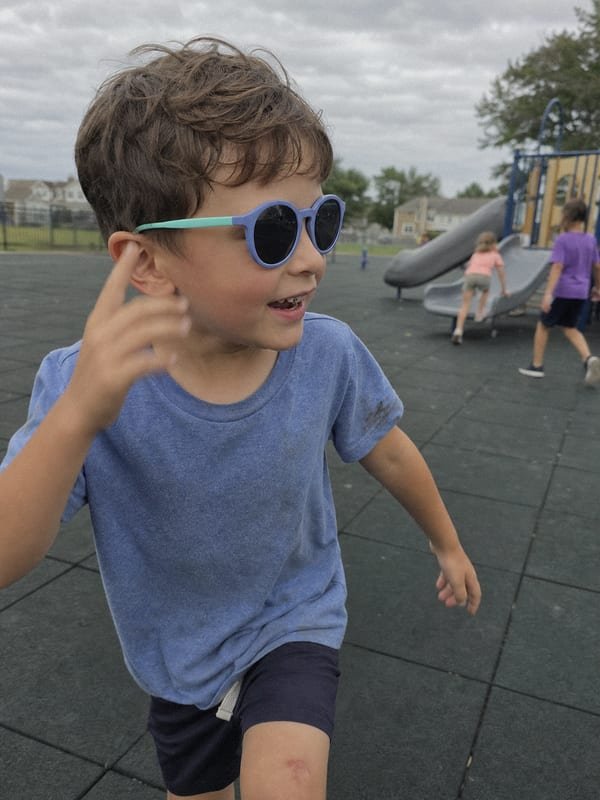
El ancho y el largo de las patillas en las gafas de sol para niños 1 deciden si un niño las usa o las tira. En nuestra línea de producción, hemos visto lentes perfectos fallar porque las patillas pellizcaban.
El ancho y el largo de las patillas controlan cómo las gafas de sol para niños se sujetan a la cabeza. La longitud correcta de la patilla permite que el brazo se curve justo detrás de la oreja sin clavarse, mientras que el ancho adecuado de la patilla evita pellizcos hacia adentro o deslizamientos sueltos. Juntos, determinan la estabilidad, los puntos de presión y la comodidad durante todo el día durante el juego activo.
La mayoría de los compradores se centran primero en la calidad y el color de las lentes. Eso es comprensible. Pero el ajuste de las patillas es donde se gana o se pierde la comodidad. Déjame explicarte exactamente cómo funciona.
¿Cómo mido la longitud correcta de la patilla para diferentes grupos de edad de niños?
Un gerente de adquisiciones de Australia me preguntó una vez por qué su línea para niños pequeños se caía durante las pruebas en el patio de juegos. La respuesta fue la longitud de la patilla, no el puente. Tuvimos que volver a verificar las medidas de sus monturas juntos.
Mide la longitud de la patilla desde el tornillo de la bisagra hasta la punta de la patilla en milímetros. Como guía general, las edades de 0 a 2 años necesitan entre 110 y 120 mm, las edades de 3 a 5 años necesitan entre 120 y 130 mm, las edades de 6 a 8 años necesitan entre 125 y 140 mm, y las edades de 9 a 12 años necesitan entre 140 y 150 mm, luego confirma que la curva descansa en la parte superior de la oreja.
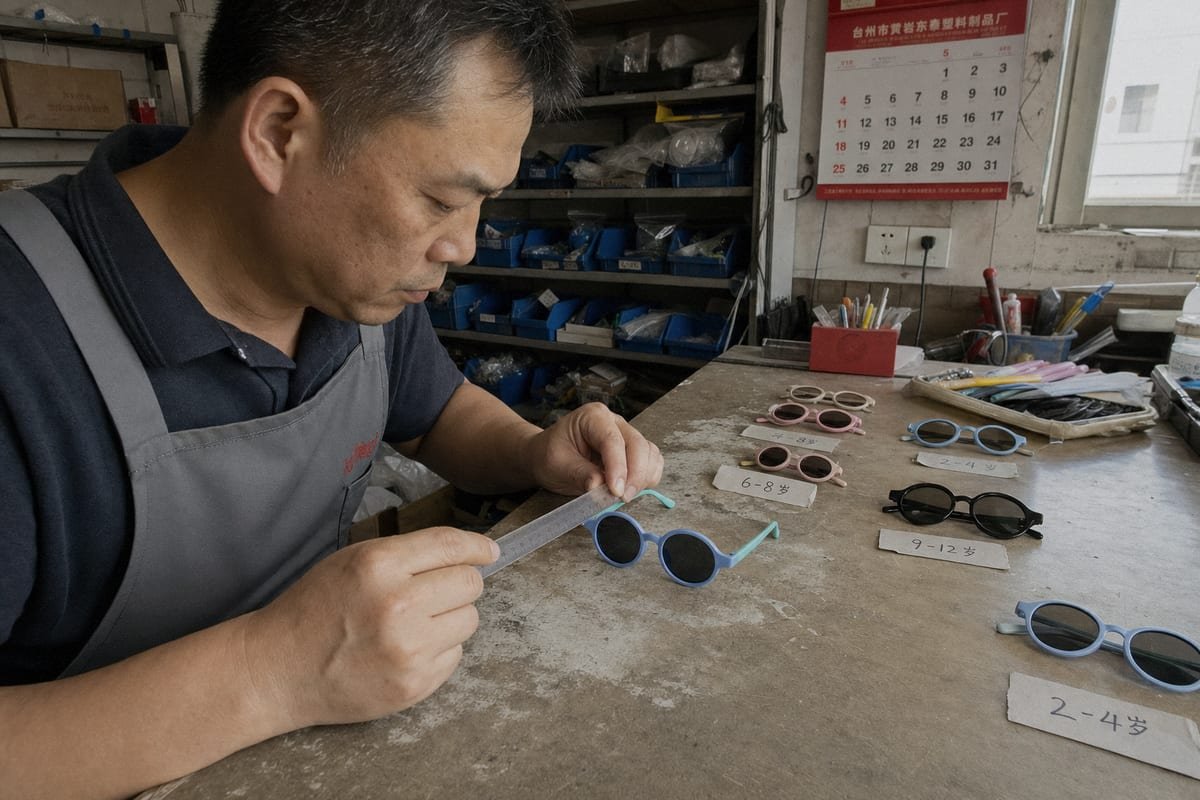
La longitud de la patilla es el factor de ajuste más importante en las gafas de sol para niños. Es el brazo que va desde la bisagra, sobre la oreja y se curva hacia abajo detrás de ella. Si esa curva cae en el lugar equivocado, la comodidad se desmorona rápidamente.
Lectura de las medidas de la montura de la manera correcta
Las monturas para niños suelen describirse con tres números, como 48-16-125. El primero es el tamaño del ojo, que significa el ancho de la lente. El segundo es el ancho del puente 2. El tercero es la longitud de la patilla. Los tres importan para el tamaño de las gafas pediátricas, pero el tercer número te dice cómo se ancla la montura a la cabeza.
Aquí está la tabla de referencia por edad que compartimos con los nuevos compradores B2B:
| Grupo de edad | Longitud típica de la patilla | Tamaño típico del ojo | Notas |
|---|---|---|---|
| 0–2 años | 110–120 mm | 38–42 mm | Considere correas de cabeza ajustables para bebés |
| 3–5 años | 120–130 mm | 42–46 mm | Los materiales de montura flexibles son lo más importante aquí |
| 6–8 años | 125–140 mm | 45–48 mm | Los brotes de crecimiento hacen que la tolerancia a la flexión sea útil |
| 9–12 años | 140–150 mm | 48–52 mm | Se acerca a las dimensiones de adultos pequeños |
Trate estos rangos como puntos de partida, no como reglas. La forma de la cabeza varía ampliamente a todas las edades. En nuestros 15 años de trabajo en óptica, hemos medido niños de la misma edad con circunferencias de cabeza que diferían en dos tallas completas de montura.
La prueba del punto de flexión
La verificación más confiable es simple. La curva de la patilla debe quedar precisamente en la parte superior de la oreja. Si la curva comienza demasiado pronto, la punta flota y la montura se desliza por la nariz. Si la curva comienza demasiado tarde, la punta se clava en el cráneo detrás de la oreja. Pídele al niño que mire hacia abajo y luego hacia arriba. Si la montura se mueve, la longitud es incorrecta.
¿Qué pasa si el ancho de las patillas no coincide con la forma de la cara de un niño?
Durante una ronda de control de calidad en nuestro taller gestionado con 5S 3, rechazamos un lote de muestra porque las patillas se curvaron hacia afuera en las formas de cabeza de nuestros hijos. Ese pequeño ensanchamiento se habría traducido en pellizcos en niños reales.
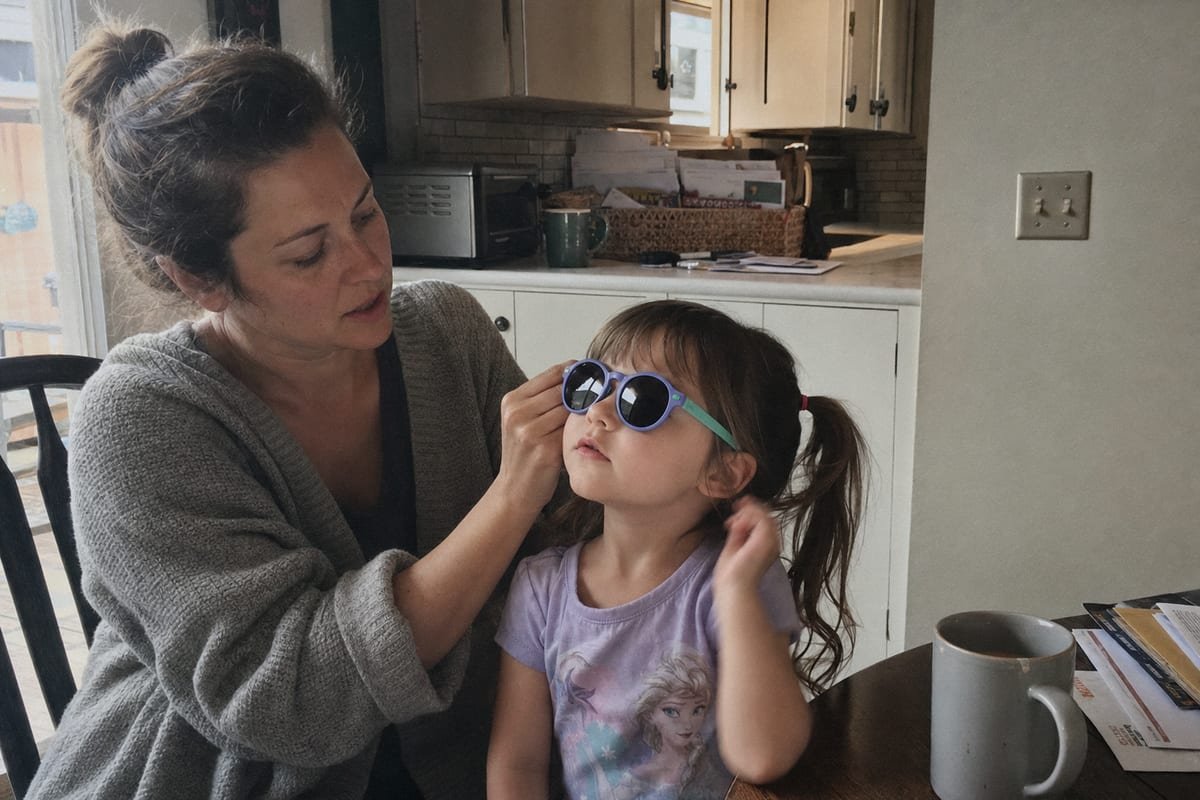
Cuando el ancho de la sien es demasiado estrecho para la cara de un niño, las patillas se curvan hacia afuera y presionan hacia adentro el cráneo, causando marcas rojas, pellizcos y dolores de cabeza. Cuando es demasiado ancho, la montura pierde agarre, se desliza durante el juego y desplaza las lentes de la alineación correcta con los ojos.
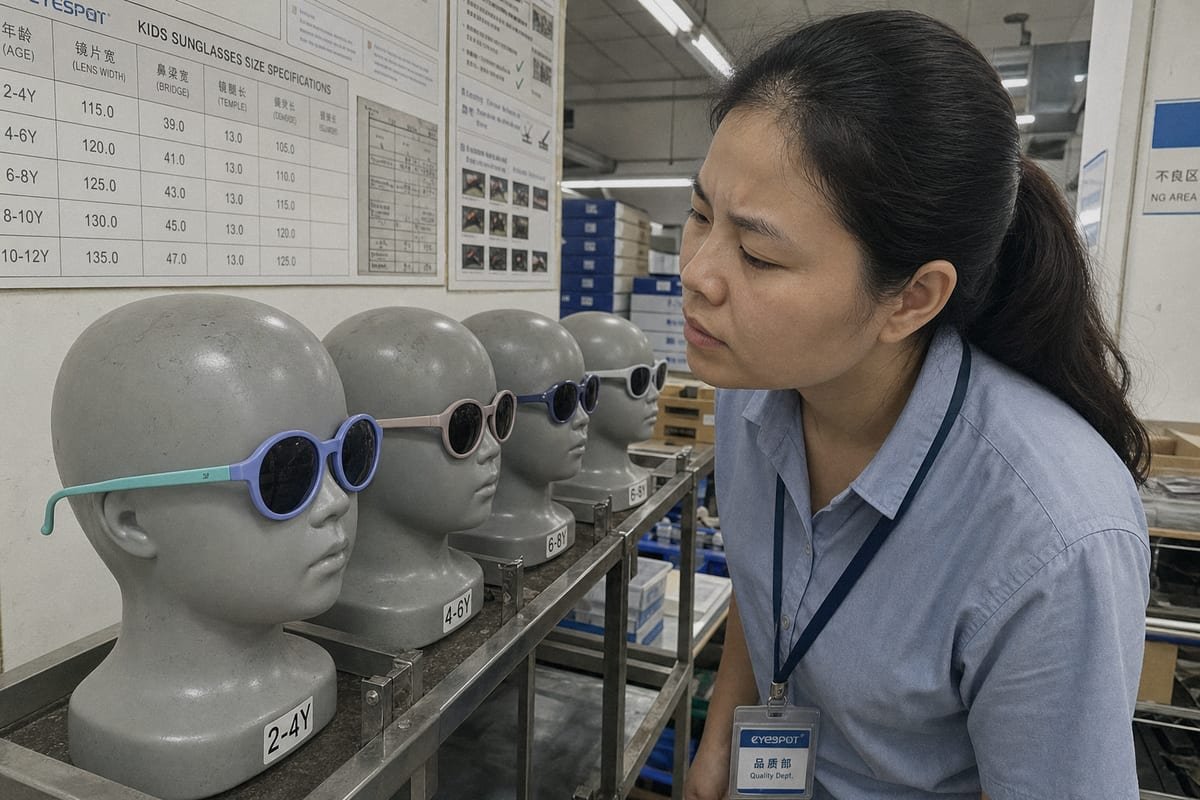
El ancho de la patilla está menos estandarizado que la longitud, así que permítame definirlo claramente. Es el ajuste lateral efectivo: cómo los dos brazos se asientan contra los lados de la cabeza y cuánta fuerza hacia adentro o hacia afuera crean. Los niños describen un mal ajuste de ancho como "pellizco" o "picazón". Esas palabras son señales de comodidad significativas, y los padres deben tomarlas en serio.
Demasiado estrecho: El problema de la presión
Una montura demasiado estrecha obliga a las patillas a separarse solo para ajustarse a la cabeza. El material luego vuelve a su posición, apretando los lados del cráneo constantemente. Esto crea puntos de presión por encima de las orejas y en las sienes. Las marcas rojas después de solo diez o quince minutos de uso son la señal de advertencia clásica. Durante un día escolar, esa presión lateral constante puede causar dolores de cabeza genuinos, y el niño simplemente deja de usar las gafas de sol.
Demasiado ancho: El problema de la estabilidad
La descompensación opuesta es más sutil pero igualmente dañina. Las patillas que se separan de la cabeza no ofrecen ningún agarre. El peso total de la montura descansa entonces sobre la nariz y la parte superior de las orejas. Cada salto, carrera o giro de cabeza hace que la montura se deslice. Un mal ajuste de ancho también cambia la distancia al vértice, el espacio entre la lente y el ojo, lo que reduce la comodidad visual y la cobertura UV en los bordes.
La forma de la cara lo cambia todo
Las cabezas de los niños se estrechan hacia atrás de diferentes maneras. Una curvatura de patilla impulsada biométricamente , una que imita ese estrechamiento natural, proporciona un ajuste seguro sin necesidad de una correa restrictiva. Es por eso que probamos nuestros diseños en múltiples formas de cabeza, no solo en una forma promedio. 4, Cuando estábamos desarrollando nuestras.
¿Cómo pueden las patillas flexibles de TPEE mejorar el ajuste en comparación con los materiales rígidos?
con monturas TR90 5 patillas de TPEE , realizamos una prueba de estrés simple: torcer las patillas en todo su rango diariamente durante semanas. Las muestras de acetato rígido se agrietaron. Los brazos de TPEE volvieron a su forma cada vez. 6La elección del material es donde los problemas de ancho y longitud de las patillas se resuelven o se multiplican. Una patilla rígida que es 3 mm demasiado estrecha pellizcará todo el día. Una patilla flexible de TPEE con el mismo ancho nominal simplemente se flexiona y distribuye la carga. Esa flexibilidad es la razón principal por la que nuestra fábrica se especializó en materiales de montura flexibles para niños.
Las patillas flexibles de TPEE se doblan hacia afuera para adaptarse al ancho de la cabeza de cada niño, luego regresan a su forma sin perder el agarre. A diferencia de los plásticos rígidos, el TPEE distribuye la presión de contacto de manera uniforme, elimina los puntos de presión duros detrás de las orejas, tolera el manejo brusco y se adapta ligeramente a medida que el niño crece.
Cómo se comparan los materiales.
Patillas de TPEE
| Propiedad | Monturas TR90 | Acetato Rígido / Plástico Estándar | Muy alta, se dobla y se recupera |
|---|---|---|---|
| Flexibilidad | Alta, semirrígida | Baja, mantiene forma fija | Distribución de la presión |
| Uniforme a lo largo de todo el brazo | Concentrada en los puntos de contacto | Buena | Resistencia a la rotura al torcer |
| Pobre, puede romperse en bordes afilados | Excelente | Muy buena | Tolerancia al crecimiento |
| Peso | Muy ligero | Muy ligero | Moderado a alto |
| Se expande ligeramente con el crecimiento de la cabeza | Alguna tolerancia | Seguridad para niños activos | Ninguno |
| La flexibilidad funciona como una bisagra de resorte incorporada | Alta | Alta | Más bajo |
mejoran la comodidad porque permiten que las patillas se flexionen hacia afuera en lugar de presionar rígidamente contra la cabeza. El TPEE logra un efecto similar a través del material en sí, a lo largo de todo el brazo en lugar de en un punto de bisagra. Algunos de nuestros estilos combinan ambos. El resultado es un agarre ceñido y flexible que sobrevive a ser sentado, quitado con una mano y metido en una mochila.
Bisagras de resorte 7 La ligereza significa menos presión percibida.
El peso y la flexibilidad trabajan juntos.
Una patilla más ligera presiona menos la oreja. , e incluso el centro de gravedad de la montura se comporta mejor. Las patillas delgadas y flexibles con puntas suaves también ayudan a la prevención de resbalones durante los deportes, y su perfil bajo y plano cabe debajo de un casco de bicicleta sin crear puntos de presión dolorosos. Para niños con sensibilidades sensoriales, la suavidad amortiguadora de vibraciones de estos polímeros reduce el "ruido" táctil de una montura que se mueve contra el cráneo. Las patillas flexibles de TPEE distribuyen la presión de contacto a lo largo de todo el brazo en lugar de concentrarla en un punto, Debido a que el elastómero se dobla y se adapta a la cabeza, la carga se distribuye uniformemente, lo que elimina los puntos de presión agudos que los materiales rígidos crean detrás de las orejas.
¿Por qué el tamaño adecuado de las patillas es importante para las tasas de devolución y seguridad de mi marca?
La cadena de costos de un mal ajuste de patilla.
El tamaño adecuado de las patillas reduce directamente las tasas de devolución porque las gafas de sol cómodas se usan, no se rechazan. También reduce los riesgos de seguridad: las patillas bien ajustadas evitan que las monturas se caigan durante la actividad, evitan lesiones por presión detrás de las orejas y mantienen las lentes UV400 correctamente posicionadas sobre los ojos.
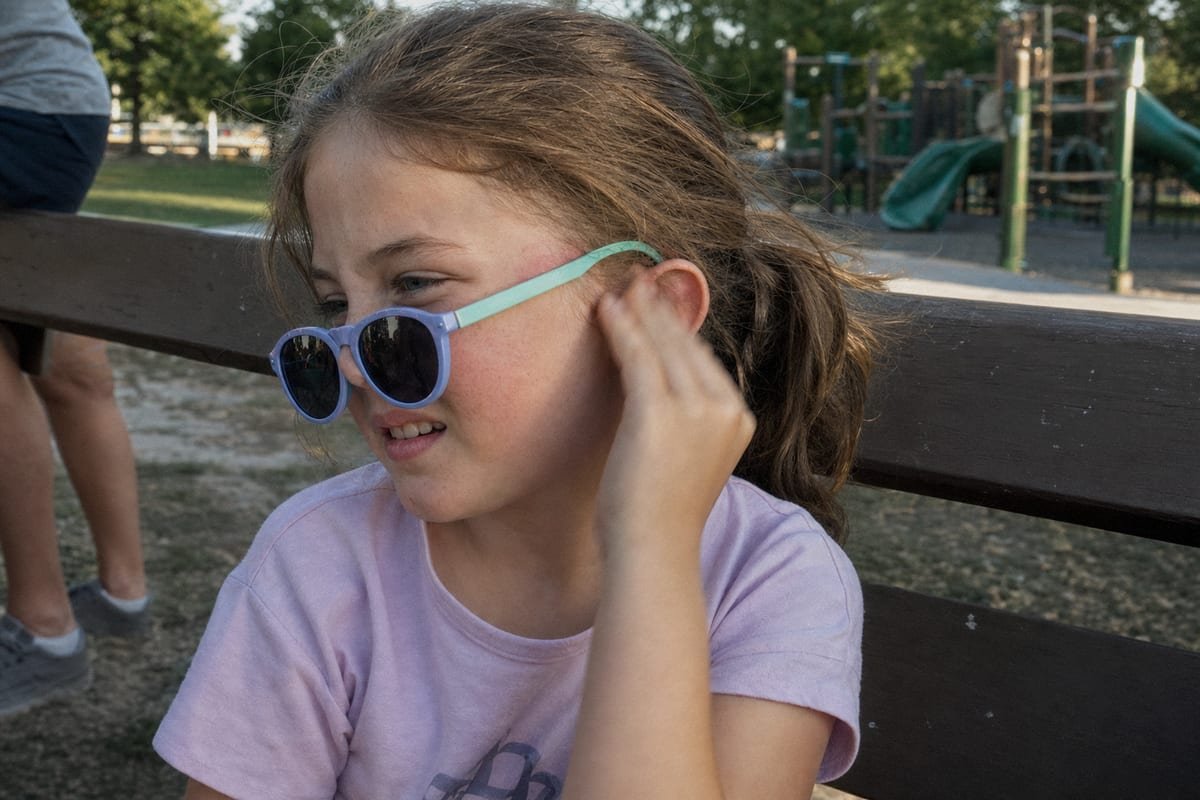
El niño siente pellizcos o deslizamiento en el primer uso.
El niño se resiste a usar las gafas de sol o se las quita al aire libre.
- El niño siente pellizcos o deslizamientos en el primer uso.
- El niño se resiste a usar las gafas de sol o se las quita al aire libre.
- El padre concluye que el producto es defectuoso o de baja calidad.
- El padre solicita un reembolso, deja una reseña negativa o ambas cosas.
- Su tasa de devoluciones aumenta y su puntuación de reseñas disminuye, lo que perjudica a cada listado futuro.
Cada paso sigue naturalmente al anterior. Arregla el ajuste de la patilla y rompes la cadena en el paso uno.
La Dimensión de Seguridad
La seguridad es el riesgo más silencioso. Las gafas de sol que se deslizan a mitad de la actividad dejan los ojos del niño expuestos a los rayos UV justo cuando la protección es más importante. Las monturas que se caen son pisadas, y una montura rígida puede romperse en fragmentos afilados. Las patillas que se clavan pueden causar irritación en la piel detrás de las orejas. Por eso, el ajuste detrás de la oreja y los materiales suaves y flexibles se encuentran en el centro de nuestros controles de calidad, junto con las pruebas de flexibilidad de la montura y el ciclo de bisagras en cada lote de producción.
Lo que esto significa al comprar
| Decisión de compra | Impacto en las devoluciones | Impacto en la seguridad |
|---|---|---|
| Longitudes de patilla graduadas por edad en toda su gama | Menos quejas de "no encaja" | Las lentes permanecen posicionadas sobre los ojos |
| Patillas flexibles de TPEE o TR90 | Menos reclamaciones por rotura | Sin bordes afilados de rotura |
| Puntas de patilla suaves o recubiertas de goma | Mejores reseñas de retención | Prevención de deslizamientos durante el deporte |
| Correas de cabeza ajustables opcionales para niños pequeños | Menos devoluciones de la línea infantil | Las monturas permanecen puestas durante el juego brusco |
| Pruebas de ajuste durante el movimiento, no solo con el uso estático | Detecta problemas antes del lanzamiento | Valida la estabilidad en el mundo real |
De nuestro catálogo de aproximadamente 800 estilos existentes, ayudamos a las marcas a mapear las longitudes de las patillas a sus grupos de edad objetivo exactos antes de comprometerse con un pedido. Probar diferentes tamaños con una baja inversión en moldes es mucho más barato que descubrir un problema de ajuste a través de devoluciones de clientes. Cuando apoyamos proyectos OEM/ODM, tratamos la talla y la geometría de la patilla con la misma seriedad que el logotipo y el embalaje, porque la comodidad es lo que mantiene el producto en la cara del niño y fuera del estante de devoluciones.
Conclusión
El ancho y la longitud de la patilla deciden si las gafas de sol para niños se sienten ajustadas o incómodas. Empareja la longitud con la edad, el ancho con la forma de la cara, elige materiales flexibles, y la comodidad, la seguridad y las ventas seguirán.
Notas al pie
Guía autorizada de la AAO que aborda específicamente la importancia de las gafas de sol y la protección UV para niños. ↩︎
La ISO estandariza la terminología de medición de monturas de gafas, como el ancho del puente, a nivel mundial. ↩︎
5S es un método reconocido de organización del lugar de trabajo utilizado en el proceso de control de calidad de fabricación descrito. ↩︎
La guía de los NIH sobre el ajuste adecuado de las gafas de sol apoya la importancia del diseño de la curvatura de la patilla. ↩︎
La CPSC supervisa las normas de seguridad para productos infantiles, relevantes para materiales de montura duraderos como el TR90. ↩︎
Información general sobre las propiedades del elastómero termoplástico utilizado en las patillas flexibles de gafas para niños. ↩︎
Información mecánica general sobre el diseño de bisagras referenciado para la flexibilidad de las gafas. ↩︎
Más artículos que te podrían gustar



¿Buscas un socio confiable en gafas para niños?
Explore más de 800 estilos listos y soporte OEM/ODM completo adaptado a su marca.
Ponte en contacto English
  Español de México
  Deutsch
  Français
  日本語
日本語  العربية
  Português do Brasil