Wie beurteilt man die Qualität von Kinderbrillen nach Aussehen und Verarbeitung?
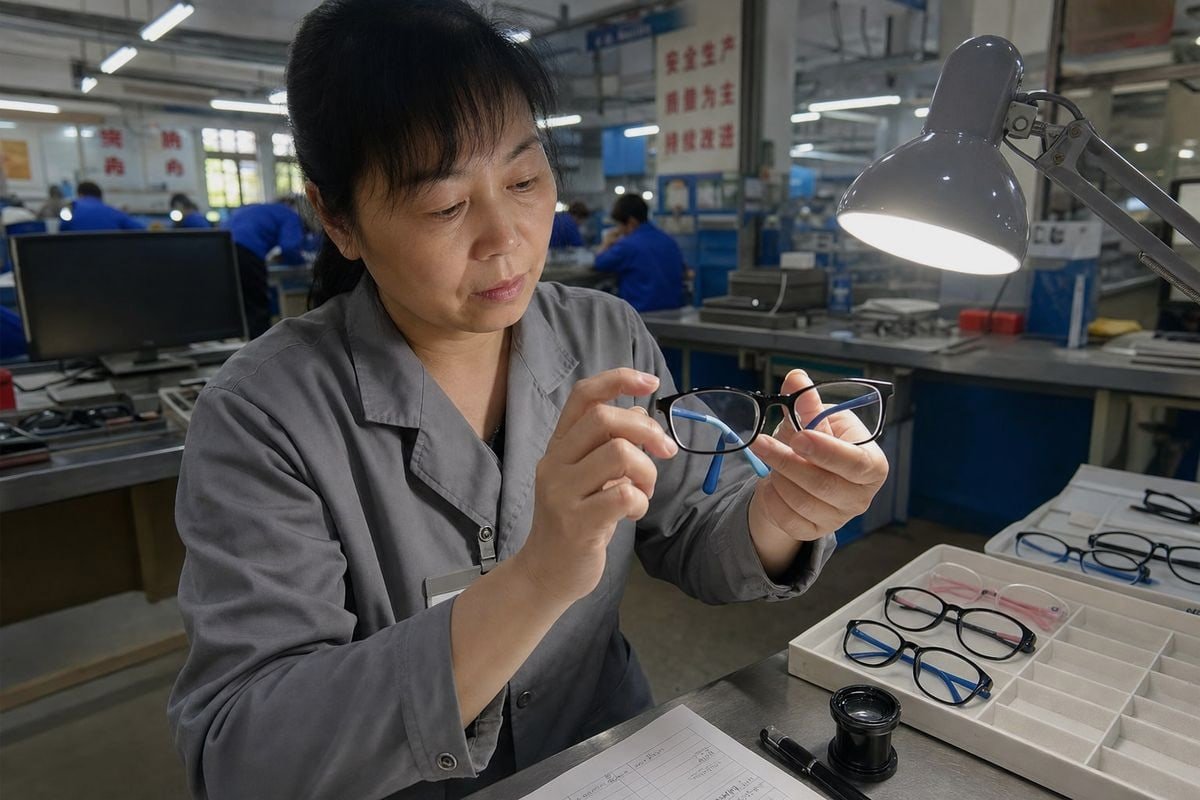
Die Qualität von Kinderbrillen kann auf einem Foto gut aussehen und in den Händen eines Kindes versagen. In unserer Produktionslinie in Taizhou sehe ich jede Woche, warum Muster Käufer täuschen.
Um die Qualität von Kinderbrillen nach dem Aussehen zu beurteilen, prüfen Sie die Oberflächenbeschaffenheit bei hellem Licht, fahren Sie mit den Fingern über die Kanten auf Grate, öffnen Sie die Scharniere wiederholt auf sanften Widerstand, bestätigen Sie die Symmetrie auf einem flachen Tisch und überprüfen Sie eine Brücke, die der Kinderanatomie entspricht. Sichtbare Handwerkskunst sagt zuverlässig etwas über die verborgene Konstruktionsqualität aus.
Sie brauchen keine Laborgeräte, um einen schwachen Rahmen zu erkennen. Sie müssen wissen, wo Fabriken sparen. Ich führe Sie durch die genauen Prüfungen, die wir in unserem eigenen Qualitätskontrollraum durchführen.
Worauf sollte ich bei der Oberflächenbeschaffenheit und den Kanten des Rahmens achten?
Letztes Frühjahr schickte mir ein Käufer aus Australien ein Muster eines Konkurrenten mit einer sichtbaren Gussnaht über die Stirn. Dieser einzelne Fehler sagte mir alles über den Polierprozess dieser Fabrik.
Achten Sie auf ein gleichmäßiges, streifenfreies Finish bei hellem Licht, handpolierte abgerundete Kanten ohne Spritzgusslinien, keine überschüssigen Grate oder Grate und eine gleichmäßige Farbtiefe. Bei Acetatrahmen-Finish sollten sich die Kanten glasglatt anfühlen; bei TR90 sollten die Nähte nahezu unsichtbar sein.
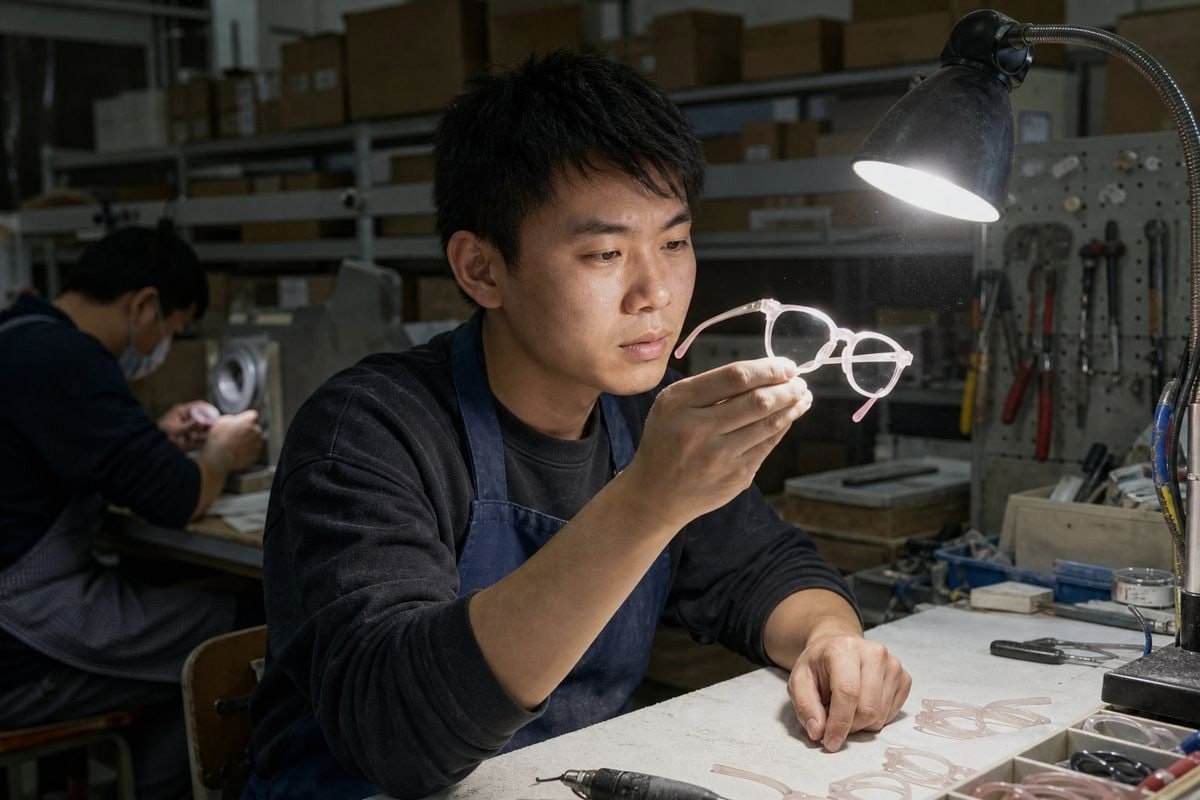
Die Oberflächenbeschaffenheit ist das erste ehrliche Signal, das Ihnen ein Rahmen gibt. In unserer 5S-verwalteten Werkstatt ist das Polieren eine separate, zeitgesteuerte Station, da überstürztes Polieren die häufigste Abkürzung bei billigen Kinderbrillen ist. Ein Rahmen, bei dem das richtige Trommeln und die Handbearbeitung übersprungen werden, wird es zeigen, und die Haut eines Kindes wird es spüren.
Der Helligkeitstest
Halten Sie die Vorderseite des Rahmens unter eine starke Lampe und neigen Sie sie langsam. Eine hochwertige Oberfläche sieht gleichmäßig aus. Achten Sie auf trübe Stellen, Orangenschalenstruktur, ungleichmäßigen Glanz oder Streifen in der Farbe. Bei durchscheinendem Acetat schauen Sie in das Material hinein, um Blasen oder Wirbel zu finden, die die Farbgleichmäßigkeit stören.
Der Fingertest
Ihre Finger finden, was Ihre Augen vermissen. Fahren Sie mit der Fingerspitze entlang des Brillenglasrands, der inneren Brücke und der Bügelkanten. Sie sollten nichts Scharfes spüren. Kunststoffgrate, raue Nähte oder zurückgebliebene Grate bedeuten, dass der Entgratungsschritt übersprungen wurde. Für Kinder ist das ein Sicherheitsproblem, nicht nur ein kosmetisches, da diese Kanten stundenlang auf weicher Gesichtshaut liegen.
| Oberflächenprüfung | Gutes Zeichen | Warnsignal |
|---|---|---|
| Farbe bei hellem Licht | Gleichmäßig, tief, konsistent | Trübe Flecken, Streifen |
| Kantenrundung | Glatter, handpolierter Radius | Scharfe Gussnähte, Grate |
| Innenflächen | Sauber, keine Klebespuren | Klebereste, raue Nähte |
| Materialklarheit | Gleichmäßiger, verfeinerter Glanz | Künstlicher Hochglanz von billigem Kunststoff, Blasen |
Einige Lieferanten fügen jetzt integrierte antimikrobielle Zusatzstoffe 1 zum Rahmenharz hinzu, ein aufkommender Standard, nach dem man fragen sollte, da Kinder ihre Brillen ständig berühren. Wir bestätigen auch BPA-freie Komponenten 2 für jede Charge von Kindermaterial, denn eine schöne Oberfläche bedeutet wenig, wenn das Substrat selbst nicht kindersicher ist.
Wie kann ich erkennen, ob die Scharniere und Gelenke gut verarbeitet sind?
Der Kompromiss, den ich bei der Entwicklung am häufigsten abwäge, ist die Scharnierkosten im Vergleich zur Scharnierlebensdauer. Ein Scharnier, das ein paar Cent pro Einheit spart, ist das Teil, über das sich Eltern im dritten Monat beschweren werden.
Gut gefertigte Scharniere öffnen und schließen sich reibungslos mit gleichmäßigem Widerstand, ohne Körnigkeit, Wackeln oder Quietschen. Federscharniere sollten sich über 90 Grad biegen und sauber zurückschnappen. Schrauben sollten versenkt und fest sein, Gelenke bündig und die Bügel sollten auch nach zwanzig Öffnungs-Schließ-Zyklen ausgerichtet bleiben.
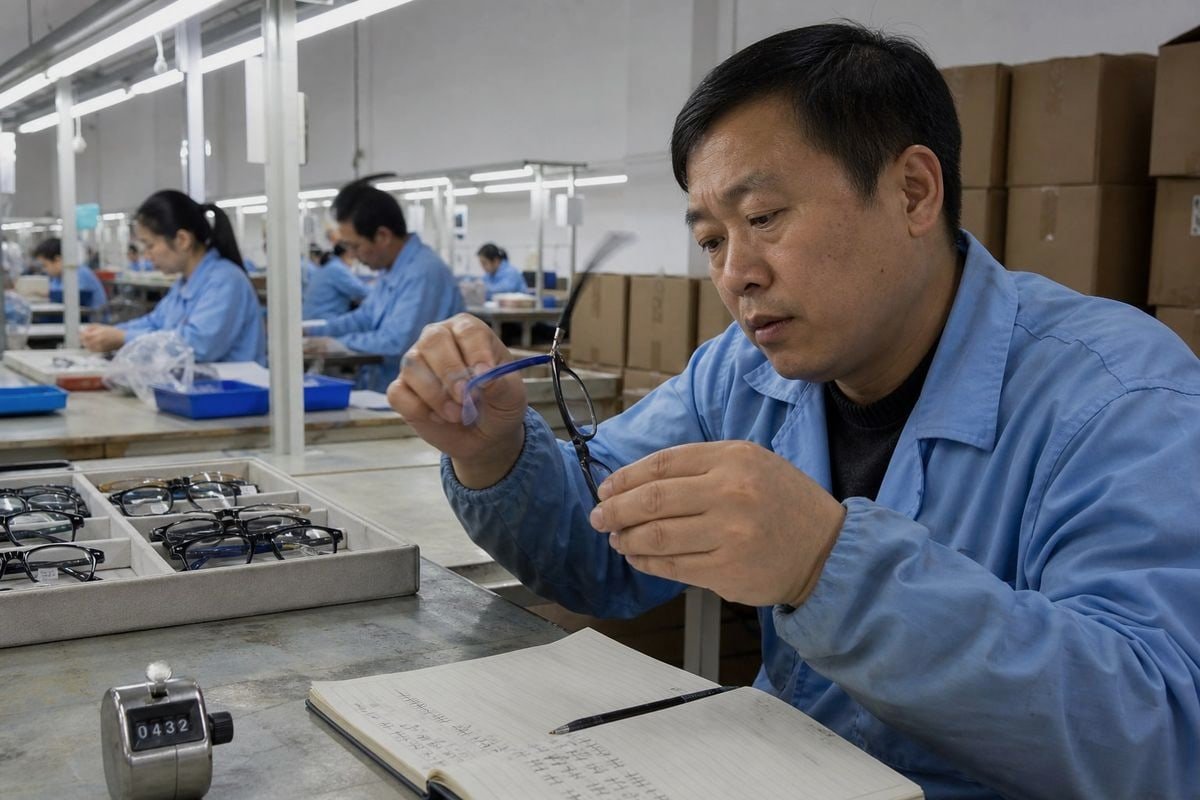
Das Gefühl des Scharniers ist der beste Indikator für die Handwerkskunst, den Sie in weniger als einer Minute testen können. Wenn wir eine Vorproduktionsserie in unserer Fabrik abnehmen, betätigen alle Qualitätsprüfer die Bügel von Stichproben und hören zu. Ein Qualitätsscharnier ist leise. Schleifen, Klicken oder ein loses Klappern bedeuten schlechte Toleranzen oder schlechte Nieten.
Warum Federscharniere für Kinder wichtig sind
Kinder ziehen Brillen mit einer Hand ab. Sie schlafen in ihnen ein. Ein Federscharnier, das sich über 90 Grad nach außen biegt, absorbiert diesen Missbrauch, anstatt ihn auf die Vorderseite des Rahmens zu übertragen. Die Haltbarkeit von Federscharnieren ist der Grund, warum wir sie für die meisten unserer TR90-Kinderbrillen spezifizieren, auch wenn starre Scharniere weniger kosten. Testen Sie die Feder, indem Sie den Bügel über seinen Anschlag hinaus öffnen: Der Widerstand sollte fest sein und die Rückkehr sollte sofort erfolgen, ohne Verzögerung oder Hängenbleiben.
Gelenke, Schrauben und schraubenlose Designs
Schauen Sie genau hin, wo Metall auf Kunststoff trifft. Versenkte Schrauben und eingelassene Beschläge sollten bündig sitzen, ohne hervorstehende Köpfe, die Haare verfangen oder die Haut zerkratzen können. Schraubenlose Scharniertechnologie gewinnt bei Kinderbrillen an Bedeutung, da nichts locker wird und nichts Kleines verschluckt werden kann; wenn ein Rahmen sie verwendet, prüfen Sie, ob die Schnappverbindung keinerlei seitliches Spiel hat. An Acetatbügeln ist ein interner Metallkern 3 ebenfalls ein Qualitätsmerkmal. Er ermöglicht es einem Optiker, den Bügel für eine individuelle, dauerhafte Passform kalt zu biegen, was ein hohler Kunststoffbügel nicht bieten kann.
Machen Sie schließlich den Wiederholungstest. Öffnen und schließen Sie beide Bügel zwanzigmal. Stellen Sie dann den Rahmen auf einen flachen Tisch. Wenn sich ein Bügel bereits verstellt hat, hält das Gelenk das Schuljahr eines Kindes nicht durch.
Welche handwerklichen Details offenbaren die wahren Qualitätsstandards einer Fabrik?
Ein Einkaufsmanager aus Japan fragte mich einmal, warum unser Angebot für einen optisch ähnlichen Rahmen höher sei als das eines Konkurrenten. Ich antwortete, indem ich ihr beide Muster gab und sie bat, fünf Details zu prüfen. Sie gab die Bestellung auf.
Vergleichen Sie 2–3 Proben aus verschiedenen Chargen auf Konsistenz und inspizieren Sie dann das anatomische Brückendesign, die Bügelkrümmung beginnend am höchsten Punkt des Ohrs, integrierte Nasenpads oder rutschfeste Texturen, Materialgedächtnis, das sich ohne Knarren in die Form zurückbildet, und saubere Innenflächen. Konsistenz über Einheiten hinweg zeigt echte Qualitätskontrolle.
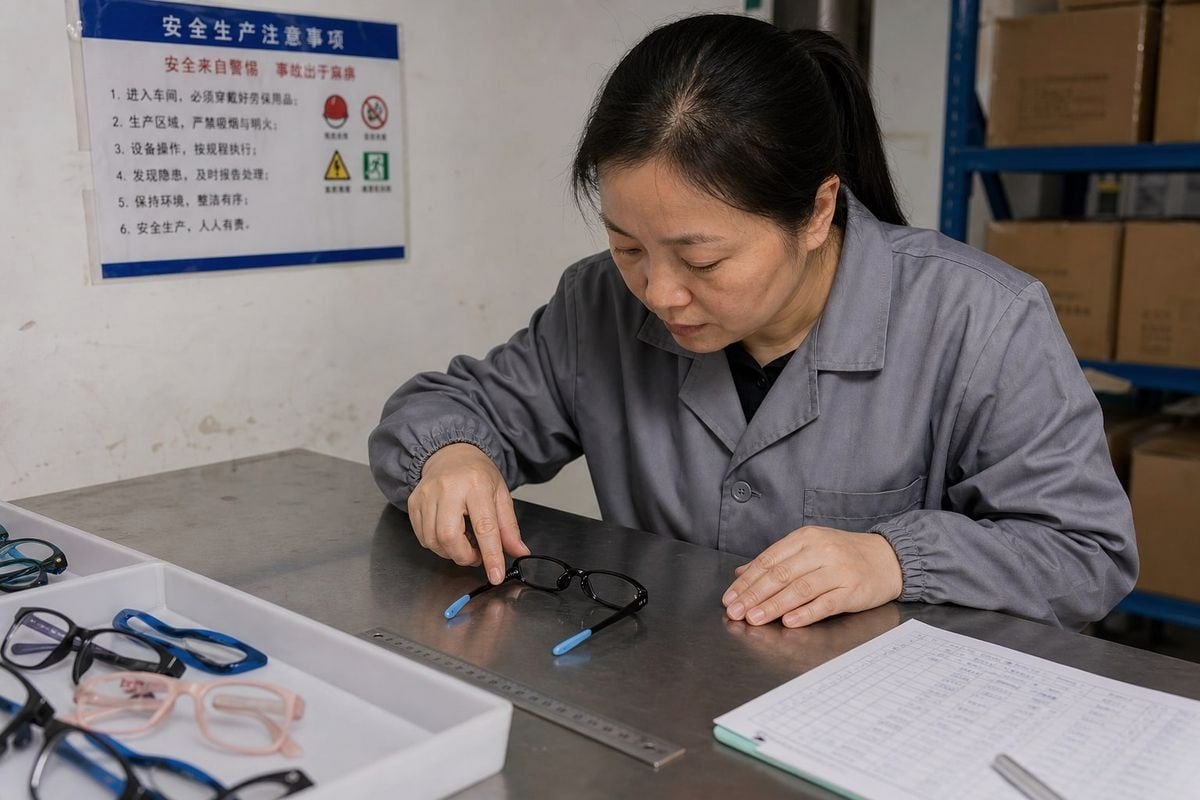
Kosmetische Konsistenz ist ein Indikator für Prozesskontrolle. Deshalb sage ich Käufern immer, sie sollen zwei oder drei Muster anfordern, idealerweise aus verschiedenen Vorproduktionschargen, und sie nebeneinander vergleichen. Eine Fabrik mit Musterstücken, Chargeninspektionen und Farbabgleich liefert Ihnen nahezu identische Einheiten. Eine Fabrik ohne diese Kontrollen kann die Variation nicht verbergen.
Details, die das Design für Kinder von geschrumpften Erwachsenendesigns unterscheiden
Ein echtes Kindergestell ist für die Anatomie des Kindes konstruiert, nicht verkleinert. Hier ist, was wir in unsere eigenen Designs einbauen und worauf Sie bei jedem anderen achten sollten:
| Handwerkskunst Detail | Was es offenbart |
|---|---|
| Sattelsteg 4 mit vollem, lückenlosem Nasenkontakt | Anatomisches Stegdesign, kein vergrößertes Erwachsenenmodell |
| DBL im Bereich von 14–17 mm | Korrekter Abstand des Kinderstegs für Stabilität |
| Bügelkurve beginnt am höchsten Punkt des Ohrs | Anatomisches Gleichgewicht; kein Druck auf den Warzenfortsatz |
| Lasergeätzte Mikrotexturen im Steg und an den Bügeln | Passiver rutschfester Griff ohne klebrige Beschichtungen |
| Modulare Bügelspitzensysteme | Das Gestell kann mit dem Kind mitwachsen, durch längere oder Kabelspitzen |
| Integrierte Nasenpads, in die Vorderseite eingearbeitet | Weniger Teile, die sich lösen können, sanfter Hautkontakt |
Ein Sattelsteg, der die Nase ohne Lücken umschmiegt, verteilt das Gewicht gleichmäßig und stoppt das ständige Verrutschen, das Kinder dazu bringt, ihre Brille abzulegen. Unsere TR90-Gestelle mit TPEE-Bügeln verwenden flexible Bügelspitzen aus weichem Silikon, gerade weil der Halt von Geometrie und Material kommen sollte, nicht von Klebstoffen. Auch die Materialwahl spielt hier eine Rolle: TR90-Speicherplastik und hypoallergene Materialien wie TPEE zeigen eine Fabrik, die Sicherheit und Komfort für die Haut priorisiert, nicht nur die Stückkosten.
Der Materialspeichertest
Biegen Sie die Gestellfront und die Bügel vorsichtig. Hochwertige TR90-Speicherplastik oder Speichermetall kehrt sofort, geräuschlos und vollständig in seine Form zurück. Knarren, Weißwerden an der Biegestelle oder eine langsame Rückkehr deuten auf abgebautes oder gemischtes Harz hin.
Welche visuellen Mängel sollten mich dazu veranlassen, eine Stichprobencharge abzulehnen?
Zu Beginn meiner fünfzehnjährigen Tätigkeit in der Augenoptik habe ich eine teure Lektion gelernt: Ein Mangel, den man in der Musterphase entschuldigt, vervielfacht sich in der Massenproduktion. Jetzt behandeln unsere Wareneingangs- und Ausgangskontrollen bestimmte Mängel als automatische Ablehnungen.
Chargen ablehnen, die Kleberflecken, klappernde oder falsch ausgerichtete Scharniere, scharfe Kanten oder freiliegende Grate, wackelnde Rahmen auf einer ebenen Fläche, asymmetrische Bügel, ungleichmäßige Politur, abgeplatzte Metallbeschichtung, lose Nasenpads oder Farbabweichungen von Einheit zu Einheit aufweisen. Diese Mängel sagen Feldausfälle und Sicherheitsbeschwerden voraus.
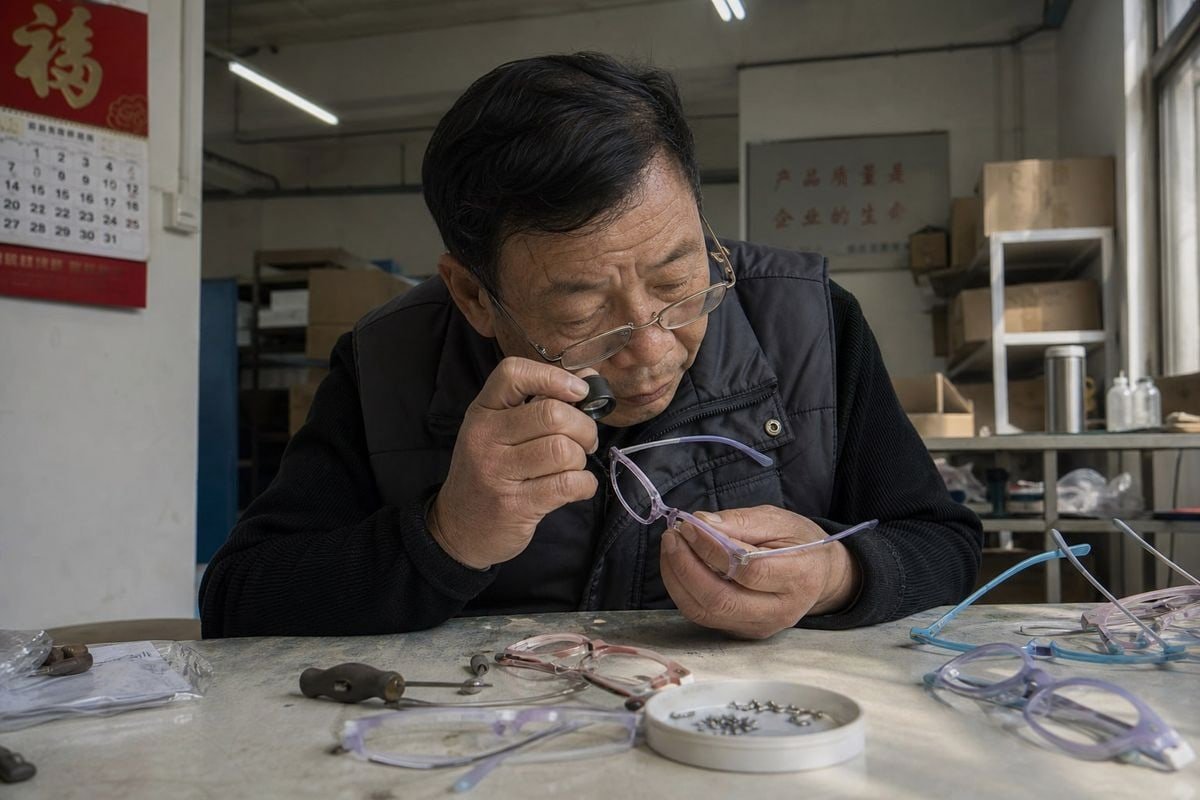
Einige Mängel sind kosmetische Ärgernisse. Andere sind frühe Warnzeichen für Rücksendungen, Reklamationen und Sicherheitsrisiken. Die Kunst besteht darin, zu wissen, was was ist, und bei Kinderprodukten muss die Schwelle niedriger angesetzt werden als bei Erwachsenengestellen. Eine raue Kante an einem Erwachsenengestell ist ein Ärgernis. Auf dem Gesicht eines Sechsjährigen ist es eine Haftung.
Ein praktischer Rahmen für Ablehnung oder Annahme
Führen Sie zuerst eine Gestellausrichtungsprüfung durch: Legen Sie das Gestell umgedreht auf eine ebene Tischplatte. Beide Bügel müssen gleichmäßig aufliegen. Wackeln bedeutet verdrehte Geometrie aufgrund schlechter Formtoleranzen oder Transportschäden, und beides ist auf Chargenebene disqualifizierend, wenn es sich wiederholt.
| Gefundener Mangel | Schweregrad | Entscheidung |
|---|---|---|
| Freiliegende Grate, scharfe Spitzen, vorstehende Beschläge | Kritische Sicherheit | Charge ablehnen |
| Gestell wackelt auf ebener Fläche; schiefer Steg | Hauptstruktur | Charge ablehnen |
| Klappernde, körnige oder klemmende Scharniere | Hauptfunktion | Charge ablehnen |
| Sichtbare Klebespuren an Verbindungen oder Brillengläsern | Hauptkosmetik/Prozess | Ablehnen; deutet auf überstürzte Montage hin |
| Abgeplatzte oder dünne Metallbeschichtung | Hauptverschleißfestigkeit | Ablehnen; wird sich mit der Zeit verschlimmern |
| Leichte Ungleichmäßigkeit der Politur nur bei einer Einheit | . Kleinere | Rückfrage; weitere Einheiten prüfen |
| Leichte Farbabweichung zwischen den Chargen im Vergleich zur Musterprobe | Klein – Groß | Verhandeln; Farbabgleich mit der Musterprobe erforderlich |
Warum eine schlechte Einheit wichtig ist
Käufer sagen mir manchmal, dass eine einzelne fehlerhafte Probe statistisch bedeutungslos ist. Ich stimme dem nicht zu, und hier ist die Nuance: Ein poliert aussehendes Gestell kann immer noch eine schwache interne Konstruktion verbergen, daher beweist das Aussehen allein niemals die Haltbarkeit. Aber das Gegenteil ist zuverlässig. Eine Fabrik, die Ihnen eine fehlerhafte Probe liefert, mit ihrem besten Fuß nach vorne, hat keine funktionierende Ausgangskontrolle. Kombinieren Sie Ihre visuelle Prüfung mit den Scharnier-, Biege- und Passformtests aus den vorherigen Abschnitten und bestehen Sie darauf, dass die Produktion mit der genehmigten Musterprobe übereinstimmt. Herkunftsland und Markenname beweisen weit weniger als diese konkreten Konstruktionsdetails.
Schlussfolgerung
Beurteilen Sie die Qualität von Kinder-Optikfassungen anhand dessen, was Sie sehen und fühlen können: gleichmäßige Oberfläche, abgerundete Kanten, leichtgängige Federscharniere, echte Symmetrie und eine kindgerechte Stegform. Diese sichtbaren Details sagen etwas über die tatsächliche Haltbarkeit aus.
Fußnoten
Die EPA reguliert antimikrobielle Substanzen, die in Materialien verwendet werden, um sicherzustellen, dass sie für den menschlichen Kontakt sicher sind. ↩︎
Unterstützt die Behauptung zur Kindersicherheit bezüglich BPA-freier Materialien mit maßgeblichen FDA-Sicherheitsrichtlinien. ↩︎
Wikipedia liefert technische Details zu Celluloseacetat, dem Hauptmaterial für hochwertige, handpolierte Optikfassungen. ↩︎
Die FDA reguliert verschreibungspflichtige Brillen und Fassungen als Medizinprodukte, um Sicherheit und Biokompatibilität zu gewährleisten. ↩︎
Weitere Artikel, die Ihnen gefallen könnten

Auf der Suche nach einem zuverlässigen Partner für Kinderbrillen?
Entdecken Sie über 800 sofort verfügbare Modelle und umfassenden OEM/ODM-Support, der auf Ihre Marke zugeschnitten ist.
Kontakt aufnehmen English
  Español de México
  Deutsch
  Français
  日本語
日本語  العربية
  Português do Brasil