Wie man Sonnenbrillen für Kinder auf scharfe Kanten und Grate prüft?
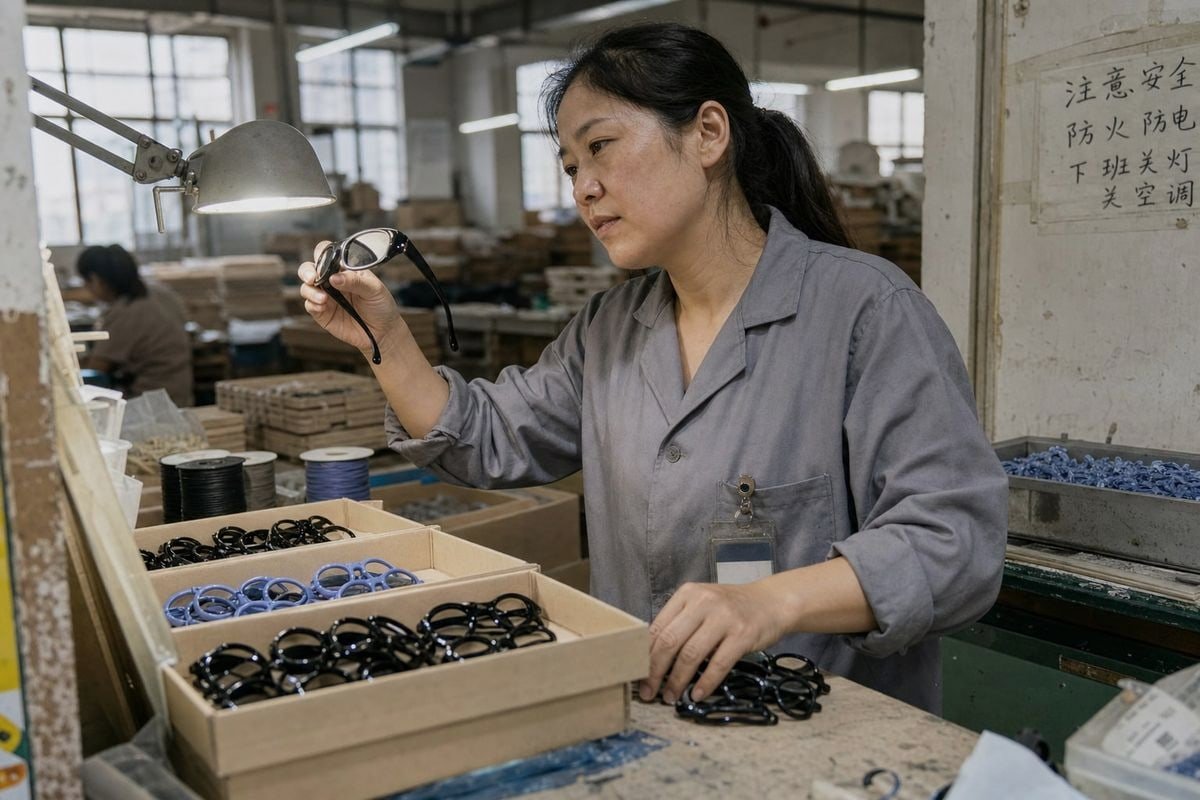
Ein winziger Grat kann großartige Kinder-Sonnenbrillen zu einer Gefahr machen BPA-frei 1. In unserer Produktionslinie in Taizhou habe ich ganze Chargen wegen Kanten abgelehnt, die die meisten Leute nie bemerken würden.
Um Kinder-Sonnenbrillen auf scharfe Kanten und Grate zu prüfen, wischen Sie den Rahmen sauber, inspizieren Sie ihn unter hellem Licht, fahren Sie mit einer Fingerspitze über jede Kante, untersuchen Sie Scharniere, Schrauben, Bügelenden und den Linsenrand und biegen Sie dann vorsichtig den Rahmen. Ersetzen Sie jedes Paar, das hängen bleibt, zerkratzt oder sich spitz anfühlt.
Das ist die Zwei-Minuten-Version. Unten führe ich Sie durch jeden Schritt im Detail. Ich zeige Ihnen auch, was wir auf Fabrikebene tun, damit Sie wissen, [was Sie von jedem Lieferanten verlangen müssen](https://okayeyewear.com/how-inspect-compare-kids-sunglasses-samples-screen-out-unqualified-suppliers/).
Welche Werkzeuge oder Techniken kann ich verwenden, um scharfe Kanten an Kinderrahmen zu erkennen?
Letztes Frühjahr hat ein Qualitätskontrolleur an unserer Linie eine Charge von Bügelenden mit Mikrograten mit nichts als einer Nylonstrumpfhose entdeckt. Dieser einfache Trick übertraf an diesem Tag unsere Lupen.
Sie können scharfe Kanten mit einem Fingerschliff-Test, einem Nylonstrumpf-Hafttest, hellem gerichteten Licht oder einer Handy-Taschenlampe, einer Lupe für Scharnierbereiche und einem Fingernagel, der über Formnähte fährt, erkennen. Alles, was am Stoff hängen bleibt oder die Haut zerkratzt, besteht die Prüfung nicht.
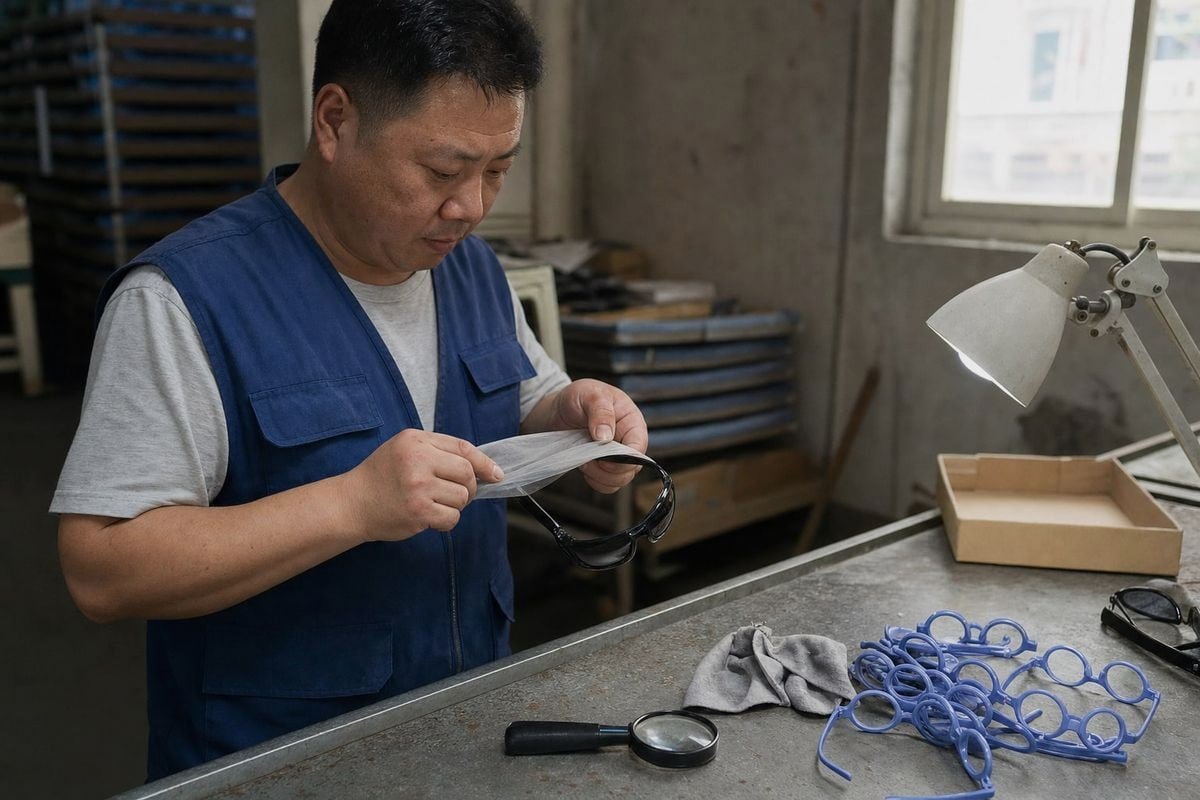
Sie brauchen keine Laborausrüstung. Ihre Hände, Ihre Augen und ein paar Haushaltsgegenstände fangen fast jeden gefährlichen Defekt ab. Reinigen Sie zuerst die Sonnenbrille mit einem Mikrofasertuch. Schmutz und Sand können sich wie Grate anfühlen, also entfernen Sie Schmutz, bevor Sie den Rahmen beurteilen. Gehen Sie dann die folgenden Techniken der Reihe nach durch.
Die Kern-Erkennungsmethoden
| Technik | Wie man es macht | Was er erfasst |
|---|---|---|
| Fingerspitzen-Gleitprüfung | Fahren Sie langsam mit einem Finger über den gesamten Rahmenumfang und beide Bügel | Raue Stellen, erhabene Kanten, scharfe Ecken |
| Nylonstrumpf-Hafttest | Schieben Sie feines Netzgewebe über alle Oberflächen | Mikroskopische Grate, die für das Auge unsichtbar sind |
| Helle Lichtinspektion | Kippen Sie den Rahmen unter eine Lampe oder Handy-Taschenlampe | Spritzgießen 2 Blitz, Risse, abgeplatzte Beschichtung |
| Fingernagel-Naht-Klick | Ziehen Sie einen Nagel senkrecht zu den Formtrennnähten | Scharf erhabene Grate durch schlechte Verarbeitung |
| Spannungsflex-Enthüllung | Biegen Sie den Rahmen vorsichtig, während Sie die Linsennuten beobachten | Versteckte innere Grate, die sich unter Spannung zeigen |
Fühlen, bevor Sie vertrauen
Meiner Erfahrung nach ist Berührung für diese Aufgabe besser als Sehen. Unsere Inspektoren gleiten mit ihren Fingern über jede Probe, bevor sie überhaupt eine Lupe in die Hand nehmen. Ein Grat, den man fühlen kann, ist ein Grat, der die Schläfe oder Nase eines Kindes zerkratzen kann. Der Strumpftest ist die empfindlichste Methode. Wenn das Netz irgendwo hängen bleibt, markieren Sie diese Stelle und untersuchen Sie sie unter Vergrößerung. Achten Sie besonders auf Nähte, denn dort versteckt sich der Grat der Spritzgussform. Biegen Sie schließlich den Rahmen vorsichtig. Hochwertige flexible TPEE-Rahmen biegen sich und kehren in ihre Form zurück, ohne scharfe innere Lippen freizulegen. Wenn das Verdrehen eine Lücke öffnet oder eine Kante in der Linsennut freilegt, sollte dieses Paar nicht in die Nähe eines Kindergesichts gelangen.
Welche Teile von Kinder-Sonnenbrillen sind am anfälligsten für Grate und raue Stellen?
Ein Käufer aus Australien fragte mich einmal, warum wir so lange brauchen, um Scharnierbereiche zu polieren. Ich gab ihr einen unfertigen Rahmen aus der laufenden Produktion, und sie verstand es innerhalb von Sekunden.
Die anfälligsten Bereiche für Grate sind die Scharnierbaugruppe, die Bügelenden, der Nasensteg, die Einspritzpunkte, die Formtrennnähte, die Schraubenköpfe und die Schnittstelle zwischen Linse und Rahmen. An diesen Stellen wird geschnitten, gebohrt oder geformt, sodass sie das höchste Risiko für raue oder scharfe Oberflächen bergen.
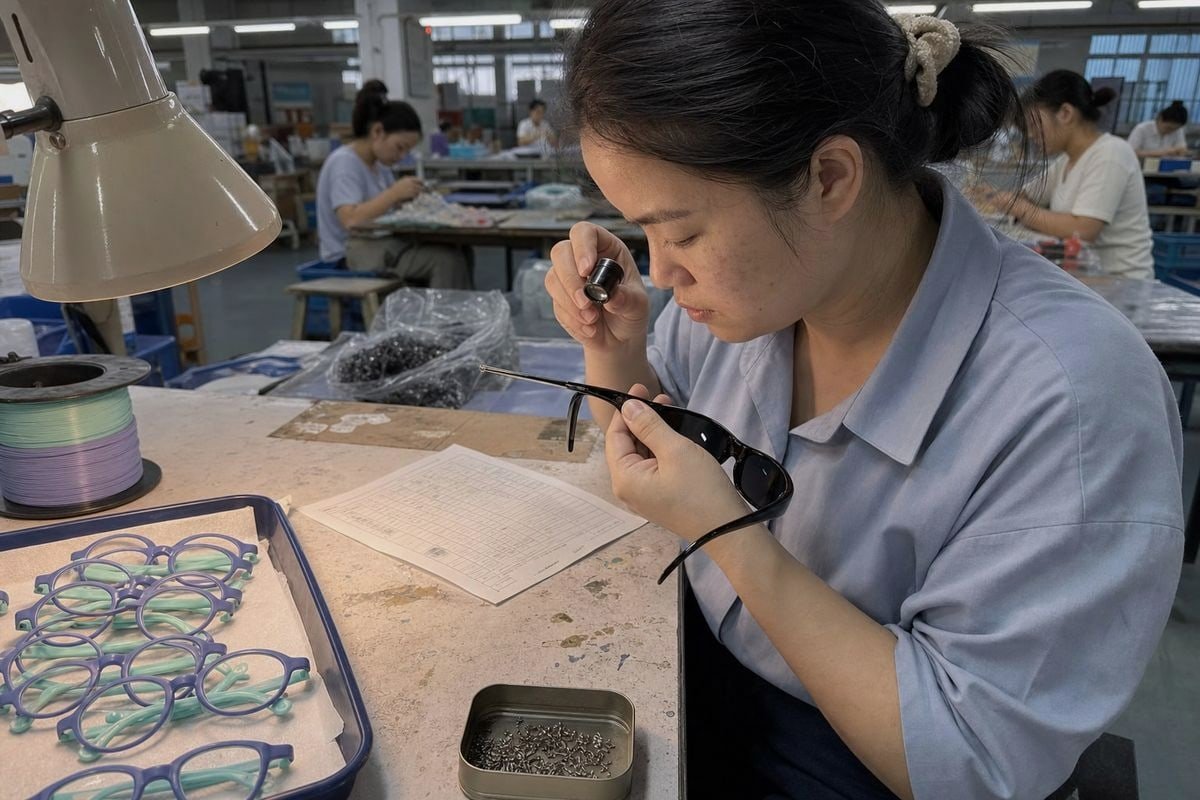
Nicht jeder Teil eines Rahmens birgt das gleiche Risiko. Grate entstehen dort, wo Material geschnitten, verbunden oder durch eine Form gepresst wird. Wenn Sie diese Problemzonen kennen, können Sie schneller und intelligenter inspizieren. Überprüfen Sie zuerst die Teile, die die Haut berühren, da diese bei der tatsächlichen Verwendung Reizungen verursachen.
Die Risikozonen, eingestuft
| Priorität | Bereich | Warum es riskant ist | Hautkontakt? |
|---|---|---|---|
| 1 | Bügelenden | Oft zuletzt getrimmt und fertiggestellt; ruht direkt auf den Ohren | Ja |
| 2 | Nasenrücken | Formnaht verläuft hier; liegt auf weicher Nasenhaut | Ja |
| 3 | Scharnierbaugruppe | Freiliegende Metallstifte, Schraubenköpfe, Kunststoffzähne können quetschen | Hautnah |
| 4 | Einspritzpunkt | Der Plastikeinlass muss bündig poliert werden | Manchmal |
| 5 | Formtrennungslinien | Grat tritt aus Nähten entlang der inneren Schläfen aus | Ja |
| 6 | Brillenglasrand und Innenkante | Nicht ausgerichtete Gläser erzeugen vorstehende scharfe Kanten | In Augennähe |
| 7 | Dekorative Teile und Befestigungselemente | Kleine Anbauteile können unbearbeitete Kanten haben | Variiert |
Warum Scharniere besondere Aufmerksamkeit verdienen
Die Sicherheit von Scharnierbeschlägen ist eine eigene Kategorie. Falten und entfalten Sie die Bügel mehrmals. Achten Sie auf freiliegende Metallkanten, vorstehende Schraubenenden oder gezackte Kunststoffzähne, die einen kleinen Finger einklemmen könnten. Bei unseren TR90-Kinder-Optikfassungen mit TPEE-Bügeln gestalten wir die Scharnierzone so, dass keine Metallkante über die Kunststoffoberfläche hinausragt. Prüfen Sie auch, ob die Gläser bündig mit dem Rand sitzen. Wenn die Fassung nicht richtig ausgerichtet ist, kann eine vorstehende Polycarbonat 3 Brillenglasrand wie eine scharfe Kante direkt neben dem Auge eines Kindes wirken. Kinder gehen grob mit Brillen um. Sie stopfen Sonnenbrillen in Rucksäcke und lassen sie auf Spielplätzen fallen. Ein Hotspot, der nur rau beginnt, kann sich über Monate der Nutzung zu etwas wirklich Scharfem entwickeln, also überprüfen Sie diese Zonen regelmäßig, nicht nur beim Kauf.
Wie stellen Hersteller wie OKAY EYEWEAR während der Produktion glatte, sichere Kanten sicher?
Es gibt einen echten Kompromiss, den wir jeden Tag abwägen: zusätzliche Polierzeit kostet Geld, aber eine einzige scharfe Kante an einer Kinderfassung kostet Vertrauen. Wir entscheiden uns immer für das Polieren.
Hersteller sorgen für glatte Kanten durch kontrollierte Spritzgusstechnik, mechanisches Entgraten von Angussstellen, Trommelpolieren, Handbearbeitung von Scharnieren und Bügelenden, taktile Inspektion jeder Charge und flexible Materialien wie TPEE und TR90, die sich biegen, ohne in scharfe Splitter zu brechen.
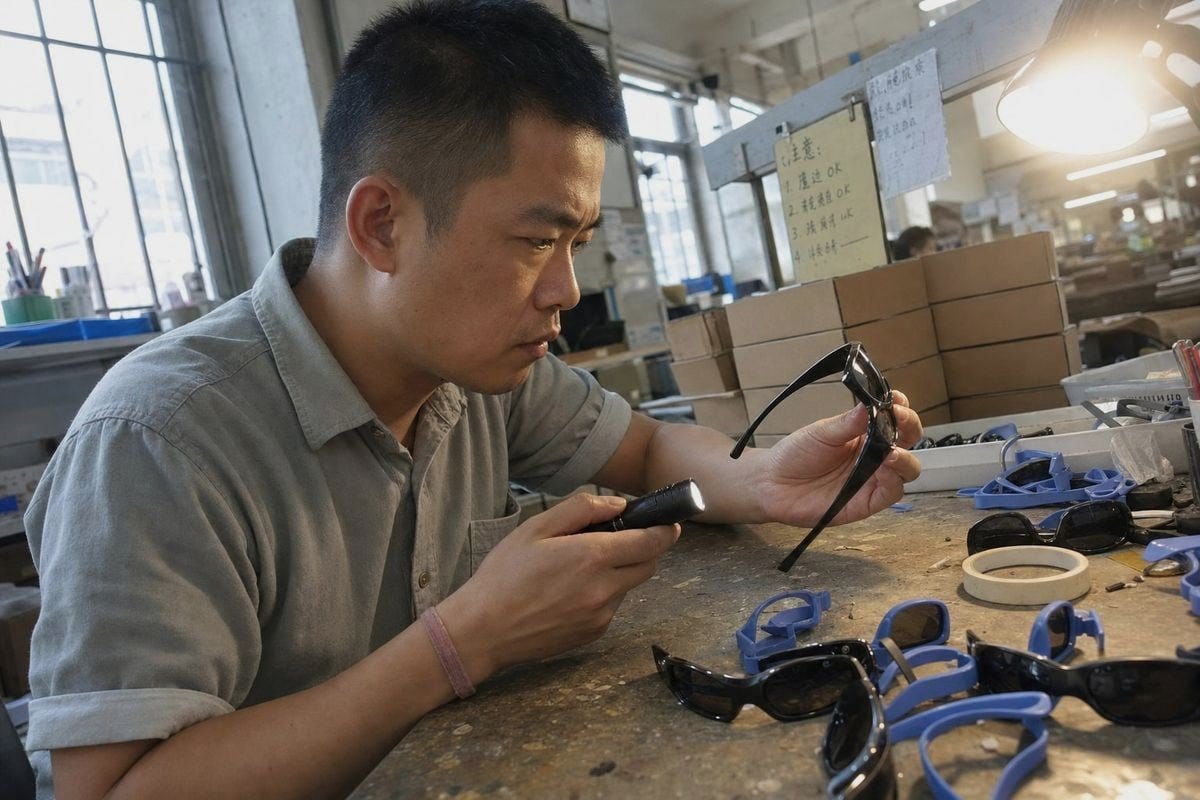
Sichere Kanten sind kein Zufall. Sie sind das Ergebnis bewusster Schritte, die in jeder Produktionsphase eingebaut sind. In unserer 5S-verwalteten Werkstatt in Taizhou, mit rund 120 Mitarbeitern und fünfzehn Jahren Erfahrung in der Brillenherstellung, folgt die Kantenbearbeitung einer festen Reihenfolge. Hier ist, wie der Prozess Schritt für Schritt abläuft.
Die Kanten-Sicherheits-Produktionssequenz
- Materialauswahl. Wir beginnen mit BPA-frei 4, umweltfreundlichen TPEE und TR90. Diese flexiblen Polymere biegen sich und kehren in ihre Form zurück, anstatt in gezackte Splitter zu brechen, was spröde Kunststoffe tun.
- Formenwartung. Verschleißte Formen verursachen Grat. Wir inspizieren und warten Formen regelmäßig, denn Vorbeugung ist besser als Korrektur.
- Kontrollierte Einspritzparameter. Korrekte Temperatur und Druck minimieren überschüssigen Kunststoff, der aus Nähten austritt, von vornherein.
- Angussentgraten. Die Angussstelle wird bei jedem Stück mechanisch bündig mit der Fassungsoberfläche geschliffen.
- Trommelpolieren. Fassungen werden mit Polierkörpern getrommelt, um alle Kanten gleichmäßig zu glätten.
- Handbearbeitung. Facharbeiter verfeinern Scharnierecken, Bügelenden und den Nasensteg von Hand, da Maschinen diese engen Geometrien nicht erreichen.
- Taktile und visuelle Qualitätskontrolle. Inspektoren gleiten mit den Fingern über die Kanten, führen Snag-Tests durch und prüfen die Scharnierbeschläge unter hellem Licht vor dem Verpacken.
Wir führen auch Schlagfestigkeitsprüfungen an Glas- und Fassungskombinationen durch, denn ein bruchsicheres Glas ist genauso wichtig wie ein glatter Rand. Unsere bruchsicheren Polycarbonat-Glasoptionen bieten standardmäßig UV400 5 Schutzstufen, und die Haltbarkeit von Polycarbonat-Gläsern bedeutet, dass die Glasrand selbst widerstandsfähig gegen Absplitterungen zu scharfen Fragmenten ist. Da Käufer aus rund 800 bestehenden Modellen wählen können, hat jedes dieser Modelle diese Bearbeitungssequenz bereits durchlaufen und wurde über wiederholte Produktionsläufe verfeinert. Diese Reife ist wichtig. Eine Erstform benötigt fast immer Kantenanpassungen; ein bewährtes Modell nicht.
Welche Qualitätskontrollschritte sollte ich von meinem Lieferanten verlangen, um Defekte an scharfen Kanten zu vermeiden?
Früh in meiner Karriere habe ich eine harte Lektion gelernt: Ein Lieferant, der Ihnen seine Checkliste zur Qualitätskontrolle nicht zeigen kann, hat normalerweise keine. Jetzt ermutige ich Käufer, nach unserer zu fragen.
Fordern Sie eine dokumentierte Checkliste zur Qualitätskontrolle an, die taktile Kanteninspektion, Scharnier- und Schraubenprüfungen, Snag-Tests, Flex-Tests und Verifizierungen der Glaspassung umfasst. Fragen Sie nach der Einhaltung von ASTM-Sicherheitsstandards, ISO 12870 und CPSIA sowie nach Inspektionsberichten vor dem Versand und physischen Golden Samples.
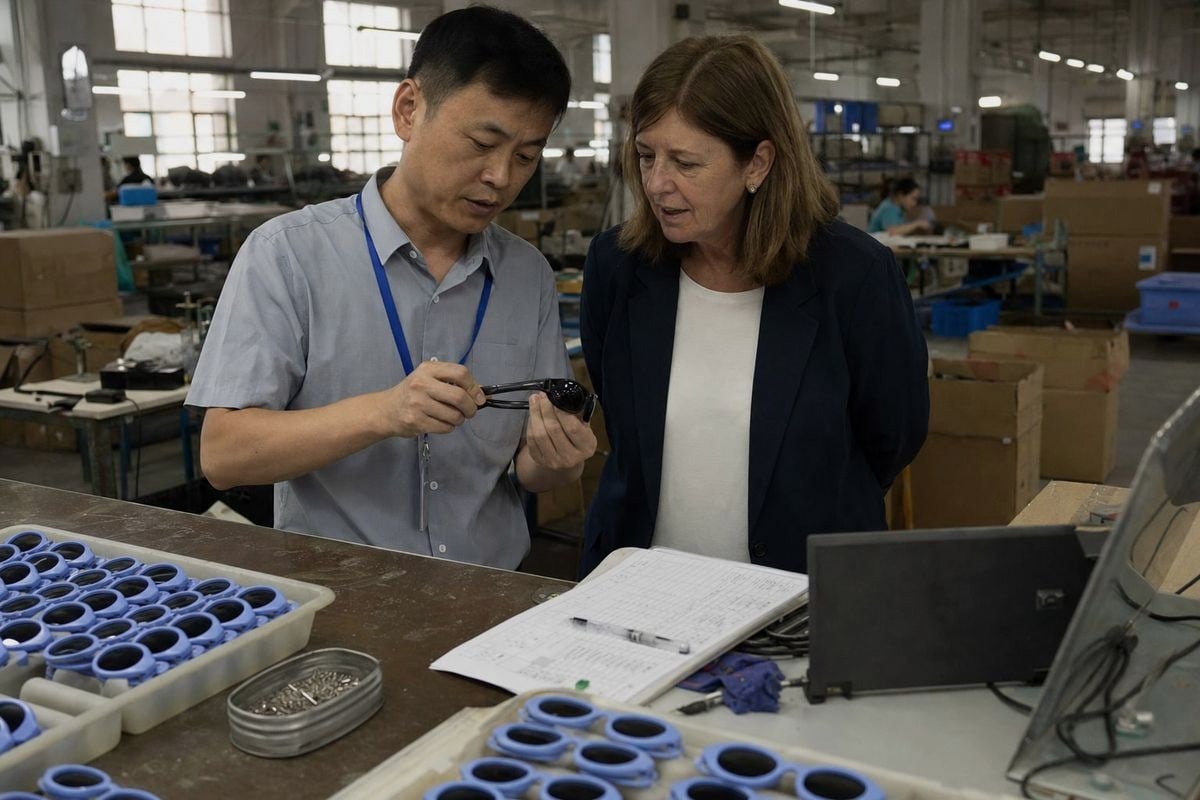
Wenn Sie ein Marken-Einkäufer sind, ist Ihre Inspektion zu Hause die letzte Verteidigungslinie, nicht die erste. Die eigentliche Arbeit geschieht vor dem Versand. Nach unserer Erfahrung im Export in mehr als zwanzig Länder beginnen die stärksten Partnerschaften mit klar vereinbarten QC-Kriterien schriftlich. Hier ist, was auf diese Liste gehört.
Die QC-Anforderungs-Checkliste des Käufers
| QC-Schritt | Was Sie anfordern sollten | Warum es wichtig ist |
|---|---|---|
| Kanten- und Gratinspektion | Taktiler Gleittest plus Snag-Test nach vereinbarter AQL-Stichprobe | Fängt scharfe Kanten vor dem Verpacken ab |
| Audit der Scharnierbeschläge | Keine freiliegenden Stifte, keine vorstehenden Schraubenköpfe, feste Schrauben | Verhindert Einklemmen und Kratzen am Falzpunkt |
| Grat- und Angussprüfung | Spritzgussöffnungen bündig geschliffen; keine sichtbaren Formtrennkanten an hautberührenden Stellen | Eliminiert die häufigste Gratursache |
| Überprüfung des Linsenpassens | Linsen bündig mit dem Rand; keine hervorstehenden Linsenränder | Entfernt scharfe Kanten in Augennähe |
| Flex- und Belastungstest | Gestelle gemäß Protokoll verdreht; keine Risse oder aufkommenden inneren Lippen | Bestätigt die Integrität des flexiblen Materials |
| Einhaltung von Standards | Dokumentation für ASTM-Sicherheitsstandards 6, ISO 12870, Die erste Frage ist immer die Klassifizierung. Sind Ihre Sonnenbrillen wirklich ein Kinderprodukt? Betrachten Sie die Größe, das Marketing, die Verpackung und den beabsichtigten Benutzer. Unsere kompakten runden Rahmen in Periwinkle-Blau mit mint-türkisen Bügeln sind eindeutig für kleine Gesichter konzipiert. Niemand würde argumentieren, dass es sich um Produkte für den allgemeinen Gebrauch handelt. Diese Klassifizierung löst den gesamten Satz von 7 Konformität | Überprüft zugängliche Kanten-Schwellenwerte für Kinderprodukte |
| Vorversandbericht | Fotos, Fehlerzählungen und Bestanden/Nicht bestanden-Ergebnisse pro Charge | Liefert Ihnen Beweise, bevor die Ware das Werk verlässt |
| Goldene Muster | Von beiden Parteien aufbewahrte genehmigte Referenzmuster | Legt einen objektiven Maßstab für jede zukünftige Bestellung fest |
Schreiben Sie es vor der ersten Bestellung auf
Vereinbaren Sie im Voraus Fehlerdefinitionen. Geben Sie an, dass jede Kante, die an Stoff hängen bleibt oder sich mit der Fingerspitze scharf anfühlt, ein kritischer Fehler und kein geringfügiger ist. Fragen Sie, wie die Fabrik Nacharbeiten handhabt: Werden Grate an Gestellen nachpoliert und neu inspiziert oder leise neu verpackt? Fordern Sie glatte Bügelenden als benannten Inspektionspunkt an, da diese den ganzen Tag auf Kinderohren sitzen. Ein seriöser Lieferant wird diese Fragen begrüßen. Wenn Käufer uns ihre eigenen Checklisten schicken, betrachten wir dies als Zeichen dafür, dass sie ein guter langfristiger Partner sein werden, und wir fügen normalerweise ein paar Punkte hinzu.
Schlussfolgerung
Scharfe Kanten an Kinder-Sonnenbrillen sind vermeidbar. Prüfen Sie durch Berührung, konzentrieren Sie sich auf Scharniere und Bügelenden und fordern Sie dokumentierte Qualitätskontrollen. Kontaktieren Sie uns gerne für sichere, flexible Kinderbrillen.
Fußnoten
FDA-Leitlinien zu Bisphenol A im Zusammenhang mit der BPA-freien Materialangabe in der Produktionssequenz. ↩︎
Hintergrundkonzept, das den Herstellungsprozess erklärt, der für Formtrennkanten und Grate verantwortlich ist, die im gesamten Text besprochen werden. ↩︎
Maßgebliche Quelle zur Sicherheit von Kunststoffmaterialien im Zusammenhang mit Haltbarkeitsangaben für Polycarbonat-Linsen. ↩︎
FDA-Leitlinien klären die Sicherheitsbewertungen hinter BPA-freien Materialangaben für Kinderprodukte.
{
</p>
<p></p>
</body></html>">
Weitere Artikel, die Ihnen gefallen könnten



Auf der Suche nach einem zuverlässigen Partner für Kinderbrillen?
Entdecken Sie über 800 sofort verfügbare Modelle und umfassenden OEM/ODM-Support, der auf Ihre Marke zugeschnitten ist.
Kontakt aufnehmen English
  Español de México
  Deutsch
  Français
  日本語
日本語  العربية
  Português do Brasil