How to Check Kids’ Sunglasses for Sharp Edges and Burrs?
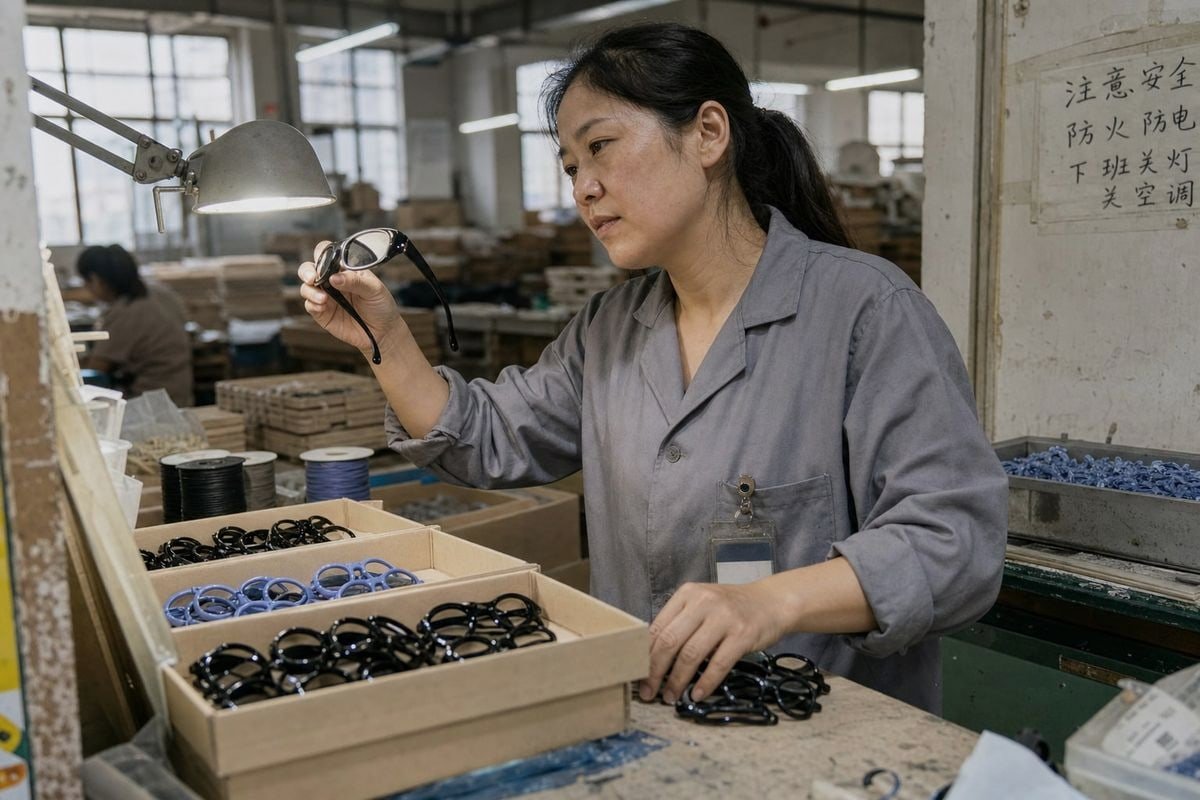
A tiny burr can turn great kids’ sunglasses into a hazard BPAフリー 1. On our production line in Taizhou, I have rejected whole batches for edges most people would never notice.
To check kids’ sunglasses for sharp edges and burrs, wipe the frame clean, inspect it under bright light, run a fingertip along every edge, examine hinges, screws, temple tips, and the lens rim, then gently flex the frame. Replace any pair that snags, scratches, or feels pointed.
That is the two-minute version. Below, I will walk you through each step in detail. I will also show you what we do at the factory level, so you know [what to demand from any supplier](https://okayeyewear.com/how-inspect-compare-kids-sunglasses-samples-screen-out-unqualified-suppliers/).
What Tools or Techniques Can I Use to Detect Sharp Edges on Children's Frames?
Last spring, a QC inspector on our line caught a batch of temple tips with micro-burrs using nothing but a nylon stocking. That simple trick outperformed our magnifiers that day.
You can detect sharp edges using a fingertip glide test, a nylon stocking snag test, bright directional light or a phone flashlight, a magnifier for hinge areas, and a fingernail run across mold seams. Anything that snags fabric or scratches skin fails the check.
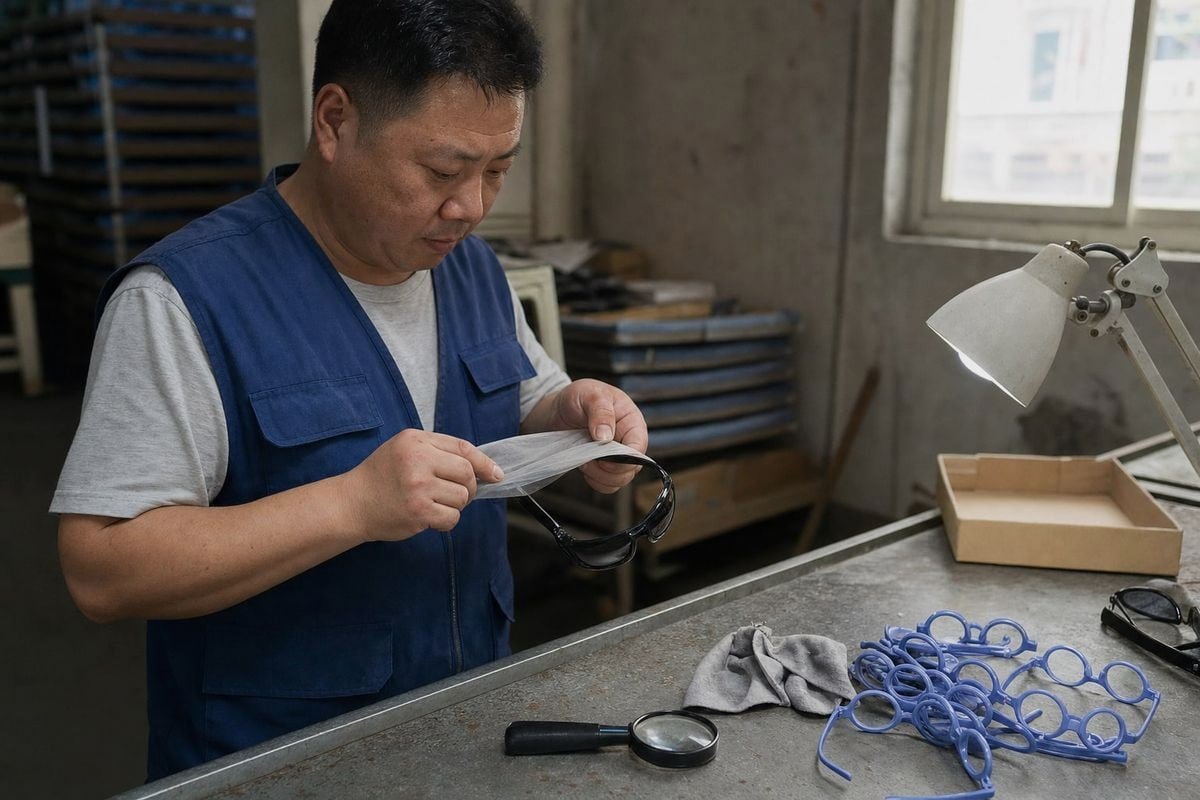
You do not need lab equipment. Your hands, your eyes, and a few household items will catch almost every dangerous defect. First, clean the sunglasses with a microfiber cloth. Dirt and sand can feel like burrs, so remove debris before you judge the frame. Then work through the techniques below in order.
The Core Detection Methods
| Technique | やり方 | 捕捉するもの |
|---|---|---|
| Fingertip glide | Slowly run a finger along the full frame perimeter and both temples | Rough spots, raised edges, sharp corners |
| Nylon stocking snag test | Slide fine mesh fabric over all surfaces | Microscopic burrs invisible to the eye |
| Bright light inspection | Tilt the frame under a lamp or phone flashlight | 射出成形 2 flash, cracks, chipped coating |
| Fingernail seam click | Drag a nail perpendicular to mold parting lines | Sharp raised ridges from poor finishing |
| Stress-flex reveal | Gently twist the frame while watching lens grooves | Hidden internal burrs that emerge under tension |
Feel Before You Trust
In my experience, touch beats sight for this job. Our inspectors glide their fingers over every sample before they ever pick up a loupe. A burr you can feel is a burr that can scratch a child's temple or nose. The stocking test is the most sensitive method. If the mesh catches anywhere, mark that spot and examine it under magnification. Pay extra attention to seams, because that is where injection molding flash hides. Finally, flex the frame gently. Quality flexible TPEE frames bend and return to shape without exposing sharp internal lips. If twisting opens a gap or reveals a ridge inside the lens groove, that pair should not go near a child's face.
Which Parts of Kids' Sunglasses Are Most Prone to Burrs and Rough Spots?
A buyer from Australia once asked me why we spend so long buffing hinge areas. I handed her an unfinished frame from mid-production, and she understood within seconds.
The most burr-prone areas are the hinge assembly, temple tips, nose bridge, injection gate sites, mold parting lines, screw heads, and the lens-to-frame interface. These spots involve cutting, drilling, or molding seams, so they carry the highest risk of rough or sharp finishes.
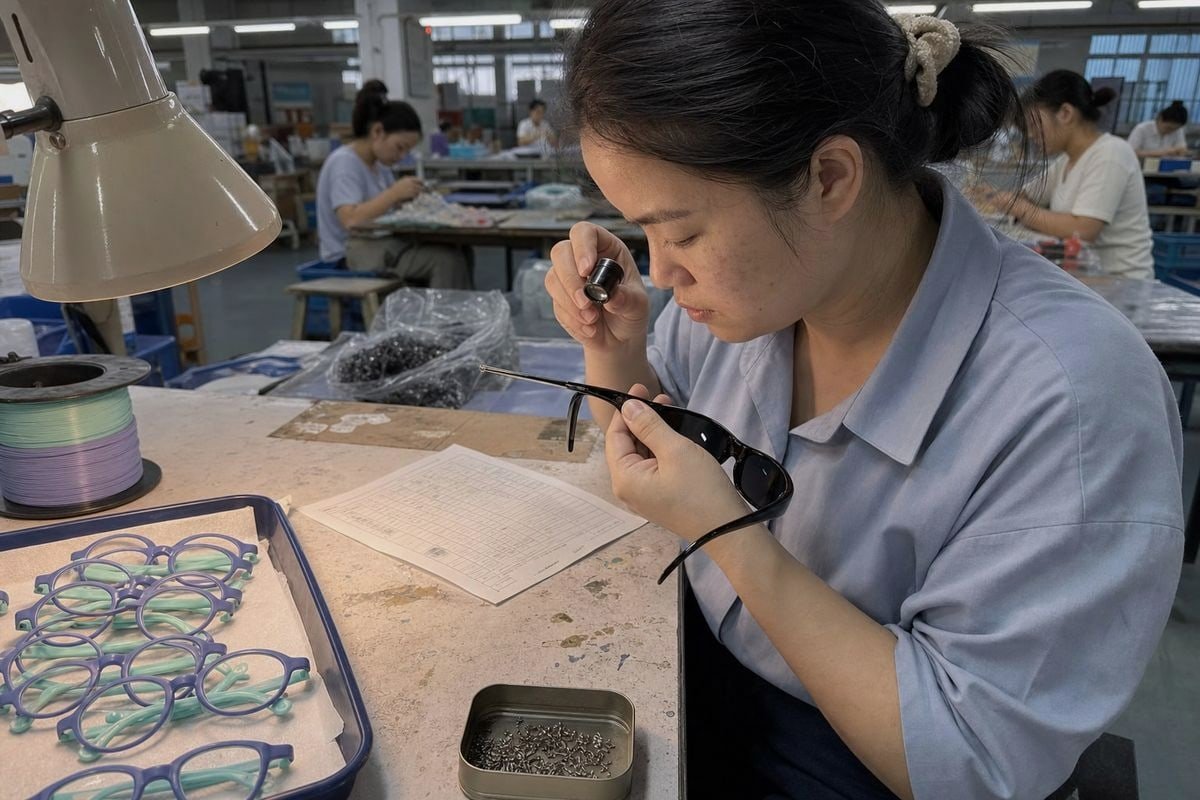
Not every part of a frame carries equal risk. Burrs appear where material is cut, joined, or forced through a mold. Knowing these hotspots lets you inspect faster and smarter. Check the parts that touch skin first, because those cause irritation during real wear.
The High-Risk Zones, Ranked
| 必須 | Area | Why It Is Risky | Skin Contact? |
|---|---|---|---|
| 1 | テンプルチップ | Often trimmed and finished last; rest directly on the ears | はい |
| 2 | 鼻梁 | Molding seam runs here; sits on soft nasal skin | はい |
| 3 | Hinge assembly | Exposed metal pins, screw heads, plastic teeth can pinch | Near skin |
| 4 | Injection gate site | Plastic entry point must be buffed flush | 時々 |
| 5 | Mold parting lines | Flash bleeds from seams along inner temples | はい |
| 6 | Lens rim and inner edge | Misaligned lenses create protruding sharp ridges | Near eyes |
| 7 | Decorative pieces and fasteners | Small add-ons may have unfinished edges | 施設自体がFDA検証を完了したこと |
Why Hinges Deserve Extra Scrutiny
Hinge hardware safety is a category of its own. Fold and unfold the temples several times. Watch for exposed metal edges, protruding screw ends, or jagged plastic teeth that could pinch a small finger. On our TR90 kids optical frames with TPEE temples, we design the hinge zone so no metal edge sits proud of the plastic surface. Also check that the lenses sit flush with the rim. If the frame is misaligned, a protruding ポリカーボネート 3 lens edge can act like a sharp ridge right next to a child's eye. Kids handle eyewear roughly. They shove sunglasses into backpacks and drop them on playgrounds. A hotspot that starts merely rough can degrade into genuinely sharp over months of use, so recheck these zones periodically, not just at purchase.
How Do Manufacturers Like OKAY EYEWEAR Ensure Smooth, Safe Edges During Production?
There is a real trade-off we weigh every day: extra polishing time costs money, but a single sharp edge on a child's frame costs trust. We always choose the polishing.
Manufacturers ensure smooth edges through controlled injection molding, mechanical buffing of gate sites, tumble polishing, hand-finishing of hinges and temple tips, tactile inspection of every batch, and flexible materials like TPEE and TR90 that bend without snapping into sharp shards.
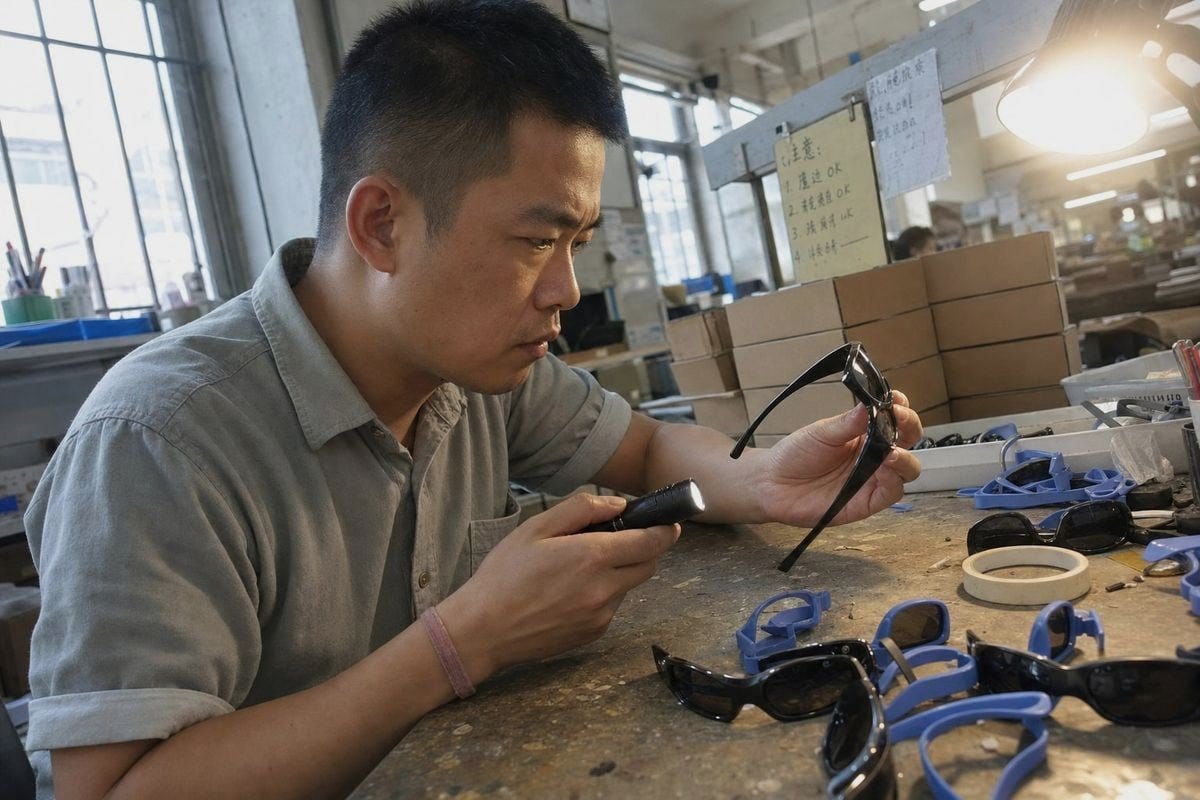
Safe edges are not an accident. They are the result of deliberate steps built into every stage of production. At our 5S-managed workshop in Taizhou, with around 120 workers and fifteen years of eyewear experience behind us, edge finishing follows a fixed sequence. Here is how the process works, step by step.
The Edge-Safety Production Sequence
- Material selection. We start with BPAフリー 4, environmentally friendly TPEE and TR90. These 柔軟なポリマー bend and recover instead of fracturing into jagged shards, which brittle plastics do.
- Mold maintenance. Worn molds cause flash. We inspect and service molds regularly, because prevention beats correction.
- Controlled injection parameters. Correct temperature and pressure minimize excess plastic bleeding from seams in the first place.
- Gate buffing. The injection gate site is mechanically buffed flush with the frame surface on every piece.
- Tumble polishing. Frames tumble with polishing media to soften all edges uniformly.
- Hand finishing. Skilled workers refine hinge corners, temple tips, and the nose bridge by hand, since machines miss these tight geometries.
- Tactile and visual QC. Inspectors glide fingers along edges, run snag tests, and check hinge hardware under bright light before packing.
We also run impact resistance testing on lens and frame combinations, because a shatterproof lens matters as much as a smooth rim. Our shatterproof polycarbonate lens options carry UV400 5 protection levels as standard, and polycarbonate lens durability means the lens edge itself resists chipping into sharp fragments. Because buyers can choose from roughly 800 existing styles, every one of those styles has already been through this finishing sequence and refined over repeated production runs. That maturity matters. A first-run mold almost always needs edge adjustments; a proven style does not.
What Quality Control Steps Should I Request From My Supplier to Prevent Sharp Edge Defects?
Early in my career, I learned a hard lesson: a supplier who cannot show you their quality control checklist usually does not have one. Now I encourage buyers to ask for ours.
Request a documented quality control checklist covering tactile edge inspection, hinge and screw checks, snag testing, flex testing, and lens-fit verification. Ask for compliance with ASTM safety standards, ISO 12870, and CPSIA, plus pre-shipment inspection reports and physical golden samples.
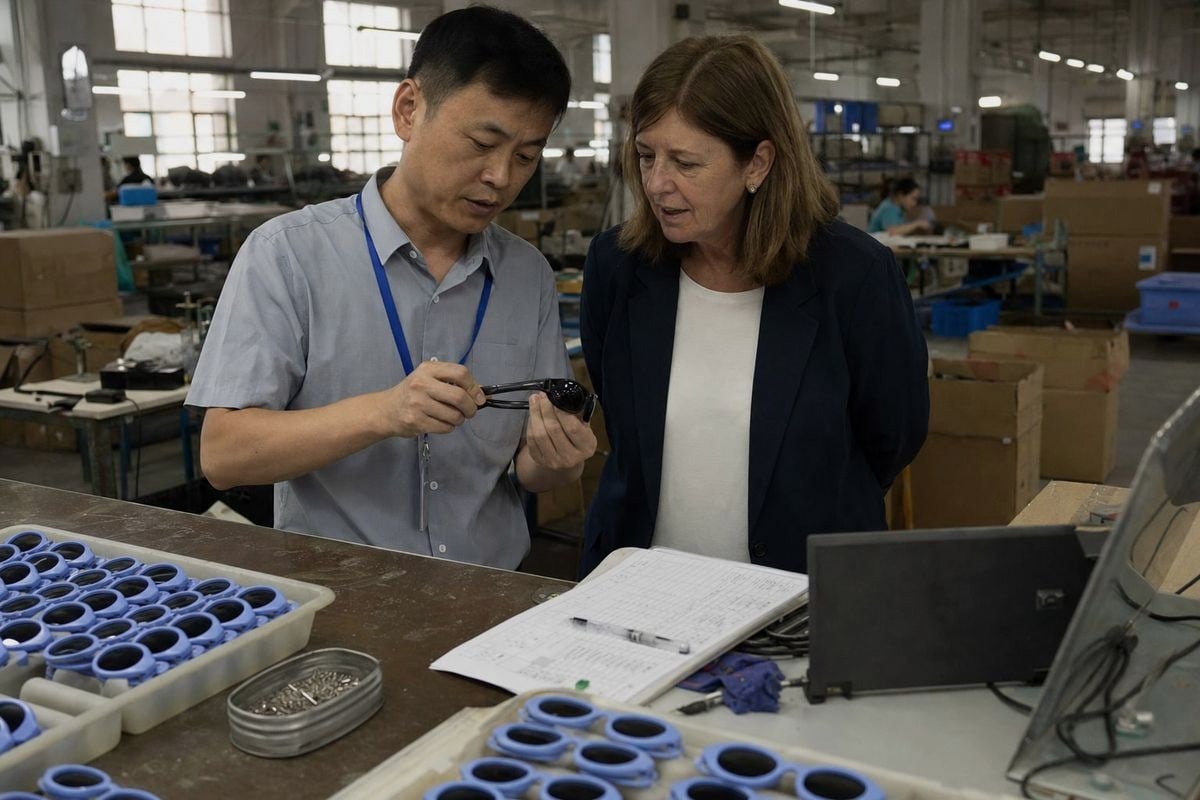
If you are a brand buyer, your inspection at home is the last line of defense, not the first. The real work happens before shipment. In our experience exporting to buyers in more than twenty countries, the strongest partnerships start with clearly agreed QC criteria in writing. Here is what to put on that list.
The Buyer's QC Request Checklist
| QC Step | 要求するもの | なぜ重要なのか |
|---|---|---|
| Edge and burr inspection | Tactile glide test plus snag test on agreed AQL sampling | Catches sharp edges before packing |
| Hinge hardware audit | No exposed pins, no protruding screw heads, snug screws | Prevents pinching and scratching at the fold point |
| Flash and gate check | Injection gates buffed flush; no visible mold flash on skin-contact areas | Eliminates the most common burr source |
| Lens-fit verification | Lenses flush with the rim; no protruding lens edges | Removes sharp ridges near the eyes |
| Flex and stress test | Frames twisted per protocol; no cracks or emerging internal lips | Confirms flexible material integrity |
| Standards compliance | Documentation for ASTM safety standards 6, ISO 12870, CPSIA 7 コンプライアンス | Verifies accessible-edge thresholds for children's products |
| Pre-shipment report | Photos, defect counts, and pass/fail results per batch | Gives you evidence before goods leave the factory |
| Golden samples | Approved reference samples kept by both parties | Sets an objective benchmark for every future order |
Put It in Writing Before the First Order
Agree on defect definitions upfront. Specify that any edge which snags fabric or feels sharp to a fingertip is a critical defect, not a minor one. Ask how the factory handles rework: are burred frames re-polished and re-inspected, or quietly repacked? Request smooth temple tips as a named inspection point, since they sit on children's ears all day. A serious supplier will welcome these questions. When buyers send us their own checklists, we treat it as a sign they will be a good long-term partner, and we usually add a few points of our own.
結論
Sharp edges on kids' sunglasses are preventable. Check by touch, focus on hinges and temple tips, and demand documented QC. Feel free to contact us for safe, flexible children's eyewear.
脚注
1. FDA guidance on bisphenol A relevant to the BPA-free material claim in the production sequence. ↩︎
2. Background concept explaining the manufacturing process responsible for mold flash and burrs discussed throughout. ↩︎
3. Authoritative source on plastic material safety relevant to polycarbonate lens durability claims. ↩︎


 English
  Español de México
  Deutsch
  Français
  日本語
日本語  العربية
  Português do Brasil