Pre-Shipment vs Mid-Production Inspection: Which Reduces Rework Costs for Kids Sunglasses?
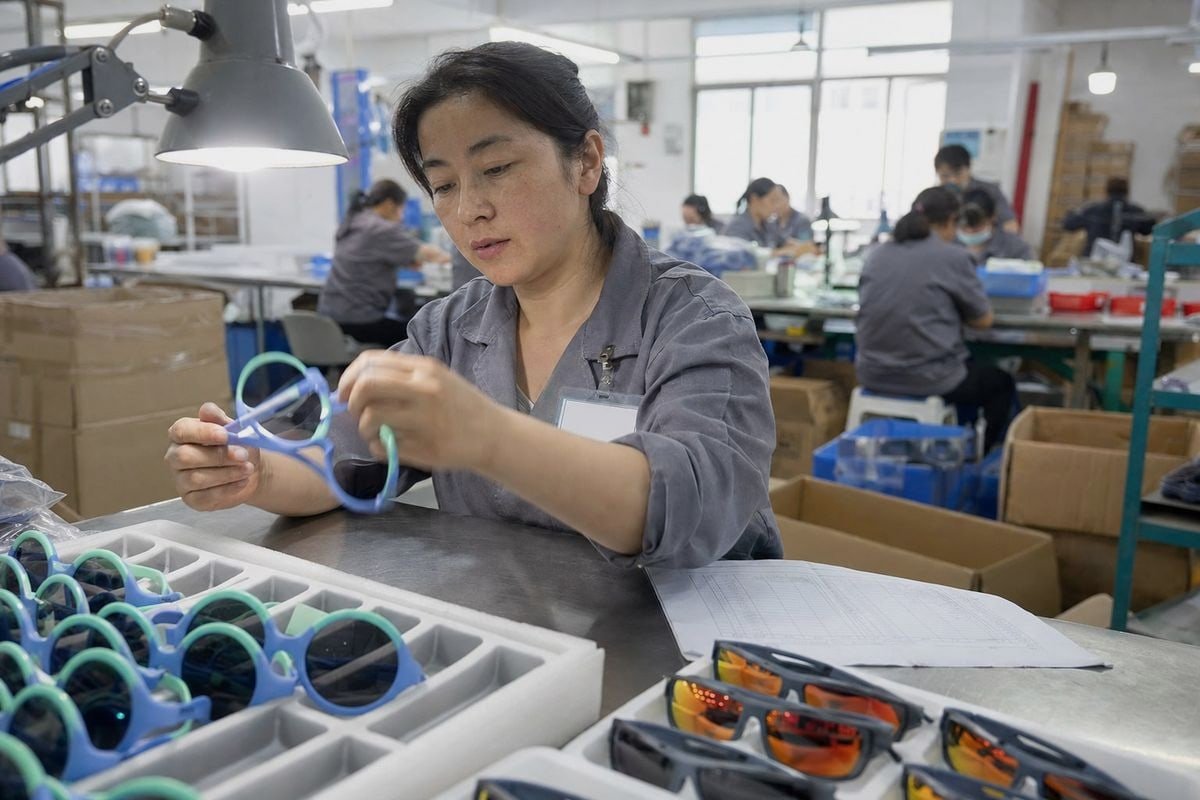
Pre-shipment vs mid-production inspection is a question I hear weekly on our kids sunglasses production line. Choose wrong, and rework costs quietly eat your entire margin before goods even ship.
Mid-production inspection reduces total rework costs more for kids sunglasses because it catches systemic defects at 20–50% completion, before the whole batch is affected. Pre-shipment inspection prevents bad goods from shipping but cannot undo labor already spent. The lowest-risk strategy combines both stages.
That is the short answer. But the real decision depends on your supplier, your order size, and the defects most likely to appear. Let me walk you through each factor.
How do I know whether my kids sunglasses order needs a mid-production check before it's too late to fix defects?
العام الماضي، During Production Check 1 on a 12,000-unit order in our workshop caught hinge-screw torque drift at 30% completion. That single visit saved the buyer thousands in rework.
Your order needs a mid-production check if the supplier is new, the design or mold is fresh, previous lots showed recurring defects, or the order is large enough that an early fix protects most of the batch. Skip it only for stable, repeat orders with locked specifications.
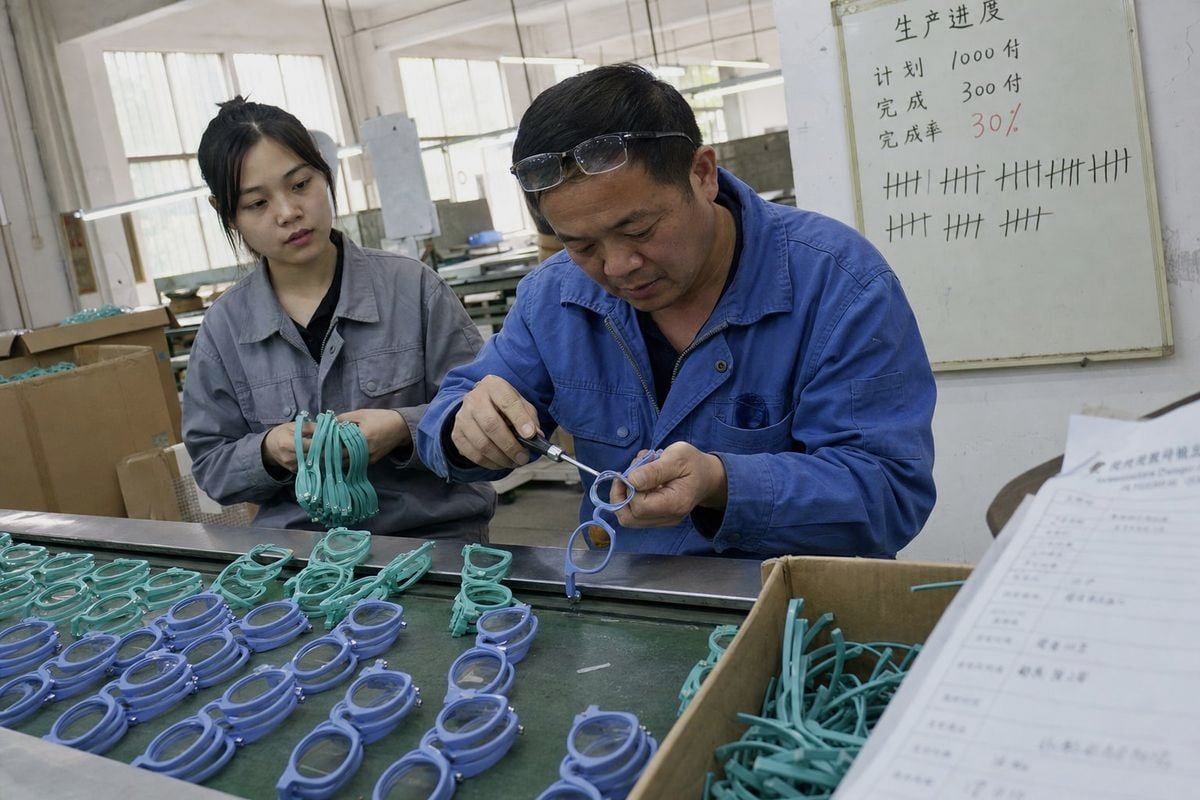
The core logic is simple: a mid-production inspection, often called DUPRO or a During Production Check, happens while most of your order still does not exist. If the inspector finds a defect pattern at 20–30% completion, the factory can correct the remaining 70–80% of units before they are ever made. A pre-shipment inspection cannot do that. By the time a Final Random Inspection 2 happens, at least 80% of goods are finished and packed.
A quick decision checklist
Ask yourself these five questions. If you answer yes to two or more, book a mid-production check.
| Risk Factor | Why It Matters for Kids Sunglasses |
|---|---|
| New supplier or new factory | No track record on lens insertion, hinge assembly, or tint consistency |
| New design or new mold | Tolerance creep and frame misalignment often appear in early runs |
| Recurring past defects | A problem "fixed" once usually returns without process correction |
| Order above ~5,000 units | Early detection protects the majority of the run |
| Multiple SKUs or color variants | Variant switching increases the chance of process drift |
In our experience exporting to buyers in 20+ countries, the most expensive failures are the systemic ones: material substitution, hinge failures that repeat on every unit, or lens tint that drifts between morning and afternoon shifts. These are exactly the defects a DUPRO catches early. Earlier scheduling also matters. We recommend inspection closer to 20% completion rather than 50%, because the factory absorbs less rework and pushes back less. An early check also opens a corrective action window: the line can be fixed and a Corrective Action Plan 3 documented without missing the shipping deadline or forcing expensive air freight.
What rework costs am I actually saving by choosing pre-shipment inspection over mid-production inspection?
Here is a trade-off I weigh with buyers constantly: a pre-shipment inspection is cheaper as a single event, but the savings it delivers land at a different stage of the cost curve.
Pre-shipment inspection saves shipment-stage costs: it prevents freight spend on defective goods, blocks returns, refunds, and bad reviews, and protects retail relationships. It does not reduce labor already spent building defective units — that saving only comes from catching defects mid-production.
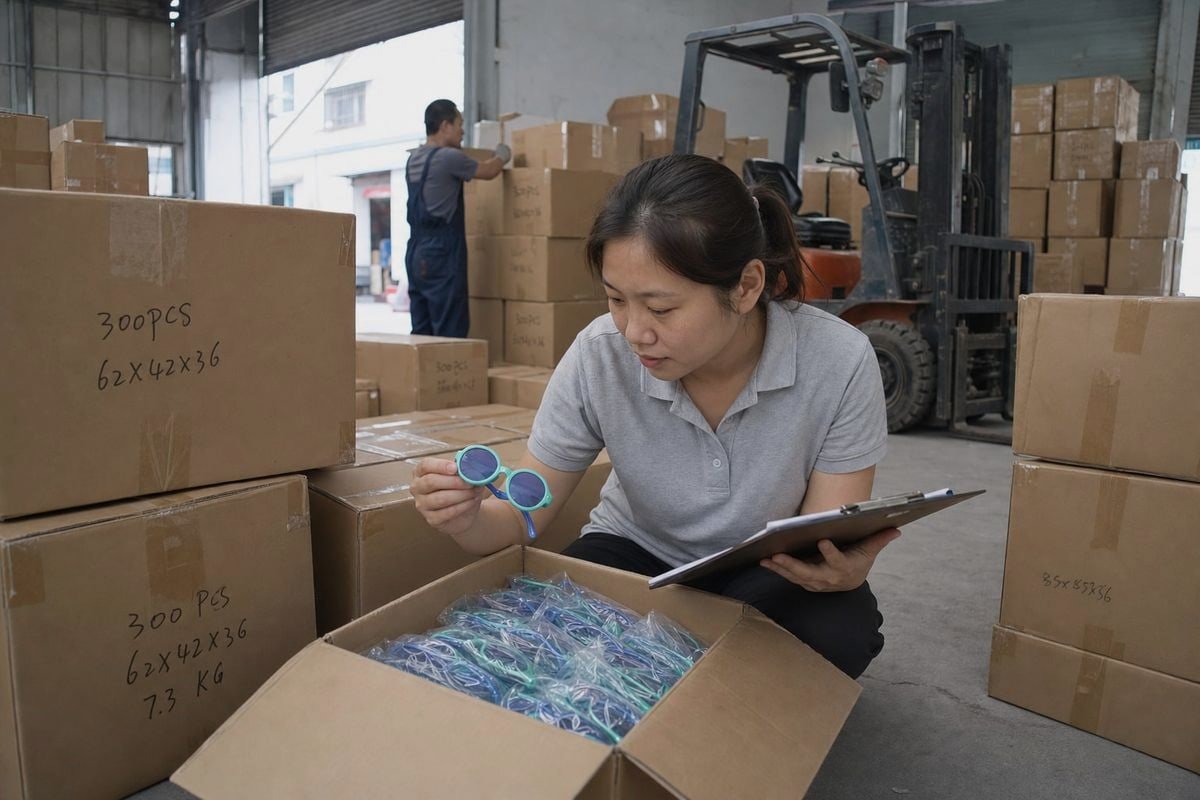
To compare fairly, you need to break "rework cost" into its parts. In kids sunglasses, rework means sorting, remaking, relabeling, repacking, and re-inspecting. It also means delay costs — missed sales windows, slower Amazon replenishment, extra storage — and downstream costs like returns and compliance-related disposal. This full picture is what quality professionals call the Cost of Poor Quality.
Where each inspection saves money
| Cost Category | DUPRO Saves It? | PSI Saves It? |
|---|---|---|
| Labor on defective units | Yes — defects stopped before most units are built | No — labor is already spent |
| 100% manual sorting of finished goods | Yes — usually avoided | Partially — PSI triggers the sorting |
| Freight on bad goods | نعم | نعم |
| Returns, refunds, bad reviews | نعم | نعم |
| Air freight from late rework | Yes — corrective window preserved | No — rework after PSI often delays shipment |
| Secondary handling damage | نعم | No — late repairs cause "rework fatigue" scratches |
Notice the last row. When finished kids sunglasses are handled repeatedly during late-stage repairs, workers introduce secondary cosmetic defects — micro-scratches on lenses, scuffed frames. We have seen batches pass a rework cycle only to fail re-inspection on new scratches. That never happens with an early correction.
The numbers reinforce this. Third-party inspection 4 in China typically costs around $250–$400 per man-day, and a standard lot may take one to one-and-a-half man-days. Meanwhile, industry sources estimate a 10% defect rate on a 5,000-unit order can generate $2,000–$15,000 or more in returns and rework fees — losses that can run 10–50 times the inspection cost. One published example put the exposure on a large order with a 20% defect rate at $86,000 versus roughly $1,000 for inspection.
There is a real objection here worth addressing. Some importers argue PSI alone is enough: if the factory is mature and the spec is locked, why pay for a mid-production visit? For stable repeat orders, that logic holds. But if the batch fails PSI, you learn the batch is bad too late to reduce rework meaningfully. PSI is a gate, not a steering wheel. One more practical point: hold your balance payment until inspection passes. That leverage is what forces rework or rejection when defects appear — and it is far stronger before you have paid in full.
Can I combine both inspection stages without blowing my budget or delaying my shipment schedule?
A buyer from Australia once asked me this exact question, worried that two inspections would double her costs. When we ran the numbers together, the combined plan added less than 0.5% to her order value.
Yes. A combined DUPRO plus PSI plan typically costs $500–$800 total for a standard kids sunglasses order — small against the order value. Scheduled correctly, DUPRO at 20–30% completion adds zero days to the timeline because production continues during the visit.
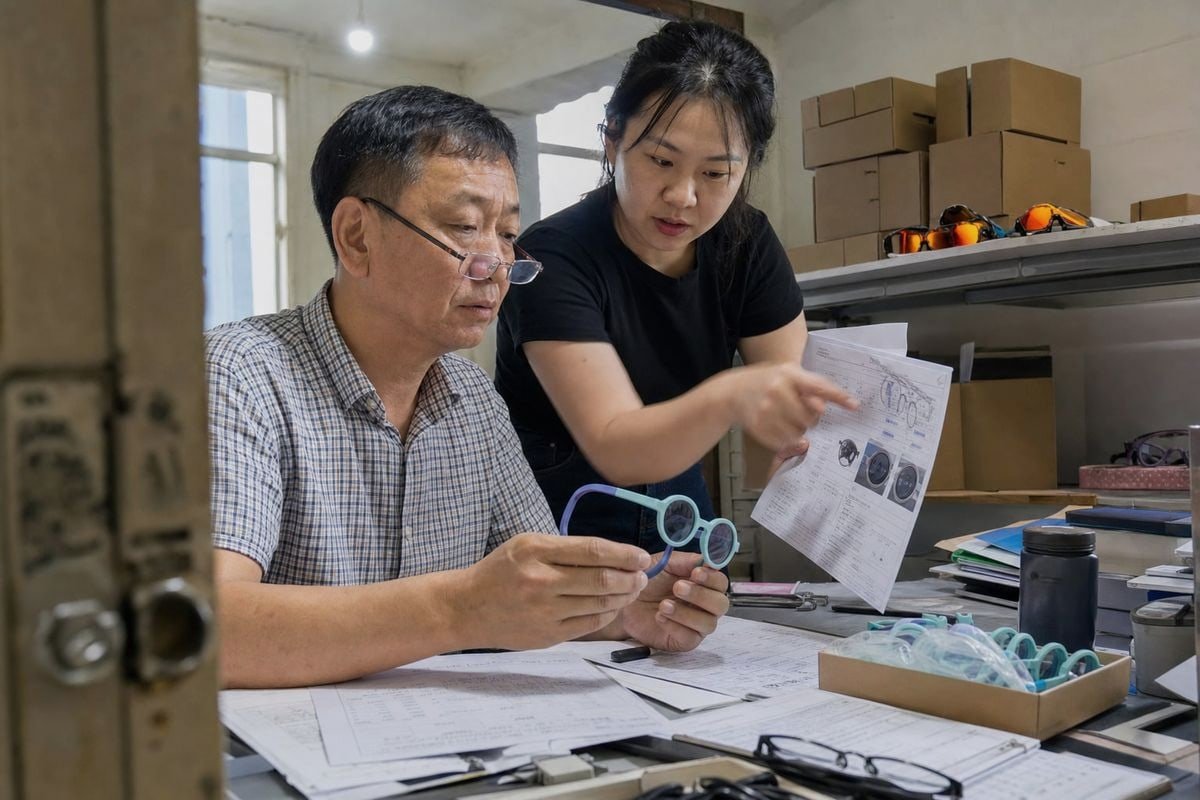
The fear of delay comes from a misunderstanding. A mid-production inspection does not stop the line. The inspector samples finished units while production continues. Only if defects are found does the factory pause to correct — and that pause happens early, when there is still schedule slack. Compare that to a failed PSI, where rework happens after your booking is confirmed and every day of delay risks air-freight surcharges or a missed retail window.
A practical two-stage schedule
Here is the timeline we recommend to brands ordering from our Taizhou factory:
- Order confirmation. Lock the spec sheet, approved sample, packaging artwork, and Acceptable Quality Level (typically AQL 2.5 major / 4.0 minor for kids eyewear).
- DUPRO at 20–30% completion. Check components, assembly quality, tint consistency, and process control. Issue a Corrective Action Plan if needed.
- Correction window. The factory adjusts tooling or process while production continues on unaffected steps.
- PSI at 80%+ completion and packed. Verify final quality, quantity, labeling, carton marking, and sample conformance.
- Release and balance payment. Ship only after PSI passes.
Budget comparison for a 10,000-unit order
| Scenario | Inspection Cost | Typical Rework Exposure | Schedule Risk |
|---|---|---|---|
| PSI only | ~$300–$400 | High — full-batch sorting if systemic defect found | High — rework after booking |
| DUPRO only | ~$300–$400 | Medium — final packing errors slip through | منخفض |
| DUPRO + PSI | ~$600–$800 | Low — early fix plus final gate | الأدنى |
For orders with safety sensitivity — and children's products always carry it — the combined plan is almost always the right call. When margins are thin and the supplier relationship is proven over multiple identical reorders, PSI alone can be defensible. But treat that as an earned position, not a starting point.
What specific defects should I ask my inspector to check for on flexible TR90 and TPEE kids sunglasses?
Flexible materials taught our QC team lessons that generic inspection checklists miss. TPEE and TR90 behave differently from rigid acetate, and your inspection brief should reflect that.
Ask your inspector to check hinge torque and temple symmetry, lens insertion and alignment, UV400 protection testing, tint and coating consistency, frame flexibility and memory, small parts safety on temple tips, CPSIA compliance markings, and packaging accuracy — split between the DUPRO and PSI stages.
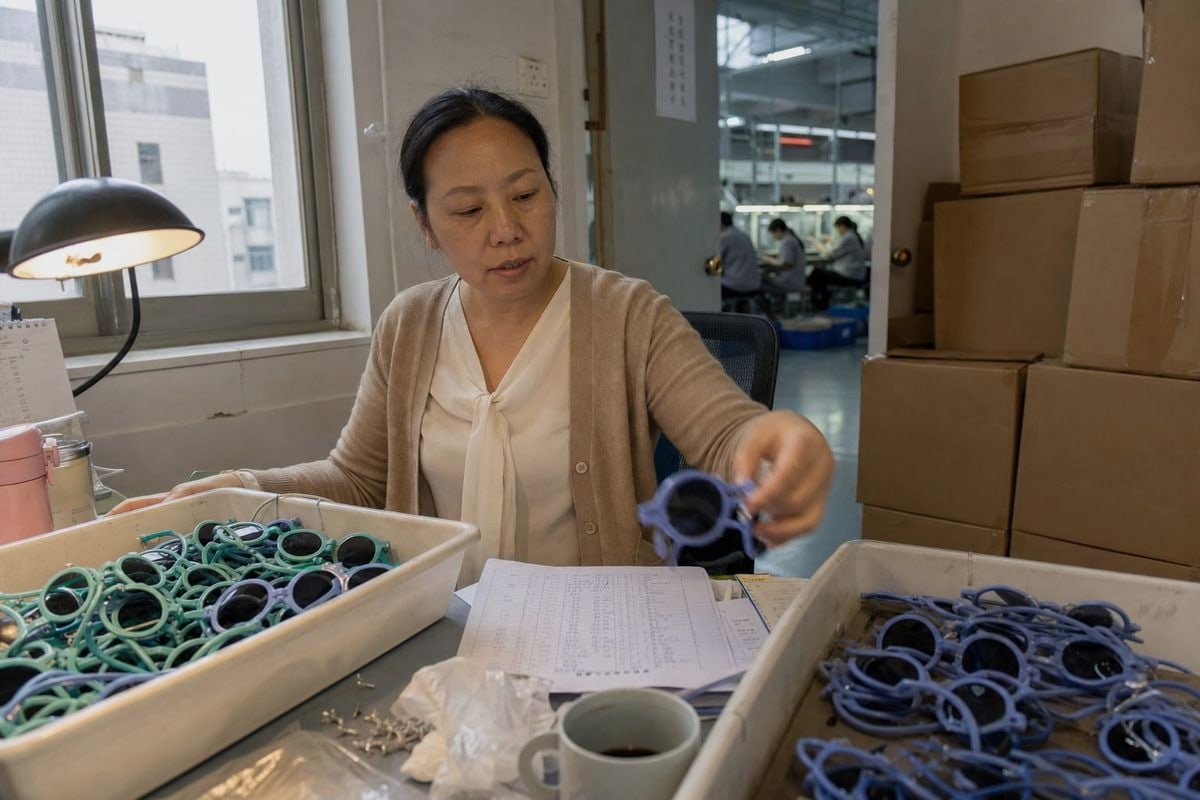
Flexible frames are what make kids sunglasses safe, but they also create unique failure modes. TPEE has material memory 6: a frame twisted out of shape should return to true. If late-stage rework requires heat-treating to reset that memory, the heat can degrade pre-applied anti-scratch coatings — which is exactly why structural defects must be caught at DUPRO, not fixed after PSI.
Defects best caught at mid-production
Assign these to the During Production Check, because they are systemic and correctable at the line level:
- Hinge torque drift. Hinge-insertion machines lose calibration over a run. Early detection allows immediate recalibration before widespread frame wobble.
- Lens insertion and alignment. Catching lens-fitting issues early prevents wasting high-value polarized or mirrored gradient lenses on frames that are out of tolerance. On our sport-shield styles with orange-to-yellow mirrored lenses, a misaligned shield lens is a total loss — it cannot be re-cut.
- Temple tip tension. Tension-testing rubberized temple tips is most cost-effective during DUPRO, because adhesives have not fully cured and the assembly process can still be adjusted.
- Material substitution. Verify the frame is genuine TR90 and the temples genuine TPEE, not cheaper substitutes that fail impact resistance standards.
- Tint and color drift. Two-tone frames — like a periwinkle front with mint temples — must match the approved swatch across the full run.
Defects best caught at pre-shipment
Assign these to the Final Random Inspection, using clear defect classification (critical, major, minor):
- Surface scratches and cosmetic rejects
- Labeling errors, missing UV400 stickers, incorrect CPSIA compliance markings
- Missing accessories — pouches, cloths, cases
- Carton damage, wrong carton marks, quantity shortfalls
- Sample conformance against the sealed golden sample
One critical warning: safety failures found at PSI usually cannot be reworked at all. If UV400 protection testing 7 fails, or lead is found in surface paint, the result is typically total batch rejection and disposal, not repair. The same applies to small parts safety — a temple tip that detaches under pull-testing is a خطر الاختناق 8, and no amount of sorting fixes a design-level failure. This is the strongest argument for early-stage checks on children's products: some defects have no rework path, only a prevention path. Increasingly, factories are also adding AI-driven visual sensors during production, creating a digital audit trail that helps predict mold-wear patterns before they cause AQL failures.
الخلاصة
Defects found late destroy margins; defects found early cost almost nothing to fix. For kids sunglasses, use mid-production inspection to cut rework, and PSI as your final safety net.
ملاحظات ختامية
1. Background on quality control inspection methods used mid-production in manufacturing. ↩︎
2. Authoritative Wikipedia entry explaining the acceptance sampling methodology used for final random inspections. ↩︎
3. Explains the quality management concept of documenting and executing corrective actions. ↩︎
4. WTO governs technical barriers to trade, relevant to independent inspection practices. ↩︎
5. Authoritative Wikipedia ent
مقالات أخرى قد تعجبك
August 1, 2026
هل يجب على المصنع التعامل مع تغليف ووضع ملصقات نظارات الأطفال الشمسية، أم استخدام مورد مخصص؟
August 1, 2026
مستودع خاص مقابل الوفاء المباشر من المورد: أيهما يقلل تكاليف الإرجاع لعلامات نظارات الأطفال الشمسية؟
August 1, 2026
مباشر إلى ميناء المستودع أو التخزين الخارجي: أيهما يوفر أكثر على شحن نظارات الأطفال الشمسية؟
هل تبحث عن شريك موثوق به للنظارات للأطفال؟
استكشف أكثر من 800 نمط جاهز ودعم OEM/ODM كامل مصمم خصيصًا لعلامتك التجارية.
اتصل بنا English
  Español de México
  Deutsch
  Français
  日本語
日本語  العربية
  Português do Brasil