Direct-to-Port Warehouse or Overseas Staging: Which Saves More on Kids Sunglasses Shipping?
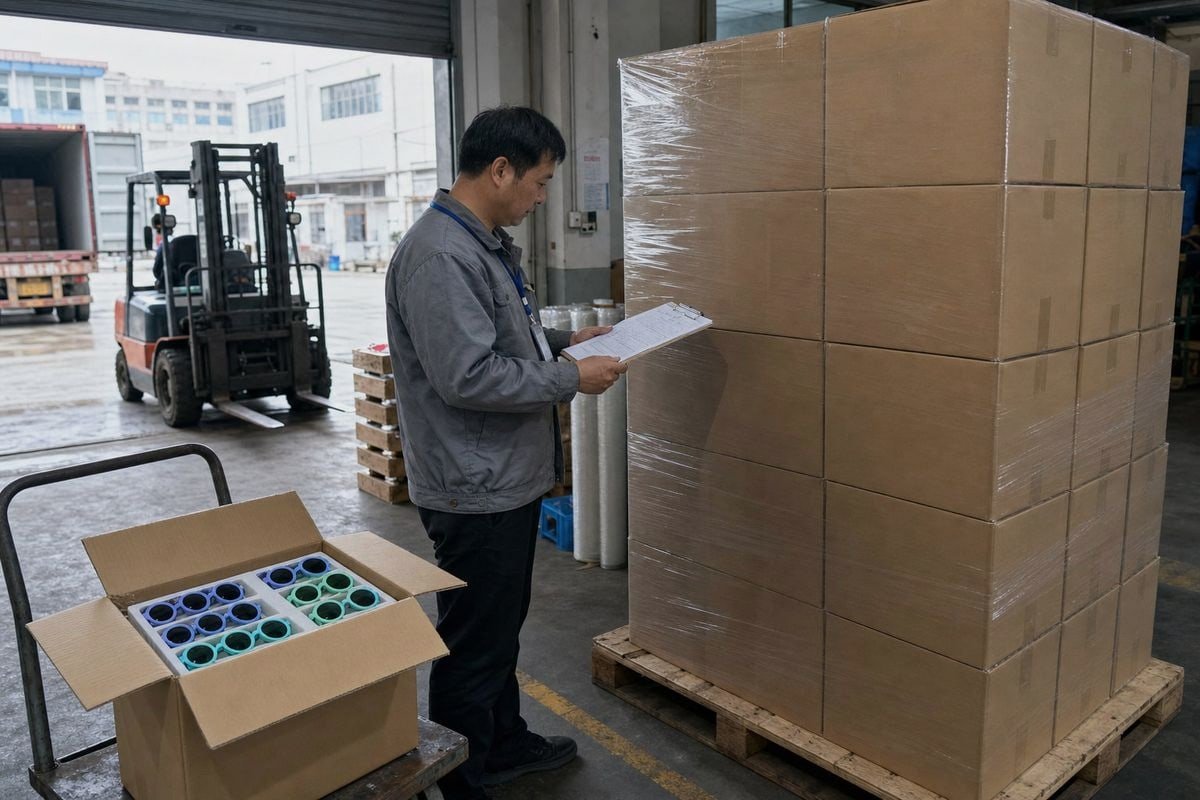
Kids sunglasses shipping costs quietly eat margins. I see it from our Taizhou factory floor: buyers pick a great إطار TR90 1, then lose profit to the wrong logistics model.
Direct-to-port shipping saves more on kids sunglasses shipping when monthly orders stay under roughly 100 units or demand is unproven. Overseas staging wins once volume passes about 500 units monthly, because bulk sea freight, faster last-mile delivery, and lower per-unit costs outweigh storage fees.
The real answer depends on your volume, cash, and delivery promises. Let me walk you through how our B2B buyers actually decide.
How do I decide between direct-to-port shipping and overseas staging for my kids sunglasses orders?
A buyer from Australia once asked me to split one order two ways so she could test both routes. Her results shaped how I now advise every new brand we supply.
Decide based on monthly order volume, demand predictability, and cash reserves. Choose direct-to-port shipping while testing demand or shipping under 100 orders monthly. Move to overseas staging once you have steady, repeatable sales above 500 units and customers who expect fast delivery.

Here is the quick comparison our buyers use before we even quote freight:
| العامل | Direct-to-Port Shipping | Overseas Staging |
|---|---|---|
| Upfront capital | منخفض | High (bulk stock paid early) |
| Delivery speed | 10–30 days | 2–5 days, sometimes 1–3 |
| Per-unit freight cost | High at scale | Low at scale |
| مخاطر المخزون | Minimal | Real (dead stock possible) |
| Best volume range | Under 100 orders/month | 500+ orders/month |
| Returns handling | Painful, cross-border | Local and manageable |
Start with your true volume, not your ambition
Many new eyewear brands overestimate first-season sales. In our fifteen years supplying children's brands across 20+ countries, the buyers who committed to a foreign warehouse before proving demand almost always regretted it. Storage fees run daily. Sunglasses are seasonal and style-driven. A periwinkle round frame that sells out in June can sit dead in a warehouse by September.
Then look at your service promise
If you sell through your own website to parents, delivery speed matters. Parents buying summer sunglasses will not wait three weeks. Overseas staging cuts lead time dramatically and supports lead time reduction goals that direct shipping simply cannot match. If you sell wholesale to retailers who plan months ahead, direct-to-port works fine, because the retailer absorbs the wait.
Finally, check your cash position
Overseas staging means paying for product, bulk freight, customs clearance fees, and storage before a single sale. Direct shipping defers much of that. One point our research keeps confirming: direct shipping is not always cheaper per order. It often just delays payment until an order sells, which helps cash flow but can cost more per parcel.
During a packaging review last year, our QC team weighed a retail-boxed sunglasses set and found the box tripled the chargeable weight. That single carton test changed a client's entire freight budget.
Compare dimensional weight surcharges, customs clearance fees, warehouse storage, pick-and-pack charges, returns processing, and dead stock risk. A proper landed cost calculation includes every line from factory gate to the customer's door, not just the headline freight rate.

Most buyers compare freight quotes and stop there. That is a mistake. The true cost stack has many layers, and each model hides different ones.
The full cost stack, side by side
| مكون التكلفة | Direct-to-Port Model | Overseas Staging Model |
|---|---|---|
| Product cost | Same | Same |
| Origin handling | Per shipment | Per bulk consignment |
| International freight | Parcel or LCL rates | Sea freight, $80–150/CBM LCL |
| Customs clearance fees | Per shipment, repeated | Once per bulk entry |
| Storage | لا شيء | Daily, per cubic meter |
| Pick-and-pack | Your team or none | Third-party logistics fees |
| Last-mile delivery | International parcel | Cheap domestic courier |
| Returns processing | Cross-border, often written off | Local, recoverable |
| Dead stock risk | Near zero | Real and seasonal |
Dimensional weight is the silent killer
Freight forwarding services charge by the greater of actual weight or volumetric weight 2. Our TPEE and TR90 kids frames 3 weigh almost nothing, but protective cases and gift boxes create bulk. That is why we help clients right-size cartons with internal dividers. Optimized packaging shrinks chargeable weight and prevents transit damage at the same time, which matters for glossy shield lenses that scratch easily.
Do not forget the port-side charges
Direct-to-port shipments still face destination port charges, drayage services to move containers inland, and possible congestion delays. Overseas staging adds inventory carrying costs, which for a seasonal product can quietly exceed the freight savings. Some sellers near a border also use de minimis rules to stage stock in a neighboring country and ship duty-free individual orders — a clever structure, but it needs a broker who knows the rules well.
Run the التكلفة النهائية both ways, per delivered order, before deciding. The cheaper model on paper is often the pricier one in practice.
How can I balance shipping costs with delivery speed for my kids' eyewear brand?
One trade-off I weigh constantly with clients: a container saves money but arrives in weeks, while air freight arrives in days but can erase margin on a low-priced kids accessory.
Balance cost and speed with a hybrid model: air freight your seasonal launch stock for speed, then replenish bestsellers by sea freight into an overseas warehouse. Keep long-tail colorways shipping direct, so slow-movers never pay storage while fast-movers deliver in days.
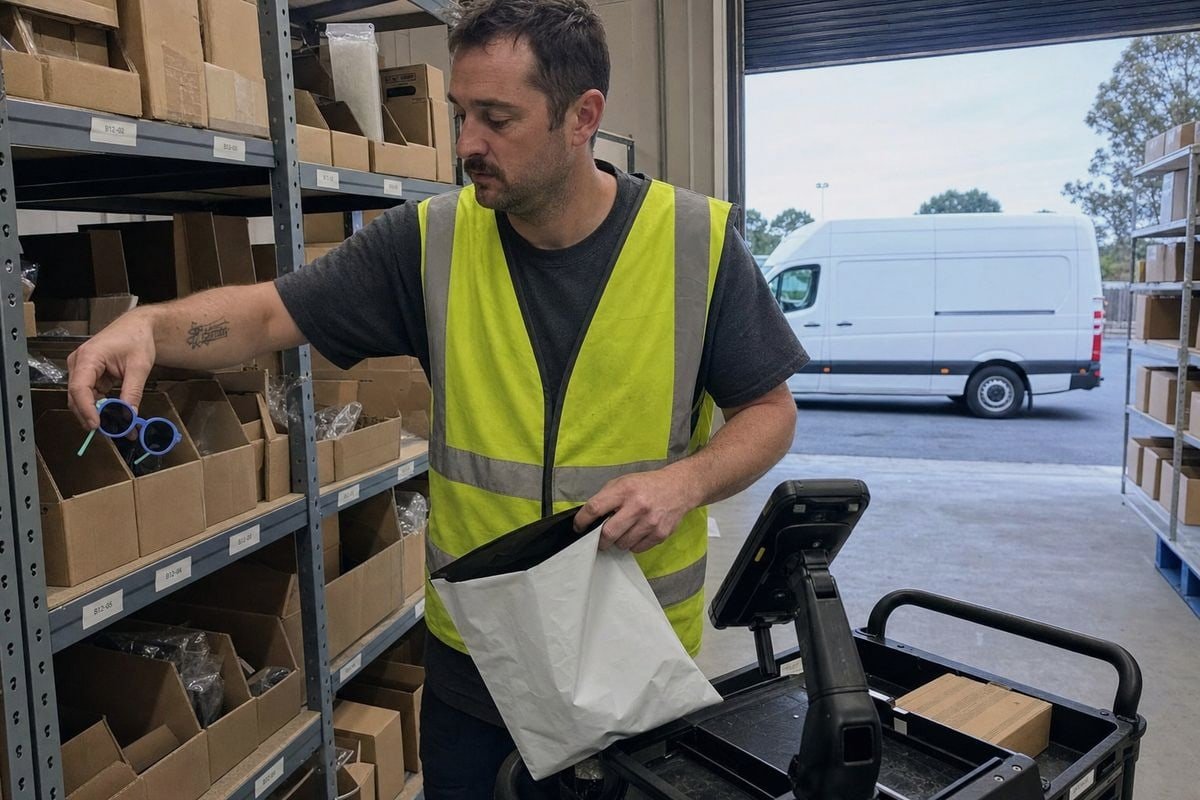
Speed is not a vanity metric for children's eyewear. Parents buy sunglasses right before a beach holiday or the start of summer sport season. A 2–5 day delivery converts. A 20-day delivery gets abandoned at checkout. So the question is not whether speed matters, but how much you should pay for it.
Use benchmark ranges, not gut feel
These figures come from different trade lanes, so treat them as directional benchmarks rather than exact quotes:
| Mode | Typical Cost Range | Typical Transit |
|---|---|---|
| الشحن الجوي | $4–8/kg | 3–7 days |
| Ocean LCL | $1–3/kg effective | 20-35 يومًا |
| Ocean FCL | $0.50–2/kg effective | 20-35 يومًا |
| Cross-border parcel | High per unit | 10–30 days to door |
| Overseas warehouse last-mile | Low per unit | 2–5 days to door |
The hybrid sequence that works for seasonal eyewear
In our experience exporting to Australia, Japan, and Europe, the best-performing brands run a simple sequence. First, they air-freight a small launch batch ahead of the season. Second, they read early sell-through by colorway. Third, they book container consolidation 4 for the proven winners by sea. Fourth, they keep experimental styles — say, a new gradient shield lens — shipping direct until data justifies staging. Because we hold around 800 existing styles, clients can test new looks without mold costs, which makes this test-then-stage rhythm cheap to run.
Some brands even turn slow direct shipping into a marketing asset, offering a lower-carbon "slow shipping" option to eco-conscious parents. It will not suit everyone, but it shows that speed and cost are levers you can trade deliberately, not constraints you must accept.
Which option gives me better inventory flexibility as my order volumes grow?
A lesson learned the hard way stays with me: a European client once staged eight colorways abroad equally, and two colors carried the season while six gathered dust.
Direct shipping offers maximum flexibility at low volumes because nothing sits abroad unsold. As volumes grow, a hybrid model wins: stage your proven bestsellers overseas for fast fulfillment while keeping long-tail SKUs, new colors, and test styles on direct shipping.
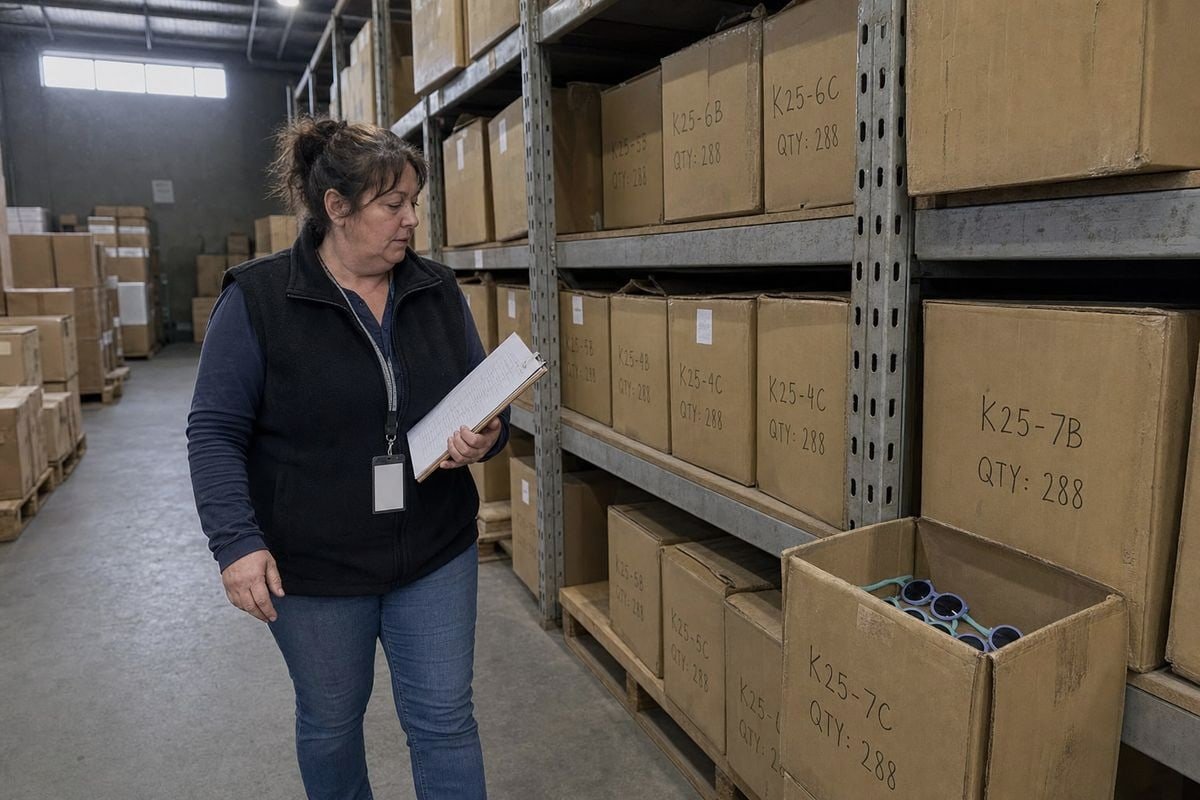
Kids sunglasses multiply SKUs quickly. Frame colors, lens tints, sizes, polarized versus standard UV400 — a modest catalog balloons into dozens of variants. Flexibility means matching each SKU to the right channel, not choosing one channel for everything.
Match the fulfillment model to your growth stage
- Test phase (under 100 orders/month). Ship everything direct. Protect cash. Learn which frames — the sporty wraparound shield or the soft round two-tone — actually sell in your market.
- Growth phase (100–500 orders/month). Go hybrid. Stage your top two or three sellers in an overseas warehouse or with a third-party logistics partner. Keep the experimental tail direct. Cross-docking efficiency 5 at the warehouse can move replenishment cartons straight to outbound without long storage.
- Scale phase (500+ orders/month). Shift the bulk of stock to overseas staging. Negotiate sea freight, consolidate suppliers into shared containers, and let cheap domestic last-mile delivery carry your customer promise.
Smarter staging reduces the flexibility penalty
The main fear with staging is being locked into wrong inventory. Modern operators soften this with predictive staging — using weather data and social trends to pre-position specific high-demand colors 6 rather than spreading stock evenly. Some brands add micro-fulfillment points in coastal or vacation regions during peak months, offering same-day replacement for a snapped or lost pair. That is a genuinely high-margin niche for children's accessories, because a parent on holiday will pay for speed.
From the factory side, we support this flexibility through supply chain optimization 7 at the source: small first runs from existing molds, strict quality control inspection before every consignment, and retail-ready packaging so cartons can flow straight from port to shelf. Flexible sourcing upstream is what makes flexible fulfillment downstream affordable.
الخلاصة
Kids sunglasses shipping punishes guesswork. Ship direct while testing, go hybrid as bestsellers emerge, then stage overseas at scale — and recalculate landed cost each season.
ملاحظات ختامية
1. Background on TR90 nylon material commonly used in lightweight kids eyewear frames. ↩︎
2. Explains how carriers calculate volumetric/dimensional weight affecting freight pricing. ↩︎
3. Technical overview of Nylon 12, the high-performance polymer used in TR90 eyewear frames. ↩︎
4. Background on container consolidation practices used to lower sea freight costs. ↩︎
5. Reference explaining the cross-docking warehouse method mentioned for faster replenishment. ↩︎
6. Overview of inventory management techniques used to forecast demand and optimize stock levels. ↩︎
7. Industry perspective on using technology and data to improve supply chain efficiency and responsiveness. ↩︎
مقالات أخرى قد تعجبك

August 1, 2026
هل يجب على المصنع التعامل مع تغليف ووضع ملصقات نظارات الأطفال الشمسية، أم استخدام مورد مخصص؟

August 1, 2026
مستودع خاص مقابل الوفاء المباشر من المورد: أيهما يقلل تكاليف الإرجاع لعلامات نظارات الأطفال الشمسية؟

August 1, 2026
كيف يؤثر حد أدنى لكمية الطلب مقابل رسوم الدُفعات الصغيرة على التكلفة النهائية لنظارات الأطفال الشمسية؟
هل تبحث عن شريك موثوق به للنظارات للأطفال؟
استكشف أكثر من 800 نمط جاهز ودعم OEM/ODM كامل مصمم خصيصًا لعلامتك التجارية.
اتصل بنا English
  Español de México
  Deutsch
  Français
  日本語
日本語  العربية
  Português do Brasil