How to Use Confirmation Samples to Ensure Mass Production Matches for Kids’ Sunglasses?
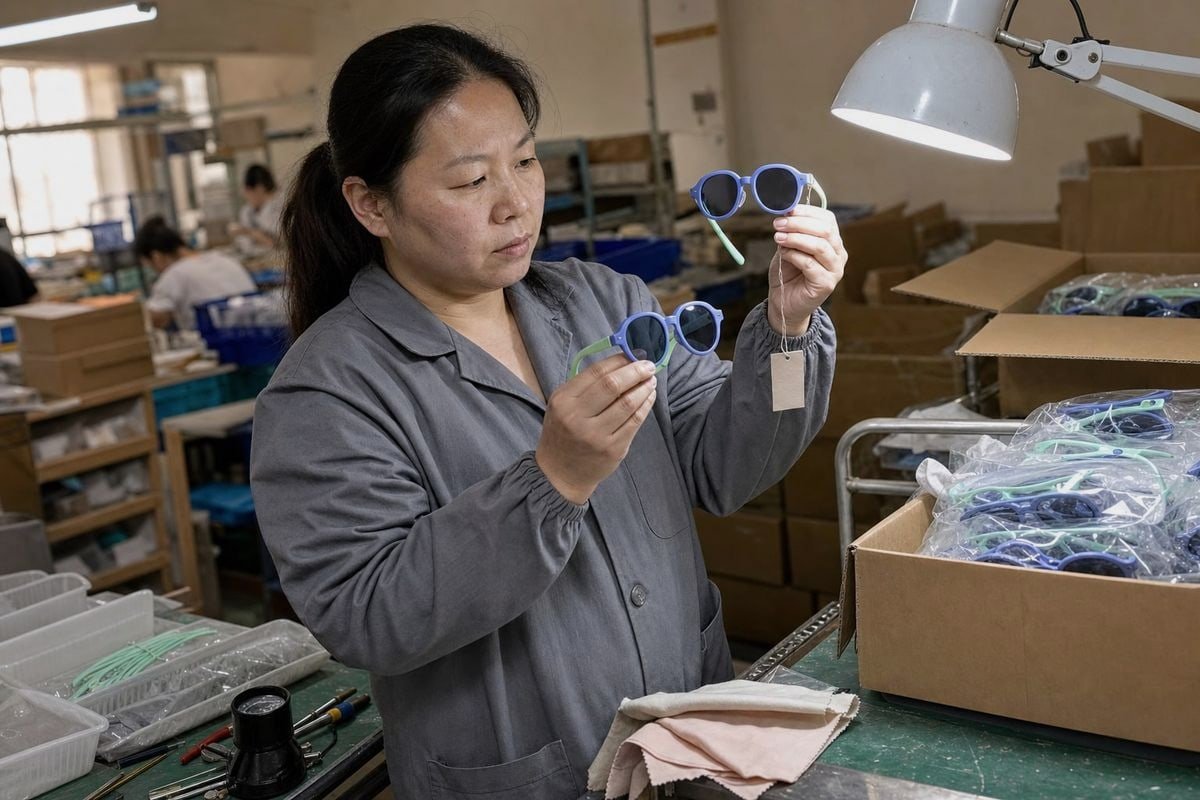
I once watched a buyer approve confirmation samples from photos alone, then face a bulk shipment of kids’ sunglasses with mismatched colors CPSIA documentation 1. That mistake cost him a season.
Confirmation samples ensure mass production matches by serving as the approved physical reference. Inspect fit, lens quality, UV400 protection, color, logo, and packaging; document approval in writing; seal the golden sample; then require QC to compare every production batch directly against it.
Below, I will walk you through the full process. It covers what to check, how to lock the standard, what paperwork to demand, and what to do when bulk goods drift from the sample.
What Should I Check on a Confirmation Sample Before I Approve Mass Production?
A buyer from Australia once asked me why we insist she wear-test our TR90 2 frames on a real child before signing off. The answer came from fifteen years of avoiding costly surprises.
Before approving mass production, check frame fit and comfort on a child-size face, hinge movement, surface finish, lens seating and clarity, UV400 protection documentation, Pantone color accuracy under daylight, logo placement and sharpness, and every packaging component against your written specification.
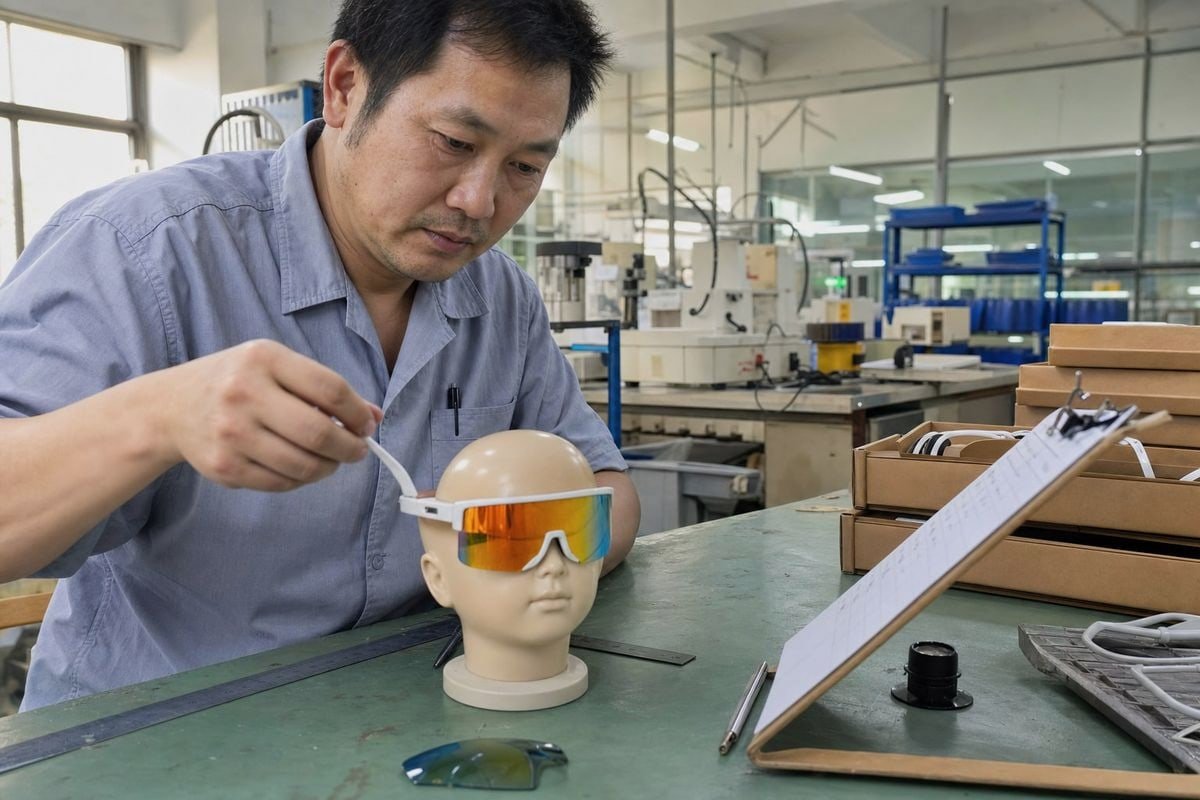
A confirmation sample is not a prototype. A prototype proves the design can be made. A confirmation sample proves you accept the result. Once you approve it, it becomes the pre-production sample (PPS) — the golden sample that governs everything after. So this is the last cheap moment to catch a problem. After this point, an error multiplies across thousands of units.
At our Taizhou workshop, we tell buyers to inspect by hand, not by screen. Photos flatten texture, hide rough edges, and distort color. Hold the sample. Flex it. Put it on a child if you can.
The Hands-On Inspection Checklist
Here is the checklist we recommend to every brand we work with:
| نقطة التحقق | ماذا تفعل | Pass Standard |
|---|---|---|
| Frame finish | Inspect under bright daylight | No rough edges, scratches, or uneven polish |
| المفصلات | Open and close temples 20+ times | Smooth, symmetric, consistent tension |
| Fit and comfort | Test on a child-size head form | No pressure at bridge, nose, or ears |
| مقعد العدسة | Press gently around the lens edge | No gaps, rattles, or pop-outs |
| ادعاء الأشعة فوق البنفسجية | Request lens test documentation | Verified UV400, not just dark tint |
| اللون | Compare to Pantone 3 reference in daylight | Within agreed tolerance |
| Logo | Measure position, check depth and alignment | Matches spec file exactly |
| التعبئة والتغليف | Assemble pouch, case, tag, and box | Matches approved artwork and materials |
Why Kids' Sunglasses Demand Extra Scrutiny
Children are less tolerant of pressure points than adults. They also bend, drop, and sit on their glasses. That is why we build most of our frames in flexible TPEE frame material and TR90 — and why you should flex the temples hard during sample review. Lens darkness alone is never proof of UV protection, so demand the lens test data before you sign anything.
How Do I Make Sure My Factory Matches the Confirmed Sample During Bulk Manufacturing?
There is a real trade-off we weigh on every order: speed versus control. Our production team can move fast, but only a documented golden sample keeps batch consistency honest at scale.
Ensure the factory matches the confirmed sample by sealing a signed golden sample on both sides, converting it into written manufacturing specifications, requiring in-line and final quality control inspection against the physical sample, and forbidding any material or process change without formal re-approval.
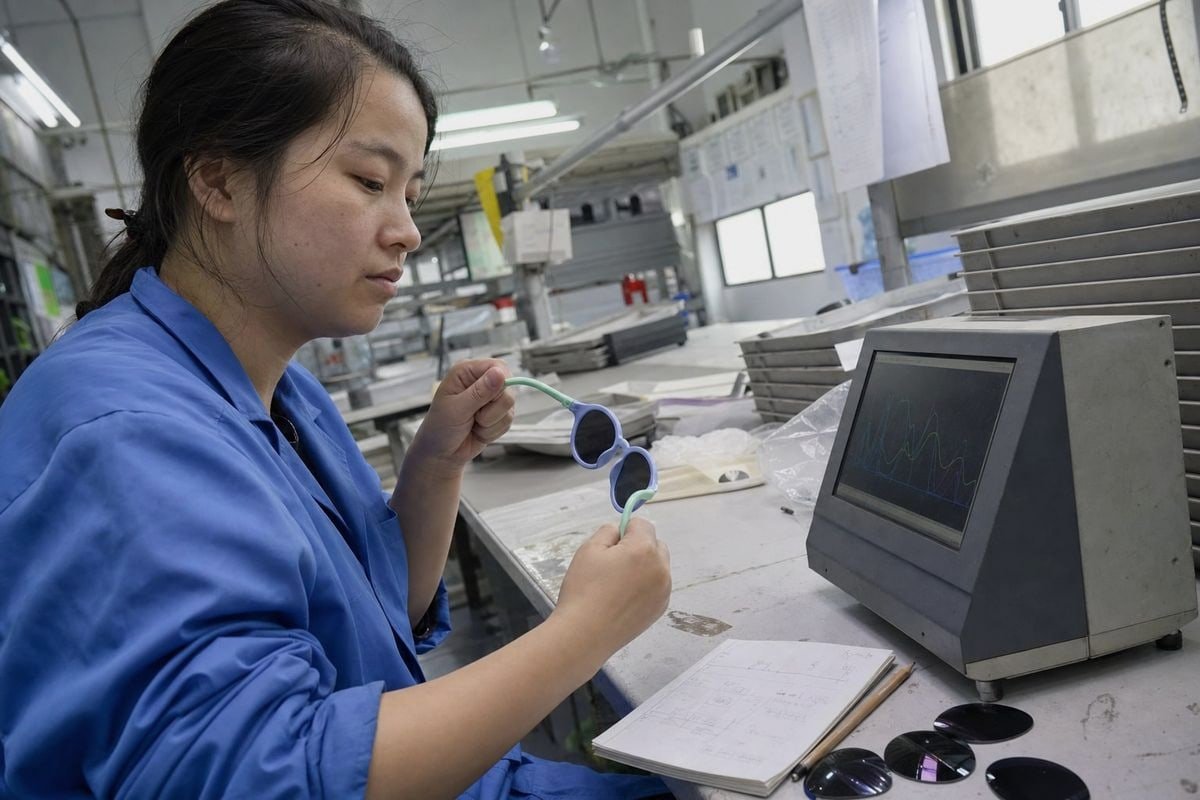
The single most effective tool here is the sign-and-seal protocol. The approved sample is physically marked, dated, and signed by both the brand and the factory manager. One sealed sample stays at the factory. An identical one stays with you. This simple step prevents quality fade — the slow drift that happens when a factory "optimizes" materials or shortcuts over repeat orders.
In our 5S-managed workshop, the sealed golden sample sits at the QC station, not in a drawer. Inspectors compare production units directly against it, not against a generic spec sheet or a product photo. A spec sheet describes the product. The golden sample is the product.
A Step-by-Step Control Process
- Seal two identical golden samples. Both parties sign and date them.
- Write the manufacturing specifications. Record frame material, lens type, Pantone codes, logo position with measurements, hinge tension standard, and packaging components.
- Run a small pilot batch first. Compare pilot units to the golden sample before releasing full production.
- Perform in-line QC. Random units are pulled during production and checked against the sample.
- Conduct final random inspection. Use an agreed sampling plan and compare against the sealed reference.
- Lock changes. Any change to material, mold, lens, logo method, or packaging triggers a new sample and fresh approval.
What "Match" Actually Means
Perfect identity is impossible in plastics manufacturing. Slight shot-to-shot variation is normal. That is why smart buyers also agree on boundary samples — physical examples showing the maximum acceptable color or tint deviation. Boundary samples turn subjective arguments into objective decisions during final inspection. Pantone color matching under daylight, not office lighting, resolves most color disputes before they start.
What Documentation Should I Request Along With My Confirmation Sample?
A procurement manager from Japan taught me something years ago: she never approved our sample until the paper trail arrived with it. Her orders were always the smoothest we produced.
Request written manufacturing specifications, UV400 lens test reports, material declarations for the frame, applicable compliance test reports such as CPSIA documentation for your market, Pantone color codes, logo artwork files with measurements, packaging specifications, and a signed sample approval form with version number and date.
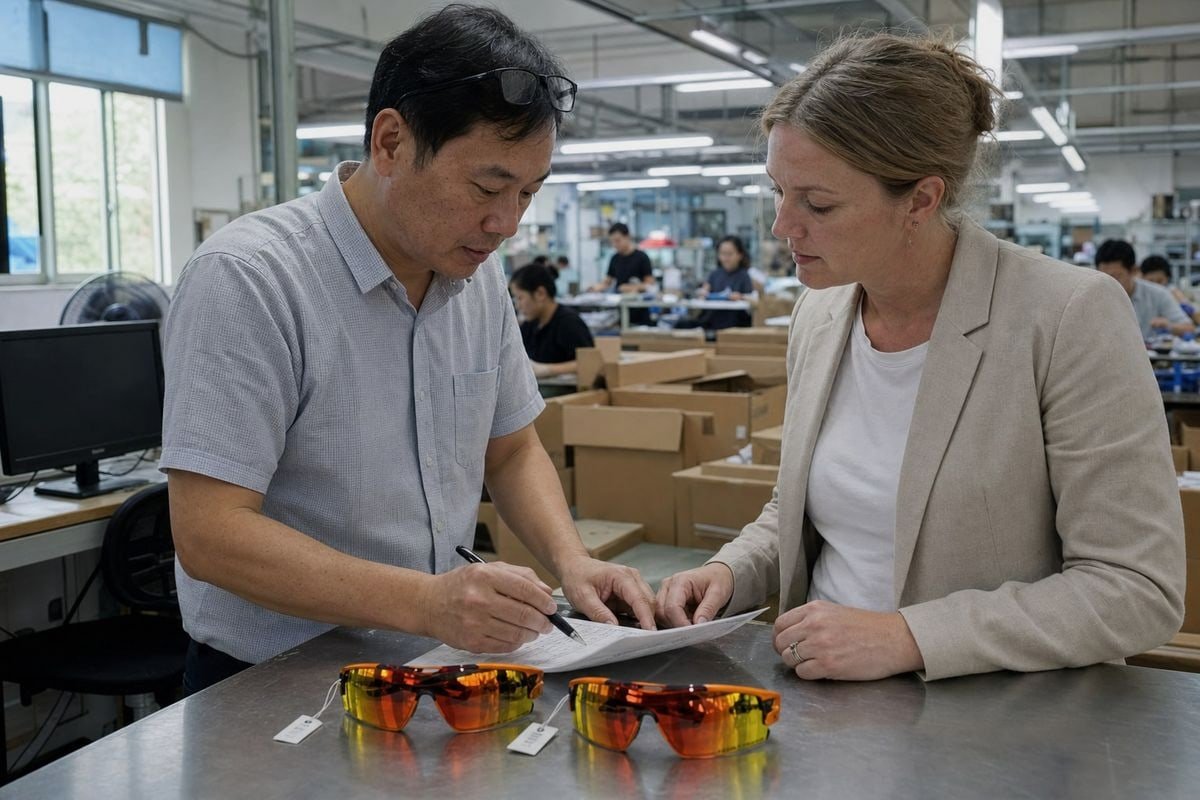
A confirmation sample without documentation is just an object. Documentation turns it into a contract. When we prepare a pre-production sample (PPS) for a buyer, we pair it with a complete file so that both sides know exactly what was approved and what cannot change.
For children's products, this paperwork matters more than in adult fashion eyewear. Buyers selling in the US will need CPSIA compliance evidence covering lead and phthalate limits 4. European buyers have their own directives. We always advise brands to verify the applicable standards for their specific market and channel, then request the matching test reports before approving the sample — not after the goods ship.
The Essential Document Package
| وثيقة | الغرض | علامة حمراء في حالة عدم وجودها |
|---|---|---|
| Sample approval form | Records version, date, signatures | No proof of which version was final |
| Manufacturing specifications | Defines materials, dimensions, tolerances | Factory interprets details freely |
| UV400 lens test report | يتحقق حماية UV400 5 standards | UV claim rests on tint appearance |
| Material declaration | Confirms TPEE / TR90 and BPA-free status | Risk of cheaper substitute resin |
| Market compliance reports | Proves safety testing for your region | Customs or liability exposure |
| إشارات بانتون | Locks frame and lens colors | Subjective color disputes later |
| Logo artwork with measurements | Fixes position, size, and method | Drifting logo placement in bulk |
| Packaging spec sheet | Lists pouch, case, cloth, tag, box | Unapproved packaging changes |
Version Control Is Not Optional
Samples usually go through revisions. If your file says "approved" but not which sample was approved, disputes become unwinnable. Every approval form we issue carries a version number tied to the physical sample's seal. Insist on the same from any supplier. اختبار مقاومة الصدمات 6 results for lenses, where required in your market, should also carry the same version reference so the tested lens matches the approved one.
How Can I Handle Discrepancies If My Mass Production Batch Doesn't Match the Approved Sample?
Early in my career, a bulk run of pastel frames came out half a shade off the approved periwinkle. The lesson stuck: the response process matters as much as the inspection itself.
Handle discrepancies by documenting the deviation with photos and the sealed golden sample side by side, classifying the defect as critical, major, or minor, halting shipment for safety or functional failures, and negotiating rework, replacement, or credit based on your written approval documents.
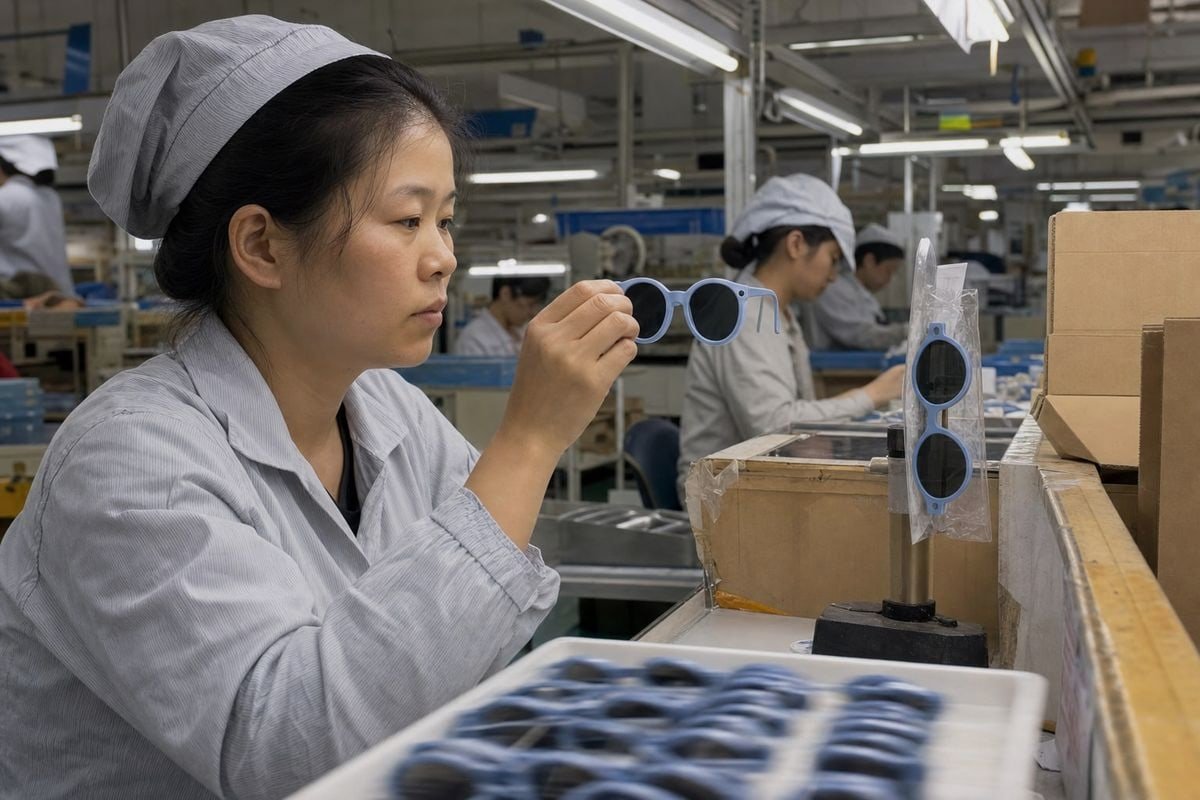
Discrepancies fall into very different categories, and your response should match the severity. A slightly loose hinge screw is not the same as a lens that fails its UV specification. This is where all your earlier discipline pays off. If you sealed a golden sample, agreed on boundary samples, and hold a signed approval form, you have leverage. If you approved by photo and email, you have an argument.
Classify Before You React
| الخطورة | Examples in Kids' Sunglasses | Recommended Action |
|---|---|---|
| حرج | Failed UV400 lens, sharp edges, choking-size detachable parts, failed impact resistance testing | Stop shipment; require 100% sort or full replacement |
| رئيسي | Wrong Pantone color beyond boundary sample, misaligned logo, stiff or loose hinges | Hold shipment; negotiate rework or partial replacement |
| طفيف | Slight polish variation, minor packaging print offset within tolerance | Accept with documented credit or corrective action for next run |
Turn the Dispute Into Prevention
When a discrepancy surfaces, we run root-cause analysis 7 together with the buyer: was it a material lot change, a mold wear issue, or a process shortcut? Then we update the manufacturing specifications and, if a critical element changed, we produce a fresh confirmation sample for re-approval. A good factory treats a discrepancy claim as data, not an insult. In our experience exporting to more than twenty countries, buyers who respond with documentation rather than emotion recover faster and keep the relationship productive. Also agree in advance — ideally in your purchase order — on remedies: rework timelines, replacement terms, and who pays for re-inspection. Fixing the rules after the problem appears is always harder.
الخلاصة
A confirmation sample is your last affordable checkpoint. Inspect it hands-on, document everything, seal the golden sample, and enforce it during QC — and your bulk kids' sunglasses will match every time.
ملاحظات ختامية
1. Official source explaining CPSIA compliance requirements for children’s products in the US. ↩︎
2. Background on TR90 nylon polymer material used in flexible eyewear frames. ↩︎
3. Background on Pantone color matching system referenced for color accuracy standards. ↩︎
4. Authoritative Wikipedia summary of mandatory lead and phthalate concentration limits established by the CPSIA for children’s products. ↩︎
5. Background on UV400 standards relevant to sunglasses lens protection claims. ↩︎
6. Official FDA regulation 21 CFR 801.410, which establishes mandatory impact resistance testing for all sunglass lenses. ↩︎
7. Background on root-cause analysis methodology used to investigate manufacturing discrepancies. ↩︎
مقالات أخرى قد تعجبك
هل تبحث عن شريك موثوق به للنظارات للأطفال؟
استكشف أكثر من 800 نمط جاهز ودعم OEM/ODM كامل مصمم خصيصًا لعلامتك التجارية.
اتصل بنا English
  Español de México
  Deutsch
  Français
  日本語
日本語  العربية
  Português do Brasil