How to Develop a Slow-Moving Inventory Exchange Policy for Kids Sunglasses Retailers?
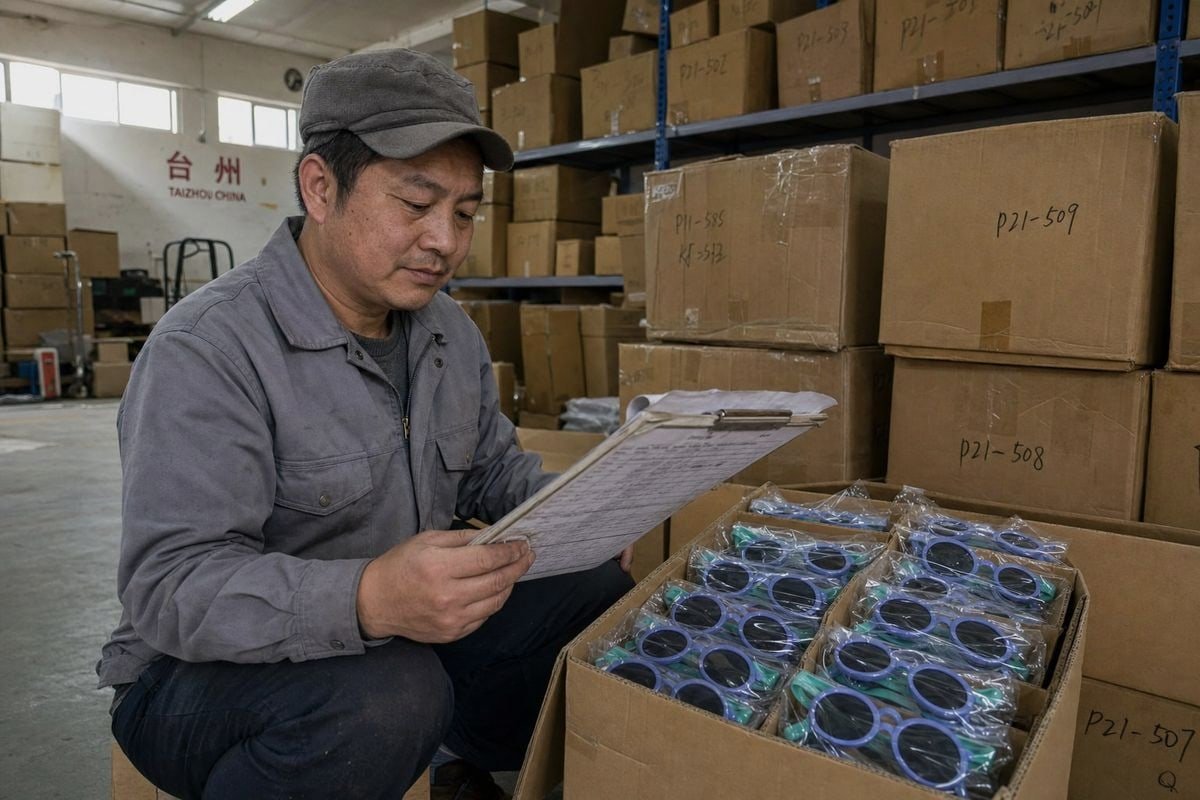
A slow-moving inventory exchange policy for kids sunglasses retailers can rescue frozen cash stock turnover ratio 1. In our Taizhou factory, we watch partners struggle when last season’s colorways stop selling and shelves stall.
A slow-moving inventory exchange policy lets kids sunglasses retailers swap unsold, resalable stock for fresher styles under agreed terms: a 90–120 day aging trigger, pristine-condition standards, a 10–20% exchange cap, credit-only reimbursement, tiered restocking fees, and a documented supplier approval workflow.
That is the short answer. Below, I break down each part so you can build a policy that works for both sides.
How can I create an exchange policy that helps retailers clear slow-moving kids sunglasses stock?
Last spring, a distributor buyer from Australia asked us to take back 400 units of a periwinkle-blue round frame. That conversation forced us to formalize how exchanges should actually work.
Create the policy by defining aging triggers (90–120 days without sales), setting sell-through thresholds below 15%, requiring SKU-level aging reports as proof, capping exchanges at 10–20% of original order value, and routing every request through a written supplier approval workflow before any stock ships back.
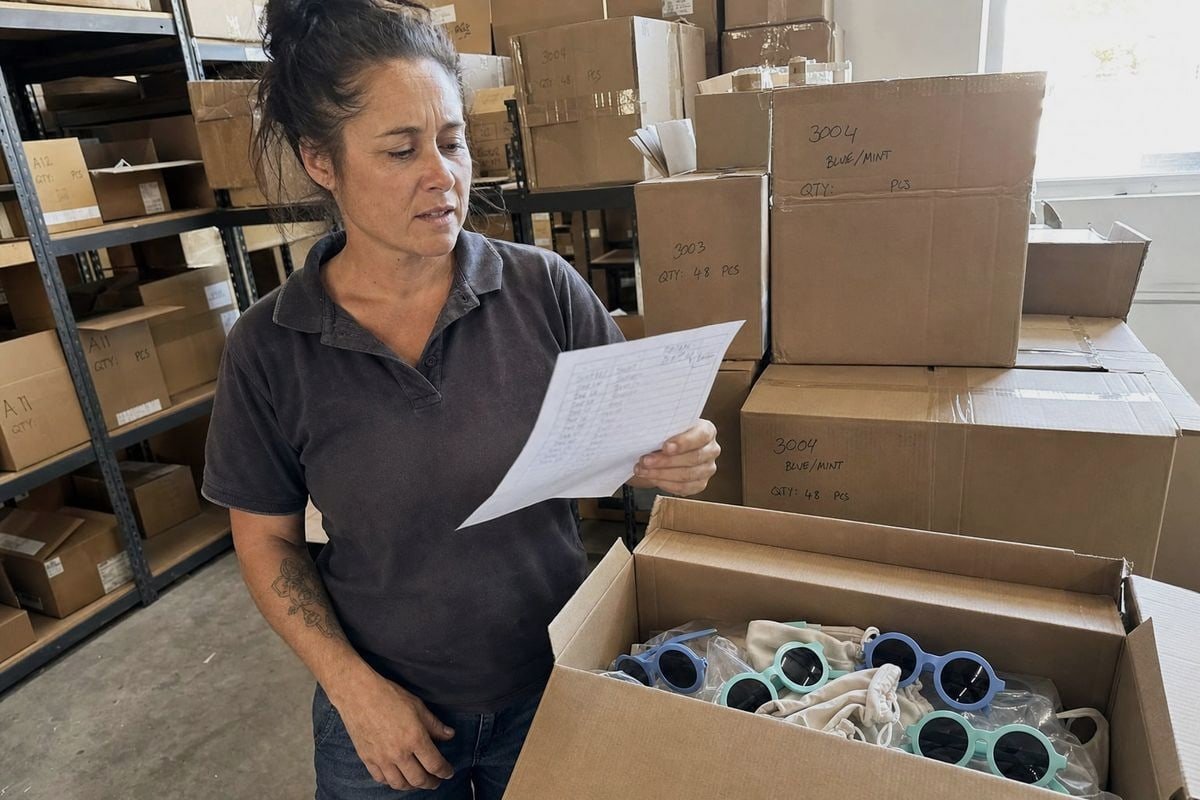
Start with data, not emotion. A retailer who says a style "feels slow" is guessing. A retailer who shows an aging report with days-on-hand buckets is negotiating sell-through thresholds 2. So the first building block of your policy is measurement. We ask our wholesale partners to bucket their kids sunglasses inventory into 0–30, 31–60, 61–90, 91–180, and 181+ day bands. Anything sitting in the 91–180 band with a sell-through rate under 15% becomes exchange-eligible. Anything past 180 days is usually better handled through a markdown strategy or liquidation, because character themes and colorways in children's eyewear age out fast.
The four-step exchange workflow
- Identify. The retailer runs a monthly aging report and flags SKUs by units and dollar value.
- Diagnose. Together, we check the cause: wrong size mix, bad seasonal timing, or overbuying. This step matters because exchanges can hide forecasting problems if you skip it.
- Request. The retailer submits a standard exchange form with purchase records, receipt dates, and inventory photos.
- Approve and swap. Our category team signs off, issues a credit memo, and the retailer selects replacement styles from our current collection of roughly 800 designs.
Track both units and value. Ten slow high-value polarized styles 3 can hurt more than a hundred cheap basics. Good dead stock management always weighs both.
What terms should I include to protect my brand while supporting retailer inventory turnover?
One lesson from fifteen years of exporting children's eyewear: vague terms cause more disputes than strict ones. Every exchange argument I have mediated traced back to a missing sentence in the agreement.
Include eligibility rules, pristine-condition standards with original cases and tags, hard seasonal cutoff dates, tiered restocking fees, credit-only reimbursement, freight responsibility clauses, per-SKU exchange caps, and documentation requirements. Together these terms protect margin while still improving the retailer's stock turnover ratio.
A return-to-vendor policy for kids sunglasses is really a bundle of small rules. Each rule closes one loophole. Here is the term sheet I recommend to brands and importers who buy from our production line.
Core policy terms and why they exist
| المصطلح | Recommended setting | What it protects |
|---|---|---|
| Eligibility window | 90–120 days after receipt, before seasonal cutoff | Keeps returned stock resalable |
| Condition standard | Unworn, original case, microfiber, and tags intact | Secondary-market value |
| Exchange cap | 10–20% of original order value | Prevents overbuying and abuse |
| Restocking fee | 5% within 30 days of trigger, 15% after 90 days | Rewards early reporting |
| Reimbursement | Credit memo only, no cash refunds | Keeps capital in the ecosystem |
| Freight | Retailer pays return; supplier pays outbound replacement | Fair cost sharing |
| التوثيق | Aging report, photos, purchase records | Verifiable claims |
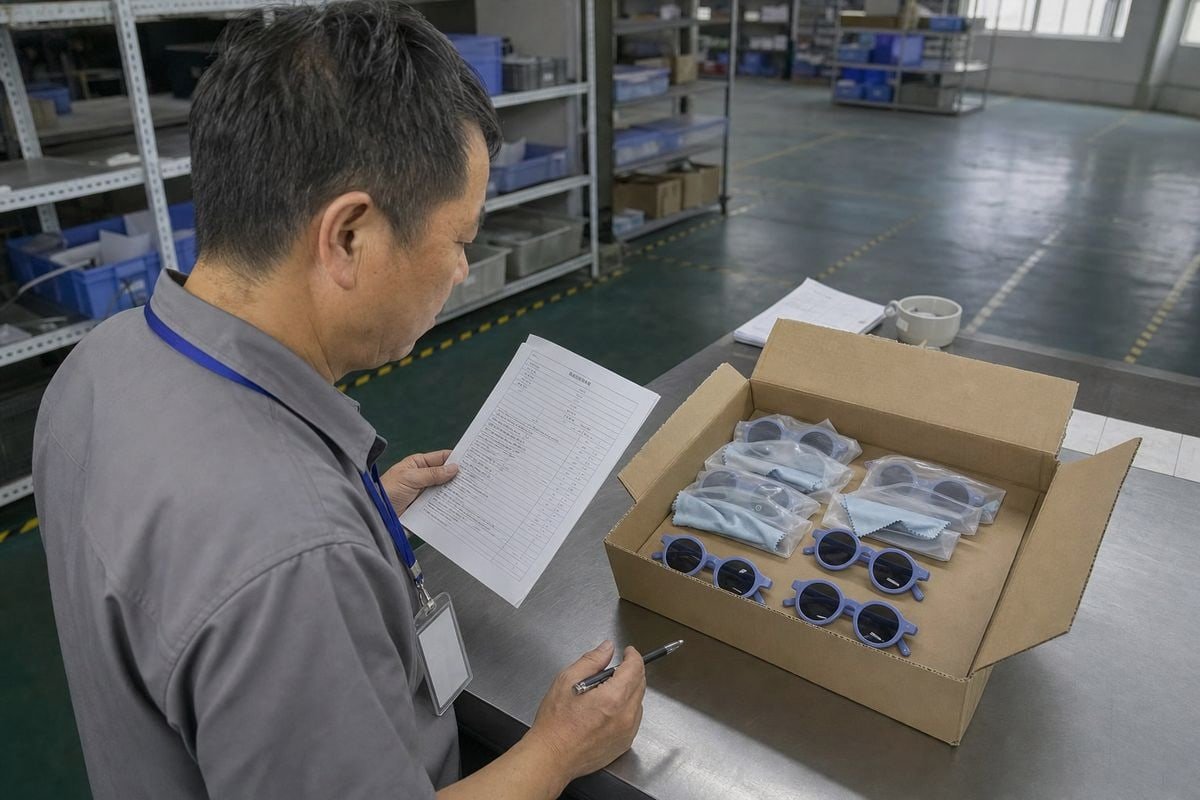
Condition standards deserve extra attention in the kids category. Missing cases and cloths sharply devalue children's eyewear when we redirect it to secondary channels. So we write "complete retail-ready set" into every buyback agreement, and our 5S-managed warehouse 4 inspects each returned carton before credit is issued.
Also link exchange privileges to buying behavior. If the same retailer exchanges the same SKU class twice, the policy should require a joint review of their seasonal demand forecasting before the next order. That single clause turns the policy from a safety valve into a planning tool.
How do I balance flexibility for retailers with cost control on returned or exchanged styles?
The trade-off I weigh most often is simple: generous rotation rights win loyal wholesale customers, but every returned carton carries freight, inspection labor, and inventory obsolescence risk on our side.
Balance the two by tiering flexibility: give full exchange rights to proven A-class styles, require manual approval for C-class SKUs, apply partial credit to older stock, mandate a bundle-first or markdown-first step, and adjust future order quantities whenever an exchange is approved.

Not every SKU deserves the same treatment. This is where SKU rationalization 5 enters the policy. Segment the assortment before writing rules, then attach different exchange rights to each segment.
Tiered flexibility by SKU class
| SKU class | Typical example from a kids range | Exchange right | Credit rate |
|---|---|---|---|
| A-class (proven sellers) | Classic round frames in core colors | Automatic, within window | 100% credit |
| B-class (seasonal) | Mirrored sport shields, themed colorways | Approval required | 80–90% credit |
| C-class (experimental) | Bold novelty shapes, niche colors | Manual review only | 50–70% or markdown-first |
Partial credit is the quiet hero of cost control. If stock returned at day 120 earns only 85% credit, retailers report slow movers earlier, when we can still resell them. Full credit at any age does the opposite; it invites late returns of dead stock.
A bundle-first rule also helps. Before a low-dollar accessory style qualifies for exchange, ask the retailer to try bundling it with a best-seller or running a targeted promotion for two to four weeks. Many "slow" styles just need placement changes. When exchanges do happen, log them against GMROI 6 and markdown recovery rate. If the recovered value keeps falling on a certain style family, retire it from the catalog rather than recycling the problem through the exchange program.
Finally, address the buyer objection I hear most: "Won't exchanges make my team lazy about forecasting?" They can. That is why every approved exchange in our workflow triggers a reorder-parameter adjustment, so the same overstock does not rebuild next season.
Which style and color options from my collection work best for a smooth exchange program?
When our design team samples new kids collections in Taizhou, we deliberately separate "safe core" styles from "fashion risk" styles. That split is exactly what makes an exchange program run smoothly.
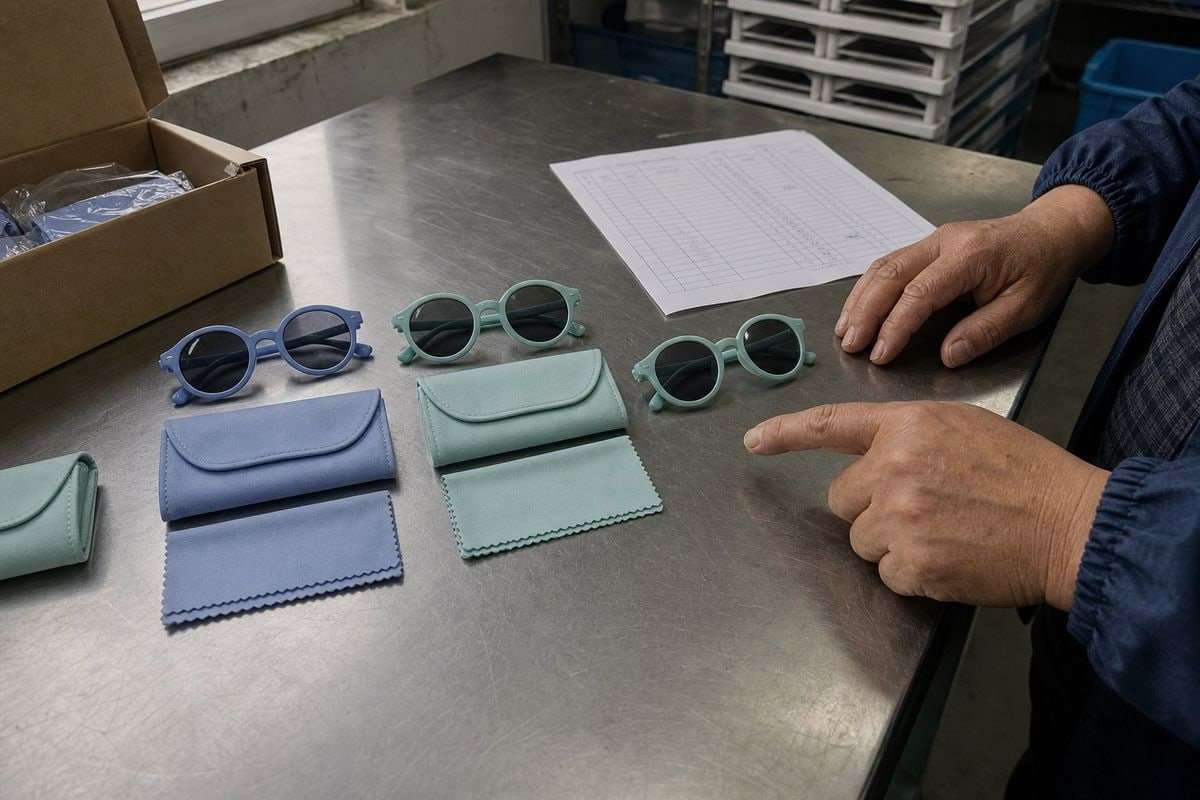
Core styles work best: soft two-tone round frames in periwinkle-blue and mint-teal for everyday wear, plus wraparound sport shields with mirrored gradient lenses in black or white frames. These carry stable multi-season demand, so exchanged units can be resold or reallocated easily.
An exchange program only works if the replacement styles actually sell and if returned styles can find a second home. So build your exchange menu around products with broad, durable appeal.
Matching styles to exchange roles
| Style | ملف التصميم | Best exchange role |
|---|---|---|
| Two-tone round frame | Periwinkle-blue front, mint-teal temples, dark gray lenses, soft flexible material | Ideal replacement stock; year-round, gender-neutral, low obsolescence |
| Black sport shield | Glossy black wraparound, orange-to-yellow mirrored gradient lens | Growth-swap option for older kids; strong in summer and outdoor channels |
| White sport shield | Matte white frame, fiery orange-to-blue iridescent lens | Reallocation candidate for coastal and high-UV regions |
The rounded two-tone frame is the anchor. Its flexible, rubberized construction suits toddlers through early school age, and its minimalist look never depends on a licensed character or a passing trend. When a retailer exchanges out a failed novelty style, this is the safest stock to send back. The sport shields serve a different purpose. They support age-bracket rotation rights, sometimes called a growth swap: a retailer with excess toddler sizes can trade into youth-oriented wraparounds mid-season as local demographics shift. Their mirrored gradient lenses also resell well in coastal and high-UV markets, which makes regional reallocation a practical exit ramp before any return-to-vendor step.
Color matters as much as shape. Black and white sport frames outlast trend cycles; the vivid story lives in the lens, which shoppers read as "performance" rather than "last season." That keeps inventory obsolescence low across the whole exchange loop.
الخلاصة
Slow movers drain cash and shelf space fast in kids sunglasses. A clear exchange policy — aging triggers, condition standards, tiered credits, and smart core styles — turns that risk into fresh, sellable assortments.
ملاحظات ختامية
1. Background on the inventory metric referenced for measuring retailer performance. ↩︎
2. Explains the retail metric used to define exchange eligibility thresholds. ↩︎
3. FDA guidance on sunglasses UV protection relevant to polarized lens products discussed. ↩︎
4. Background on the 5S workplace organization methodology referenced for warehouse inspection. ↩︎
5. Defines SKU concept underlying the tiered exchange segmentation strategy. ↩︎
6. Authoritative Wikipedia entry defining Gross Margin Return on Investment for retail inventory management. ↩︎
مقالات أخرى قد تعجبك

August 1, 2026
هل يجب على المصنع التعامل مع تغليف ووضع ملصقات نظارات الأطفال الشمسية، أم استخدام مورد مخصص؟

August 1, 2026
مستودع خاص مقابل الوفاء المباشر من المورد: أيهما يقلل تكاليف الإرجاع لعلامات نظارات الأطفال الشمسية؟

August 1, 2026
مباشر إلى ميناء المستودع أو التخزين الخارجي: أيهما يوفر أكثر على شحن نظارات الأطفال الشمسية؟
هل تبحث عن شريك موثوق به للنظارات للأطفال؟
استكشف أكثر من 800 نمط جاهز ودعم OEM/ODM كامل مصمم خصيصًا لعلامتك التجارية.
اتصل بنا English
  Español de México
  Deutsch
  Français
  日本語
日本語  العربية
  Português do Brasil