How to Schedule Kids Sunglasses Arrivals to Avoid Out-of-Stock Gaps?

Scheduling kids sunglasses arrivals is where I see most new brands stumble wholesale eyewear suppliers 1. Our Taizhou factory watches buyers lose entire summer weeks to empty shelves — sales they never get back.
To schedule kids sunglasses arrivals and avoid out-of-stock gaps, work backward from your peak-demand date using worst-case supplier lead time, add buffers for transit, customs, and QA, set reorder points on best-sellers, and place seasonal orders 4–6 months before summer or back-to-school.
That answer sounds simple. The hard part is turning it into a calendar you can actually follow. Below, I break down each step the way we walk our own buyers through it.
How can I calculate the right lead time for my kids sunglasses orders from China?
Last spring, a European buyer emailed us in a panic: her sunglasses were "on time" by her math, yet still three weeks from her warehouse. Her math only counted production days.
Calculate lead time by adding every stage: production (typically 30–45 days for custom orders), pre-shipment QC, ocean freight (25–40 days to Europe or Australia), customs clearance, inland transit, and warehouse receiving. Then plan to the worst-case total, not the average, and add a one-to-two-week buffer.
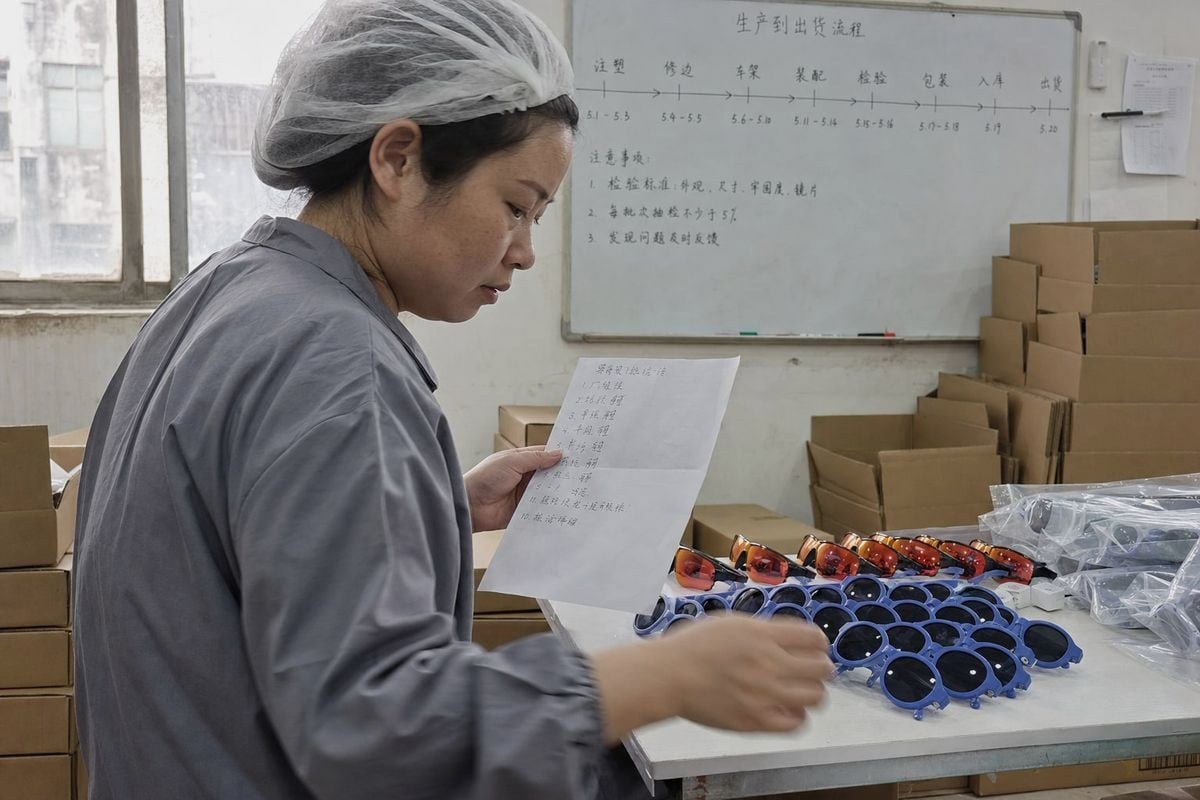
Lead time management is the foundation of everything else in this article. In our experience exporting to buyers in 20+ countries, the number one cause of stockout gaps is not slow factories or slow ships. It is buyers who schedule to the average arrival time instead of the realistic worst case. If your average total lead time is 70 days but your worst case is 95 days, and you plan to 70, you will be out of stock roughly half the time your supply chain hits friction.
Break the lead time into stages
Never treat lead time as one number. Break it into stages you can measure and challenge:
| المرحلة | Typical Range | What Extends It |
|---|---|---|
| Order confirmation & sampling | 3–10 days | Custom colors, new logos, packaging approval |
| Production | 30–45 days (custom); much shorter for ready styles | Peak season queue, special lens coatings, material orders |
| QC & export packing | 2–5 days | Failed inspections, rework |
| Ocean freight | 25–40 days | Port congestion, vessel rollovers, weather |
| Customs & inland transit | 3–10 days | Documentation errors, inspections, holidays |
| Warehouse receiving | 2-7 أيام | 3PL backlogs during peak shopping seasons |
Two calendar traps deserve special attention. First, عيد رأس السنة الصيني 2 effectively removes three to four weeks from production capacity every winter — orders that need to arrive for spring must be confirmed before December. Second, weekends, national holidays, and warehouse blackout days quietly stretch every stage. Retail delivery systems work the same way: even fast domestic retailers only promise next-day dispatch before a strict cutoff time, and prescription eyewear commonly runs 7–14 business days. If domestic fulfillment needs that much buffer, your international supply chain logistics need far more.
Our practical rule: take your realistic total, then schedule to roughly the 90th-percentile arrival date. The cost of goods arriving two weeks early is small. The cost of a two-week gap in July is a lost season.
What MOQ and reorder strategy will help me avoid stockouts without overbuying?
One trade-off I discuss with almost every new buyer: order deep and risk dead stock, or order lean and risk empty shelves. Neither extreme works for children's eyewear.
Use selective safety stock: hold deeper inventory on proven best-selling sizes and colors, order conservatively on trend styles, and set a reorder point equal to daily sales multiplied by worst-case lead time, plus safety stock. Reorder when inventory hits that number, not when it runs out.
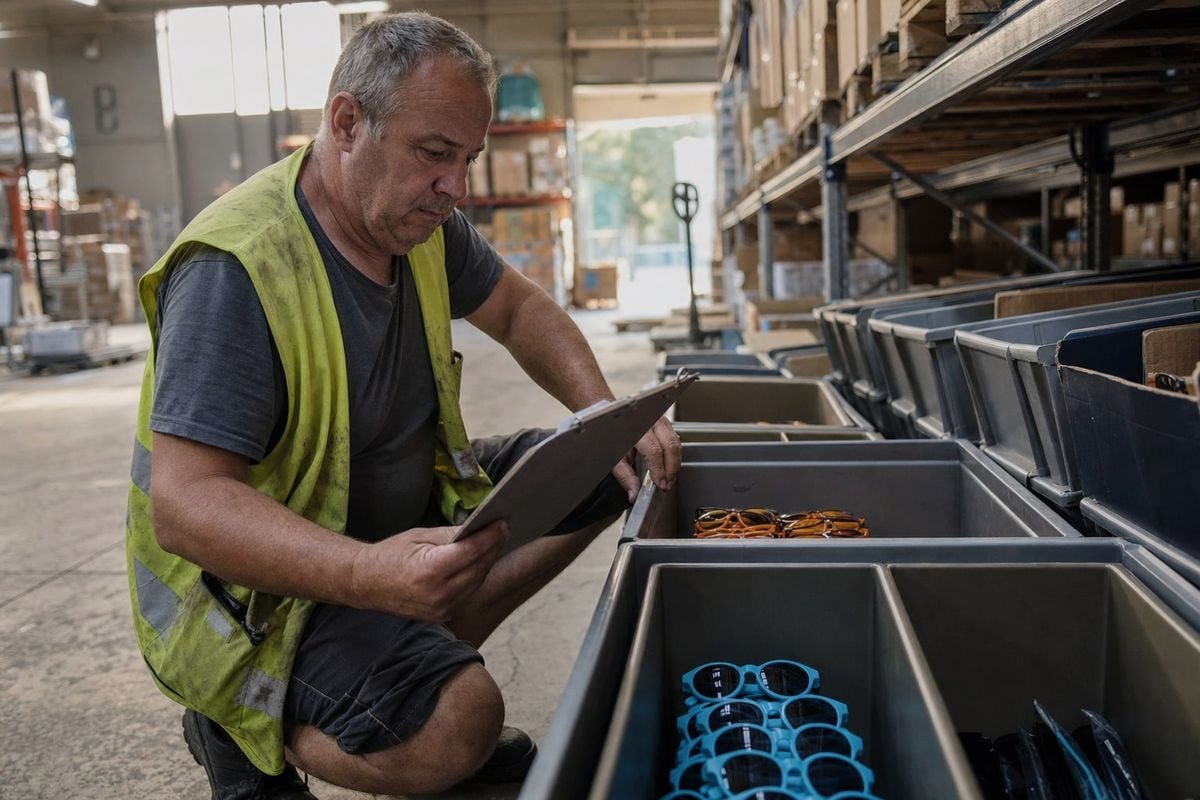
Kids sunglasses complicate standard reorder logic because one "product" is really a matrix of sizes, colors, and lens types. A toddler size in mint-teal can sell out while the pre-teen version of the same frame sits untouched. So your stock replenishment strategy has to work at the SKU level, not the style level.
Reorder point calculation, made practical
The formula itself is simple:
- Measure average daily unit sales per SKU during the selling season.
- Multiply by your worst-case lead time in days. That is your lead-time demand.
- Add safety stock levels — extra units to cover demand spikes and supplier variability.
- When on-hand inventory hits that total, place the purchase order immediately.
The judgment call is step three. Here is how we advise buyers to segment it:
| نوع SKU | Safety Stock Approach | لماذا |
|---|---|---|
| Core best-sellers (top sizes/colors) | High — 3–4 weeks of extra cover | These cause the most visible, costly gaps |
| Seasonal heroes (summer sport shields) | High before peak, taper after | Demand spikes fast; reordering mid-season is often too late |
| أنماط اتجاه/اختبار | Low — accept possible sellout | Markdown risk outweighs stockout risk |
| Polarized or custom-lens variants | متوسط إلى مرتفع | Longer, less predictable replenishment path |
Now the objection I hear most: "Just-in-time keeps my cash free — why carry safety stock at all?" Fair point, and JIT does reduce carrying cost. But children's sunglasses sell in seasonal bursts, and a JIT plan built on 70-day international lead times cannot react to a heatwave or a viral colorway. The opposite extreme — blanket safety stock on every SKU — ties up cash and creates markdown pressure on slow movers, dragging down your أول طلب آمن دائمًا هو أصغر طلب يقبله المورد 3. Selective safety stock resolves both objections: protect the SKUs that hurt when they gap, stay lean everywhere else.
MOQ matters here too. Stratify your buy across age tiers — toddler, child, pre-teen — rather than dumping the full MOQ into one size. On our line, buyers often split a single style’s MOQ across two or three colorways, which keeps each SKU's depth matched to its real demand.
How do I plan seasonal shipments so my kids sunglasses arrive before peak demand?
An Australian buyer once taught us a lesson we never forgot: her summer starts in December, so her production slot with us had to be booked in July — mid-winter for her customers.
Plan seasonal shipments by placing orders 4–6 months before your peak window. Set the target arrival date 3–4 weeks before demand starts, then subtract worst-case lead time to find your latest order date. Book production slots early to avoid the pre-summer factory queue.
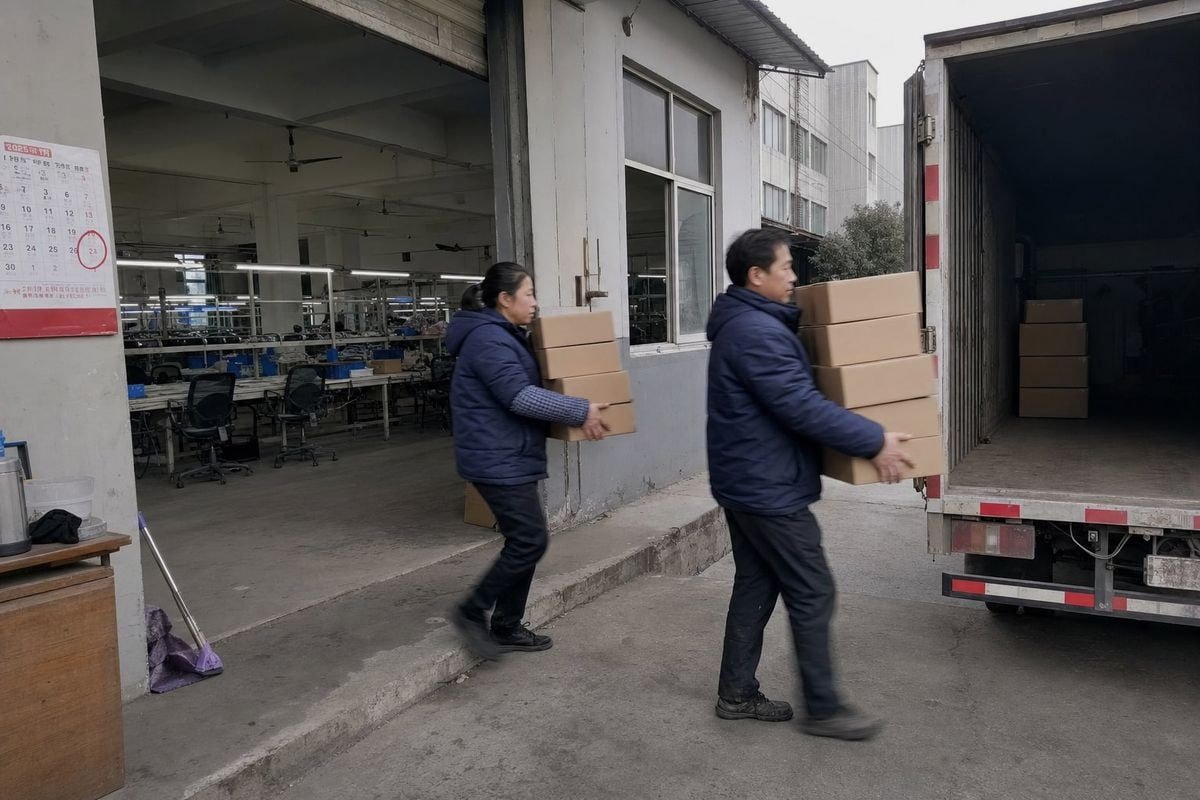
Seasonal demand planning for kids sunglasses is not linear. Sales cluster around a few predictable windows: the spring transition when sunglasses shift from fashion accessory to sun-protection necessity, summer vacations, back-to-school, and holiday gifting. Inventory forecasting should start with last year's SKU-level sales during each window, adjusted for growth and any new styles you are adding.
A backward-planning calendar for a Northern Hemisphere summer
| معلم رئيسي | Target Date | لماذا |
|---|---|---|
| Peak demand begins | June 1 | UV-season buying accelerates |
| Goods on shelf / live online | May 1–10 | Buffer for receiving, photography, listing |
| Arrival at your warehouse | Late April | Absorbs customs or freight slippage |
| Ship from China | Early–mid March | 25–40 days ocean transit |
| Production complete | Early March | QC and export packing |
| Order confirmed at factory | Early–mid January | 30–45 days production, before spring queue |
| Sampling and design lock | November–December | Custom colors, logos, packaging approved |
Notice how a June peak demands a January order — and if Chinese New Year lands in that window, you move everything earlier still. This matches the standard industry guidance to order 4–6 months ahead, and it is exactly what we see on our own production calendar: February through April slots fill fast with pre-summer orders.
Two refinements make this plan sharper. First, layer in local triggers: youth sports league opening days, school field weeks, and regional holidays can pull demand forward by weeks in specific markets. Second, watch early-season weather. An unusually sunny April can ignite demand a month ahead of forecast — buyers with goods already landed capture it; buyers still waiting on a vessel do not. Some larger retailers even tie regional replenishment to UV-index data 4. You do not need that sophistication; you just need your stock to land early rather than exactly on time.
Finally, split shipments when volume allows. Land 60–70% before the season and hold a second, smaller production run for mid-season replenishment of whatever proves hottest. That balances early coverage with mid-season flexibility.
Can working with a manufacturer offering ready styles help me shorten my delivery schedule?
When we built our catalog to roughly 800 existing styles, the goal was exactly this: letting brands skip the slowest, riskiest stages of a custom eyewear timeline.
Yes. Ready styles remove mold development and shorten sampling and production dramatically, since tooling, fit testing, and material sourcing are already done. Brands can add custom colors, logos, and packaging to proven frames and cut weeks off the schedule versus fully custom development.
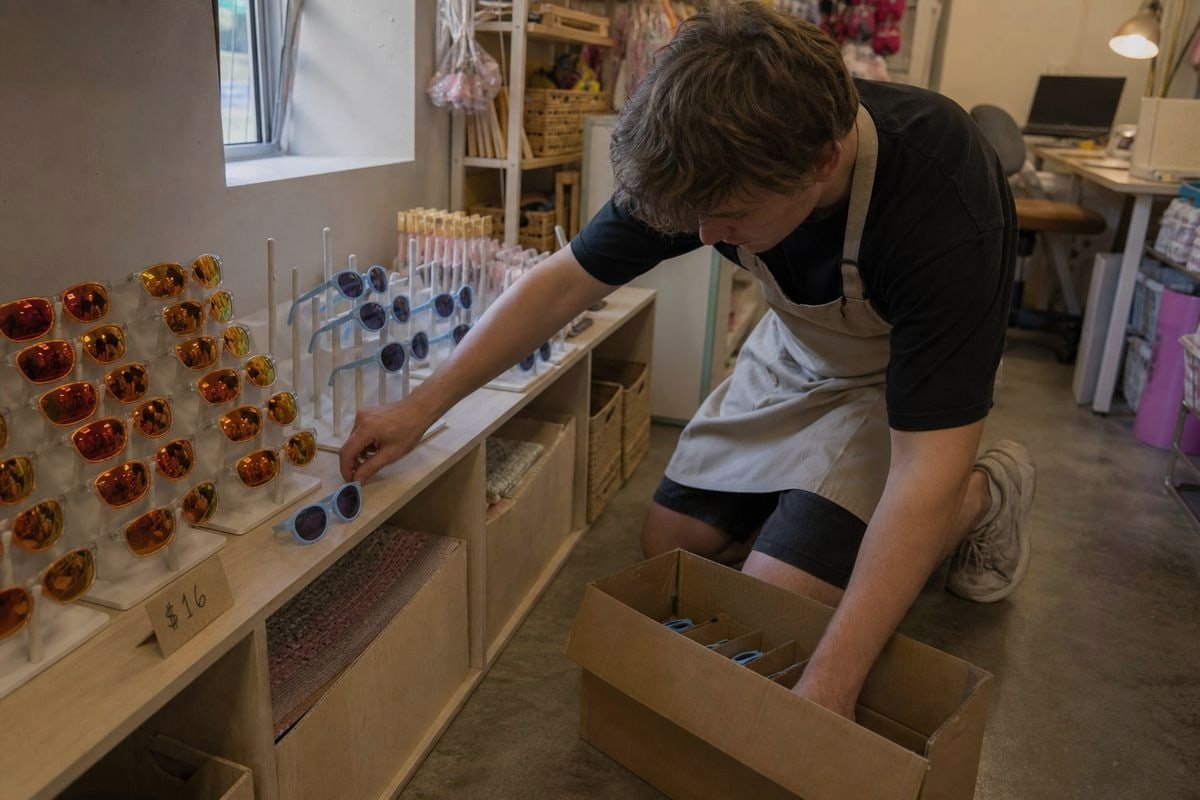
Fully custom eyewear development is slow for reasons no factory can wish away. New molds take weeks to cut and tune. Fit testing on children's face shapes takes iterations. Some manufacturing setups quote 20–35 days standard production that stretches much longer when special materials must be sourced. If your replenishment calendar depends on that path every time, your worst-case lead time balloons — and so does your stockout risk.
Where ready styles save time
Choosing from an existing catalog collapses several stages at once. The mold exists. The fit is proven on real children — from soft, rounded two-tone frames for toddlers to wraparound sport shields with mirrored gradient lenses for active pre-teens. TPEE and TR90 material behavior is already dialed in, so flexibility and safety are not experiments on your order. يو في 400 5 and polarized lens options are standard, not special sourcing projects. What remains is your differentiation layer: custom colors, printed logos, lens treatments, and retail-ready packaging — the OEM/ODM work that runs in days-to-weeks, not months.
This matters most in three scenarios. New brands can launch without heavy mold investment and test the market at lower risk. Established brands can use ready styles as fast-replenishment cores while running custom designs on longer timelines. And when a mid-season best-seller starts running low, a ready style is often the only path fast enough to refill before the season ends.
One honest caveat: ready styles shorten production, not the ocean. Freight, customs, and receiving still apply, so ready styles complement your reorder-point discipline 6 — they do not replace it. Evaluating wholesale eyewear suppliers on catalog depth, material expertise, and QC consistency 7 is therefore as important as evaluating their price sheet. A factory that ships on the confirmed date is worth more to your calendar than one that quotes a week faster and slips.
الخلاصة
Empty shelves in July are planned in January. Schedule to worst-case lead times, protect hero SKUs with safety stock, order months before peaks, and lean on ready styles when speed matters.
ملاحظات ختامية
1. Alibaba is a leading marketplace for sourcing and evaluating wholesale eyewear suppliers. ↩︎
2. Explains the holiday that shrinks Chinese factory capacity each winter. ↩︎
3. Background on the inventory metric affected by excess safety stock. ↩︎
4. EPA’s official UV Index resource explains the data retailers use for replenishment. ↩︎
5. Official FDA consumer update recommending UV400 rated sunglasses for effective eye protection. ↩︎
6. Defines the inventory replenishment concept referenced alongside ready styles. ↩︎
7. Government resource explaining how ISO 9001 standards ensure consistent product quality and management. ↩︎
مقالات أخرى قد تعجبك

August 1, 2026
هل يجب على المصنع التعامل مع تغليف ووضع ملصقات نظارات الأطفال الشمسية، أم استخدام مورد مخصص؟
August 1, 2026
مستودع خاص مقابل الوفاء المباشر من المورد: أيهما يقلل تكاليف الإرجاع لعلامات نظارات الأطفال الشمسية؟

August 1, 2026
مباشر إلى ميناء المستودع أو التخزين الخارجي: أيهما يوفر أكثر على شحن نظارات الأطفال الشمسية؟
هل تبحث عن شريك موثوق به للنظارات للأطفال؟
استكشف أكثر من 800 نمط جاهز ودعم OEM/ODM كامل مصمم خصيصًا لعلامتك التجارية.
اتصل بنا English
  Español de México
  Deutsch
  Français
  日本語
日本語  العربية
  Português do Brasil