How to Determine Color and Size Stock Ratios for Kids’ Sunglasses?
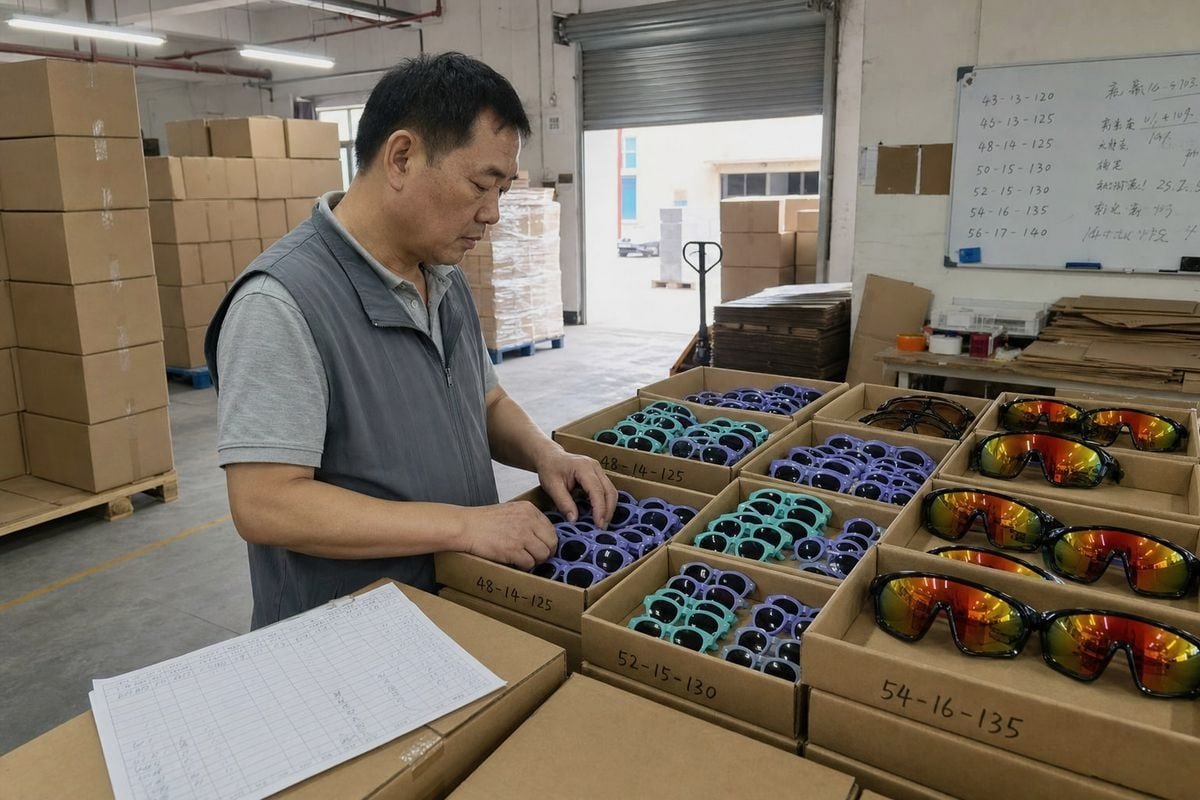
Getting color and size stock ratios for kids’ sunglasses wrong is expensive. I have watched buyers on our production line over-order “cute” colors that never sold through.
To determine color and size stock ratios for kids’ sunglasses, allocate 60–70% of units to your core middle size band, 20–30% to adjacent sizes, and 10% to trend tests. For color, keep roughly 70% evergreen neutrals and 30% seasonal or novelty shades.
That formula is a starting point, not a rule. Below, I break down how to adjust it for your age groups, your sales data, and each market you sell into.
How do I choose the right color mix for my kids' sunglasses order?
Last spring, a European buyer asked our team to run their whole order in neon pink. We talked them into a split assortment. The neon sold out, but the neutrals reordered three times.
Choose a color mix by splitting stock roughly 70/30: 70% in evergreen, versatile colors like black, tortoise, navy, and soft pastels, and 30% in bright, trend-driven, or seasonal shades. Prioritize gender-neutral color palettes to simplify inventory and widen appeal.
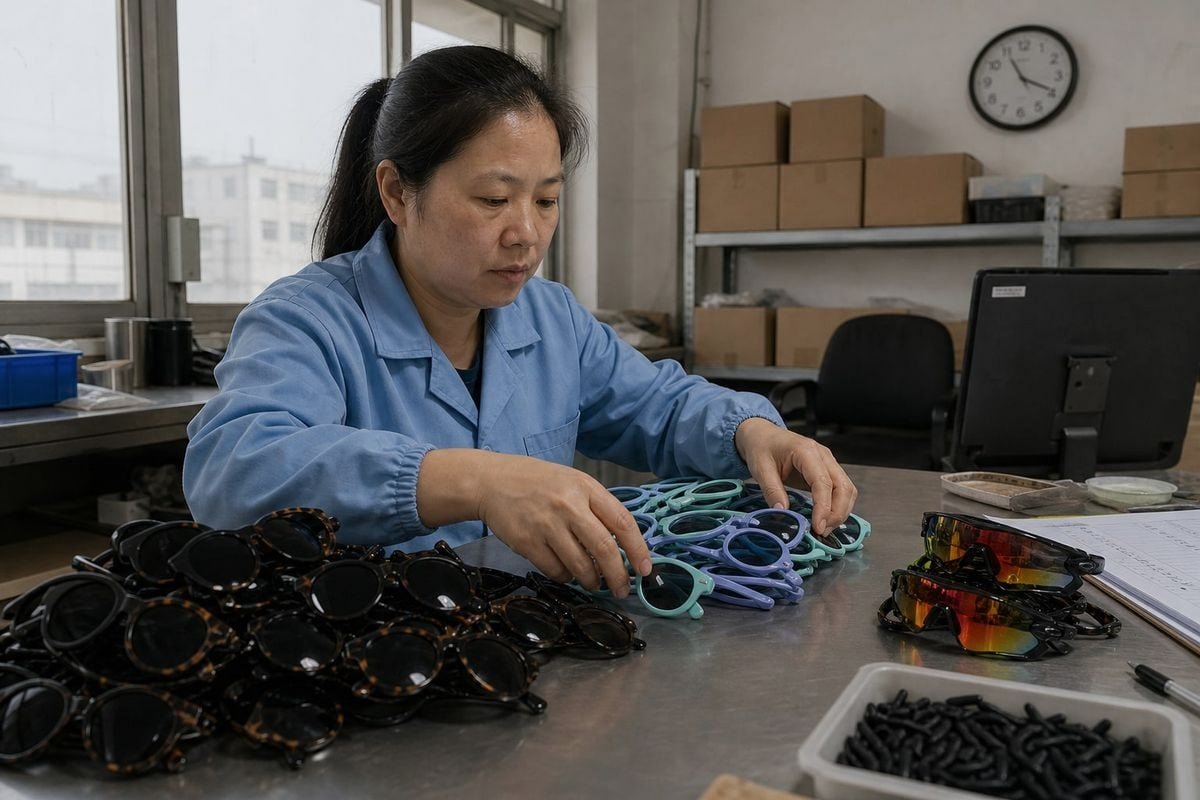
Color is the emotional side of the buying decision, but it must be managed with retail discipline. Parents pay, and parents lean practical. Children choose, and children lean bright. Your color mix has to serve both. In our fifteen years supplying children's brands from Taizhou, the assortments that sell through fastest almost always balance "mini-me" adult tones with a smaller layer of kid-centric color.
The core-versus-trend split
Think of your color budget in three tiers:
| Color tier | Share of stock | أمثلة | الدور |
|---|---|---|---|
| Evergreen core | 60–70% | Matte black, tortoise, navy, gray | Reliable sell-through, low markdown risk |
| Soft fashion | 20–25% | Periwinkle blue, mint teal, blush pink | Seasonal freshness, child appeal |
| Novelty / trend | 10–15% | Neon, mirrored gradients, two-tone pops | Tests demand, drives social attention |
The two-tone periwinkle-and-mint style we produce is a good example of the middle tier. It reads playful to a child but still soft enough for a parent to say yes. Meanwhile, mirrored gradient shield lenses in orange-to-yellow tones belong in your novelty tier — they photograph brilliantly and attract tweens, but you should order them in tighter quantities until sales prove them.
Frame color versus lens tint
Separate the two decisions. Lens tint is not a safety feature. UV400 protection matters far more than how dark or colorful a lens looks. Treat mirrored and gradient tints as merchandising choices 1, and confirm every SKU meets UV400 regardless of tint. Also dedicate at least 40% of your assortment to gender-neutral color 2 palettes. It reduces SKU count, simplifies reordering, and matches how modern parents actually shop.
What size ratios should I stock for different children's age groups?
One trade-off we weigh constantly in our workshop: bigger lenses give better sun coverage, but a frame that slips off a toddler's nose protects nothing. Size ratios have to respect real face measurements.
Stock size ratios by age band: place 60–70% of units in your core band (usually 4–8 years, lens widths around 43–47 mm), 20–30% in adjacent bands, and about 10% in the smallest and largest sizes. Overstock the 4–8 range by roughly 20% for replacements.
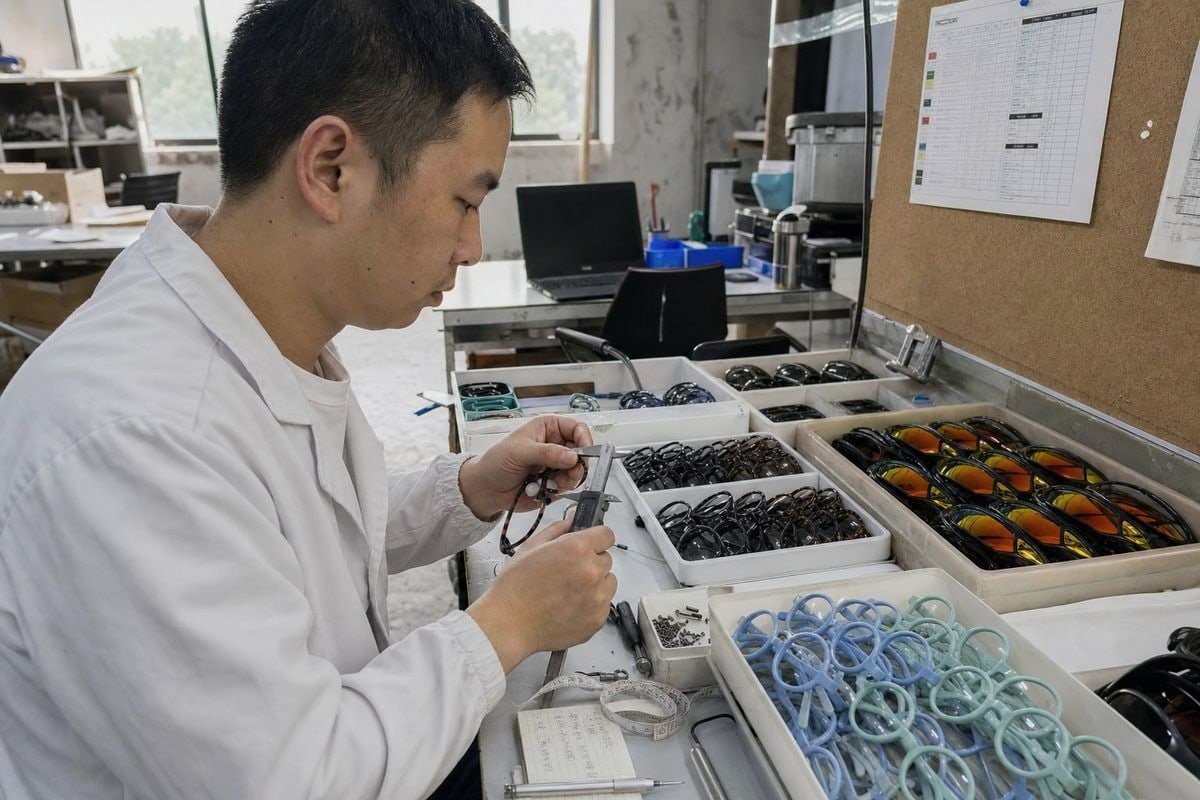
Size mix is driven by three technical measurements: lens width, bridge width, and temple length 3, all in millimeters. Age labels alone are not enough, because face width 4 varies within any age group. But age-based sizing charts give you a workable planning skeleton, and you refine it with fit feedback later.
A practical age-to-size planning table
| Age band | Typical lens width | Suggested stock share | Notes |
|---|---|---|---|
| Baby, 0–2 yrs | 35-38 ملم | 5–10% | Prioritize إطارات مرنة من TPEE 5 and soft temples |
| Toddler, 2.5–4 yrs | 2-5 سنوات (طفل صغير) | 15–20% | Flexibility and grip matter most |
| Junior core, 4–8 yrs | 43–46 mm | 45–55% | Highest loss and breakage — add ~20% buffer |
| Youth, 8–10 yrs | 7-10 سنوات (أطفال) | 15–20% | Rising polarized lens demand for sports |
| Tween/teen, 10–14 yrs | 10-16 سنة (مراهق) | 10–15% | Style-driven; adult-look frames and shields |
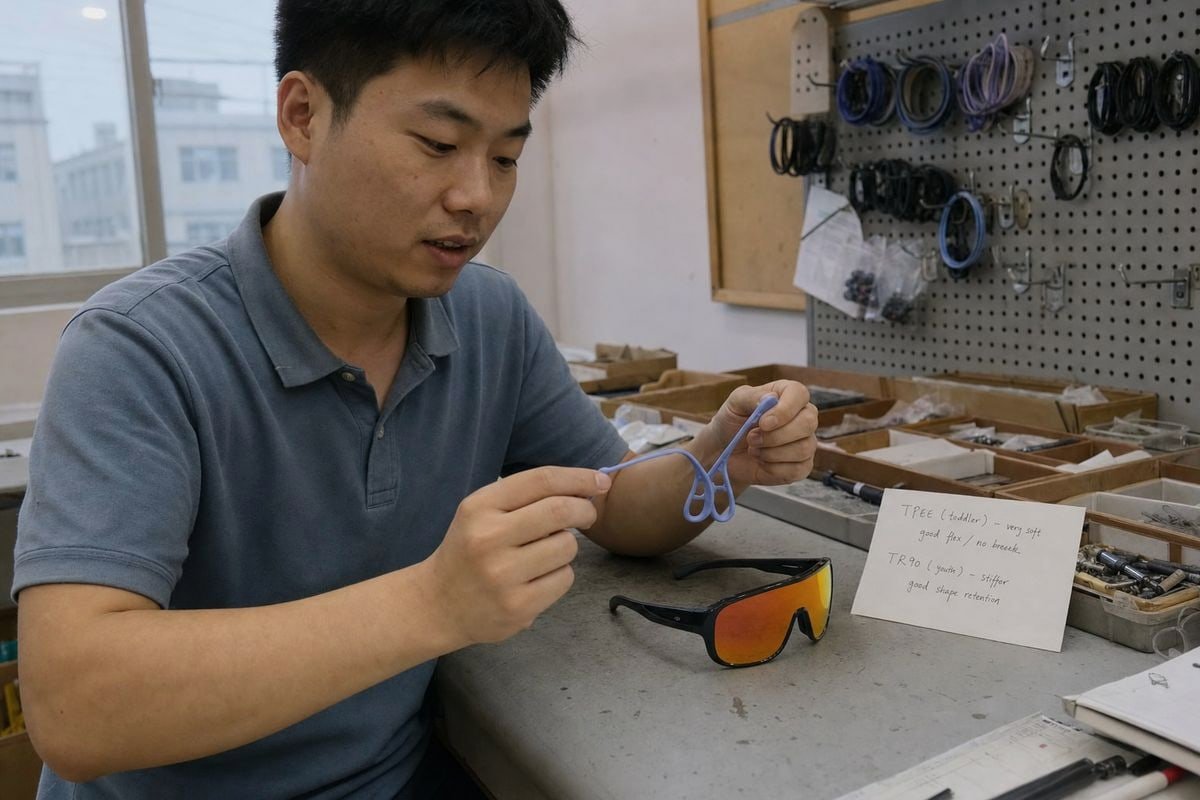
الـ toddler vs youth eyewear distinction matters more than most first-time buyers expect. Toddler frames need shorter temples, wider relative bridges, and forgiving materials — this is where TPEE flexible frames earn their keep, because a two-year-old will twist, chew, and sit on their sunglasses. Youth frames shift toward TR90 with more structure, larger lenses, and sport shapes like wraparound shields.
Why the 4–8 band deserves a buffer
Children in this range lose sunglasses at school, break them at the playground, and outgrow them within a season or two. That replacement cycle means demand is not just first purchases — it is repeat purchases. Overweighting this band improves your inventory turnover rate because it is the bucket least likely to sit unsold.
Also remember growth allowance. Choose sizes with a little room to grow, but avoid ordering "one size up" across the board. Oversized frames create side gaps that let sunlight in and slip during play, which defeats the purpose.
How can I use sales data to refine my stock ratios each season?
A distributor client of ours in Australia once reordered purely on gut feel — and ran out of mid-size frames by December while pastel purple piled up. Their next order was built on numbers, and it turned twice as fast.
Refine stock ratios each season by grouping SKUs into size and color buckets, ranking each bucket by sell-through rate, then shifting share toward the fastest sellers. Use returns and fit complaints to cut sizes that run large or small, and cap slow colors.
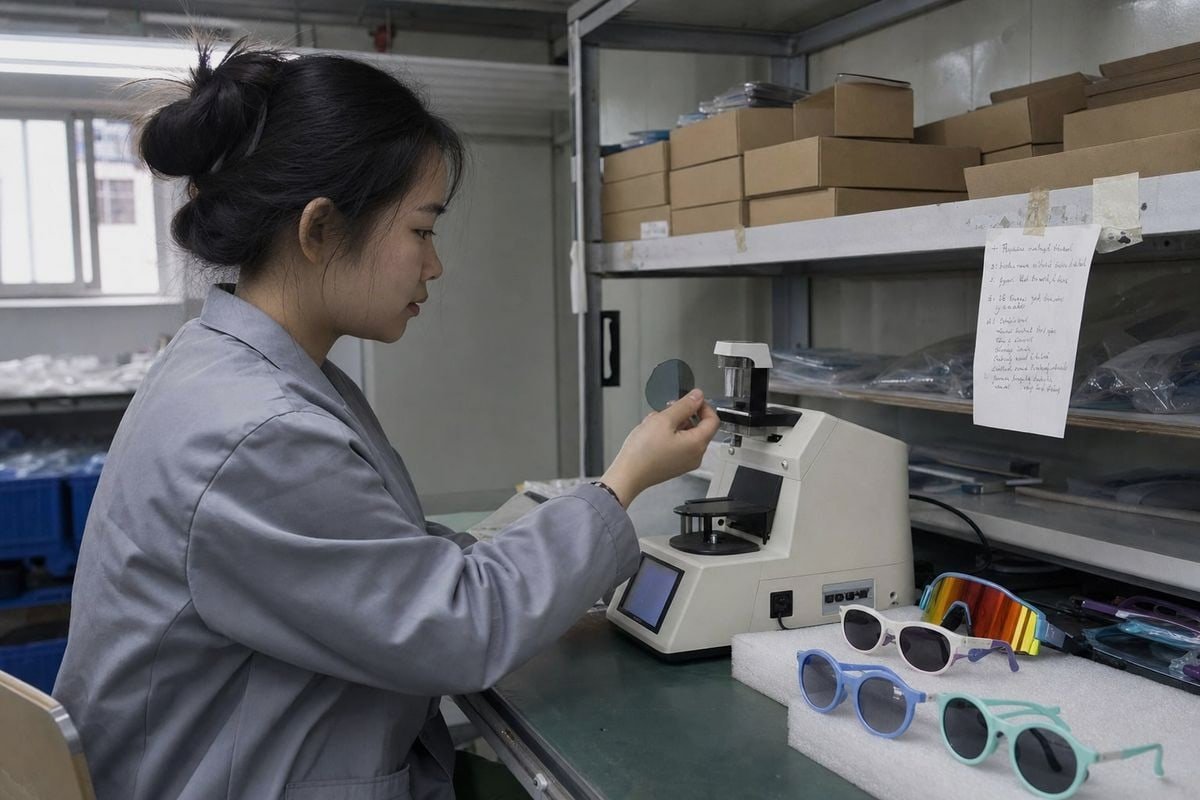
Your first order is an educated guess. Every order after that should be an act of historical sales data 6 analysis. The method does not need expensive software. It needs discipline and a simple repeatable process.
A five-step seasonal review process
- Pull last season's sell-through by SKU. Units sold divided by units received, per SKU, per month.
- Group SKUs into buckets. Three size buckets (small, medium, large) and three color buckets (core, fashion, novelty). This is basic SKU rationalization — you manage buckets, not fifty individual codes.
- Rank the buckets. The bucket with the fastest sell-through gets the largest share of the next replenishment. This is the heart of sell-through rate optimization.
- Mine your returns and reviews. Fit complaints like "slips down" or "too tight at the temples" tell you which sizes are mislabeled for your audience. Reduce those quantities before they become deadstock.
- Reserve a fixed test allocation. Keep about 10% of the order for new colors or shapes every season, so trends never contaminate your core buy.
Watch two numbers above all
Inventory turnover rate tells you how hard your capital is working. Sell-through by week tells you when to reorder. When we help buyers plan repeat orders from our 800 existing styles, we ask for these two figures first — because a factory lead time 7 only helps if the reorder trigger fires early enough. Kill any SKU that sells below half the pace of its bucket average for two consecutive seasons. Sentiment keeps bad SKUs alive; data retires them.
Should I adjust my color and size ratios differently for each market I sell in?
Shipping to twenty-plus countries has taught our export team one blunt lesson: the same container split never works twice. A Japanese order and an Australian order can share styles, yet demand opposite ratios.
Yes. Adjust ratios per market based on climate, season length, activity culture, and local taste. Sunny, sport-heavy markets need more wraparound frames and polarized lenses; fashion-led markets need more mini-me neutrals; year-round sun markets support broader size depth and faster reorder cycles.
Market context changes every variable in your stock ratio formula. Treating all regions as one buying pool is the fastest way to strand inventory in the wrong warehouse.
How key markets shift the ratios
| Market factor | Example markets | Ratio adjustment |
|---|---|---|
| Long, intense sun season | Australia, Middle East | Deeper stock across all size bands; higher polarized lens demand; strict UV400 expectations |
| Fashion-led shopping | Japan, Western Europe | More muted, sophisticated tones; smaller novelty tier; tighter size runs |
| Sport and outdoor culture | US, Australia | More wraparound shield styles for the 6+ group; grippier temple designs |
| Short summers | Northern Europe | Compressed selling window; lean opening buys, fast reorders; a winter pivot to darker snow-glare tints |
Seasonal fashion trends also travel unevenly. A neon gradient shield that trends in one market may land flat in another for a full year. That is why we advise brands to run trend colors as small regional tests rather than global rollouts.
Size ratios shift too, not just color
Average face width and bridge shape differ across populations. Buyers serving East Asian markets often request wider bridge fits and adjusted nose pads on the same base frame. In our OEM work, that is a tooling and fitting conversation before it is a quantity conversation. If you sell in multiple regions, keep your core styles shared but let each market's age-based sizing charts and fit feedback set its own size split. One catalog, several ratio profiles — that is how you protect margin across borders.
الخلاصة
Guessing ratios drains cash. Anchor most stock in core sizes and evergreen colors, test trends small, and let each season's data reshape the next order.
ملاحظات ختامية
1. Wikipedia entry defining merchandising as the promotion of goods for sale in retail environments. ↩︎
2. Industry-leading authority on color trends and the strategic importance of color selection in product design. ↩︎
مقالات أخرى قد تعجبك

August 1, 2026
هل يجب على المصنع التعامل مع تغليف ووضع ملصقات نظارات الأطفال الشمسية، أم استخدام مورد مخصص؟

August 1, 2026
مستودع خاص مقابل الوفاء المباشر من المورد: أيهما يقلل تكاليف الإرجاع لعلامات نظارات الأطفال الشمسية؟

August 1, 2026
مباشر إلى ميناء المستودع أو التخزين الخارجي: أيهما يوفر أكثر على شحن نظارات الأطفال الشمسية؟
هل تبحث عن شريك موثوق به للنظارات للأطفال؟
استكشف أكثر من 800 نمط جاهز ودعم OEM/ODM كامل مصمم خصيصًا لعلامتك التجارية.
اتصل بنا English
  Español de México
  Deutsch
  Français
  日本語
日本語  العربية
  Português do Brasil