ما هي المعلومات المطلوبة على ملصقات تغليف نظارات الأطفال الشمسية؟
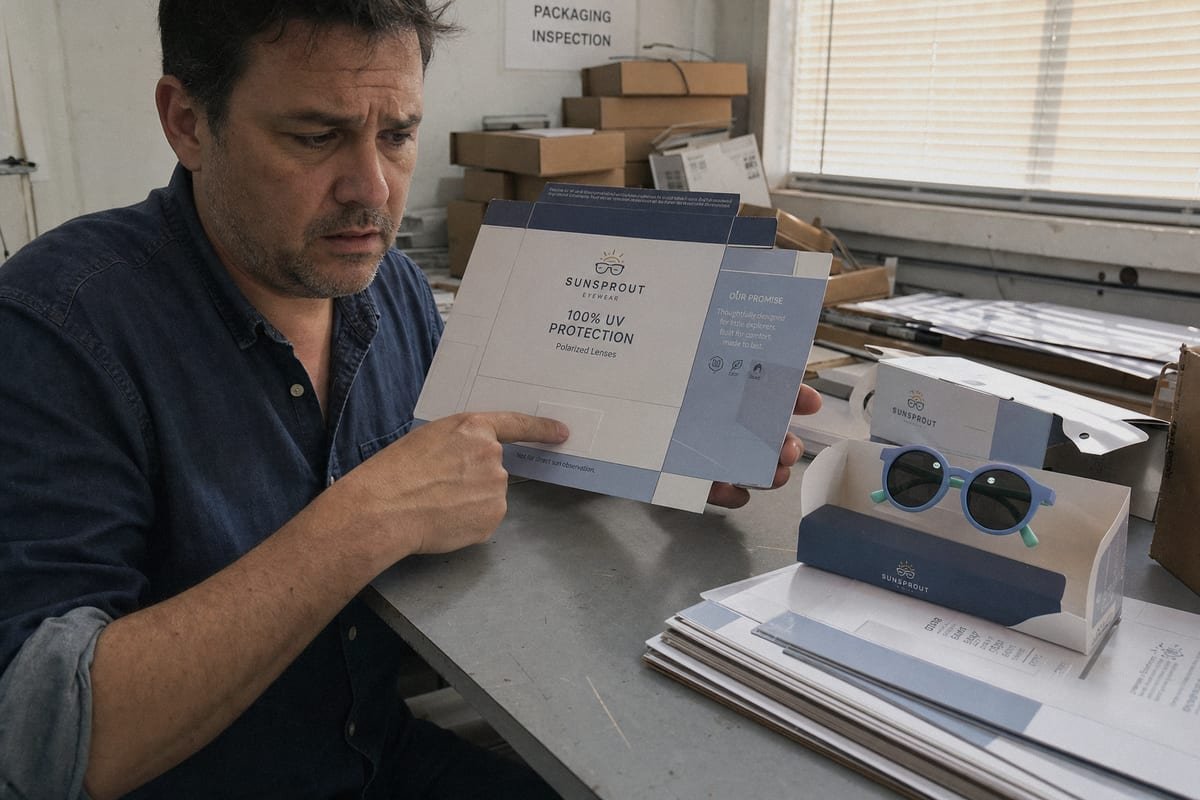
تسببت ملصقات تغليف نظارات الأطفال الشمسية في تأخير مكلف في الجمارك لأحد المشترين لدينا العام الماضي. في خط الإنتاج الخاص بنا، نقوم الآن بمراجعة رسومات الملصقات قبل أي عملية طباعة - لأن الملصقات غير المكتملة يمكن أن تعيق الشحنات بأكملها.
يجب أن تُظهر ملصقات تغليف نظارات الأطفال الشمسية اسم وعنوان الشركة المصنعة أو المستوردة، وبلد المنشأ، وادعاءات الحماية من الأشعة فوق البنفسجية، وفئة مرشح العدسة، وتحذيرات السلامة، ومعلومات تتبع CPSIA للسوق الأمريكية. يتطلب الاتحاد الأوروبي تفاصيل علامة CE، وتفرض أستراليا وضع علامات على فئة العدسة.
هذه هي الإجابة المختصرة. لكن التفاصيل تختلف حسب البلد، والأخطاء مكلفة. دعني أريك ما يجب وضعه على الصندوق، سوقًا بسوق.
ما هي معلومات السلامة والامتثال التي يجب علي تضمينها على ملصقات نظارات الأطفال الشمسية؟
خلال مراجعة التعبئة والتغليف في مصنعنا في تايتشو، بدت رسومات العميل جميلة ولكنها افتقدت تمامًا إلى كتلة ملصق التتبع. اكتشفناها قبل يومين من طباعة عشرة آلاف صندوق.
يجب أن تحمل كل ملصقات نظارات الأطفال الشمسية تعريف الشركة المصنعة، وبلد المنشأ، وبيانًا للحماية من الأشعة فوق البنفسجية، وفئة فلتر العدسة، وتحذيرات السلامة المطبقة، وبالنسبة للولايات المتحدة، تفاصيل تتبع CPSIA بما في ذلك الدفعة والتاريخ وموقع الإنتاج. يجب أن تكون الادعاءات صادقة ومدعومة بتقارير اختبار.
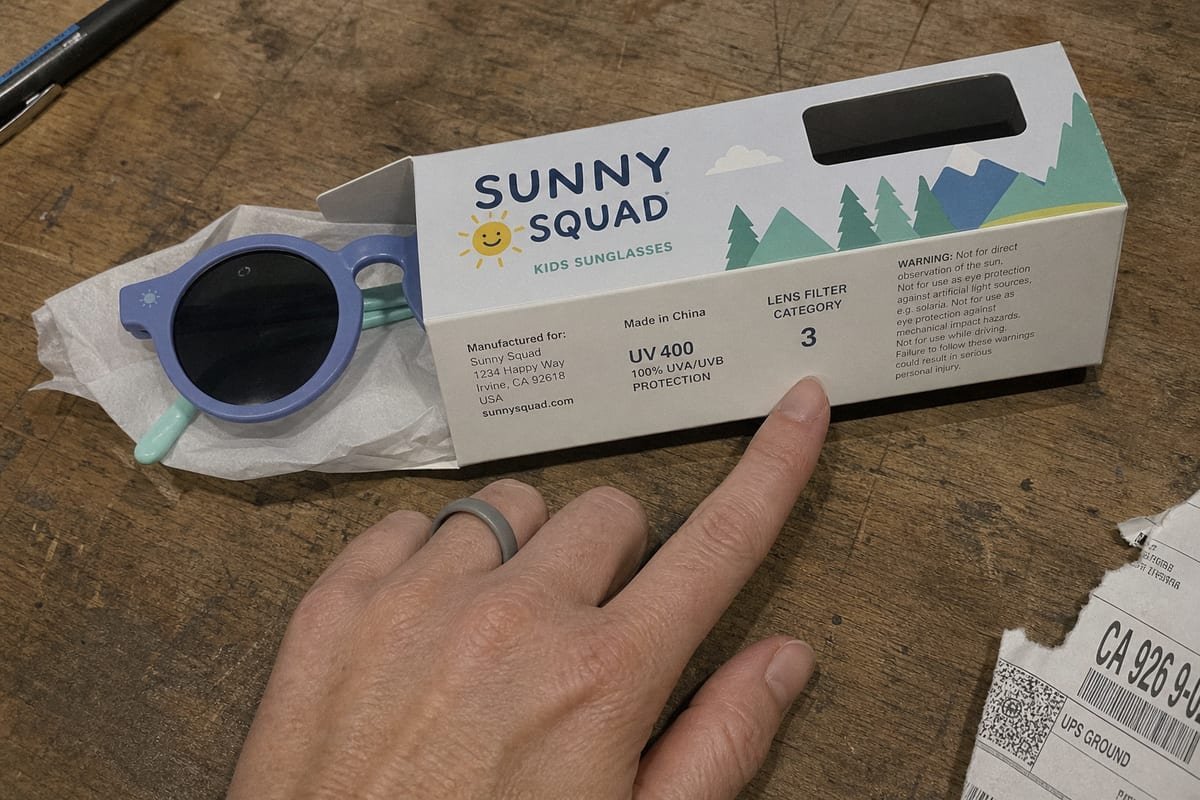
نقطة البداية هي فهم أن نظارات الأطفال الشمسية هي منتجات منظمة، وليست إكسسوارات أزياء. في الولايات المتحدة، تقع النظارات الشمسية غير الطبية الوصفية تحت تصنيف الأجهزة الطبية التابعة لإدارة الغذاء والدواء 1 كأجهزة متاحة دون وصفة طبية. هذا يعني أن قواعد وضع العلامات العامة للأجهزة تنطبق: اسم ومكان عمل الشركة المصنعة أو المعبئة أو الموزعة؛ بيان واضح للهوية والاستخدام المقصود؛ وعدم وجود ادعاءات كاذبة أو مضللة. يجب أيضًا أن تظهر البيانات المطلوبة بشكل بارز، وليس مدفونة في طباعة صغيرة.
العناصر الأساسية للملصق
هذه هي قائمة المراجعة الأساسية التي نستخدمها عند التحضير تعبئة وتغليف جاهزة للبيع بالتجزئة لعملائنا من مصنعي المعدات الأصلية (OEM):
| عنصر الملصق | ما يغطيه | لماذا هو مهم |
|---|---|---|
| هوية الشركة المصنعة/المستوردة | اسم الشركة الكامل وعنوان الاتصال | مطلوب في الولايات المتحدة والاتحاد الأوروبي والمملكة المتحدة وأستراليا |
| بلد المنشأ | على سبيل المثال، "صنع في الصين" | متطلب جمركي في معظم الأسواق |
| ادعاء الحماية من الأشعة فوق البنفسجية | تصنيف حماية UV400 أو "100% UVA/UVB" | يجب أن يتطابق مع نتائج اختبار العدسة الفعلية |
| فئة مرشح العدسة | الفئة 0-4 بناءً على نفاذية الضوء | إلزامي في أستراليا؛ متوقع في الاتحاد الأوروبي |
| تحذيرات السلامة | "ليس للمراقبة المباشرة للشمس"، "ليس للقيادة الليلية" | متطلب حماية المستهلك |
| ملصق تتبع CPSIA 2 | دفعة، تاريخ الإنتاج، والموقع | إلزامي لمنتجات الأطفال الأمريكية |
تحذيرات تنطبق خصيصًا على الأطفال
تحمل منتجات الأطفال تدقيقًا إضافيًا. إذا كانت عبوتك تحتوي على أجزاء صغيرة قابلة للفصل - علب، أربطة، سحر - فقد يكون تحذير خطر الاختناق 3 مطلوبًا للمنتجات الموجهة للأطفال الأصغر سنًا. ننصح العملاء أيضًا بتحديد نطاق العمر المقصود بوضوح. من واقع خبرتنا، يساعد بيان العمر مراجعي الامتثال ومشترين التجزئة على فهم لمن المنتج مخصص بالضبط.
نقطة أخرى: يجب أن يكون أي ادعاء بمقاومة الصدمات على الصندوق مدعومًا بـ اختبار مقاومة الصدمات فعلي في الملف. لا تطبع أبدًا ادعاء لا يمكنك توثيقه.
كيف تختلف متطلبات الملصقات عبر أسواقي التصدير المستهدفة؟
أرسلت لنا مديرة مشتريات من ملبورن مرة رسوماتها للموافقة عليها، وكانت متوافقة تمامًا مع الاتحاد الأوروبي - ولكنها افتقدت إلى رقم فئة العدسة الذي تصر عليه أستراليا. أسواق مختلفة، قواعد مختلفة.
تطالب الولايات المتحدة بملصقات على غرار أجهزة إدارة الغذاء والدواء الأمريكية بالإضافة إلى ملصقات تتبع CPSIA؛ وتلزم أستراليا بتضمين أرقام فئات العدسات، وأوصاف الاستخدام، وهوية المورد على الملصق؛ ويتطلب الاتحاد الأوروبي والمملكة المتحدة علامة CE أو UKCA، واسم الشركة المصنعة وعنوانها البريدي، وتحديد الدفعة أو الرقم التسلسلي باللغة المحلية.
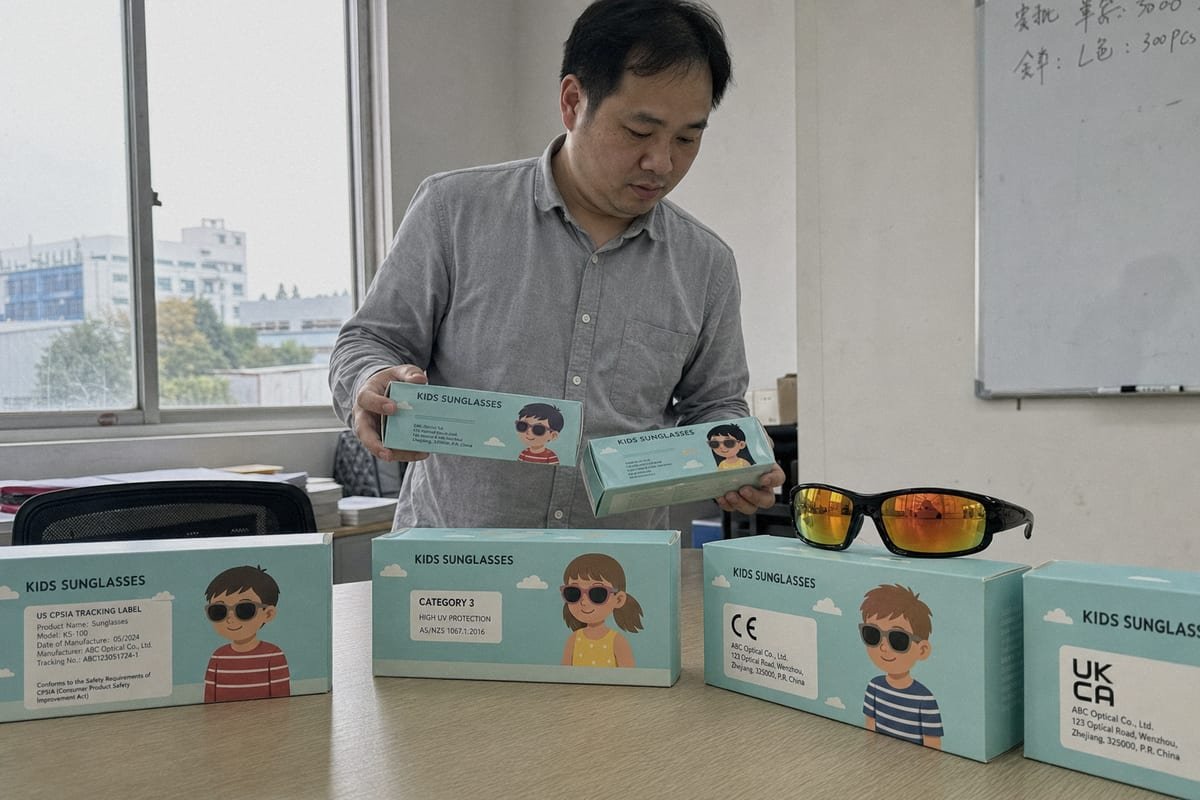
هذه مقارنة سريعة قبل أن نتعمق أكثر:
| السوق | الإطار التنظيمي | عناصر الملصقات الرئيسية للتعبئة والتغليف |
|---|---|---|
| الولايات المتحدة | قواعد أجهزة إدارة الغذاء والدواء + امتثال CPSIA | اسم الشركة وعنوانها، الاستخدام المقصود، ملصق التتبع، ادعاءات الأشعة فوق البنفسجية الصادقة، اختبار مقاومة الصدمات بالكرة الساقطة في الملف |
| أستراليا | معيار إلزامي للنظارات الشمسية | هوية المورد، رقم فئة العدسة، وصف الفئة، معلومات الاستخدام، التحذيرات |
| الاتحاد الأوروبي | إطار عمل معدات الوقاية الشخصية،, ISO 12312-1 4 standard | CE marking, manufacturer name and postal address, batch/serial number, end-user information in local language |
| المملكة المتحدة | UKCA regime (mirrors EU rules) | UKCA marking, UK responsible person address, batch identification |
| Japan | Voluntary + consumer protection rules | Importer identity, transmittance information, care instructions |
The US in Detail
The US framework has two layers. First, FDA device labeling covers identity, intended use, and honest claims, and lens performance sits alongside ANSI Z80.3 5 requirements as the industry benchmark. Second, CPSIA compliance requires tracking labels on children's products and their packaging — batch number, date of production, and production location — so any defective batch can be traced and recalled.
Australia in Detail
Australia is unusually explicit. The mandatory standard requires a clear, legible mark showing the manufacturer or supplier, the lens category number from 0 to 4, a description of that category, and usage guidance. Most kids' sunglasses we ship to Australian brands are lens category 3, which suits bright sunlight.
EU and UK in Detail
In Europe, sunglasses are treated as معدات الحماية الشخصية 6. The packaging or product needs علامة CE 7, the manufacturer's name and postal address, and a batch or serial number. Instructions and warnings must be understandable to end users — which usually means translation into local languages. The UKCA mark follows the same logic for Great Britain.
ما هي تفاصيل العلامة التجارية التي يجب أن أضيفها إلى عبوتي دون فقدان مساحة الامتثال؟
Balancing brand personality against regulatory text is a trade-off we help clients weigh on nearly every packaging project. A crowded box looks cheap; a bare box wastes shelf appeal.
خصص لوحة واحدة - عادةً الجزء الخلفي أو القاعدة - لنص الامتثال، ثم استخدم الجزء الأمامي والجوانب لشعارك واسم المنتج ونطاق العمر وقصة الألوان ونقاط البيع الرئيسية مثل إطارات TPEE المرنة أو العدسات المستقطبة. حافظ على البيانات الإلزامية واضحة ولا تغطيها الملصقات أبدًا.
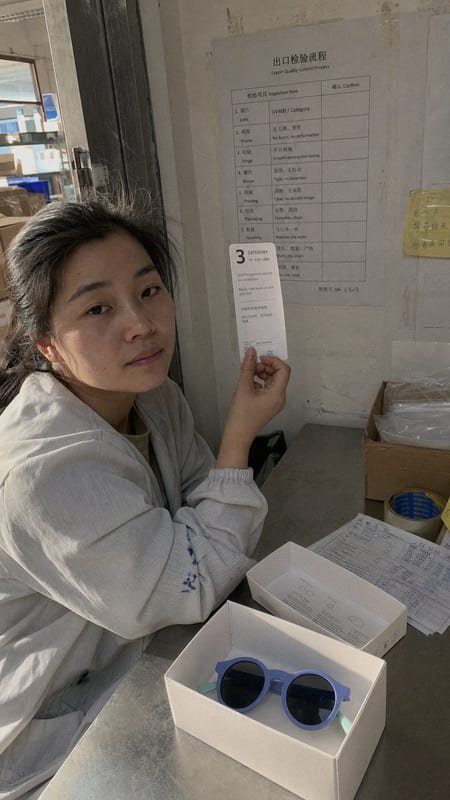
Good packaging tells two stories at once. One story speaks to the parent picking up the box: safety, comfort, style. The other speaks to the regulator or customs inspector: identity, origin, warnings. Our design team maps both stories onto the box before any artwork is finalized, so neither crowds out the other.
A Practical Panel Layout
This is the layout structure we recommend to brands launching from our catalog of roughly 800 existing styles:
- Front panel — logo, product name, hero image or window showing the frame, one headline benefit such as "UV400 protection" or "Flexible & unbreakable."
- Side panels — age range, color name, a short fit note, and any physical fit scale printed on the box for temple-to-temple sizing.
- Back panel — full compliance block: manufacturer/importer name and address, country of origin, lens category, warnings, and care instructions.
- Base or inner flap — CPSIA tracking label with batch code, production date, and factory location.
Selling Points That Also Support Compliance
Some marketing claims double as useful information. A تصنيف حماية UV400 is both a benefit and a regulated statement, so keep it accurate. If your frames use bio-based or recycled content, stating the percentage builds trust — but only print figures your material supplier can certify. The same logic applies to screw-less hinge icons or antimicrobial coating claims: they differentiate the product on shelf, yet each one must be verifiable. Our rule for clients is simple — every icon on the box needs a document behind it.
هل يمكن لمصنعي مساعدتي في تصميم ملصقات تلبي المعايير الدولية؟
Fifteen years of shipping children's eyewear to buyers in more than twenty countries has taught our team one thing: label problems are far cheaper to fix before printing than at the port.
نعم - يمكن لمصنع OEM/ODM ذي الخبرة أن يقوم مسبقًا بملء كتل الامتثال لأسواقك المستهدفة، وتوفير تقارير الاختبار وراء كل ادعاء، وطباعة رموز تتبع CPSIA لكل دفعة، وتقديم تغليف جاهز للبيع بالتجزئة يجتاز مراجعة الجمارك. تظل أنت العلامة التجارية المسؤولة، لكن المصنع يقوم بالعمل الفني الأساسي.

A capable factory does more than print your artwork. It should understand the standards behind the label. When we develop a new kids' style — say, a flexible TR90 frame with TPEE temples — we align the lens specification with ISO 12312-1 for European buyers and ANSI-based expectations for American buyers before the packaging conversation even begins. That way, the claims on the box are already supported.
What to Ask Your Factory Before Printing
| سؤال | ما يبدو عليه الرد الجيد |
|---|---|
| Can you provide UV transmittance test data? | Yes, per lens batch, matching the UV400 claim on the box |
| Do you support CPSIA tracking labels? | Yes, with batch, date, and location printed per production run |
| Can you adapt one design for multiple markets? | Yes, with market-specific compliance panels or insert cards |
| Who verifies translated warnings? | The factory drafts; the brand's local reviewer confirms |
| Can artwork be checked before mass printing? | Yes, with a pre-production label review as a standard QC step |
Where the Responsibility Line Sits
Be clear on one point: the brand or importer named on the box carries legal responsibility in the destination market. Our job is to make that responsibility easy to carry. We prepare the compliance block, keep test documentation ready — including impact resistance test records — and flag anything in your artwork that looks risky. Several of our long-term clients now send label drafts with every new purchase order, and we treat that review as part of quality control, not an extra service. That habit has prevented more shipment delays than I can count.
الخلاصة
Incomplete labels stall shipments and damage brands. Get the compliance block right for each market, protect space for branding, and partner with a factory that reviews labels before printing.
ملاحظات ختامية
1. Clarifies FDA’s regulatory classification for nonprescription sunglasses as OTC devices. ↩︎
2. CPSC guidance on mandatory tracking labels for children’s products under CPSIA. ↩︎
3. CPSC safety guidance on choking hazards relevant to detachable packaging parts for kids. ↩︎
4. Official ISO standard page defining sunglasses and lens category requirements referenced for EU buyers. ↩︎
5. Background on ANSI, the body behind the Z80.3 sunglasses performance standard. ↩︎
6. Background on the PPE classification the EU applies to sunglasses regulation. ↩︎
7. Explains the CE marking system required on EU sunglasses packaging. ↩︎
مقالات أخرى قد تعجبك
August 1, 2026
هل يجب على المصنع التعامل مع تغليف ووضع ملصقات نظارات الأطفال الشمسية، أم استخدام مورد مخصص؟
August 1, 2026
مستودع خاص مقابل الوفاء المباشر من المورد: أيهما يقلل تكاليف الإرجاع لعلامات نظارات الأطفال الشمسية؟
August 1, 2026
مباشر إلى ميناء المستودع أو التخزين الخارجي: أيهما يوفر أكثر على شحن نظارات الأطفال الشمسية؟
هل تبحث عن شريك موثوق به للنظارات للأطفال؟
استكشف أكثر من 800 نمط جاهز ودعم OEM/ODM كامل مصمم خصيصًا لعلامتك التجارية.
اتصل بنا English
  Español de México
  Deutsch
  Français
  日本語
日本語  العربية
  Português do Brasil