كيف تقارن إطارات النظارات البصرية للأطفال TR90-TPEE بإطارات السيليكون والأسيتات؟
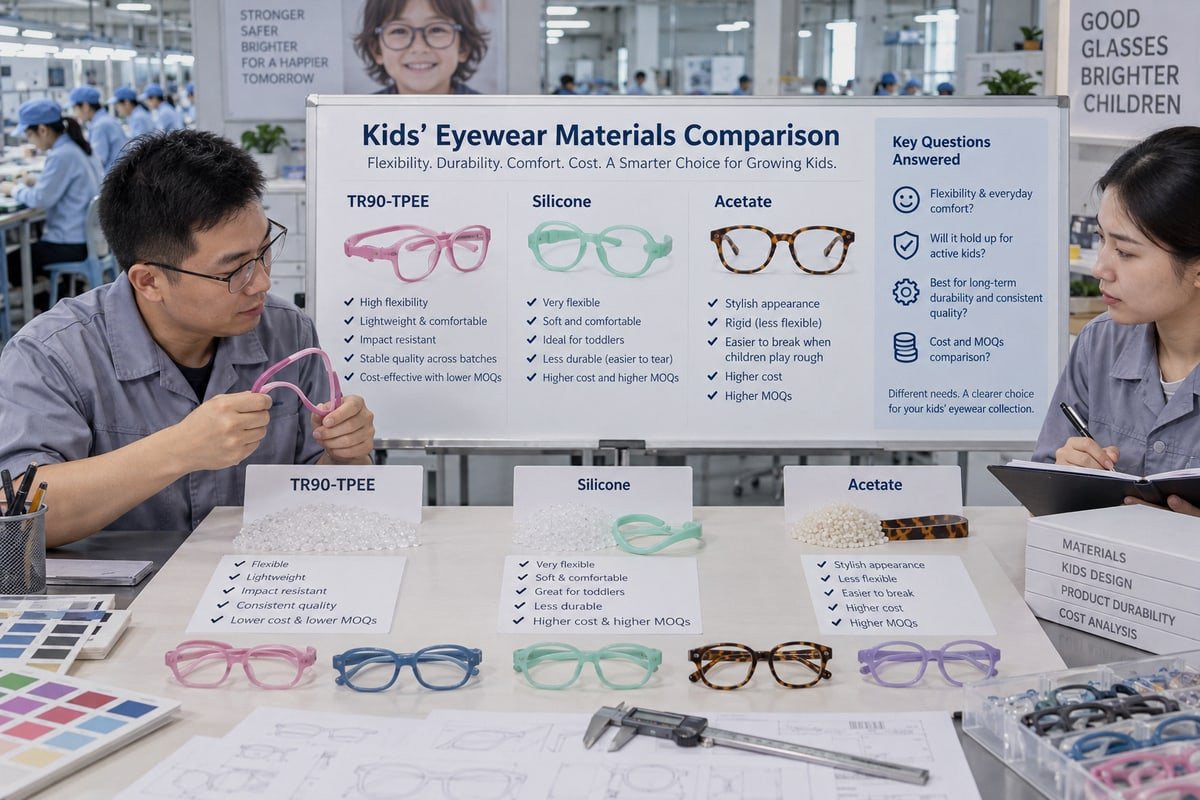
جسر مكسور، طفل يبكي، طلب استرداد. مصنعنا يسمع هذه السلسلة أسبوعيًا. اختيار TR90-TPEE للأطفال إطارات بصرية 1 أفضل من الأسيتات يمكن أن يكسره قبل أن يبدأ.
إطارات TR90-TPEE للأطفال البصرية أخف وزناً وأكثر مرونة ومقاومة للصدمات من الأسيتات، وأكثر ثباتاً في الشكل من السيليكون. تزن واجهات TR90 حوالي 15-20 جرامًا مقابل 25-35 جرامًا للأسيتات، بينما تضيف معابد TPEE راحة ناعمة تشبه المطاط. يتفوق الأسيتات في عمق اللون؛ يتفوق السيليكون في النعومة فقط.
هذه هي النسخة المختصرة. النسخة الطويلة أكثر أهمية عندما تقوم ببناء خط إنتاج، وليس شراء زوج واحد. أدناه، سأستعرض الأسئلة الأربعة التي يطرحها علينا المشترون أكثر. يقارن كل منها المواد الثلاث من حيث نقطة محددة: الراحة، اللعب الخشن، اتساق الدُفعات، وتكلفة التوريد.
كيف تقارن TR90-TPEE بإطارات السيليكون من حيث المرونة والراحة اليومية لمجموعة أطفالي؟
طلب منا مشترٍ من أستراليا العام الماضي تقديم عروض أسعار لإطارات السيليكون. عندما فتحنا صور المرجع الخاصة بها، كانت كل واحدة منها TPEE.
إطارات TR90-TPEE تتطابق مع السيليكون في النعومة عند نقاط التلامس ولكنها تحافظ على شكلها بشكل أفضل. تتمايل أذرع TPEE مثل المطاط على الأذن، ويحافظ الجزء الأمامي من TR90 على محاذاة العدسات، ويزن الإطار النهائي 15-20 جرامًا. السيليكون أنعم ولكنه يترهل، لذا فهو يناسب الرضع أكثر من الأطفال في سن المدرسة.
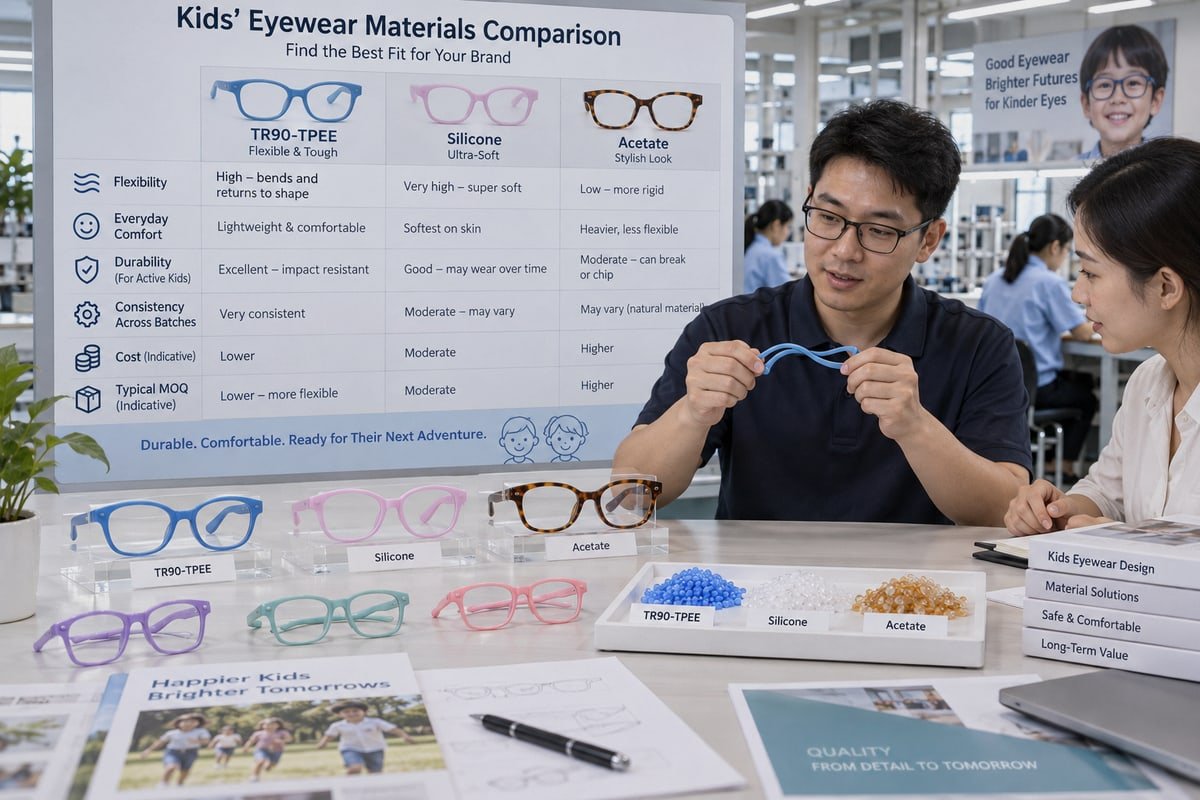
ارتباك هذا المشتري شائع، ويستحق التوضيح أولاً. في سوق النظارات للأطفال، غالبًا ما تُستخدم كلمة 'سيليكون" بشكل فضفاض. يقصد العديد من البائعين أي إطار ناعم ومطاطي وقابل للانحناء. المقارنة الصحيحة تقنيًا للإطارات البصرية هي TR90 مقابل TPEE مقابل الأسيتات. السيليكون الحقيقي هو كيمياء مختلفة، ويتصرف بشكل مختلف.
مقارنة سريعة جنبًا إلى جنب للمرونة والراحة
| الميزة | إطار أمامي TR90 + معابد TPEE | إطار سيليكون حقيقي | أسيتات (للمرجع) |
|---|---|---|---|
| الوزن النهائي | حوالي 15-20 جرام | خفيف، ولكنه يختلف حسب السماكة | حوالي 25-35 جرام |
| نعومة الذراع | مطاطي، مرن | ناعم جدًا، ارتداد قليل | صلب، يتم تعديله يدويًا |
| ثبات الشكل | عالي (واجهة TR90) | منخفض إلى متوسط | مرتفع |
| تثبيت العدسة | أخدود موثوق | يمكن أن يرتخي بمرور الوقت | أخدود موثوق |
| نطاق العمر النموذجي | 6-12+ (TR90)، 0-5 (معظمها TPEE) | 0–3 | 8+ ومراهقون |
| الأجزاء المعدنية | اختياري؛ تصميم مفصلات بدون براغي متاح | عادة لا شيء | براغي ومفصلات |
حيث ينتمي السيليكون حقًا
يستحق السيليكون الثناء على ما يفعله جيدًا. إنه أحد أكثر المواد المضادة للحساسية في النظارات. لا يحتوي على براغي أو معدن أو حواف صلبة. لهذا السبب هو الخيار الأمثل للرضع والأطفال الصغار الذين لديهم جسور أنف غير مكتملة النمو. غالبًا ما تستخدم إطارات السيليكون جسرًا مدمجًا وذراعًا ملتفة أو شريطًا للرأس، لأن المادة وحدها لا يمكنها الإمساك بالوجه.
ولكن هذه النعومة نفسها هي الحد. واجهة السيليكون لا تحتفظ بالعدسة الطبية بإحكام مثل واجهة TR90. يمكن أن تتدلى في الطقس الدافئ. كما أنها تبدو أقل شبهاً بـ "النظارات الحقيقية"، وهو ما يلاحظه الأطفال الأكبر سنًا بسرعة.
كيف تغير خصائص بلاستيك الذاكرة TR90 الشعور
TR90 هو بلاستيك حراري مطور في سويسرا 2 مع خصائص بلاستيك الذاكرة. ينحني لأكثر من 90 درجة ويعود إلى شكله الأصلي. يضعه اختبار الصناعة عند 5000+ دورات ثني ومقاومة حرارة حوالي 120 درجة مئوية. في خط إنتاجنا، نستخدمه للواجهة، حيث يكون محاذاة العدسة أكثر أهمية.
يتم وضع TPEE على الأذرع. إنه أكثر نعومة من TR90، مع ملمس يدوي مطاطي. انظر إلى النمط الأرجواني المتدرج الشفاف في كتالوجنا: الواجهة الشفافة هي TR90، والأذرع هي TPEE، وتنتهي الأطراف بخطافات أذن حلقية. تضيف النقاط الصغيرة المثقبة على طول الأذرع مرونة إضافية دون إضافة وزن. يستخدم الإصدار الأزرق الفاتح أذرع TPEE غير الشفافة غير اللامعة مع أطراف مطاطية. كلاهما يوفر للطفل المرونة والراحة عند الأذن والأنف، بالإضافة إلى واجهة تبقى مربعة.
تفاصيل صديقة للبشرة مهمة للارتداء طوال اليوم
الراحة ليست مجرد نعومة. إنها أيضًا ما تفعله المادة على مدار ثماني ساعات على وجه الطفل. مزيج TR90-TPEE 3 لدينا مصاغة لتكون آمنة غذائيًا وخالية من BPA، لأن الأطفال الصغار يمضغون أطراف الأذرع. تقاوم المادة زيوت البشرة والعرق، لذا يظل السطح ناعمًا بدلاً من أن يصبح لزجًا. هذه المكونات الصديقة للبشرة هي سبب كبير يجعل الآباء يبقون النظارات على الطفل، وسبب كبير يجعل متاجر النظارات تعيد الطلب.
هل ستتحمل إطارات TR90-TPEE بشكل أفضل من إطارات الأسيتات للأطفال النشطين الذين يلعبون بخشونة؟
على طاولة اختبار المرونة الخاصة بنا، نقوم بلف كل عينة من أذرع TR90 لأكثر من 90 درجة ونراقبها وهي تعود إلى وضعها. الأسيتات لا تصمد في هذا الاختبار.
نعم. إطارات TR90-TPEE تتحمل بشكل أفضل من الأسيتات للأطفال النشطين لأن TR90 ينحني لأكثر من 90 درجة ويعود إلى شكله، ويتحمل أكثر من 5000 دورة انثناء، ويقاوم الحرارة إلى حوالي 120 درجة مئوية. الأسيتات أثقل وأكثر هشاشة، ويتكسر في الطقس البارد، ويمكن أن يترك حوافًا حادة عند كسره.
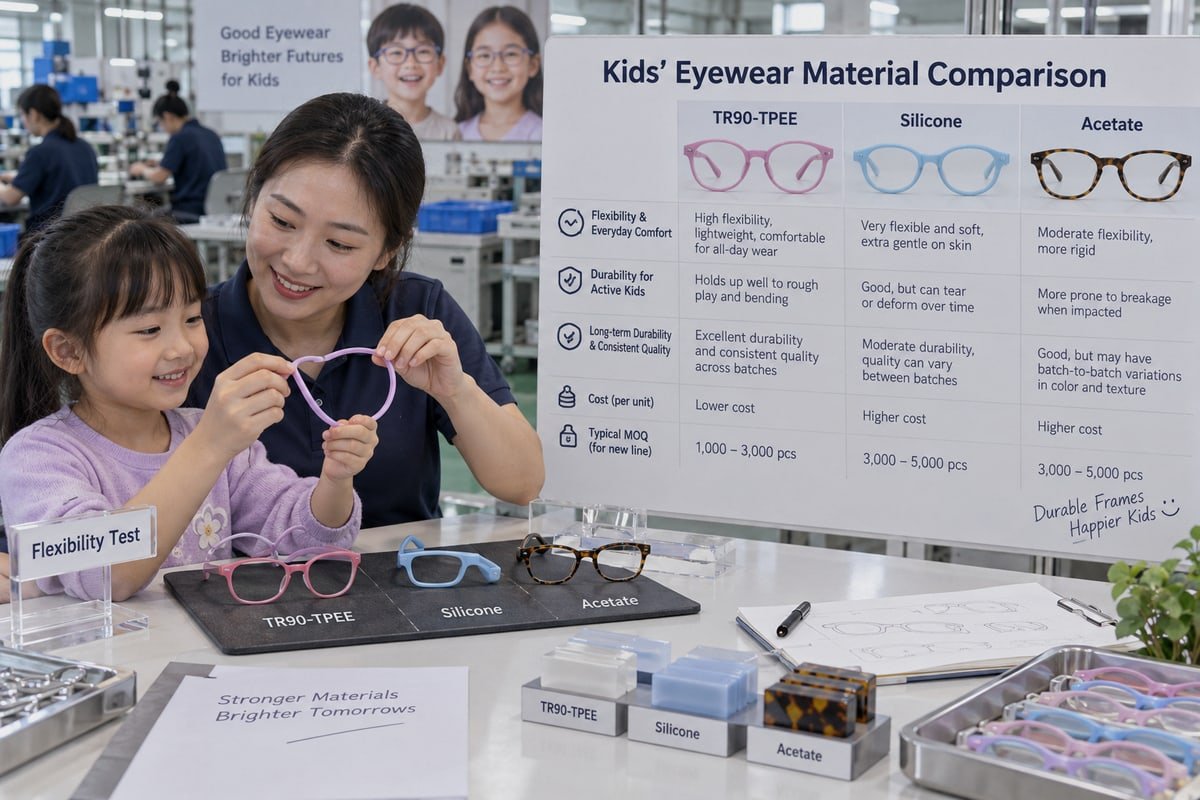
دعني أكون منصفًا للأسيتات أولاً. إنها مادة جميلة. لها لون عميق ومتدرج ومظهر مصقول وفاخر لا يمكن لـ TR90 نسخه بالكامل. تختار العديد من ماركات الأطفال العصرية ذلك لهذا السبب. السؤال ليس ما إذا كان الأسيتات سيئًا. السؤال هو ما يحدث عندما يجلس عليه طفل يبلغ من العمر سبع سنوات.
ست طرق يكسر بها الأطفال النظارات
Rough play is not one event. It is a list of repeated small abuses. Here is how each material handles them.
- السقوط على الخرسانة. TR90 absorbs the impact and flexes. Acetate can crack at the bridge or lens rim.
- لف المعابد. TR90 and TPEE return to shape. Acetate holds a permanent bend or snaps at the hinge.
- Tugging by a sibling. TPEE temples stretch and recover. Acetate temples transfer the force to the screw and hinge.
- Chewing the tips. Food-grade, BPA-free TPEE handles this. Acetate can chip.
- Cold weather. TPEE keeps its flexibility and مقاومة الصدمات 4 in sub-zero temperatures. Acetate becomes brittle and snaps more easily.
- Sweat, sunscreen, and sun. TR90 and TPEE resist skin oils and UV. Acetate contains plasticizers that migrate out over time, causing the "whitening" you see on old frames.
Frame durability in numbers
| خاصية | TR90-TPEE | أسيتات |
|---|---|---|
| استعادة الانحناء | Past 90°, returns to shape | Limited; permanent set or fracture |
| Flex cycle testing | 5,000+ cycles reported | Not designed for repeated flexing |
| مقاومة الحرارة | About 120°C | Softens and deforms at lower heat |
| Cold performance | Stays flexible below zero | Brittle, prone to snapping |
| Aging | Resists oils, sweat, UV | Whitening and plasticizer loss |
| ينحني، لا ينكسر تقريبًا | Bends or tears, no sharp shards | Can fracture into sharp edges |
The premium objection, and why it does not hold
The objection I hear from brand owners is simple: acetate feels more premium, so it must be built better. The قوة الشد 5 of acetate is real, but strength is not the same as toughness. A material can be strong and still brittle. Our engineers found this out early. Weight and stiffness feel like quality in the hand, but on a playground they become liabilities. A heavier frame swings harder when it falls and pushes harder on the nose. That extra weight also causes the "nose-slide" effect, which is worse with thick myopia-control lenses. The lower density of TR90-TPEE lets us mold a thicker, more robust rim to hold those heavy lenses without the frame sliding down.
Safety when a frame does fail
Every frame will eventually meet a force it cannot handle. What matters then is the failure mode. Acetate can crack into sharp edges near the eye. TR90 and TPEE bend, tear, or separate cleanly. On our toddler styles we go one step further with a screwless hinge design, so there is no metal part to press into the face on impact. This is also what most eyewear safety standards for children push toward: fewer rigid parts, no sharp fragments, and predictable behavior under load.
ما هي المادة التي يجب أن أختارها إذا كانت أولوية علامتي التجارية هي المتانة طويلة الأمد والجودة المتسقة عبر دفعات الإنتاج؟
Every new style forces a trade-off I weigh carefully: softer material feels nicer in hand, but too soft and the lens groove loses its grip.
اختر TR90 للجزء الأمامي و TPEE للمعابد. كلاهما من اللدائن الحرارية المقولبة بالحقن، لذا يظل اللون وسمك الجدار وملاءمة المفصلة متسقين من دفعة إلى أخرى. يتم قطع الأسيتات وصقلها يدويًا، مما يضيف تباينًا وابيضاضًا بمرور الوقت؛ يمكن للسيليكون النقي أن يرتخي ويفقد ثبات العدسة.
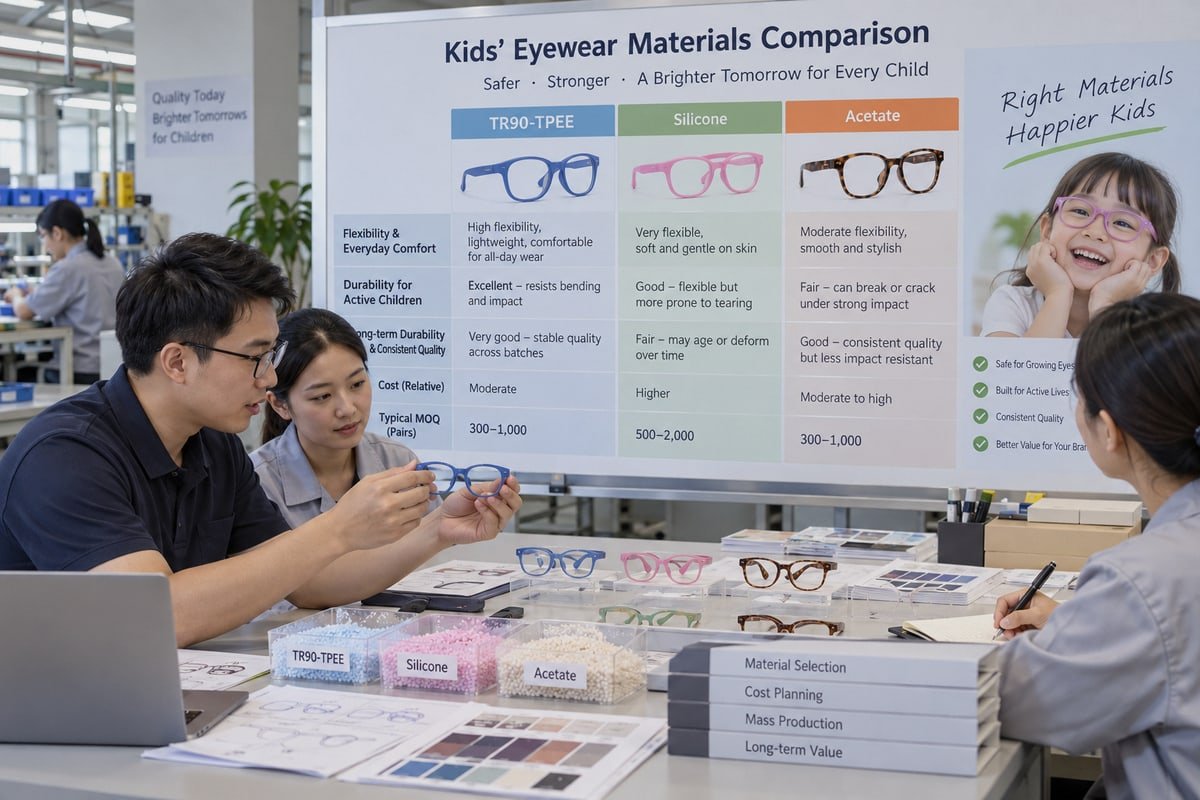
Batch consistency is a process question before it is a material question. But the material decides how easy the process is to control. That is why I push most brand buyers toward the hybrid TR90-TPEE build when they tell me consistency is the priority.
Why injection molding makes consistency easier
TR90 and TPEE are both molded. The mold sets the geometry. The resin lot sets the color. The machine parameters set the density and surface. Once those three are locked, frame 1 and frame 5,000 come out the same. Acetate works differently. Sheets are cut, tumbled, and polished by hand. Skilled workers do great work, but every hand step is a small chance for variation in thickness, gloss, and temple angle.
How we keep TR90-TPEE kids optical frames the same every run
Here is the sequence our 5S-managed workshop follows on a repeat order. I share it because buyers often assume "molded" means "no QC needed." It does not.
- Incoming resin check. We confirm the TR90 and TPEE lot numbers and color masterbatch against the approved sample.
- Mold inspection. Vent, gate, and cavity surfaces are cleaned and checked before the first shot.
- الموافقة على المقالة الأولى. The first frames off the machine are compared to the golden sample for color, dimensions, and surface.
- Flex and recovery check. Temples are bent past 90 degrees and must return without whitening or set.
- Lens retention check. Demo lenses are pressed and removed to confirm the groove holds and the front stays square.
- Hinge and tip check. Adjustable temple tips and hinges are cycled to confirm smooth movement and no play.
- Final visual and packing. Logos, colors, and packaging are matched to the buyer's spec before boxing.
The counterargument: is more flexible always better?
No, and this is the trade-off I mentioned above. A frame can be too soft. When the front flexes too much, the lens can pop, the pupil center shifts, and the prescription no longer sits where the optician set it. That is a real problem for kids in myopia-control lenses. It is why we do not mold the front from TPEE for school-age styles. TR90 gives the front structure. TPEE gives the temples give. That split is the whole point of the hybrid design.
Long-term durability by material
| العامل | TR90-TPEE | أسيتات | سيليكون |
|---|---|---|---|
| Batch color control | Masterbatch, repeatable | Sheet variation possible | Repeatable but limited palette |
| Dimensional control | Mold-locked | Hand finishing | Mold-locked, but soft |
| Aging over 2–3 years | Resists oils, sweat, UV | Whitening, plasticizer migration | Can yellow, attracts dust |
| Prescription alignment | مستقر | مستقر | ضعيف |
| قابلية إعادة التدوير | 100% recyclable thermoplastic | Often non-biodegradable plasticizers | Difficult to reprocess |
That last row matters more each year. Brands in Europe and Japan increasingly ask about الاقتصاد الدائري 6 fit. TR90 and TPEE are recyclable thermoplastics. Silicone is hard to reprocess. Acetate often carries plasticizers that complicate recycling. If your brand story includes environmentally friendly materials, the hybrid build supports it honestly.
كيف تقارن تكاليف وMOQs لـ TR90-TPEE مع السيليكون والأسيتات عندما أقوم بتوريد خط جديد لنظارات الأطفال؟
Fifteen years of quoting kids' eyewear taught me one lesson: the mold, not the resin, decides whether a new line is affordable.
عادةً ما تكون إطارات TR90-TPEE أقل تكلفة للوحدة من الأسيتات وتحمل حدًا أدنى لكميات الطلب أقل، لأنها تُصب بالحقن بدلاً من التشطيب اليدوي. يتطلب الأسيتات المزيد من العمالة ويقع عند نقاط سعر مميزة. الأدوات المصنوعة من السيليكون مشابهة لـ TPEE. يقلل الاختيار من القوالب الموجودة من حد أدنى لكميات الطلب ويزيل تكلفة الأدوات الأولية.
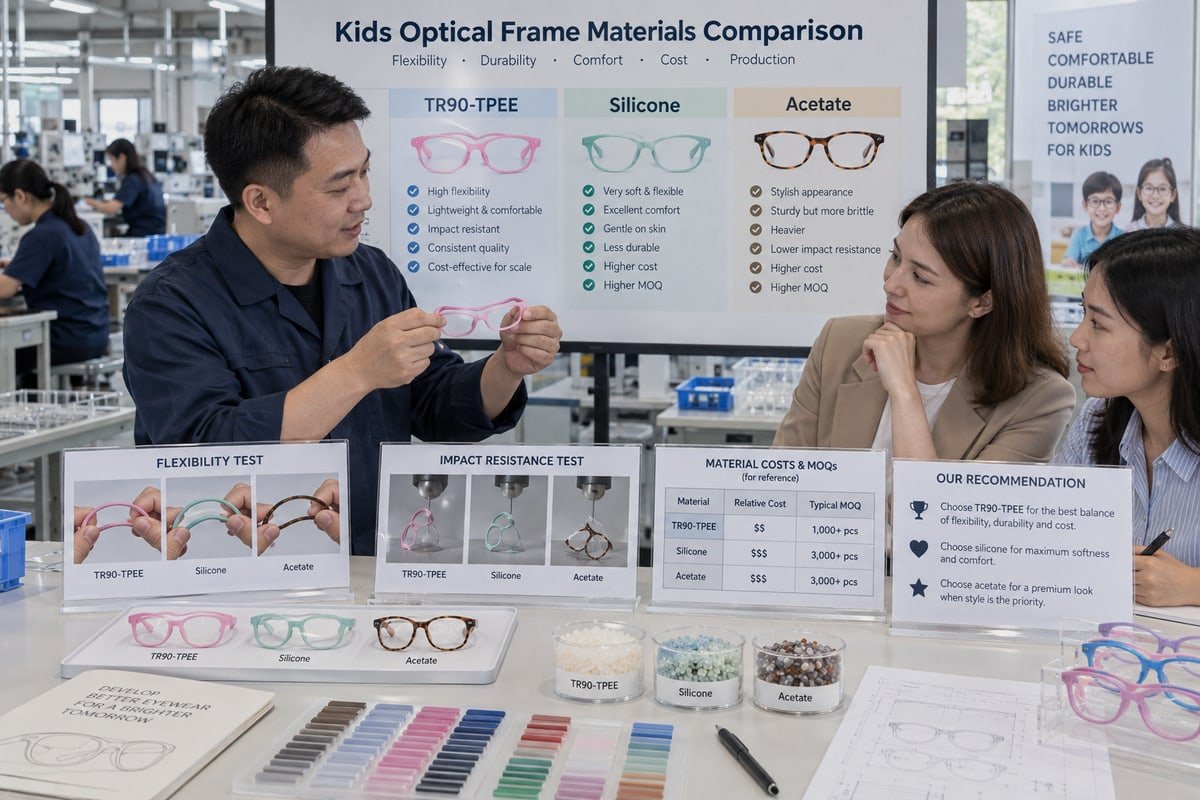
When a new brand founder sends me a budget, I usually split it into three buckets before we talk price per pair. The buckets are tooling, unit cost, and everything after the frame ships. Material changes all three, but not in the way most people expect.
Cost structure by material
| محرك التكلفة | TR90-TPEE | أسيتات | سيليكون |
|---|---|---|---|
| الأدوات | Steel mold per front and temple; shared across colors | Little tooling, but cutting patterns and hand labor | Mold per style, similar to TPEE |
| عمالة الوحدة | Low; molded, trimmed, assembled | High; cut, tumble, polish, fit | منخفض إلى متوسط |
| تغييرات اللون | Easy via masterbatch | Requires new sheet stock | Easy via pigment |
| Typical positioning | Value-durable, sport, everyday school | Premium fashion | Infant and toddler niche |
| MOQ driver | استهلاك القالب | Labor scheduling and sheet minimums | استهلاك القالب |
| Returns and breakage | منخفض | Higher on active kids | Low, but limited to young ages |
The mold question, and how to skip it
A new TR90-TPEE style needs a mold for the front and a mold for the temples. That is a real upfront cost, and it is what pushes MOQs up when everything is custom. The way around it is to start from existing tooling. Our catalog holds roughly 800 existing styles across TPEE and TR90. A brand can pick a front, pick a temple, and change the color, logo, lens, and packaging without paying for new steel. That lets an importer or a baby-product brand test a market with a smaller first order and lower risk. The two styles I described earlier, the clear front with purple-gradient temples and the light-blue front with matte-blue temples, are both existing molds. Different colorways, same tooling.
What custom OEM/ODM work actually adds
Customization does not have to mean a new mold. In our experience with brands across 20+ countries, the changes that build a brand are mostly surface-level from a tooling point of view:
- Custom colors through masterbatch, including translucent and gradient effects.
- موضع الشعار by pad print, laser, or molded inset on the temple.
- أشكال يومية كلاسيكية such as UV400 or polarized for the sun range, or demo lenses for optical fronts.
- التعبئة والتغليف والملحقات like cases, cloths, straps, and retail-ready hang cards.
Each of these adds a modest cost per unit. None of them force you into a large MOQ the way a new mold does.
The cost acetate hides
Acetate quotes look higher on paper and often are. But the bigger gap shows up after delivery. An active-kid line in acetate sees more breakage, more warranty claims, and more one-star reviews from parents. A TR90-TPEE line with lightweight construction, adjustable temple tips, and food-grade materials sees fewer of all three. When I help a buyer build a landed-cost sheet, I tell them to add a line for expected returns. That line usually flips the decision.
A simple age guide for planning a line
| الفئة العمرية | 0 إلى 3 سنوات | لماذا |
|---|---|---|
| 0–3 | TPEE-heavy, screwless, integrated bridge or strap | Softest, no metal, safest failure mode |
| 3–5 | TPEE frame or TR90 front with TPEE temples | Balance of softness and shape |
| 6–12 | واجهة TR90 مع أذرع TPEE | Holds prescription, survives school and sport |
| 12+ style-first | Acetate or TR90 in fashion colorways | Premium look matters more, play is gentler |
الخلاصة
Broken frames cost brands trust. TR90-TPEE kids optical frames give the durability, comfort, and batch consistency active children need. Acetate suits fashion. Silicone suits infants.
هل أنت مهتم بتوريد المنتجات المذكورة في هذه المقالة؟ انظر التفاصيل واطلب عرض أسعار هنا:
ملاحظات ختامية
1. WHO resource on visual impairment, relevant to the use of specialized corrective lenses. ↩︎
2. Official manufacturer site for the TR90 material (Grilamid TR), detailing its properties. ↩︎
3. FDA overview of BPA safety and regulations in consumer products. ↩︎
4. DuPont’s official page for Hytrel, the primary commercial TPEE used in flexible applications. ↩︎
5. Comprehensive overview of cellulose acetate’s chemical properties and its history in eyewear. ↩︎
6. Official European Commission page explaining circular economy principles and sustainability. ↩︎
مقالات أخرى قد تعجبك
28 أكتوبر 2026
ما هي المعايير التي يجب أن تلتزم بها إطارات TR90 البصرية للأطفال: GB/T 14214 مقابل ISO 12870؟

27 أكتوبر 2026
كيف يجب على تجار التجزئة تخزين إطارات النظارات الطبية للأطفال TR90 حسب اتجاهات العمر والجنس؟
26 أكتوبر 2026
ما الذي يعطيه الآباء الأولوية في إطارات النظارات البصرية للأطفال المصنوعة من TR90؟
هل تبحث عن شريك موثوق به للنظارات للأطفال؟
استكشف أكثر من 800 نمط جاهز ودعم OEM/ODM كامل مصمم خصيصًا لعلامتك التجارية.
اتصل بنا English
 Español de México
 Deutsch
 Français
 日本語
 العربية
 Português do Brasil