معلومات من يجب أن تكون على ملصقات نظارات الأطفال الشمسية لمعيار السلامة الأسترالي؟

ملصقات نظارات الأطفال الشمسية لرحلة أستراليا تربك المزيد من المشترين أكثر من أي تفصيل آخر نتعامل معه في مصنعنا في تايتشو. اسم واحد مفقود على بطاقة التأرجح يمكن أن يعلق شحنة بأكملها.
يجب أن تحدد ملصقات نظارات الأطفال الشمسية لأستراليا الشركة المصنعة أو المورد المسؤول عن المنتج في السوق الأسترالية - عادةً المستورد الأسترالي أو مالك العلامة التجارية، وليس بائع التجزئة. يجب أن تُظهر الملصقات أيضًا رقم فئة العدسة ووصف الفئة ومعلومات الاستخدام وأي بيانات تحذيرية مطلوبة.
هذه هي الإجابة المختصرة. ولكن من هو بالضبط “المورد”؟ وماذا يحدث إذا أخطأت؟ دعني أشرح لك ما تعلمناه من شحن نظارات الأطفال للعلامات التجارية الأسترالية.
كيف أعرف أي معيار سلامة ينطبق على نظارات أطفالي الشمسية قبل وضع الملصقات؟
قبل بضع سنوات، طلب منا مستورد أسترالي وضع ملصق على طلبهم وفقًا لـ "معيار الألعاب". كان علينا إيقاف الطلب وشرح لماذا كان ذلك سيكون خطأ مكلفًا.
تقع نظارات الأطفال الشمسية المباعة في أستراليا ضمن معيار سلامة السلع الاستهلاكية (النظارات الشمسية ونظارات الموضة) لعام 2017، والذي يعتمد على AS/NZS 1067.1:2016. ينطبق هذا المعيار الإلزامي على أحجام البالغين والأطفال على حد سواء، لذلك لا تحصل نظارات الأطفال الشمسية على أي إعفاء من وضع العلامات على الإطلاق.
أول شيء أخبر به كل مشترٍ جديد هو هذا: القاعدة الأسترالية هي معيار سلامة المنتج الإلزامي, ، وليس دليل جودة طوعي. إطار عمل المعايير الإلزامية لـ ACCC 1 يفرضه، ويمكن مصادرة النظارات الشمسية غير المتوافقة أو استدعاؤها أو تغريمها. لقد تم تطبيقه بالكامل منذ 1 يوليو 2019.
النظارات الشمسية مقابل النظارات العصرية
يميز المعيار بين النظارات الشمسية الحقيقية و النظارات العصرية 2. هذا التصنيف للنظارات العصرية مهم لمنتجات الأطفال. إذا كانت زوج من النظارات يوفر تقليلًا ضئيلًا أو معدومًا لوهج الشمس، فيجب وضع ملصق عليها كنظارات عصرية - لا تباع كنظارات شمسية. العديد من إطارات الأطفال المرحة وغير التقليدية تقع في هذا الفخ عندما يفترض المشترون أن أي عدسة ملونة تعتبر نظارة شمسية.
كيفية التأكد من الفئة التي ينتمي إليها منتجك
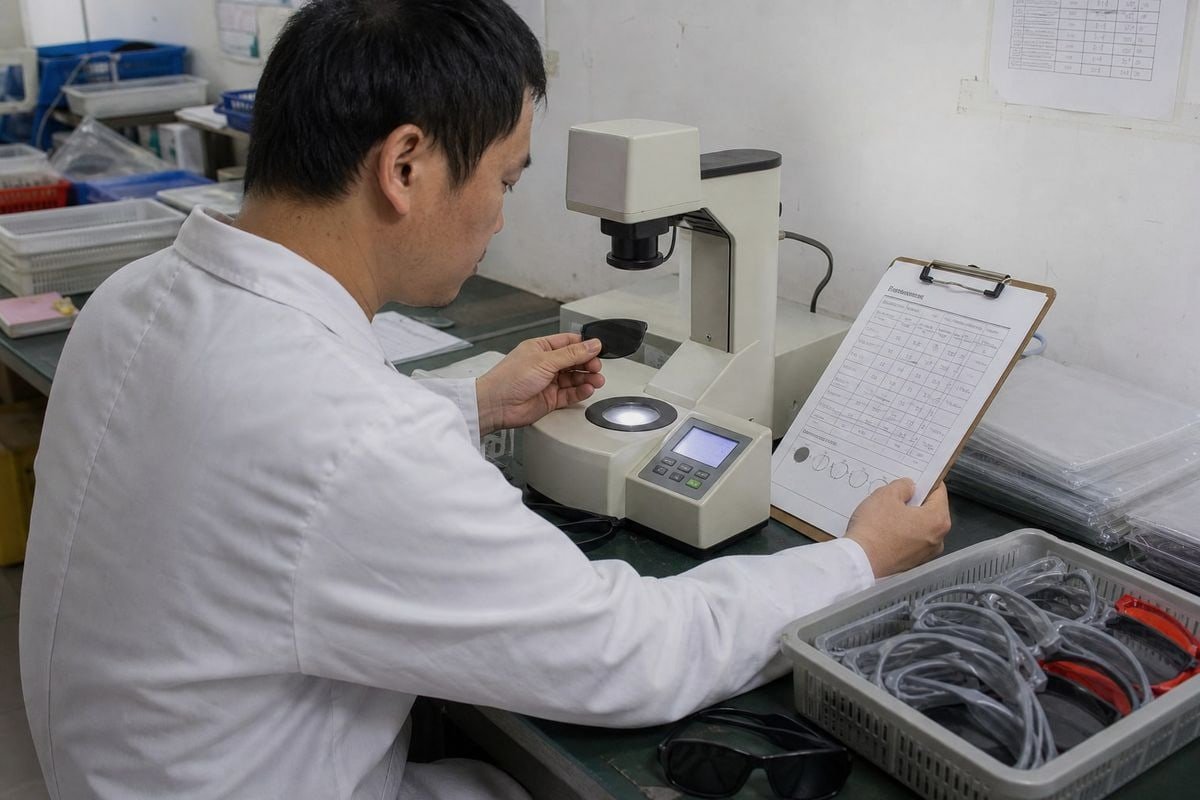
هذه هي العملية التي نتبعها قبل أن يبدأ أي طلب أسترالي في الإنتاج:
- اختبار العدسات لنفاذية الضوء و مستويات الحماية من الأشعة فوق البنفسجية 3 في مختبر مؤهل.
- تعيين فئة العدسة الصحيحة (من 0 إلى 4) بناءً على تقرير الاختبار.
- مطابقة نص الملصق مع تلك الفئة، بالإشارة إلى AS/NZS 1067.1:2016.
- تأكيد أن المنتج ليس عنصرًا متخصصًا (النظارات الطبية وبعض معدات الحماية تتبع قواعد مختلفة).
| نوع المنتج | مشمول بالمعيار الإلزامي لعام 2017؟ | تأثير الملصق |
|---|---|---|
| نظارات شمسية للأطفال (الفئات 1-4) | نعم | ملصقات كاملة مطلوبة |
| نظارات عصرية (الفئة 0) | نعم | يجب وضع ملصق عليها كنظارات عصرية |
| نظارات شمسية للألعاب تباع كألعاب | يعتمد على التموضع | منطقة رمادية عالية المخاطر - احصل على المشورة |
| نظارات طبية | لا | مسار تنظيمي مختلف |
المنطقة الرمادية حقيقية. إذا كان المنتج يبدو كنظارات شمسية ويباع ليتم ارتداؤه في الهواء الطلق، فإن المنظمين الأستراليين يتعاملون معه كنظارات شمسية. ننصح المشترين بعدم الاعتماد أبدًا على ملصق "لعبة" للتهرب من معيار النظارات الشمسية.
ما هي المعلومات الدقيقة التي يجب علي تضمينها على الملصق لتلبية المتطلبات الأسترالية؟
يحتفظ فريق مراقبة الجودة لدينا بقائمة تحقق من الملصقات المطبوعة معلقة فوق خط التعبئة للطلبات الأسترالية. يتم فحص كل بطاقة تأرجح مقابلها قبل إغلاق الكراتين.
يجب أن تُظهر ملصقات النظارات الشمسية الأسترالية هوية الشركة المصنعة أو المورد، ورقم فئة العدسة (0-4)، ووصف الفئة المطابق باللغة الإنجليزية، ومعلومات الاستخدام بما في ذلك مستوى الحماية من وهج الشمس، وأي تحذيرات مطلوبة - مثل بيان بأن النظارات الشمسية غير مناسبة للقيادة.
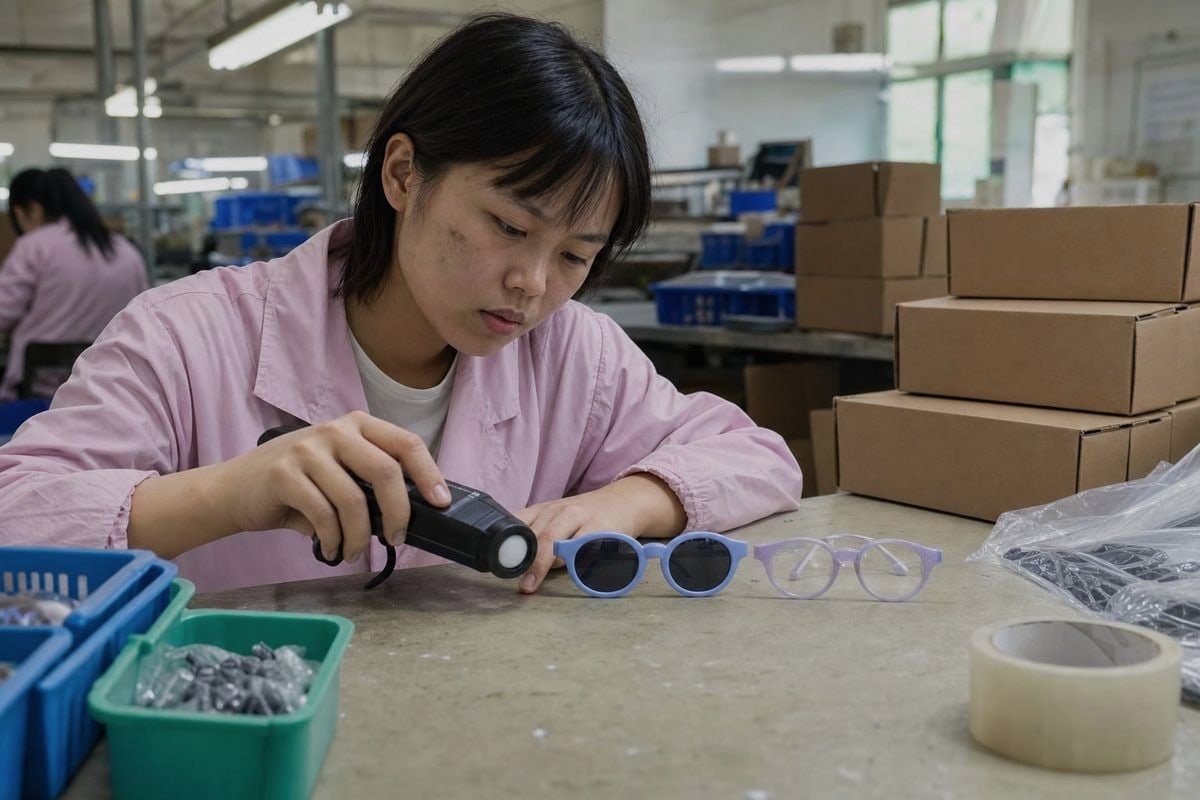
دعني أشرح كل عنصر، لأن "تحديد المورد" هو المكان الذي يعيش فيه معظم الارتباك. يجب أن يحدد الملصق الكيان المسؤول عن وضع المنتج في السوق الأسترالية. في الممارسة العملية، يعني ذلك عادةً عنوان المستورد الأسترالي أو مالك العلامة التجارية المحلي - وليس المصنع الأجنبي وحده، وليس متجر البيع بالتجزئة ما لم يكن بائع التجزئة هو أيضًا المورد المسجل. عندما تبيع علامة تجارية دولية من خلال مركز توزيع محلي، فإن الكيان الأسترالي الذي يعمل كـ مستورد مسجل 4 هو الذي تحدد تفاصيله المساءلة القانونية. يجب أن أكون واضحًا: نص المعيار يسرد حقول البيانات المطلوبة، ولكنه لا يوضح كل حالة استثنائية لمن يعتبر موردًا، لذا تعامل مع هذا على أنه قراءة امتثال عملية، وليس تعريفًا قانونيًا مقتبسًا.
حقول الملصق الأساسية
| عنصر الملصق | ما يجب أن يظهره | مثال شائع |
|---|---|---|
| تحديد المورد | اسم الشركة المصنعة أو المورد الأسترالي | Brand owner or importer name and address |
| Lens category number | A number from 0 to 4 | الفئة 3 |
| Category description | English wording matching the number | "General purpose sunglasses" |
| Usage information | Protection level guidance | "High protection against sun glare" |
| Warnings/symbols | Any mandatory restriction | "Not suitable for driving at night" |
| Standard reference | Compliance statement | AS/NZS 1067.1:2016 |
What the lens category communicates
The lens category number is the consumer-facing shorthand for مستويات الحماية من الأشعة فوق البنفسجية and light transmission. Category 0 covers fashion spectacles with minimal glare reduction. Categories 2 and 3 cover most kids' everyday sunglasses. Category 4 lenses are very dark, built for extreme glare, and are never suitable for driving — a warning that must appear on the label.
Two more points from recent buyer conversations. First, a QR code linking to digital test reports is a nice extra, but it cannot legally replace the physical swing tag or lens sticker at the point of sale. Second, model identification — a model number or name — supports traceability and recalls, so we print it on every tag even when a buyer forgets to ask.
هل يمكن لمُصنّعي مساعدتي في إعداد ملصقات ووثائق متوافقة قبل الشحن؟
One trade-off we discuss with nearly every new Australian client is speed versus certainty: skip pre-shipment label review and ship a week earlier, or verify everything and sleep well.
نعم - يمكن لشركة مصنعة قادرة ترتيب اختبار العدسات، وطباعة بطاقات تعليق متوافقة مع تعريف المورد الخاص بك وتفاصيل فئة العدسة، وتجميع تقارير الاختبار ووثائق الامتثال قبل الشحن. تظل المسؤولية القانونية مع المورد الأسترالي، لكن المصنع يقوم بالعمل الشاق.
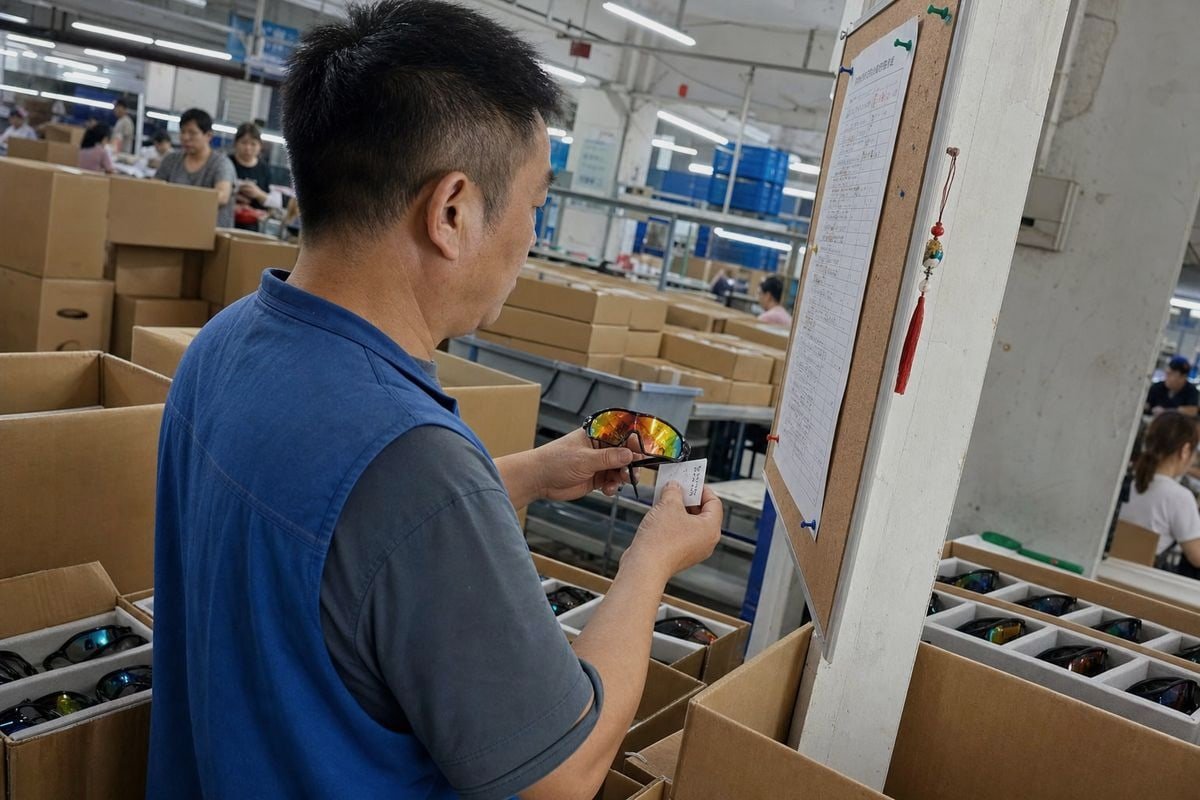
At OKAY EYEWEAR, label preparation is part of our standard OEM/ODM service for Australian buyers, alongside custom colors, logos, lenses, and packaging. Here is how the workflow runs on our side, and where you as the buyer must step in.
A typical pre-shipment compliance workflow
- Lens testing. We send lens samples to a lab for transmittance and UV testing against AS/NZS 1067.1:2016. Our UV400 and polarized lens options are engineered with these thresholds in mind.
- Category assignment. The test report determines the lens category. We never guess this number.
- Label artwork. You supply your Australian entity name and address; we design the swing tag with the category number, English description, usage wording, and warnings.
- Buyer sign-off. You or your compliance advisor approve the artwork. This step is non-negotiable in our process.
- Print and apply. Our 5S-managed workshop prints tags with non-migratory, non-toxic inks — an emerging expectation for children's products, since kids chew on everything.
- Documentation pack. Test reports, label proofs, and packing records travel with the shipment paperwork.
What the factory cannot do for you
We cannot decide who your supplier of record is, and we cannot sign compliance on your behalf. Product safety labeling responsibility under Australian consumer protection regulations 5 sits with the entity supplying the goods in Australia. What a good factory does is make it nearly impossible for a required field to be missing when your goods land. With around 800 existing styles available, many of our buyers also test the Australian market first with pre-tested designs before investing in custom molds — the compliance documentation carries over with far less friction.
ما هي الأخطاء التي يجب أن أتجنبها عند تسمية نظارات الأطفال الشمسية للسوق الأسترالي؟
The most expensive lesson I have watched a buyer learn involved a pallet of relabeled stock — every price sticker had been placed directly over the lens category information.
تجنب خمسة أخطاء: استخدام اسم علامة تجارية فقط دون تحديد كامل للمورد، وحذف رقم فئة العدسة أو وصفها، وتغطية معلومات الملصق المطلوبة بملصقات الأسعار، وتخطي تحذيرات القيادة الإلزامية، وتجاهل تحذيرات خطر الاختناق على نظارات الأطفال الشمسية ذات الأجزاء الزخرفية القابلة للفصل.
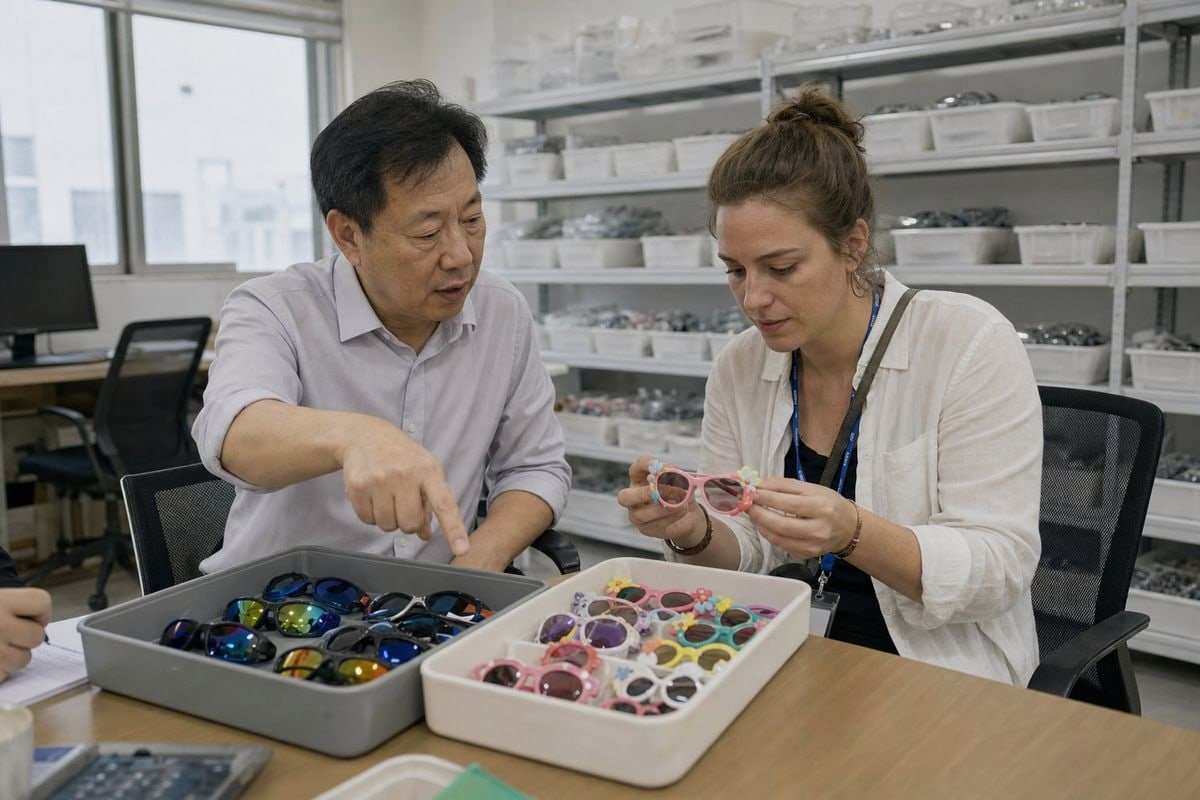
Each of these mistakes is cheap to prevent and expensive to fix after arrival. Let me rank them by how often we see them and how badly they hurt.
| Mistake | How often we see it | Consequence |
|---|---|---|
| Brand name only, no supplier identity or address | شائع جدًا | Non-compliant label; possible recall exposure |
| Missing lens category number or description | شائع | Fails a core requirement of the standard |
| Price stickers covering required information | Common at retail | Label deemed not clear and legible |
| No driving warning on category 4 or night-restricted lenses | عرضي | Direct safety non-compliance |
| No choking warning on detachable decorative parts | Occasional on kids' styles | Overlaps with toy safety rules for under-3s |
The brand-name trap
A logo is not supplier identification. "SunnyKids™" printed on a temple arm tells a regulator nothing about who is legally accountable. The label needs the actual business name — and best practice includes the Australian importer address — so consumers and regulators can trace the responsible entity.
Kids-specific pitfalls
Children's styles carry extra risks. Detachable charms, clip-on decorations, or removable nose pads can create small parts, which pulls in choking hazard warnings 6 and effectively merges eyewear labeling with toy safety requirements for children under three. This is one reason our kids' frames use flexible TPEE and TR90 construction 7 with minimal detachable hardware — fewer small parts means fewer warnings needed and fewer real hazards on a child's face. Also, do not confuse Australia's lens category system with Eye Protection Factor style marketing claims; the mandatory label fields come from the standard, and marketing claims must never replace or contradict them.
الخلاصة
Australian labels must name the responsible manufacturer or supplier, show the lens category, and carry required warnings. Get those fields right before shipping, and your kids sunglasses clear the market cleanly.
ملاحظات ختامية
1. Official Australian government page detailing the mandatory safety standards for sunglasses and fashion spectacles. ↩︎
2. Wikipedia entry explaining the classification of sunglasses and fashion spectacles under various international standards. ↩︎
3. ARPANSA provides authoritative information on UV radiation protection and sunglass standards in Australia. ↩︎
4. Australian Border Force guide on the legal responsibilities of importing goods into Australia. ↩︎
5. ACCC page explaining consumer rights and business obligations under Australian consumer law. ↩︎
6. Official safety guidelines for products intended for young children, specifically regarding small parts and choking. ↩︎
7. Technical background on the thermoplastic material commonly used in high-quality eyewear frames. ↩︎
مقالات أخرى قد تعجبك
August 1, 2026
هل يجب على المصنع التعامل مع تغليف ووضع ملصقات نظارات الأطفال الشمسية، أم استخدام مورد مخصص؟
August 1, 2026
مستودع خاص مقابل الوفاء المباشر من المورد: أيهما يقلل تكاليف الإرجاع لعلامات نظارات الأطفال الشمسية؟
August 1, 2026
مباشر إلى ميناء المستودع أو التخزين الخارجي: أيهما يوفر أكثر على شحن نظارات الأطفال الشمسية؟
هل تبحث عن شريك موثوق به للنظارات للأطفال؟
استكشف أكثر من 800 نمط جاهز ودعم OEM/ODM كامل مصمم خصيصًا لعلامتك التجارية.
اتصل بنا English
  Español de México
  Deutsch
  Français
  日本語
日本語  العربية
  Português do Brasil