オーストラリアの安全基準のための子供用サングラスのラベルに誰の情報が必要ですか?

子供用サングラスのオーストラリア旅行用ラベルは、私たちの台州工場で取り扱っている他のどの詳細よりも多くのバイヤーを混乱させます。スイングタグに名前が1つ欠けているだけで、出荷全体が保留される可能性があります。.
オーストラリア向けの子供用サングラスのラベルには、オーストラリア市場における製品の製造業者または供給業者(通常はオーストラリアの輸入業者またはブランド所有者であり、小売業者ではない)を明記する必要があります。ラベルには、レンズのカテゴリ番号、カテゴリの説明、使用情報、および必要な警告表示も表示する必要があります。.
それが簡単な答えです。しかし、「サプライヤー」とは具体的に誰を指すのでしょうか?そして、間違った場合はどうなりますか?オーストラリアのブランドに子供用アイウェアを発送して学んだことをご紹介します。.
ラベル付けの前に、子供用サングラスに適用される安全基準をどのように知ることができますか?
数年前、オーストラリアの輸入業者が「おもちゃの基準」で注文にラベルを貼るように依頼してきました。私たちは注文を一時停止し、それがなぜ費用のかかる間違いになるのかを説明しなければなりませんでした。.
オーストラリアで販売されている子供用サングラスは、AS/NZS 1067.1:2016 に基づく消費者製品(サングラスおよびファッション用眼鏡)安全基準 2017 の対象となります。この必須基準は大人用と子供用の両方に適用されるため、子供用サングラスには一切の表示免除はありません。.
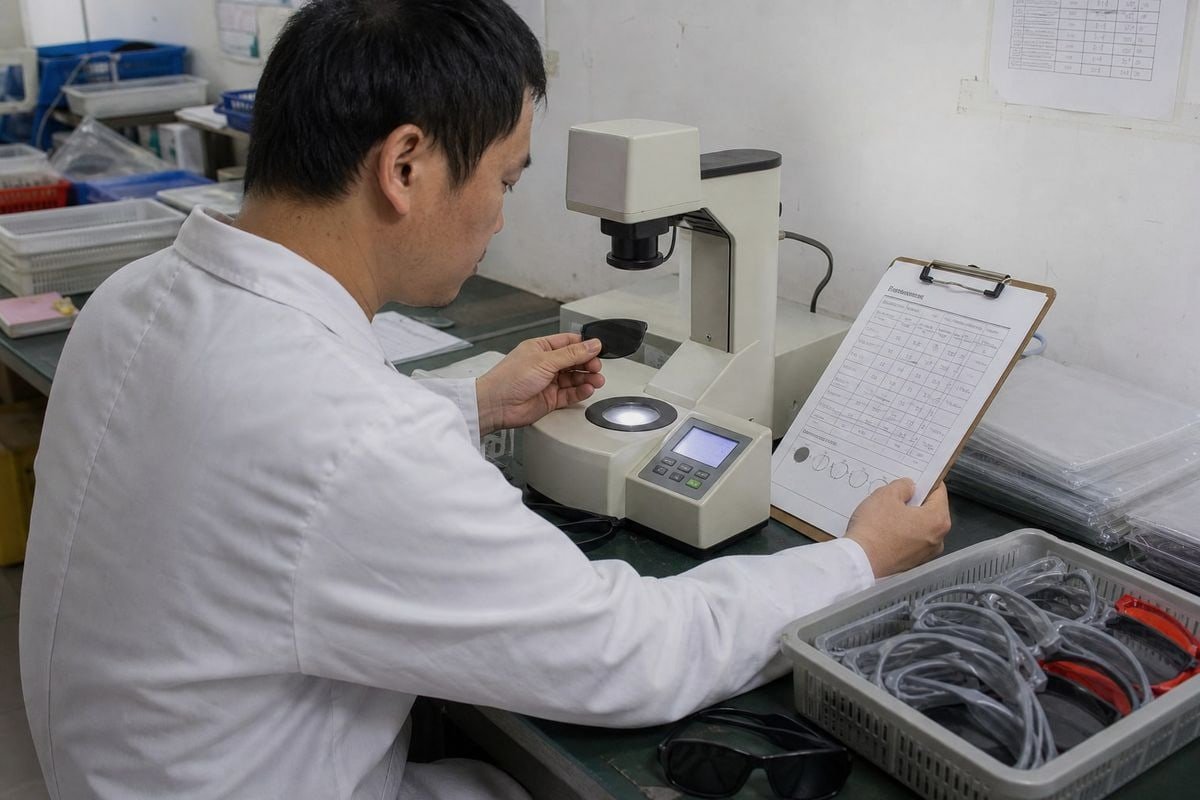
私がすべての新しいバイヤーに最初に伝えることは次のとおりです。オーストラリアの規則は、 必須の製品安全基準, であり、自主的な品質ガイドラインではありません。 ACCC必須基準フレームワーク 1 がそれを施行しており、基準に準拠していないサングラスは差し押さえられたり、リコールされたり、罰金を科されたりする可能性があります。これは2019年7月1日から完全に適用されています。.
サングラス対ファッションスペクタクル
基準は、本物のサングラスと ファッションスペクタクル 2. を区別します。このファッションスペクタクル分類は、子供向け製品にとって重要です。メガネが太陽のまぶしさをほとんどまたはまったく軽減しない場合、サングラスとして販売されるのではなく、ファッションスペクタクルとしてラベル付けする必要があります。バイヤーが色付きレンズなら何でもサングラスだと仮定すると、遊び心のあるノベルティの子供用フレームの多くがこの落とし穴にはまります。.
製品がどのカテゴリに属するかを確認する方法
これは、オーストラリアへの注文が製造に入る前に私たちが行うプロセスです。
- 認定されたラボで、レンズの光透過率と UV保護レベル 3 をテストします。.
- テストレポートに基づいて、正しいレンズカテゴリ(0〜4)を割り当てます。.
- AS/NZS 1067.1:2016を参照して、ラベルの文言をそのカテゴリに一致させます。.
- 製品が特殊品ではないことを確認します(処方メガネや特定の保護用アイウェアは異なる規則に従います)。.
| 製品タイプ | 2017年の必須基準の対象となりますか? | ラベリングのインプリケーション |
|---|---|---|
| 子供用サングラス(カテゴリ1〜4) | はい | 完全なラベリングが必要です |
| ファッションスペクタクル(カテゴリ0) | はい | ファッションスペクタクルとしてラベル付けする必要があります |
| おもちゃとして販売されるおもちゃのサングラス | ポジショニングによります | 高リスクのグレーゾーン—アドバイスを受けてください |
| 処方アイウェア | いいえ | 異なる規制経路 |
グレーゾーンは現実です。製品がサングラスのように見え、屋外で着用するために販売されている場合、オーストラリアの規制当局はそれをサングラスとして扱います。サングラス基準を回避するために「おもちゃ」ラベルに頼らないようにバイヤーにアドバイスします。.
オーストラリアの要件を満たすために、ラベルに正確にどのような情報を記載する必要がありますか?
私たちのQCチームは、オーストラリアへの注文の梱包ラインの上に印刷されたラベルのチェックリストを掲示しています。カートンが密封される前に、すべてのスイングタグがそれに対してチェックされます。.
オーストラリアのサングラスのラベルには、製造業者または供給業者の名称、レンズのカテゴリー番号(0〜4)、それに一致する英語でのカテゴリー説明、日差しの保護レベルを含む使用情報、そして運転には適さない旨の表示など、必要な警告を表示しなければなりません。.
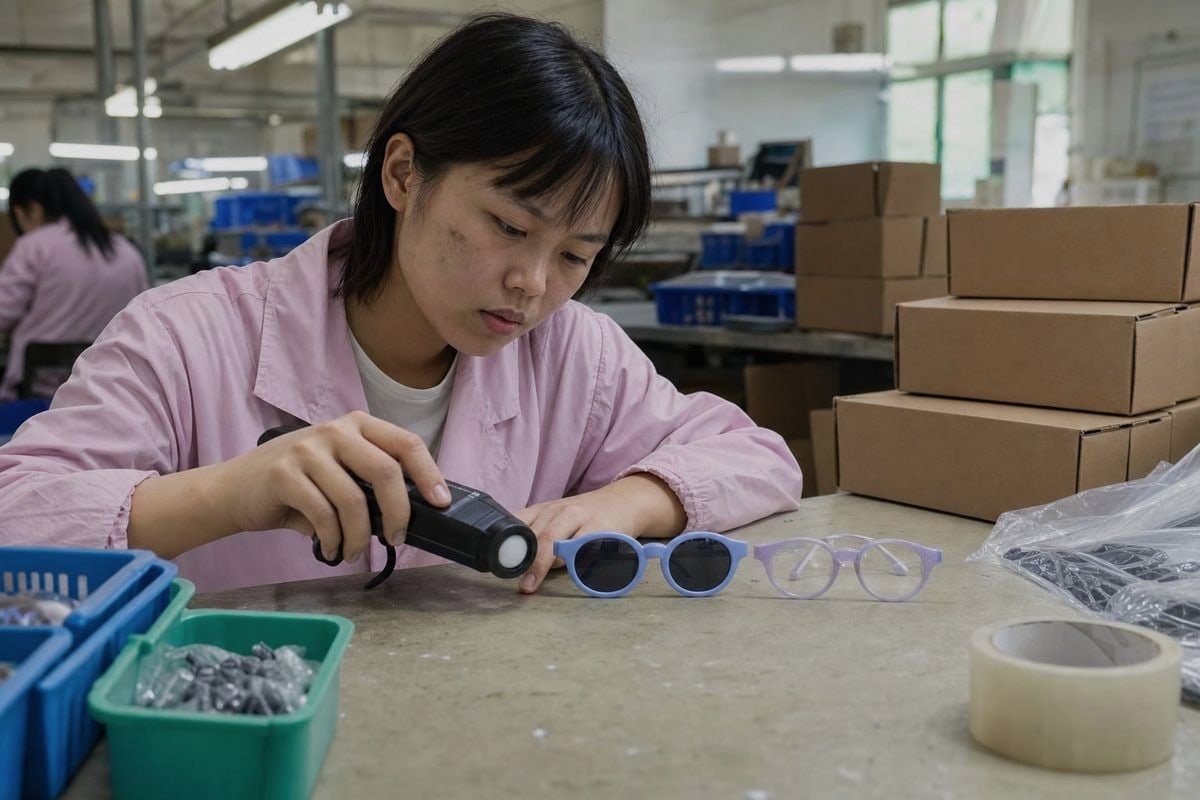
「"サプライヤーの識別"」が最も混乱が生じる場所なので、各要素を分解させてください。ラベルには、製品をオーストラリア市場に投入する責任のある事業体を識別する必要があります。実際には、通常はオーストラリアの輸入業者の住所または現地のブランドオーナーを指しますが、海外の工場だけを指すわけではなく、小売店がサプライヤー記録者でもある場合を除き、小売店も指しません。国際ブランドが地元のフルフィルメントセンターを通じて販売する場合、 輸入者記録者 4 として機能するオーストラリアの事業体が、法的責任を固定する詳細を持つ事業体です。明確にしておきますが、基準のテキストには必要なデータフィールドがリストされていますが、サプライヤーが誰であるかのすべての例外的なケースを詳しく説明しているわけではないため、これを引用された法的定義ではなく、実用的なコンプライアンスの読み方として扱ってください。.
コアラベルフィールド
| ラベル要素 | 何を示す必要があるか | 一般的な例 |
|---|---|---|
| Supplier identification | Name of the manufacturer or Australian supplier | Brand owner or importer name and address |
| Lens category number | A number from 0 to 4 | Category 3 |
| Category description | English wording matching the number | "General purpose sunglasses" |
| Usage information | Protection level guidance | "High protection against sun glare" |
| Warnings/symbols | Any mandatory restriction | "Not suitable for driving at night" |
| Standard reference | Compliance statement | AS/NZS 1067.1:2016 |
What the lens category communicates
The lens category number is the consumer-facing shorthand for UV保護レベル and light transmission. Category 0 covers fashion spectacles with minimal glare reduction. Categories 2 and 3 cover most kids' everyday sunglasses. Category 4 lenses are very dark, built for extreme glare, and are never suitable for driving — a warning that must appear on the label.
Two more points from recent buyer conversations. First, a QR code linking to digital test reports is a nice extra, but it cannot legally replace the physical swing tag or lens sticker at the point of sale. Second, model identification — a model number or name — supports traceability and recalls, so we print it on every tag even when a buyer forgets to ask.
出荷前に、製造元は準拠したラベルと書類の準備を手伝ってくれますか?
One trade-off we discuss with nearly every new Australian client is speed versus certainty: skip pre-shipment label review and ship a week earlier, or verify everything and sleep well.
はい — 有能な製造業者は、レンズのテストを手配し、サプライヤーの識別情報とレンズのカテゴリの詳細を記載した準拠したスイングタグを印刷し、出荷前にテストレポートとコンプライアンス文書をまとめることができます。法的責任はオーストラリアのサプライヤーに残りますが、工場が主要な作業を行います。.
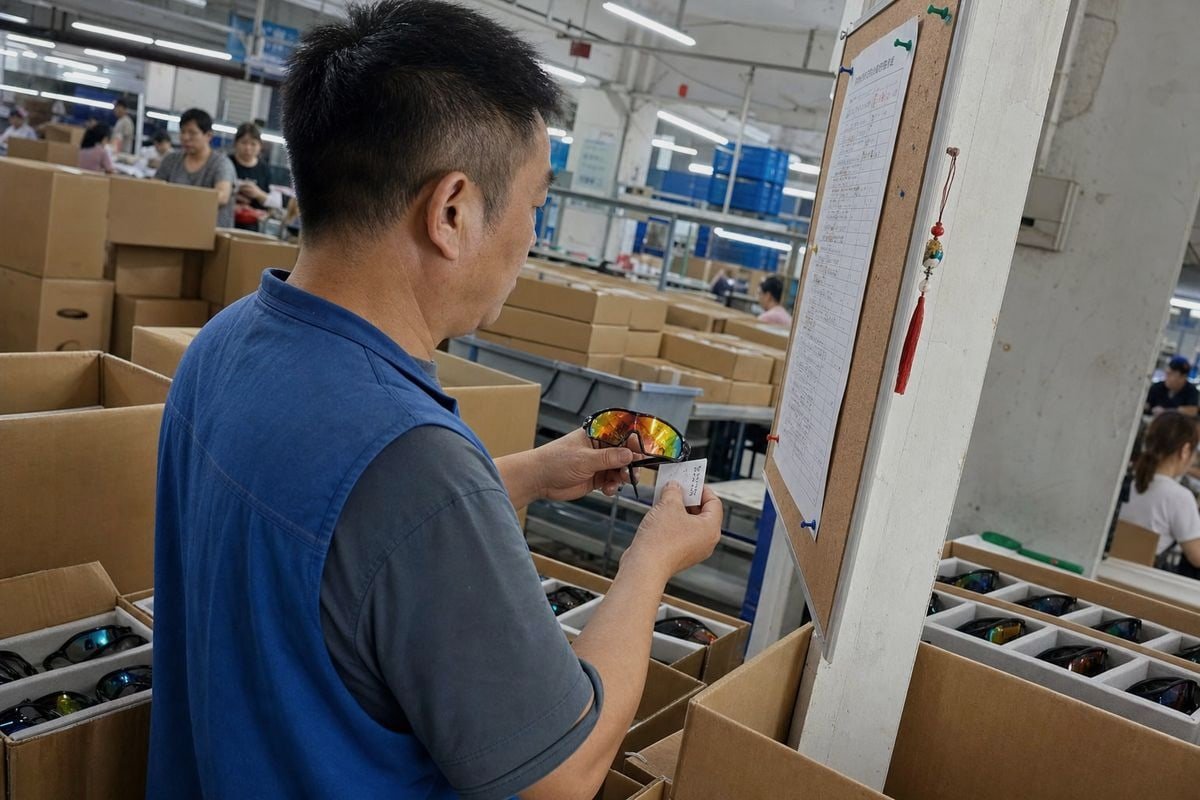
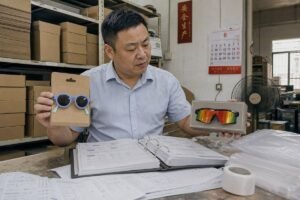
At OKAY EYEWEAR, label preparation is part of our standard OEM/ODM service for Australian buyers, alongside custom colors, logos, lenses, and packaging. Here is how the workflow runs on our side, and where you as the buyer must step in.
A typical pre-shipment compliance workflow
- Lens testing. We send lens samples to a lab for transmittance and UV testing against AS/NZS 1067.1:2016. Our UV400 and polarized lens options are engineered with these thresholds in mind.
- Category assignment. The test report determines the lens category. We never guess this number.
- Label artwork. You supply your Australian entity name and address; we design the swing tag with the category number, English description, usage wording, and warnings.
- Buyer sign-off. You or your compliance advisor approve the artwork. This step is non-negotiable in our process.
- Print and apply. Our 5S-managed workshop prints tags with non-migratory, non-toxic inks — an emerging expectation for children's products, since kids chew on everything.
- Documentation pack. Test reports, label proofs, and packing records travel with the shipment paperwork.
What the factory cannot do for you
We cannot decide who your supplier of record is, and we cannot sign compliance on your behalf. Product safety labeling responsibility under Australian consumer protection regulations 5 sits with the entity supplying the goods in Australia. What a good factory does is make it nearly impossible for a required field to be missing when your goods land. With around 800 existing styles available, many of our buyers also test the Australian market first with pre-tested designs before investing in custom molds — the compliance documentation carries over with far less friction.
オーストラリア市場向け子供用サングラスのラベリングで避けるべき間違いは何ですか?
The most expensive lesson I have watched a buyer learn involved a pallet of relabeled stock — every price sticker had been placed directly over the lens category information.
Avoid five mistakes: using only a brand name without full supplier identification, omitting the lens category number or description, covering required label information with price stickers, skipping mandatory driving warnings, and ignoring choking-hazard warnings on kids sunglasses with detachable decorative parts.
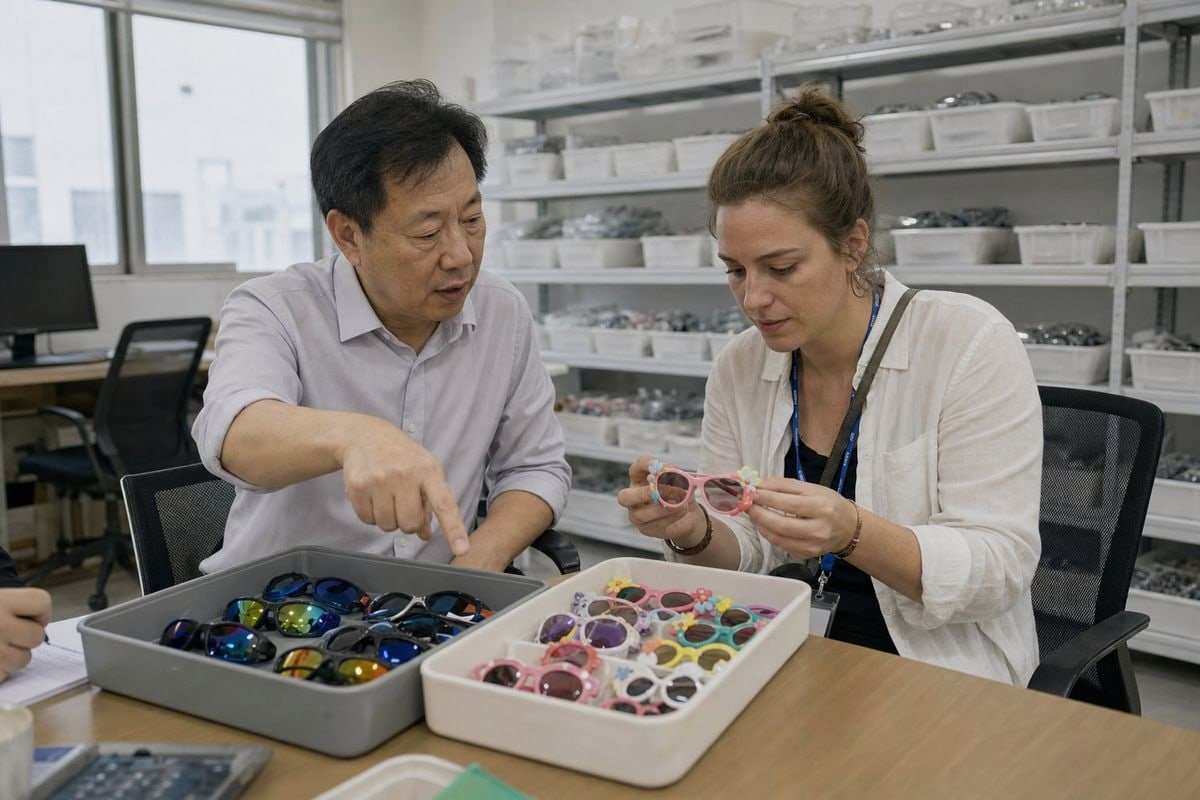
Each of these mistakes is cheap to prevent and expensive to fix after arrival. Let me rank them by how often we see them and how badly they hurt.
| Mistake | How often we see it | Consequence |
|---|---|---|
| Brand name only, no supplier identity or address | Very common | Non-compliant label; possible recall exposure |
| Missing lens category number or description | 一般的 | Fails a core requirement of the standard |
| Price stickers covering required information | Common at retail | Label deemed not clear and legible |
| No driving warning on category 4 or night-restricted lenses | 時々 | Direct safety non-compliance |
| No choking warning on detachable decorative parts | Occasional on kids' styles | Overlaps with toy safety rules for under-3s |
The brand-name trap
A logo is not supplier identification. "SunnyKids™" printed on a temple arm tells a regulator nothing about who is legally accountable. The label needs the actual business name — and best practice includes the Australian importer address — so consumers and regulators can trace the responsible entity.
Kids-specific pitfalls
Children's styles carry extra risks. Detachable charms, clip-on decorations, or removable nose pads can create small parts, which pulls in choking hazard warnings 6 and effectively merges eyewear labeling with toy safety requirements for children under three. This is one reason our kids' frames use flexible TPEE and TR90 construction 7 with minimal detachable hardware — fewer small parts means fewer warnings needed and fewer real hazards on a child's face. Also, do not confuse Australia's lens category system with Eye Protection Factor style marketing claims; the mandatory label fields come from the standard, and marketing claims must never replace or contradict them.
結論
Australian labels must name the responsible manufacturer or supplier, show the lens category, and carry required warnings. Get those fields right before shipping, and your kids sunglasses clear the market cleanly.
脚注
1. Official Australian government page detailing the mandatory safety standards for sunglasses and fashion spectacles. ↩︎
2. Wikipedia entry explaining the classification of sunglasses and fashion spectacles under various international standards. ↩︎
3. ARPANSA provides authoritative information on UV radiation protection and sunglass standards in Australia. ↩︎
4. Australian Border Force guide on the legal responsibilities of importing goods into Australia. ↩︎
5. ACCC page explaining consumer rights and business obligations under Australian consumer law. ↩︎
6. Official safety guidelines for products intended for young children, specifically regarding small parts and choking. ↩︎
7. Technical background on the thermoplastic material commonly used in high-quality eyewear frames. ↩︎
 English
  Español de México
  Deutsch
  Français
  日本語
日本語  العربية
  Português do Brasil