Why Do TR90 & TPEE Kids Sunglasses Cause Eye Redness and Itching?
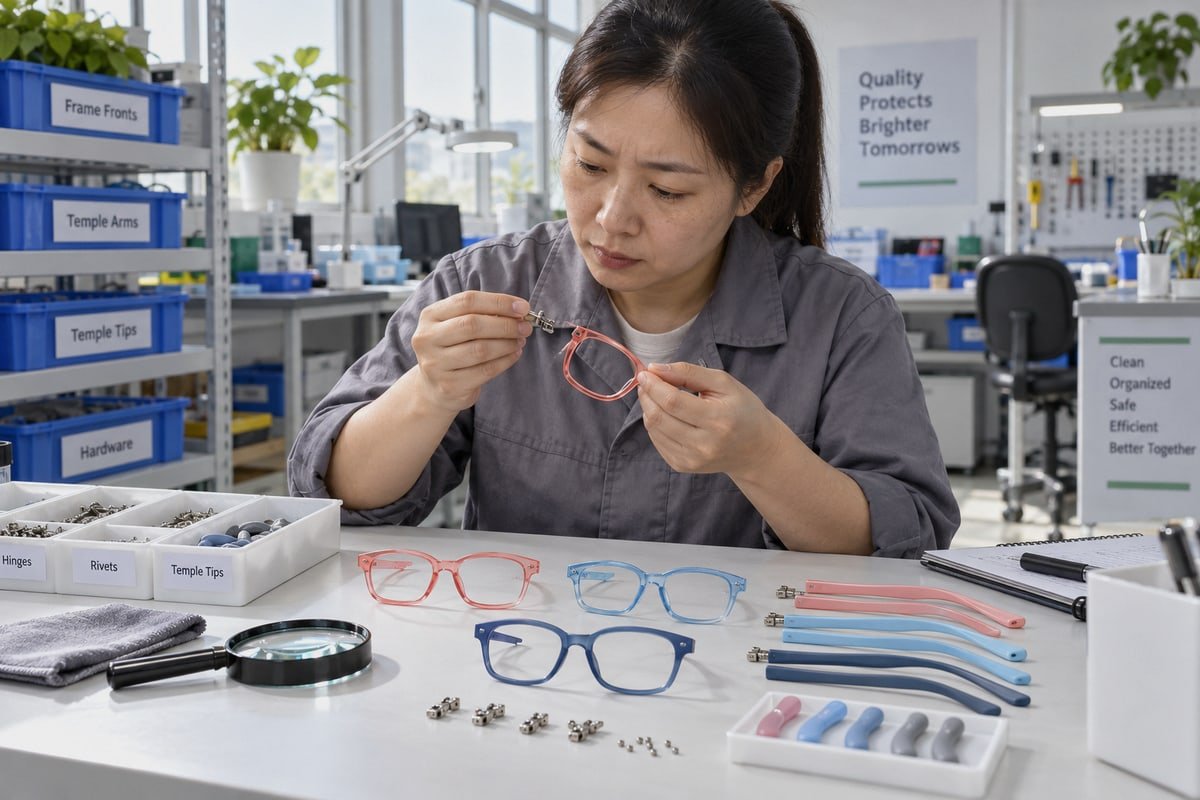
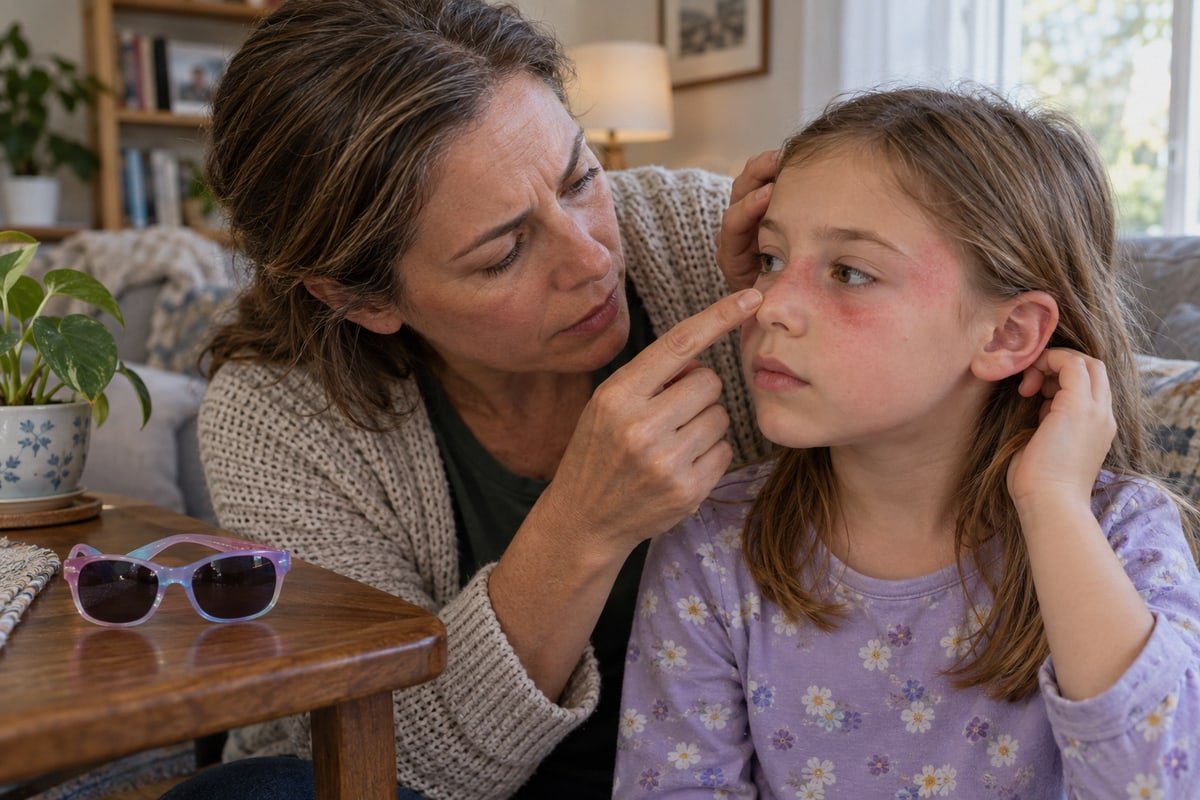
A buyer forwarded us a complaint: TR90 & [TPEE](https://okayeyewear.com/what-benefits-tr90-tpee-kids-sunglasses-age-start/) kids sunglasses were leaving a child’s eyes red and itchy optical distortion 1. The frames looked safe. Our production team knew where to look.
TR90 & TPEE kids sunglasses rarely cause redness through the base polymer itself. The usual culprits are residual molding chemicals, dyes, coatings, metal hinges, or nose-pad friction that trigger contact dermatitis, plus dark lenses without true UV400 protection that let ultraviolet light irritate the eye.
That answer surprises many parents and many brand owners. So let me break it down piece by piece. I will start with the materials, then move to fit, then explain how a factory controls the risk, and finish with a checklist you can use on your own products.
What Materials in My Kids Sunglasses Could Be Triggering Skin Irritation?
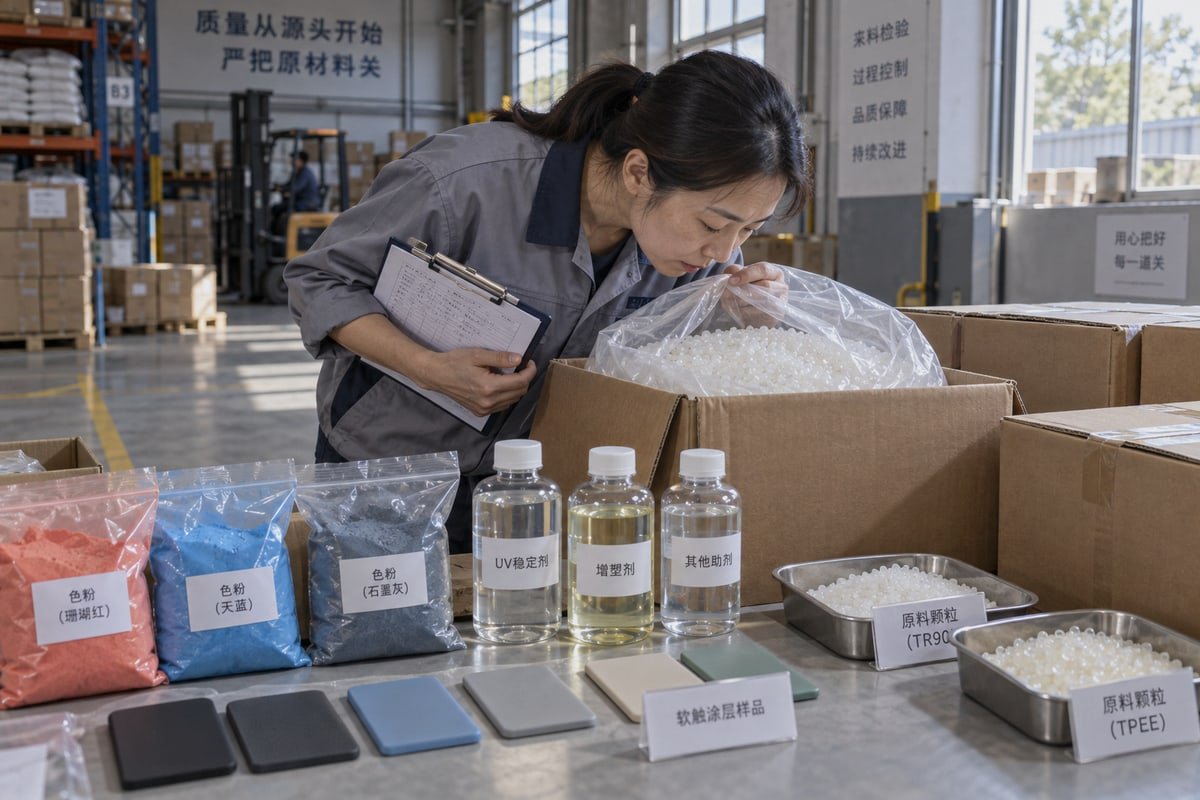
During an incoming-material check last season, our QC team rejected a batch of rubberized temple tips. They smelled of solvent. That smell told us plenty.
Skin irritation from kids sunglasses usually comes from additives, not the TR90 or TPEE polymer. Common triggers include residual injection-molding solvents, color pigments, UV stabilizers, plasticizers, soft-touch coatings, rubber temple tips, and nickel in hinges. Reactions appear where the frame touches the nose, temples, and ears.
TR90 and TPEE in plain language
TR90 is a flexible, lightweight thermoplastic. It bends instead of snapping. TPEE stands for thermoplastic polyester elastomer. It is softer than TR90 and feels almost rubbery. That is why we pair TR90 fronts with TPEE temples on many of our kids' styles. The front holds the lens shape. The temples flex around the ears and survive rough play.
Both polymers are widely sold as hypoallergenic materials. In our experience, that claim holds up well for the raw pellets. The problem starts after the pellets leave the bag.
Where the real suspects hide
Documented eyewear dermatitis cases point to a short list of allergens: nickel, plastics, rubber, solvents, dyes, waxes, plasticizers, and UV stabilizers. Eyewear dermatitis is uncommon overall, but it is real. Notice that most items on that list are additives or hardware. They are not the base resin.
| Frame component | Possible irritant | Where symptoms show |
|---|---|---|
| Frame surface after molding | Residual mold-release agents, solvents, industrial lubricants | Nose bridge, cheeks |
| Color pigments | Dyes used for translucent, gradient, or candy shades | Anywhere the frame touches |
| Flexibility additives | Plasticizers and UV stabilizers | Temples, behind ears |
| Rubberized temple tips | Rubber compounds, soft-touch coatings | Behind ears |
| Hinges and rivets | Nickel in metal hardware | Temple area near the hinge |
| Nose pads (some styles) | Silicone or rubber blends | Nose bridge |
Heat, sweat, and sunscreen make it worse
A frame sitting on a shelf is not the same frame left in a hot car. Stored at high heat, some plastics off-gas volatile organic compounds. When a child puts those frames on right away, the moist tissue around the eye can react at once. Sweat then adds moisture and salt. Pediatric sunscreen adds a chemical layer that can interact with a soft TPEE surface and migrate toward the eye. None of this is an allergic reaction to plastic in the strict sense. It is chemical sensitivity to the whole finished package.
This is why we treat BPA-free frames or phthalate-free plastic as a starting point, not a finish line. Those labels describe what was left out of the resin. They say nothing about what was added during coloring and finishing. When we evaluate TR90 & TPEE kids sunglasses for a new client, we look at every layer, not just the pellet certificate.
How Do I Know If It's an Allergic Reaction or a Poor Frame Fit Causing the Redness?
A procurement manager from Australia once sent us photos of a child's nose bridge. Red marks, both sides, sharp edges. That pattern pointed to fit, not allergy.
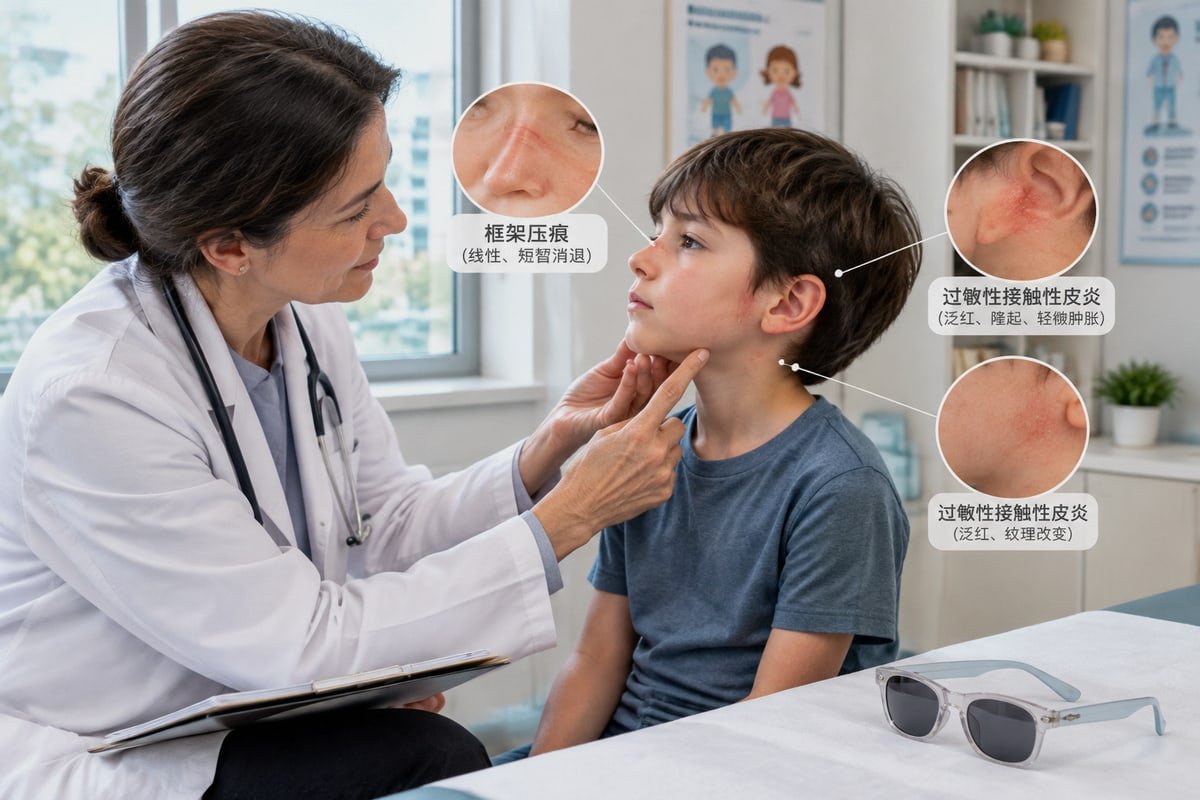
Fit-related redness appears as pressure marks exactly where the frame presses, fades soon after removal, and does not itch much. Allergic contact dermatitis spreads slightly beyond the contact line, itches intensely, may show bumps or flaking, and takes days to clear after the sunglasses are removed.
Read the pattern on the skin first
Redness tells a story. Look at its shape, its edges, and how long it lasts. This table is the one I send to buyers when they forward a customer complaint.
| Sign | Poor frame fit | Allergic contact dermatitis | Eye condition (not the frame) |
|---|---|---|---|
| Location | Exact contact points: nose bridge, top of ears | Contact area plus a slight halo beyond it | Inside the eye, eyelid margin, often both eyes |
| Feel | Pressure, warmth, mild ache | Strong itch, sometimes burning | Gritty, watery, light-sensitive |
| Surface | Smooth red mark or shallow dent | Bumps, flaking, tiny blisters | Discharge, swollen lid |
| Timing after removal | Fades quickly, usually the same day | Persists for days | Unrelated to wearing time |
| Happens with other frames? | Only with similar shapes | Yes, with similar materials | Yes, or with no glasses at all |
Friction is sneaky. When a frame rubs, it creates heat. Warm skin itches. Parents read that itch as an allergy, but it is purely mechanical. Flexible frames can still chafe if the shape is wrong or the child wears them all afternoon.
There are three more fit-adjacent causes I see often. First, the non-porous surface of a plastic frame collects sweat, skin oils, and bacteria. That film sits right against the skin all day. Second, some thermoplastic elastomers 2 build static charge and attract fine dust straight onto the eyelid margin. Third, an older frame with surface pitting from years of sun exposure can trap pollen. None of these are allergies to the plastic. All of them respond to cleaning and replacement.
Skin symptom or eye symptom?
Skin irritation symptoms live outside the eye. Redness inside the eye is a different problem. It points toward allergic conjunctivitis 3, dryness, foreign material, or ultraviolet exposure. Photokeratitis, a sunburn of the cornea, brings redness, tearing, pain, light sensitivity, and blurred vision. Lenses with poor optical clarity or high distortion force the eyes to work harder, and that strain also shows up as redness. I cover the lens side later.
A simple elimination process
- Stop using the pair for several days. Note whether the symptoms clear.
- Wash the frame with mild soap and warm water. Dry it fully. Try again.
- Check the lens for a UV400 or UVA/UVB claim, and ask the brand for proof.
- Press the frame gently onto the child's face. Watch for white pressure spots on the nose and ears.
- Test a simpler frame: matte finish, no coating, no metal contact.
- See a doctor if the child has pain, discharge, vision changes, or strong light sensitivity.
Can Choosing a Trusted TR90 & TPEE Manufacturer Help Me Avoid These Skin Reactions?
Every colorway we approve involves a trade-off. Brighter candy pinks and sky blues sell well, but each pigment we add is one more variable touching a child's skin.
Yes. A trusted TR90 & TPEE manufacturer controls the variables that cause reactions: traceable raw resin, tested pigments, controlled injection molding, thorough post-mold cleaning, nickel-free hardware, and fit testing on children's head forms. Consistent quality control across every batch matters more than any single material label.
Two objections I hear from new buyers
The first objection goes like this: "TR90 is hypoallergenic, so any supplier's TR90 will be fine." I understand the logic. But two factories can buy the same resin and ship very different frames. One runs the mold at the right temperature and cleans off the release agent. The other rushes the cycle, leaves residue on the surface, and adds a cheap pigment that was never tested against skin. Same label, different outcome.
The second objection is the opposite: "Flexible kids' frames are just cheap sunglasses made of soft plastic." That view misses what flexible frame durability actually requires. TPEE temples need the right wall thickness and a clean bond to the TR90 front. Get it wrong and the temple splits or the hinge loosens. A loose hinge means a sliding frame, and a sliding frame means friction on the nose. Durability and comfort are the same problem seen from two sides.
What process control looks like in practice
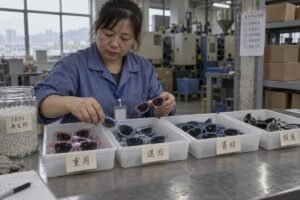
Our workshop in Taizhou runs on a 5S system with around 120 workers. Over 15 years of eyewear work, we have learned that most skin complaints trace back to one of five gaps. So we built our controls around them.
| Question to ask a supplier | What a good answer sounds like | Why it matters for skin reactions |
|---|---|---|
| Where does your TR90 and TPEE resin come from? | Named, consistent source with material data on file | Rules out mystery filler and unknown plasticizers |
| How do you qualify a new pigment? | Sample run, rub test, skin-contact review before approval | Dyes are a top eyewear allergen |
| What happens to frames after molding? | Cleaning and inspection step before assembly | Removes residual solvents and mold lubricants |
| What metal is in the hinges? | Nickel-free or fully covered hardware | Nickel is the most common metal allergen |
| How do you check fit for kids? | Head-form sizing across age ranges, pressure-point review | Prevents friction redness that mimics allergy |
Why existing styles lower your risk
New brands often want a fully custom frame on day one. I usually suggest a slower path. We hold roughly 800 existing styles, and many of them have been worn by children in more than 20 countries. That real-world history tells us which nose bridges sit well and which temple curves rub. A brand can pick from those shapes, apply its own colors, logo, and packaging, and test the market without heavy mold investment. Pediatric eyewear safety improves when the shape is already proven. A trusted partner for TR90 & TPEE kids sunglasses does not just make what you draw. It tells you when a drawing will cause complaints.
What Should I Look for in Lens and Frame Quality to Prevent Irritation in My Products?
One lesson took us years to fully absorb: parents blame the frame, but the lens is often the silent problem. Dark tint alone fools everyone, including the pupil.
Look for verified UV400 lenses that block UVA and UVB, low optical distortion, and polarized options for glare. On the frame, check for smooth seams, no solvent odor, nickel-free hinges, soft TPEE temples, and a fit that rests without pressure points. Request material and lens test documentation.
Lens checkpoints that protect ocular health for children
UV400 lens safety means the lens blocks ultraviolet wavelengths up to 400 nanometers. That covers both UVA and UVB. Tint has nothing to do with it. A very dark lens without a UV block is actually worse than no sunglasses at all. The dark tint makes the pupil open wider, and the wider pupil lets more ultraviolet light reach the cornea and retina. The result can be mild photokeratitis 4 or surface dryness. The child rubs the eyes, the eyes turn red, and the parent blames the frame.
Optical clarity is the second lens issue. A cheap lens with visible distortion makes the eyes work to correct the image. That effort produces strain, and strain produces redness and itching. Polarization is a bonus for beaches, pools, and snow, because it cuts glare bouncing up from the surface. Our polarized lenses ship with a small protective sticker marked with the polarization claim. I tell buyers to treat that sticker as a label, not as proof. Ask for the lens test documentation and keep it with your product file.
Frame checkpoints you can run by hand
| Checkpoint | What good looks like | Irritation it prevents |
|---|---|---|
| Surface odor | No solvent or chemical smell straight out of the bag | Residual chemical contact dermatitis |
| Seams and edges | Smooth, polished, no flash lines at the nose bridge | Friction and pressure marks |
| Hinges and rivets | Nickel-free or covered so metal never meets skin | Nickel allergy near the temple |
| Temples | Soft TPEE, rounded tips, no separate rubber sleeve | Rubber compound sensitivity behind the ears |
| Colorants | No color transfer when rubbed with a damp cloth | Dye migration onto sweaty skin |
| Frame UV stability | Surface stays smooth after sun exposure | Pitting that traps pollen and dust |
| Weight and balance | Light enough to sit still without sliding | Repeated rubbing on the nose |
Test in the child's real environment
A frame that passes on a clean desk can still fail in a hot car or on a sweaty face coated in sunscreen. So we ask clients to run three simple trials before approving a sample. Leave the frame in a parked car on a warm day, then smell it. Wipe it with the pediatric sunscreen your market actually uses and check for stickiness or color change. Finally, have a child wear it through an active afternoon and inspect the nose and ears afterward. These trials cost almost nothing. They catch the problems that a material certificate never will.
Conclusion
Red, itchy eyes erode trust in a brand fast. The cause is usually additives, fit, or weak UV protection, not TR90 or TPEE. Control those, and the complaints stop.
Interested in sourcing the products mentioned in this article? See details and request a quote here:
Footnotes
1. International standard specifying the optical requirements and distortion limits for sunglasses. ↩︎
2. Technical overview of thermoplastic elastomer properties and their industrial applications. ↩︎
3. Authoritative medical definition and symptoms of allergic conjunctivitis from the NIH. ↩︎
4. Clinical explanation of photokeratitis and its impact on ocular health from the AAO. ↩︎
More Articles You Might Like


Looking for a Reliable Kids Eyewear Partner?
Explore 800+ ready styles and full OEM/ODM support tailored to your brand.
Get in Touch English
  Español de México
  Deutsch
  Français
  日本語
日本語  العربية
  Português do Brasil