Why Replace Broken Kids Optical Frames or Fallen-Out Lenses?
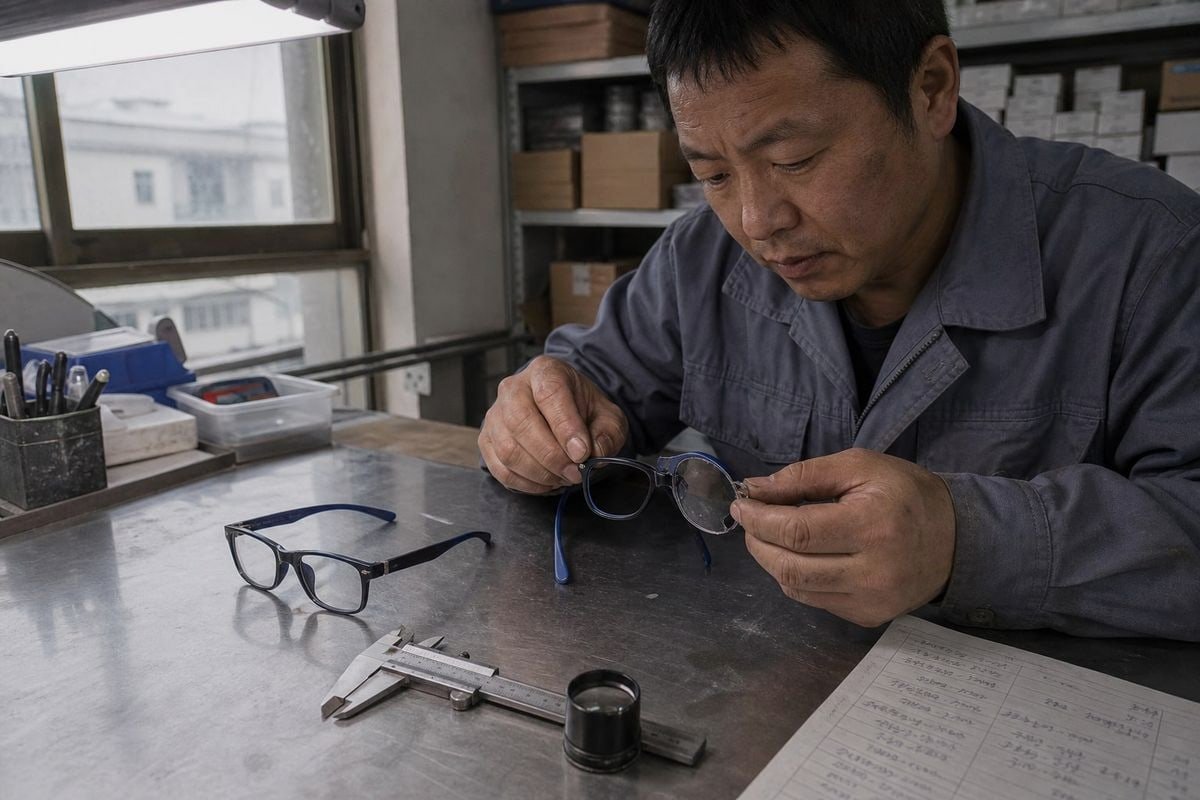
Broken kids optical frames 1 land on my inspection bench every month — returned samples from buyers asking why. Each one represents a child who lost clear vision, and a brand that lost trust.
Broken kids optical frames or fallen-out lenses should be replaced because damaged frames shift lenses away from a child’s pupils, blur vision, interrupt amblyopia treatment, and create sharp-edge safety hazards. During rapid vision development, even 24–48 hours without working glasses can set treatment back.
This is not just a hardware problem. It is a vision, safety, and brand-reputation problem. Below, I break down each risk and show how the right frame design prevents it.
How do I know if broken kids optical frames are putting my customers' children at risk?
A distributor in Australia once sent me photos of a snapped bridge with a sharp acetate edge sticking out. That image changed how our factory tests every frame front we ship.
Broken kids optical frames put children at risk when they show cracked bridges, chipped lens edges, warped fronts, or failed hinges. These faults misalign the optical centers, cause eye strain symptoms and headaches, and expose sharp edges that can cut skin or injure the eye during play.
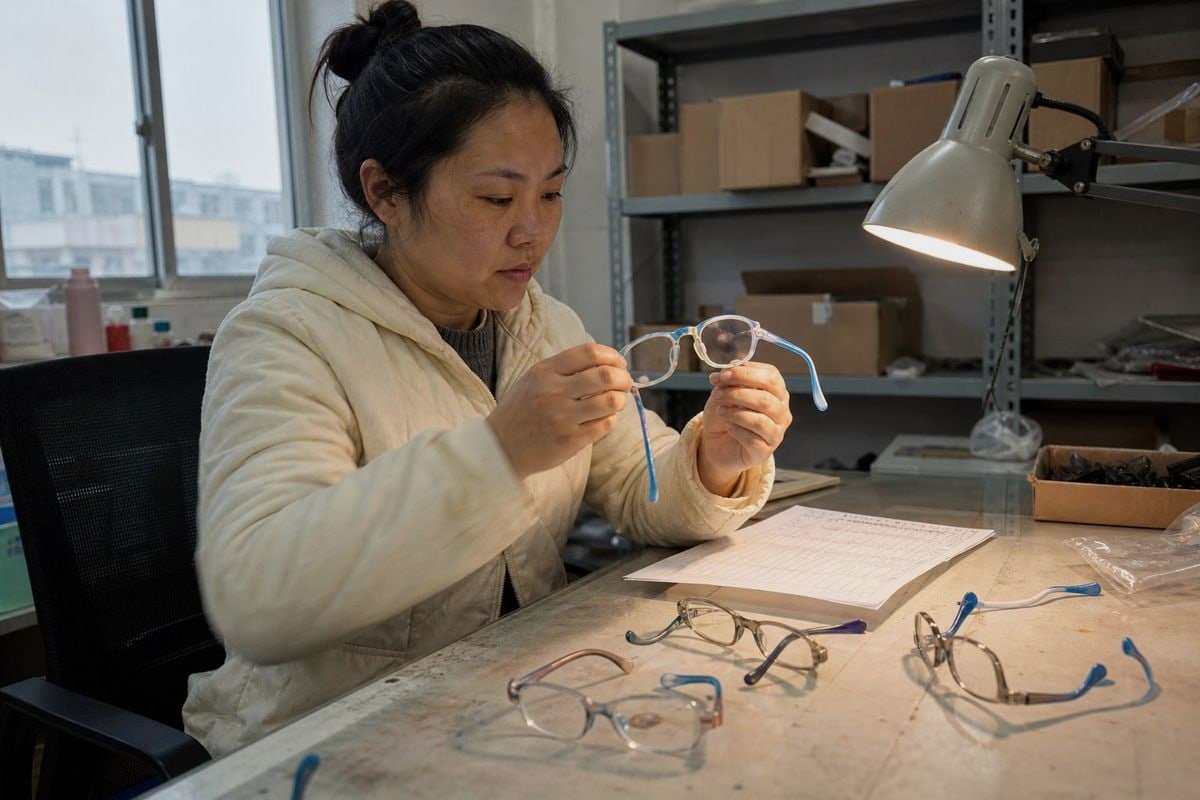
The risk splits into three layers, and each one matters for pediatric eye health. I walk buyers through all three whenever they audit our production line in Taizhou.
Physical injury risk
Cracked lenses and snapped rims create sharp edges close to a child's eyes and face. Kids run, fall, and collide. A frame that fails under impact can cause facial lacerations or ocular trauma at the worst possible moment. This is why we pair flexible frame materials with impact-resistant polycarbonate lenses on nearly every children's style we produce.
Optical risk
A bent or warped frame moves the lens optical center 2 away from the pupil. The prescription is still correct, but the vision is not. The child sees a subtle prismatic effect, and the brain works overtime to compensate. That "silent" cognitive load shows up as headaches, poor concentration, and trouble reading the classroom board — often long before a parent notices anything wrong with the glasses.
Developmental risk
For children in amblyopia treatment 3 or a myopia control program 4, consistent and precise lens position is the whole point. Research shared with our product team shows at least 5% of preschool children develop amblyopia, and it becomes hard to treat after age five. Broken glasses interrupt that treatment window.
| Damage type | Risk level | What it threatens |
|---|---|---|
| Chipped or cracked lens | High | Eye injury, distorted vision |
| Snapped bridge or rim | High | Facial cuts, total loss of correction |
| Warped or twisted frame front | Medium–High | Misaligned optics, eye strain, headaches |
| Loose or failed hinge | Medium | Unstable fit, lenses drifting off-axis |
| Missing screw or nose pad | Low–Medium | Discomfort, gradual misalignment |
What is causing lenses to fall out of my children's frames so often?
When we tear down returned frames in our QC room, the fallen-out lens almost never fails alone. Nine times out of ten, the frame around it tells the real story.
Lenses fall out of children's frames because of oversized or loose-fitting frames, shallow lens grooves, weak hinges that let the front flex, heavy lenses in soft rims, and rough handling during play. Each cause traces back to frame design and material choices, not the child's behavior alone.
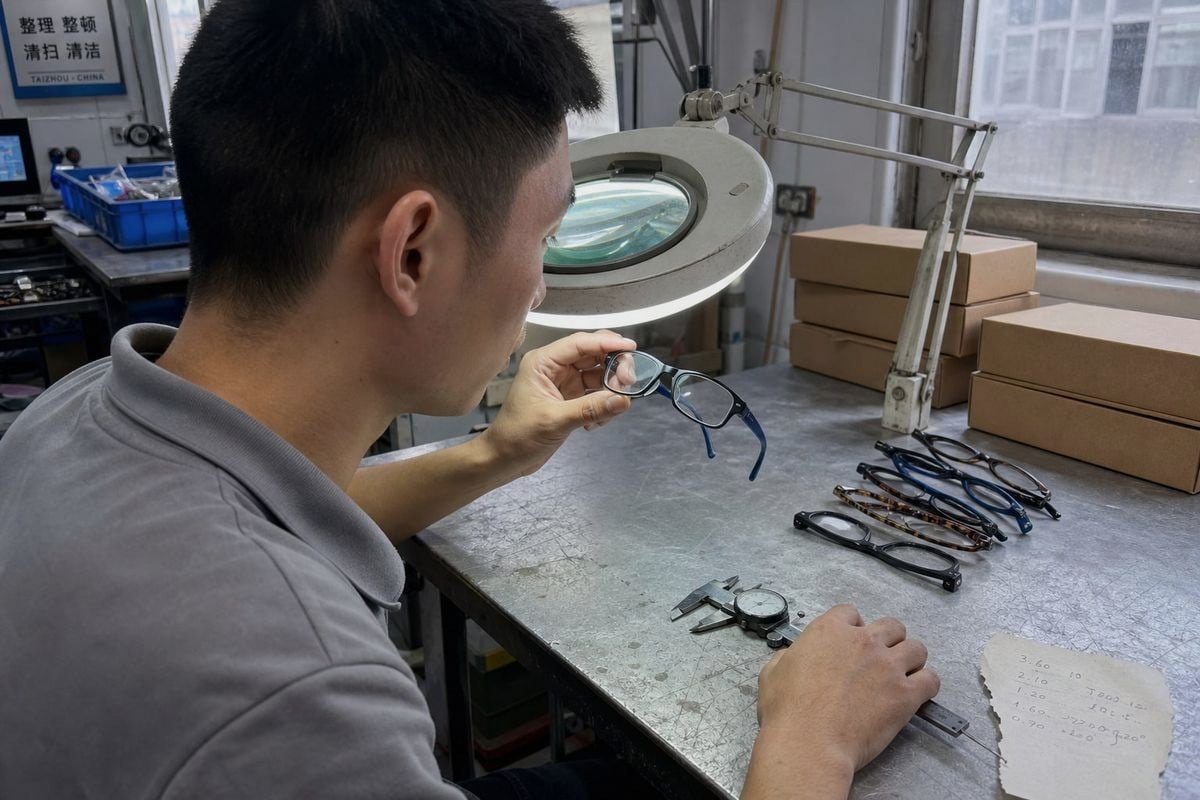
Let me be direct: kids will always remove glasses with one hand, sit on them, and twist them like toys. A frame designed for children must absorb that abuse. Here are the five root causes we see most often, ranked by frequency in our own teardown reports.
- Shallow or inconsistent lens grooves. If the bevel groove in the rim is cut too shallow or varies around the eye wire, the lens has nothing to grip. One twist and it pops free.
- Rims that are too rigid or too soft. Brittle plastic cracks under stress and releases the lens. Overly soft plastic stretches, loosens, and lets the lens rattle out. TR90 sits in the sweet spot — it flexes and returns to shape.
- Weak hinge zones. When a hinge loosens, the temple no longer holds the frame square on the face. The front twists during wear, and repeated flexing works the lens loose. Spring hinges or molded flexible temples spread that stress instead of concentrating it.
- Frame-to-lens weight mismatch. High prescriptions mean thicker, heavier lenses. A lightweight rim that was fine with a demo lens may not retain a real Rx lens securely.
- Poor initial fit. A frame that is too big slides down, gets pushed up constantly, and endures far more handling cycles than a properly sized frame.
Why a popped lens is a warning sign, not a one-off
A lens that comes out once will usually come out again. Reseating it without fixing the groove, hinge, or fit only resets the clock. In our experience, a second pop-out within a month means the frame is structurally compromised and should be replaced. This matters most for children under eight, or those in amblyopia treatment, where pediatric guidance recommends restoring working glasses within 24–48 hours.
Can I reduce return and complaint rates by switching to more durable frame materials?
The trade-off I weigh with every new buyer is simple: a slightly higher unit cost for flexible materials, versus the compounding cost of returns, replacements, and one-star reviews. The math almost always favors the better material.
Yes. Switching to flexible frame materials like TR90 and TPEE, paired with polycarbonate lenses and reinforced or spring hinges, dramatically reduces breakage-related returns. These materials bend and recover instead of snapping, absorb impact, and hold optical frame adjustment far longer than rigid acetate or cheap injection plastics.
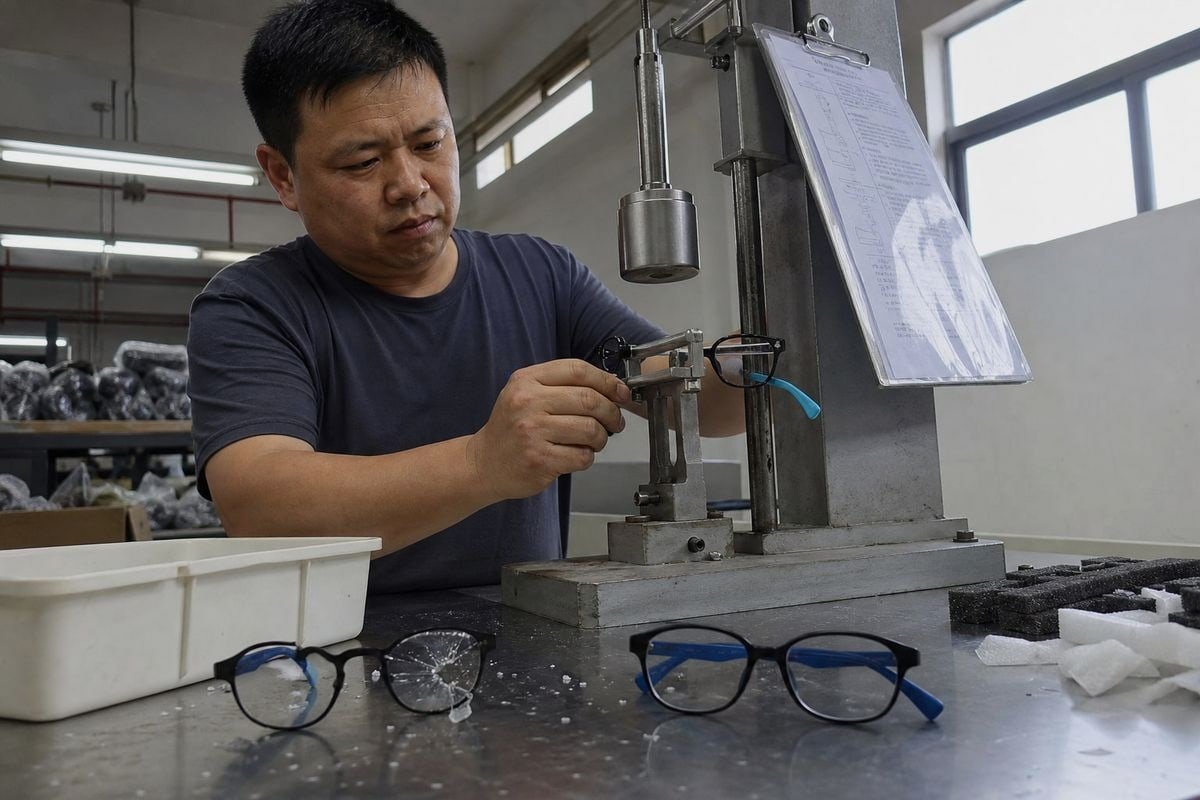
Durability is not one property. It is a system of material, hinge, lens, and fit working together. When any one link fails, the complaint lands in your inbox, not mine — which is exactly why our factory treats material selection as the first quality decision, not a cost line.
How the common materials compare
| Material | Flexibility | Impact resistance | Weight | Best use for kids |
|---|---|---|---|---|
| TR90 | Excellent — bends and recovers | High | Very light | Everyday optical frames |
| TPEE | Outstanding — near-unbreakable flex | Very high | Very light | Temples, baby and toddler frames |
| Standard acetate | Low — cracks under twist | Moderate | Medium | Fashion styles, older teens |
| Cheap PC injection frames | Low–Medium | Brittle over time | Light | Not recommended for active kids |
Two of the frames we ship most often illustrate the system approach. Our rectangular-rounded black front with navy-to-sky-blue silicone temple tips uses a TR90 front for lens retention and soft rubberized temples with embossed grip patterns, so the frame stays put without pressure points. Our translucent pale pink rounded-rectangular style keeps the same compact, lightweight build with textured hinge details for durability. Both survive the twist tests that crack rigid frames.
The hidden factors beyond material
Material alone will not save a badly engineered frame. Buyers should also check:
- Hinge design. Spring hinges or molded flexible temples absorb the outward pull when a child yanks glasses off one-handed.
- Lens spec. Polycarbonate lenses resist impact and protect the eye if something does strike the frame.
- Growth allowance. Very young children may need new frames every three to six months as their faces grow. A durable frame that no longer fits is still a failed frame, so sizing runs matter as much as materials.
- Modular thinking. Offering replacement temples or part-specific spares reduces waste from childhood breakages and gives your brand a sustainability story parents appreciate.
For brands selling into myopia control or amblyopia treatment channels, stable optical alignment is a clinical requirement, not a nice-to-have. Durable, flexible frames are what keep that alignment intact between eye exams.
How do I find a manufacturer that can fix these frame and lens durability issues for my brand?
Fifteen years ago, our workshop learned an expensive lesson: a buyer left us over hinge failures we had dismissed as "normal kid damage." That loss reshaped our QC checklist, and it shapes the advice I give buyers today.
Find a manufacturer with proven flexible-material expertise in TR90 and TPEE, an existing style library to avoid mold investment, documented QC processes, and full OEM/ODM support for custom lenses, colors, and packaging. Ask for flex tests, lens retention checks, and references from children's eyewear brands specifically.
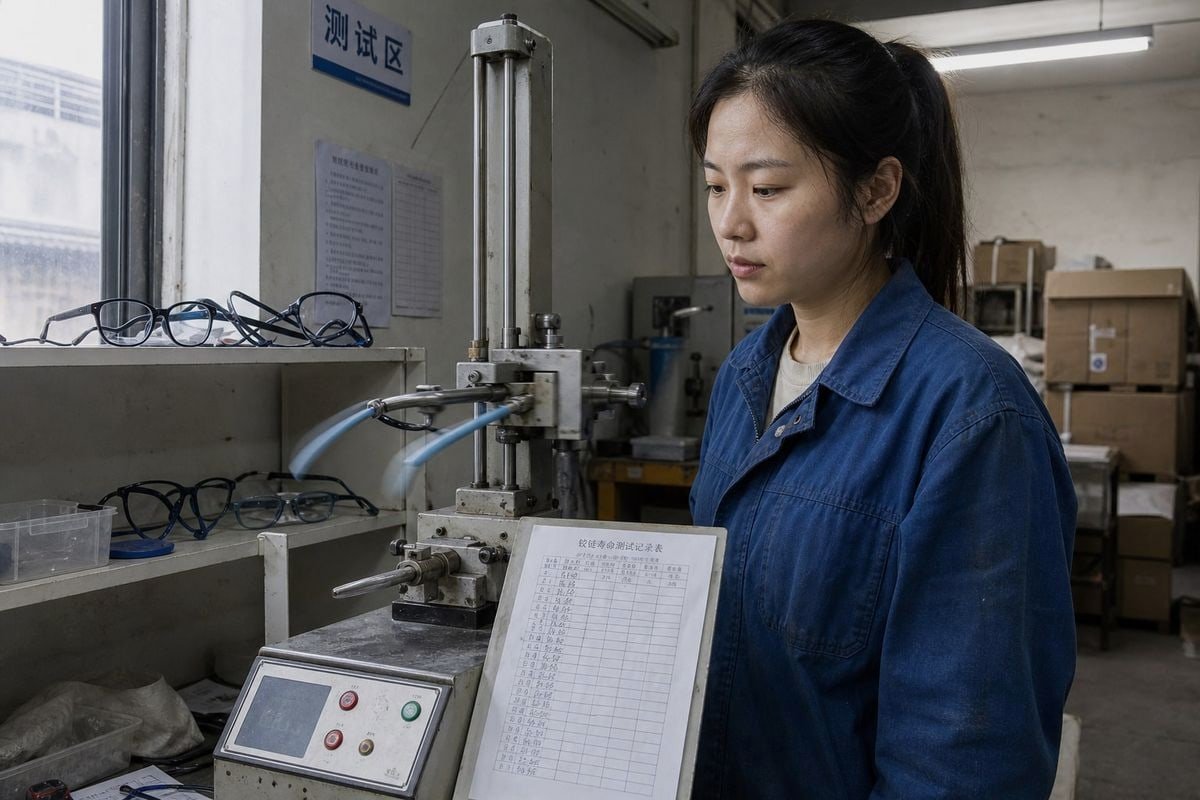
Children's eyewear is a specialty, not a subcategory of adult frames. A supplier who mostly makes adult acetate frames will apply adult assumptions to child-sized products — and the durability failures described above are usually the result. Here is the evaluation process I recommend, based on what our most successful long-term partners did when they vetted us.
A five-step vetting process
- Verify they are a factory, not a trader. Ask for workshop photos, worker headcount, and a video call from the production floor. Our facility runs about 120 workers under 5S management; any real factory can show you the same transparency.
- Test their material knowledge. Ask why they would choose TPEE temples on a TR90 front for a toddler frame. A specialist explains flex behavior, skin safety, and lens retention. A generalist quotes a price.
- Check the style library. A deep catalog — ours holds roughly 800 existing styles — lets you launch or test the market without paying for new molds. That lowers your risk on the first order and speeds up replacements when a style needs a durability revision.
- Audit the QC steps that matter for kids. Ask specifically about temple flex cycling, lens retention checks, hinge torque, and edge smoothness. These are the tests that predict return rates.
- Confirm full OEM/ODM scope. Custom colors, logos, UV400 or polarized lens options, retail-ready packaging, and accessories should all sit under one roof, so quality accountability never fragments across vendors.
Questions worth asking on the first call
| Question | What a strong answer sounds like |
|---|---|
| How do you prevent lens pop-out? | Specific groove depth control and rim material choice, not "we glue them" |
| What happens if a batch shows hinge failures? | A documented corrective process and replacement terms |
| Can you support small trial orders? | Yes, via existing styles with custom branding |
| Which markets do you export to? | Named regions with kids-safety expectations, ideally 20+ countries |
| How do you handle sizing for growing children? | Multiple size runs and fit guidance, not one-size frames |
A manufacturer who answers these questions with specifics is a partner who will fix durability issues before they reach your customers. One who answers with generalities will send you the same broken frames you are trying to escape.
Conclusion
Broken kids optical frames threaten vision development, safety, and your brand. Replace damaged frames fast, choose flexible materials, and partner with a specialist factory that engineers durability in from the start.
Footnotes
1. Authoritative medical source for selecting safe and appropriate children’s optical frames. ↩︎
2. Technical definition of the optical center and its role in lens alignment. ↩︎
3. Clinical overview of amblyopia treatment to understand the importance of lens positioning. ↩︎
4. WHO data on global vision impairment and the necessity of corrective programs. ↩︎
More Articles You Might Like
August 5, 2026
Bio-Based vs Regular Cellulose Acetate: What's the Difference for Kids' Frames?
August 5, 2026
How Recyclable Are Kids' Optical Frame Materials, and What Eco-Friendly Alternatives Exist?
August 5, 2026
Do Kids Optical Frames Whiten or Age in Storage, and How to Control Warehouse Conditions?
Looking for a Reliable Kids Eyewear Partner?
Explore 800+ ready styles and full OEM/ODM support tailored to your brand.
Get in Touch English
  Español de México
  Deutsch
  Français
  日本語
日本語  العربية
  Português do Brasil