Why Do Kids’ Eyes Need Extra UV Protection, and How Effective Are TPEE Sunglasses?
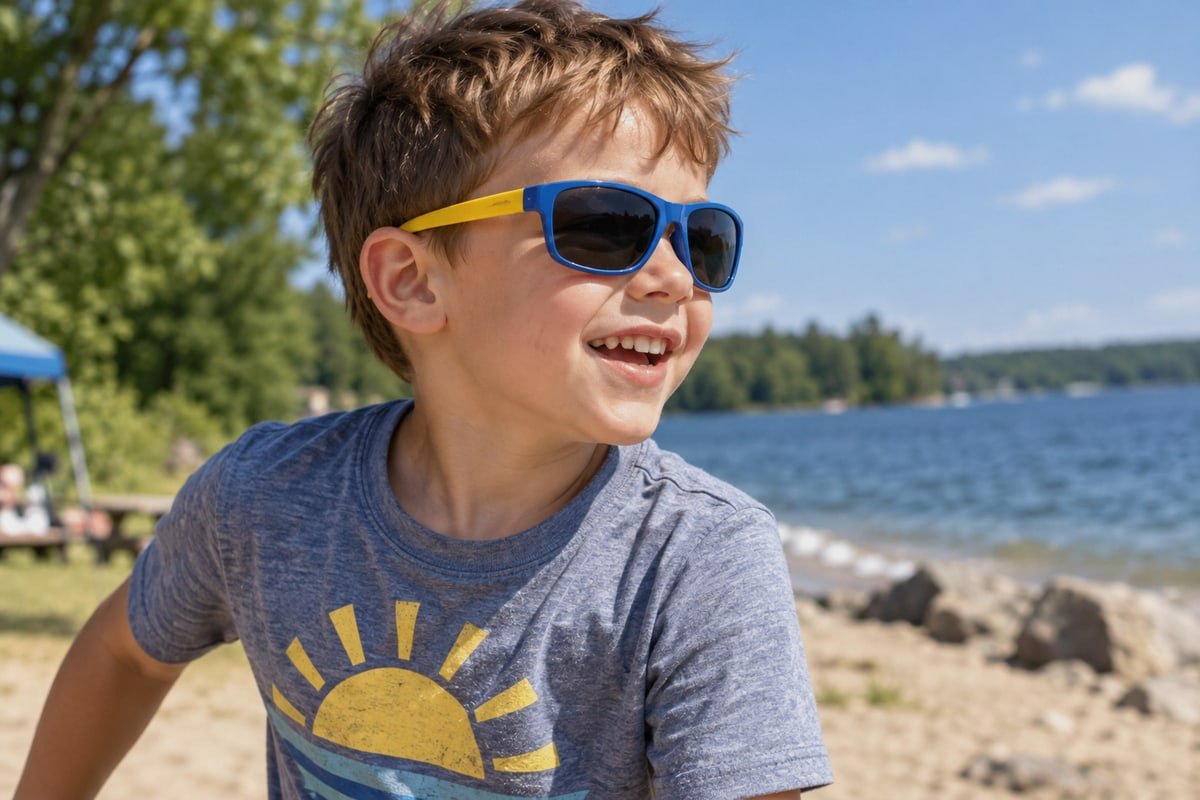
Every summer, our Taizhou production line ships thousands of kids’ sunglasses, yet I keep meeting parents who assume any cheap toy pair gives real UV protection. It doesn’t.
Kids’ eyes need extra UV protection because their clearer crystalline lens and larger pupils let up to 70% more UV reach the retina. TPEE sunglasses are effective when fitted with certified UV400 lenses that block 99–100% of UVA and UVB rays; the flexible frame adds safety, not UV blocking.
That last sentence is the whole point of this article. The frame and the lens do two different jobs. Below, I will explain why [children’s eyes are at higher risk](https://okayeyewear.com/why-kids-sunglasses-specially-designed-children-vision-development/), how to verify a [UV400](https://okayeyewear.com/what-uv400-mean-kids-sunglasses-important-does-on/) claim, what TPEE actually contributes, and how to pick a factory partner who gets both parts right.
Why Are Children's Eyes More Vulnerable to UV Damage Than Adults?
During a lens-transmission check on a new run of round pink frames, a visiting optometrist reminded our team why child eyes behave so differently from adult eyes.
Children's eyes are more vulnerable because their crystalline lens is clearer, letting up to 70% more UV reach the retina, their pupils are larger, and they spend about three times longer outdoors than adults. Around 80% of lifetime UV exposure happens before age 18.
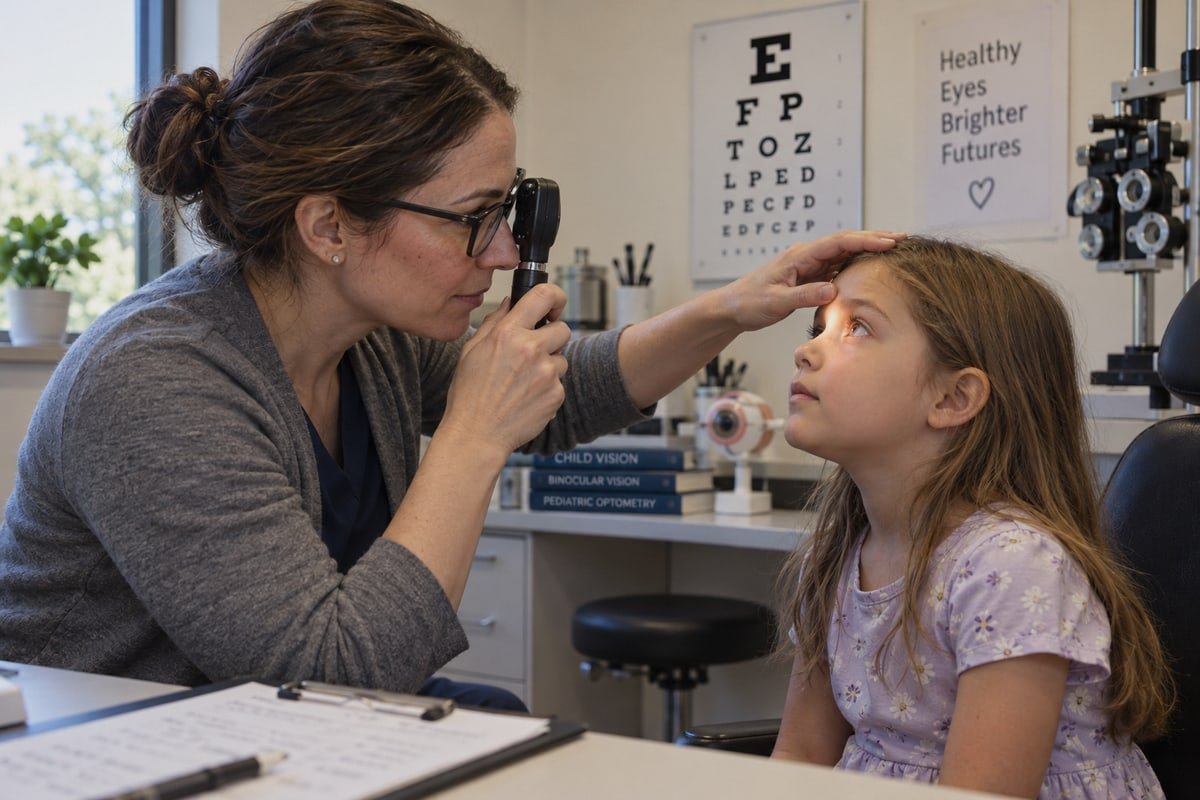
The reason comes down to biology, behavior, and time. Let me take each one in turn, because the buyers I speak with in Europe and Japan often know the headline but not the mechanism.
Crystalline Lens Clarity and Pupil Size
An adult lens slowly yellows with age. That yellowing is not pretty, but it acts as a natural UV filter. A child's lens has none of that filtering yet. Crystalline lens clarity is high, so UVA and UVB rays 1 pass straight through to the retina. Pediatric ophthalmology sources put the difference at up to 70% more UV reaching the back of the eye. Add a larger pupil, which is common in young children, and the eye simply admits more light.
| Factor | Child eye | Adult eye |
|---|---|---|
| Lens transparency | Very high, minimal UV filtering | Yellows over time, filters more UV |
| Pupil size | Larger, admits more light | Smaller on average |
| Time outdoors | Roughly 3x more per year | Less, often indoors at work |
| Share of lifetime UV dose | About 80% before age 18 | Remaining ~20% spread over decades |
Cumulative UV Exposure and Later-Life Risk
UV damage is not like a bruise that fades. It is cumulative UV exposure 2, and the eye keeps score. Short-term, an intense day on snow or water can cause photokeratitis, which is basically a sunburn on the cornea. Long-term, the exposure banked in childhood is linked to cataracts and macular degeneration decades later. Retinal damage prevention therefore starts in the stroller, not at forty.
Does a Hat Make Sunglasses Unnecessary?
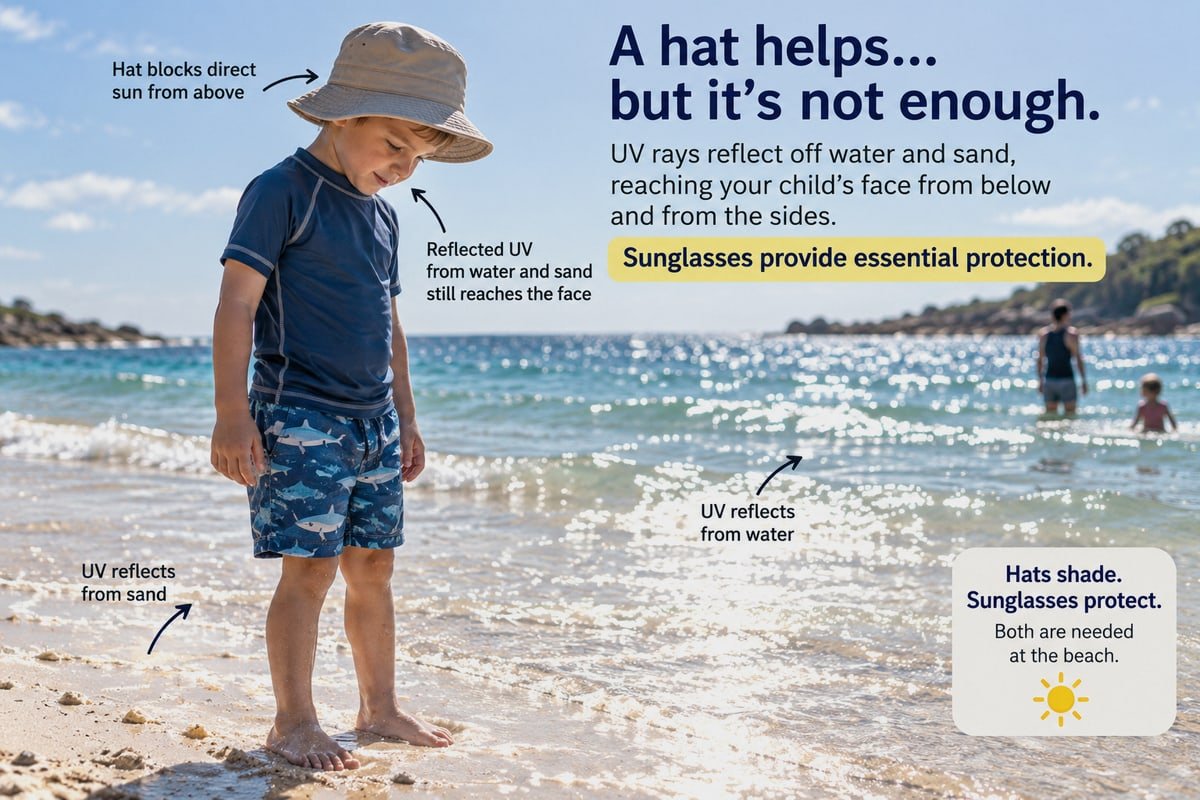
I hear this objection from parents and occasionally from brand founders. A hat helps. It cuts direct overhead UV. But it does nothing about reflected UV 3 from sand, water, snow, or pavement, which enters from below and from the sides. Sunglasses are the only item that sits directly in front of the eye. Public-health guidance is consistent here: sunglasses on sunny and cloudy days, plus a hat and shade as layers.
How Can I Verify That TPEE Sunglasses Actually Meet UV400 Protection Standards?
A procurement manager from Australia asked me a blunt question: if the frame is TPEE, does that automatically mean the lens is UV400? Fair question, and the answer is no.
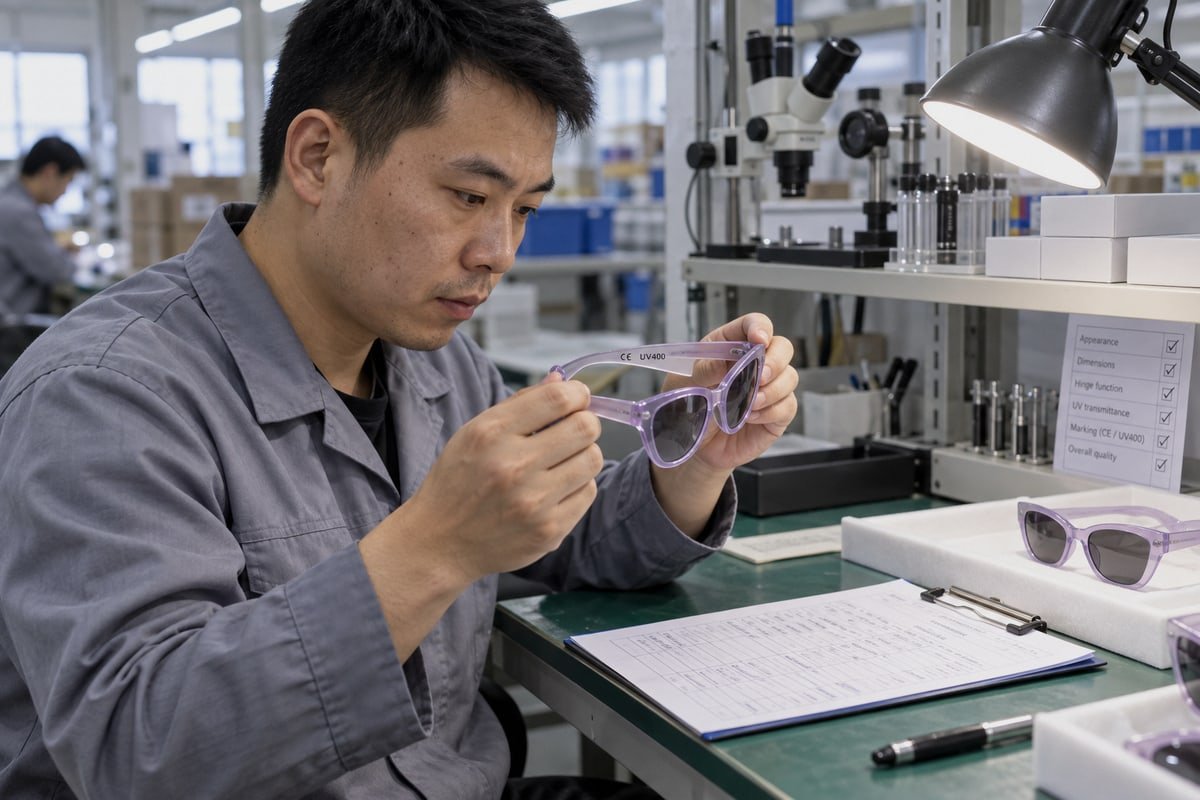
Verify UV400 protection by checking the lens, not the frame: look for a clear 99–100% UVA and UVB claim, a UV400, ANSI Z80.3 or Australian/New Zealand standard reference, a marked temple, and a supplier UV transmittance test report. Vague "UV protective" wording is not enough.
The frame material tells you how the glasses will survive a fall. It tells you nothing about what the lens lets through. Here is the process I walk buyers through before they place an order with us.
A Five-Step Verification Process
- Read the exact wording. "Blocks 99–100% of UVA and UVB" or "UV400" is a measurable claim. "UV protective" or "sun lenses" is marketing.
- Look for a named standard. ANSI Z80.3 in the US market and the Australian/New Zealand sunglass standard are the ones our export customers ask about most.
- Check the temple marking. On our lavender cat-eye style, for example, the inner left temple carries engraved text and a CE marking. That marking should be legible, not a sticker.
- Ask for the lens transmittance report. A real factory can show a UV transmittance measurement for the lens batch. If they cannot, walk away.
- Test a sample yourself. Many optical shops have a UV meter. It takes ten seconds.
What the Labels Actually Mean
| Label or claim | What it means | Reliable proof of UV protection? |
|---|---|---|
| UV400 | Blocks wavelengths up to 400 nm, i.e. 99–100% of UVA and UVB | Yes |
| 100% UVA/UVB | Same protection level, different wording | Yes |
| ANSI Z80.3 / AS-NZS standard reference | Tested against a recognized sunglass standard | Yes |
| Polarized | Reduces reflected glare | No, not by itself |
| "UV protective" / "sun lenses" | No stated percentage | No |
| Toy sunglasses, no marking | Costume item | No |
Polarized Lenses vs UV400: Not the Same Thing
Some buyers believe polarization is the premium feature that guarantees safety. It is not. Polarized lenses cut horizontal glare off water and roads, which is great for comfort. UV blocking is a separate coating or lens property. We offer both polarized and non-polarized UV400 options in our range precisely because they solve different problems. Also note that a UV400 lens typically screens out 75–90% of visible light. That figure explains why the lens looks dark and reduces glare, but darkness itself is not UV protection. A very dark lens without UV blocking is actually worse, because the pupil opens wider behind it.
What Makes TPEE Material a Safer Choice for My Kids' Sunglasses Lineup?
When we quote a new kids' line, we weigh the same trade-off: a rigid frame looks crisp on a shelf, but a flexible TPEE frame survives the playground.
TPEE (Thermoplastic Polyester Elastomer) is safer for kids' sunglasses because it bends 180 degrees without snapping into sharp fragments, is non-toxic, BPA-free and hypoallergenic, absorbs impact during falls, keeps its shape as faces grow, and allows screw-free living hinges that remove small-part choking hazards.
Since this is really a materials comparison, let me put the three common options side by side first, then explain the details that matter on a child's face.
| Property | TPEE frame | Polycarbonate frame | Generic plastic frame |
|---|---|---|---|
| Flexibility | Bends 180° and returns | Rigid, limited flex | Rigid, brittle |
| Failure mode | Bends, does not shatter | Cracks under high stress | Snaps into sharp pieces |
| Impact resistance on the face | Elastomer absorbs shock | Hard, transfers force | Hard, transfers force |
| Hinge option | Living hinge, no screws | Metal hinge and screws | Metal hinge and screws |
| Skin safety | Non-toxic, BPA-free, hypoallergenic | Usually BPA-free, check supplier | Often unverified |
| Slip resistance | Soft-touch surface grips skin | Needs rubber nose pads | Slides on sweat |
| Weight | Very light | Light | Varies |
Mechanical Memory and a Growing Face
The property our engineers value most is what the industry calls mechanical memory. Thermoplastic Polyester Elastomer returns to its molded shape after being twisted, sat on, or chewed. For a child, that means the temples adapt to a head that grows noticeably between one summer and the next, without creating pressure points at the bridge or behind the ears. Flexible frame durability is not just about surviving drops. It is about staying comfortable for months, which is the only way a child will keep the glasses on.
Impact Resistance That Protects the Face, Not Just the Frame
Rigid frames are tested to see whether the frame breaks. We think about the other side of the collision. When a toddler falls forward onto a hard frame, the frame can bruise the orbit or cut the skin. TPEE acts as a kinetic shock absorber. It compresses on impact and spreads the load. In our own drop and flex checks, the frame bends and pops back; we have never seen a TPEE temple produce a sharp edge.
Living Hinges and Small Parts
Metal screws are the smallest part on any sunglasses, and they are exactly what a curious two-year-old will find. TPEE's flexibility allows living hinges molded from the material itself. No screw, no choking hazard, and less weight. Our two-tone royal blue and yellow style still uses a small hinge accent for older kids, while our baby and toddler styles move to fully screw-free construction. We also combine TR90 fronts with TPEE temples 5 for kids who want a slightly firmer look with the same safe, flexible fit. In every case, the BPA-free frames are paired with UV400 lenses, because safe material without a certified lens is only half the job.
How Do I Choose a Manufacturing Partner That Guarantees Reliable UV Protection at Scale?
One lesson from fifteen years in eyewear: a supplier who cannot show you a lens test report before the order will not magically produce one after it.
Choose a partner that is a real factory, not a trader; that sources UV400 lenses from consistent suppliers and tests transmittance every batch; that has genuine TPEE and TR90 expertise; that offers existing styles to reduce mold risk; and that provides full OEM/ODM support with retail-ready packaging.
Reliable UV protection at scale is a process question, not a product question. A single perfect sample proves very little. What matters is whether the ten-thousandth pair matches the first. Here is how I suggest buyers evaluate any factory, including ours.
The Questions Worth Asking
| Question to ask | What a strong answer looks like |
|---|---|
| Are you a factory or a trading company? | A named workshop you can visit; in our case about 120 workers in Taizhou on a 5S-managed floor |
| Where do the UV400 lenses come from? | A consistent lens source, not whichever vendor is cheapest that month |
| How is UV performance checked? | Transmittance checked per lens batch, with a report available on request |
| What materials do you actually mold? | Direct TPEE and TR90 experience, not just assembly of bought-in parts |
| Can I launch without new molds? | A catalog of existing styles; we hold roughly 800 |
| What can be customized? | Colors, logos, lens options, packaging, accessories |
| Who else do you ship to? | Brands and distributors across 20+ countries, with references on request |
Why Existing Styles Reduce Risk
Tooling is the biggest hidden cost in eyewear. A new frame mold is expensive and locks a young brand into one shape before the market has voted. Our approach is to let brands choose from around 800 existing styles, from a blush-pink round frame to a lavender cat-eye, then customize color, logo, lens tint, and packaging. The brand tests demand with lower risk. Once a style proves itself, custom tooling becomes a sensible next step rather than a gamble.
Quality Control That Repeats
At our workshop, the UV check is not a one-time certification exercise. Lens batches are verified before assembly. Frames are flex-tested by bending temples fully back and confirming they return to shape. Finished pairs are inspected for hinge action, temple marking legibility, and packaging before they leave. I will be honest about the trade-off: this makes us slower and slightly more expensive than a low-price supplier. For the founders and procurement managers we work with in Australia, Japan, and Europe, that consistency is exactly what they are paying for. A recall over a UV claim costs far more than the margin saved on a cheaper lens.
Conclusion
Kids' eyes take in more UV than ours, and the damage adds up. Pair certified UV400 lenses with a flexible TPEE frame, and verify both before you buy.
Interested in sourcing the products mentioned in this article? See details and request a quote here:
Footnotes
1. WHO fact sheet detailing the health risks of ultraviolet radiation on eyes and skin. ↩︎
2. American Academy of Ophthalmology guide on the long-term risks of UV exposure for children’s eyes. ↩︎
3. Official EPA resource detailing the health effects of UV radiation and the impact of reflected rays. ↩︎
4. Authoritative medical source from the American Academy of Ophthalmology explaining UV400 and protection standards. ↩︎
5. Wikipedia article defining the physical properties and flexibility of thermoplastic elastomers used in manufacturing. ↩︎
More Articles You Might Like



Looking for a Reliable Kids Eyewear Partner?
Explore 800+ ready styles and full OEM/ODM support tailored to your brand.
Get in Touch English
  Español de México
  Deutsch
  Français
  日本語
日本語  العربية
  Português do Brasil