What Are the Safety Risks of Kids Wearing Sunglasses During Exercise or Car Rides?
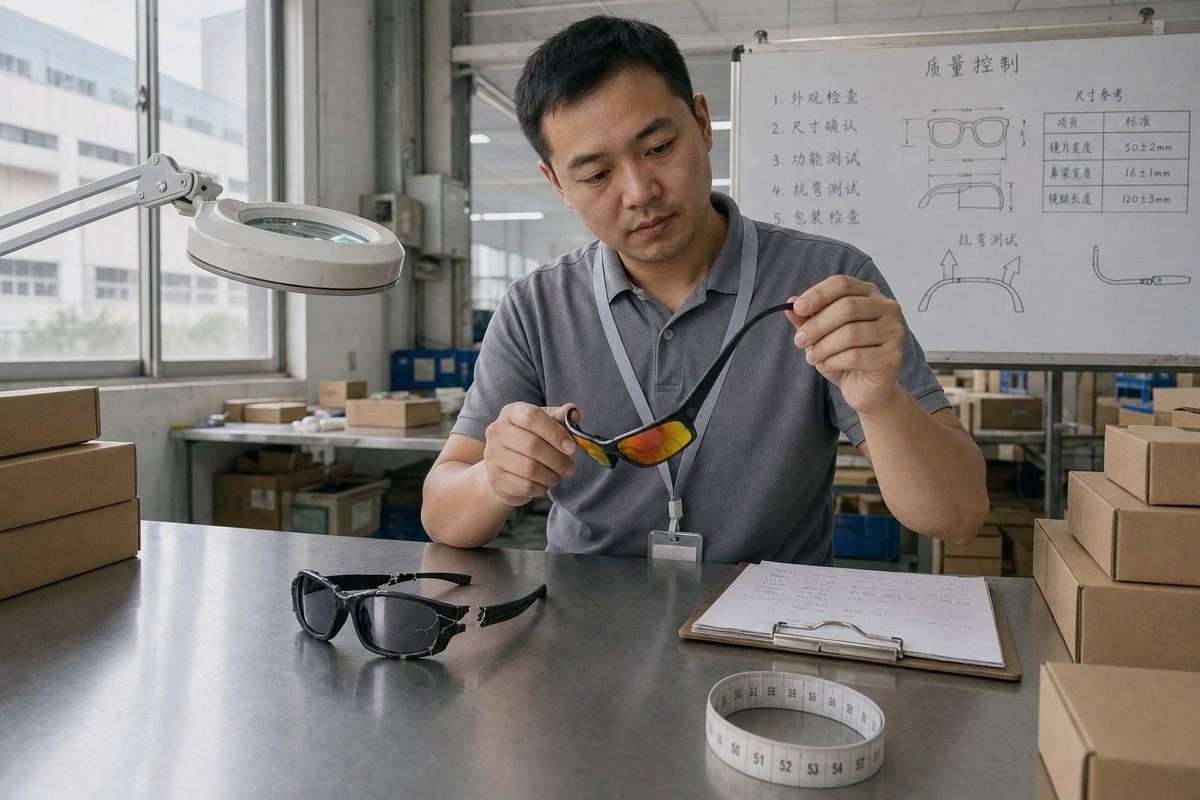
The safety risks of kids wearing sunglasses during exercise or car rides worry me daily on our production line polycarbonate lenses 1. A cracked frame near a child’s eye is a nightmare no brand can afford. That is exactly why we build every pair around flexibility first.
The main safety risks of kids wearing sunglasses during exercise or car rides are frame breakage on impact, lens shattering near the eye, poor fit causing slippage and distraction, and small detached parts. Flexible, shatter-resistant materials like TPEE and TR90 with polycarbonate lenses greatly reduce these dangers.
Let me walk you through where the real risks hide. Then I will show you how material choice, frame design, and proper certification solve most of them.
What Makes Traditional Rigid-Frame Sunglasses Dangerous for Active Kids?
During a drop-test session in our Taizhou workshop last year, I watched a competitor's rigid acetate frame snap into three sharp pieces on the first fall. Our team keeps that sample on the QC bench as a reminder.
Traditional rigid-frame sunglasses are dangerous for active kids because they snap under impact, creating sharp edges near the eyes and face. They also lack flexibility at the hinges and temples, so falls, ball strikes, or car-seat pressure can drive broken plastic or lens fragments toward a child's eye.
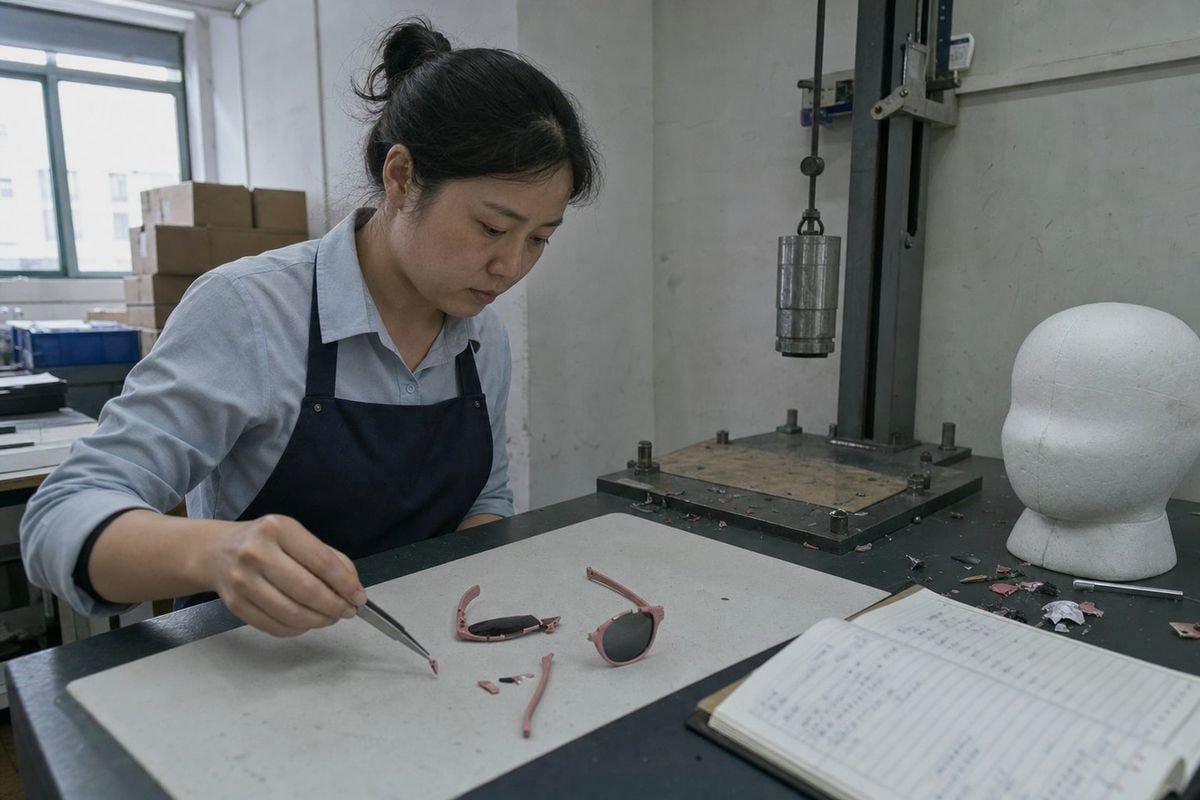
The core problem is simple physics. Kids move fast, fall often, and collide with things. A rigid frame absorbs none of that energy. Instead, it transfers the force straight into the frame structure, and the frame fails at its weakest point. That failure point is usually the bridge, the hinge, or the lens groove — all of which sit within centimeters of a child's eye.
Where Rigid Frames Fail First
In our fifteen years of making children's eyewear, we have seen the same failure patterns again and again. Rigid frames crack at the nose bridge when a child falls face-first. Hinges snap when a child pulls the glasses off with one hand, which nearly every young child does. Lens grooves split when a ball or elbow hits the shield, and the lens can pop inward.
The Hidden Risks Beyond Breakage
Breakage is only part of the story. Rigid frames also fit poorly on growing faces. Here is how the risks stack up:
| Risk Factor | Rigid Standard Frame | Flexible Kids' Frame |
|---|---|---|
| Impact behavior | Snaps, sharp edges | Bends and rebounds |
| Fall from face | Cracks on hard ground | Usually survives intact |
| Hinge stress | Screws loosen, metal exposed | Flexible temples absorb twist |
| Fit on small faces | Pressure points, slipping | Contours softly, stays put |
| Small detached parts | Screws, hinge pieces | Minimal loose hardware |
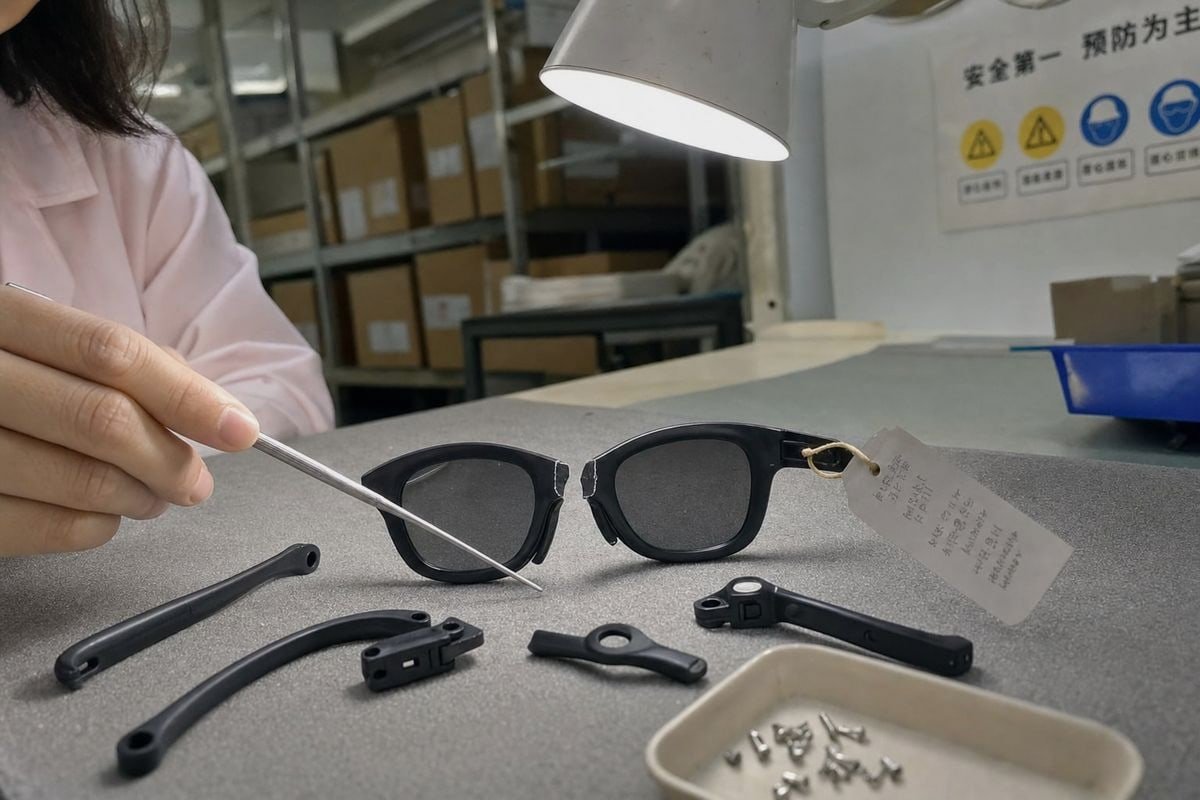
Slipping frames create a second-order danger. A child running or cycling with sunglasses sliding down their nose will grab at them mid-motion. That split second of distraction causes trips, falls, and collisions. Loose oversized frames can also fall off inside a car seat, and a young child may chew on detached parts. For toddlers, small screws and hinge fragments are a genuine choking hazard 2. Rigid frames simply were not designed for how children actually behave.
How Can I Choose Frame Materials That Reduce Impact and Injury Risk in Car Accidents?
A buyer from Australia once asked me a question I had never heard framed so directly: "If the car brakes hard, what happens to the glasses on my customer's child?" That question changed how we present material specs.
To reduce injury risk in car accidents, choose frames made from flexible, memory-retaining materials such as TPEE or TR90, paired with shatterproof polycarbonate lenses. These materials deform and absorb energy during sudden deceleration or airbag contact, instead of fracturing into rigid fragments against a child's face.
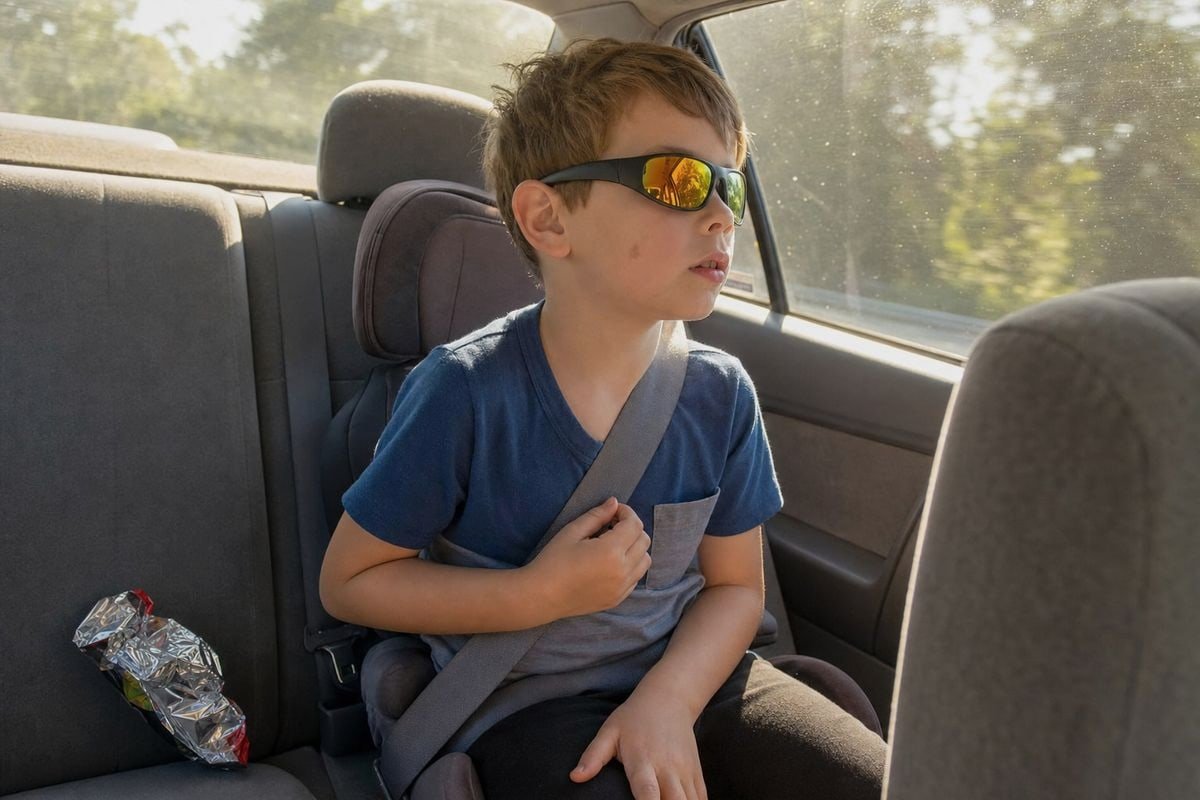
In a car, sunglasses are mostly a comfort and UV item, not a protective device. Children's eyes 3 are more vulnerable to UV than adult eyes, and side windows let plenty of sunlight through, so sunglasses on a long drive make real sense. But the frame sitting on a child's face becomes part of the crash environment. During a sudden stop, a child's head can whip forward against the seat, a sibling, or a deployed side airbag. Whatever material is between the face and that surface matters.
What "Impact-Safe" Actually Means for a Frame
When we develop a new style, we evaluate three material behaviors:
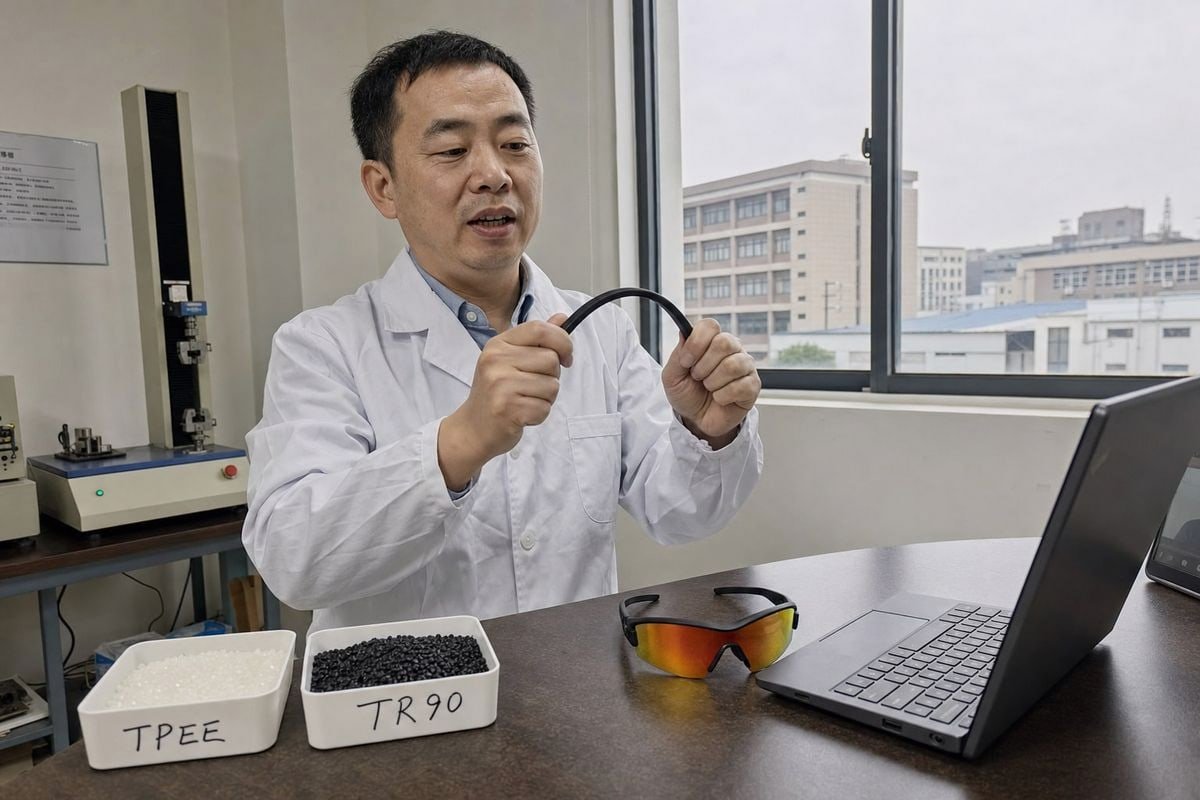
- Elastic deformation. The frame should bend far past its normal shape and return without cracking. Our TPEE temples can twist nearly flat and recover.
- No sharp failure mode. If a frame ever does fail under extreme force, it should tear or deform rather than snap into pointed shards.
- Low frame mass. A lighter frame carries less energy in a collision and presses less against the face under g-forces.
Practical Checks for Buyers
You do not need a lab to screen samples. Ask your supplier to demonstrate a full temple twist and a bridge flex. Check the lens material — polycarbonate is the industry standard for shatter resistance in children's eyewear. Ask whether hinges are metal screws or integrated flexible joints; fewer rigid metal parts near the temple means fewer hard contact points. Also check heat stability. Sunglasses live in hot cars, and cheap plastics warp and micro-crack under thermal stress, quietly degrading both fit and UV coating 4 over time. Quality TR90 holds its shape far better in a hot glovebox.
Why Do TPEE and TR90 Frames Offer Better Safety Than Standard Plastic for Sports and Travel?
There is a trade-off we weigh on every project: standard injection plastic costs less per unit, but TPEE and TR90 5 change what happens when a seven-year-old crashes a bike. For children's brands, that trade-off is not really a choice.
TPEE and TR90 frames offer better safety because both materials are highly flexible, lightweight, and memory-retaining. They bend under impact and spring back instead of shattering, eliminate sharp fracture edges, resist heat warping in cars, and stay comfortable and secure on small faces during vigorous movement.
Here is the quick comparison most of our B2B clients ask for first:
| Property | Standard PC/Acetate Frame | TR90 Frame | TPEE Frame or Temples |
|---|---|---|---|
| Flexibility | Low — cracks under twist | High — bends and recovers | Very high — near rubber-like |
| Weight | Moderate to heavy | Very light | Very light |
| Failure mode | Sharp fragments | Deforms, rarely breaks | Deforms, does not shard |
| Heat resistance (hot car) | Warps, coating cracks | Excellent shape memory | Excellent |
| Skin comfort | Can pinch and pressure | Smooth, low pressure | Soft, gentle grip |
| Eco profile | Varies | Recyclable options | Environmentally friendly |
Why We Combine the Two Materials
Many of our best-selling children's styles use a TR90 front with TPEE temples. The logic is deliberate. TR90 gives the lens area a stable, precise shape, so UV400 6 or polarized lenses seat correctly and optical quality stays consistent. TPEE temples give the part of the frame that a child grabs, twists, sleeps on, and sits on the ability to survive all of it. When a child yanks the glasses off sideways — and they always do — the temple flexes instead of stressing the hinge.
Sports Versus Travel: Different Demands, Same Answer
For sports use, the wraparound sport shield styles we produce hug the face, so they stay put during running and cycling and block wind and debris from the sides. Flexible materials let that snug fit exist without pressure headaches. For travel, the benefits are quieter but real: no warping in a hot back seat, no snapped temples in a crowded backpack, and no sharp edges if the frame ends up under a car seat. One European client told us their return rate on broken frames dropped noticeably after switching their line from standard plastic to our TR90/TPEE construction. That is the kind of result that keeps a children's brand's reputation intact.
To be clear about limits: for high-impact ball sports like baseball or squash, properly fitted protective sports eyewear 7 — which can prevent the vast majority of significant eye injuries — is the right tool. Flexible sunglasses are the safe choice for running, cycling, playgrounds, beach days, and travel, not a replacement for certified sports goggles in collision sports.
What Safety Certifications Should I Look for When Sourcing Kids' Sunglasses for High-Movement Use?
Early in my career at our factory, a promising order nearly fell apart because a distributor's customs broker asked for test documentation we had assumed was optional. Fifteen years on, certification paperwork is the first conversation we have with new buyers, not the last.
For high-movement use, look for UV400 lens verification, EN ISO 12312-1 compliance for Europe, ANSI Z80.3 for the US, AS/NZS 1067 for Australia, plus children's product safety testing such as EN 71 or CPSIA for small parts, mechanical strength, and material safety.
Certifications matter more for children's eyewear than for almost any other accessory, because a failure sits directly against a child's eyes and skin. Here is how the main standards map to markets:
| Standard | Region | What It Covers |
|---|---|---|
| EN ISO 12312-1 | Europe (CE) | UV filtering, optical quality, mechanical robustness |
| ANSI Z80.3 | United States | Non-prescription sunglass optics, UV, impact basics |
| AS/NZS 1067 | Australia/NZ | Lens categories, strict UV performance |
| EN 71 / CPSIA 8 | EU / US | Children's product safety: small parts, chemicals, sharp edges |
| FDA drop-ball test | United States | Lens impact resistance for eyewear imported to the US |
Beyond the Certificate: What to Actually Verify
A certificate on paper is not the same as consistent production quality. When buyers audit us, we encourage them to check three things. First, batch-level testing — UV400 performance should be verified per production run, not just once for a golden sample. Second, small-parts and pull-force testing for younger age grades, since detached parts are an aspiration hazard for toddlers. Third, documented QC process — our 5S-managed workshop logs inspection at incoming material, in-line assembly, and final packing, and we share those records with clients.
A Sourcing Checklist for High-Movement Kids' Eyewear
Before you sign a purchase order, confirm the following:
- Test reports issued by a recognized third-party lab, dated within a reasonable window.
- UV400 claims backed by spectrophotometer data, not just a sticker.
- Lens material confirmed as polycarbonate or equivalent shatter-resistant material.
- Frame material declaration for TR90/TPEE, including compliance with chemical safety limits.
- Age-grade suitability — a frame safe for an eight-year-old may still fail small-parts rules for a two-year-old.
- Packaging that protects the product in transit, so certified glasses do not arrive warped or scratched.
Getting this right protects children first, and it protects your brand second. Both outcomes are worth far more than the small cost difference of properly tested eyewear.
More Articles You Might Like
August 1, 2026
Should Factory Handle Kids Sunglasses Packaging & Labeling, or Use a Designated Supplier?
August 1, 2026
Own Warehouse vs Supplier Direct Fulfillment: Which Cuts Return Costs for Kids Sunglasses Brands?

August 1, 2026
Direct-to-Port Warehouse or Overseas Staging: Which Saves More on Kids Sunglasses Shipping?
Looking for a Reliable Kids Eyewear Partner?
Explore 800+ ready styles and full OEM/ODM support tailored to your brand.
Get in Touch English
  Español de México
  Deutsch
  Français
  日本語
日本語  العربية
  Português do Brasil