What Lens Shape Tracing Data to Request from Suppliers for Kids’ Sunglasses Edging?
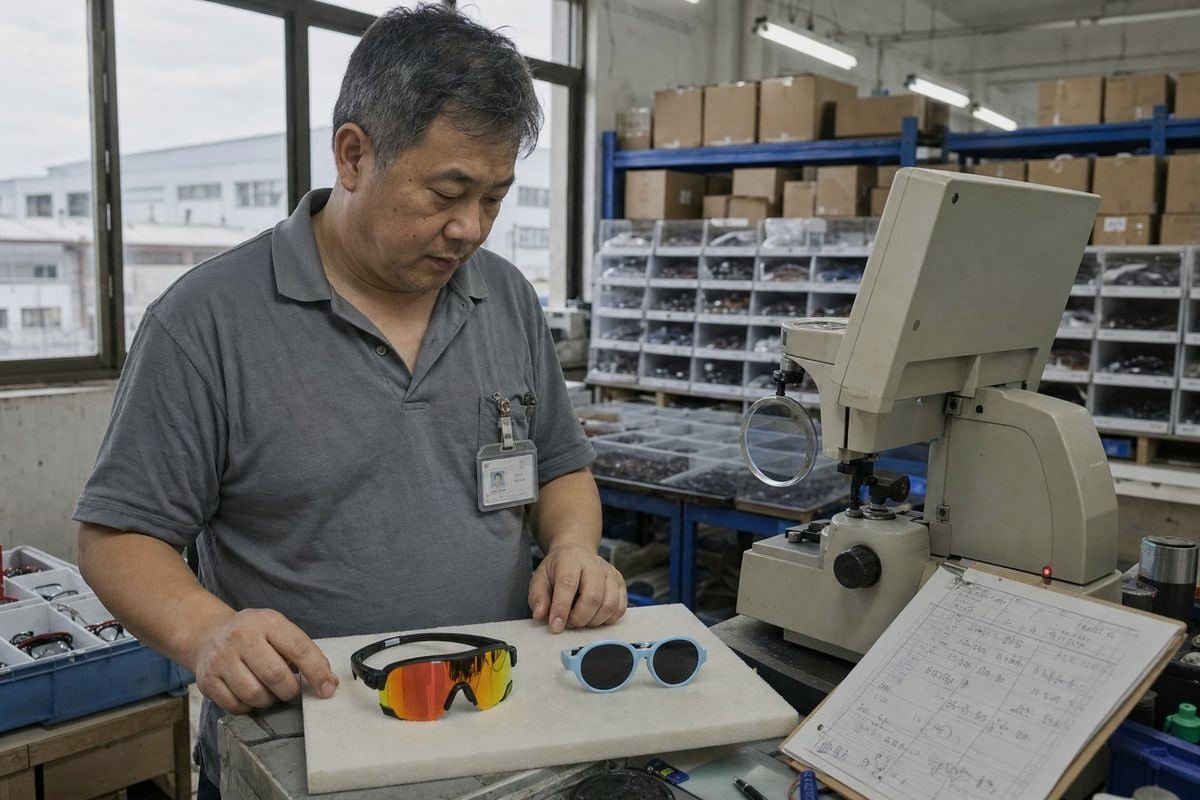
Wrong lens shape tracing data ruins kids’ sunglasses batches fast ISO 1. I have watched buyers lose whole seasons over it, so our factory now treats tracing files as a contract, not an afterthought.
Request a digital trace in the OMA/VCA standard (DCS file format), boxed lens system measurements (A, B, DBL, ED), lens circumference data, frame wrap angle, lens base curve, and bevel placement data. For curved or sport kids’ frames, ask for full 3D tracing, not a flat 2D outline.
That is the short answer. But each item matters for a different reason, and kids’ frames add their own twists. Let me walk you through what to ask for, and why.
How do I know which lens tracing file format my edging lab actually needs?
A buyer from Australia once sent us a hand-drawn lens outline scanned as a PDF. Our engineers had to re-trace the sample frame from scratch. That week taught me to always confirm formats first.
Ask your edging lab directly which system it runs, then request tracing files in the OMA/VCA standard, usually delivered as a DCS file format. This standard is readable by most modern patternless edgers and lab software, so the traced lens shape transfers without manual redrawing or guesswork.
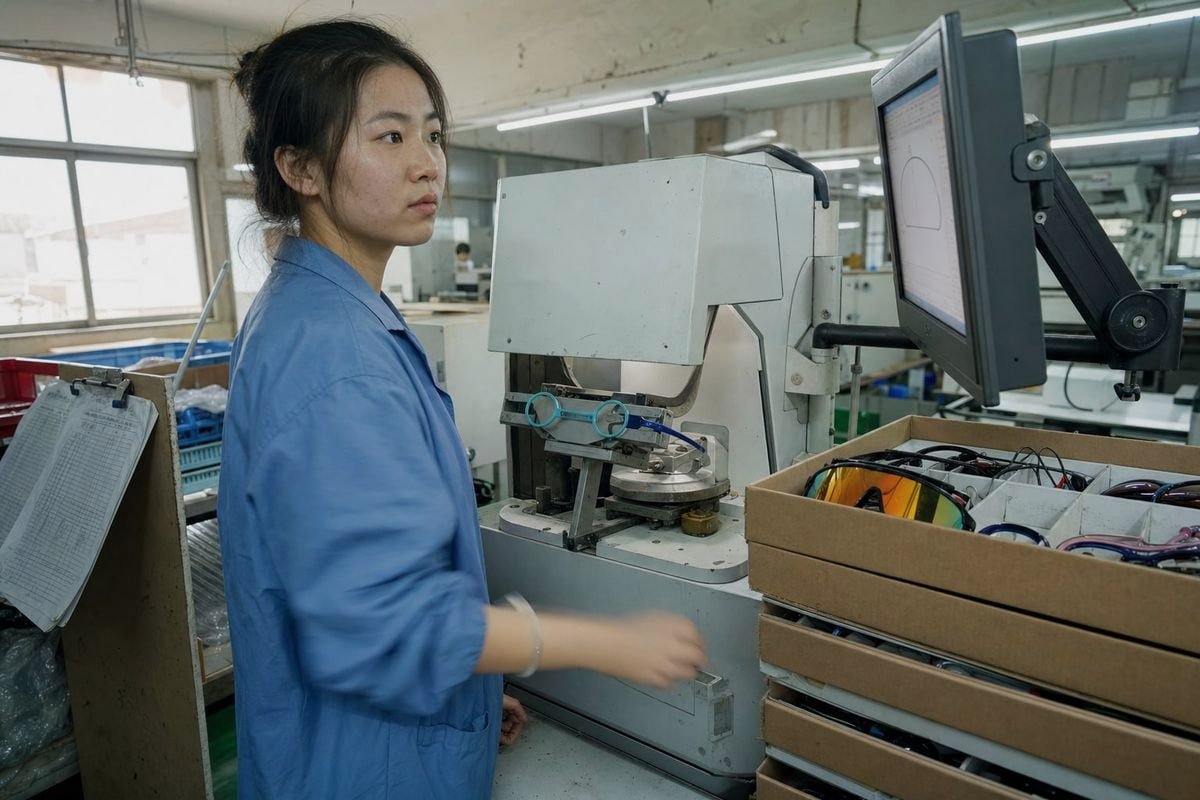
The eyewear industry solved the compatibility problem years ago, but many buyers still do not know the solution exists. The Vision Council maintains the OMA/VCA standard 2, which defines how tracing data moves between tracers, ordering software, and edging machines. When our factory in Taizhou exports frames to optical companies in Europe and Japan, we always ask one question early: does your lab accept DCS files, or does it need something else?
The three common ways shape data travels
In my experience, tracing data reaches an edging lab in one of three forms. Each has a different risk level.
| Data form | What it is | Risk for kids' frames |
|---|---|---|
| OMA/VCA trace (DCS file) | Digitized radii points from a calibrated tracer | Low — machine-readable, precise |
| CAD outline 3 (DXF/DWG) | Design-stage drawing of the lens aperture | Medium — may not match molded reality |
| Scanned image or PDF | A picture of the shape | High — no scale, no curvature, no circumference |
Here is a nuance most buyers miss. A CAD file from the mold designer shows the intended shape. A trace from a physical frame shows the actual shape after molding and shrinkage. For TR90 4 and TPEE kids' frames, those two shapes are rarely identical. So the safest workflow is simple: ask the supplier to trace an approved production sample on a calibrated tracer, export the DCS file, and send it alongside the physical sample. Then your lab can verify one against the other before cutting a single lens.
Also confirm whether your lab needs single-eye or binocular data. Children's faces develop asymmetrically, and some labs prefer asymmetric binocular tracing rather than mirrored single-eye data. It costs nothing extra to ask.
What tracing measurements should I double-check before approving a kids' frame sample?
During a pre-shipment check last year, our QC team caught a 0.4 mm circumference deviation on a round powder-blue kids' style. It looked tiny on paper. On a child’s small frame, it was not.
Verify the boxed lens system values — A and B measurements, distance between lenses (DBL), and effective diameter (ED) — plus lens circumference data against the physical sample. On small kids' frames, even half a millimeter of deviation causes loose lenses or stressed eyewires.
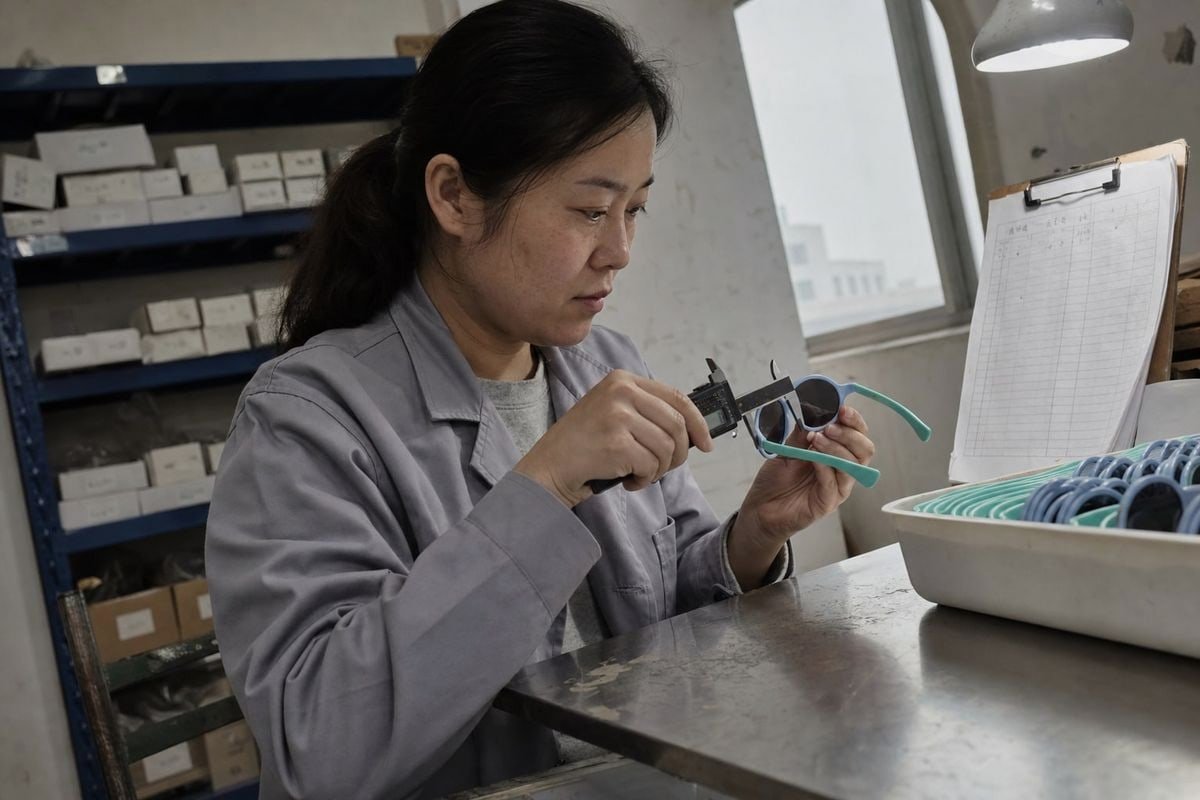
Small frames punish small errors. That is the core reason kids' eyewear needs tighter checks than adult eyewear. A 0.5 mm error on a 58 mm adult lens is under 1% of the width. The same error on a 42 mm kids' lens is proportionally larger, and it lands on a frame that a child will bend, drop, and sit on.
The measurements that matter most
The boxed lens system gives you a shared language with your supplier. Here is what I recommend checking, and what each number controls.
| Measurement | What it controls | Why it matters for kids |
|---|---|---|
| A measurement (width) | Horizontal lens size | Governs overall fit on small faces |
| B measurement (height) | Vertical lens size | Affects cheek clearance and coverage |
| DBL (distance between lenses) | Bridge width | Kids' bridges are low and narrow; errors cause slipping |
| ED (effective diameter) | Minimum lens blank size | Prevents blank cut-outs on deep shapes |
| Lens circumference | Total edge length | The single best predictor of lens retention |
Of these, lens circumference data deserves special attention. Two lenses can share identical A and B measurements yet have different circumferences because their corner radii differ. The circumference is what actually holds the lens in the groove. When we develop a new style among our 800 existing kids' designs, we record circumference from the trace and re-check it on golden samples, because it drifts if mold temperature or material batch changes.
My practical advice: ask your supplier to state all five values on the sample approval sheet. Then have your lab trace the same sample independently. If the two data sets match within tolerance, approve. If not, resolve the gap before mass production, never after.
Why do TR90 and TPEE frames need different tracing tolerances than rigid plastic frames?
There is a trade-off we weigh on every flexible kids' style: the softer the material, the safer it is on a child's face, but the harder it is to trace and edge with confidence.
TR90 and TPEE frames flex under the tracer stylus and during wear, so traces read slightly small and lenses can pop out when the frame bends. Labs compensate by over-sizing the lens circumference slightly and adjusting bevel placement data, which rigid acetate frames do not require.
Flexible materials are the heart of what we do. After fifteen years of building TR90 frames with TPEE temples, I can tell you the tracing behavior of these materials is genuinely different, and your edging lab needs to know it up front.
What flexibility does to a trace
A mechanical tracer runs a stylus around the inside of the eyewire under light pressure. On a rigid acetate 6 frame, the eyewire barely moves. On a soft TPEE kids' frame, the stylus pressure deflects the eyewire outward by a small amount. The result is a trace that reads slightly larger or smaller than the frame's resting shape, depending on the tracer settings. Then, in real life, the frame flexes every time a child pulls it on and off, which momentarily opens the eyewire.
How the numbers should change
Here is how I frame the difference for buyers comparing materials.
| Factor | Rigid plastic (acetate) | TR90 | TPEE |
|---|---|---|---|
| Eyewire deflection during tracing | Minimal | Slight | Noticeable |
| Recommended circumference strategy | Cut to trace | Slight over-size | Over-size for retention |
| Bevel placement data | Standard bevel | Standard to mini-bevel | Deeper groove seating preferred |
| Heat-and-snap lens insertion | Common | Sometimes | Usually press-fit |
Frame wrap angle adds another layer. Sporty wraparound kids’ styles carry a higher lens base curve, and the bevel must follow that curve around the eyewire. If the lab edges a flat bevel onto a curved frame, the lens rocks in the groove or gaps at the temples. So for TR90 and TPEE sport frames, we always supply base curve values and, where the lab supports it, full 3D trace data with Z-axis points. Ask your supplier for the frame's designed lens base curve and confirm your lab's edger accepts wrap parameters. Two questions, five minutes, and you avoid the most common flexible-frame remake.
How can I avoid edging errors when working with an overseas eyewear factory?
A lesson I learned the hard way: assumptions cross oceans faster than data does. Early in our export business, a European client and our team each assumed the other would handle tracing. Nobody did.
Prevent edging errors by agreeing on a written data package before production: DCS trace files from approved samples, boxed system measurements, base curve and wrap angle, bevel specs, and lens material. Then validate with a small pilot edging run before cutting the full order.
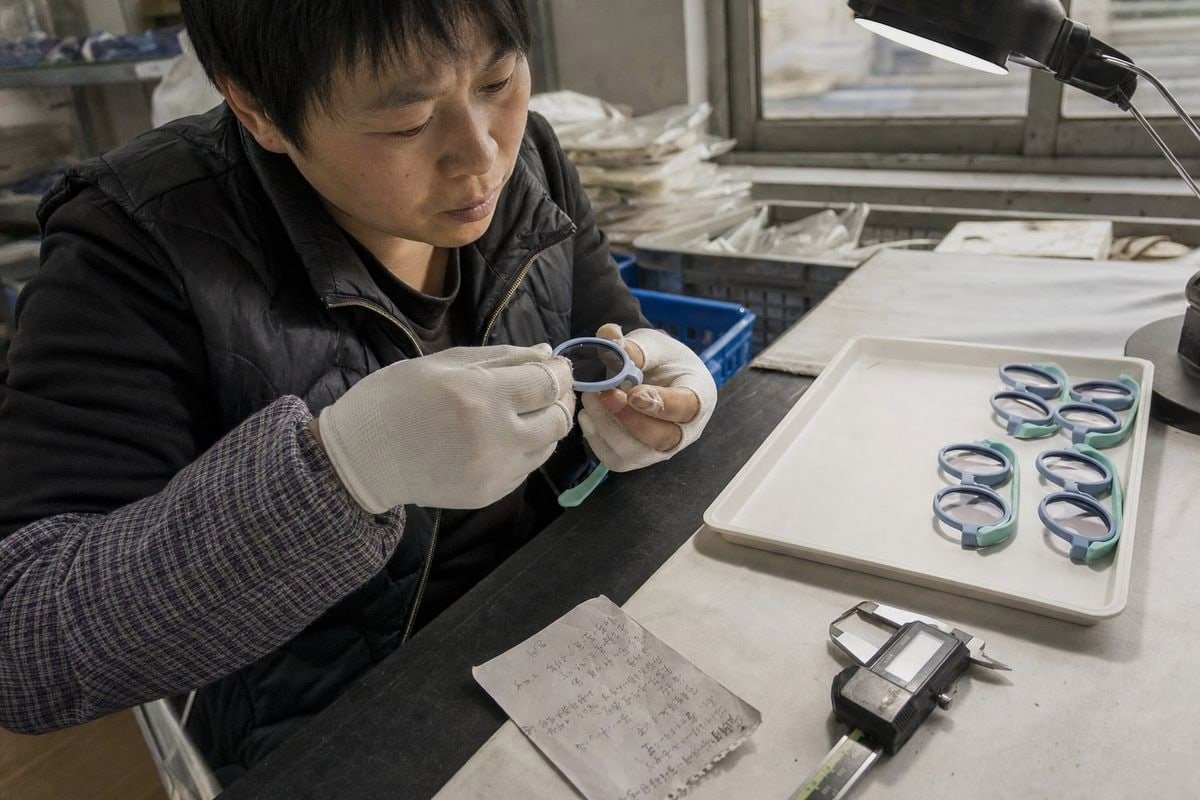
Distance is not the real problem in overseas sourcing. Undefined responsibility is. When a Taizhou factory, a lens lab in another country, and a brand's product manager all touch the same project, the tracing data must be owned, versioned, and verified by name. Here is the process we now follow with our OEM/ODM clients, and I recommend it to anyone buying kids’ sunglasses for edging elsewhere.
A five-step workflow that catches errors early
- Define the data package in the PO. List every required file: OMA/VCA trace, box measurements, lens base curve, frame wrap angle, bevel placement data, and lens material spec (polycarbonate 7 is standard for pediatric impact safety).
- Trace approved golden samples, not prototypes. Prototypes differ from production molds. The trace must come from the frame version your customers will actually receive.
- Ship physical samples with the digital files. Your lab should verify the DCS file against the real frame before mass edging. This one step catches most shrinkage and calibration mismatches.
- Run a pilot edging batch. Edge five to ten lenses, mount them, and stress-test the fit. Flex the temples. Check for lens rock, gaps, and pop-out on the flexible frames.
- Lock the trace file with a version number. If the mold is ever repaired or the material batch changes, the supplier must re-trace and issue a new version. Silent changes are how good projects go wrong.
One more habit worth building: keep a shared tolerance sheet. Agree in writing on acceptable deviation for circumference and box dimensions. Numbers end arguments. When both sides measure against the same sheet, remakes drop, timelines hold, and nobody spends a launch week arguing about whose lens shape was correct.
Conclusion
Loose lenses and remakes start with weak data. Request OMA/VCA traces, boxed measurements, base curve, wrap angle, and bevel specs — then verify against real samples. That discipline is what our factory builds every kids' style around.
Footnotes
1. ISO develops standards relevant to optical measurement and manufacturing tolerances. ↩︎
2. Background on the industry-standard tracing format referenced throughout the article. ↩︎
3. Background on computer-aided design files used in the tracing data comparison table. ↩︎
4. Explains the flexible nylon-based material discussed for kids’ frames. ↩︎
5. General background on eyeglass frame anatomy terms used repeatedly in the article. ↩︎
6. Explains the rigid plastic material compared against flexible frame types. ↩︎
7. Background on the impact-resistant lens material recommended for pediatric safety.
More Articles You Might Like
August 1, 2026
Should Factory Handle Kids Sunglasses Packaging & Labeling, or Use a Designated Supplier?

August 1, 2026
Own Warehouse vs Supplier Direct Fulfillment: Which Cuts Return Costs for Kids Sunglasses Brands?

August 1, 2026
Direct-to-Port Warehouse or Overseas Staging: Which Saves More on Kids Sunglasses Shipping?
Looking for a Reliable Kids Eyewear Partner?
Explore 800+ ready styles and full OEM/ODM support tailored to your brand.
Get in Touch English
  Español de México
  Deutsch
  Français
  日本語
日本語  العربية
  Português do Brasil