What Features Should Kids’ Optical Frames Have for Homework or Tablet Use?

Kids’ optical frames for homework or tablet use fail for one simple reason: kids stop wearing them. On our production line in Taizhou, we design against that exact problem every day.
The best kids’ optical frames for homework or tablet use combine lightweight flexible materials like TR90, a secure molded bridge that resists slipping during downward gaze, impact-resistant polycarbonate lenses, anti-reflective coating for screen glare, and optional blue light filtering — with fit and comfort prioritized above all else.
That is the short answer. But each of those features hides real trade-offs. Let me walk you through them the way I would walk a brand buyer through our sample room.
What lens features help reduce eye strain during homework or screen time?
A buyer from Australia once asked me why her customers returned "blue light glasses" that kids refused to wear. The lenses were heavily tinted amber. The kids hated how homework looked through them.
Anti-reflective coating is the most universally useful lens feature for homework and screen time because it cuts glare from tablets and overhead lighting. Blue light filtering lenses help some children, but for school use, choose clear or lightly tinted lenses with roughly 20–50% filtration, not maximum blocking.

Parents often confuse two very different lens technologies. Glare reduction and blue light blocking are not the same thing, and mixing them up leads to bad purchases.
Anti-reflective coating comes first
An anti-reflective coating removes reflections bouncing off the lens surface. Those reflections come from tablet screens, laptop displays, and classroom lights. When we spec lenses for optical brands, we treat a multi-layer AR coating 1 as a baseline for any frame marketed for study or screen use. It reduces the visual noise that contributes to digital eye strain 2, and it works for every child, regardless of screen habits.
Blue light filtering is an option, not a requirement
Blue light filtering lenses are a preference-dependent add-on. They may improve perceived comfort during long tablet sessions, and heavier filtration can make sense for evening use before bed. But more filtration is not automatically better. Strongly tinted lenses distort color, which matters when a child does art homework or reads color-coded learning apps. For daytime schoolwork, research-backed guidance points to clear or lightly tinted lenses in the 20–50% filtration range.
How the lens features compare
| Lens feature | Main benefit | Best for | Watch out for |
|---|---|---|---|
| Anti-reflective coating | Cuts screen and lighting glare | Every child, all-day wear | Coating quality varies by supplier |
| Blue light filtering (20–50%) | Perceived screen comfort | Heavy tablet or laptop users | Marketing that oversells health claims |
| High-percentage blue blocking | Evening / pre-bedtime use | Late-day screen time | Color distortion during homework |
| Anti-scratch coating | Lens longevity | All kids | Should be paired with AR coating |
Symptoms often labeled computer vision syndrome — tired eyes, headaches, blurred focus after screen time — respond better to correct prescription, good fit, and glare control than to any tint alone.
Which frame materials keep my kids' glasses comfortable during long study sessions?
The trade-off I weigh most often in material selection is flexibility versus structure. A frame soft enough to survive a bend must still hold a prescription lens perfectly in place. That balance is exactly why we specialize in TR90 and TPEE.
TR90 is the leading material for kids' study frames because it is lightweight, flexible, and durable. Silicone or TPEE temple tips add soft, pressure-free comfort at the ears. Acetate frames suit older kids who want style, while memory metal offers a premium flexible option.
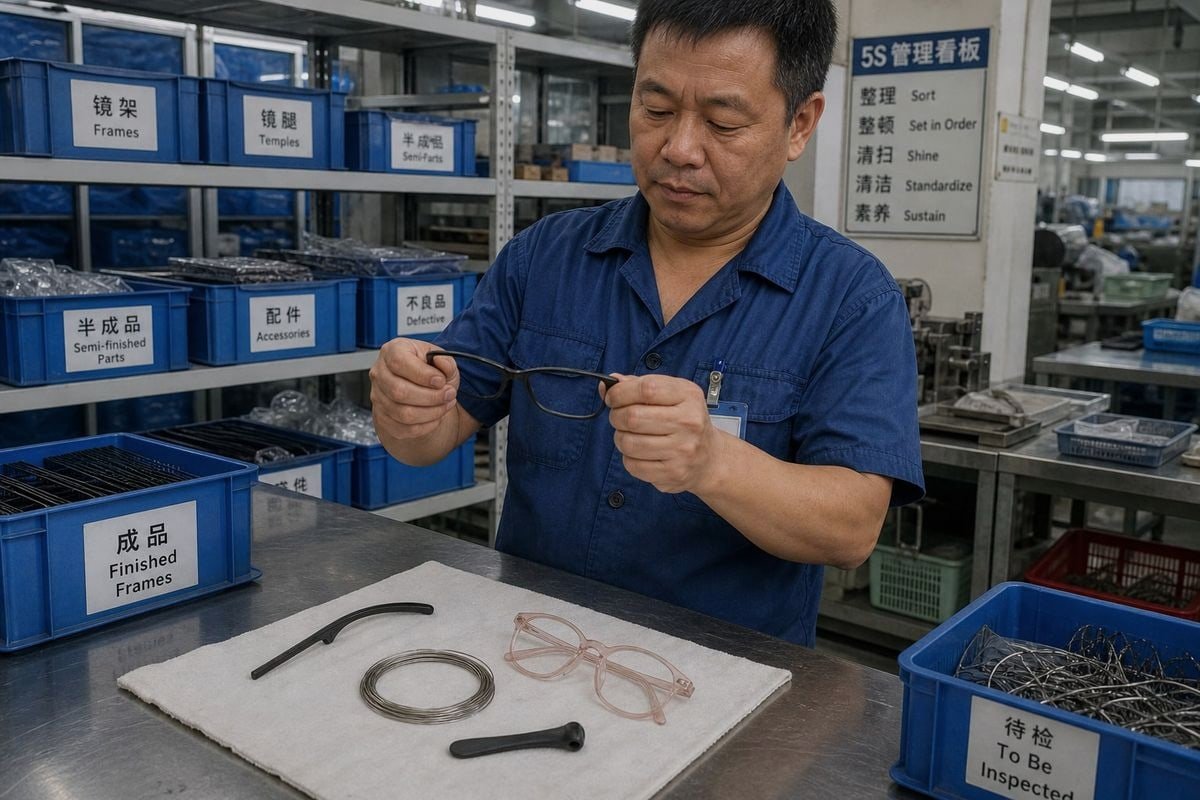
Weight is the silent killer of long study sessions. A frame that feels fine for five minutes in a shop can create pressure points on the nose and behind the ears after ninety minutes of reading. Kids will not complain in adult language. They will just take the glasses off.
Matching material to age and use
After fifteen years making children's eyewear, our engineers match materials to age first, style second:
| Material | Weight | Flexibility | Best age group | Notes |
|---|---|---|---|---|
| TR90 | Very light | High — returns to shape | 4–14 years | Our go-to for study frames |
| TPEE (temples/full) | Very light | Very high | Toddlers to 8 years | Soft, safe, environmentally friendly |
| Silicone / rubberized | Light | Extremely high | Toddlers, preschoolers | Nearly unbreakable in normal use |
| Acetate | Moderate | Low–medium | 8+ years | Rich colors, style appeal for tweens |
| Memory metal / titanium | Very light | High | 10+ years | Premium price, excellent durability |
Why we combine materials
Many of our most requested styles use a TR90 front with TPEE or silicone temple arms. One of our two-tone designs pairs a glossy black TR90 front with navy temples that transition into a soft sky-blue silicone ear tip. The rigid front holds the lenses precisely. The soft, curved ear hooks grip gently without digging in. Small embossed dot patterns on the tips add friction so the frame stays put when a child looks down at a tablet. That hybrid construction is not a styling choice. It is an ergonomic one, and it is what keeps glasses on a child's face through an entire homework session.
Flat, slim temple profiles matter too. Many kids now wear over-ear headphones for online classes, and a thin temple avoids painful pressure under the ear cup.
How do I choose optical frames that stay secure while my child reads or uses a tablet?
Something we learned early in our export business: most returned kids' frames were not broken. They simply slipped. Homework posture — head tilted down toward a book or tablet — is the worst-case scenario for frame retention.
Choose frames sized for a child's face, with a correct bridge width, shorter temples, and a molded saddle bridge rather than adjustable nose pads for younger kids. Curved or cabled temple ends and grippy silicone tips keep frames stable during downward-gaze reading and tablet use.
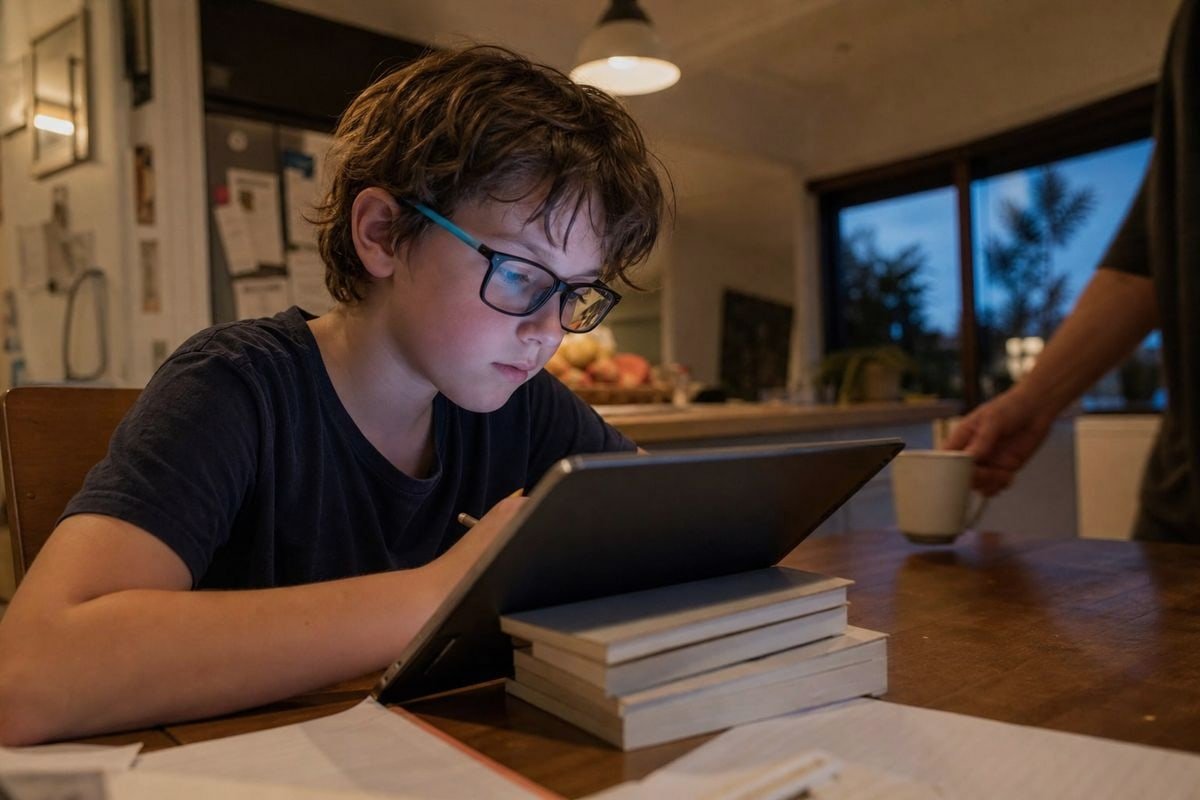
Adult frames scaled down do not fit children. A child's face needs a smaller frame width, a shorter temple length, and a much lower, wider bridge fit. Get any of those wrong and gravity wins every time the child looks down at a screen.
A fit checklist for downward-gaze tasks
- Bridge fit first. Younger children's nasal bridges 3 are not fully developed. A molded saddle bridge spreads weight across the nose and resists slipping. Adjustable nose pads sound appealing, but on small noses they often slide, pinch, or fall out of alignment — one reason we mold most of our children's bridges directly into the TR90 front.
- Temple length second. Temples should curve just behind the ear, not float past it. Shorter, correctly curved temples anchor the frame during near-vision tasks like reading and typing.
- Retention features third. For toddlers and very active kids, cabled temples that wrap the ear, or an elastic strap, hold everything in place. For school-age kids, textured silicone tips usually provide enough grip.
- Pantoscopic tilt last. A slight downward lens tilt aligns the optical center with the natural downward viewing angle of tablet and laptop use, so the child looks through the correct part of the lens.
The slipping test
When buyers visit our showroom, I suggest a simple check: have the child look down at a tablet for two minutes. If they push the glasses up even once, the fit is wrong. No coating or lens feature can rescue a frame that will not stay in position — the child ends up looking over the top of the lenses, which defeats the prescription entirely.
What safety features should I look for in kids' optical frames for daily indoor use?
Watching our QC team stress-test hinges taught me something about "indoor" glasses: there is no such thing as gentle use with children. Frames get sat on, dropped, twisted off one-handed, and stuffed into backpacks.
Look for shatter-resistant polycarbonate or Trivex lenses, flexible spring hinges or hingeless flexible construction, smooth edges with no small detachable parts, and hypoallergenic, environmentally friendly frame materials. Safety covers both impact resistance and skin contact during all-day indoor wear.
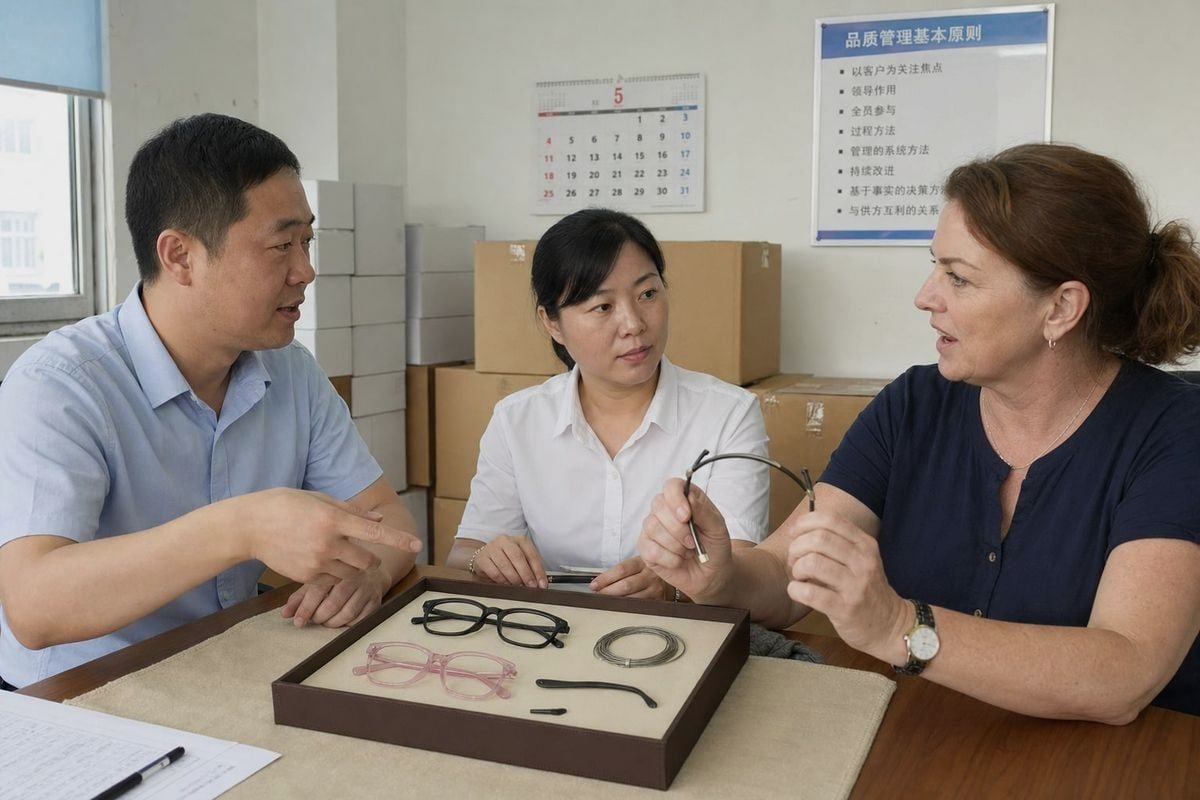
Safety in children's eyewear has two layers. The obvious layer is what happens in an accident. The overlooked layer is what touches a child's skin for eight hours a day.
Impact and breakage protection
Polycarbonate lenses are the standard recommendation for children because they resist shattering and block UV light. Trivex offers similar impact resistance with slightly better optics. Standard plastic lenses can crack into sharp fragments, so we advise our optical clients against them for any children's line. On the frame side, flexible spring hinges let temples bend outward without snapping — a near-daily event when kids pull glasses off with one hand. Our TPEE and TR90 constructions take this further: the material itself flexes, so there is less strain on the hinge in the first place.
Skin-contact and small-part safety
| Safety aspect | What to require | Why it matters |
|---|---|---|
| Lens material | Polycarbonate or Trivex | Shatter resistance during drops and bumps |
| Hinge design | Flexible spring hinges or flexible one-piece temples | Survives outward bending, protects the child |
| Frame material | Hypoallergenic, eco-friendly TR90/TPEE/silicone | Long skin contact without irritation |
| Edges and parts | Smooth finishes, no loose screws or detachable pads | Avoids scratches and choking hazards |
| Coatings | Anti-scratch plus AR coating | Keeps vision clear as lenses age |
For B2B buyers, I always recommend asking your supplier for material safety documentation and consistent batch-level QC. In our 5S-managed workshop, we check hinge tension, edge smoothness, and lens seating on every production run, because a children's brand only gets one chance with a safety complaint.
Conclusion
The best kids' optical frames for homework or tablet use put fit first, durability second, lens coatings third, and style last — because the right frame is the one your child actually wears.
Footnotes
1. Technical explanation of how multi-layer coatings reduce light reflection on optical surfaces. ↩︎
2. Authoritative medical source defining the causes and symptoms of digital eye strain in children. ↩︎
3. Anatomical explanation of nasal bridge development which affects frame fit and stability in children. ↩︎
More Articles You Might Like

August 5, 2026
Bio-Based vs Regular Cellulose Acetate: What's the Difference for Kids' Frames?

August 5, 2026
How Recyclable Are Kids' Optical Frame Materials, and What Eco-Friendly Alternatives Exist?
August 5, 2026
Do Kids Optical Frames Whiten or Age in Storage, and How to Control Warehouse Conditions?
Looking for a Reliable Kids Eyewear Partner?
Explore 800+ ready styles and full OEM/ODM support tailored to your brand.
Get in Touch English
  Español de México
  Deutsch
  Français
  日本語
日本語  العربية
  Português do Brasil