What Are Common Pitfalls Parents Face When Buying Kids’ Sunglasses?
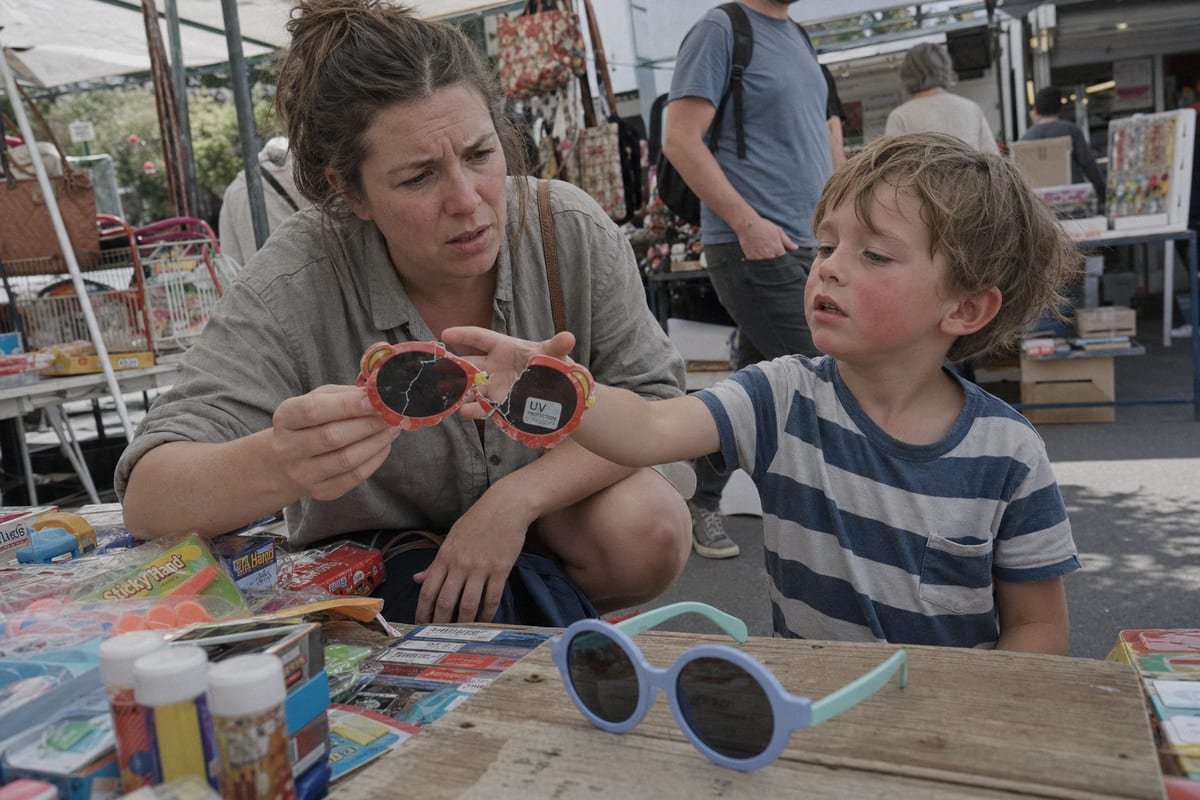
On our production line in Taizhou, I have seen the common pitfalls parents face when buying kids’ sunglasses up close. Many pairs look protective but block almost no UV. That false security worries me most, and it is exactly what this guide will help you avoid.
The most common pitfalls parents face when buying kids’ sunglasses are trusting dark lenses instead of verified UV400 protection, buying novelty or toy sunglasses without impact resistance, ignoring fit on small nose bridges, and choosing cheap unverified marketplace products over sunglasses from reliable, safety-focused suppliers.
Each of these mistakes is easy to make. Each one is also easy to avoid once you know what to check. Let me walk you through the details, one section at a time.
How Do I Know If Kids' Sunglasses Are Truly Safe for My Child?
A buyer from Australia once sent me a pair of cartoon-shaped sunglasses she found at a market stall. She asked if we could copy them. When we tested the lenses, they blocked almost no UVA and UVB rays 1. We told her no — and showed her why.
Kids' sunglasses are truly safe when they carry a verified UV400 or 100% UVA/UVB label, use shatterproof polycarbonate lenses, meet recognized standards like ANSI Z80.3, and come from a traceable supplier. Dark tint alone, or a vague "UV protection" sticker, proves nothing.
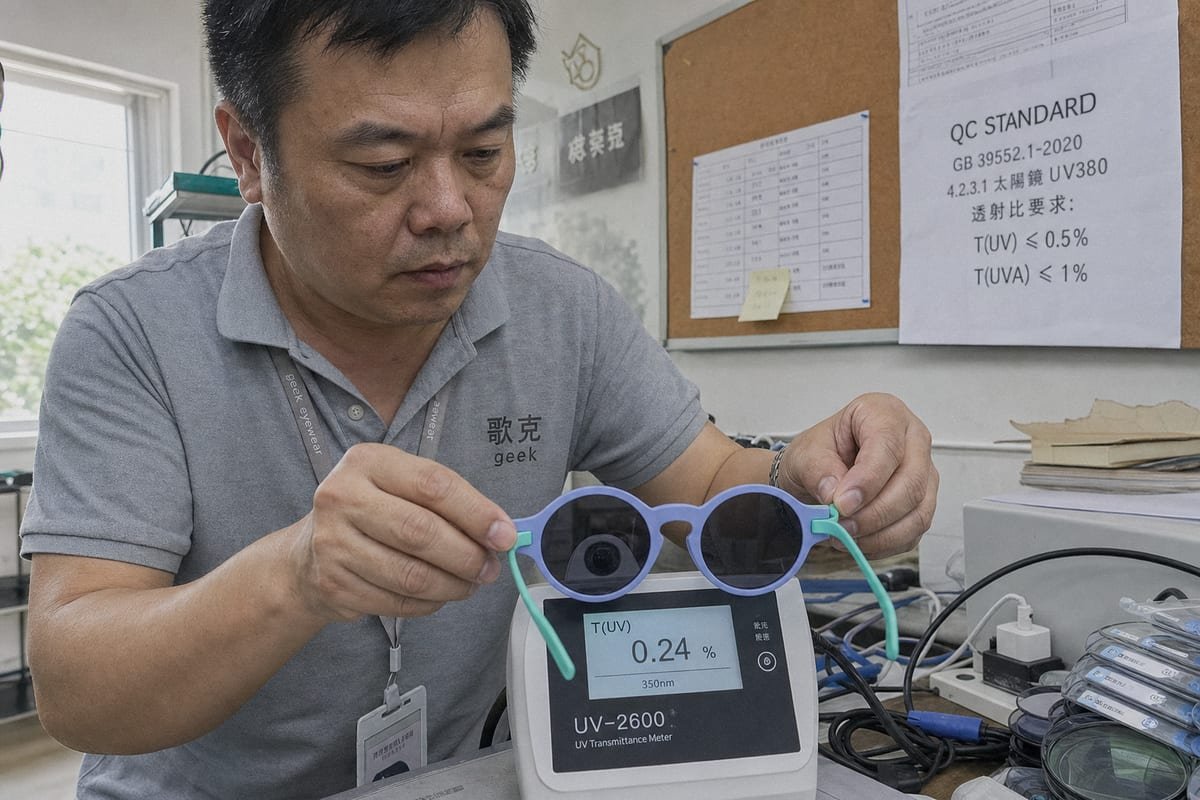
Safety in children's eyewear is not a feeling. It is a set of checkable facts. In our fifteen years making children's frames, I have learned that parents get misled because unsafe products often look identical to safe ones on a shelf. The difference sits in the lens material, the coating, and the testing behind the label.
Children's eyes need this protection more than adult eyes do. A child's lens transmits more UV to the retina than an adult's. Kids also spend more hours outdoors. That combination means retinal UV damage accumulates early — and it is cumulative, so delaying consistent sunglass use until later childhood is itself a pitfall.
What the label should actually say
A trustworthy label is specific. Look for these exact claims:
- UV400 or 100% UVA and UVB protection — not just "UV protection"
- Lens category (Category 3 for bright sun; Category 4 for snow or extreme glare)
- Reference to a standard such as ANSI Z80.3 or the equivalent EN/AS standard for your market
- Lens material stated clearly, ideally polycarbonate
Quick safety comparison
| Feature | Safe kids' sunglasses | Risky "toy" sunglasses |
|---|---|---|
| UV claim | UV400 / 100% UVA-UVB, testable | Vague sticker or no claim |
| Lens material | Polycarbonate, shatterproof | Brittle acrylic or unknown plastic |
| Standards | ANSI Z80.3 2 or EN/AS equivalent | None declared |
| Frame material | Flexible TPEE / TR90 | Rigid, breakable plastic |
| Small parts | Secured, tested | Detachable decorations |
One more overlooked detail: a back-surface anti-reflective coating 3. Without it, UV can bounce off the inner lens surface and into the eye from behind. Ophthalmologist recommended guidance increasingly mentions this, especially for wide, open frame styles. Toy sunglasses safety is a real category of concern for regulators, and for good reason — costume glasses are made to look fun, not to pass optical tests.
Why Do Some Kids' Sunglasses Break or Bend So Easily?
There is a trade-off we weigh in every new mold: make the frame stiff and it snaps; make it too soft and it loses shape. Getting that balance right is why we chose flexible TPEE and TR90 materials for our children's lines in the first place.
Kids' sunglasses break easily when they are made from rigid, brittle plastic that cannot absorb twisting, sitting, or drops. Flexible materials like TPEE and TR90 bend and return to shape, while cheap frames crack at hinges and can leave sharp edges near a child's face.
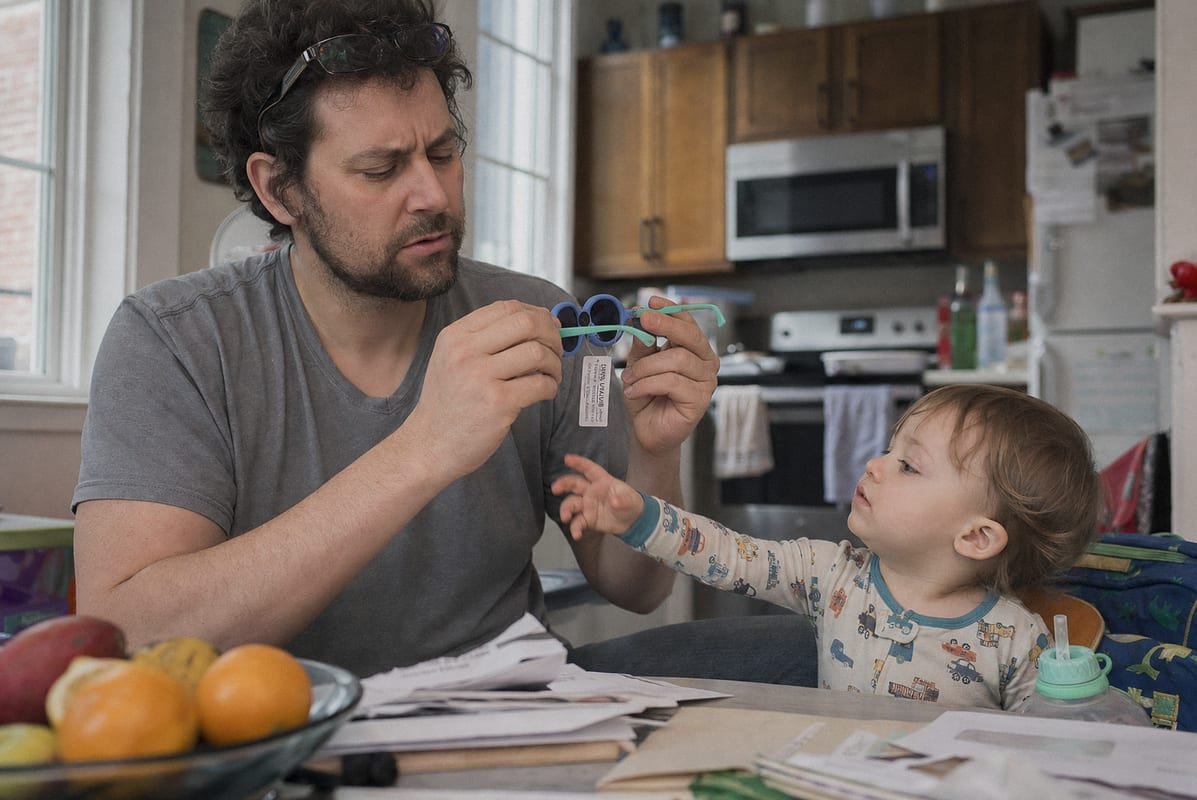
Children do not treat sunglasses gently. They sit on them. They pull them off with one hand. They stuff them into backpacks with water bottles. So durability is not a bonus feature. It is a core safety requirement, because a frame that snaps can produce sharp fragments right beside a child's eye.
In our workshop, we run flex tests on temples thousands of times before a style ships. What we consistently see is that failure follows material choice more than price. A moderately priced TR90 frame with TPEE temples will outlast an expensive rigid acetate copy in a child's hands, simply because it deforms instead of fracturing.
The materials that matter
- TPEE: soft, rubbery, highly flexible; ideal for toddlers who twist frames
- TR90: lightweight, memory-flexible nylon; springs back after bending
- Rigid injection plastic: cheap, but brittle; the most common failure we see in returned market samples
- Metal: durable but heavy, and hinge screws loosen fast with kids
Common breakage points and what prevents them
| Failure point | Why it fails | What to look for |
|---|---|---|
| Hinge | Rigid plastic cracks under twisting | Flexible temples, reinforced or spring hinges |
| Bridge | Snaps when sat on or bent | TR90 or TPEE frame front |
| Lens | Shatters on impact | Polycarbonate lenses 4 with impact resistance |
| Temple tips | Chew and pull damage | One-piece soft TPEE temples, no loose end caps |
| Decorations | Small parts detach | Molded-in details, not glued parts |
For toddlers, an adjustable strap adds real value. It keeps the frame on during play and reduces drops, which cuts breakage before it happens. A scratch-resistant coating on the lenses also matters more than parents expect — a scratched lens scatters light, annoys the child, and often ends up abandoned in a drawer.
What UV and Lens Quality Issues Should I Watch Out For?
Early in my export career, I learned a lesson that reshaped how we spec lenses: a distributor returned a competitor's shipment because the "polarized" lenses reduced glare beautifully but failed a basic UV transmission test. Glare comfort and UV safety are not the same thing.
Watch out for lenses with no verified UV400 rating, polarized lenses marketed as UV protection, missing back-surface anti-reflective coatings, wrong lens categories for the activity, and worn hand-me-downs with damaged coatings. Verify 100% UVA and UVB blocking before considering tint, polarization, or color.
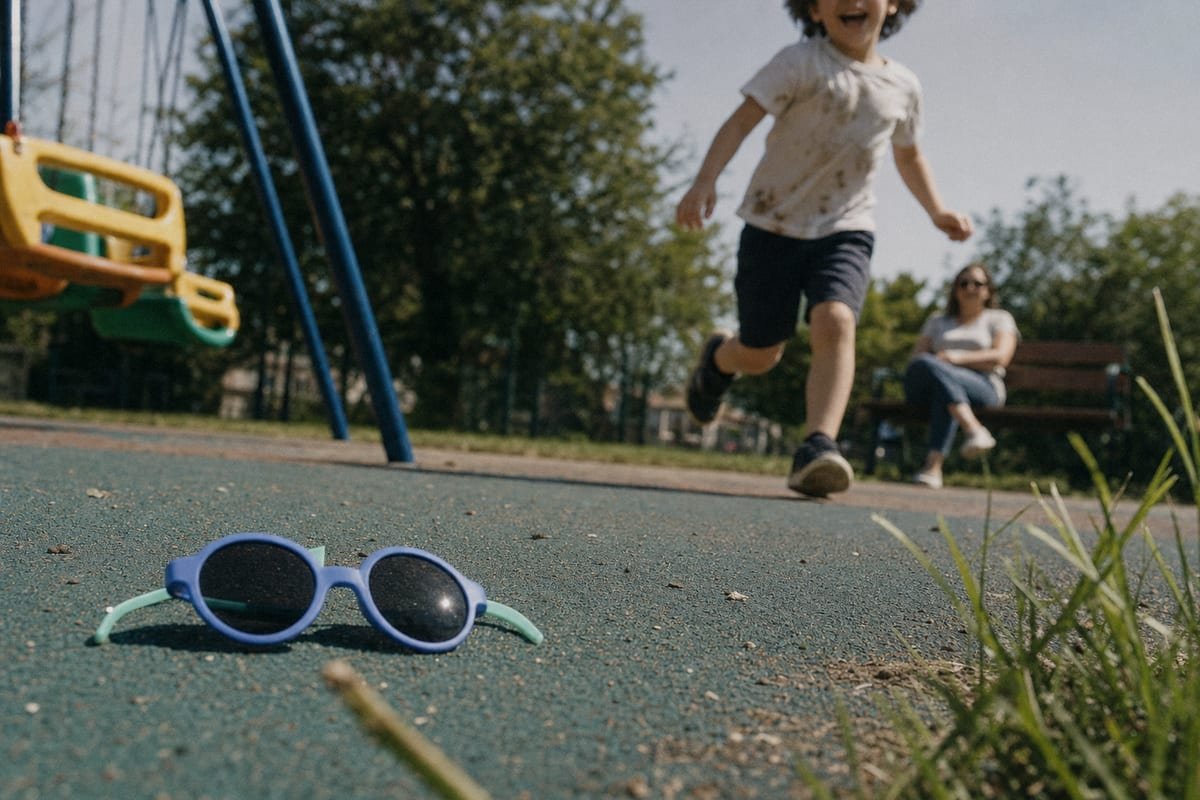
Lens quality is where marketing language does the most damage. So let me break down the claims you will see, and what each one actually guarantees.
Polarization is comfort, not protection
Polarized lenses for kids are genuinely useful near water, snow, and reflective pavement. They cut glare and reduce squinting. But polarization says nothing about UV filtering. A lens can be fully polarized and still pass harmful UVA and UVB rays. Treat polarization as a comfort upgrade layered on top of UV400 protection — never as a substitute for it.
Tint, category, and activity
Lens category describes darkness, not safety. Category 3 suits bright everyday sun — beach, playground, cycling. Category 4 is for skiing and extreme glare, and it is too dark for general use. Neither category number confirms UV blocking. You need both pieces of information on the label.
What each lens claim really means
| Claim on the label | What it guarantees | What it does NOT guarantee |
|---|---|---|
| UV400 | Blocks UVA and UVB up to 400nm | Glare reduction or impact resistance |
| Polarized | Reduces reflected glare | Any UV protection at all |
| Category 3 / 4 | Level of visible-light darkness | UV filtering |
| Polycarbonate | Shatterproof, inherent UV resistance | Coating quality or optical clarity |
| "UV protection" (vague) | Very little — unverifiable | Full UVA/UVB coverage |
Two more issues deserve attention. First, hand-me-downs: the evidence that UV coatings always degrade is inconclusive, but scratched lenses, loose hinges, and unverifiable labels make old pairs a gamble. Check condition and labeling before reuse. Second, some parents now ask us about High-Energy Visible blue light 5 filtering for developing eyes. It is an emerging area, and a reasonable extra for long outdoor hours — but again, only after UV400 is confirmed. And do not skip sunglasses on overcast days. Ambient UV stays high under cloud cover, which is one of the most persistent myths we hear from buyers' end customers.
How Can I Avoid Choosing an Unreliable Sunglasses Supplier?
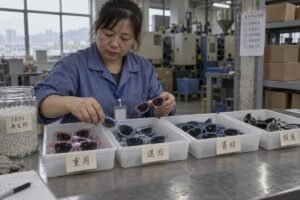
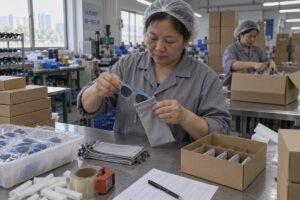
When new brand founders visit our factory floor, the first thing I show them is not a product. It is our 5S-managed workshop and QC stations, because a supplier's process tells you far more about future shipments than any polished sample ever will.
Avoid unreliable suppliers by verifying they are a real factory, requesting UV and impact test reports, checking material specifications like TR90 and polycarbonate in writing, ordering pre-production samples, and confirming OEM/ODM capability. Untraceable marketplace sellers with no documentation are the highest-risk choice.

Consumer testing in the UK has found kids' sunglasses sold through online marketplaces 6 that were unsafe and even illegal. This is not rare. Anonymous third-party listings make verification nearly impossible for parents, and honestly, for brands too. So whether you are a parent choosing a retail brand or a procurement manager choosing a factory, the principle is the same: buy from someone accountable.
For parents, that means trusted retailers and recognizable brands that publish their UV claims. For brand buyers, it means going deeper. Here is the process I recommend, based on what serious buyers do when they evaluate us.
A five-step supplier verification process
- Confirm they are a factory, not a trader. Ask for workshop photos, video calls on the production floor, and worker headcount. Traders add margin and remove accountability.
- Request test documentation. UV400 transmission reports, impact resistance results, and compliance with ANSI Z80.3 or your market's equivalent standard should exist in writing.
- Check material claims. "TR90" and "polycarbonate lenses" should appear on specification sheets, not just in sales chat. Ask how they handle wrap-around frames 7 and lens curvature, since poorly made wrap styles distort vision.
- Order and stress-test samples. Twist the temples. Drop them. Check the scratch-resistant coating. A good factory welcomes this.
- Evaluate development support. Real OEM/ODM partners offer custom colors, logos, lenses, and retail-ready packaging. A supplier with a deep existing style library — ours holds around 800 styles — lets you launch without heavy mold investment and test your market with lower risk.
One caution I share often: the cheapest quote usually hides a cost. Sometimes it is a swapped lens material. Sometimes it is skipped QC. A reliable long-term partner protects your brand's reputation with every shipment, and for children's products, reputation is everything.
Conclusion
The real danger with kids' sunglasses is false security — pairs that look protective but are not. Verify UV400 protection, insist on flexible frames and polycarbonate lenses, check fit, and buy from accountable suppliers. Do that, and your child's eyes stay genuinely protected.
Footnotes
More Articles You Might Like

Looking for a Reliable Kids Eyewear Partner?
Explore 800+ ready styles and full OEM/ODM support tailored to your brand.
Get in Touch English
  Español de México
  Deutsch
  Français
  日本語
日本語  العربية
  Português do Brasil