Do Purchasing Agents Need FDA Registration When Sourcing Kids’ Sunglasses From China?
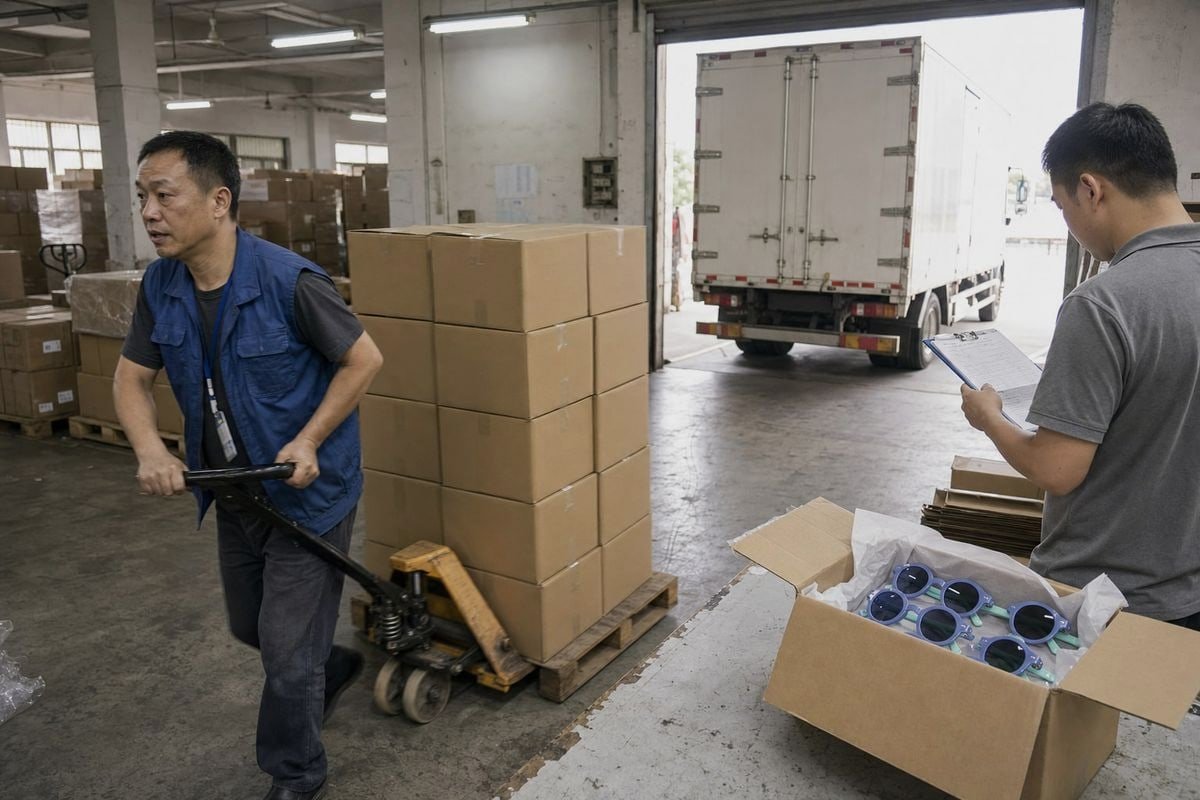
Buyers often ask me whether purchasing agents need FDA registration for kids’ sunglasses from China. On our Taizhou production line, this confusion delays orders more than any technical issue.
No, purchasing agents generally do not need FDA registration when sourcing kids’ sunglasses from China. FDA registration duties fall on the manufacturer, the foreign establishment, and the initial U.S. importer who takes first possession — not on agents or brokers who never physically hold the goods.
That short answer hides important exceptions. Your legal role in the supply chain 1 decides everything. Let me walk you through how this works, step by step, based on what we see every week shipping children’s eyewear to U.S. buyers.
How do I know if my kids' sunglasses require FDA registration before importing?
A procurement manager from a baby brand once emailed our team in a panic, convinced her whole company needed FDA registration before her first sample order. Her worry was understandable — but misplaced.
The sunglasses themselves always fall under FDA oversight because sunglasses are Class I medical devices. But registration attaches to establishments, not products. The manufacturer and the initial U.S. importer must register; a purchasing agent who never takes first possession does not.
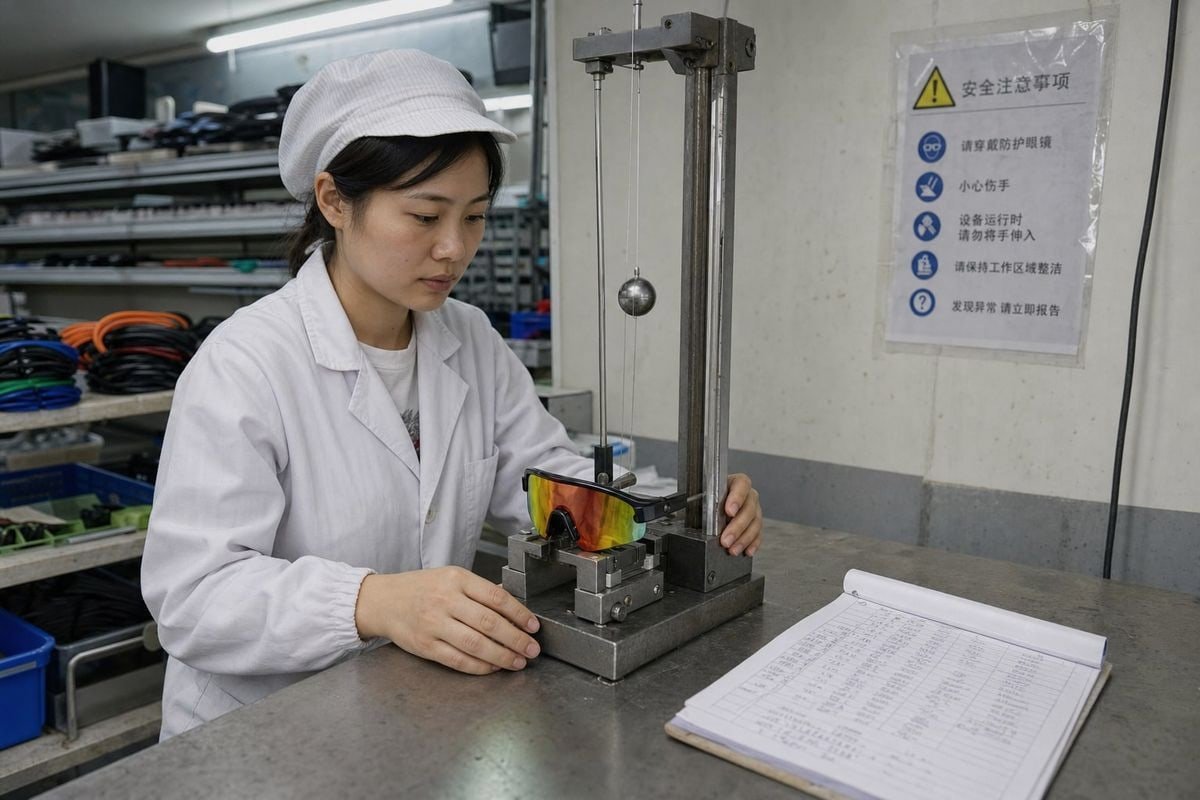
The starting point is medical device classification. The FDA treats all sunglasses — adult or children's — as Class I medical devices 2 because they protect the eyes from ultraviolet radiation. That surprises many first-time buyers of our TR90 kids' frames. They assume a colorful pair of children's sunglasses is a toy. It is not, at least not legally, if it is marketed for sun protection.
Here is the nuance that matters. Sunglasses are exempt from 510(k) premarket notification. But 510(k) exemption is not exemption from everything. Establishment registration, device listing 3, and impact resistance requirements 4 still apply. The question is simply: who carries those duties?
Who must register, and who does not?
| Supply chain role | FDA registration required? |
|---|---|
| Chinese factory (foreign manufacturer) | Yes — foreign manufacturer registration plus a designated U.S. Agent |
| Initial U.S. importer (takes first possession) | Yes — establishment registration and annual fee |
| U.S. distributor taking first possession | Yes, if acting as initial importer |
| Purchasing agent / sourcing agent (no possession) | No |
| Customs broker | No |
So before importing, ask yourself three questions. First, is my factory registered with the FDA and does it have device listing for sunglasses? Second, who is the first U.S. entity to physically receive the goods? Third, am I only facilitating the purchase, or am I stepping into the importer role? Your answers tell you exactly where the registration burden sits. In our fifteen years of exporting children's eyewear, nearly every "FDA problem" a buyer raised traced back to confusion over these three questions — not to the product itself.
What documents should I request from my China manufacturer to prove compliance?
Every winter, before the spring sunglasses season, our QC team pulls sample lenses from production batches for drop-ball verification. We do this because serious buyers always ask for the paperwork — and they should.
Request the factory's FDA establishment registration number, its device listing confirmation, the drop ball test certificate under 21 CFR 801.410, third-party CPSIA test reports for lead and phthalates, a Children's Product Certificate template, and proof of a designated U.S. Agent.
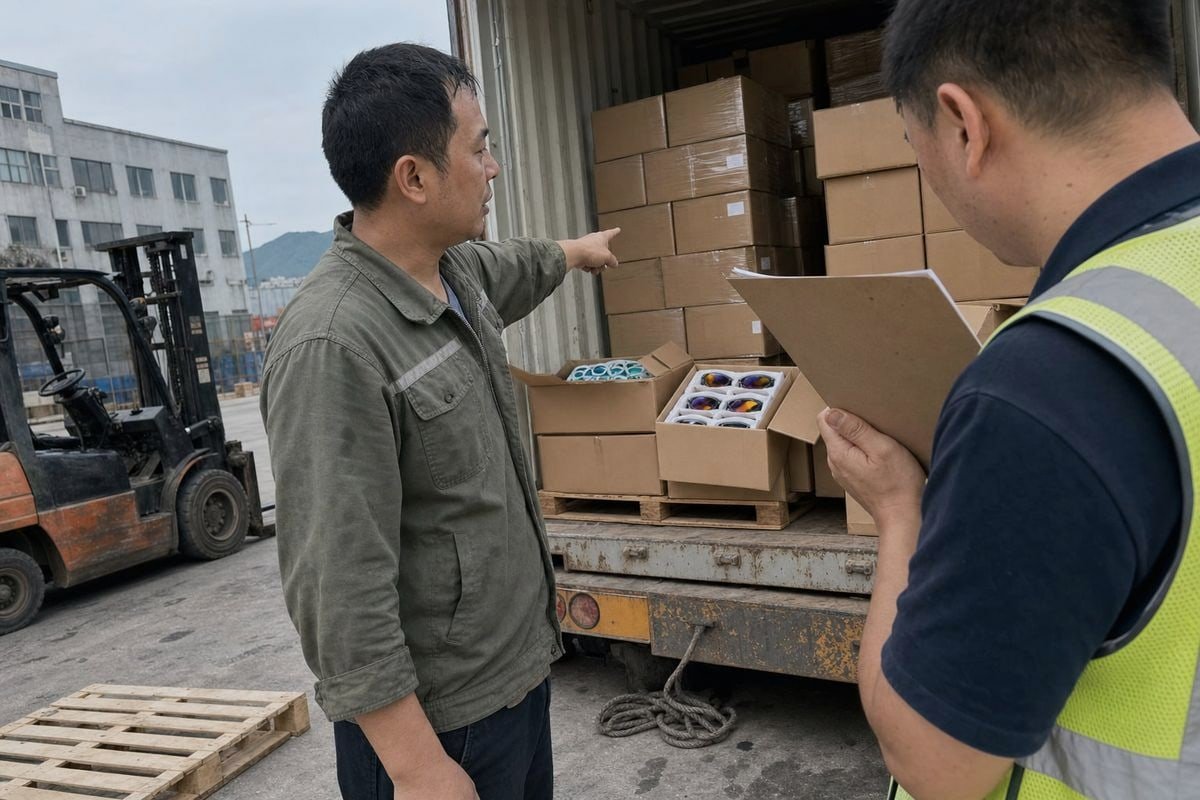
Children's sunglasses sit under two regulators, not one. The FDA governs them as eyewear. The CPSC governs them as children's products under CPSIA. A complete document package must satisfy both systems. When we onboard a new brand customer, we walk them through this checklist so nothing surprises them at the port.
The core compliance document checklist
| Document | Regulator | What it proves |
|---|---|---|
| FDA establishment registration number | FDA | The factory is a registered foreign manufacturer |
| Device listing confirmation | FDA | Sunglasses are listed under the correct product code |
| Drop ball test certificate | FDA | Lenses meet impact resistance requirements under 21 CFR 801.410 |
| Third-party lab reports (lead, phthalates, mechanical safety) | CPSC | The product passed CPSIA compliance testing at an accepted lab |
| Children's Product Certificate (CPC) | CPSC | The importer can certify the children's product legally |
| U.S. Agent designation letter | FDA | The foreign manufacturer has a U.S. contact for the FDA |
| Tracking label confirmation | CPSC | Permanent markings identify batch, date, and source |
A few practical warnings from our side of the workshop. First, verify the registration number yourself in the FDA’s public database. Do not accept a certificate-style PDF at face value — the FDA does not issue "FDA certificates," and any supplier waving one around should worry you. Second, check that test reports match your exact SKU, colorway, and material. A report for an adult TR90 frame does not cover a child's TPEE-temple frame. Third, remember that the CPC is issued by the U.S. importer, based on the factory's third-party testing. Your factory supplies the test reports; the importer signs the certificate. Getting that sequence wrong is one of the most common paperwork mistakes we see among first-time private-label brands.
One trap worth flagging
Under CPSIA rules, even a small change in raw materials — a new batch of frame paint or different plastic pellets — can void existing certifications and trigger re-testing. We lock material specifications for the life of an order for exactly this reason, and we notify buyers before any substitution. Ask your supplier whether they do the same.
There is a trade-off I discuss with almost every new buyer: do you want the cheapest quote, or a partner who understands the regulatory map? The two rarely come from the same factory.
Yes, an experienced supplier can maintain its own foreign manufacturer registration, provide drop ball test certificates and CPSIA lab reports, designate a U.S. Agent, and flag material changes. But a supplier cannot register on your behalf or replace your importer-of-record obligations.
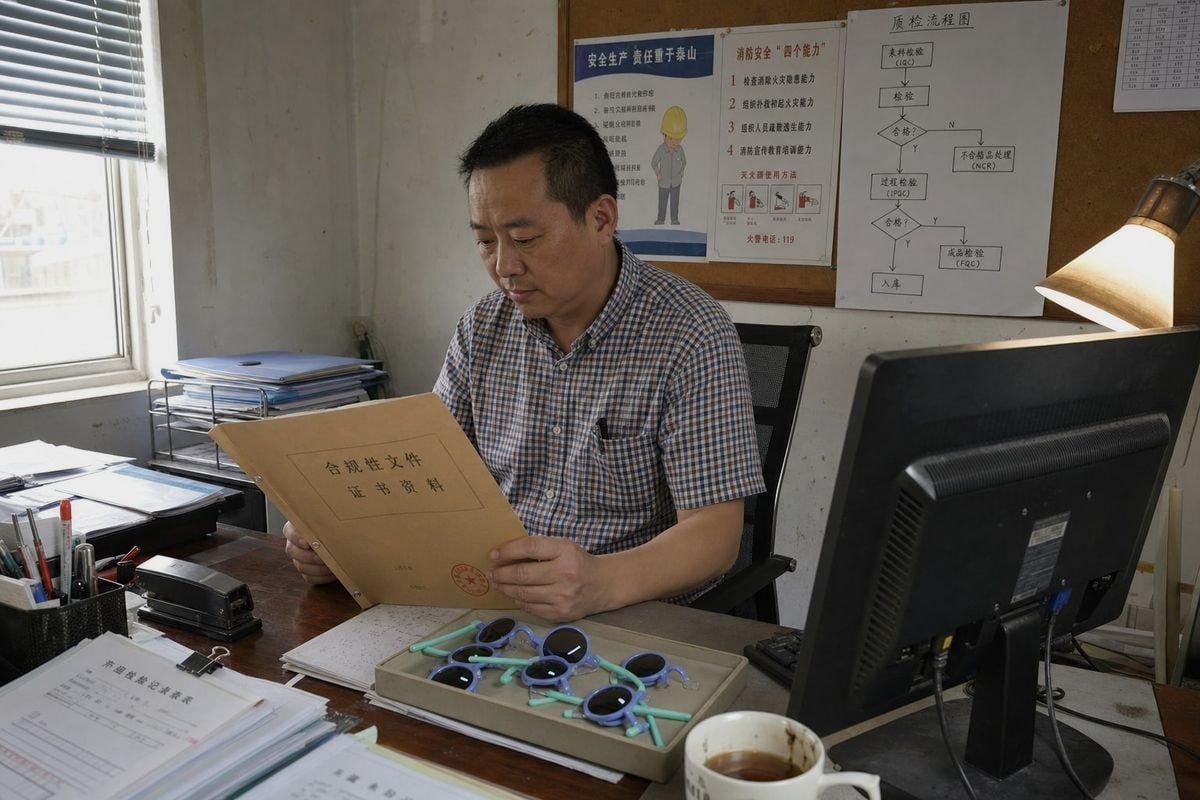
Let me be honest about the limits here, because many supplier websites blur them. Some import-service companies imply they can "handle FDA registration" for anyone in the chain. That phrasing misleads buyers. A factory can only register itself as the manufacturing establishment. It cannot register your company, and it cannot absorb the duties of the initial U.S. importer. What a good supplier can do is carry its own end of the burden fully and make your end easier.
Here is how we structure that support in practice. Our factory keeps its establishment registration and device listing current, so buyers never discover a lapsed registration at the port. We perform drop-ball verification during production, not after, so impact-resistance documentation ships with the goods. And because roughly 800 existing styles sit in our catalog, a new brand can select a pre-tested design — like a flexible TPEE-temple round frame or a wraparound sport shield — instead of funding a new mold and a full testing cycle from zero.
What to expect from a capable partner
- Proactive documentation. Test reports and certificates arrive before you ask, matched to your exact SKUs.
- Material discipline. No silent substitutions of pellets, paints, or lens stock that would void your CPSIA compliance.
- Design-for-compliance advice. Rounded edges, flexible hinges, and soft materials reduce physical-safety risks on children's faces.
- Clear role boundaries. The supplier tells you plainly what they can and cannot do under FDA rules, instead of overpromising.
One lesson we learned early: buyers who treat compliance as a shared project, opened at the sampling stage, almost never face customs problems. Buyers who bolt it on after production has finished usually do. Raise the FDA and CPSC questions in your very first supplier conversation, and judge the supplier by the precision of the answers.
What happens if I import kids' sunglasses without proper FDA registration?
A distributor once approached us mid-crisis: a container of children's sunglasses from another factory sat detained at a U.S. port because the manufacturer had never completed foreign manufacturer registration. The goods eventually cleared, but the season was lost.
Noncompliant kids' sunglasses can be detained at the U.S. port of entry, refused admission, or destroyed. The importer of record bears legal liability, faces storage and re-export costs, and risks CPSC penalties if CPSIA testing and the Children's Product Certificate are also missing.
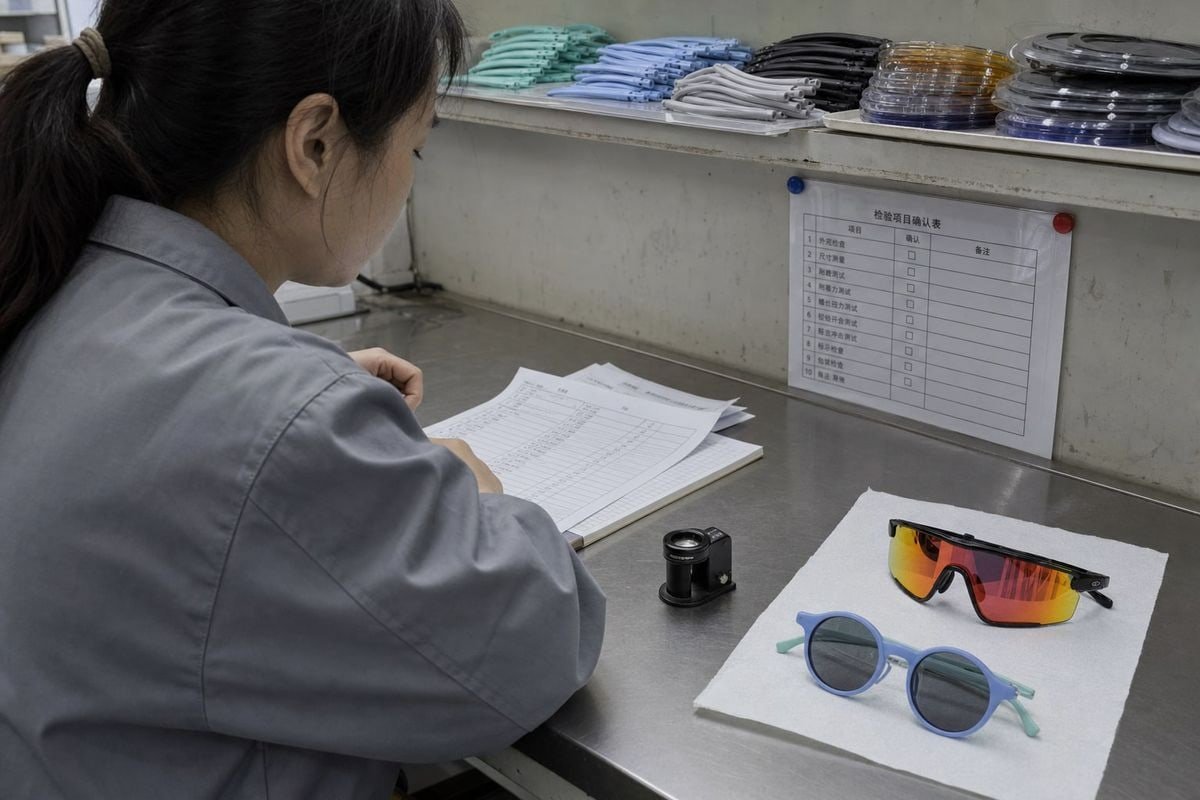
Enforcement happens at the border, and it happens fast. When your shipment reaches U.S. customs, FDA import screening 6 checks whether the declared manufacturer holds valid establishment registration and device listing. If the answer is no, the goods can be flagged and detained. From that moment, every day costs money: demurrage, storage, brokerage time, and missed retail windows.
Where the liability lands
This is where the "purchasing agent" question gets sharp teeth. If your name appears as Importer of Record on the customs entry, you own the compliance problem — even if you saw yourself as a mere middleman. The IOR assumes full legal responsibility for the product's admissibility. So an agent who casually agrees to act as IOR for a client has quietly stepped out of the exempt "broker" category and into a regulated role. In blind drop-shipping models, an agent who facilitates entries for an unregistered Chinese factory can also draw scrutiny for facilitating the entry of noncompliant medical devices. Structure your sourcing agreement so the party carrying the FDA burden is named clearly, in writing.
Common failure scenarios and their consequences
| Mistake | Likely consequence |
|---|---|
| Factory has no FDA registration or device listing | Shipment flagged and detained at port of entry |
| No drop ball test certificate available on request | Goods held pending proof of impact resistance |
| Missing CPSIA test reports or Children's Product Certificate | CPSC enforcement, recall exposure, marketplace delisting |
| Labeling kids' sunglasses as "toys" to dodge FDA rules | Automatic detention risk if the product is marketed for sun protection |
| Agent unknowingly listed as Importer of Record | Agent assumes full legal liability for compliance |
One more temptation deserves a blunt warning. Some sellers relabel children's sunglasses as "novelty items" hoping to escape the medical device pathway. If the listing, packaging, or marketing mentions UV protection 7 — and for children's eyewear it almost always does — that strategy collapses under inspection. The safer path is cheaper than the shortcut: verify registrations before production, collect documents before shipment, and name the responsible parties before the container leaves our dock in Taizhou.
Conclusion
Purchasing agents rarely need FDA registration themselves — but someone in your chain must. Verify your factory's registration, define the Importer of Record, and gather documents early. We are glad to help.
Footnotes
1. Provides a general definition and overview of supply chain management concepts. ↩︎
2. Official FDA page explaining the classification system for medical devices, including Class I requirements. ↩︎
3. FDA guidance on the mandatory registration and listing process for medical device establishments. ↩︎
4. Federal regulation 21 CFR 801.410 regarding impact resistance for eyeglass lenses. ↩︎
5. Cites the exact federal regulation governing impact resistance testing for sunglasses lenses. ↩︎
6. Official FDA information regarding the import program and screening process for regulated goods. ↩︎
7. WHO information on ultraviolet radiation and the importance of eye protection. ↩︎
More Articles You Might Like
August 1, 2026
Should Factory Handle Kids Sunglasses Packaging & Labeling, or Use a Designated Supplier?
August 1, 2026
Own Warehouse vs Supplier Direct Fulfillment: Which Cuts Return Costs for Kids Sunglasses Brands?
August 1, 2026
Direct-to-Port Warehouse or Overseas Staging: Which Saves More on Kids Sunglasses Shipping?
Looking for a Reliable Kids Eyewear Partner?
Explore 800+ ready styles and full OEM/ODM support tailored to your brand.
Get in Touch English
  Español de México
  Deutsch
  Français
  日本語
日本語  العربية
  Português do Brasil