Por que as crianças se queixam de dor de cabeça ou nas têmporas depois de usar óculos de sol?
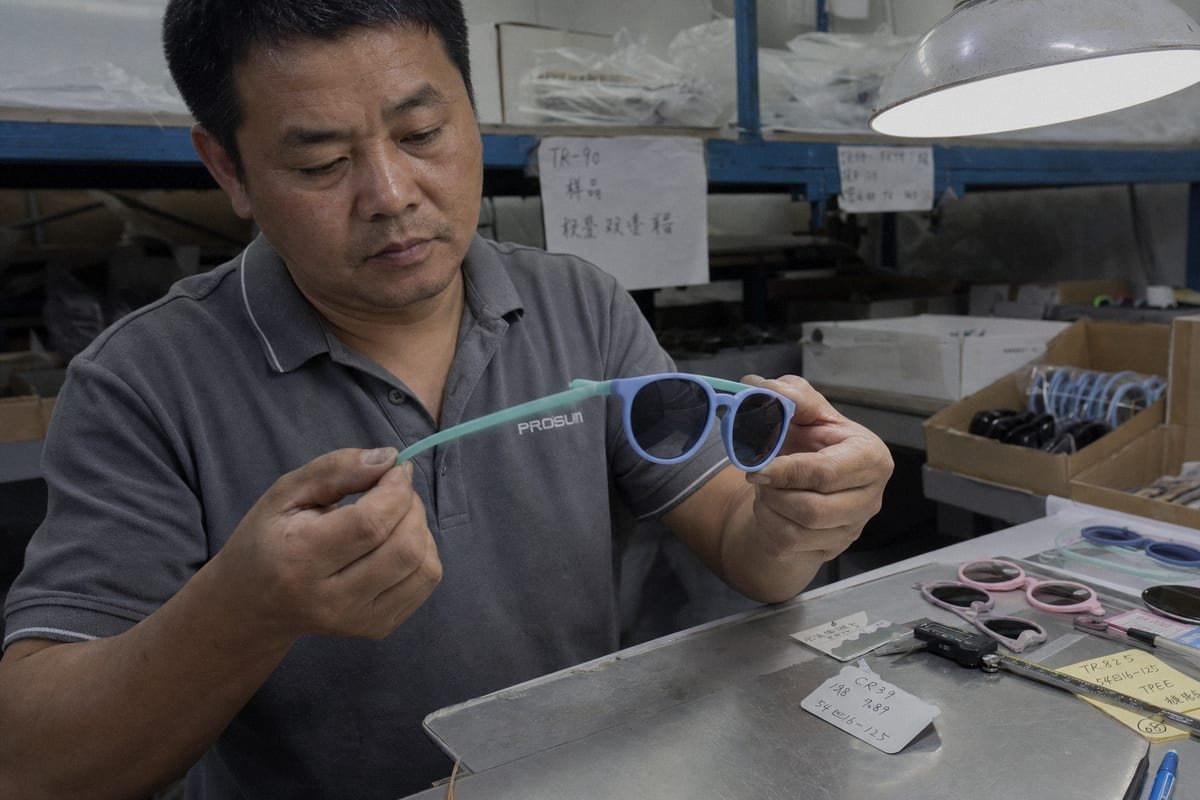
Dor de cabeça ou nas têmporas depois de usar óculos de sol é uma das reclamações mais comuns que nossa fábrica ouve de compradores de óculos infantis ISO 1. Os pais devolvem os produtos. Os varejistas perdem a confiança. As marcas perdem pedidos recorrentes.
As crianças queixam-se de dor de cabeça ou nas têmporas depois de usar óculos de sol principalmente porque armações apertadas comprimem as têmporas, armações pesadas ou desequilibradas pressionam a ponte do nariz, ou lentes de má qualidade causam fadiga ocular. A dor é geralmente um problema mecânico de ajuste ou um problema ótico — raramente apenas capricho.
Vou detalhar isso parte por parte. Abordarei materiais, verificações de ajuste, hastes flexíveis e o que exigir do seu fornecedor.
Que Materiais Devo Procurar para Evitar Pontos de Pressão nos Meus Óculos de Sol?
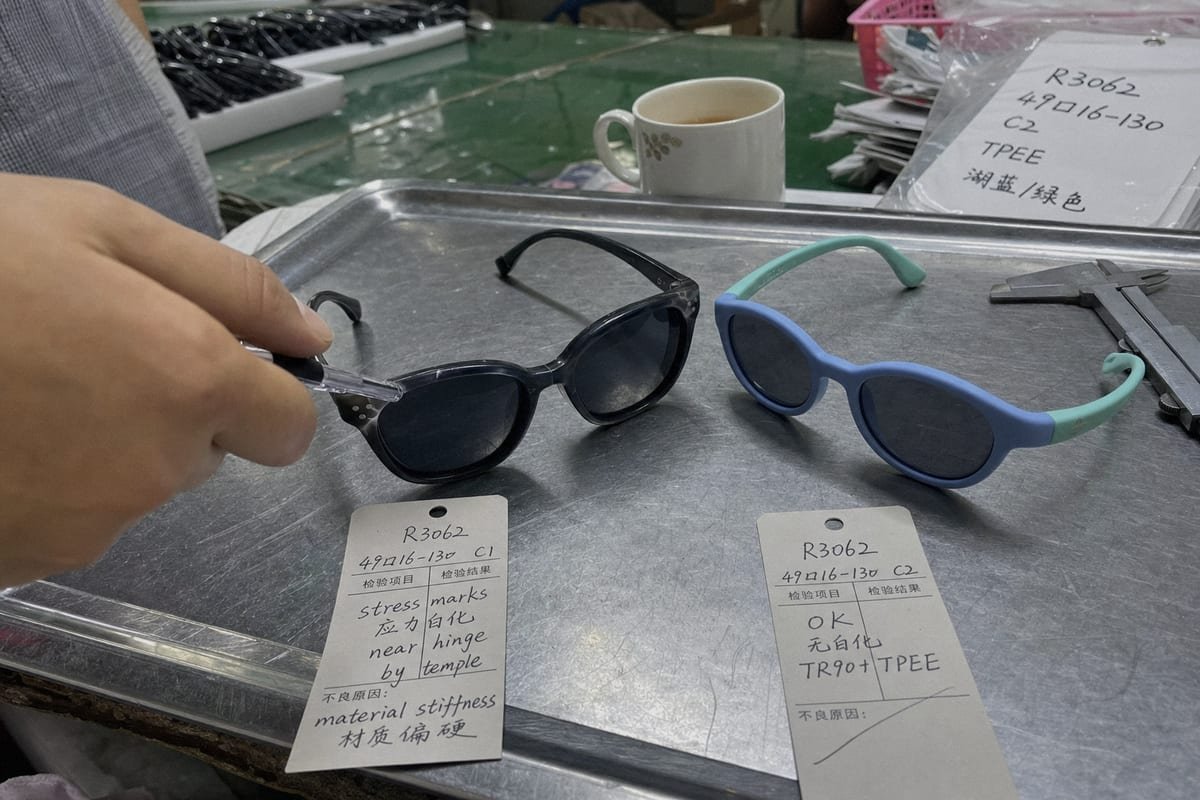
Há alguns anos, nossa equipe de controle de qualidade comparou amostras devolvidas de dois compradores. As armações rígidas de acetato apresentavam marcas de estresse nas têmporas. As flexíveis não.
Para evitar pontos de pressão, escolha materiais leves e flexíveis como TR90 para a frente da armação e TPEE para as hastes. Estes materiais dobram-se à forma da cabeça da criança, distribuem a pressão uniformemente e voltam à forma em vez de apertar, o que evita a pressão apertada da armação e dores de cabeça tensionais.
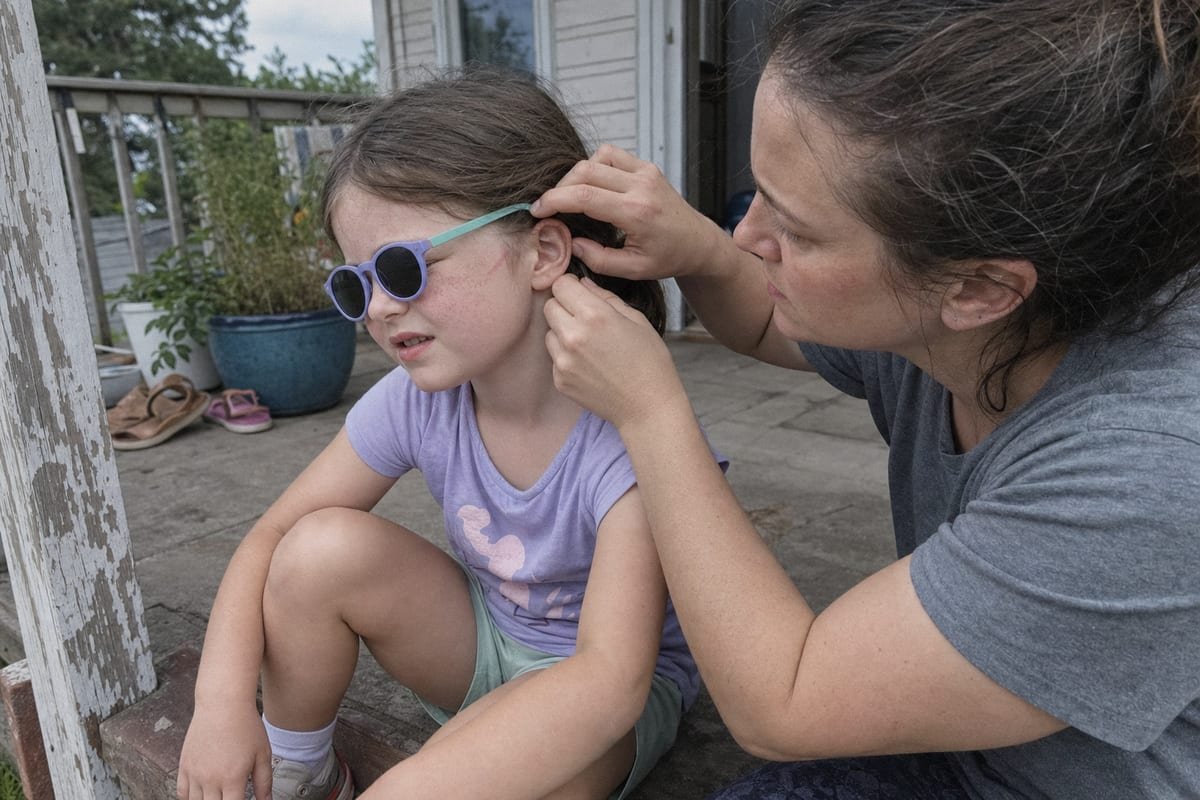
A escolha do material é o maior fator isolado para determinar se uma criança sente pontos de pressão. Eis o porquê. O crânio de uma criança ainda está em desenvolvimento. O tecido mole ao redor das têmporas fica próximo aos nervos, incluindo ramos ligados à sensibilidade do nervo trigêmeo 2 Mesmo uma pressão leve e constante nessa área pode se transformar em uma dor de cabeça surda e em faixa em vinte minutos. Adultos toleram mais. Crianças não — e não deveriam ter que tolerar.
Por que plásticos rígidos falham em rostos pequenos
Plásticos injetados baratos, e até mesmo acetato clássico, mantêm sua forma moldada teimosamente. Se a cabeça for ligeiramente mais larga que a armação, a armação empurra para trás. Essa pressão constante é o que os clínicos chamam de compressão, e ela produz dores de cabeça tensionais 3. Pior ainda, plásticos de baixa qualidade podem endurecer ou mudar sutilmente de forma com o calor. Uma armação deixada em um carro quente ou usada sob sol forte pode apertar mais do que no dia da compra.
Como polímeros flexíveis resolvem o problema
TR90 4 é um polímero de memória à base de nylon. É muito leve e flexiona para fora sem quebrar. O TPEE vai um passo além — é um elastômero macio, semelhante à borracha, que se sente suave contra a pele. Em nossa linha de produção, combinamos uma frente TR90 com hastes TPEE para a maioria dos estilos infantis, porque a frente permanece dimensionalmente estável enquanto as hastes cedem sob pressão lateral.
| Material | Peso | Flexibilidade | Risco de Pressão | Melhor Uso para Crianças |
|---|---|---|---|---|
| TPEE | Muito leve | Extremamente alto | Muito baixo | Armações para bebês e crianças pequenas, hastes |
| TR90 | Muito leve | Alto | Baixo | Frentes de armação, crianças ativas de 3 a 12 anos |
| Plástico PC padrão | Médio | Baixo | Médio-alto | Óculos de sol econômicos (não ideais) |
| Acetato | Mais Pesado | Muito baixo | Alto em rostos pequenos | Armações da moda para adultos |
Mais uma observação: a escolha do material afeta a segurança, não apenas o conforto. Uma armação que dobra em vez de quebrar não se estilhaçará em bordas afiadas durante a brincadeira. Isso é tão importante para os pais que compram seu produto quanto a questão da dor de cabeça.
Como Sei Se o Ajuste da Armação Está Errado para o Rosto de uma Criança?
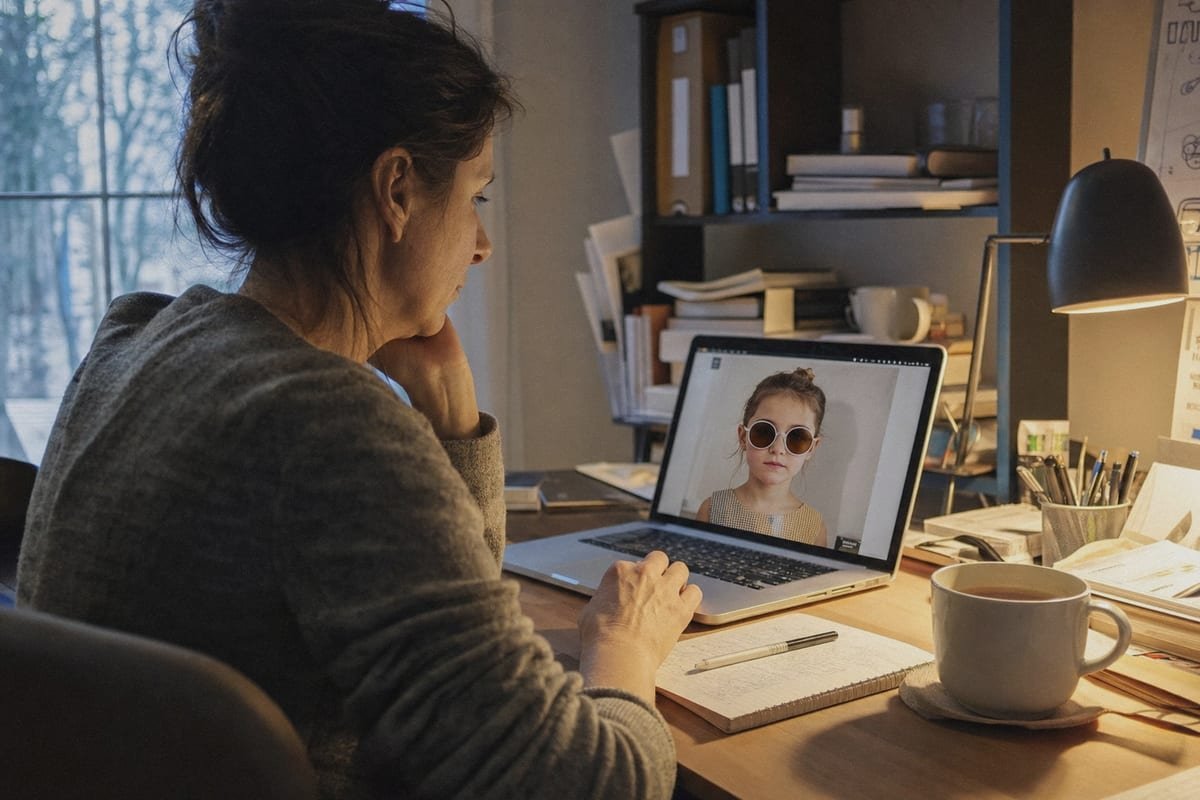
Durante uma videochamada na primavera passada, um comprador da Austrália me mostrou um modelo infantil usando uma amostra. Marcas vermelhas acima das duas orelhas me contaram a história do ajuste em segundos.
Um ajuste incorreto da armação mostra sinais claros: marcas vermelhas nas têmporas ou no nariz, armações escorregando, a criança as empurrando repetidamente, apertando os olhos devido a vazamentos de luz, pinçando atrás das orelhas ou reclamações nos primeiros trinta minutos de uso. Qualquer um desses sinais indica um problema de tamanho.
Problemas de ajuste são fáceis de identificar quando se sabe onde procurar. O problema é que as crianças muitas vezes não conseguem descrever o problema. Elas apenas dizem "minha cabeça dói" ou tiram os óculos de sol. Portanto, os pais — e as marcas que vendem para eles — precisam de verificações objetivas. Em nossa experiência exportando para compradores em mais de vinte países, os mesmos cinco pontos de falha surgem repetidamente.
A Verificação de Ajuste de Cinco Pontos
- Largura da armação. A frente da armação deve corresponder à largura do rosto. Se as hastes se curvam visivelmente para fora, a armação está muito estreita e está aplicando pressão constante na área temporal.
- Comprimento da haste. Hastes muito curtas puxam a armação para trás e apertam atrás das orelhas. Hastes muito longas deixam a armação escorregar pelo nariz.
- Ajuste da ponte nasal. A ponte deve repousar uniformemente. O mau alinhamento da plaqueta nasal concentra o peso em dois pequenos pontos, e essa pressão pode se referir para cima em direção à testa e às têmporas.
- Distância do vértice. Se a armação repousar sobre as maçãs do rosto, ela fica muito baixa. A criança pode sentir pressão facial que descreve como dor nas têmporas.
- Vazamentos de luz. Grandes vãos na parte superior ou nas laterais deixam o brilho entrar. A criança aperta os olhos constantemente, o que força os músculos faciais e adiciona fadiga ocular à pressão mecânica.
Dor Imediata vs. Dor Atrasada
O tempo diz muito. Aqui está um guia de diagnóstico simples que compartilhamos com nossos clientes de marca:
| Quando a Dor Começa | Causa Mais Provável | O Que Verificar Primeiro |
|---|---|---|
| Dentro de 10–30 minutos | Mechanical fit problem | Temple tightness, bridge pressure, frame width |
| After 1–2 hours | Optical or lens issue | Lens distortion, glare, tint quality |
| Only during active play | Slippage and friction | Temple grip, weight, bounce |
| Every time, any glasses | Possible vision issue | Book an eye exam 5 |
If a child complains quickly, do not tell them they will "get used to it." Fast-onset pain almost always means the hardware is wrong. Slow-building pain points toward the lenses or the eyes themselves — and if headaches happen with every pair, or come with squinting indoors, photophobia 6, or sitting close to screens, an optometrist visit is the right call.
As Hastes Flexíveis de TR90 ou TPEE Podem Realmente Reduzir o Desconforto em Crianças?
Honestly, I was skeptical myself fifteen years ago when we first switched a production run from standard plastic to TPEE temples. The return rate difference convinced me for good.
Sim. As hastes flexíveis de TR90 ou TPEE reduzem genuinamente o desconforto porque se flexionam para fora sob carga, cortando drasticamente a força de aperto nas hastes. Elas se adaptam a diferentes larguras de cabeça, absorvem o impacto durante o jogo e eliminam os pontos de pressão rígidos que desencadeiam dores de cabeça por compressão em crianças.
This is not marketing language. It is basic mechanics. A rigid temple arm acts like a fixed clamp: if the head is wider than the frame's designed width, all the excess force goes straight into the soft tissue at the sides of the head. A flexible temple acts like a spring with a very low spring rate. It gives way. The force it applies stays gentle even when the fit is not perfect — and with growing kids, the fit is never perfect for long.
The Growth Problem That Flexibility Solves
A child's head width can change noticeably in a single year. A rigid frame that fits in spring may pinch by autumn. Flexible temples buy months of extra comfortable wear because they tolerate that growth. For brands, this means fewer sizing complaints and a product that parents feel is worth the price. On our round pastel kids' styles — the soft periwinkle-and-mint frames we make for toddler lines — we use a slightly rubberized, matte-finish flexible construction precisely for this reason. Toddlers cannot articulate discomfort at all. The material has to do the accommodating for them.
Flexibility Plus Smart Hardware
Temples alone are not the whole answer. Flexible hinges — whether spring hinges or elastomer-based joints — let the arms open beyond ninety degrees without stressing the frame or the child's head. Combine that with proper temple arm adjustment at the tips (a gentle downward curve behind the ear, not a hook that digs in) and rubberized temple grips, and the frame stays put through running, cycling, and playground chaos without needing to squeeze. Our sport shield styles for older kids use exactly this combination: a wraparound lens for coverage, plus slim temple tips with small rubber grips so security comes from friction, not compression.
There is one caveat worth stating. Flexibility does not fix a fundamentally wrong size. A frame two sizes too small will still press, no matter the material. Flexibility widens the comfortable range; it does not make sizing irrelevant.
O que devo perguntar ao meu fabricante para evitar reclamações de tamanho dos clientes?
One lesson I learned the hard way: a buyer once approved a sample by photo alone, skipped the physical fit review, and spent the season fielding "too tight" reviews. We now insist buyers wear-test samples on real children before mass production.
Peça ao seu fabricante as medidas exatas da armação por faixa etária, especificações de material para armação e hastes, testes de flexão e força de aperto, lentes de grau óptico com proteção UV400 verificada, amostras físicas para testes de uso em crianças e seus padrões de tolerância para distorção de lentes e simetria da armação.

Sizing complaints are preventable, but only if you ask the right questions before the purchase order is signed. Most complaints trace back to gaps in the specification stage, not the production stage. Here is the checklist I walk buyers through when they develop a children's line with us.
The Specification Questions
First, demand measurements, not vague age labels. "For kids 3–6" means nothing without numbers. You need lens width, bridge width, temple length, and total frame front width — and you need them matched to the head dimensions of your actual target market, because average head sizes differ by region.
| Pergunta a Fazer | Why It Prevents Complaints |
|---|---|
| What are the exact frame dimensions per size? | Ensures the frame matches real head widths, not guesses |
| What material is used for front and temples? | TR90/TPEE construction prevents tight frame pressure |
| How do you test flex and clamping force? | Verifies the frame will not compress the temples |
| Are lenses optical grade and distortion-checked? | Poor lens distortion causes eye strain headaches |
| O Proteção UV400 7 verified per batch? | Weak UV filtering causes squinting and photophobia complaints |
| Can I wear-test samples on children first? | Catches fit failures before mass production |
| What are your QC tolerances for symmetry? | Asymmetric frames create uneven pressure points |
Lens Quality Is a Sizing Question Too
This surprises many buyers. But remember: a headache complaint from a customer rarely comes with a diagnosis. If the lenses have optical imperfections, waves, or an uneven tint, the child's brain works overtime to correct the image. The resulting eye strain gets reported as "the sunglasses hurt." So insist on distortion checks and consistent polarization 8 if you offer polarized options. In our 5S-managed workshop, lens inspection sits inside the same QC flow as frame inspection, because from the parent's point of view, they are the same complaint.
Reduce Risk with Proven Styles
Finally, ask whether your supplier has existing tested styles. Starting from a catalog of proven, already-fitted designs — we maintain roughly 800 — lets you launch without new mold investment and without gambling on unproven geometry. Custom colors, logos, lens tints, and packaging can all be applied on top of a fit that already works.
Conclusão
Head or temple pain after wearing sunglasses is a solvable design problem. When kids hurt, brands lose trust and sales. But the fix is clear: flexible TR90 and TPEE materials, correct sizing per age, distortion-free optical grade lenses, and a manufacturer who wear-tests before production. Get those four things right, and comfort complaints largely disappear. If you are developing a children's eyewear line and want a partner with real flexible-material expertise, I am always glad to talk through sizing, samples, and specifications.
Notas de rodapé
1. ISO reference supports quality tolerance and testing standards manufacturers should follow. ↩︎
2. Provides background on the nerve structure linked to temple pain sensitivity in children. ↩︎
Mais Artigos que Você Pode Gostar


Procurando um Parceiro Confiável em Óculos Infantis?
Explore mais de 800 estilos prontos e suporte completo OEM/ODM adaptado à sua marca.
Entre em Contato English
  Español de México
  Deutsch
  Français
  日本語
日本語  العربية
  Português do Brasil