Why Do Kids Complain of Head or Temple Pain After Wearing Sunglasses?
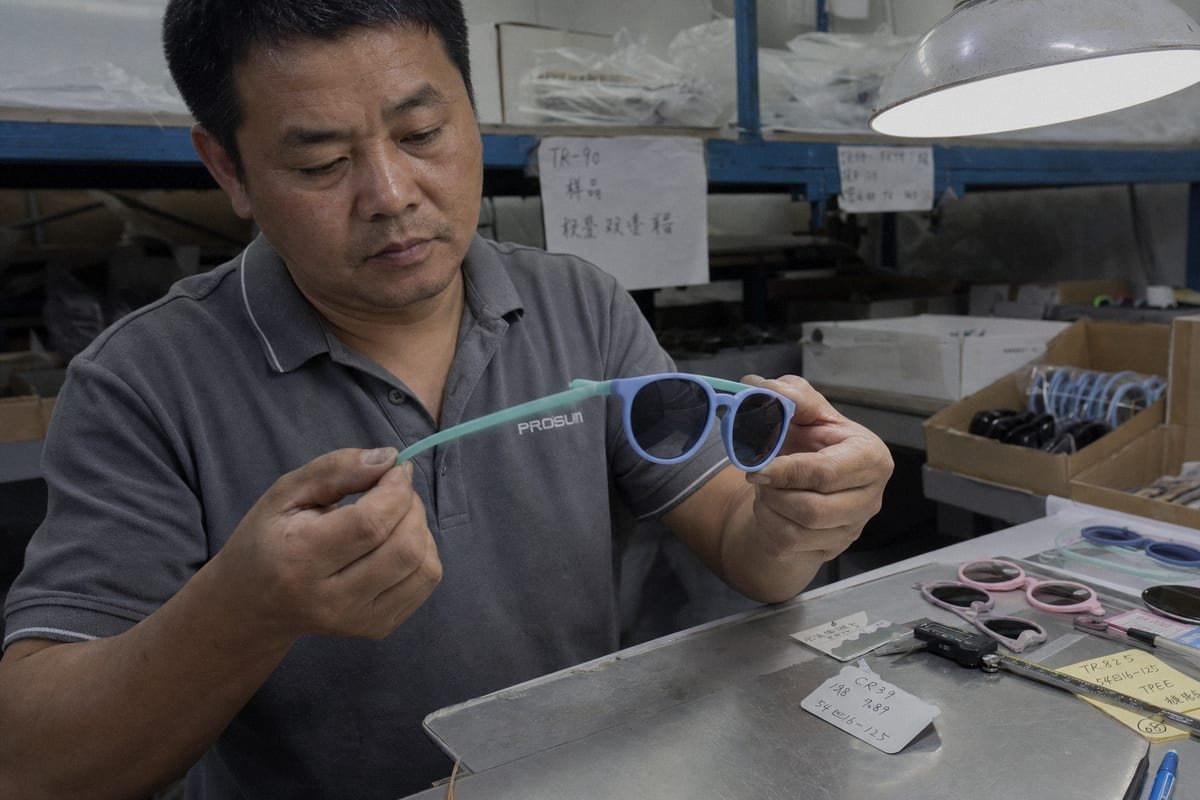
Head or temple pain after wearing sunglasses is one of the most common complaints our factory hears from kids’ eyewear buyers ISO 1. Parents return products. Retailers lose trust. Brands lose repeat orders.
Kids complain of head or temple pain after wearing sunglasses mainly because tight frames compress the temples, heavy or unbalanced frames press on the nose bridge, or poor-quality lenses cause eye strain. The pain is usually a mechanical fit problem or an optical problem — rarely just fussiness.
Let me break this down piece by piece. I will cover materials, fit checks, flexible temples, and what to demand from your supplier.
What Materials Should I Look for to Avoid Pressure Points on My Sunglasses?
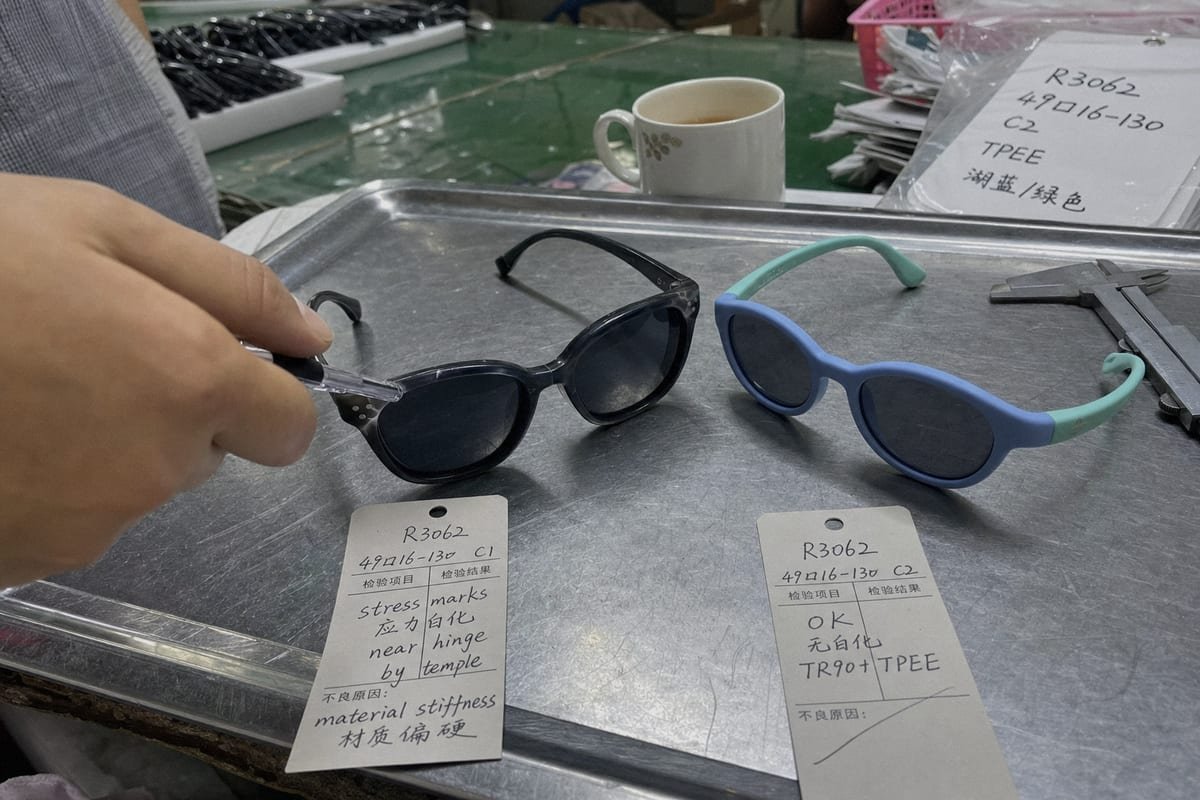
A few years back, our QC team compared returned samples from two buyers. The rigid acetate frames showed stress marks at the temples. The flexible ones did not.
To avoid pressure points, choose lightweight flexible materials such as TR90 for the frame front and TPEE for the temple arms. These materials bend with a child's head shape, distribute pressure evenly, and spring back instead of clamping, which prevents tight frame pressure and tension headaches.
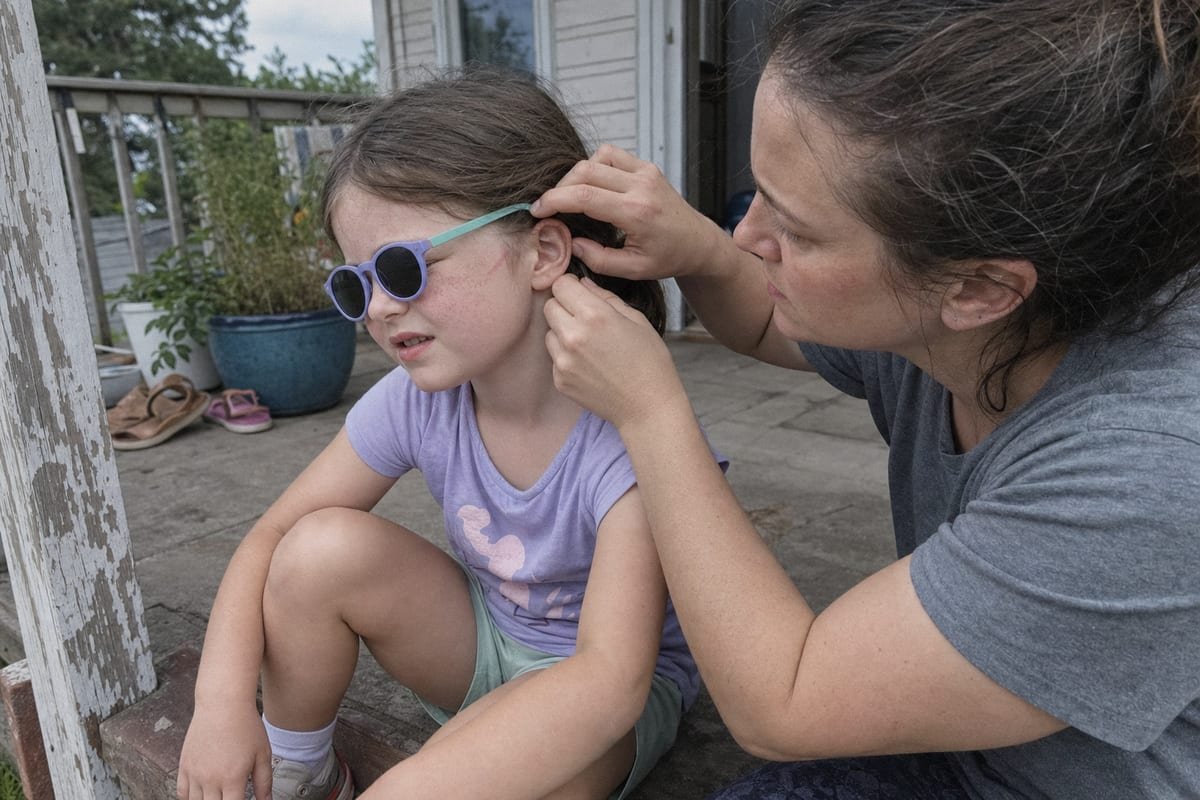
Material choice is the single biggest factor in whether a child feels pressure points. Here is why. A child's skull is still developing. The soft tissue around the temples sits close to nerves, including branches linked to trigeminal nerve 2 sensitivity. Even mild, constant clamping in that area can build into a dull, band-like headache within twenty minutes. Adults tolerate more. Kids do not — and they should not have to.
Why Rigid Plastics Fail on Small Faces
Cheap injected plastics, and even classic acetate, hold their molded shape stubbornly. If the head is slightly wider than the frame, the frame pushes back. That constant push is what clinicians call compression, and it produces tension headaches 3. Worse, low-grade plastics can stiffen or subtly change shape with heat. A frame left in a hot car or worn under strong sun can grip harder than it did in the store.
How Flexible Polymers Solve the Problem
TR90 4 is a nylon-based memory polymer. It is very light, and it flexes outward without snapping. TPEE goes a step further — it is a soft, rubber-like elastomer that feels gentle against skin. On our production line, we pair a TR90 front with TPEE temple arms for most children's styles, because the front stays dimensionally stable while the arms give way under sideways pressure.
| Matériel | Poids | Flexibilité | Pressure Risk | Best Use for Kids |
|---|---|---|---|---|
| TPEE | Très léger | Extrêmement élevée | Très faible | Toddler and baby frames, temple arms |
| TR90 | Très léger | Élevé | Bas | Frame fronts, active kids 3–12 |
| Plastique PC standard | Moyen | Bas | Medium–high | Budget sunglasses (not ideal) |
| Acétate | Peut se fissurer ou se déformer | Très faible | High on small faces | Fashion adult frames |
One more note: material choice affects safety, not just comfort. A frame that bends instead of breaking will not snap into sharp edges during play. That matters as much to the parents buying your product as the headache issue does.
How Do I Know If the Frame Fit Is Wrong for a Child's Face?
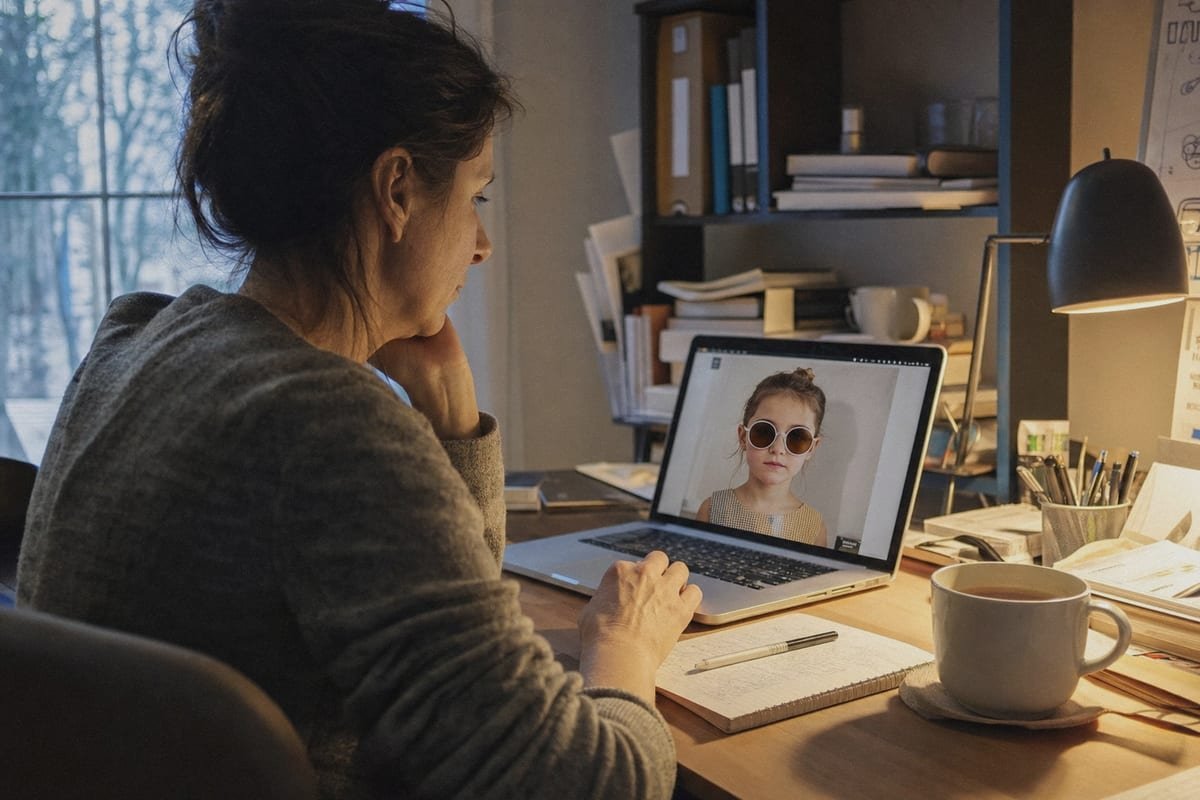
During a video call last spring, a buyer from Australia showed me a child model wearing a sample. Red marks above both ears told me the fit story in seconds.
A wrong frame fit shows clear signs: red marks at the temples or nose, frames slipping down, the child pushing them up repeatedly, squinting from light leaks, pinching behind the ears, or complaints within the first thirty minutes of wear. Any one of these signals a sizing problem.
Fit problems are easy to spot once you know where to look. The trouble is that kids often cannot describe the problem. They just say "my head hurts" or take the sunglasses off. So parents — and the brands selling to them — need objective checks. In our experience exporting to buyers in more than twenty countries, the same five failure points come up again and again.
The Five-Point Fit Check
- Frame width. The frame front should match the face width. If the temples bow outward visibly, the frame is too narrow and is applying constant pressure to the temporal area.
- Temple arm length. Arms that are too short pull the frame back and dig in behind the ears. Arms that are too long let the frame slide down the nose.
- Nose bridge fit. The bridge should rest evenly. Poor nose pad alignment concentrates weight on two small points, and that pressure can refer upward toward the forehead and temples.
- Vertex distance. If the frame rests on the cheekbones, it sits too low. The child may feel facial pressure they describe as temple pain.
- Light leaks. Big gaps at the top or sides let glare in. The child squints constantly, which strains facial muscles and adds eye strain to the mechanical pressure.
Immediate Pain vs. Delayed Pain
Timing tells you a lot. Here is a simple diagnostic guide we share with our brand customers:
| When the Pain Starts | Most Likely Cause | What to Check First |
|---|---|---|
| Within 10–30 minutes | Mechanical fit problem | Temple tightness, bridge pressure, frame width |
| After 1–2 hours | Optical or lens issue | Lens distortion, glare, tint quality |
| Only during active play | Slippage and friction | Temple grip, weight, bounce |
| Every time, any glasses | Possible vision issue | Book an eye exam 5 |
If a child complains quickly, do not tell them they will "get used to it." Fast-onset pain almost always means the hardware is wrong. Slow-building pain points toward the lenses or the eyes themselves — and if headaches happen with every pair, or come with squinting indoors, photophobia 6, or sitting close to screens, an optometrist visit is the right call.
Can Flexible TR90 or TPEE Temples Really Reduce Discomfort for Kids?
Honestly, I was skeptical myself fifteen years ago when we first switched a production run from standard plastic to TPEE temples. The return rate difference convinced me for good.
Yes. Flexible TR90 or TPEE temples genuinely reduce discomfort because they flex outward under load, cutting the clamping force on the temples dramatically. They adapt to different head widths, absorb impact during play, and eliminate the rigid pressure points that trigger compression headaches in children.
This is not marketing language. It is basic mechanics. A rigid temple arm acts like a fixed clamp: if the head is wider than the frame's designed width, all the excess force goes straight into the soft tissue at the sides of the head. A flexible temple acts like a spring with a very low spring rate. It gives way. The force it applies stays gentle even when the fit is not perfect — and with growing kids, the fit is never perfect for long.
The Growth Problem That Flexibility Solves
A child's head width can change noticeably in a single year. A rigid frame that fits in spring may pinch by autumn. Flexible temples buy months of extra comfortable wear because they tolerate that growth. For brands, this means fewer sizing complaints and a product that parents feel is worth the price. On our round pastel kids' styles — the soft periwinkle-and-mint frames we make for toddler lines — we use a slightly rubberized, matte-finish flexible construction precisely for this reason. Toddlers cannot articulate discomfort at all. The material has to do the accommodating for them.
Flexibility Plus Smart Hardware
Temples alone are not the whole answer. Flexible hinges — whether spring hinges or elastomer-based joints — let the arms open beyond ninety degrees without stressing the frame or the child's head. Combine that with proper temple arm adjustment at the tips (a gentle downward curve behind the ear, not a hook that digs in) and rubberized temple grips, and the frame stays put through running, cycling, and playground chaos without needing to squeeze. Our sport shield styles for older kids use exactly this combination: a wraparound lens for coverage, plus slim temple tips with small rubber grips so security comes from friction, not compression.
There is one caveat worth stating. Flexibility does not fix a fundamentally wrong size. A frame two sizes too small will still press, no matter the material. Flexibility widens the comfortable range; it does not make sizing irrelevant.
What Should I Ask My Manufacturer to Prevent Sizing Complaints from Customers?
One lesson I learned the hard way: a buyer once approved a sample by photo alone, skipped the physical fit review, and spent the season fielding "too tight" reviews. We now insist buyers wear-test samples on real children before mass production.
Ask your manufacturer for exact frame measurements by age range, material specifications for frame and temples, flex and clamping-force testing, optical grade lenses with verified UV400 protection, physical samples for child wear-testing, and their tolerance standards for lens distortion and frame symmetry.

Sizing complaints are preventable, but only if you ask the right questions before the purchase order is signed. Most complaints trace back to gaps in the specification stage, not the production stage. Here is the checklist I walk buyers through when they develop a children's line with us.
The Specification Questions
First, demand measurements, not vague age labels. "For kids 3–6" means nothing without numbers. You need lens width, bridge width, temple length, and total frame front width — and you need them matched to the head dimensions of your actual target market, because average head sizes differ by region.
| Question à poser | Why It Prevents Complaints |
|---|---|
| What are the exact frame dimensions per size? | Ensures the frame matches real head widths, not guesses |
| What material is used for front and temples? | TR90/TPEE construction prevents tight frame pressure |
| How do you test flex and clamping force? | Verifies the frame will not compress the temples |
| Are lenses optical grade and distortion-checked? | Poor lens distortion causes eye strain headaches |
| Les protection UV400 7 verified per batch? | Weak UV filtering causes squinting and photophobia complaints |
| Can I wear-test samples on children first? | Catches fit failures before mass production |
| What are your QC tolerances for symmetry? | Asymmetric frames create uneven pressure points |
Lens Quality Is a Sizing Question Too
This surprises many buyers. But remember: a headache complaint from a customer rarely comes with a diagnosis. If the lenses have optical imperfections, waves, or an uneven tint, the child's brain works overtime to correct the image. The resulting eye strain gets reported as "the sunglasses hurt." So insist on distortion checks and consistent une polarisation 8 if you offer polarized options. In our 5S-managed workshop, lens inspection sits inside the same QC flow as frame inspection, because from the parent's point of view, they are the same complaint.
Reduce Risk with Proven Styles
Finally, ask whether your supplier has existing tested styles. Starting from a catalog of proven, already-fitted designs — we maintain roughly 800 — lets you launch without new mold investment and without gambling on unproven geometry. Custom colors, logos, lens tints, and packaging can all be applied on top of a fit that already works.
Conclusion
Head or temple pain after wearing sunglasses is a solvable design problem. When kids hurt, brands lose trust and sales. But the fix is clear: flexible TR90 and TPEE materials, correct sizing per age, distortion-free optical grade lenses, and a manufacturer who wear-tests before production. Get those four things right, and comfort complaints largely disappear. If you are developing a children's eyewear line and want a partner with real flexible-material expertise, I am always glad to talk through sizing, samples, and specifications.
Notes de bas de page
1. ISO reference supports quality tolerance and testing standards manufacturers should follow. ↩︎
2. Provides background on the nerve structure linked to temple pain sensitivity in children. ↩︎
Plus d'articles que vous pourriez aimer



Vous recherchez un partenaire fiable en lunetterie pour enfants ?
Explorez plus de 800 styles prêts et un support OEM/ODM complet adapté à votre marque.
Contactez-nous English
  Español de México
  Deutsch
  Français
  日本語
日本語  العربية
  Português do Brasil