What Drop-Ball Test Standards Qualify Kids’ Eyewear for Impact Resistance?
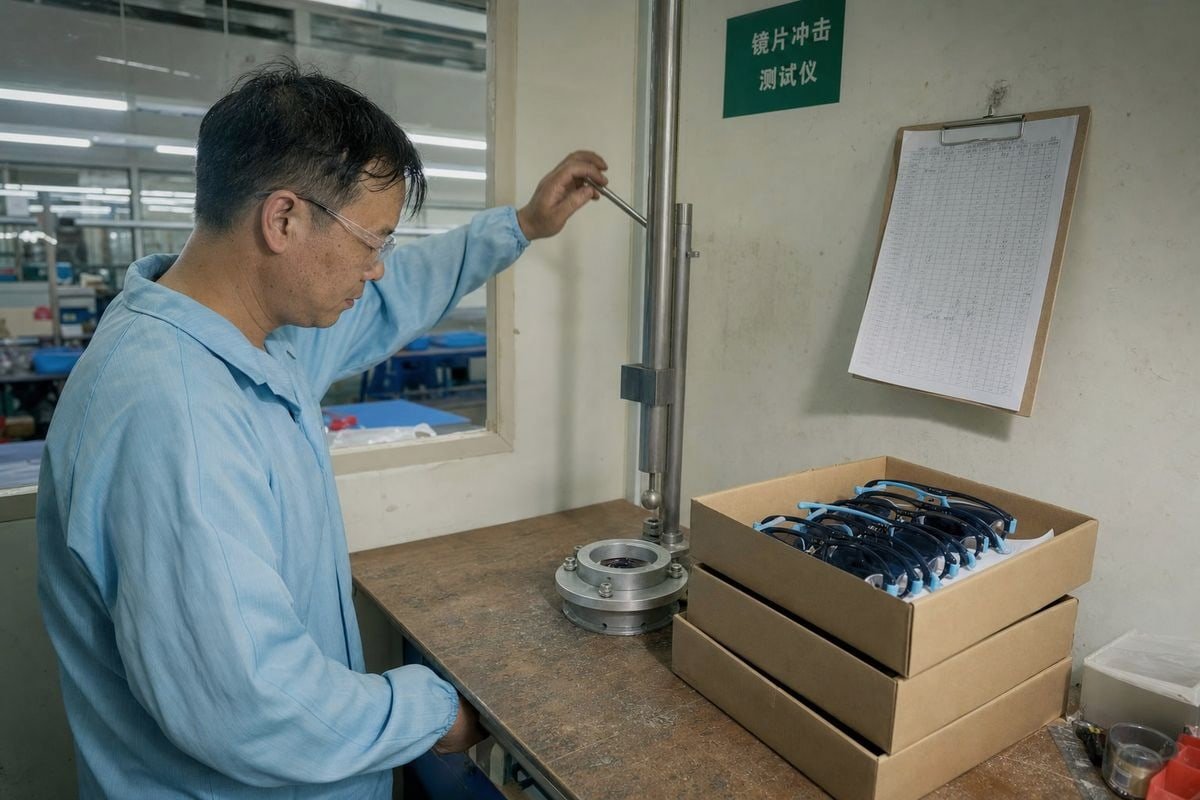
Drop-ball test standards decide whether kids’ eyewear is legally sellable in the US Trivex material 1. On our production line, one failed lens batch can stall an entire shipment — and a buyer’s launch.
The FDA drop-ball test under 21 CFR 801.410 is the core standard qualifying kids’ eyewear for impact resistance: a 5/8-inch steel ball weighing about 0.56 ounces is dropped from 50 inches onto the lens, which must not fracture. ANSI Z87.1 and ASTM F803 apply to safety and sports eyewear.
That is the short answer. But the details matter when you are sourcing children’s frames 2 at scale. Let me walk you through the standards, the test itself, and how to verify results.
What Drop-Ball Impact Standards Should I Look for When Sourcing Kids' Eyewear?
A buyer from Australia once asked me why her previous supplier's "impact tested" claim meant nothing at customs. The answer: the claim named no standard. In our export paperwork, we always name one.
Look for FDA 21 CFR 801.410 compliance for everyday kids' glasses and sunglasses sold in the US, ANSI Z87.1 for children's safety glasses, and ASTM F803 for protective sports goggles. Each standard covers a different use case, and a vague "impact resistant" claim without a named standard is a red flag.
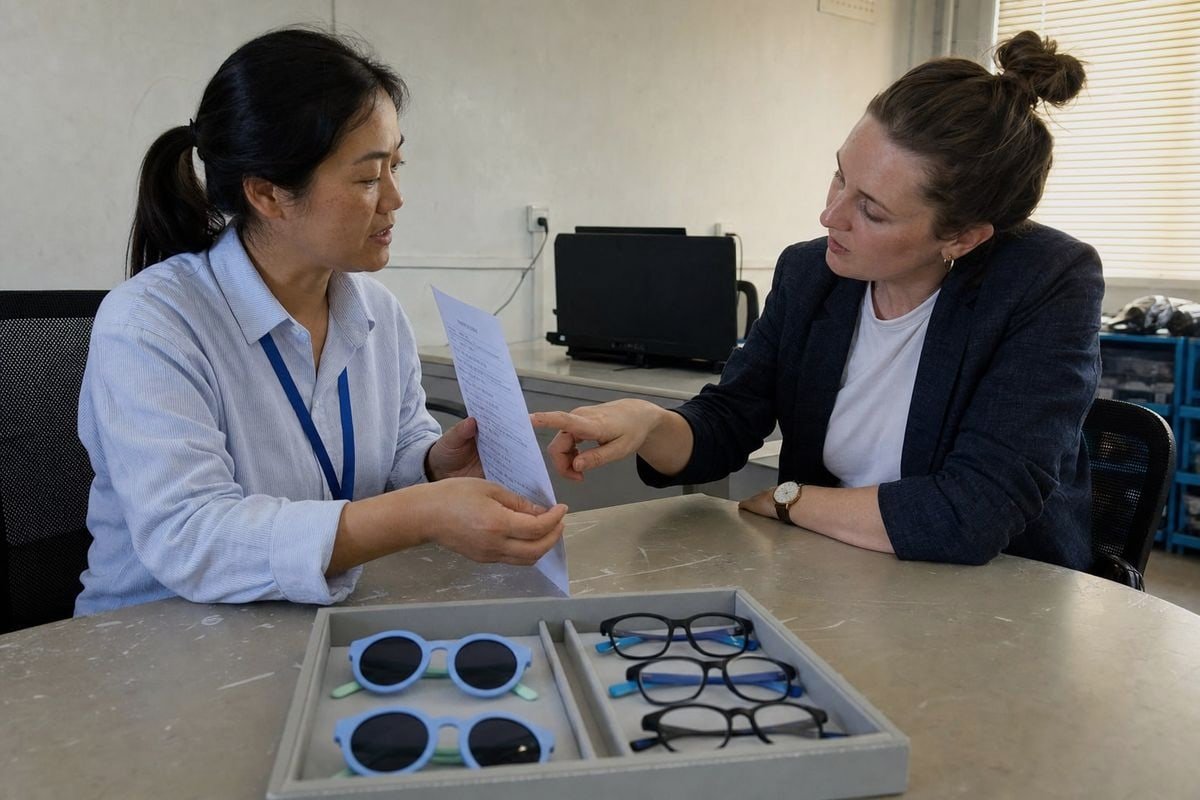
The confusion I see most often among new brand founders is treating all "impact resistance" claims as one thing. They are not. The standard that qualifies a product depends entirely on how the child will use it.
The Three Standards That Matter
| Padrão | Applies To | Test Type | Legal Status in US |
|---|---|---|---|
| FDA 21 CFR 801.410 | Everyday eyeglasses and sunglasses | Drop-ball referee test | Mandatory federal minimum |
| ANSI Z87.1 | Safety glasses and occupational eyewear | Basic and high-impact tests | Required for products marketed as safety eyewear |
| ASTM F803 3 | Protective sports goggles | High-velocity impact testing | Required for sport-specific protective claims |
For most of the children's optical frames and sunglasses we ship — like our TR90 rectangular kids' frames with flexible TPEE temples — the FDA drop-ball requirement 4 is the baseline that applies. It governs the lenses, not the frames, and it sets a legal floor for the US market. ANSI Z80.1 also covers general ophthalmic lens standards such as optical quality, so serious optical buyers often reference both.
Here is the nuance a good supplier will explain honestly. A lens can pass the FDA drop-ball test and still be unsuitable for baseball or basketball. High-velocity impact from a ball or elbow far exceeds what a falling steel ball simulates. If your brand markets eyewear for sports, ASTM F803 is the correct benchmark, and it tests the frame's lens retention as a complete system — not the lens alone. We always ask buyers to define the end use before we quote, because eye injury prevention depends on matching the standard to the activity, not on the loudest marketing claim.
How Does the Drop-Ball Test Actually Work for Children's Sunglasses and Optical Frames?
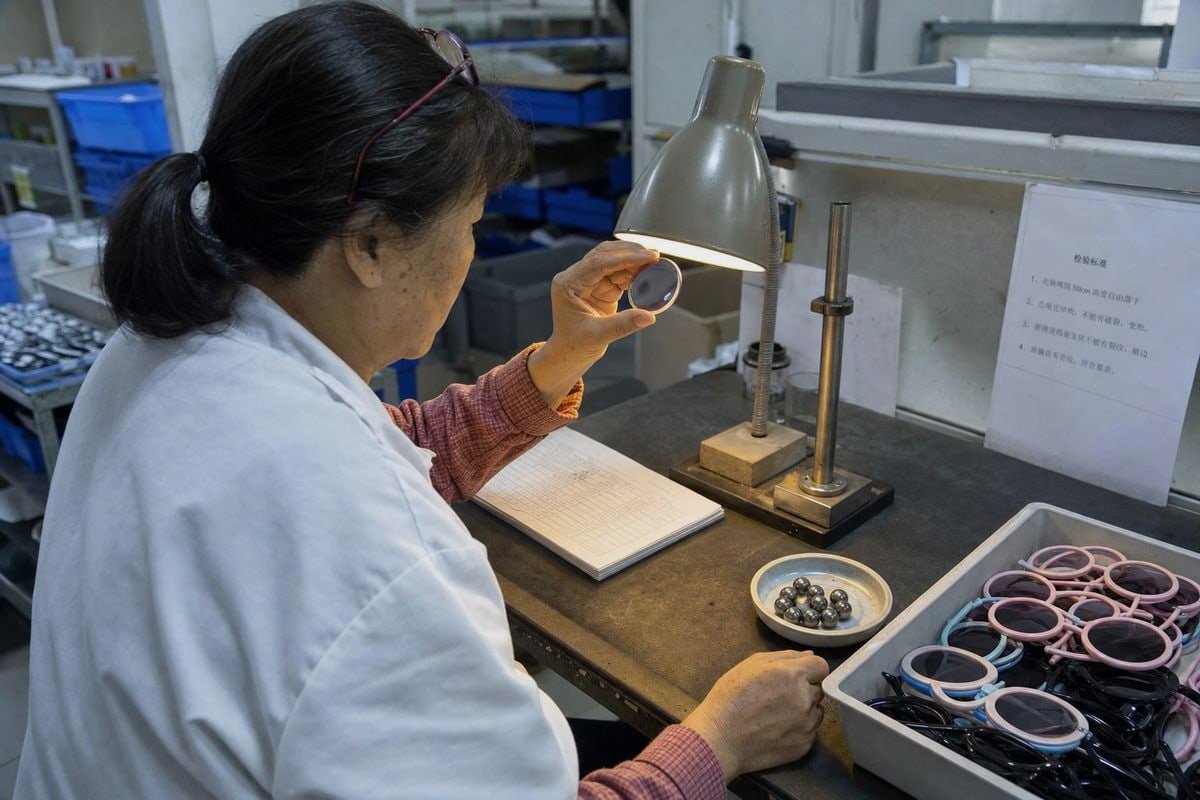
Our QC room in Taizhou has a simple steel tube fixed above a lens holder. New workshop staff are always surprised by how low-tech the referee test looks — and how strict the pass criteria are.
In the drop-ball test, a 5/8-inch steel ball weighing roughly 0.56 ounces falls freely from 50 inches onto the horizontal lens surface, striking within a 5/8-inch circle at the geometric center. The lens passes only if it does not fracture through its full thickness or shed visible fragments.
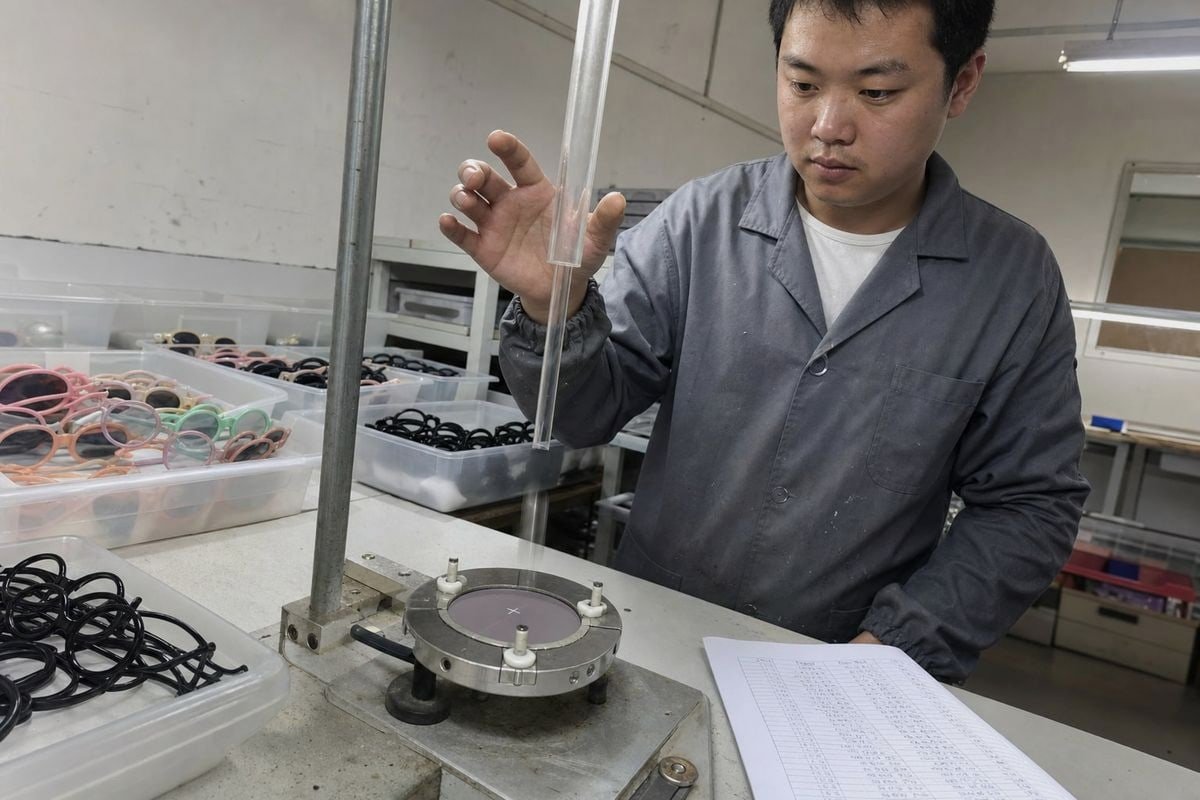
The mechanics are simple, but every detail is specified. Understanding the procedure helps you audit a supplier intelligently, so let me break it down as a process.
The Test, Step by Step
- The lens is mounted horizontally, convex side up, on a supporting fixture.
- A guide tube may position the ball, but the tube cannot restrict free fall, and it may extend to within about 4 inches of the lens.
- The 5/8-inch steel ball is released from 50 inches above the lens surface.
- The ball must strike within a 5/8-inch diameter circle centered on the lens's geometric center.
- Inspectors examine the lens for failure conditions.
What Counts as Failure
A lens fails if it cracks through its entire thickness and across a complete diameter into separate pieces. It also fails if any fragment visible to the naked eye detaches from the surface closest to the eye. That second condition matters enormously for children. A lens that holds together but sprays micro-fragments toward a child's eye is a failed lens, full stop.
Glass vs. Plastic Testing Rules
There is one more distinction buyers should know. Prescription glass lenses must be tested individually — every single lens. Plastic lenses, including lentes de policarbonato 5 and Trivex material, may be batch-tested using statistically significant sampling. Since virtually all our children's lenses are plastic, batch sampling is how we run incoming lens QC. We pull samples from each lens shipment before assembly, because catching a weak batch early costs far less than reworking finished goods. One point I always clarify for buyers: heavy anti-reflective or hard coatings can create an "eggshell effect" that reduces a lens's impact resistance significantly compared to an uncoated lens, so coated lenses need their own verification — never assume the base material's result carries over.
How Can I Verify My Manufacturer's Drop-Ball Test Results Before Placing an Order?
Early in my export career, I learned that buyers who never ask for test evidence are the same buyers who panic at customs. Now I send documentation proactively, before anyone asks.
Verify drop-ball results by requesting the supplier's written test records or third-party lab reports referencing FDA 21 CFR 801.410, confirming batch sampling procedures for plastic lenses, ordering pre-production samples for independent testing, and checking that documentation matches your exact lens material and coating specification.
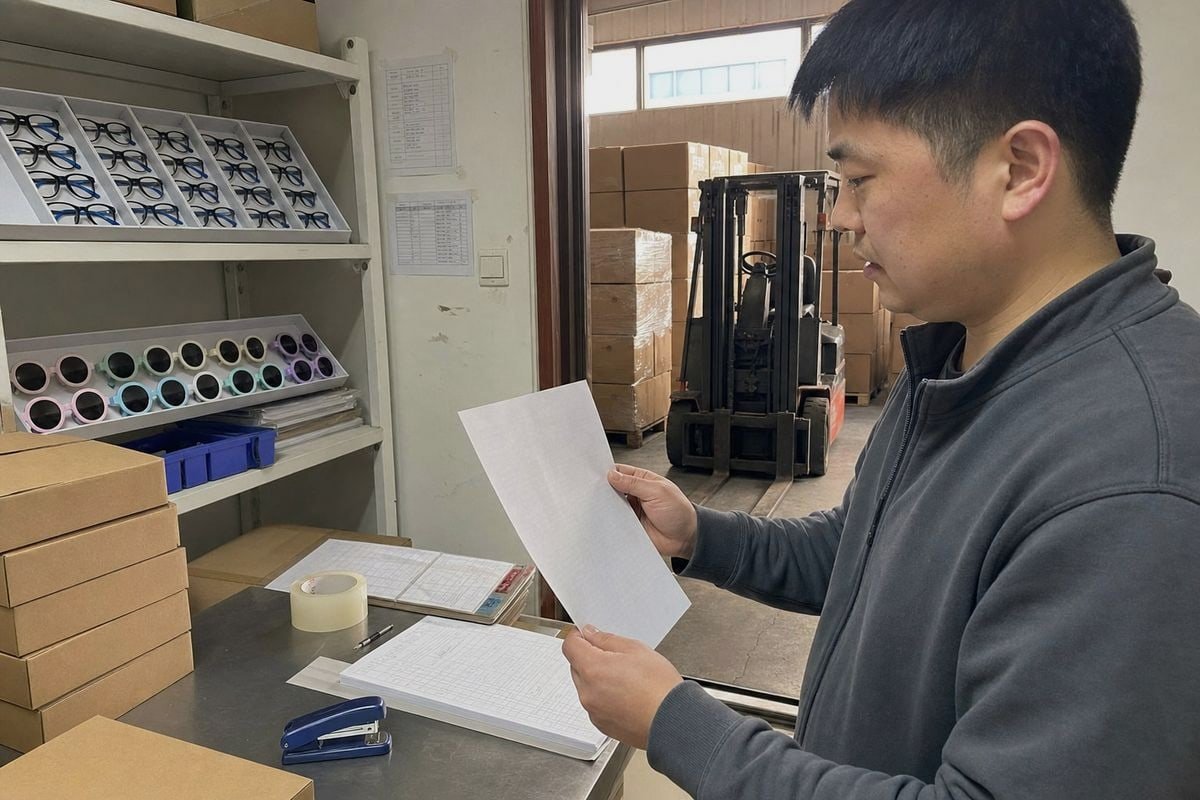
Trust is good. Documents are better. Here is the verification checklist I recommend to every new B2B buyer, based on fifteen years of shipping children's eyewear to more than twenty countries.
Seu Checklist de Verificação
| Verification Step | What to Ask For | Como Deve Ser uma Boa Resposta |
|---|---|---|
| Standard reference | Which standard was tested? | A named regulation, e.g., FDA 21 CFR 801.410, not "we test for quality" |
| Test evidence | In-house records or third-party lab report | Dated reports matching your lens spec and coating |
| Sampling method | How are plastic lens batches sampled? | A defined sampling plan per incoming batch |
| Independent check | Pre-production samples for your own lab | Supplier ships samples willingly, before deposit if possible |
| Coating impact | Are coated lenses retested? | Yes — coated and uncoated lenses tested separately |
Why Sample Testing Is Non-Negotiable
I always encourage buyers to send pre-production samples to an independent lab in their home market. It is a small cost against a container-sized risk. When we developed a polarized sunglasses program for a European kids' brand, the buyer tested our UV400 polarized lenses at a local lab alongside our own reports. The results matched, and that single step turned a first order into a multi-year relationship.
Red Flags to Walk Away From
Be cautious if a supplier cannot name the standard, offers only a generic "certificate" with no test parameters, or claims one report covers every lens type and coating they sell. Ophthalmic lens standards are specific for a reason. A factory with a real 5S-managed QC process — like the workshop discipline we maintain across our roughly 120 workers — can show you traceable records for your exact specification, not a photocopied catch-all document.
Why Does Frame Material Like TR90 or TPEE Affect Drop-Ball Impact Performance?
The trade-off we weigh on every new kids' style is stiffness versus flex. A rigid frame holds a lens precisely, but a flexible frame absorbs abuse. For children, we almost always choose controlled flexibility.
Frame material affects impact performance because the drop-ball test proves the lens, while the frame determines whether that lens stays in place on impact. Flexible TR90 and TPEE absorb and distribute energy, resist snapping, and provide the lens retention that keeps a passing lens away from a child's eye.
Here is a point that surprises many buyers: the drop-ball test is a lens test. A lens can pass beautifully and still endanger a child if the frame lets it pop inward on impact. Impact resistance is a system-wide property, and frame material is half the system.
How TR90 and TPEE Behave Under Impact
Our engineers work with both materials daily, and each earns its place. TR90 is a lightweight thermoplastic 6 with memory-like flexibility. It bends under stress and returns to shape instead of cracking into sharp edges. TPEE goes further — it is softer, rubber-like, and nearly impossible for a child to snap through normal abuse. Both are environmentally friendly options, which matters to the kids' and baby brands we serve.
| Propriedade | TR90 | TPEE | Rigid Acetate/Plastic |
|---|---|---|---|
| Flexibilidade | High, memory return | Very high, rubber-like | Low, can snap |
| Peso | Muito leve | Muito leve | Mais Pesado |
| Sharp-edge risk on break | Baixo | Muito baixo | Higher |
| Lens retention under flex | Strong when groove is engineered well | Strong with proper bezel design | Good until fracture |
| Best fit | Kids' optical frames | Temples, active-wear sunglasses | Fashion adult frames |
Material Pairs With Design
Many of our best-selling children's optical styles combine a TR90 front with TPEE temples — the glossy black rectangular frame with navy and sky-blue flexible temples in our catalog is a typical example. The front holds the lens groove precisely, so the shatter-resistant lens stays seated even when the frame twists. The soft temples survive being sat on, pulled, and thrown into school bags. For sport-style wraparound shields, a well-designed polycarbonate frame-and-lens system 7 takes over, edging toward what protective sports goggles achieve. One caution I share with every buyer: material alone is not certification. Polycarbonate lenses in a poorly designed frame can still be pushed toward the eye. Test the assembled product, not just the components.
Conclusão
Vague "impact resistant" claims put your brand and children's eyes at risk. Named drop-ball test standards — FDA 21 CFR 801.410, ANSI Z87.1, ASTM F803 — plus verified documentation and flexible frame materials solve that risk. We build all three into every kids' style we produce.
Notas de rodapé
1. Manufacturer information on Trivex material’s impact resistance and clarity. ↩︎
2. General overview of eyeglass frame components and materials. ↩︎
3. Standard specification for eye protectors used in various sports. ↩︎
4. Official US federal regulation for impact-resistant lenses in eyeglasses. ↩︎
5. Technical properties and saf
Mais Artigos que Você Pode Gostar
Procurando um Parceiro Confiável em Óculos Infantis?
Explore mais de 800 estilos prontos e suporte completo OEM/ODM adaptado à sua marca.
Entre em Contato English
  Español de México
  Deutsch
  Français
  日本語
日本語  العربية
  Português do Brasil