Why Do B2B Platform Quotes for Kids Optical Frames Differ From Trade Show Prices?

B2B platform quotes for kids optical frames often confuse buyers who visit our booth. The gap feels suspicious, budgets get harder to plan, and trust erodes. Our quoting desk sees why daily.
B2B platform quotes for kids optical frames differ from trade show prices because they price different things. Platform quotes are standardized, itemized, and include service, documentation, and risk buffers. Trade show prices are negotiation openers that often exclude customization, packaging, certification, and logistics costs revealed only later.
The difference is structural, not a trick. Once you understand what each price actually covers, you can compare them fairly. Let me walk you through it, section by section.
Why do the same kids optical frames cost more when I request a quote online than at a trade show booth?
A buyer from Australia once showed me a screenshot of our online quote next to a competitor's show price. Same-looking Armação TR90 1, two very different numbers. Here is why.
Online quotes usually bundle production economics, quality control, documentation, and buyer protection into one conservative number. Trade show prices are frequently opening offers, sometimes show-only promotions, quoted for a bare frame at an assumed MOQ, with customization, packaging, and shipping terms still undefined.
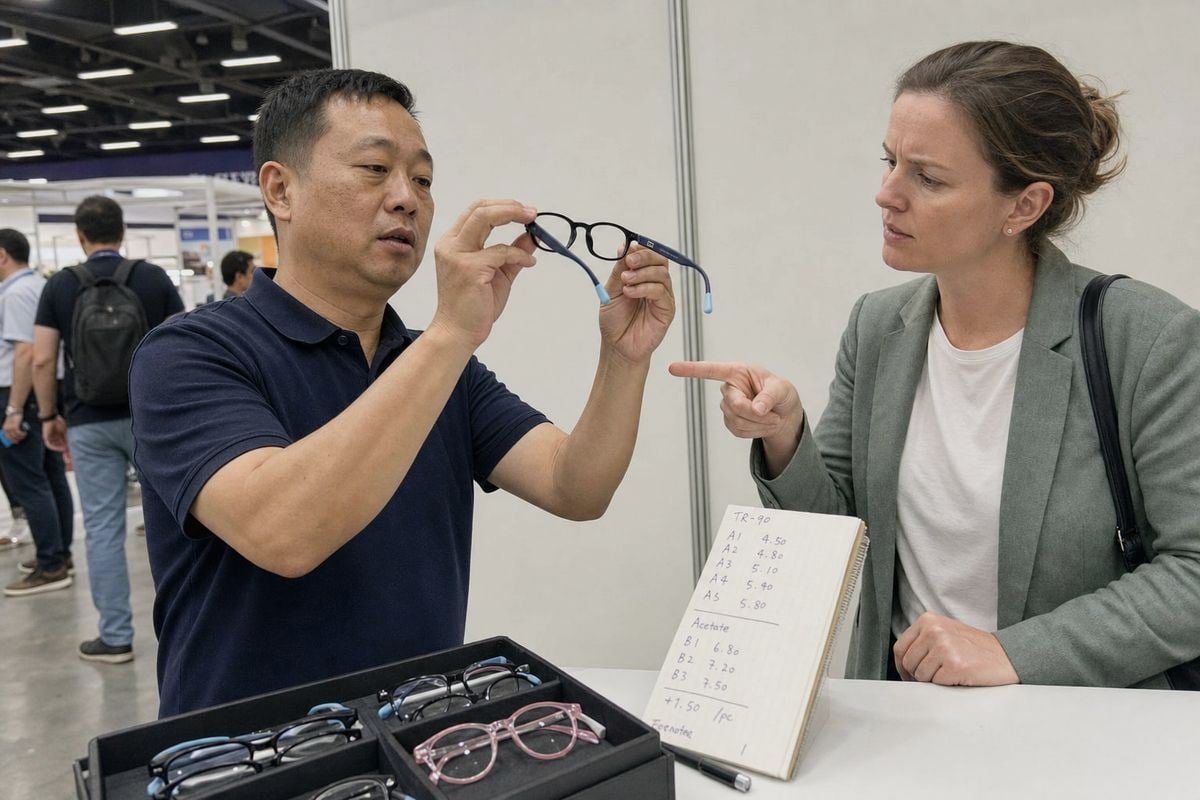
The core issue is scope mismatch. A price for children's glasses in bulk is rarely just the frame. At our Taizhou factory, a full quotation for a kids optical frame covers the base unit, logo printing, cases, cloths, packaging type, inspection, lead time, payment terms, and the shipping term such as FOB or EXW. When we quote on an online B2B marketplace, we itemize most of that. At a trade show, the conversation often sounds like a single all-in number, even when it is not.
What each channel is really pricing
| Fator | Typical Platform Quote | Typical Trade Show Price |
|---|---|---|
| Base frame | Included, itemized | Included |
| Custom logo & private label optical frames | Listed as add-on | Often unspecified |
| Packaging & accessories | Specified | Frequently vague |
| Inspection & QC | Built into price | Assumed, rarely discussed |
| Shipping term (EXW/FOB/DAP) | Stated | Often not unpacked yet |
| Negotiation room | Limitada | High, adjusted in real time |
There is also a supplier-side reality. Trade show exhibit expenses — booth rental, staff travel, marketing materials — push some exhibitors to price aggressively just to secure orders and recover costs through volume later. Meanwhile, online B2B marketplace pricing tends to bake in more service and documentation, because the seller cannot read your face or gauge your real volume. Exhibitors can adjust in real time based on perceived order size or future potential. A platform seller quotes blind, so the number is more conservative.
Neither price is dishonest. They simply answer different questions.
How can I tell if a low online quote hides extra costs I'll discover later?
One lesson our export team learned early: the cheapest quote on paper is often the most expensive invoice at the end. Kids' frames make this trap sharper.
Ask for a full Proforma Invoice that specifies product name, quantity per style and color, unit price, total price, logo details, accessories, packaging, lead time, payment terms, and shipping term. Any quote missing these line items is hiding costs you will discover after ordering.
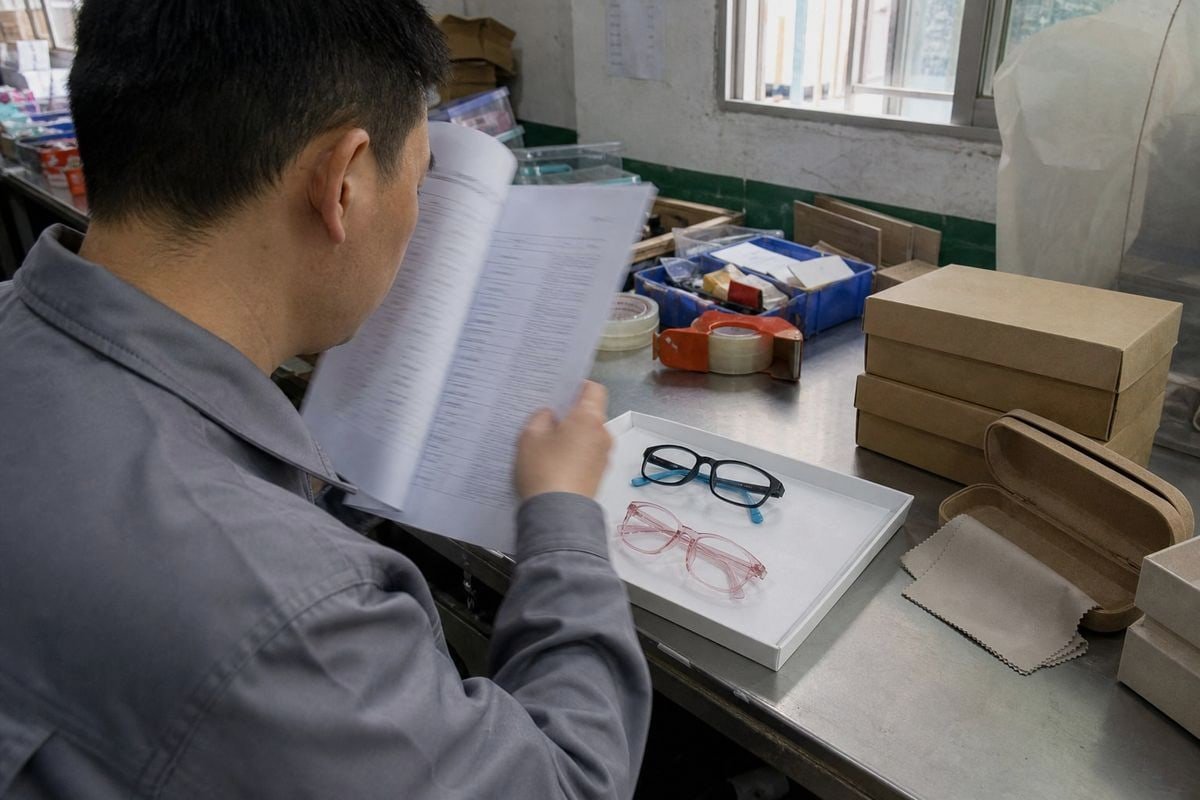
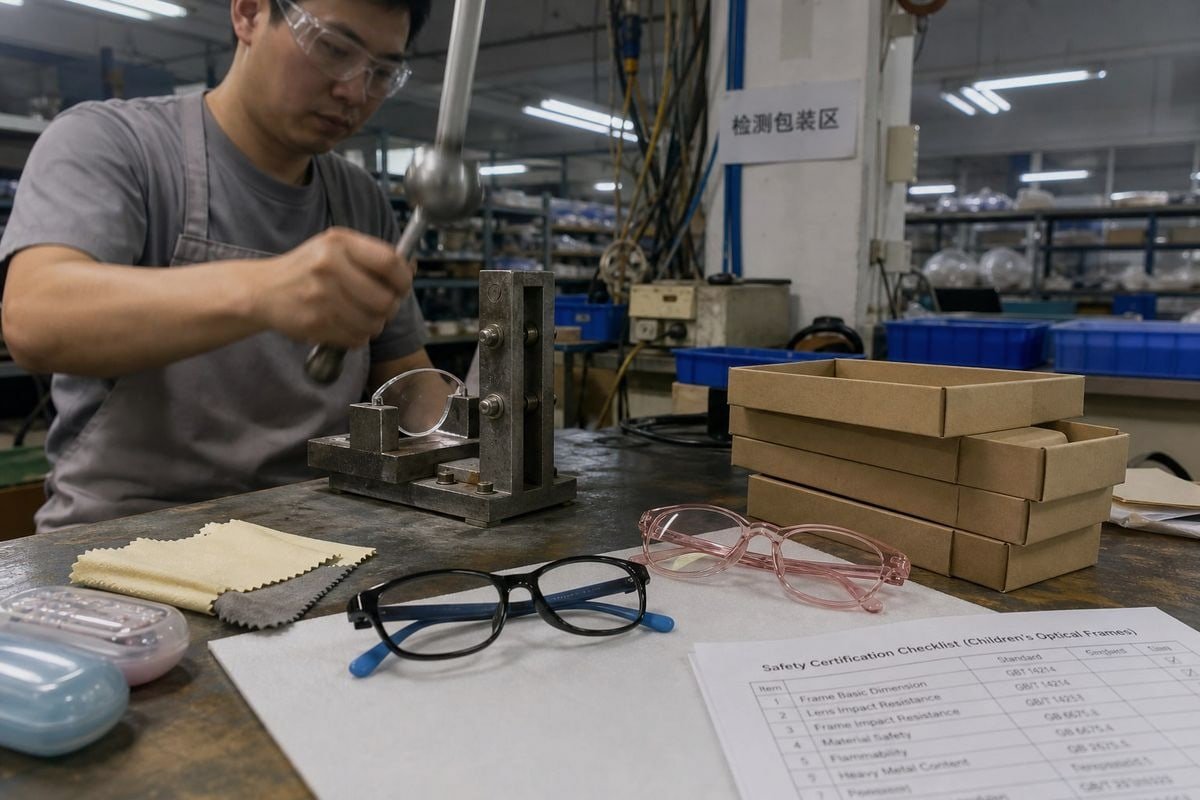
Children's eyewear carries stricter functional and safety expectations than adult fashion frames. Kids' frames typically rely on impact-resistant PC lenses and flexible materials like TR90 or flexible metal, plus safety certification. One supplier may quote a bare frame with minimal documentation. Another bundles safer materials, testing, and retail-ready packaging into the unit price. On paper, the first supplier looks cheaper. In practice, you pay the difference later — through compliance failures, returns, or a rushed re-order.
Red flags our buyers have learned to spot
- No shipping term stated. EXW pricing pushes freight, export handling, and risk onto you. Always confirm whether the quote is EXW, FOB, or DAP before comparing.
- No certification mention. For children's glasses in bulk, missing safety documentation is a cost deferred, not a cost saved. Impact resistance and certification are becoming more visible in pricing across the industry, and rightly so.
- Sample economics ignored. Single samples often cost around $10 per piece plus shipping, with cheaper negotiated pricing for multiple samples, and sample fees are sometimes refunded after a larger order. If a quote assumes production economics but you need samples first, your real early cost is higher.
- Vague packaging. "Standard packaging" can mean a polybag or a branded retail box. For our private label optical frames, packaging is always a specified line item.
- Material substitution room. A seemingly identical frame can differ in hinge durability, nose pad comfort, and certification coverage. If the quote does not name the material grade, assume the cheapest one.
A rough B2B wholesale benchmark for children's eyewear runs about $10–25 per pair, excluding customization and shipping. A quote far below that range should trigger questions about optical frame materials cost, not celebration.
What pricing details do I need to compare quotes fairly across platforms and trade shows?
When we develop a new TR90 frame with TPEE temples, we cost every component separately. I encourage buyers to demand the same discipline from every quote they receive.
To compare fairly, normalize both quotes to the same MOQ, material specification, lens type, packaging, certification requirement, sample policy, and Incoterm. Then calculate the full landed cost — unit price plus freight, insurance, and duties — because only landed cost per delivered frame is truly comparable.
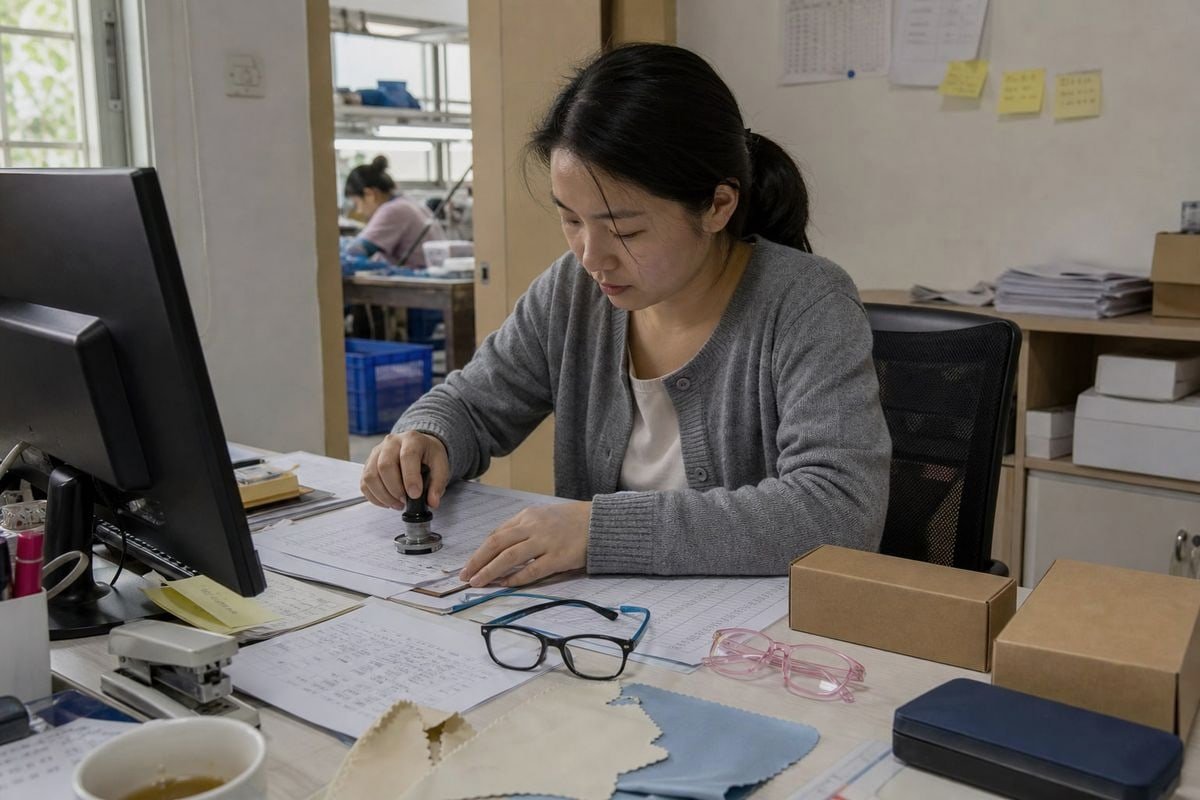
The single biggest distortion is quantity. Wholesale eyewear pricing changes with quantity tiers, and a lower per-unit price may require a much larger order. Trade show buyers often hear an event price that assumes a different minimum order quantity (MOQ) than the platform quote. Volume discounts in eyewear are real, but comparing a 300-piece platform tier against a 3,000-piece show tier tells you nothing.
The normalization checklist
| Variable | Question to Ask Both Suppliers | Why It Distorts Comparison |
|---|---|---|
| MOQ & tiers | What is the price at exactly my quantity? | Quantity breaks can swing unit price dramatically |
| Material spec | TR90? TPEE temples? PC lenses? | Optical frame materials cost varies widely by grade |
| Certification | Which safety standards are covered and documented? | Testing and QC expenses are reflected in price |
| Embalagem | Polybag, case, cloth, or branded retail box? | Retail-ready presentation adds real cost |
| Sample policy | Sample price? Refunded against production order? | Sample-oriented quotes distort per-unit math |
| Incoterm 3 | EXW, FOB, or DAP? | Determines who pays freight, duty, and risk |
From unit price to landed cost
Landed cost eyewear math is where cheap quotes go to die. A quote that looks lower may exclude freight, duty, or delivery responsibility. Trade show offers often feel cheaper simply because the buyer has not yet unpacked the logistics terms. In our experience exporting to buyers in 20+ countries, two quotes that differ by 20% at unit level frequently land within a few percent of each other once shipping method, insurance, and import duties are added.
There is a shortcut we recommend. Because we hold around 800 existing styles, buyers can often skip mold investment entirely, test the market at a modest MOQ, and get a clean, fully itemized quote — which makes the comparison exercise much simpler.
Should I trust B2B platform prices or wait to negotiate face-to-face at the next trade show?
Buyers at our booth ask this constantly, usually while holding their phone with our online listing open. My honest answer: use both, in sequence.
Use platforms for screening and structured comparison, then use trade shows for validation and relationship-based negotiation. Neither channel is inherently cheaper or more trustworthy. The best B2B pricing strategy converts both quotes into one identical specification, then chooses the supplier, not just the number.
The market is already moving this way. More buyers now use online platforms for supplier comparison and test orders, then use expos for direct engagement with factory owners and deeper eyewear supplier negotiation. Price transparency is improving, but it remains incomplete — marketplace pages show example ranges and supplier profiles, yet actual quotes still vary by quantity, customization, and supplier tier.
Let me address the common objections directly.
"Trade show prices are always lower." Often true for simple, high-volume deals, because exhibitors use shows to drive immediate orders. But that price may omit customization or logistics. Also remember the follow-up dynamic: initial show quotes are frequently part of a broader sales strategy, with further discounts offered post-show to convert leads. The booth number is rarely the floor.
"Platform quotes are inflated." Sometimes they are higher — because sellers bake in risk, buyer protection, service, and documentation rather than offering their lowest live-negotiation number. That is added value, not padding.
"The difference is just marketing." The evidence says otherwise. Quotation format, included services, MOQ, sample policy, and compliance requirements all materially affect final cost. The gap is structural.
A practical sequence we see work
| Estágio | Channel | Goal |
|---|---|---|
| 1. Screening | B2B platform | Shortlist suppliers, request itemized PIs |
| 2. Sampling | Either | Test comfort, flexibility, hinge quality on real frames |
| 3. Validation | Trade show | Meet the factory team, verify capability, touch products |
| 4. Negotiation | Face-to-face + follow-up | Lock spec, MOQ, Incoterm, and long-term terms |
Platforms also aggregate every supplier tier, from small workshops to export-ready factories, while shows concentrate suppliers with a specific positioning — premium, design-forward, or export-focused. Different overhead and specialization produce large price gaps that have nothing to do with your specific deal. What matters for a children's brand is not squeezing the last dollar at a booth. It is finding a factory that quotes the same way in both channels, stands behind its safety spec, and delivers the same quality on order ten as on order one. That consistency is what we have built fifteen years of production around.
Conclusão
Confusing quote gaps waste budgets and stall launches. The fix is simple: never compare until both quotes share the same MOQ, materials, packaging, certification, samples, and Incoterm. The price you see is not the price you pay — normalize first, then decide.
Notas de rodapé
1. Explains the properties and benefits of TR90 material in eyewear. ↩︎
2. Defines the purpose and typical contents of a Proforma Invoice in international trade. ↩︎
3. Explains the role of Incoterms in defining shipping responsibilities and costs. ↩︎
Mais Artigos que Você Pode Gostar
5 de agosto de 2026
Acetato de Celulose Bio-Baseado vs. Regular: Qual a Diferença para Armações Infantis?

5 de agosto de 2026
Quão Recicláveis São os Materiais de Armações Ópticas Infantis e Quais Alternativas Ecológicas Existem?
5 de agosto de 2026
As Armações Ópticas Infantis Branqueiam ou Envelhecem em Armazenamento e Como Controlar as Condições do Armazém?
Procurando um Parceiro Confiável em Óculos Infantis?
Explore mais de 800 estilos prontos e suporte completo OEM/ODM adaptado à sua marca.
Entre em Contato English
  Español de México
  Deutsch
  Français
  日本語
日本語  العربية
  Português do Brasil