What Role Does TPEE Play in TR90 Kids Optical Frames vs Soft Rubber & Silicone?

Parents return kids’ glasses for snapped temples, not blurry lenses. That pattern shaped how our Taizhou line uses TPEE in TR90 kids optical frames instead of rubber or silicone.
TPEE in TR90 kids optical frames serves as the ultra-flexible temple material. TR90 gives the front its stable, lens-holding structure, while TPEE temples bend, twist, and recover without cracking. Compared with soft rubber, TPEE resists fatigue and stickiness; compared with silicone, it holds shape and bonds cleanly to TR90.
The rest of this article breaks that answer down. I will look at safety first, then durability, then flexibility and comfort. I will close with what this means for a brand building a children’s collection. Each section includes the trade-offs we weigh on our own production line.
How do I know if TPEE temples are safer for my kids' eyewear than silicone or rubber?
During a drop test on our 5S workshop floor last season, a TPEE temple folded flat against the lens and sprang back. That moment explains a lot about child safety.
TPEE temples are safer for kids' eyewear because they bend fully without snapping into sharp edges, stay non-sticky against skin, and are BPA-free and phthalate-free. Silicone and rubber are also skin-safe, but they tear or deform more easily. Remember that frame flexibility never replaces certified lens impact testing.

Safety in children's eyewear has two layers. One is what touches the skin. The other is what happens when the frame gets bent, sat on, or dropped. TPEE performs well on both, but I want to be precise about where it wins and where it does not.
Skin contact and material chemistry
All three materials we compare here—TR90, TPEE, and medical-grade silicone—are prioritized in kids' eyewear because they are Materiais livres de BPA 1, phthalate-free, and biocompatible for sensitive skin. Their hypoallergenic properties are similar on day one. The difference shows up over time. Soft rubber, usually TPR or TPE, tends to absorb skin oil. It can turn slightly sticky and hold onto sweat and grime behind the ears. TPEE, a elastômero de poliéster termoplástico 2, keeps its tactile integrity. It stays dry and smooth to the touch. For a child who wears glasses eight hours a day, that matters.
Bending behavior in a fall
When a frame gets crushed in a backpack or a child falls on the playground, the failure mode is the safety question. A rigid temple can snap and leave a sharp stub near the eye. TPEE temples fold and recover. Silicone is very soft, but thin silicone sections can tear. Soft rubber often deforms permanently, so the frame sits crooked and the lens angle drifts. Our TPEE temple designs with looped ear hooks add another layer. The loop keeps the frame on the face during play, so fewer drops happen in the first place.
| Fator de segurança | haste de TPEE | Silicone | Soft rubber (TPR/TPE) | TR90 |
|---|---|---|---|---|
| Skin-safe chemistry | Sim | Sim | Geralmente | Sim |
| Stays non-sticky over time | Sim | Sim | Often no | Sim |
| Folds without snapping | Sim | Sim | Yes, but deforms | Flexes, may crack under extreme load |
| Recovers original shape | Sim | Parcialmente | Mal | Sim |
| Suitable as structural front | Não | Não | Não | Sim |
What frame material cannot claim
Here is where I push back on marketing language. Frame material helps retain lenses and absorb stress. Formal protection claims, though, depend on lens impact standards. When buyers ask us to print "unbreakable" on retail packaging, we advise "flexible" or "bend-resistant" instead. Flexibility reduces everyday breakage risk. It does not replace certified impact testing, and a responsible brand should keep those two ideas separate.
What makes TPEE more durable than soft rubber when I'm sourcing children's optical frames?
Every temple design forces our engineers to weigh softness against lifespan. A softer rubber feels lovely on day one. Months of skin oil and sunlight tell a different story.
TPEE is more durable than soft rubber because it is a thermoplastic polyester elastomer with higher tensile strength and fatigue resistance. It survives repeated double-hinge bending without permanent deformation, resists skin-oil absorption and UV yellowing, and bonds molecularly to TR90 during multi-shot injection molding, so temples do not delaminate.

Pediatric frame durability is not one property. It is a bundle of behaviors that show up at different points in a product's life. I will take them one at a time, because soft rubber and TPEE fail in very different ways.
Fatigue resistance and the double-hinge bend
Children bend temples backward. They pull them outward. They twist them while pulling glasses off with one hand. Soft rubber handles a few of those cycles well, then starts to hold a slight bend. TPEE has superior fatigue resistance. It survives extreme "double-hinge" bending and rough handling without permanent deformation. In our own inspections, we flex TPEE temples repeatedly before approving a mold. The recovery stays consistent. That consistency is what a procurement manager actually buys.
Skin oil, sunlight, and the "sticky" problem
Soft rubber is more susceptible to skin oil absorption and environmental degradation. Over time the surface gets tacky, picks up dust, and may crack at the ear bend. TPEE does not become sticky. It also offers better UV stabilization and pigment retention than traditional soft rubbers. That prevents the yellowing and brittleness caused by prolonged sun exposure during outdoor play. For a kids' outdoor brand in Australia, this point alone often decides the material.
| Durability property | TPEE | Soft rubber (TPR/TPE) |
|---|---|---|
| Resistência à tração 3 | Mais alto | Menor |
| Fatigue resistance under repeated bending | Superior | Moderate, holds a set |
| Skin-oil absorption | Resists | Absorbs, turns sticky |
| UV stability and color retention | Bom | Prone to yellowing |
| Bond to TR90 front | Molecular bond in multi-shot molding | Weaker, may delaminate |
| Reciclabilidade | Thermoplastic, reprocessable | Varies by compound |
The bond between temple and front
A hybrid frame lives or dies at the junction. TPEE enables superior molecular bonding during multi-shot injection molding 4. The result is a seamless transition from the rigid TR90 front to the flexible temple tips, and it will not delaminate. We choose an injection molding grade of TPEE that matches the TR90 processing window, and the gradient temples you see in our catalog—white near the hinge fading to solid purple or blue at the tip—are possible because of that clean bond. Soft rubber overmolds can peel at the same spot after a season of heat and sweat.
Can I get the same flexibility from TPEE as silicone without sacrificing comfort for kids?
A Japanese baby-brand buyer once asked me to make a whole frame as soft as a silicone nose pad. I understood the wish. I also explained why we would not.
Yes, TPEE delivers flexibility close to silicone while keeping comfort high. Its low flexural modulus lets temples wrap softly around a child's ears, yet it recovers its shape and keeps lenses aligned. Silicone stays best at touchpoints like nose pads, where grip matters more than structure.
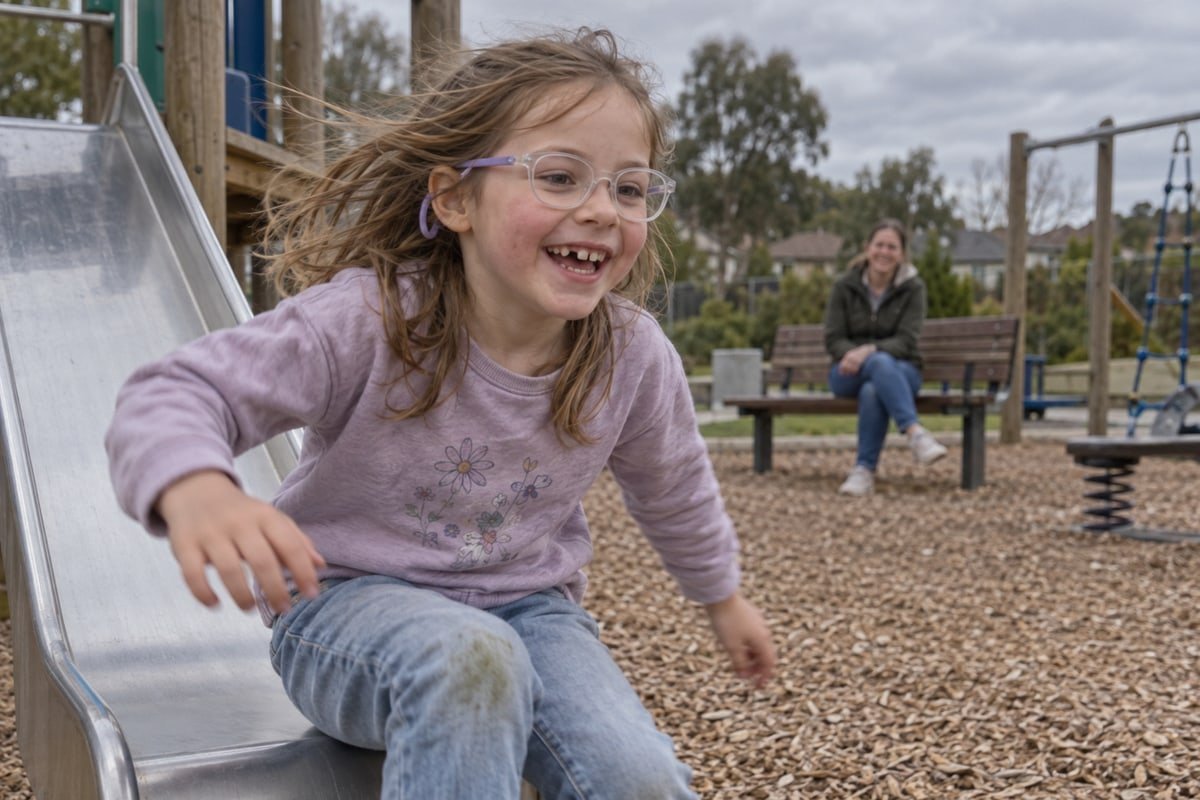
The buyer's request raises the real tension in this topic. One camp says the softest frame is the best frame. The other says a structured frame fits better and lasts longer. I sit in the second camp, but I understand the first, so let me explain the reasoning in plain terms.
What flexural modulus means for a child's face
Flexural modulus 5 is simply how much a material resists bending. Silicone has a very low value. TPEE also sits low, well below standard TR90. That is why TPEE temples wrap around a child's ear and flex when the head turns on a pillow. But TPEE sits in a sweet spot. It bends easily, and it also pushes back to its original shape. Silicone bends easily and then mostly stays wherever gravity leaves it. On a full frame, that means the lenses drift out of alignment. Comfort feels great; vision does not.
Where silicone still wins
Silicone is excellent at touchpoints. It has a high friction coefficient and hypoallergenic properties, so it stops frames from sliding down a small nose. We use silicone in nose pads and anti-slip inserts, especially for low-bridge fits common in our Asian markets. What silicone is not good at is holding a lens in place or keeping a hinge line straight. It is a finishing material, not a structural one.
A practical fit check we run on every hybrid sample
Comfort in children's frames depends on fit as much as on material. Here is the order we check in our sample room:
- Total frame width against the target age range, so the temples do not splay outward.
- Bridge fit, and whether a silicone pad or a flatter TR90 bridge suits the face.
- Temple length, so the TPEE bend lands behind the ear, not on top of it.
- Recovery after a full backward fold, to confirm the lenses stay seated in the TR90 front.
- Hinge feel and sound, because TPEE has acoustic damping that removes the plastic "clatter" and gives a quieter, premium feel.
The perforated dot pattern along some of our TPEE temples is part of this thinking. It adds flexibility right where the temple curves, without softening the rest of the frame. That is how we give buyers silicone-like comfort with TR90-level alignment.
Why should I choose TR90 with TPEE temples over rubber-based frames for my brand's collection?
Fifteen years of eyewear taught us one lesson: brands rarely fail on style. They fail on returns. That is why our catalog leans on TR90 fronts with TPEE temples.
Choose TR90 with TPEE temples because the hybrid gives brands structured lens alignment from memory plastic plus rubber-like comfort where frames touch the head. It reduces breakage returns, avoids the sticky ageing of rubber, is fully recyclable as a thermoplastic, and supports premium multi-shot color designs.

A brand collection has to work across ages, activities, and retail channels. No single material does that alone. The hybrid approach lets each material do one job well, and it lets your line-up feel consistent while still fitting a toddler and a ten-year-old.
Matching construction to age and use case
| Perfil da criança | Recommended construction | Por que funciona |
|---|---|---|
| Baby and toddler | Mostly TPEE, very soft, looped ear hooks | Near-unbreakable in normal use, gentle on delicate skin |
| Preschool, rough play | frente de TR90 com hastes de TPEE | Stable lenses, temples survive twisting and drops |
| School-age, classroom wear | TR90 front with TPEE temples, silicone nose pads | Clean structured look, no sliding, all-day comfort |
| Sports and outdoor | TR90 front with TPEE temples, UV400 or polarized lenses | Impact resistance, UV-stable color, secure fit |
| Sensitive skin or low bridge | Hybrid with silicone inserts | Skin-friendly polymers at every contact point |
Resolving the "softest is best" objection
Some buyers still ask for all-rubber or all-silicone frames because the marketing writes itself. I understand the appeal of "bends but never breaks." The problem is precision fit. A frame that is soft everywhere holds its shape less predictably, so the lenses tilt and the child pushes the glasses up all day. TR90 is a memory plastic with strong shape recovery, so the front returns to its designed geometry. Add TPEE temples, and you get the bendability the marketing promises without giving up alignment. This is why our TPEE in TR90 kids optical frames sells as a comfort-and-durability package, not as a compromise.
Launching without heavy mold investment
Our factory in Taizhou runs about 120 workers and offers roughly 800 existing styles across kids' sunglasses and optical frames. A new brand can pick TR90 front shapes, choose TPEE temple colors, add silicone nose pads, and test the market without paying for new tooling. Custom logos, lens options, and retail-ready packaging come through our OEM/ODM process. We ship to buyers in more than 20 countries, and most of them started with catalog styles before moving to custom molds.
Sustainability and merchandising
Unlike thermoset silicone, which needs specialized chemical recycling, TPEE is a thermoplastic that can be fully reprocessed. That story fits circular-economy messaging for European and Australian brands. Multi-shot molding also gives you visual signatures—a crystal-clear TR90 front paired with a lavender gradient temple, or a translucent light-blue front with a matte solid-blue arm—that rubber overmolds struggle to match cleanly.
Conclusão
Snapped temples cost trust. TPEE in TR90 kids optical frames fixes this: TR90 holds structure, TPEE flexes and lasts, silicone grips. Choose the hybrid, and a partner who understands it.
Interessado em adquirir os produtos mencionados neste artigo? Veja detalhes e solicite um orçamento aqui:
Notas de rodapé
1. Regulatory authority for biocompatibility and safety standards of materials in contact with skin. ↩︎
2. Technical definition of TPEE material properties and engineering applications. ↩︎
3. Scientific explanation of material resistance to tension and breaking under stress. ↩︎
4. Technical overview of the manufacturing process used to bond different polymers. ↩︎
5. Engineering concept explaining material stiffness and its tendency to bend. ↩︎
Mais artigos que você pode gostar

9 de novembro de 2026
Como saber quando as armações ópticas infantis em TR90 precisam de substituição?
8 de novembro de 2026
Por Que as Armações Ópticas Infantis em TR90 Ficam Amarelas e Quebradiças, e O Que Acelera Isso?
7 de novembro de 2026
Quanto Tempo Duram as Armações Óticas Infantis em TR90 Antes da Substituição?
Procurando um parceiro confiável em óculos infantis?
Explore mais de 800 modelos já desenvolvidos e suporte OEM/ODM completo sob medida para a sua marca.
Entre em contato English
 Español de México
 Deutsch
 Français
 日本語
 العربية
 Português do Brasil