Quais são as diferenças de qualidade entre óculos de sol infantis em diferentes faixas de preço?
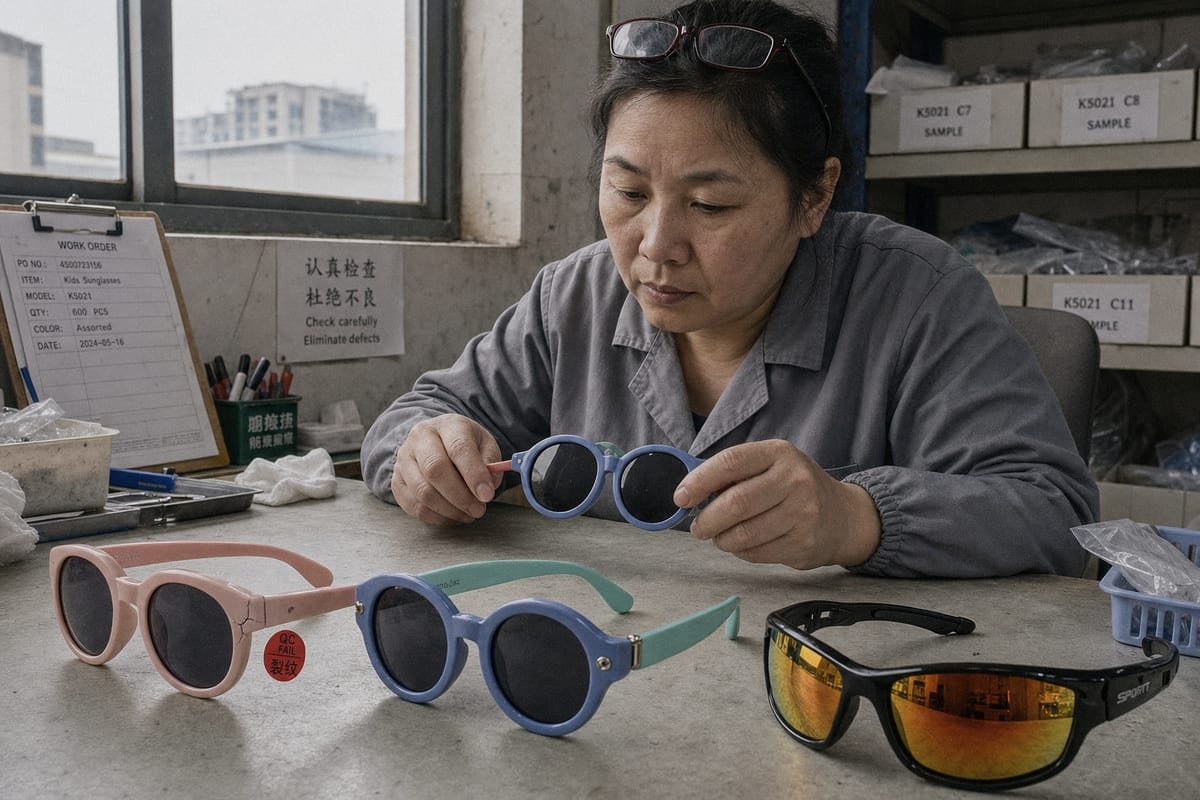
Os compradores perguntam-me sobre as diferenças de qualidade entre óculos de sol infantis em diferentes faixas de preço quase todas as semanas, geralmente depois de um lote barato ter rachado, desbotado ou falhado numa auditoria de segurança.
As diferenças de qualidade entre óculos de sol infantis em diferentes faixas de preço residem principalmente nos materiais da armação, resistência ao impacto, clareza das lentes, ajuste e controlo de qualidade — não apenas na proteção UV. Pares económicos podem oferecer proteção UV400, mas os níveis intermédio e premium proporcionam melhor durabilidade, conforto e consistência.
O preço por si só diz muito pouco. O que importa é saber exatamente quais características melhoram com o aumento do preço e quais alegações são apenas marketing. Deixe-me detalhar por nível.
Como Materiais Como TPEE e TR90 Afetam a Durabilidade em Diferentes Níveis de Preço?
Na nossa linha de produção em Taizhou, dobramos cada haste de TPEE amostrada a noventa graus antes de aprovar um lote. Plástico injetado barato parte nesse ponto. O nosso volta ao lugar.
TPEE e TR90 determinam diretamente a durabilidade em diferentes faixas de preço. Óculos de sol econômicos usam plásticos rígidos injetados que quebram sob estresse, enquanto armações infantis de gama média e premium usam armações flexíveis de TPEE e frentes de TR90 que dobram, torcem e se recuperam sem quebrar ou apertar o rosto de uma criança.
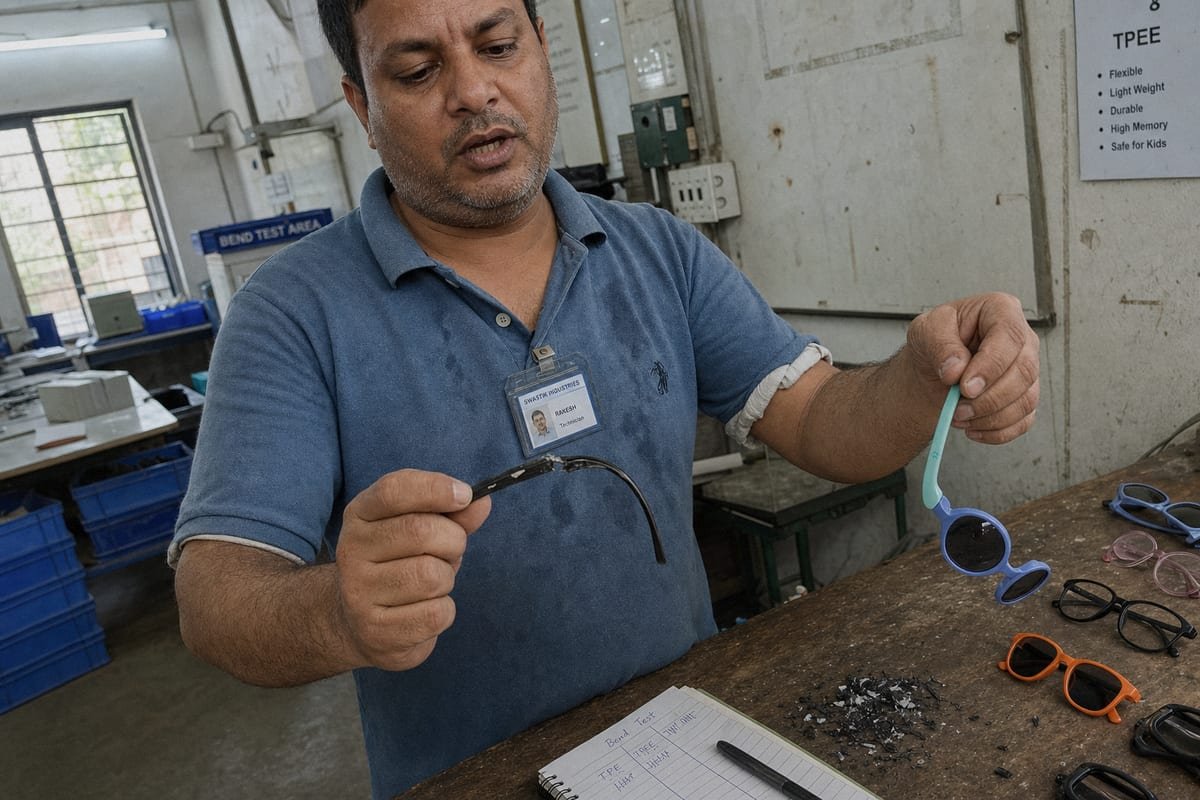
A escolha do material é o maior fator de custo dentro de uma armação infantil. É também onde os fornecedores económicos cortam primeiro, porque os pais não conseguem ver o grau do polímero à primeira vista. Mas as crianças descobrem a fragilidade em poucos dias. Sentam-se nos seus óculos de sol. Tiramo-los com uma mão. Colocam-nos em mochilas sem estojo.
O que Cada Material Realmente Faz
TR90 1 é um polímero de memória termoplástico. É leve, resiste ao impacto e volta à forma após torção. O TPEE vai mais longe. É um elastómero flexível que usamos para hastes e armações completas para bebés porque dobra quase totalmente sem marcas de stress. Ambos os materiais também estão disponíveis como plástico sem BPA 2 graus, o que é importante para produtos que acabam na boca de crianças pequenas.
Eis como os materiais normalmente se relacionam com os níveis de preço:
| Nível de Preço | Material Típico da Armação | Flexibilidade | Vida Útil Real |
|---|---|---|---|
| Económico ($10–20) | PC rígido injetado ou acrílico | Baixa — parte sob torção | Semanas a poucos meses |
| Intermédio ($30–50) | Frente em TR90, frequentemente armações ou hastes flexíveis em TPEE | Alta — recupera da dobra | Uma a duas épocas |
| Premium ($50–80+) | Combinações de TR90/TPEE, silicone, dobradiças de mola | Muito alta — sobrevive a sentar, torcer | Vários anos |
Porquê as Dobradiças Importam Tanto Quanto as Armações
Uma armação flexível com uma dobradiça quebradiça ainda falha. Designs intermédios e premium frequentemente adicionam dobradiças de mola ou dobradiças de barril reforçadas. Na nossa experiência a desenvolver armações redondas bicolores — como o nosso estilo infantil azul-piscina e menta com acabamento mate emborrachado — a tolerância do parafuso e do barril da dobradiça decide se a armação sobrevive ao segundo ano. Fábricas económicas raramente controlam essa tolerância lote a lote.
Que Padrões de Segurança e Lentes Devo Esperar ao Comparar Níveis de Preço?
Um gestor de compras da Austrália enviou-nos uma amostra económica de um concorrente para análise. A lente alegava Proteção UV400 3. O nosso medidor de luz mostrou filtração desigual em toda a superfície da lente.
Em cada faixa de preço, a demanda verificou proteção UV400 e lentes de policarbonato resistentes a impactos como base. Faixas de preço intermediárias adicionam lentes polarizadas, filtros solares Categoria 3 e revestimento resistente a arranhões. Faixas de preço premium adicionam clareza de grau óptico, certificações de segurança de materiais e testes consistentes de lote.
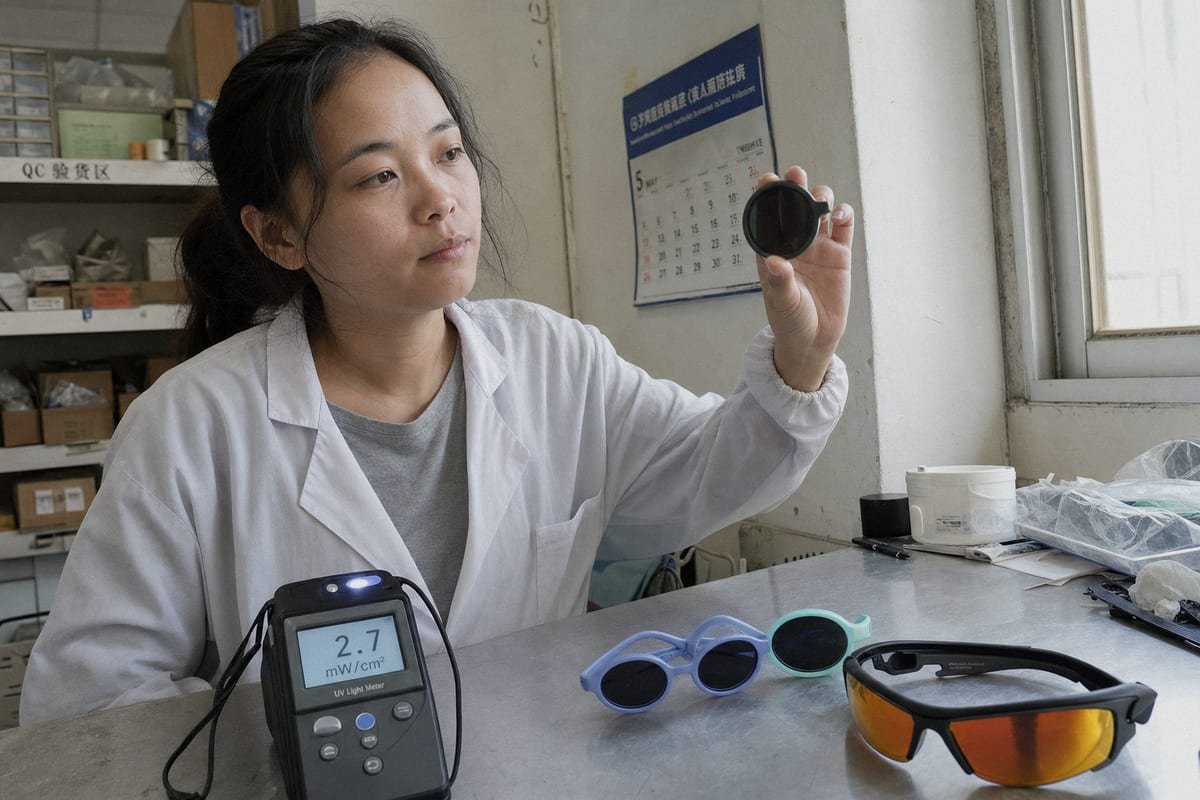
Eis a verdade desconfortável sobre o nível mais baixo. Uma lente escura sem filtração UV genuína é pior do que nenhum óculos de sol. A tonalidade faz a pupila dilatar, de modo que mais radiação não filtrada atinge a retina. É por isso que especificação da lente — não o preço — é o ponto de partida inegociável.
O Checklist de Normas por Nível
Use este checklist ao comparar cotações de fornecedores:
| Norma ou Característica | Económico | Intermédio | Premium |
|---|---|---|---|
| UV400 / 100% UVA-UVB | Alegado, verificado inconsistentemente | Verificado por lote | Verificado, documentado |
| Policarbonato 4 lentes de material | Às vezes acrílico em vez disso | Padrão | Padrão, grau ótico |
| Normas de resistência ao impacto 5 | Raramente testado | Testado | Testado e certificado |
| Filtros solares Categoria 3 | A sorte ou azar | Comum | Padrão |
| Lentes polarizadas | Raro | Upgrade opcional | Comum |
| Revestimento resistente a arranhões | Ausente | Revestimento duro básico | Revestimento multicamadas |
| Triagem de ftalatos/chumbo/BPA | Risco não regulamentado | Geralmente em conformidade | Conformidade documentada |
A clareza óptica é a lacuna oculta
Lentes coloridas baratas são estampadas em massa e apresentam ondas visíveis. Essa distorção óptica força os olhos dos jovens durante o uso prolongado. Lentes melhores são moldadas e acabadas com tolerâncias mais rigorosas, proporcionando clareza visual real. Quando desenvolvemos estilos de óculos de sol envolventes — como nossos designs de lente única envolventes com revestimentos espelhados de laranja para dourado — verificamos a distorção em cada curva da lente, pois um escudo curvo amplia qualquer falha de moldagem. Algumas linhas premium agora também adicionam Filtração de luz azul HEV 6, embora para uso externo, UV400 e uma boa tonalidade Categoria 3 permaneçam a proteção principal.
Estou Pagando por Conforto e Ajuste, ou Apenas por uma Marca?
O compromisso mais difícil que ponderamos durante o desenvolvimento é a geometria da ponte versus o custo do molde. A ponte nasal de uma criança é mais achatada do que a de um adulto, e acertar essa curva é caro para projetar, mas invisível em uma folha de especificações.
Nas faixas de preço econômico e intermediário, gastos extras compram conforto real: geometria de ponte específica para crianças, materiais leves e flexíveis, punhos emborrachados e cobertura de design envolvente. Acima de aproximadamente $60–80, uma parcela crescente do preço reflete o prestígio da marca em vez de melhorias mensuráveis no ajuste.
O conforto não é um recurso de luxo em óculos infantis. É um recurso de segurança. Uma criança que acha os óculos de sol pesados, apertados ou escorregadios simplesmente os tirará. Então, a classificação UV na caixa não protege ninguém.
Recursos de ajuste que valem a pena pagar
Essas melhorias oferecem valor mensurável e do mundo real:
- Design de ponte específico para crianças. Armações adultas em escala reduzida escorregam de narizes em desenvolvimento mais achatados. Armações infantis projetadas especificamente ficam seguras.
- Polímeros leves e flexíveis. Frentes em TR90 e hastes em TPEE reduzem a pressão atrás das orelhas durante o uso prolongado.
- Design envolvente. Frentes curvas de ajuste próximo bloqueiam a luz lateral e permanecem no lugar durante a corrida e o ciclismo.
- Pontas de haste emborrachadas. Pequenas aderências, como as de nossos estilos de óculos de sol envolventes, param de quicar durante a atividade.
- Dimensionamento correto por idade. Cabeças de bebês, pré-escolares e em idade escolar precisam de diferentes larguras de lente e comprimentos de haste.
Onde o prêmio da marca entra em jogo
Acima do limite premium, você muitas vezes paga por um logotipo de moda, design de grife e posicionamento de varejo. Essas coisas importam para a venda, e o estilo genuinamente aumenta o tempo de uso — as crianças usam armações que amam. Mas o polímero dentro de uma armação licenciada de R$70 é frequentemente o mesmo TR90 encontrado em um par bem feito de R$35. Quando nossos clientes criam suas próprias marcas usando nossa biblioteca de aproximadamente 800 estilos existentes, eles capturam esse valor de ajuste e conforto sem pagar um markup de licenciamento e sem um grande investimento em moldes.
Como Posso Saber se um Fornecedor de Menor Custo Ainda Entrega Controle de Qualidade Consistente?
Quinze anos de produção de óculos nos ensinaram uma lição acima de tudo: qualquer fábrica pode fazer uma boa amostra. A consistência em dez mil peças é o verdadeiro teste.
Julgue um fornecedor pelo processo, não pelo preço. Solicite registros de testes UV e de impacto em nível de lote, certificados de material para plástico livre de BPA, verificações de tolerância em dobradiças e parafusos, gerenciamento organizado da oficina e relatórios de inspeção pré-embarque. Documentação consistente sinaliza controle de qualidade consistente.
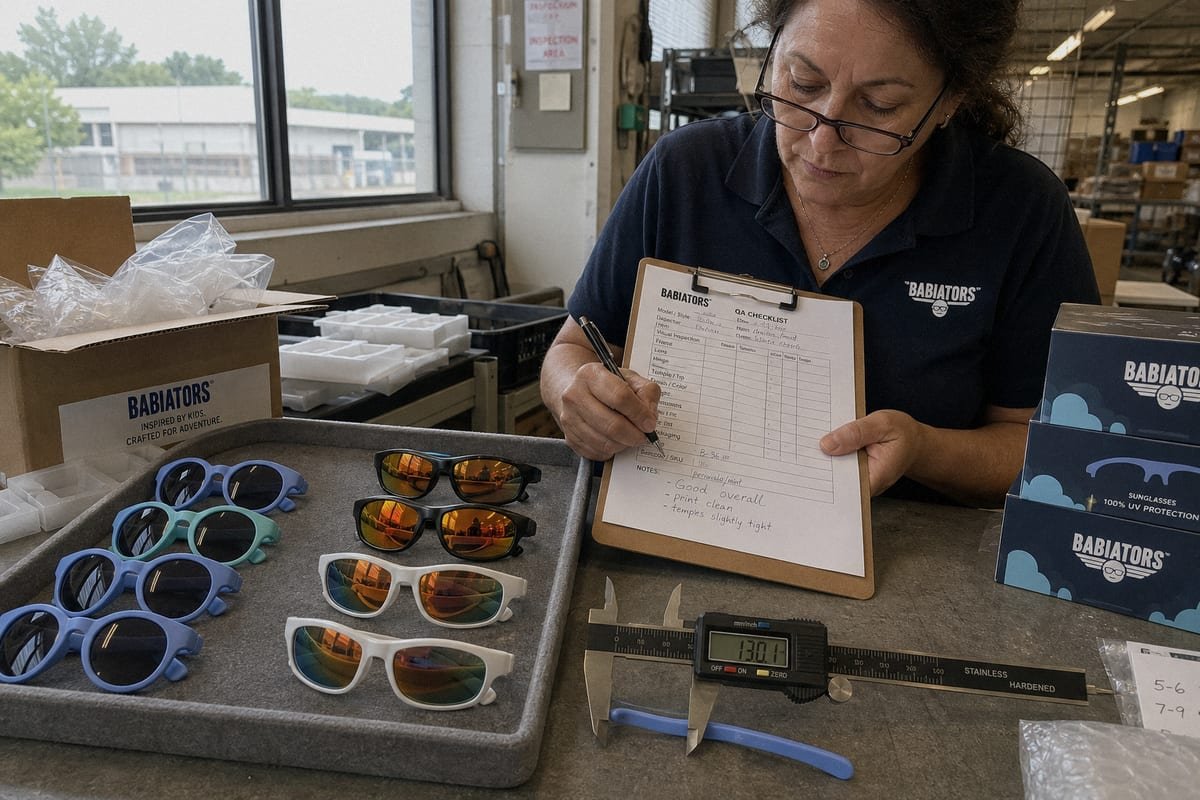
Preço e controle de qualidade estão relacionados, mas não travados juntos. Um fornecedor de menor custo com processos disciplinados pode superar um comerciante mais caro que nunca vê a linha de produção. O problema para os compradores é que a disciplina de CQ é invisível em uma cotação. Você tem que procurar suas impressões digitais.
Um checklist prático de auditoria de fornecedores
Aqui está como sugerimos que os compradores separem fábricas disciplinadas de sortudas:
| Sinal de CQ | O que Solicitar | Bandeira Vermelha |
|---|---|---|
| Verificação da lente | Registros de teste UV400 em lote | "Todas as lentes são UV400" sem dados |
| Teste de impacto | Resultados do teste de queda de bola ou equivalente | Nenhum padrão definido de resistência ao impacto |
| Segurança do material | Certificados para polímeros de lentes e armações | Alegações vagas de "plástico de grau alimentício" |
| Disciplina da oficina | Fotos da fábrica, 5S ou sistema similar | Recusa em compartilhar imagens ou vídeos do chão de fábrica |
| Consistência | Amostra de ouro mais limites de tolerância | Cada reordem parece ligeiramente diferente |
| Durabilidade do revestimento | Testes de adesão do revestimento resistente a arranhões | Revestimentos que se soltam durante o transporte |
Pequenos detalhes revelam grandes hábitos
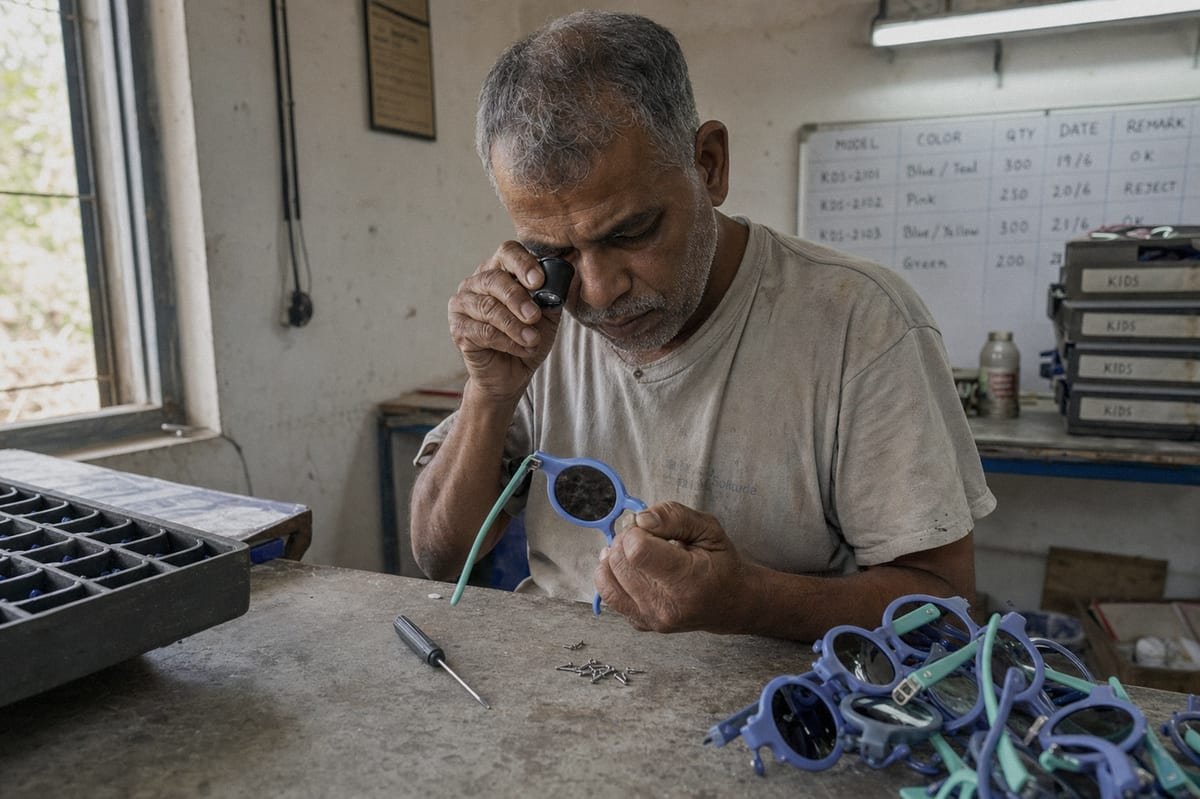
Verifique as partes chatas de uma amostra. Os parafusos da dobradiça estão nivelados? A borda da lente é polida ou áspera? A cor da haste corresponde ao lote frontal de lote para lote? Em nossa oficina gerenciada por 5S, rastreamos esses detalhes porque um parafuso solto em uma armação infantil é uma questão de segurança, não cosmética. Verifique também a prontidão do OEM: impressão consistente do logotipo, embalagem limpa e apresentação pronta para varejo mostram que uma fábrica controla todo o seu processo, não apenas a moldagem. Um fornecedor que documenta tudo geralmente fabrica tudo com cuidado também.
Conclusão
Aqui está o risco: assumir que preço é igual a segurança leva as marcas a pagar a mais por logotipos ou a comprar menos em durabilidade. Ambos os erros custam clientes quando as armações quebram ou escorregam.
As reais diferenças de qualidade entre óculos de sol infantis em diferentes faixas de preço se resumem a materiais, padrões de lentes, ajuste e consistência do controle de qualidade. A proteção UV400 é a linha de base em todos os níveis. O que melhora com gastos inteligentes — não apenas gastos mais altos — é a flexibilidade TPEE e TR90, lentes de material de policarbonato genuíno, ajuste específico para crianças e controle de qualidade documentado. Na minha experiência fornecendo marcas infantis em mais de vinte países, a fórmula vencedora é proteção verificada, um ajuste seguro e confortável, e durabilidade que sobrevive à infância real. Escolha um parceiro que possa comprovar os três, e o preço se torna uma estratégia em vez de um jogo.
Notas de rodapé
Contexto sobre polímeros de memória termoplástica usados em armações de gama média e premium. ↩︎
Orientações da FDA sobre segurança de BPA relevantes para certificados de material para produtos infantis. ↩︎
Contexto sobre padrões de proteção UV e tecnologia de lentes de óculos de sol para leitores. ↩︎
Explica o material plástico resistente a impactos referenciado como linha de base do padrão de lentes. ↩︎
Organismo de normas ISO relevante para resistência ao impacto e testes de segurança referenciados na lista de verificação. ↩︎
Recurso do NIH sobre saúde ocular relevante para alegações de filtragem de luz azul e UV. ↩︎
Ficha informativa da OMS explicando os riscos da radiação UV que apoiam as alegações de segurança do artigo. ↩︎
Mais Artigos que Você Pode Gostar

28 de setembro de 2026
Óculos de Sol Infantis TR90 e TPEE Podem Usar Materiais Reciclados ou de Base Biológica?
28 de setembro de 2026
Óculos de Sol Infantis TR90 e TPEE São Recicláveis? Dicas de Descarte Explicadas?
28 de setembro de 2026
Como Evitar Deformação e Arranhões ao Enviar Óculos de Sol Infantis TR90 e TPEE?
Procurando um Parceiro Confiável em Óculos Infantis?
Explore mais de 800 estilos prontos e suporte completo OEM/ODM adaptado à sua marca.
Entre em Contato English
  Español de México
  Deutsch
  Français
  日本語
日本語  العربية
  Português do Brasil