子供用サングラスの価格帯による品質の違いは何ですか?
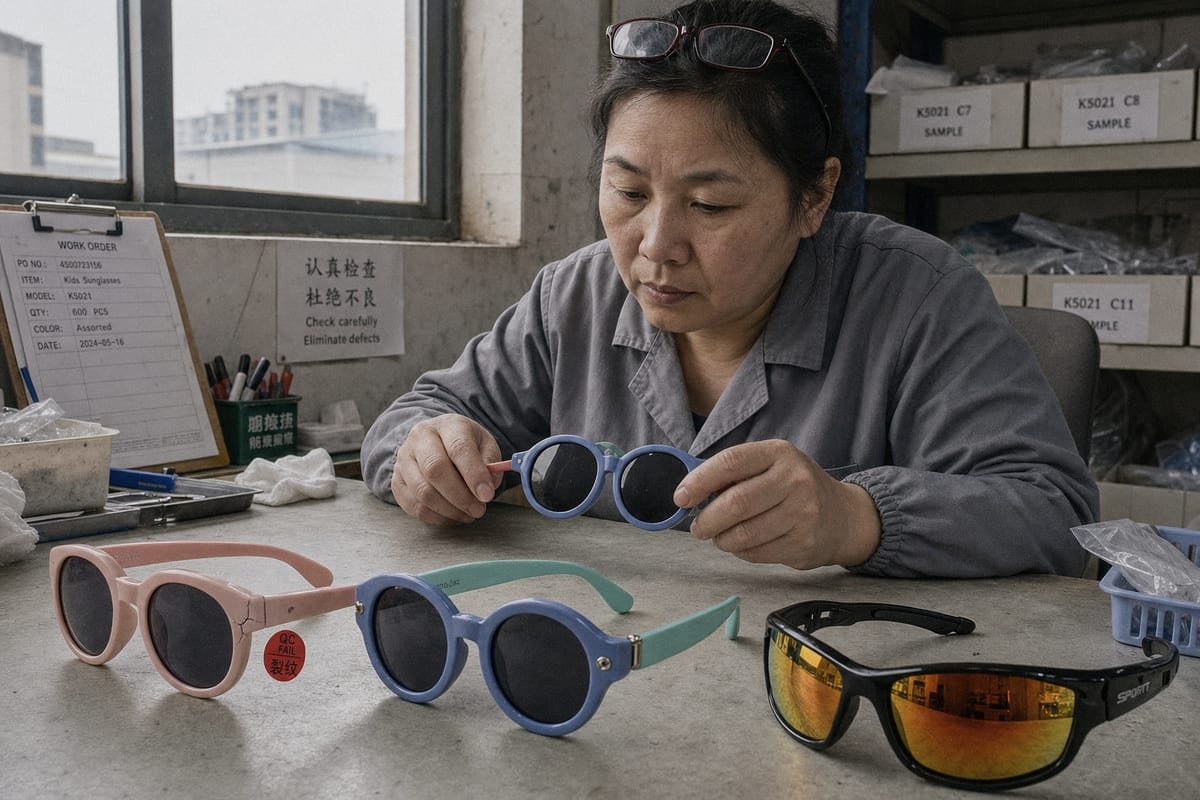
バイヤーは毎週のように、子供用サングラスの価格帯による品質の違いについて尋ねてきます。通常は、安価な製品が割れたり、色あせたり、安全監査に合格しなかったりした後です。.
子供用サングラスの価格帯による品質の違いは、主にフレーム素材、耐衝撃性、レンズの鮮明さ、フィット感、品質管理にあり、UV保護だけではありません。安価なペアでもUV400保護を提供できますが、中価格帯およびプレミアムティアは、より優れた耐久性、快適性、一貫性を提供します。.
価格だけではほとんどわかりません。重要なのは、価格の上昇とともにどの機能が向上し、どの主張が単なるマーケティングであるかを正確に知ることです。ティアごとに分解してみましょう。.
TPEEやTR90のような素材は、価格帯によって耐久性にどのように影響しますか?
太州の生産ラインでは、バッチを承認する前に、すべてのTPEEテンプルサンプルを90度以上に曲げます。安価な射出成形プラスチックはその時点で壊れます。私たちのものは元に戻ります。.
TPEEとTR90は、価格帯全体で耐久性を直接決定します。低価格のサングラスは、ストレスで壊れる硬い射出成形プラスチックを使用していますが、中級および高級の子供用フレームは、壊れたり子供の顔を挟んだりすることなく、曲げたり、ねじったり、元に戻したりできるTPEEの柔軟なフレームとTR90のフロントを使用しています。.
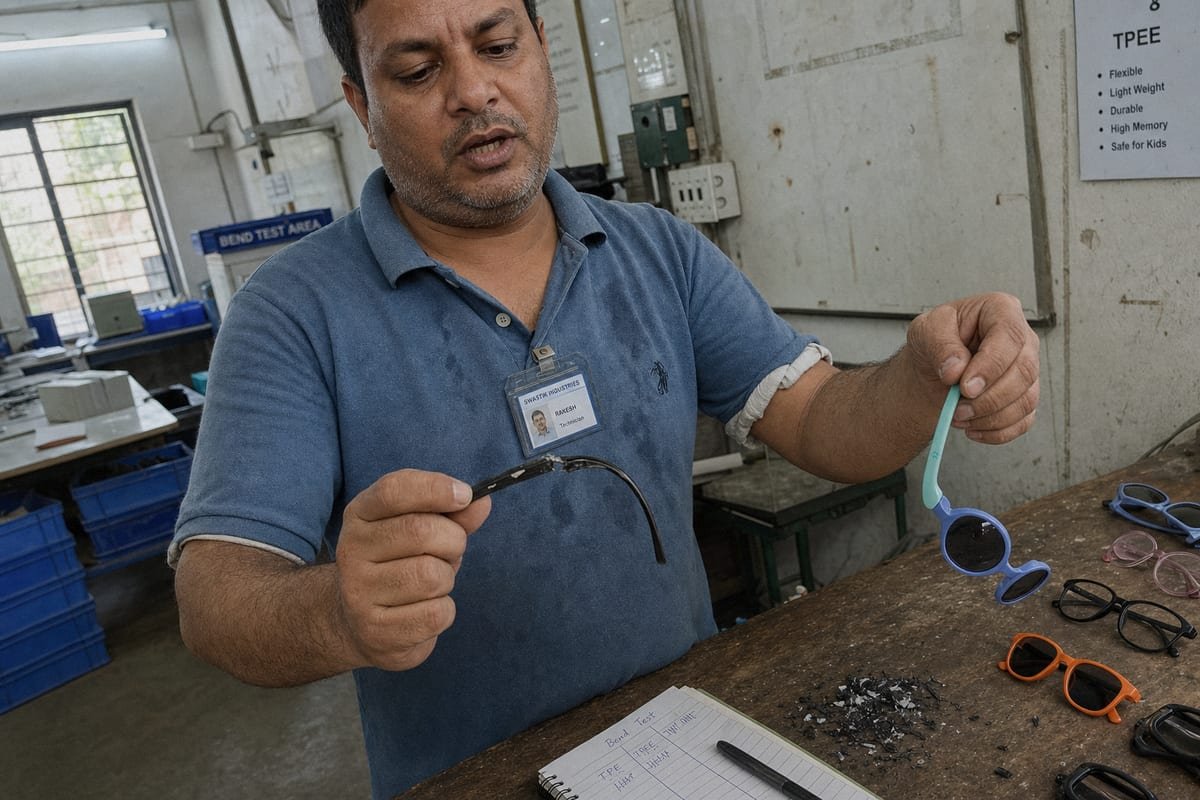
素材の選択は、子供用フレーム内で最も大きなコスト要因です。また、保護者はポリマーグレードを一目で確認できないため、予算サプライヤーが最初に手を抜く場所でもあります。しかし、子供たちは数日で弱点を見つけます。サングラスの上に座ったり、片手で外したり、ケースなしでバックパックに詰め込んだりします。.
各素材が実際に何をするか
TR90 1 は熱可塑性形状記憶ポリマーです。軽量で耐衝撃性があり、ねじれても元の形状に戻ります。TPEEはさらに進んでいます。テンプルやベビーフレーム全体に使用している柔軟なエラストマーであり、ストレスマークなしでほぼ平らに曲がります。どちらの素材も BPAフリープラスチック 2 グレードとしても利用可能であり、これは幼児の口に入る製品にとって重要です。.
素材が価格帯にどのようにマッピングされるかは次のとおりです。
| 価格帯 | 一般的なフレーム素材 | 柔軟性 | 実際の寿命 |
|---|---|---|---|
| 予算($10–20) | 硬質射出成形PCまたはアクリル | 低—ねじれで壊れる | 数週間から数ヶ月 |
| 中価格帯($30–50) | TR90フロント、多くの場合TPEE柔軟なフレームまたはテンプル | 高—曲げから回復する | One to two seasons |
| プレミアム($50–80+) | TR90/TPEEの組み合わせ、シリコン、スプリングヒンジ | 非常に高い—座ったりねじったりしても大丈夫 | 数年以上 |
フレームと同じくらいヒンジが重要な理由
ヒンジが壊れやすい柔軟なフレームは、それでも壊れます。中価格帯およびプレミアムデザインには、スプリングヒンジまたは強化バレルヒンジが追加されることがよくあります。ラバーマット仕上げのパープルミントのようなラウンドツートンフレームを開発した経験から、フレームが2年目に耐えられるかどうかは、ヒンジネジとバレルの公差によって決まります。予算工場では、バッチごとの公差を管理することはめったにありません。.
価格帯を比較する際に、どのような安全基準やレンズ基準を期待すべきですか?
オーストラリアの調達マネージャーが、競合他社の安価なサンプルをレビューのために送ってきました。レンズには UV400保護 3. と記載されていました。.
あらゆる価格帯で、UV400保護と耐衝撃性ポリカーボネートレンズを標準装備。中価格帯では、偏光レンズ、カテゴリー3のサンフィルター、傷防止コーティングを追加。プレミアム価格帯では、光学グレードの透明度、素材安全認証、および一貫したバッチテストを追加。.
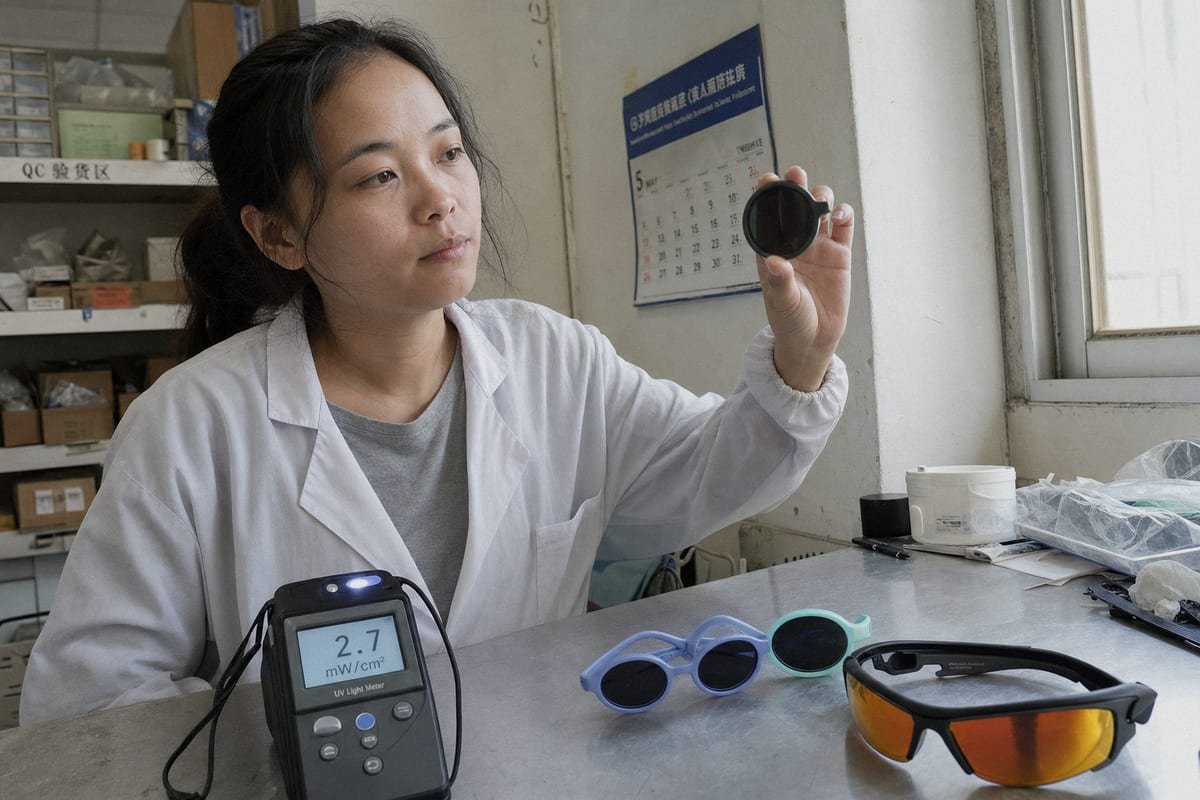
当社の光度計は、レンズ表面全体で不均一なろ過を示しました。 最も安価なティアに関する不快な真実を以下に示します。本物のUVろ過のない暗いレンズは、サングラスがないよりも悪いのです。瞳孔が散大するため、ろ過されていない放射線が網膜に多く到達します。だからこそ レンズ仕様.
—価格ではなく—交渉不可能な出発点です。
ティアごとの標準チェックリスト
| サプライヤーの見積もりを比較する際に、このチェックリストを使用してください。 | バジェット | 標準または機能 | プレミアム |
|---|---|---|---|
| UV400 / 100% UVA-UVB | 中価格帯 | 主張されているが、一貫して検証されていない | バッチごとに検証済み |
| ポリカーボネート 4 検証済み、文書化済み | 素材レンズ | 標準 | アクリル製の場合もあります |
| 標準、光学グレード 5 | 耐衝撃性基準 | ほとんどテストされていない | テスト済み |
| カテゴリー3のサンフィルター | 当たり外れがある | 一般的 | 標準 |
| 偏光レンズ | 稀 | オプションのアップグレード | 一般的 |
| 傷防止コーティング | 欠席 | 基本的なハードコート | マルチレイヤーコーティング |
| フタル酸エステル/鉛/BPAスクリーニング | 規制されていないリスク | 通常は準拠 | 文書化されたコンプライアンス |
光学的な明瞭さは隠されたギャップです
安価な色付きレンズは大量にスタンプされ、目に見える波があります。その光学歪みは、長時間の着用中に若い目を疲れさせます。より良いレンズは、より厳しい公差で成形および仕上げられ、真の視覚的明瞭さを提供します。ミラーリングされたオレンジからゴールドのコーティングを備えたラップアラウンド単一レンズデザインのようなスポーツシールドスタイルを開発するときは、成形不良を拡大するため、すべてのレンズカーブで歪みをチェックします。一部のプレミアムラインは現在追加されています HEVブルーライトろ過 6, 、ただし屋外での使用では、UV400と優れたカテゴリー3の色合いがコア保護のままです。.
快適さとフィット感のためにお金を払っているのか、それとも単なるブランド名のためか?
開発中に最も難しいトレードオフは、ブリッジのジオメトリと金型コストです。子供の鼻梁は大人よりも平らであり、そのカーブを正しく調整するのはエンジニアリングには費用がかかりますが、仕様シートでは見えません。.
予算帯や中間価格帯では、追加の出費が実際の快適さを生み出します。子供向けのブリッジジオメトリ、軽量で柔軟な素材、ゴム引きのグリップ、そしてラップアラウンドデザインのカバー範囲です。約60〜80ポンドを超えると、価格の増加分は測定可能なフィット感の向上というよりも、ブランドの威信を反映するようになります。.
子供用アイウェアに快適さは贅沢な機能ではありません。安全機能です。サングラスが重い、挟む、滑る子供は、単にそれらを外します。そうすれば、箱のUV定格は誰も保護しません。.
支払う価値のあるフィット機能
これらの改善は、測定可能で実世界の値を提供します。
- 子供専用のブリッジデザイン。. 小さくなった大人用フレームは、平らな発達中の鼻から滑り落ちます。目的のために作られた子供用フレームはしっかりとフィットします。.
- 軽量で柔軟なポリマー。. TR90フロントとTPEEテンプルは、長時間の着用中に耳の後ろへの圧力を軽減します。.
- ラップアラウンドデザイン。. ぴったりとフィットするカーブしたフロントは、サイドライトをブロックし、ランニングやサイクリング中に所定の位置に留まります。.
- ゴム引きのテンプルチップ。. 私たちのもののような小さなグリップ バイヤーがしばしば見落とすフィット感の要因がもう一つあります。, 、アクティビティ中のバウンスを停止します。.
- 年齢別の正しいサイジング。. トドラー、就学前、学齢期の頭 レンズの幅とテンプルの長さが異なります。.
ブランドプレミアムが適用される場所
プレミアムしきい値を超えると、多くの場合、ファッションロゴ、デザイナーのスタイリング、小売店のポジショニングに支払われます。それらのことは売れ行きに影響を与え、スタイルは実際に着用時間を増やします—子供たちは好きなフレームを着用します。しかし、$70ライセンスフレームの内部のポリマーは、よくできた$35ペアにあるものと同じTR90であることがよくあります。クライアントが約800の既存のスタイルからなるライブラリを使用して独自のブランドを構築するとき、ライセンス料のマークアップなしで、重い金型投資なしで、そのフィット感と快適さの価値を捉えます。.
低コストサプライヤーが依然として一貫した品質管理を提供しているかどうかをどのように判断できますか?
15年間のアイウェア製造により、私たちのチームは最も重要な教訓を学びました。どの工場でも1つの良いサンプルを作成できます。1万個の一貫性が真のテストです。.
プロセスでサプライヤーを判断し、価格で判断しない。バッチレベルのUVおよび衝撃試験記録、BPAフリープラスチックの材料証明書、ヒンジとネジの公差チェック、整理されたワークショップ管理、および出荷前検査レポートを要求してください。一貫した文書化は、一貫した品質管理を示します。.
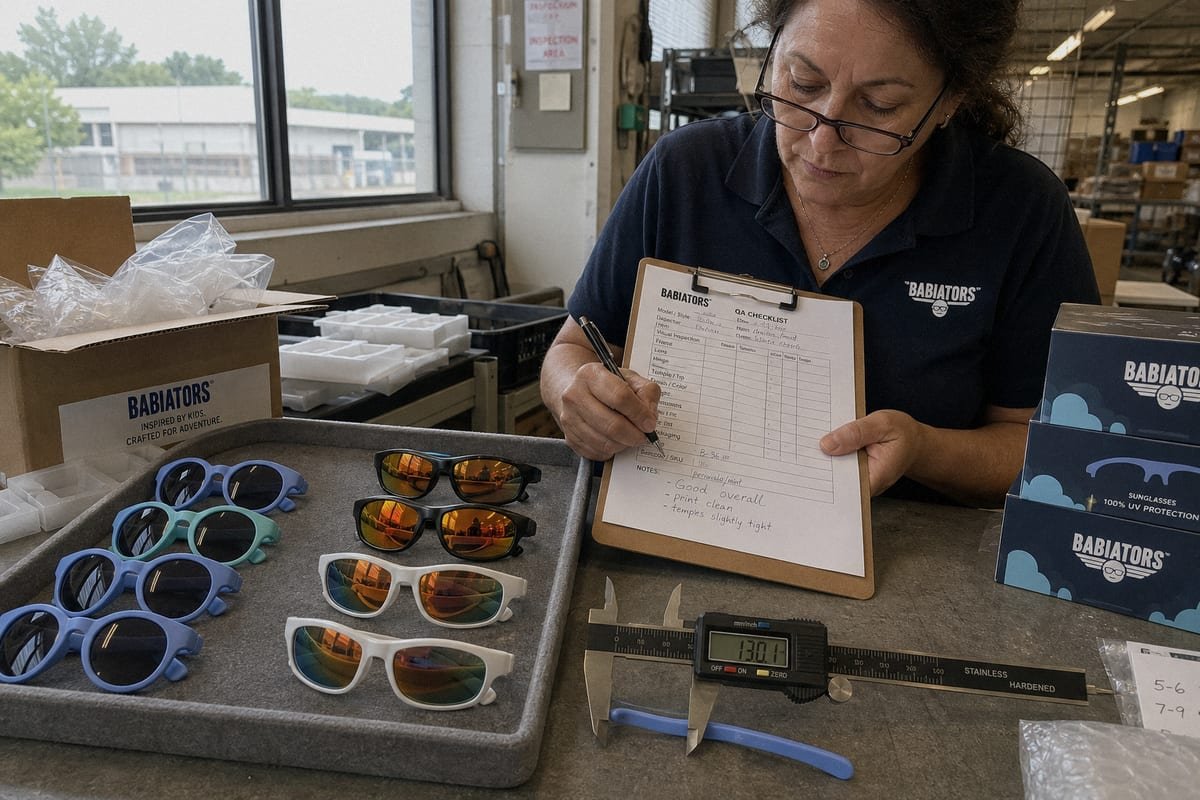
価格と品質管理は関連していますが、固定されていません。規律あるプロセスを持つ低コストのサプライヤーは、生産現場を一度も見たことのない高価なトレーダーよりも優れたパフォーマンスを発揮できます。バイヤーにとっての問題は、QCの規律が見積もりでは見えないことです。その指紋を探す必要があります。.
実用的なサプライヤー監査チェックリスト
ここに、バイヤーが規律ある工場と幸運な工場を区別する方法を示します。
| QCシグナル | 要求するもの | 赤信号 |
|---|---|---|
| レンズの検証 | バッチUV400テスト記録 | "データなしの「すべてのレンズはUV400」 |
| 耐衝撃性試験 | ドロップボールまたは同等のテスト結果 | 定義された耐衝撃性基準はありません |
| 材料安全性 | レンズとフレームのポリマーの証明書 | 曖昧な「食品グレードプラスチック」の主張 |
| ワークショップの規律 | 工場の写真、5Sまたは類似のシステム | フロアの画像やビデオの共有を拒否する |
| 一貫性 | ゴールデンサンプルと許容範囲 | 再注文のたびに若干異なる |
| コーティングの耐久性 | 耐傷性コーティングの密着性試験 | 輸送中に剥がれるコーティング |
小さなディテールが大きな習慣を明らかにする
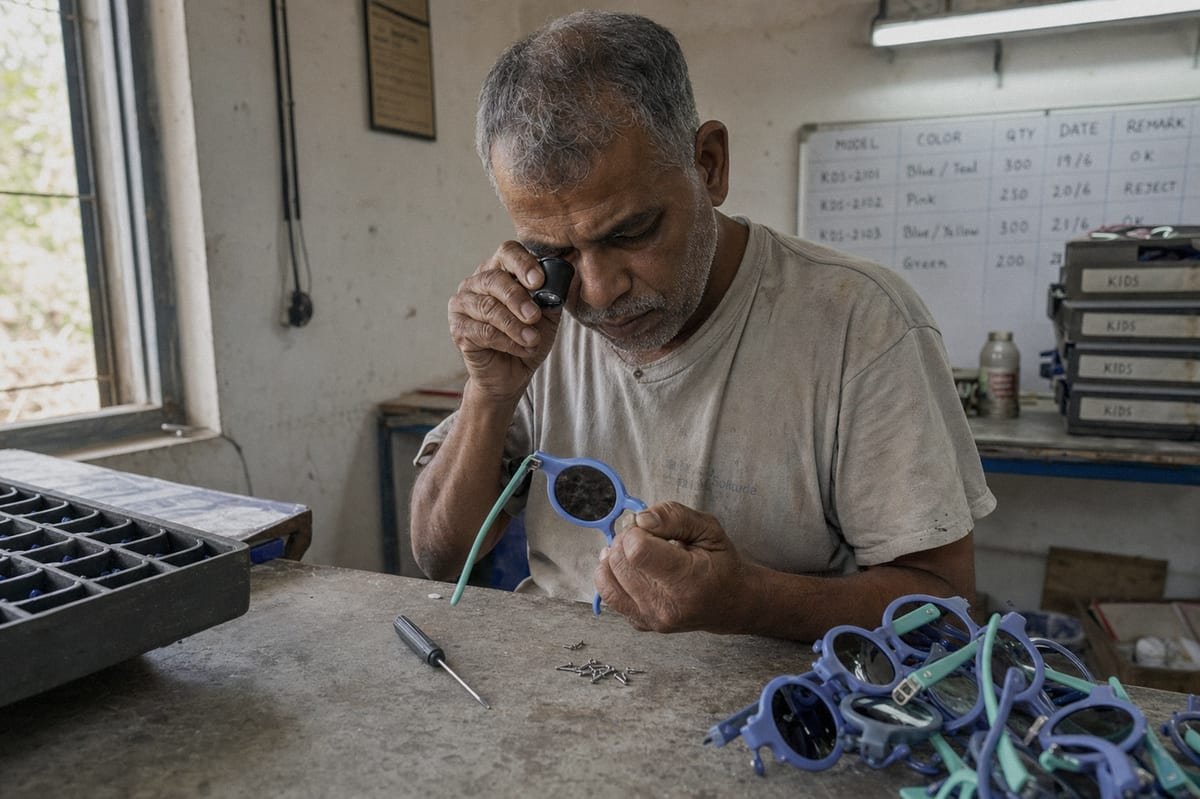
サンプルの退屈な部分を確認します。ヒンジネジはフラッシュで取り付けられていますか?レンズの端は研磨されていますか、それとも粗いですか?テンプルの色は、バッチごとにフロントバッチと一致していますか?5S管理のワークショップでは、これらの詳細を追跡しています。なぜなら、幼児用フレームのネジの緩みは、化粧品の問題ではなく、安全上の問題だからです。OEMの準備状況も確認してください。一貫したロゴ印刷、きれいなパッケージング、小売準備のプレゼンテーションは、工場が成形だけでなく、プロセス全体を管理していることを示しています。すべてを文書化するサプライヤーは、通常、すべてを注意深く製造しています。.
結論
ここでのリスクは、価格が安全性を等しいと仮定すると、ブランドはロゴのために過払いするか、耐久性のために過小購入することになります。フレームが壊れたり滑り落ちたりすると、どちらの間違いも顧客を失うことになります。.
子供用サングラスの価格帯による実際の品質の違いは、素材、レンズ基準、フィット感、QCの一貫性にかかっています。UV400保護は、すべてのティアのベースラインです。スマートな支出、単なる高額な支出ではなく、改善されるのは、TPEEとTR90の柔軟性、本物のポリカーボネート素材のレンズ、子供向けのフィット感、文書化された品質管理です。20か国以上にわたる子供向けブランドへの供給経験から、成功の秘訣は、検証された保護、安全で快適なフィット感、そして実際の子供時代に耐える耐久性です。これら3つすべてを証明できるパートナーを選択すれば、価格はギャンブルではなく戦略になります。.
脚注
中価格帯およびプレミアムフレームに使用される熱可塑性形状記憶ポリマーの背景。. ↩︎
子供向け製品の材料証明書に関連するBPA安全に関するFDAガイダンス。. ↩︎
UV保護基準および読者向けサングラスレンズ技術の背景。. ↩︎
レンズ基準のベースラインとして参照される耐衝撃性プラスチック材料について説明します。. ↩︎
チェックリストで参照されている耐衝撃性および安全試験に関連するISO規格本体。. ↩︎
ブルーライトおよびUVフィルターの主張に関連する眼の健康に関するNIHリソース。. ↩︎
記事の安全性の主張を裏付ける紫外線リスクを説明するWHOファクトシート。. ↩︎
 English
  Español de México
  Deutsch
  Français
  日本語
日本語  العربية
  Português do Brasil