What Are the Most Common Misconceptions When Choosing Kids’ Sunglasses?
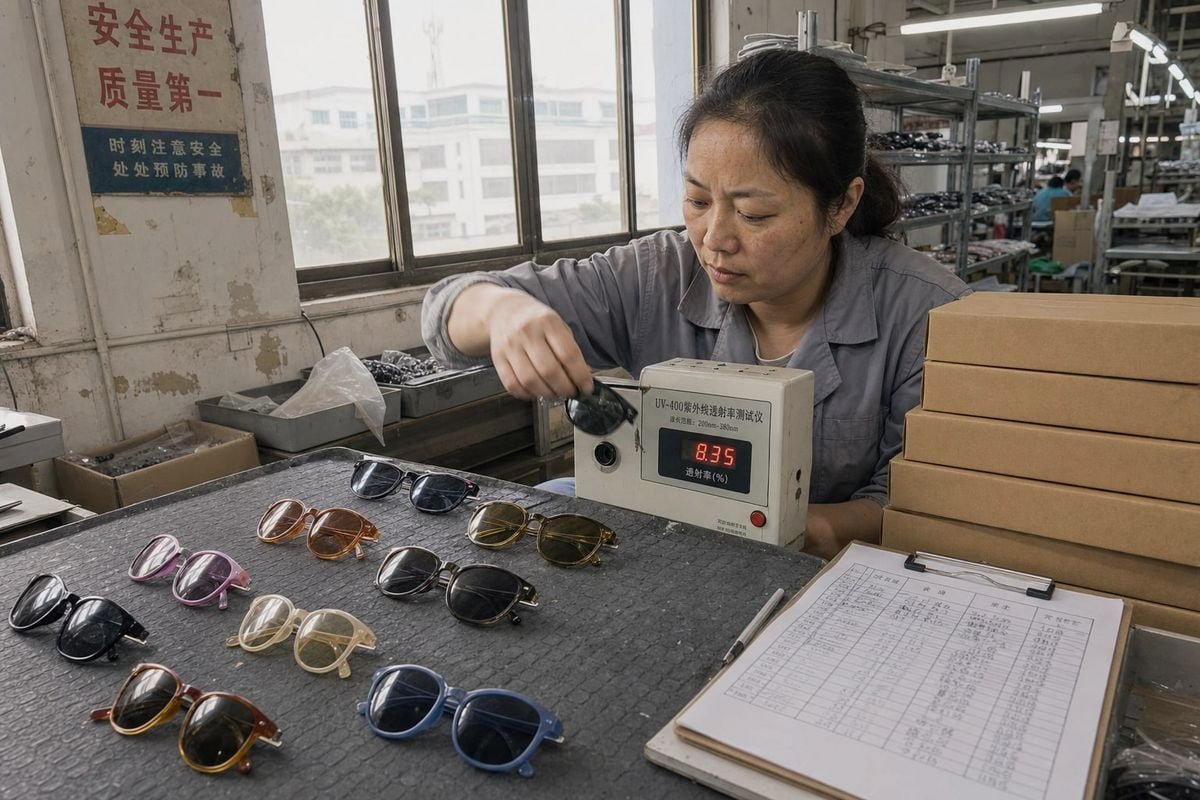
Choosing kids’ sunglasses looks simple until a shipment fails a UV test thermoplastic with excellent memory 1. On our production line in Taizhou, I have seen buyers learn that lesson the expensive way — after ordering.
The most common misconceptions when choosing kids’ sunglasses are that darker lenses block more UV, higher prices guarantee safety, polarization equals protection, and all flexible frames perform the same. What actually matters is verified UV400 protection, proper coverage, child-safe materials, and a comfortable, durable fit.
These myths cost brands money and put children’s eyes at risk. Let me walk through each one, using what we see every day in factory testing and buyer conversations.
Why do I assume higher prices always mean better UV protection for my kids' sunglasses line?
A procurement manager from Europe once told me she rejected our quote because it seemed "too reasonable to be safe." That conversation taught me how deep the price myth runs in our industry.
Higher prices do not guarantee better UV protection for kids' sunglasses. UV400 protection comes from the lens material and coating, which cost very little to produce correctly. Price usually reflects branding, styling, and margins — so buyers should verify lens certification, not rely on cost as a safety signal.
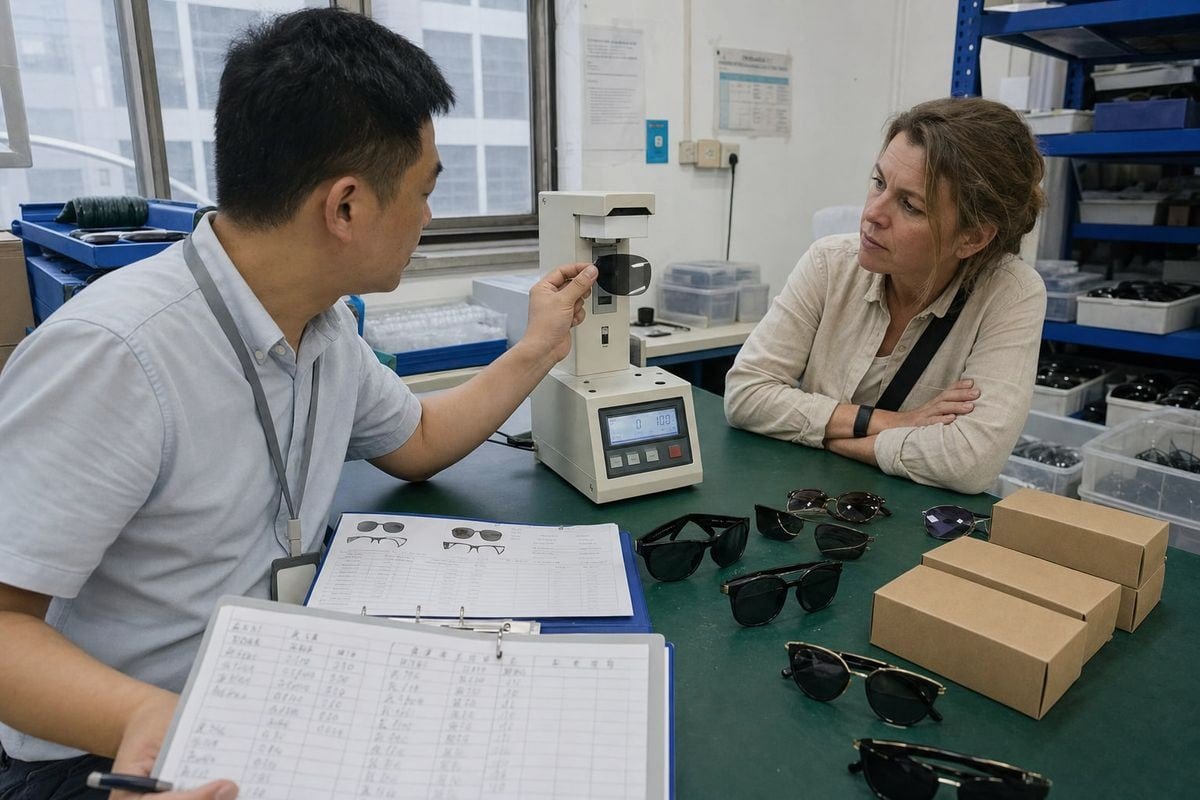
The confusion is understandable. In most product categories, paying more buys better quality. But UV protection is different. A polycarbonate or TAC lens with genuine UV400 filtering 2 is not an expensive component. At our factory, we fit UV400 lenses into styles at nearly every price point, because the lens blank itself is one of the cheaper parts of the bill of materials. What drives price up is usually frame material, hinge quality, packaging, and brand positioning — not the UV filter.
Here is the danger for a buyer: if you assume price equals protection, you may overpay for a stylish adult-brand lookalike that skips proper testing, or you may dismiss a well-certified affordable option. Both mistakes hurt your brand.
What price actually pays for
| Cost driver | Affects UV protection? | Affects your brand? |
|---|---|---|
| UV400 lens coating/material | Yes — but low cost | Critical for safety claims |
| Frame material (TR90, TPEE) | Não | Yes — comfort and durability |
| Hinges and hardware | Não | Yes — product lifespan |
| Packaging and presentation | Não | Yes — retail appeal |
| Brand name and marketing | Não | Depends on positioning |
How to verify instead of guessing
Ask your supplier for lens test reports against recognized standards. Request samples and run independent UV transmission tests 3 before mass production. In our 15 years of eyewear work, serious buyers always test — and the good factories welcome it. A supplier who resists third-party verification is telling you something important, regardless of what they charge.
Is polarization really necessary, or am I overpaying for a feature my customers don't need?
Buyers frequently ask me whether to spec polarized or standard UV400 lenses across a new collection. My honest answer is always the same: it depends on where and how the children will wear them.
Polarization is not necessary for UV safety — it only reduces glare from reflective surfaces like water, snow, and roads. UV400 protection is the true safety requirement. Polarized lenses add comfort for beach, boating, or skiing use, but a non-polarized UV400 lens protects eyes just as well.
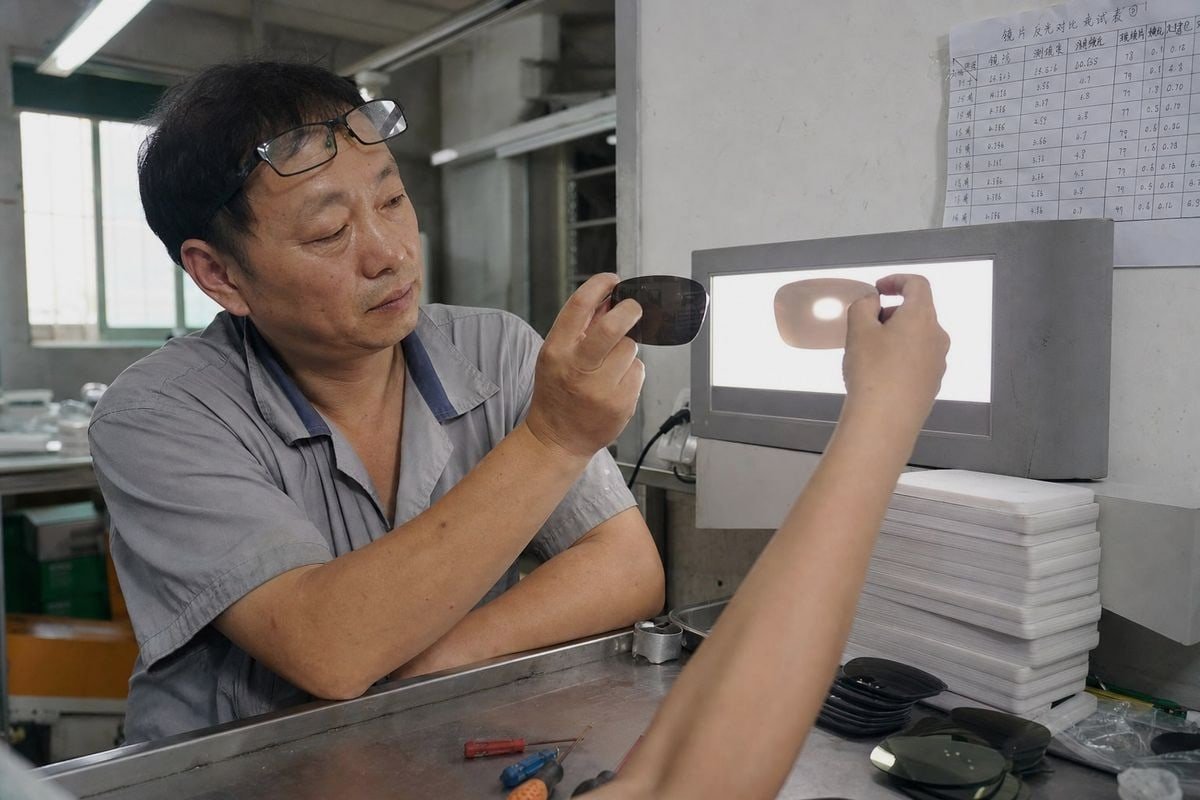
The biggest misconception here works in both directions. Some parents believe "polarized" is a synonym for "UV-protected." It is not. Polarization is a filter that blocks horizontally reflected light waves 4. It has nothing to do with ultraviolet radiation unless the lens also includes a UV coating. A cheap polarized lens without UV400 treatment reduces glare while letting harmful rays through — arguably worse than nothing, because darker, more comfortable vision makes pupils dilate and admit more UV.
On the other side, some buyers dismiss polarization entirely as a gimmick. That is also wrong. For kids who spend time near water, on snow, or in bright coastal environments, glare reduction genuinely improves visual comfort and reduces squinting. We supply both polarized and standard UV400 lens options precisely because different markets need different specs. An Australian beach-lifestyle brand and a Japanese city-commuter brand should not order the same lens package.
Quando a polarização vale o seu custo
| Use case | Polarized worth it? | Por quê |
|---|---|---|
| Beach, lake, boating | Sim | Water reflects intense glare |
| Skiing, snow play | Sim | Snow reflects up to 80% of UV and glare |
| Everyday school and park use | Optional | UV400 alone covers safety |
| Budget promotional lines | Usually no | UV400 delivers the core protection |
My recommendation to buyers
Position polarization as a comfort upgrade in your product tiers, not as your safety claim. Put "100% UV400 protection" on every SKU. Then offer polarized versions for outdoor-focused lines where the price premium makes sense to the end customer.
Am I wrong to think all flexible frames offer the same safety and comfort for children?
During a materials trial a few years back, our engineers bent two visually identical frames five hundred times each. One returned to shape perfectly. The other developed a stress-white crack at the hinge. Same look, completely different polymer.
Not all flexible frames are equal. Material choice determines real safety and comfort. TR90 offers lightweight strength and shape memory, while TPEE adds soft, rubber-like flexibility ideal for temples. Cheap PVC or generic plastic frames may bend once but crack, snap, or leach unsafe additives over time.
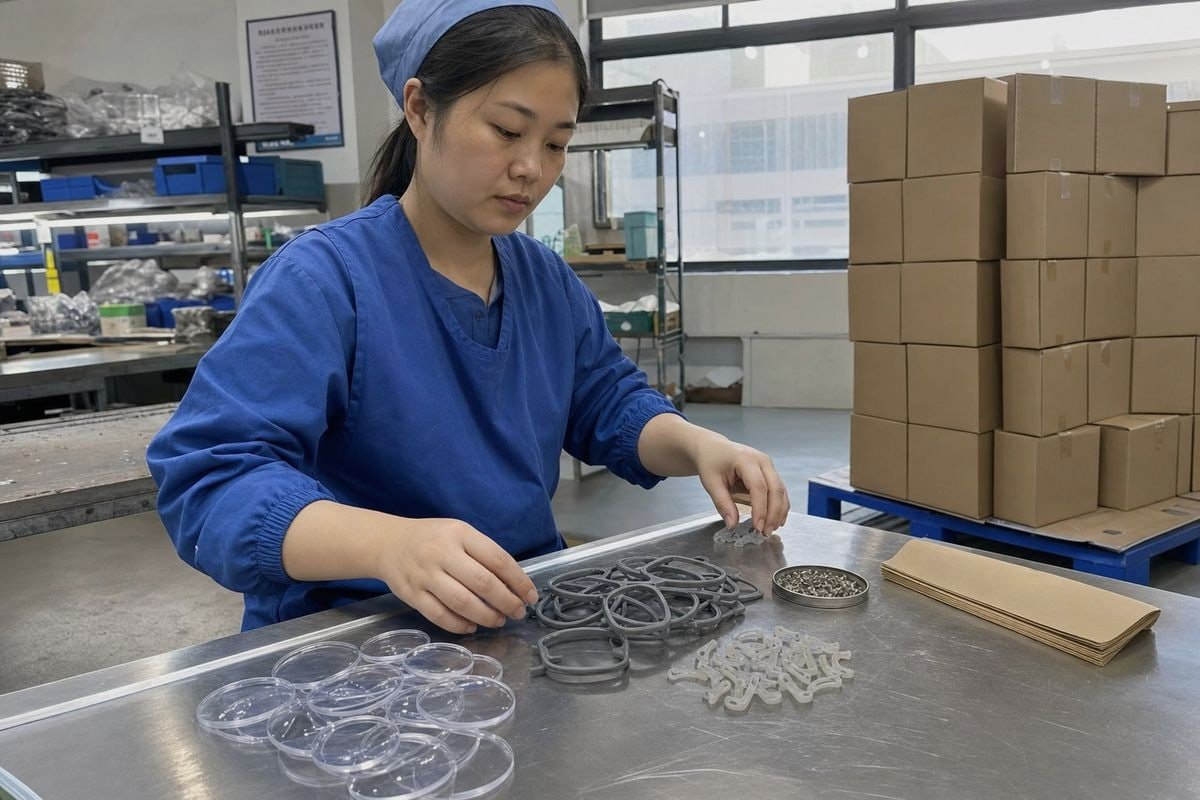
"Flexible" has become a marketing word, and that worries me. A frame that bends in a product photo tells you nothing about how it behaves after six months of a toddler pulling it, sitting on it, and dropping it on playground concrete. The polymer science underneath is what separates a safe children's frame from a liability.
We build most of our children's frames in TR90 e TPEE 5 for specific reasons. TR90 is a thermoplastic with excellent memory — it flexes and returns to its original shape without micro-cracking. TPEE is softer and more elastic, which is why we often pair a TR90 front with TPEE temples: the front holds the lenses securely, while the temples flex gently around a child's head without pressure points behind the ears. Both materials are lightweight and environmentally friendly, which matters increasingly to brands in Europe, Japan, and Australia.
How common frame materials compare for kids
| Material | Flexibilidade | Peso | Break resistance | Child-safety suitability |
|---|---|---|---|---|
| TR90 | High, with shape memory | Muito leve | Excelente | Excelente |
| TPEE | Very high, rubber-soft | Muito leve | Excelente | Excellent, ideal for temples |
| Standard PC/plastic | Baixo | Médio | Moderate — can snap | Justo |
| Cheap PVC/novelty plastic | Varies, degrades fast | Médio | Poor — sharp break edges | Ruim |
Questions to ask your supplier
- Which exact polymer is used for the front and the temples?
- Can you provide bend-test and drop-test results?
- Are the materials free of harmful plasticizers and compliant with children's product regulations 6 in my market?
- How does the frame perform after temperature cycling — hot cars, cold winters?
A frame that answers all four questions well is a frame you can put your brand name on with confidence.
Does a stylish design automatically mean the sunglasses are safe enough for active kids?
Looking at our own catalog of roughly 800 styles, I can tell you that the sporty wraparound shields and the cute round two-tone frames sell for very different reasons — and neither design language guarantees safety by itself.
No — style never guarantees safety. A stylish design can still fail on lens coverage, impact resistance, or fit. Safe sunglasses for active kids require impact-resistant lenses, secure wraparound or well-fitted coverage, flexible non-snap frames, and verified UV400 protection, regardless of how fashionable the design looks.
Style and safety are not enemies, but they are separate checklists. A mirrored gradient shield lens on a black sport frame looks fast and futuristic. A periwinkle-and-mint round frame looks adorable on a five-year-old. Both can be genuinely safe — or genuinely dangerous — depending on what sits underneath the styling.
Consider what "active kids" actually do. They run into things. They fall off bikes. They catch balls with their faces. A lens that shatters into sharp fragments under impact is a hazard no design can excuse. That is why impact-resistant polycarbonate 7 lenses and standards like ANSI Z80.3 matter far more than the color story. It is also why we favor a wraparound silhouette for sport styles: the curved shield shape is not just aesthetic — it blocks UV and debris from entering at the sides, where standard flat frames leave gaps.
The style-versus-safety audit
When we develop a new style with a buyer, we run it through this sequence:
- Lens material — impact-resistant polycarbonate or equivalent, never brittle acrylic.
- UV specification — UV400 confirmed by test report, not by tint darkness.
- Coverage — does the lens shape shield the eyes from above and the sides?
- Frame behavior on impact — flex and absorb, or snap with sharp edges?
- Fit retention — does it stay in place during running and jumping?
- Only then — colorway, finish, mirror coating, and packaging.
Notice that style comes last, not first. The best children's eyewear passes every safety gate and still looks good enough that kids actually want to wear it. That last point is quietly critical: sunglasses a child refuses to wear protect nothing. So design is a safety tool too — just never a safety proof.
Conclusão
Tint, price, polarization labels, and cute designs all mislead buyers. Verify UV400, demand real material specs, and test before ordering — that is how we build kids' sunglasses worth trusting.
Notas de rodapé
1. Background reference explains thermoplastic properties like flexibility and shape memory used in TR90 frames. ↩︎
2. WHO explains UV radiation risks, supporting the claim that UV400 filtering is a critical safety factor. ↩︎
3. ISO sets international testing standards buyers reference for lens UV transmission verification. ↩︎
4. Background on wave polarization clarifies why glare-filtering differs from UV protection. ↩︎
5. Background on thermoplastic elastomers explains flexibility properties of frame materials. ↩︎
6. CPSC oversees U.S. children’s product safety regulations relevant to sunglasses compliance. ↩︎
7. Polycarbonate is the standard impact-resistant lens material referenced for child safety. ↩︎
Mais Artigos que Você Pode Gostar
1 de agosto de 2026
A Fábrica Deve Lidar com a Embalagem e Rotulagem de Óculos de Sol Infantis, ou Usar um Fornecedor Designado?

1 de agosto de 2026
Armazém Próprio vs. Envio Direto do Fornecedor: Qual Reduz os Custos de Devolução para Marcas de Óculos de Sol Infantis?

1 de agosto de 2026
Armazém Direto ao Porto ou Estiva no Exterior: Qual Economiza Mais no Envio de Óculos de Sol Infantis?
Procurando um Parceiro Confiável em Óculos Infantis?
Explore mais de 800 estilos prontos e suporte completo OEM/ODM adaptado à sua marca.
Entre em Contato English
  Español de México
  Deutsch
  Français
  日本語
日本語  العربية
  Português do Brasil