What Must EU Distributors Verify for GPSR Due Diligence on Kids’ Sunglasses?

A shipment of kids’ sunglasses stopped at customs can sink a season. On our Taizhou production line, we watch distributors underestimate GPSR due diligence—until authorities ask for files.
EU distributors must verify manufacturer and importer contact details, product traceability identifiers, technical documentation availability, CE marking and EN ISO 12312-1 conformity, safety instructions in local languages, and child-specific risk assessments—then keep that evidence on file to prove GPSR due diligence to market surveillance authorities.
That is the short answer. The rest of this article breaks it into a practical checklist. I will cover what documents to request, how to verify UV400 1 claims, what to keep on record, and where supplier audits fit in.
What documentation should I request from a manufacturer to prove GPSR compliance for kids' sunglasses?
A German importer once asked us for "the certificate" for a children's frame. There is no single certificate. After fifteen years supplying kids' eyewear brands, we know it is a document set.
Request the EU Declaration of Conformity, technical file access confirmation, EN ISO 12312-1 test reports, CE marking evidence, product risk assessment, label artwork showing manufacturer contact details and batch identifiers, plus safety instructions in your market's language. Verify every document matches the exact model you are buying.
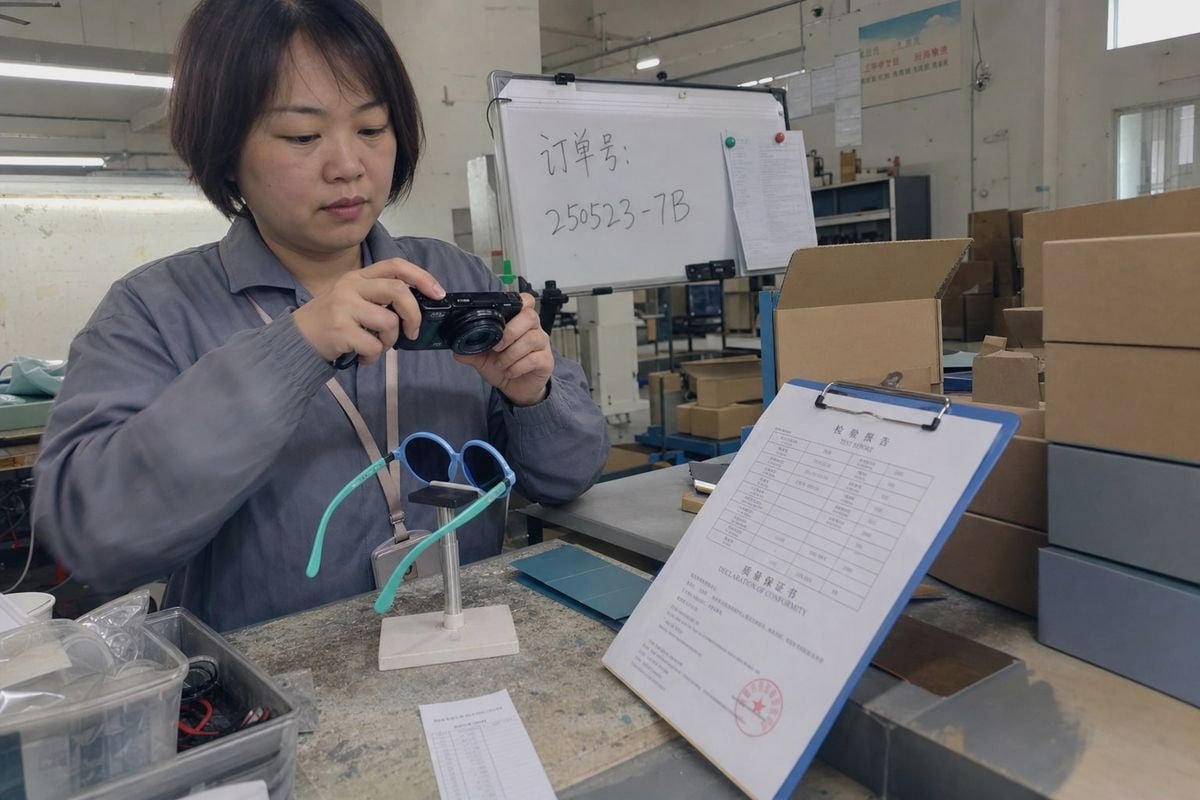
Sunglasses are not "just fashion" in EU law. They are classified as Category I Personal Protective Equipment 2 sob Regulation (EU) 2016/425 3. That means CE marking compliance is mandatory, and the GPSR adds a second layer of general safety and traceability duties on top. As a distributor, you sit at the end of that chain. You must confirm that the economic operators before you—the manufacturer and the importer—have done their jobs. That is what "economic operator obligations" means in practice for you: check before you sell.
The core document set
Here is the checklist we prepare for our own EU distribution clients before any order ships:
| Documento | What to check | Red flag |
|---|---|---|
| EU Declaration of Conformity | Signed, dated, references EN ISO 12312-1 and PPE Regulation 2016/425, lists your exact model | Generic DoC covering "sunglasses" with no model number |
| Test reports | Issued by a credible lab, tied to the same lens and frame you ordered | Report older than the current production version |
| Technical file confirmation | Written confirmation the file exists and will stay available for 10 years | Supplier cannot say who holds the file |
| Label artwork | CE mark, manufacturer contact details, importer details, batch identifier | Address missing or only a website listed |
| Safety instructions and warnings | Correct language for the destination Member State, age-appropriate warnings | English-only leaflets for a French or Polish market |
| Risk assessment summary | Covers child-specific hazards, including foreseeable misuse | Adult-product template reused for a kids' item |
Match documents to the physical product
Paper alone is not verification. Open a carton. Check that the model number on the temple or packaging matches the DoC. Check that traceability labeling requirements 4 are met: a batch or serial identifier must appear on the product, its packaging, or an accompanying document. When we run OEM projects for children's brands, we photograph the printed inner temple, the packaging panel, and the warning leaflet, then archive those images with the batch record. I recommend every distributor do the same at goods-in.
How do I verify that UV400 lenses actually meet EU safety standards before importing?
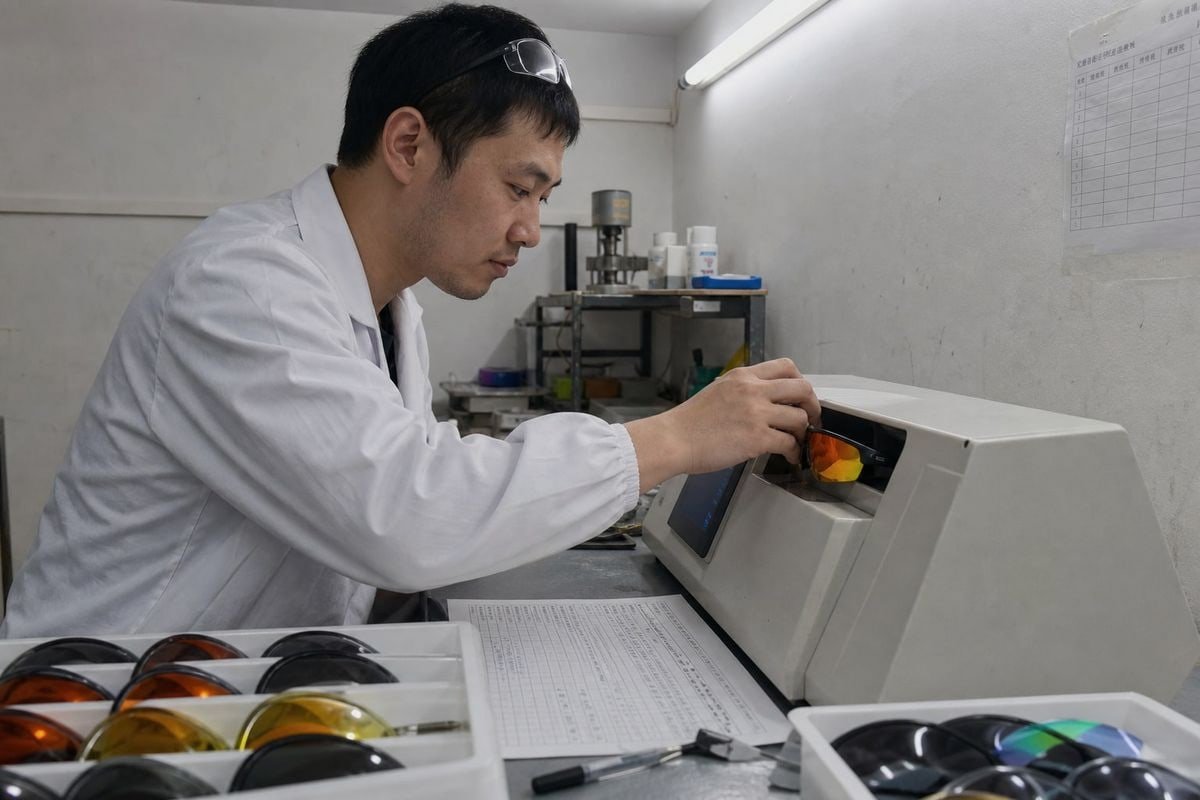
In our QC room, every lens batch passes through a UV transmittance meter 6 before assembly. We added that step years ago after catching one raw-lens lot that failed its own spec sheet.
Verify UV400 claims by requesting third-party lab test reports against the EN ISO 12312-1 standard, checking that the report covers your exact lens and model, confirming UV cut-off at 400 nm, and spot-testing incoming batches with a UV transmittance meter before releasing goods for sale.
"UV400" printed on a hang tag is a claim, not a fact. The EN ISO 12312-1 standard is the harmonized benchmark for sunglasses in the EU. It covers UV transmittance, luminous transmittance categories, optical quality, and refractive properties. Your due diligence job is to connect the marketing claim to real test evidence—and under GPSR, that also protects you from making misleading health-related claims in your listings.
A practical four-step verification process
- Request the full lab report, not a summary. The report should name the lens material, coating, and color, and reference EN ISO 12312-1 clauses. A one-line "PASS" certificate tells you very little.
- Match the report to your SKU. Lens suppliers change. A report for last year's gray lens does not cover this year's mirrored gradient shield. When we switch a lens source at our factory, we retest—your supplier should do the same and tell you.
- Confirm the UV cut-off wavelength. UV400 means the lens blocks wavelengths up to 400 nm. Some cheaper lenses only block to 380 nm. For children's developing eyes, that gap matters, and the claim on the box must be substantiated.
- Spot-check incoming batches. A benchtop UV transmittance meter costs less than one rejected container. Test a sample from each batch and log the result with the batch number.
Watch the marketing claims too
GPSR pushes distributors to police claims, not just hardware. "Blue light filtering" and "anti-reflective" statements on packaging or online listings need substantiation. If your supplier cannot produce data behind a claim, remove the claim from your listing. Under GPSR Article 19, online listings must also display safety information and manufacturer contact details digitally—so an unsupported claim on a marketplace page is doubly exposed to market surveillance compliance checks.
Which technical files and risk assessments must I keep on record as an EU distributor?
There is a trade-off every buyer weighs: chasing paperwork costs time before launch. But when we help brands across twenty-plus countries build their files, the launch delay is always cheaper than a recall.
Keep the EU Declaration of Conformity, technical documentation summary or access confirmation, product risk assessment, test reports, label and packaging photos, batch and purchase records, safety instructions, and supplier correspondence. Retain these files for ten years and be ready to show them to authorities.
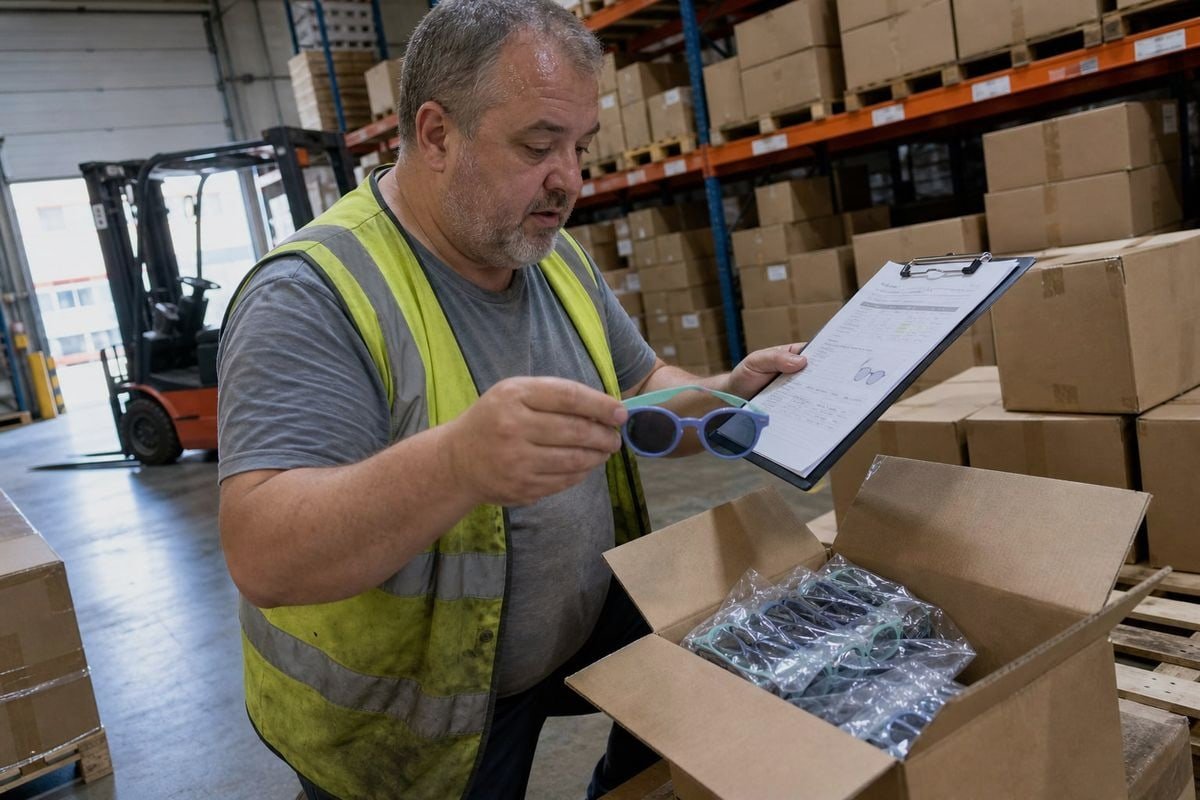
As a distributor, you are not legally required to author the technical file—that is the manufacturer's job. But you must verify it exists, and you must be able to point authorities to it fast. In practice, smart distributors build a shadow file. Technical documentation verification then becomes a repeatable onboarding step, not a scramble when a Safety Gate 7 alert lands.
Your evidence pack, item by item
| Evidence item | Why you keep it | Retention |
|---|---|---|
| EU Declaration of Conformity | Proves conformity was declared for your exact model | 10 years from placing on market |
| Technical file access confirmation | Shows you verified documentation availability | 10 years |
| Product risk assessment summary | Demonstrates child-specific hazards were assessed | 10 years |
| EN ISO 12312-1 test reports | Substantiates UV and optical claims | 10 years |
| Label and packaging photos | Proves traceability labeling requirements were met at sale | Life of the product line |
| Purchase orders and batch records | Enables one-batch recalls instead of full-range recalls | 10 years |
| Safety instructions in local language | Proves consumers received required warnings | Life of the product line |
| Supplier correspondence on corrective actions | Shows active monitoring and cooperation | Contínuo |
What the risk assessment must actually cover for kids
A children's product risk assessment cannot be a copy of an adult template. It should address foreseeable misuse: children chew temples, bend frames, drop them on concrete, and pull at hinge screws. For the round rubberized-frame styles we produce in flexible TPEE, we specifically assess small-part detachment—hinge screws and decorative parts are potential choking hazards—plus breakage and sharp-edge behavior, and strap or cord entanglement if accessories ship in the box. Ask your manufacturer whether their assessment covers these points. If it does not, that is a gap you must close before sale, not after.
Recall readiness is part of the file
Your records only work if you can act on them. Map each batch to its shipments and sales channels. Monitor Safety Gate 8 for alerts involving your models or suppliers. If an alert appears, your file should let you identify affected stock within hours.
Can I rely on my supplier's factory audits to satisfy my own due diligence obligations?
Early in our export history, a European client told me their previous supplier "had audits" but could not name who held the technical file. That gap taught both of us where audits stop.
No. Supplier factory audits support your due diligence, but they cannot replace it. GPSR requires distributors to independently verify documentation, labeling, traceability, and safety information before sale. Treat audits as one piece of evidence inside a broader verification file you control yourself.
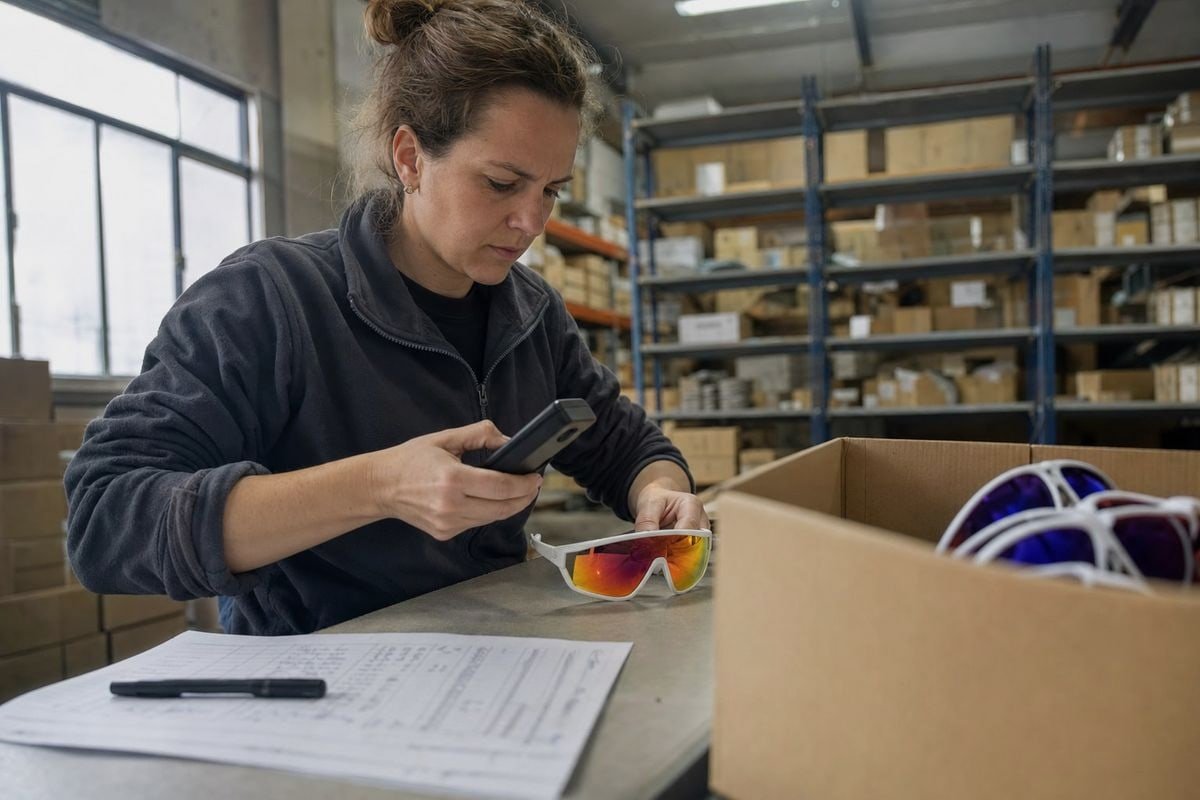
I hear the objection often: "We are a small distributor. We have no lab. The factory was audited—surely that is enough?" I understand the logic, but GPSR does not treat distributors as passive resellers anymore. The regulation expects active verification and ongoing monitoring. The good news: none of the required checks demand a laboratory. They demand discipline.
What audits prove—and what they miss
A factory audit is a snapshot of a facility's systems: workshop management, process control, working conditions. Our own 5S-managed workshop hosts client audits regularly, and I value them. But an audit does not confirm that the specific batch you ordered carries the right CE mark, the right language leaflet, or a valid batch identifier. It does not confirm the DoC references the EN ISO 12312-1 standard for your model. Those are product-level and batch-level checks, and they belong to you.
A distributor workflow that stands on its own
- Onboard. Collect the full document set from the manufacturer, including manufacturer contact details and the EU responsible person's identity for non-EU goods.
- Review. Check documents against the exact model, lens, and packaging you ordered.
- Sample-check. Physically inspect arriving goods: markings, identifiers, safety instructions and warnings, build quality, and no obviously loose small parts.
- Approve or escalate. Missing address, missing batch number, contradictory UV or age claims, or fragile samples all mean stop—do not sell while you investigate.
- Archive and monitor. File everything, then recheck conformity periodically and watch Safety Gate.
When your supplier's systems are strong—and when they proactively hand you a complete, model-specific document pack the way we do for our OEM clients—your workflow gets faster. But the responsibility to run it stays yours.
Conclusão
GPSR due diligence for kids' sunglasses means verifying documents, labels, traceability, and safety evidence—then keeping proof for ten years. Verify actively, archive everything, and choose manufacturers who make that easy.
Notas de rodapé
1. Background reference on UV protection claims and standards used in sunglasses design. ↩︎
2. Background concept explaining what PPE classification means for consumer products. ↩︎
3. Official EU legal text defining PPE classification and CE marking rules for sunglasses. ↩︎
4. Official text of the General Product Safety Regulation defining traceability obligations. ↩︎
5. Cites the official EU PPE regulation classifying sunglasses as Category I equipment. ↩︎
6. Background on ultraviolet radiation measurement relevant to lens transmittance testing. ↩︎
7. Official EU rapid alert portal distributors must monitor for product safety recalls. ↩︎
8. Links to the EU’s official rapid alert system distributors must monitor for recalls. ↩︎
Mais Artigos que Você Pode Gostar
1 de agosto de 2026
A Fábrica Deve Lidar com a Embalagem e Rotulagem de Óculos de Sol Infantis, ou Usar um Fornecedor Designado?

1 de agosto de 2026
Armazém Próprio vs. Envio Direto do Fornecedor: Qual Reduz os Custos de Devolução para Marcas de Óculos de Sol Infantis?

1 de agosto de 2026
Armazém Direto ao Porto ou Estiva no Exterior: Qual Economiza Mais no Envio de Óculos de Sol Infantis?
Procurando um Parceiro Confiável em Óculos Infantis?
Explore mais de 800 estilos prontos e suporte completo OEM/ODM adaptado à sua marca.
Entre em Contato English
  Español de México
  Deutsch
  Français
  日本語
日本語  العربية
  Português do Brasil