What Design Features Should Kids’ Optical Frames Have for Amblyopia Patching Therapy?
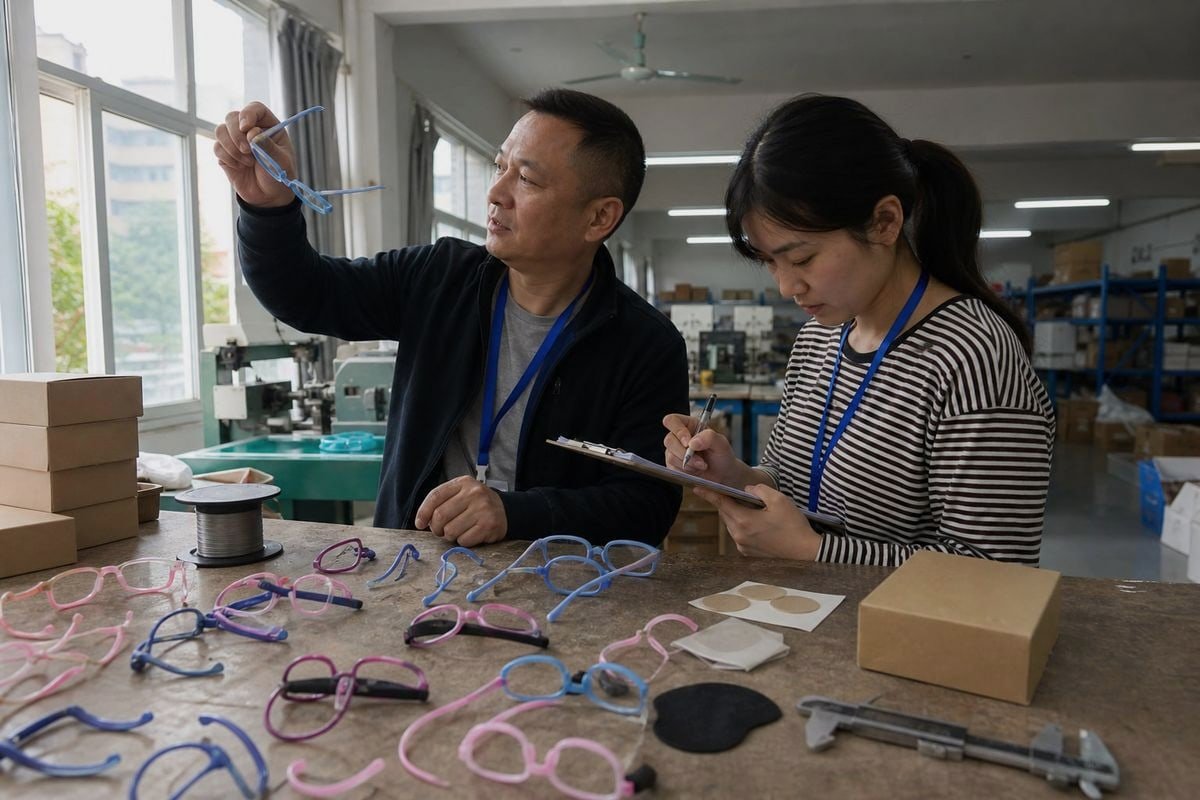
Kids’ optical frames for amblyopia patching therapy 1 fail for one simple reason: children take them off. On our production line in Taizhou, we design against that exact problem every day.
Kids’ optical frames for amblyopia patching therapy should combine a secure, slip-resistant fit, lightweight flexible materials like TR90 and TPEE, anatomical bridge contouring, spring or flexible hinges, and full compatibility with adhesive, clip-on, or slip-on occluders — because consistent wear time determines treatment success.
The frame is part of the treatment, not just an accessory. Below, I break down each design feature that helps occlusion therapy actually work.
How can I choose optical frames that stay secure during patching therapy?
A buyer from Australia once told me her retailer's biggest complaint was frames sliding down mid-patching session. That single conversation reshaped how our team approaches temple design.
Choose frames with curved cable temples or ear-hook temple tips, an anatomical saddle bridge, and grippy silicone contact points. These features keep the lens centered over the eye during play, prevent vertical slippage, and stop the child from peeking over or around the frame.
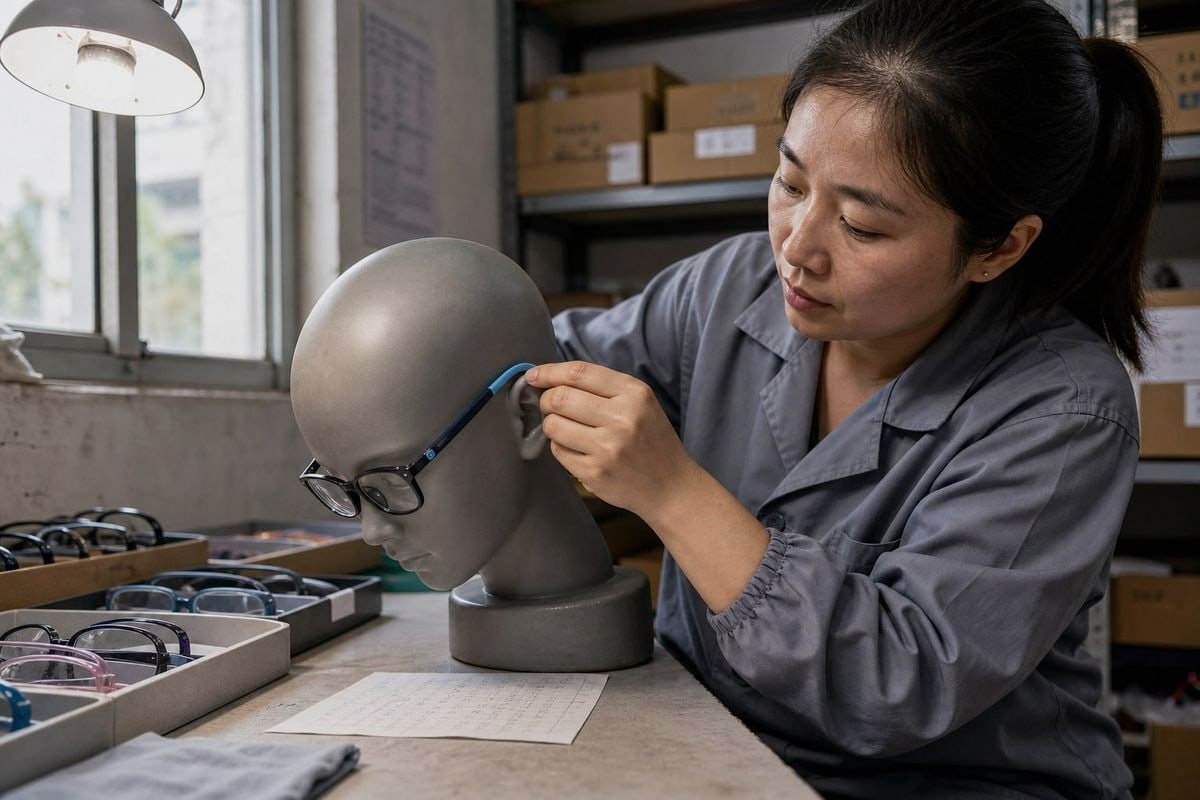
Stability is the first thing a pediatric optometry practice 2 checks, and it should be the first thing a brand buyer checks too. If the lens drifts even a few millimeters, the child's eye is no longer centered. That creates gaps where the stronger eye can peek — and peeking undermines the whole occlusion plan.
Three fit features that prevent slippage
Our engineers focus on three contact zones: the bridge, the temples, and the ear area. Each one either holds the frame in place or lets it slide.
| Fit Feature | O que faz | Why It Matters for Patching |
|---|---|---|
| Deep saddle bridge | Distributes weight across the nose | Pediatric nasal bridges are underdeveloped; a saddle shape minimizes vertical slippage |
| Cable temples / ear hooks | Wrap behind the ear | Keep the frame anchored when the child runs, bends, or looks down |
| Silicone temple tips | Add soft friction | Prevent sliding without pressure, even during sweaty play |
One of our TR90 kids optical frames pairs a rigid front with soft TPEE temples that curve into an adjustable ear hook. The temple tips carry small embossed dot patterns. Those patterns are not decoration — they add grip against the skin. Silicone nose pads can serve the same purpose on styles without a molded bridge.
The peeking test
Ask your optician partner to run a simple check: does the child's pupil stay centered in the lens when they look down at a toy on the floor? If the frame drops and the eye peeks over the top rim, the frame fails, no matter how attractive it looks. Frame sizing must match the child’s pupillary distance and face width — an oversized frame invites peeking around the edges, and that light leakage weakens the therapeutic dose the weaker eye receives.
What frame materials are safest and most comfortable for my amblyopia patients?
There is a real trade-off we weigh on every new mold: rigidity holds lens position better, but flexibility survives a toddler's hands. After fifteen years, we side with flexibility every time.
TR90 and TPEE are the safest and most comfortable frame materials for amblyopia patients. Both are lightweight, flexible, hypoallergenic, and shatter-resistant. Pair them with polycarbonate or Trivex lenses for impact protection, since patched children have reduced depth perception and bump into things more often.
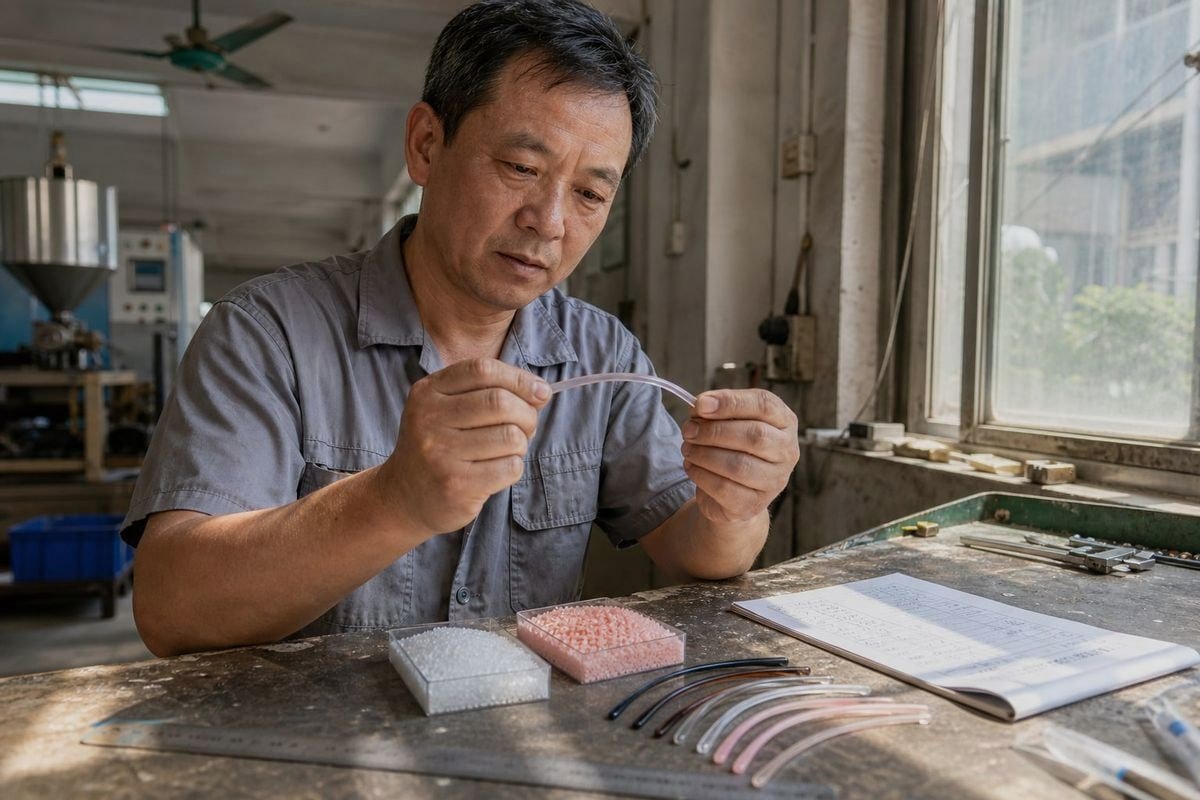
Material choice affects three things at once: safety on impact, comfort over long wear hours, and skin health under the patch zone. Patching is often prescribed for hours per day, so a frame that feels heavy or irritating after twenty minutes will directly cut the treatment dose the child receives.
Comparing common pediatric frame materials
| Material | Peso | Flexibilidade | Skin Safety | Suitability for Patching |
|---|---|---|---|---|
| TR90 | Muito leve | Alta — retorna à forma | Hypoallergenic | Excellent for frame fronts |
| TPEE | Muito leve | Very high — nearly unbreakable | Hypoallergenic, eco-friendlier | Excellent for temples and full frames |
| Acetato | Moderado | Baixo-médio | Generally safe | Acceptable, but heavier for all-day wear |
| Metal | Moderado | Low (unless memory alloy) | Nickel risk for sensitive skin | Use with caution; sharp on impact |
In our 5S-managed workshop, we combine a TR90 front with TPEE temples on many children's styles. The front stays rigid enough to hold visual acuity correction 3 in the right position, while the temples bend safely when a child pulls the glasses off one-handed — which patched kids do constantly.
Skin considerations under and around the patch
The area between an adhesive patch and the face gets warm and moist. Frames should not add irritation on top of that. Soft rubberized silicone at every contact point helps, and some buyers now ask us about anti-microbial coatings to reduce bacterial buildup where the frame meets patched skin. It is a reasonable request for a therapy frame worn eight hours a day. Materials must also be genuinely non-toxic; environmentally friendly compounds matter to the parents your brand serves, and they matter more when the product touches a child's face all day.
Which design features help my patients adjust to patching without discomfort?
Early in my export career, a Japanese client returned samples because the hinge pinched a tester's temple when the child pulled the glasses off to adjust her patch. That lesson still guides our hinge specs.
Spring hinges, weight-balanced silicone temple tips, a pressure-free frame bridge fit, and child-friendly colors help patients adjust to patching. Comfort at every contact point reduces removal attempts, while fun designs make the child feel ownership of treatment rather than seeing it as punishment.
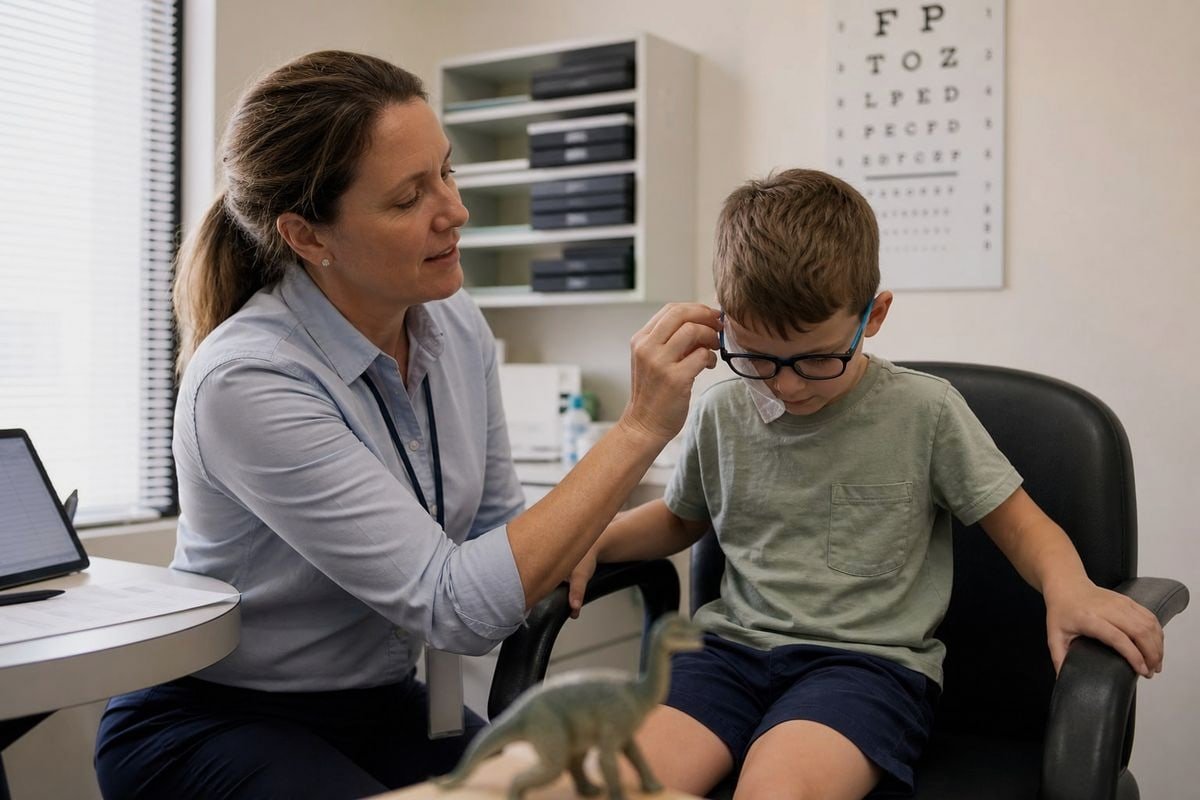
Comfort and appearance are two halves of the same compliance problem. A frame can fit perfectly on paper and still fail if the child hates wearing it. Research on adherence-monitoring devices found that even small aesthetic changes — like adding colored shrink wrap to the frame — were needed to keep children willing to wear them. Appearance is functional.
Comfort features that reduce daily friction
Here is how I would prioritize the mechanical comfort features:
- Spring hinges. Patched children put glasses on and take them off far more often than average wearers. Spring hinges absorb that repeated outward stretching without loosening or snapping.
- Weight-balanced temple tips. Slightly weighted or extended silicone tips shift the center of gravity backward. This offsets the small added load of a clip-on or frame-mounted occluder and relieves nose pressure.
- Smooth, rounded edges everywhere. No sharp hinge corners near the temple, no rough mold lines at the bridge. Our QC team runs a fingertip check on every sample batch for exactly this.
- A wraparound frame style where appropriate. A gently curved front reduces the side gaps where light leakage lets the stronger eye cheat, and it hugs an active child's face during sport.
Making the frame something the child chooses
Bright colors, two-tone color blocking, translucent candy finishes, and embossed patterns turn a medical device into something a child picks out. One pale pink translucent acetate-look style in our catalog consistently outsells its plain version — parents tell our buyers the child asks to wear it. That request is compliance you do not have to fight for. Fun design must never replace secure occlusion, but it should always accompany it.
How can I find a manufacturer who understands amblyopia patching frame requirements?
When new brand buyers contact our factory, the first question I ask back is: which occlusion method will your end customers use? The answer changes the whole frame specification.
Look for a manufacturer with proven pediatric flexible-material expertise, an existing style library you can sample quickly, willingness to adapt bridge and temple designs for occluder compatibility, documented quality control, and full OEM/ODM support for colors, logos, lenses, and retail-ready packaging.
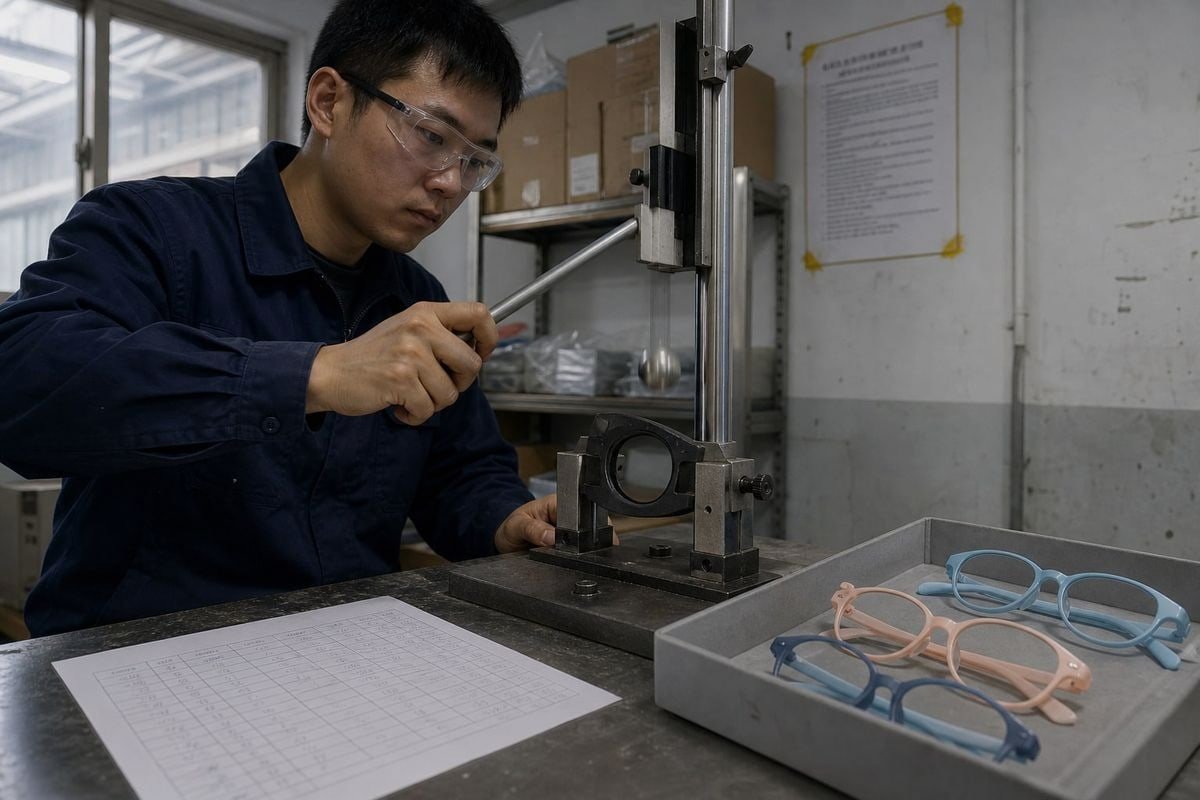
Not every kids' eyewear factory understands therapy frames. Fashion frames tolerate a loose fit; occlusion therapy frames do not. Your supplier needs to grasp why frame geometry matters — for patch attachment, for eliminating peeking gaps, and even for emerging add-ons like frame-mounted wear monitors that sit near the temple.
Occluder compatibility questions to ask your supplier
Different occlusion methods place different demands on the frame. Clinical guidance often favors adhesive eye patches for very young children because peeking under a skin-worn patch is harder — a fair objection to frame-mounted options. But for older children with sensitive skin, slip-on fabric occluders and clip-ons are gentler and more practical. A capable manufacturer supports both paths.
| Occlusion Method | Frame Requirement | Best Suited For |
|---|---|---|
| Adhesive eye patches (on skin) | Frame must sit comfortably over the patch without rubbing its edges | Toddlers and children likely to peek |
| Slip-on fabric occluder | Lens shape and rim depth must match the sleeve; snug fit needed | Children with adhesive skin irritation |
| Clip-on occluder | Sturdy rim and hinge area to carry added weight | School-age children, part-time patching |
| Elastic-strap / button-hole occluder | Temple design must accept strap attachment | Frames with or without nose pieces |
What a real partner should offer
From our side of the business, I can tell you what a serious pediatric frame supplier looks like. They are a factory, not a trader, so specification changes reach the production line directly. They hold a large existing style library — ours has around 800 styles — so a brand can test a patching-friendly frame in the market without heavy mold investment. They offer genuine TR90 and TPEE expertise rather than repurposed adult tooling. And they provide full OEM/ODM support: custom colors, logos, lens options, and packaging that looks credible next to a clinical recommendation. Ask for samples, bend the temples, check the hinge action, and run the peeking test before you commit to a container.
Conclusão
Loose, uncomfortable frames quietly sabotage patching therapy. Choose lightweight TR90/TPEE construction, anatomical bridges, spring hinges, occluder compatibility, and kid-approved styling — and partner with a factory that engineers for compliance.
Notas de rodapé
1. Authoritative government source explaining the medical condition and the standard treatment of patching. ↩︎
2. Professional association providing clinical standards for pediatric eye care and vision development. ↩︎
3. Global health organization defining visual impairment and the importance of effective correction. ↩︎
4. Medical authority detailing the safety benefits of impact-resistant lens materials for children. ↩︎
Mais Artigos que Você Pode Gostar

5 de agosto de 2026
Acetato de Celulose Bio-Baseado vs. Regular: Qual a Diferença para Armações Infantis?

5 de agosto de 2026
Quão Recicláveis São os Materiais de Armações Ópticas Infantis e Quais Alternativas Ecológicas Existem?
5 de agosto de 2026
As Armações Ópticas Infantis Branqueiam ou Envelhecem em Armazenamento e Como Controlar as Condições do Armazém?
Procurando um Parceiro Confiável em Óculos Infantis?
Explore mais de 800 estilos prontos e suporte completo OEM/ODM adaptado à sua marca.
Entre em Contato English
  Español de México
  Deutsch
  Français
  日本語
日本語  العربية
  Português do Brasil