Can Wet Wipes, Hand Sanitizer, or Clothing Damage Kids’ Sunglasses?
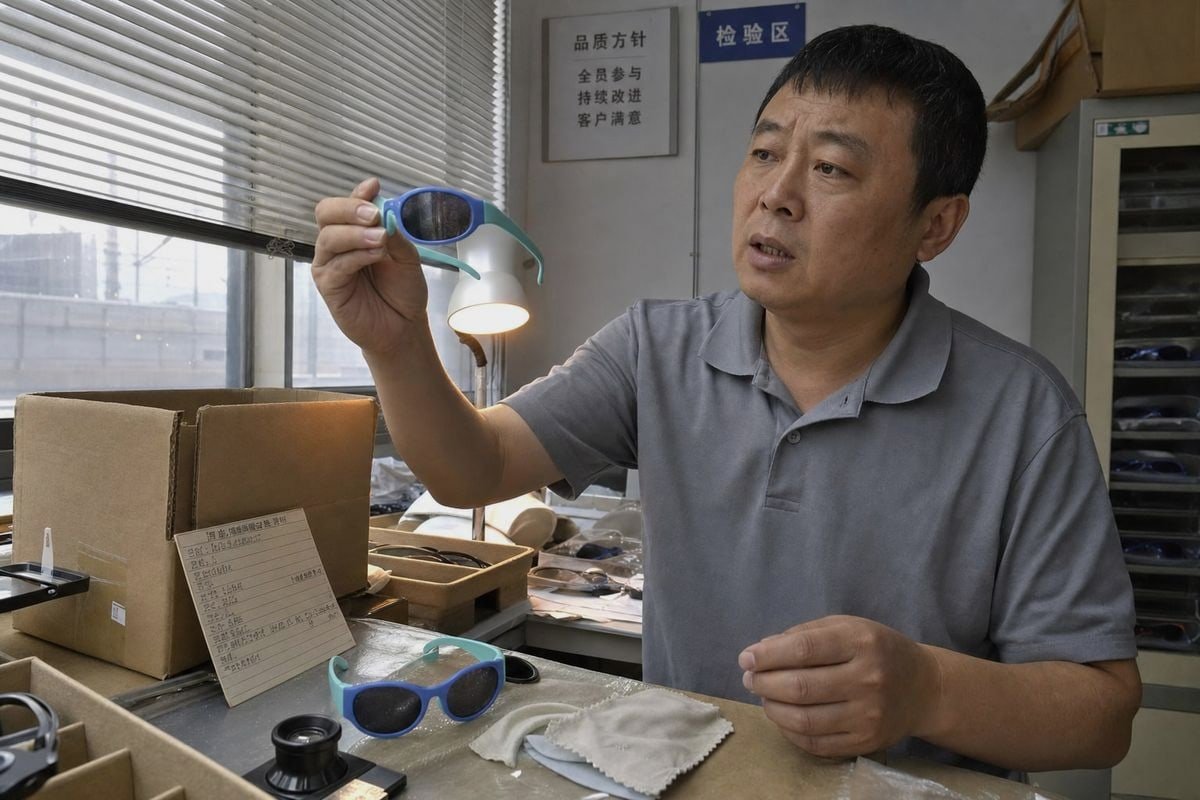
Wet wipes, hand sanitizer 1, and clothing can quietly damage kids’ sunglasses — and at our Taizhou factory, we see returned samples proving it. Coatings fade, lenses haze, and brands take the blame.
Yes, all three can damage kids’ sunglasses. Clothing is the biggest scratch risk because trapped grit abrades lenses. Alcohol-based sanitizers and wipes degrade UV, polarized, and anti-reflective coatings, and can dry out rubber parts. Safe cleaning uses water, mild soap, and microfiber.
The damage is rarely instant. It builds up over weeks of shirt-wiping and sanitizer smears. Let me break down how it happens, which materials resist it, and how brands can protect themselves before mass production.
How do I know if wet wipes or sanitizer are damaging my kids' sunglasses lenses or coatings?
A buyer from Australia once sent us back a pair of our UV400 2 kids' sunglasses that looked "foggy." Our QC team traced it to daily cleaning with alcohol disinfecting wipes — not a lens defect.
Look for cloudiness that will not wash off, rainbow-like spotting, uneven sheen, peeling at lens edges, or increased glare in sunlight. On frames, watch for sticky or brittle rubber nose pads and temple tips. These are classic signs of chemical damage from wipes or sanitizer.
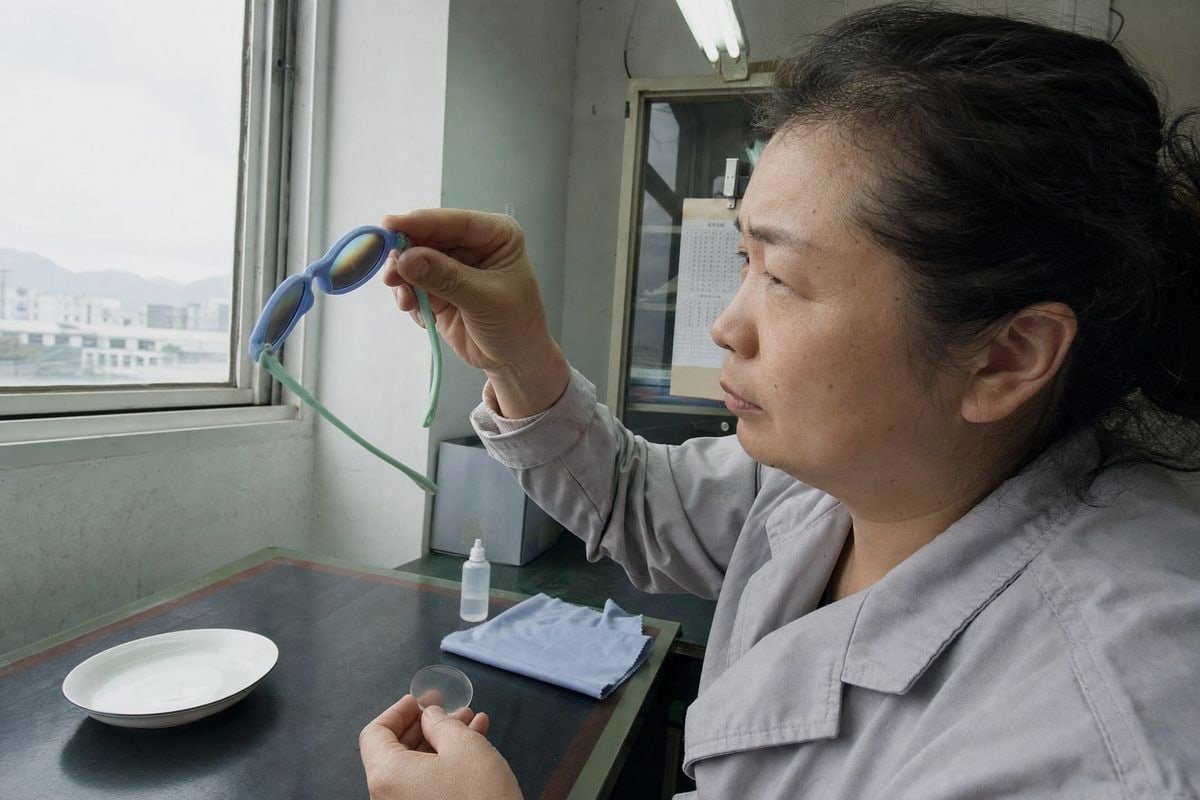
Coating damage is sneaky. It does not show up as one big scratch. Instead, it appears as a gradual change in how the lens looks and performs. Alcohol slowly breaks down the thin layers applied on top of policarbonato 3 or plastic lenses. Those layers include anti-reflective, anti-scratch, and sometimes polarized films 4. Once they degrade, the lens may still look "okay" from a distance. But under bright light, the problems appear.
The five-minute check parents and brands can do
- Rinse the lenses with lukewarm water and dry with a clean microfiber cloth.
- Hold the lens up to a bright light or window.
- Tilt the lens slowly and look for haze, spots, or a patchy shine.
- Press the rubber nose pads and temple tips gently. Sticky or cracked rubber means chemical exposure.
- Compare against a new pair if you have one.
What each symptom usually means
| Symptom | Likely cause | Reversible? |
|---|---|---|
| Cloudy film that returns after cleaning | Baby wipe moisturizers or sanitizer residue | Sometimes, with soap and water |
| Rainbow spotting or patchy sheen | Alcohol attacking the anti-reflective coating | Não |
| Fine haze visible in sunlight | Micro-scratches from wiping over grit | Não |
| Sticky or discolored rubber parts | Repeated alcohol contact | Não |
| Peeling at lens edges | Chemical breakdown of coating adhesion | Não |
Here is the part most parents miss. UV degradation can be invisible. A lens can look clear while its protective performance drops. That is why we tell our B2B clients to educate end customers on cleaning habits, not just UV ratings. In our fifteen years of building children's eyewear, we have learned that care instructions on packaging prevent more complaints than any warranty policy.
Which materials, like TR90 or TPEE, hold up best against everyday chemicals and fabric friction?
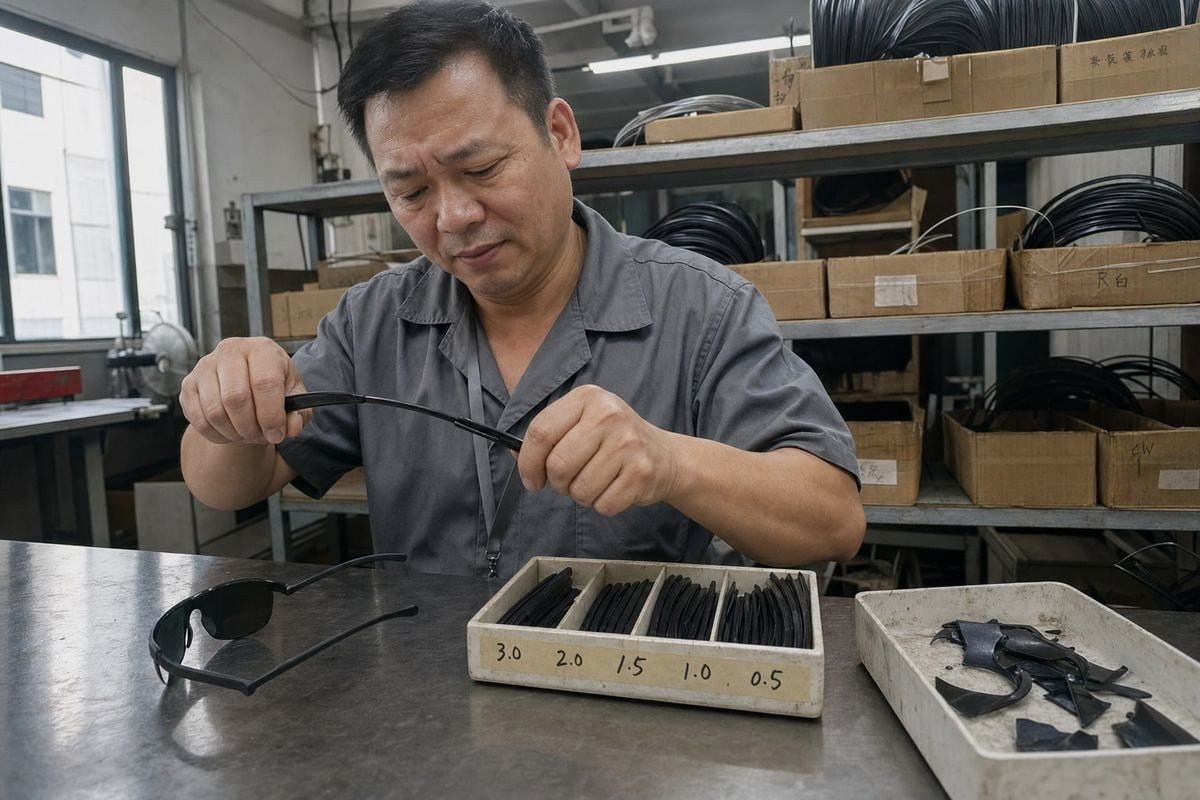
Material choice is a trade-off we weigh on every project. When we develop TR90 frames with TPEE temples for children's brands, chemical resistance and flexibility matter as much as color and fit.
TR90 and TPEE hold up best. TR90 resists chemical corrosion, flexing, and daily friction better than standard plastics. TPEE stays flexible and skin-safe without turning sticky like cheap rubberized coatings. Polycarbonate lenses need hard coatings, because the base material scratches easily against fabric.
Not all "plastic" frames behave the same way. Cheap acrylic or ABS frames can crack, fade, or get tacky when exposed to sunscreen 5, sanitizer, and sweat. That is a real problem for kids' products, because children's hands carry all three at once. Sunscreen residue mixed with wipe chemicals is especially harsh. The combination breaks down finishes faster than either substance alone.
This is exactly why we standardized on TPEE and TR90 across most of our roughly 800 existing styles. Both materials are environmentally friendly, lightweight, and genuinely flexible. A child can bend the temples, sit on the frame, or shove it in a backpack, and it springs back.
How common eyewear materials compare
| Material | Chemical resistance | Fabric friction resistance | Flexibilidade | Best use in kids' eyewear |
|---|---|---|---|---|
| TR90 | Alto | Alto | Alto | Frame fronts and full frames |
| TPEE | Alto | Alto | Muito alto | Temples, baby frames, soft-touch parts |
| Standard ABS/acrylic | Baixo-médio | Médio | Baixo | Budget adult frames |
| Rubberized coatings | Low (alcohol turns them sticky) | Baixo | N/A | Avoid for high-touch kids' parts |
| Polycarbonate lens (coated) | Medium (coating dependent) | Médio | N/A | Standard kids' lens with hard coat |
Why the lens coating matters more than the lens
Polycarbonate is impact-resistant, which is why it dominates children's eyewear. But it is soft. Without a quality hard coating, a single shirt-wipe over sand can leave visible marks. When we spec lenses for our UV400 and polarized options, the hard coat quality is a line item we never cut. A cheaper coating saves cents per unit and costs a brand its reputation within one summer season.
What cleaning and storage habits should I recommend to protect my brand's sunglasses from daily wear and tear?
One lesson we learned early: care instructions sell. A European kids' brand we supply added a printed care card and microfiber pouch to their packaging, and their complaint rate on "scratched lenses" dropped noticeably.
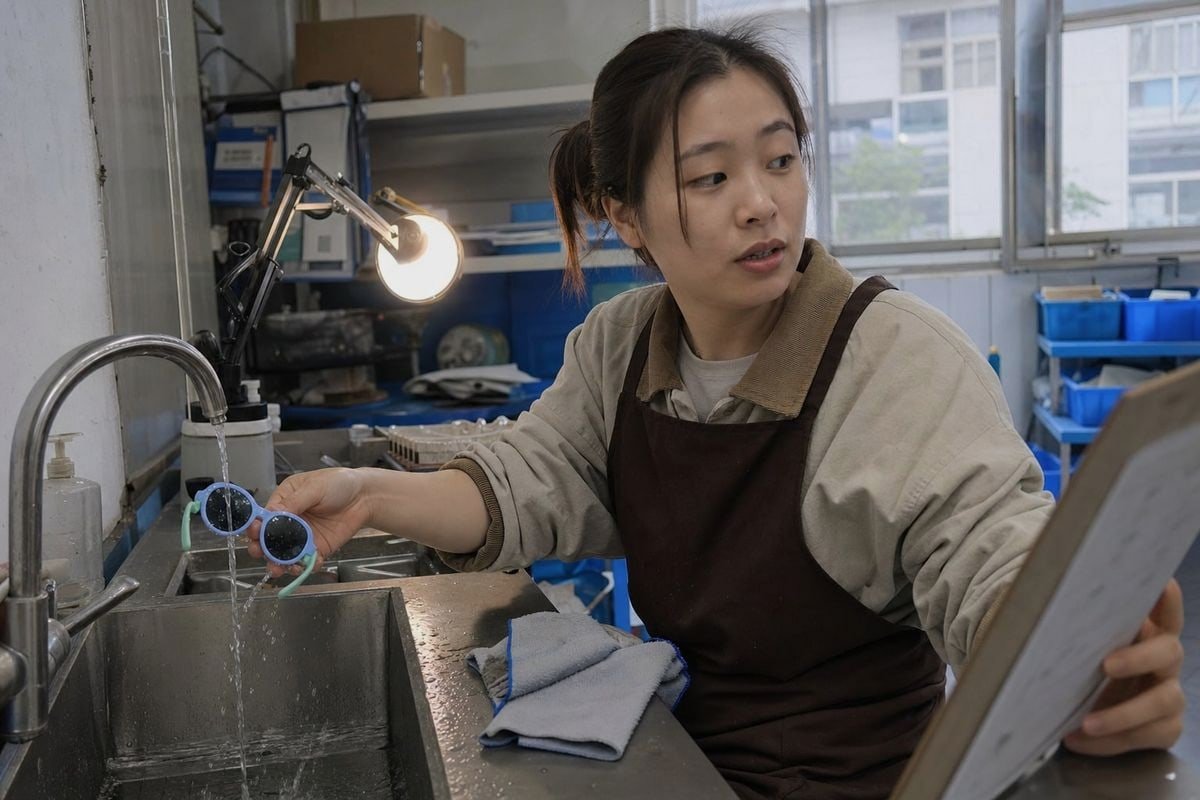
Recommend this routine: rinse lenses with lukewarm water first, add a drop of lotion-free soap, rinse again, and dry with a clean microfiber cloth. Never wipe dry lenses with clothing or tissues. Store the sunglasses in a hard case, away from heat and bags.
Parents want a simple answer. The honest answer is that "safe in a pinch" is not the same as "safe every day." An alcohol-free lens wipe is fine for an emergency fingerprint at the playground. A baby wipe once in a while will not destroy a lens. But a daily habit of shirt-wiping or sanitizer-cleaning will shorten the life of any coated lens, no matter who made it.
The routine we print on our care cards
- Wash hands first, so no grit or oil transfers to the lens.
- Rinse under lukewarm water to float away dust and sand.
- Apply one small drop of mild, lotion-free dish soap.
- Rub gently with clean fingertips, then rinse.
- Dry with a clean microfiber cloth only.
- Return the sunglasses to a hard case immediately.
Everyday risk, ranked
| Habit | Risk level | Por quê |
|---|---|---|
| Wiping dry lenses on a shirt | Highest | Trapped sand and dust grind micro-scratches into soft lenses |
| Cleaning with hand sanitizer | Alto | Alcohol attacks coatings and rubber frame parts |
| Using baby or disinfecting wipes | Médio-alto | Alcohol, fragrance, and moisturizers leave film or degrade coatings |
| Alcohol-free eyewear wipes | Baixo-médio | Acceptable for emergencies, but dust should still be removed first |
| Water, soap, and microfiber | Lowest | Removes grit before contact and leaves no residue |
For brands, the practical move is to bundle a microfiber pouch and a short care card with every pair. It costs little, positions the product as premium, and protects your review scores. We handle this kind of retail-ready packaging as part of our OEM support, and it consistently pays for itself.
How can I work with my manufacturer to test durability against sanitizers, wipes, and clothing before mass production?
Buyers often ask us about lead time and price first, and durability testing last. The best procurement managers we work with flip that order — and their reorder rates show why.
Request pre-production tests: chemical resistance checks on coatings and frame parts using alcohol and sunscreen exposure, abrasion tests on lens coatings, and flex-cycle tests on temples. Approve golden samples after testing, define acceptance criteria in writing, and verify with pre-shipment inspection.
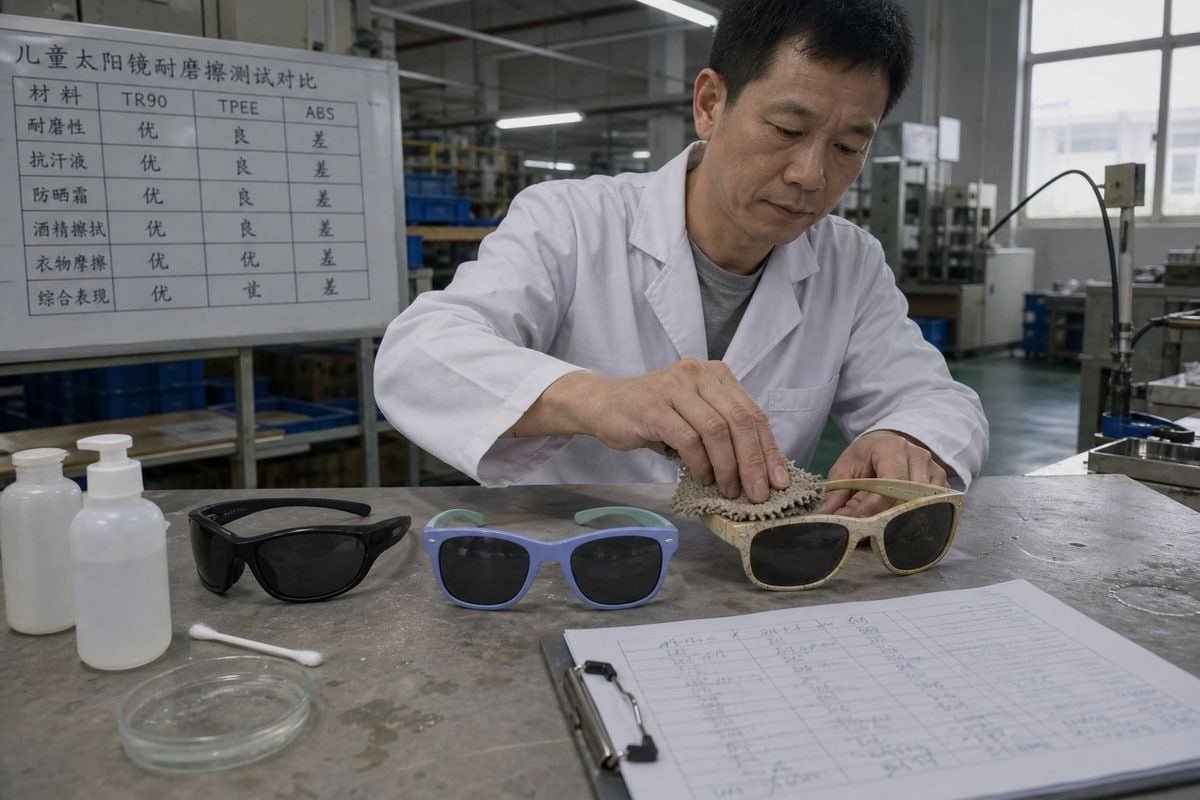
A factory that welcomes testing is a factory you can trust. In our oficina gerenciada por 5S 6, we treat pre-production validation as part of the development process, not an extra favor. With around 120 workers and fifteen years of eyewear experience, we have seen how a two-week testing phase prevents six months of quality disputes.
A practical testing workflow to request
- Define the use case in writing. Kids at the beach, in car seats, at camp. This tells the factory which stresses matter most.
- Ask for chemical exposure checks. Coated lens samples and frame parts should be wiped repeatedly with alcohol sanitizer and common wipes, then inspected for haze, spotting, and stickiness.
- Request abrasion testing on the hard coat. A steel-wool or eraser rub test reveals weak coatings quickly.
- Include sunscreen contact. Sunscreen plus wipe chemistry is a real-world combination that breaks down finishes faster than either alone.
- Run flex and torsion cycles on temples. TPEE and TR90 should return to shape after repeated bending; cheap substitutes will not.
- Verify UV performance after exposure, not just on fresh lenses.
- Lock a golden sample with agreed acceptance criteria, and reference it during pre-shipment inspection.
Starting from existing styles reduces risk further. Because we offer roughly 800 proven designs, a new brand can test market demand with tooling-free products, then invest in custom molds 7 once sales justify it. Testing budgets stay small, and surprises stay rare. Good communication matters too: share your target market's expectations early, because a pair sold in Japan may face different care habits than one sold in Australia.
Conclusão
Wet wipes, hand sanitizer, and clothing all damage kids' sunglasses over time. Choose TR90 and TPEE, teach safe cleaning, and test durability with your factory before production.
Notas de rodapé
1. CDC guidance on alcohol-based hand sanitizer composition and safe use practices. ↩︎
2. EPA sun safety guidance explains UV protection ratings referenced in the article. ↩︎
3. Background on polycarbonate, the base material used in most kids’ sunglasses lenses. ↩︎
4. Explains polarized lens technology mentioned as a coating vulnerable to chemical damage. ↩︎
5. FDA resource on sunscreen ingredients relevant to chemical residue damaging lens coatings. ↩︎
6. Explains the 5S lean manufacturing methodology referenced in the factory’s quality process. ↩︎
7. Alibaba connects brands with manufacturers offering custom mold tooling for new eyewear designs. ↩︎
Mais Artigos que Você Pode Gostar
1 de agosto de 2026
A Fábrica Deve Lidar com a Embalagem e Rotulagem de Óculos de Sol Infantis, ou Usar um Fornecedor Designado?
1 de agosto de 2026
Armazém Próprio vs. Envio Direto do Fornecedor: Qual Reduz os Custos de Devolução para Marcas de Óculos de Sol Infantis?
1 de agosto de 2026
Armazém Direto ao Porto ou Estiva no Exterior: Qual Economiza Mais no Envio de Óculos de Sol Infantis?
Procurando um Parceiro Confiável em Óculos Infantis?
Explore mais de 800 estilos prontos e suporte completo OEM/ODM adaptado à sua marca.
Entre em Contato English
  Español de México
  Deutsch
  Français
  日本語
日本語  العربية
  Português do Brasil