Do Sweat, Sunscreen, and Insect Repellent Damage Kids’ Sunglasses Coating and Lenses?
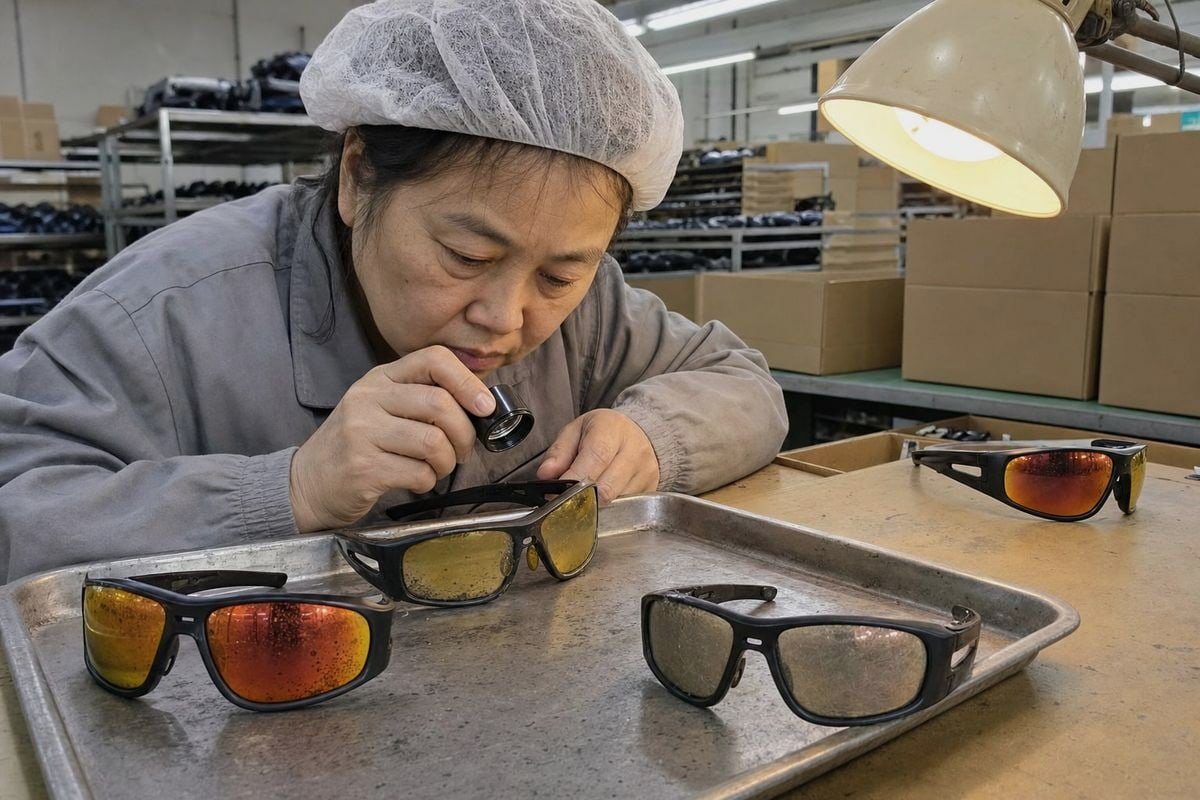
Kids’ sunglasses coating and lenses face a chemical gauntlet every summer DEET-based insect repellent 1. On our production line in Taizhou, we hear the same worry from buyers: returned pairs with hazy, peeling lenses.
Yes, these products can damage kids’ sunglasses coating and lenses, but the risk levels differ. DEET-based insect repellent is the most destructive, dissolving plastics and fogging lenses. Sunscreen mainly leaves residue and gradual coating wear. Sweat causes slow buildup and abrasion, not direct chemical damage.
Each exposure works differently. If you source children’s eyewear, you need to know which threats matter, which materials resist them, and how to verify quality before you order.
How do I know if my kids' sunglasses coating can withstand sweat, sunscreen, and insect repellent exposure?
A buyer from Australia once sent us photos of clouded lenses from a previous supplier. The culprit was not sweat or sun. It was bug spray applied right next to the child's face.
Check the damage pattern first. Fogging, softening, or pitting points to DEET repellent, the most aggressive chemical. Sticky film or discoloration suggests sunscreen residue. Fine haze and micro-scratches usually mean sweat buildup combined with rough wiping, not true chemical failure.

The three exposures attack coatings in very different ways, so diagnosis is the first skill every buyer and parent needs. In our fifteen years making children's eyewear, we have inspected thousands of field-returned samples. The failure signature almost always tells the story.
The three damage signatures
DEET acts as a solvent. It can molecularly dissolve certain plastic polymers 2 within seconds, not hours. Damage looks like permanent clouding, surface pitting, or a softened, tacky frame. This damage is chemical and irreversible.
Sunscreen is slower. Chemical filters like oxybenzone and avobenzone 3 can break down anti-reflective and hydrophobic layers over repeated contact, especially in heat. The signs are a greasy film that will not wipe clean, yellowing near the nose pads, and gradual dulling of mirror coatings.
Sweat is the mildest of the three. Salt and body oils sit on the lens surface. The real harm comes when a child wipes the lens with a dry shirt hem, grinding salt crystals across the coating. That produces haze made of thousands of fine scratches.
| Exposure | Damage speed | Typical signs | Reversible? |
|---|---|---|---|
| DEET repellent | Seconds to minutes | Fogging, pitting, soft frames | Não |
| Chemical sunscreen | Semanas a meses | Film, stains, coating dulling | Partly, if cleaned early |
| Sweat | Months of buildup | Haze, micro-scratches | No, once scratched |
If a lens survives all three in real use, the coating and substrate were specified correctly from the start.
Which lens materials and coatings should I request from my manufacturer to resist chemical damage?
When we develop a new frame in TR90 with TPEE temples, material selection is where chemical resistance is won or lost. A cheap substrate cannot be rescued by a nice coating.
Request polycarbonate or PC lenses with a hard coat plus a hydrophobic or oleophobic top layer, UV400 protection built into the lens material, and TR90 or TPEE frames. Avoid soft PVC parts and uncoated acrylic lenses, which fail fastest under sunscreen and repellent exposure.

Material choice matters more than most buyers realize. On our line, the difference between a pair that survives two summers and one that clouds in two weeks often comes down to three specification decisions.
Lens substrate
Polycarbonate 4 is the standard for children's eyewear for good reason. It is impact-resistant, lightweight, and holds coatings well. Cheap acrylic lenses, common in toy-grade sunglasses, are softer and far more vulnerable to solvents like DEET. Proteção UV400 5 should be built into the lens polymer itself, not applied as a surface tint. A surface tint can wear away. Polymer-level protection cannot.
Coating stack
The coating stack is where resistance lives. A hard coat gives scratch resistance against sweat-salt abrasion. A hydrophobic or oleophobic top layer 6 sheds water, oils, and sunscreen so residue wipes off instead of bonding. Premium hydrophobic layers show measurably better resistance to sweat and chemical exposure than a bare anti-reflective coating.
Material da armação
| Componente | Recommended | Avoid | Por quê |
|---|---|---|---|
| Lente | PC with hard coat + hydrophobic layer | Uncoated acrylic | Solvent and scratch resistance |
| Armação | TR90 | Rigid PVC, brittle PS | Flexibility, chemical stability |
| Temples | TPEE | Soft PVC overmolds | DEET softens vinyl quickly |
| UV filter | In-polymer UV400 | Surface tint only | Tint fades; polymer does not |
TR90 and TPEE resist chemical attack better than vinyl-based plastics, and they flex instead of snapping. That is why we standardized on them years ago. For polarized options, ask for a laminated polarized film sealed inside the lens rather than a surface film, which peels sooner under heat and residue.
Can I test my supplier's lenses for sunscreen and repellent resistance before placing a bulk order?
One product manager in Japan asked us exactly this before her first order. We suggested she abuse our samples on purpose. She did, and it settled the decision in a week.
Yes. Request three to five production samples, then run a home exposure test: apply DEET repellent to one lens, chemical sunscreen to another, and salt water to a third. Leave each for 24 hours in warm conditions, wipe clean, and inspect for fogging, film, or coating lift.

You do not need a laboratory to screen a supplier. A structured sample test tells you most of what matters, and any factory confident in its coatings will welcome it. We ship samples for this purpose regularly, because the pairs that come back clean become our strongest sales argument.
A simple five-step sample test
- Order identical samples from each supplier you are comparing, ideally from real production tooling, not hand samples.
- Label the lenses. Apply a drop of DEET-based repellent 7 to lens A, a smear of chemical sunscreen to lens B, and salt water to lens C. Keep one pair untouched as your control.
- Leave the samples in a warm spot, such as a sunny windowsill, for 24 hours. Heat accelerates chemical breakdown, which mimics a hot car or a beach bag.
- Wash gently with lukewarm water and mild soap, then dry with a clean microfiber cloth.
- Compare against the control under bright light. Look for clouding, pitting, sticky spots, coating edges lifting, or color shift in mirror layers.
A quality PC lens with a proper coating stack should show no permanent change from sunscreen or salt water, and minimal change from brief DEET contact. If a lens fogs from sunscreen alone, walk away. Also test the frame: rub repellent on a hidden temple section and check for softening or gloss loss after a day. For polarized samples, view a phone screen through the lens after testing to confirm the polarizing film has not delaminated.
Document everything with photos. It gives you a baseline to hold your supplier to at mass production.
What quality control steps should I ask my factory to take to prevent coating degradation from everyday kids' activities?
Our 5S-managed workshop taught us a hard lesson early on: coating quality fails in production long before it fails in a child's hands. Contaminated lenses before coating means peeling lenses after shipment.
Ask your factory for incoming lens inspection, coating adhesion cross-hatch tests, salt-spray or artificial-sweat exposure checks, UV400 verification on every batch, chemical wipe tests with sunscreen and repellent, and documented AQL sampling before shipment. Request written test reports with each order.

Quality control is not one gate. It is a chain of checkpoints, and coating durability depends on every link. Here is what we recommend buyers write into their purchase orders, based on what we run for our own OEM and ODM clients.
Checkpoints to specify in your PO
| QC stage | Test to request | O que previne |
|---|---|---|
| Incoming materials | Lens substrate and coating batch certification | Substituted cheap acrylic or thin coatings |
| Pre-assembly | Cross-hatch adhesion test on coated lenses | Coating peeling and edge lift in the field |
| In-process | Artificial sweat / salt solution exposure | Haze and corrosion from real summer wear |
| In-process | Chemical wipe test with sunscreen and DEET | Fogging and film failure from summer products |
| Pré-embarque | UV400 transmission check per batch | Lenses that look dark but leak UV |
| Pré-embarque | AQL sampling inspection with photo report | Mixed-quality cartons reaching your warehouse |
Two of these deserve emphasis. The cross-hatch adhesion test scores the coating in a grid and pulls tape across it. If squares lift, the coating will not survive a season of wiping. The chemical wipe test is simple but rare among low-end factories: technicians rub lenses with sunscreen and repellent-soaked cloths, then inspect after a set dwell time.
Also ask about handling discipline. Lenses must be coated in a clean environment and handled with gloves, because skin oils trapped under a coating create weak points that fail exactly where sweat and sunscreen attack later. Finally, request that your care card mentions rinsing after sunscreen use and applying repellent before putting sunglasses on. Good QC extends into how the end user is instructed.
Conclusão
Summer chemicals threaten kids' sunglasses coating and lenses, but damage is preventable. Specify DEET-resistant materials, test samples hard, and demand documented QC. Partner with a factory that proves it.
Notas de rodapé
1. EPA provides authoritative safety and chemical data on DEET repellents referenced for damage claims. ↩︎
2. Explains polymer chemistry relevant to how DEET solvents dissolve certain plastics. ↩︎
3. FDA explains chemical sunscreen filters like oxybenzone and avobenzone cited in the sunscreen damage claim. ↩︎
4. Background on the impact-resistant plastic recommended as the standard lens substrate. ↩︎
5. WHO reference on UV radiation supports the need for built-in UV400 lens protection. ↩︎
6. Background on hydrophobic surface chemistry used in protective lens coatings. ↩︎
7. EPA reference on DEET, the chemical identified as most damaging to lens coatings. ↩︎
Mais Artigos que Você Pode Gostar

1 de agosto de 2026
A Fábrica Deve Lidar com a Embalagem e Rotulagem de Óculos de Sol Infantis, ou Usar um Fornecedor Designado?

1 de agosto de 2026
Armazém Próprio vs. Envio Direto do Fornecedor: Qual Reduz os Custos de Devolução para Marcas de Óculos de Sol Infantis?

1 de agosto de 2026
Armazém Direto ao Porto ou Estiva no Exterior: Qual Economiza Mais no Envio de Óculos de Sol Infantis?
Procurando um Parceiro Confiável em Óculos Infantis?
Explore mais de 800 estilos prontos e suporte completo OEM/ODM adaptado à sua marca.
Entre em Contato English
  Español de México
  Deutsch
  Français
  日本語
日本語  العربية
  Português do Brasil