Quanto Tempo Duram os Óculos de Sol Infantis e Quando Substituí-los?

Os compradores me perguntam quanto tempo duram os óculos de sol infantis mais do que qualquer outra pergunta UVA/UVB 1. Em nossa linha de produção em Taizhou, vemos o porquê: as crianças destroem rapidamente armações fracas, e os pais preocupados culpam a marca. Uma dobradiça quebrada ou uma lente arranhada não apenas incomoda um cliente — ela silenciosamente remove proteção UV 2 dos olhos de uma criança enquanto todos assumem que os óculos ainda funcionam. A boa notícia é que a vida útil é previsível assim que você entende o ajuste, os materiais e os padrões de uso, e é exatamente isso que vou detalhar aqui.
Os óculos de sol infantis geralmente duram de seis meses a dois anos, dependendo dos materiais, uso e cuidado. Substitua-os quando a criança crescer a armação, as lentes ficarem arranhadas, a armação entortar ou quebrar, ou o ajuste afrouxar — a condição e o ajuste importam mais do que uma data de validade fixa.
Não há uma única data de validade impressa em um par de óculos de sol infantis Lentes de policarbonato 3. Portanto, a verdadeira habilidade é saber o que verificar e quando. Vamos começar com os sinais de fim de vida.
Como posso saber se os óculos de sol dos meus filhos chegaram ao fim da sua vida útil?
Um distribuidor na Austrália enviou uma vez uma caixa de armações devolvidas para nossa equipe de CQ inspecionar Marcação CE 4. A maioria não tinha nada de errado com as lentes — as falhas eram dobradiças soltas, hastes esticadas e armações que as crianças simplesmente haviam superado.
Os óculos de sol infantis chegaram ao fim da sua vida útil quando as lentes estão riscadas ou baças, as armações estão tortas ou soltas, as dobradiças abanam, o ajuste escorrega ou aperta após o crescimento, ou o par já não assenta nivelado e justo no rosto da criança.
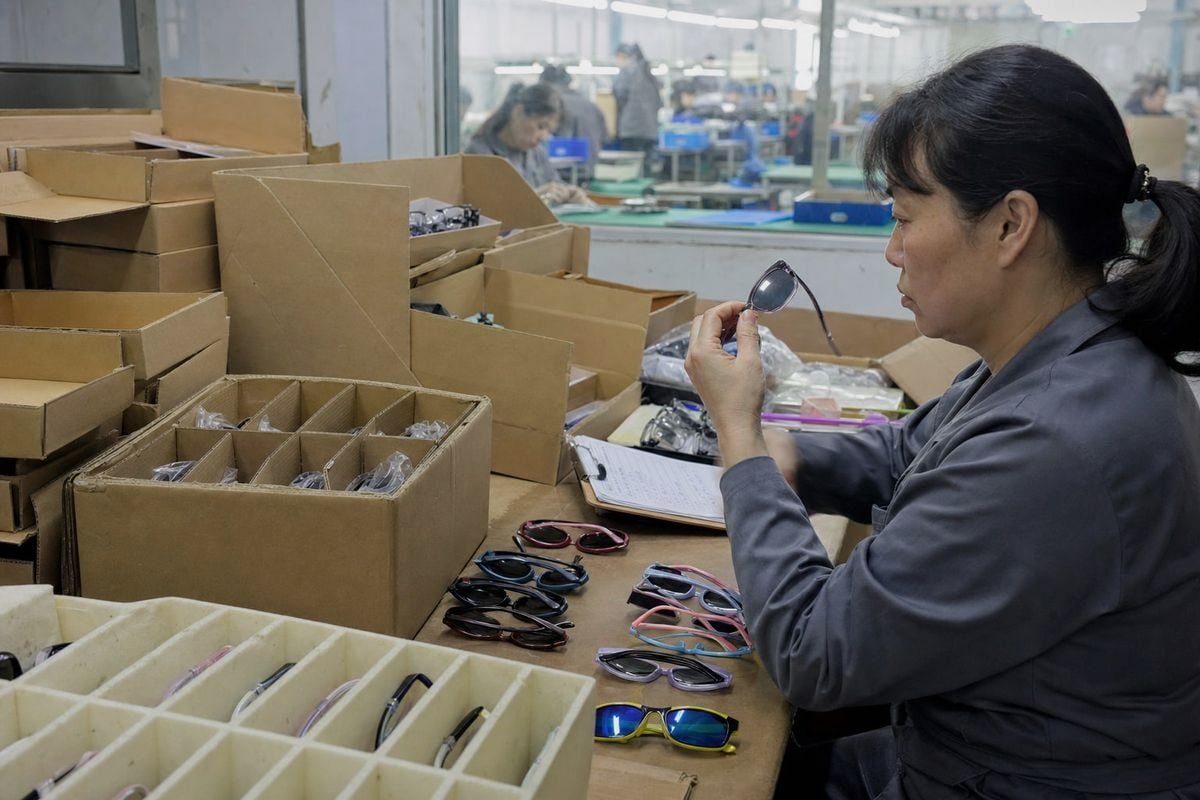
The trick is to think of lifespan in two separate ways. First, physical durability: is the pair still intact? Second, continued suitability: does it still fit and protect this specific child? A pair can pass the first test and fail the second. In our experience, the second failure is actually more common, because children grow faster than good frames wear out.
The five-point end-of-life check
I tell our brand customers to teach parents this simple inspection. It takes under a minute.
| Check point | O que procurar | What it means |
|---|---|---|
| Lentes | Scratches, pits, haze, warping | Reduced clarity; child may squint or refuse to wear them |
| Frente da armação | Cracks, whitened stress marks, twisting | Structure is weakening; sudden breakage risk |
| Hinges | Wobble, looseness, missing screws | Fit becomes unstable; temples splay outward |
| Fit | Sliding down the nose, pinching temples, red marks | Child has outgrown the frame; coverage gaps appear |
| Alignment | One lens sits higher; frame looks twisted on a flat table | Warped frame, often from heat or being sat on |
Why fit failure counts as end of life
A frame that slips down exposes the eyes to light from above and the sides. A frame that pinches gets pulled off and left in a bag. Either way, protection drops to zero. When we develop children's frames, we design the fit for a target age range precisely because growth, not breakage, ends most product lifespans. If the pair no longer stays put comfortably, its useful life is over — even if it looks brand new.
Que materiais tornam os óculos de sol infantis mais duráveis e duradouros?
Material choice is the biggest trade-off we weigh in every new development project. A rigid frame holds its shape beautifully in the showroom — and snaps the first time a toddler bends it backwards.
Materiais flexíveis e resistentes a impactos duram mais em óculos de sol infantis. Armações TR90 e TPEE dobram sem quebrar, nylon e poliamida resistem a estresse, e lentes de policarbonato são resistentes a estilhaçamento. Revestimentos de lente resistentes a arranhões e designs de dobradiça robustos estendem ainda mais a vida útil no mundo real.
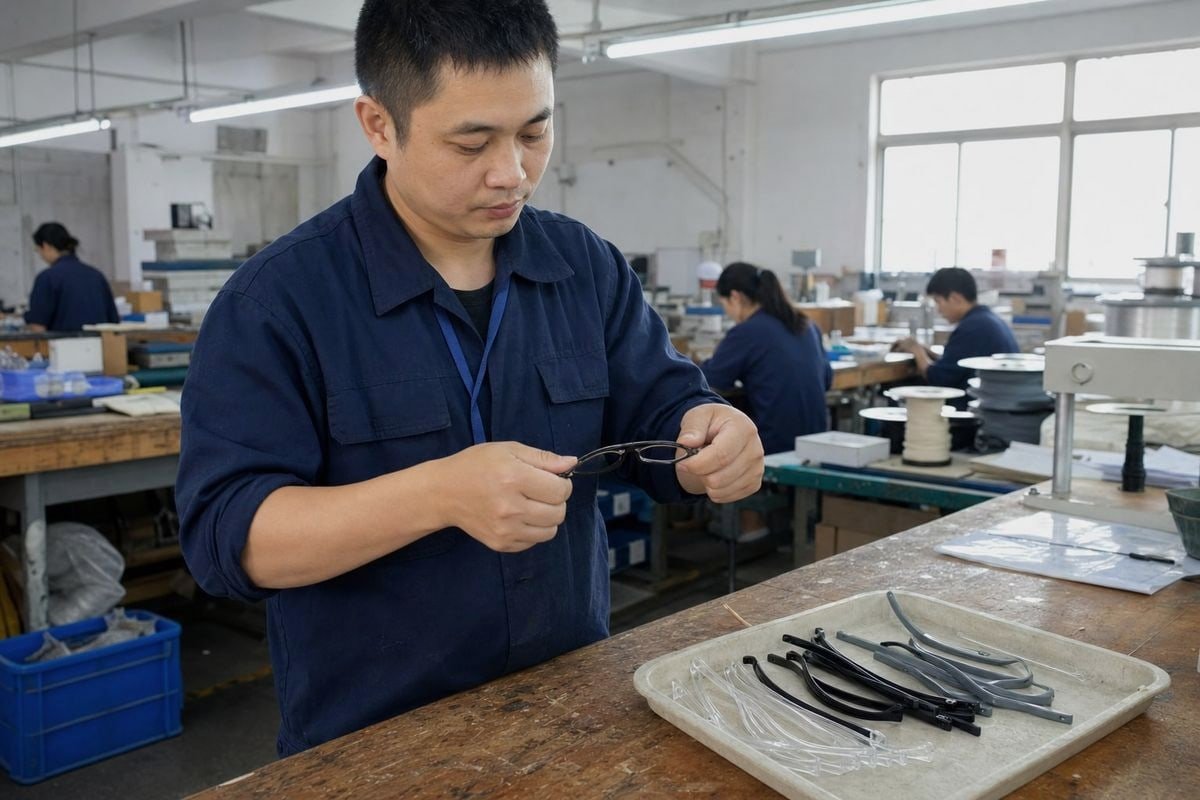
After fifteen years making children's eyewear, our engineers have a simple rule: assume the frame will be twisted, chewed, dropped, and stepped on. Then choose materials that survive all four. That thinking is why most of our roughly 800 existing styles use TR90 5 frames, often paired with soft TPEE temples. TR90 gives structure with memory flex — it bends and returns to shape. TPEE adds a soft, rubbery touch on the temples, which protects small ears and survives rough handling. Both are also environmentally friendly, which matters more every year to the brands we supply.
Frame materials compared
| Material | Flexibilidade | Resistência ao impacto | Best use in kids' eyewear |
|---|---|---|---|
| TR90 | High, with shape memory | Excelente | Main frame body for ages 3+ |
| TPEE | Very high, soft touch | Excelente | Temples, baby and toddler frames |
| Nylon / polyamide | Alto | Muito bom | Sport and wraparound styles |
| Standard rigid plastic | Baixo | Poor to fair | Not recommended for active kids |
Lenses matter as much as frames
Lentes de policarbonato 6 are the standard we recommend. They are lightweight and shatter-resistant, which is critical when a ball or handlebar meets a child's face. Add a hard scratch-resistant coating and the lens survives pockets, backpacks, and sandy beach bags far longer. For high-glare use — water, snow, cycling — polarized options reduce eye strain, though UV400 protection remains the non-negotiable core. Durable materials will not stop a growth spurt, but they do make sure the pair survives until the child genuinely outgrows it.
Com que frequência devo substituir óculos de sol para os jovens clientes da minha marca?
A product manager at a European kids' brand once asked me for one number she could print on packaging. I told her honestly: give parents a checking rhythm, not a countdown, because condition beats age.
Aconselhe os pais a substituir os óculos de sol das crianças a cada um a dois anos por pares de qualidade, e mais cedo por modelos económicos. Mais importante ainda, recomende inspeções no início de cada estação soalheira, após as férias e após qualquer impacto — substituindo sempre que o ajuste ou a condição falharem.
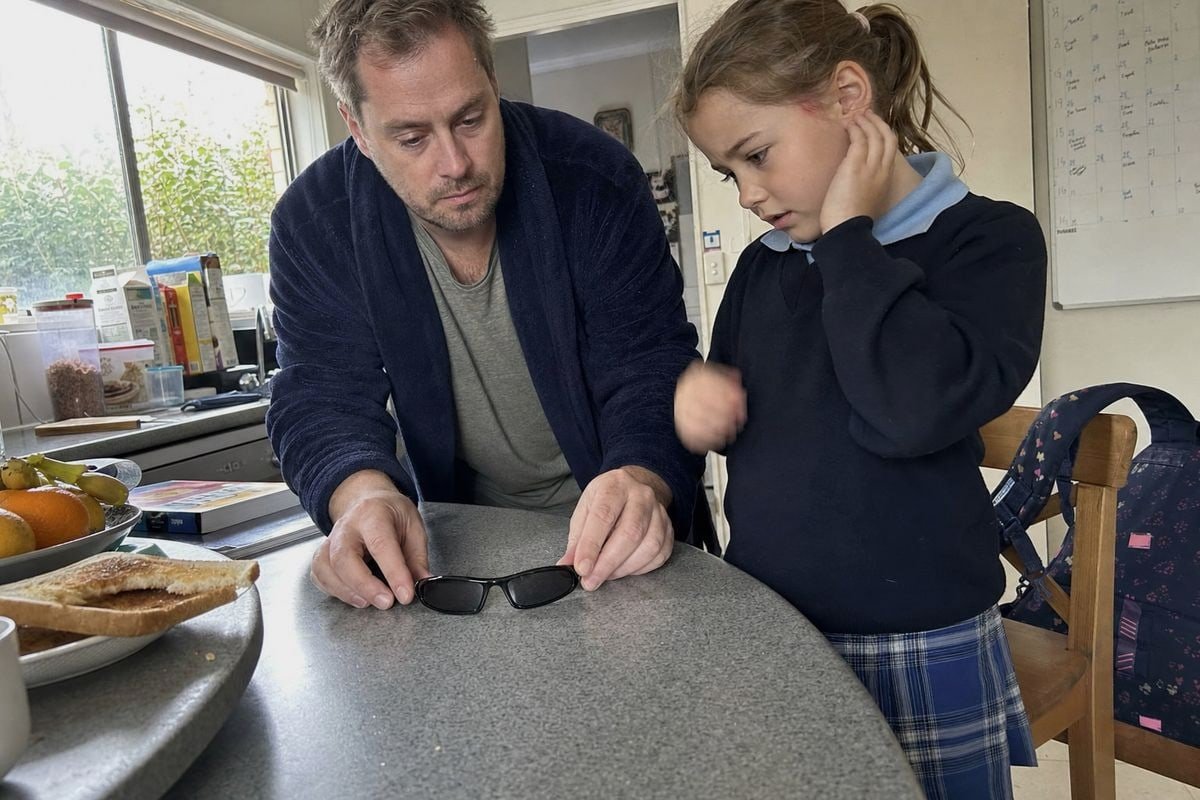
For brands, the smartest position is condition-based replacement guidance with realistic timelines behind it. Here is the framework I share with our B2B customers, based on the use patterns we see across twenty-plus export markets.
Replacement rhythm by use pattern
| Use pattern | Typical lifespan | Suggested check cadence |
|---|---|---|
| Occasional use (weekends, holidays) | 18–24 months, often growth-limited | Start of each sunny season |
| Everyday use (school runs, playground) | 12–18 months | Every 3 months, plus after any drop |
| Sports and outdoor-heavy use | 6–12 months | Monthly, plus after every impact |
| Babies and toddlers (6 months–3 years) | 6–12 months, growth-driven | Every 2–3 months as the face grows |
Growth is the hidden clock
Children's faces change quickly, especially around ages three to seven when eye spacing and head width shift noticeably. A frame sized perfectly last summer may sit crooked this summer. That is why we build our size ranges in careful steps, so a brand can move a young customer up a size instead of losing the sale. Some retailers now run growth-based trade-in programs, and I think that is a smart model: it keeps replacement affordable for parents and keeps the child in properly fitting protection.
What to tell your customers
Give parents three trigger events, not just a date: a growth spurt, a visible change in fit, and any accident. Pair that with a seasonal check and you cover nearly every failure mode. Brands that communicate this clearly build trust — and earn the repeat purchase when replacement time genuinely arrives.
Quais sinais de desgaste ou dano indicam que é hora de substituir os óculos de sol das crianças imediatamente?
During a QC session last year, I flexed a competitor's returned frame and it snapped clean at the bridge with almost no force. The stress cracks had been invisible. That pair should have been retired weeks earlier.
Substitua os óculos de sol infantis imediatamente se as lentes estiverem rachadas, arranhadas profundamente ou deformadas; se a armação estiver quebrada, torcida ou com marcas de estresse esbranquiçadas; se as dobradiças estiverem soltas ou faltarem parafusos; ou se o par não tiver proteção UV400 verificada ou marcação CE.
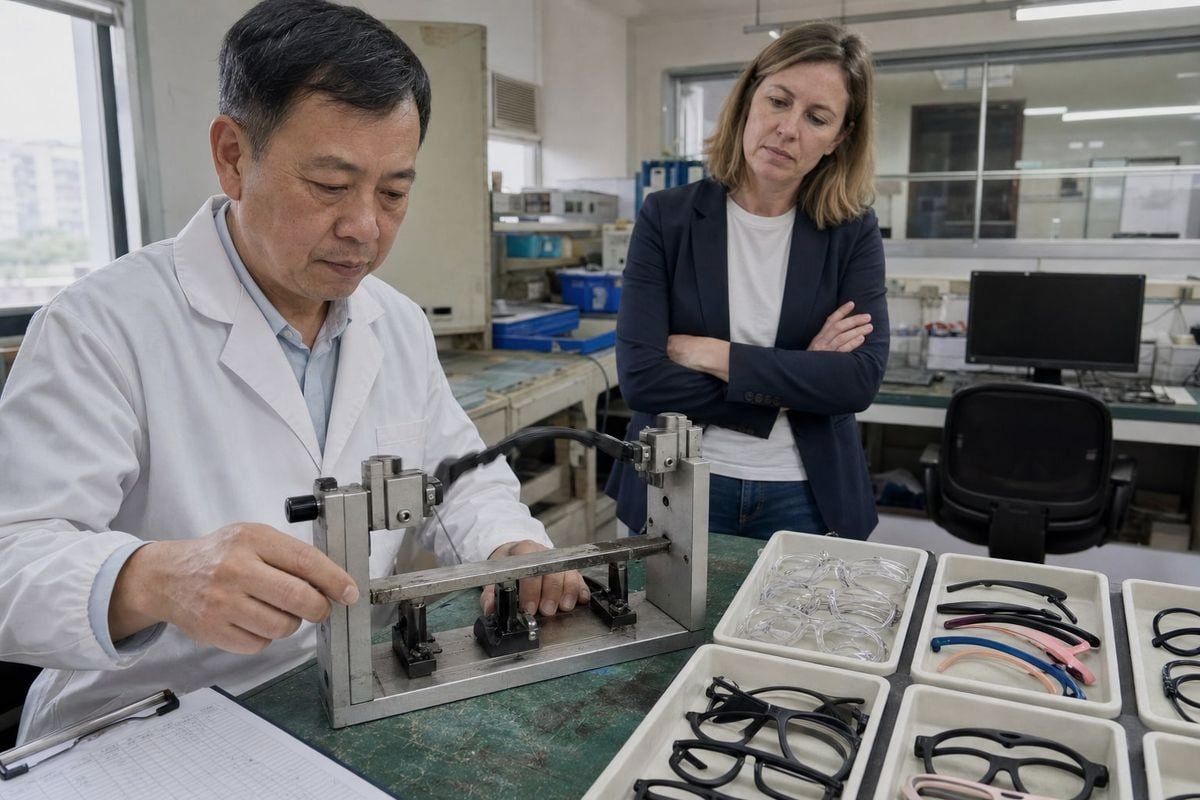
Some wear allows a grace period. Some does not. The signs below mean the sunglasses should come off the child's face today, because they either fail to protect or actively create risk.
Immediate replacement triggers
- Cracked or chipped lenses. A cracked polycarbonate lens can still shield UV, but the structure is compromised and edges can be sharp. Retire it.
- Deep scratches across the vision zone. Scratches scatter light, cause squinting, and reduce clarity. A child squinting behind dark lenses is worse off than one squinting in open shade, because the dark tint dilates the pupil.
- Warped frames or lenses. Heat is the usual culprit — a car dashboard in summer can deform frames and degrade lens coatings even when nothing looks broken afterward.
- Broken or unstable frames. Snapped temples, cracked bridges, and whitened stress lines mean sudden failure is near. Tape repairs never restore proper fit.
- Loose hinges or missing screws. The frame splays, coverage gaps open at the sides, and UV enters around the lens.
- Missing or doubtful certification. If a pair has no Marcação CE 7, no UV400 or 100% UVA/UVB claim you can trust, or came from an unclear source, it should not be on a child's face at all. Dark tint without UV filtering is more dangerous than no sunglasses.
One caution on tint versus protection
Parents often judge lenses by darkness. That is a mistake. UV protection comes from the lens material and filter, not the tint level. This is why our factory validates UV400 performance on lens batches and why we recommend category 3 filters for everyday sun exposure. A pale lens can protect fully; a dark uncertified lens can harm.
Conclusão
Kids' sunglasses fail quietly — through growth, scratches, and loose hinges — while parents assume protection continues. Replace on condition and fit, choose flexible certified materials, and inspect seasonally. Our team is always glad to help brands get this right.
Notas de rodapé
1. CDC resource on UV radiation risks supports the article’s UV filtering claims. ↩︎
2. EPA guidance explains why UV protection matters for eye health in children. ↩︎
3. Background on polycarbonate material properties supports the shatter-resistance claim. ↩︎
4. Explains what CE marking certifies, supporting the certification safety warning. ↩︎
5. Background on nylon-based polymers used in flexible TR90 frame construction. ↩︎
6. Background on polycarbonate material properties relevant to shatter-resistant lenses. ↩︎
7. Explains the certification standard referenced for safe children’s eyewear. ↩︎
Mais Artigos que Você Pode Gostar

1 de agosto de 2026
A Fábrica Deve Lidar com a Embalagem e Rotulagem de Óculos de Sol Infantis, ou Usar um Fornecedor Designado?

1 de agosto de 2026
Armazém Próprio vs. Envio Direto do Fornecedor: Qual Reduz os Custos de Devolução para Marcas de Óculos de Sol Infantis?

1 de agosto de 2026
Armazém Direto ao Porto ou Estiva no Exterior: Qual Economiza Mais no Envio de Óculos de Sol Infantis?
Procurando um Parceiro Confiável em Óculos Infantis?
Explore mais de 800 estilos prontos e suporte completo OEM/ODM adaptado à sua marca.
Entre em Contato English
  Español de México
  Deutsch
  Français
  日本語
日本語  العربية
  Português do Brasil