Is AS/NZS 1067.1 Testing and Labeling Mandatory for Kids’ Plano Fashion Eyeglasses?
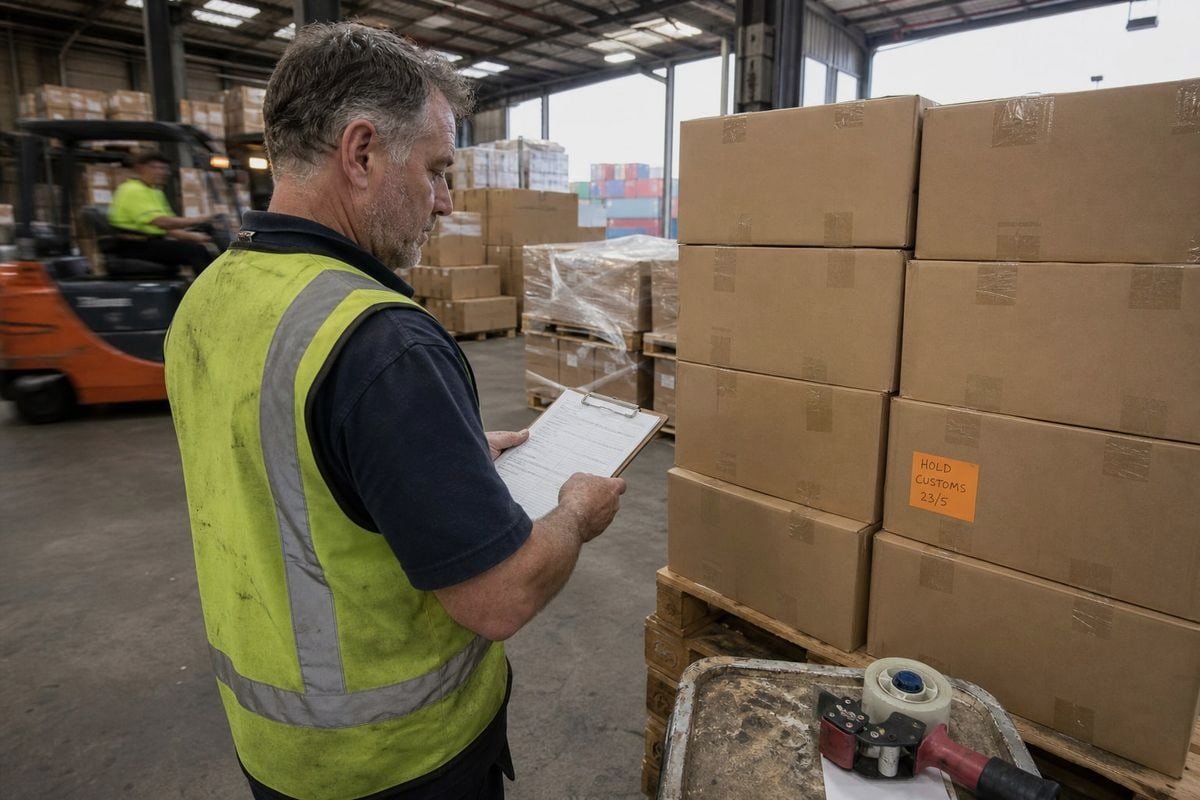
AS/NZS 1067.1 1 confusion has cost several of our Australian buyers real money. One shipment of kids’ plano fashion eyeglasses sat in customs for weeks because the labels were wrong mandatory consumer safety standard 2. Nobody wants that surprise. Our factory learned to solve this classification puzzle before production even starts.
Yes, AS/NZS 1067.1 testing and labeling are mandatory for kids’ plano fashion eyeglasses sold in Australia or New Zealand as sunglasses or fashion spectacles. Only genuine toy glasses clearly labeled as toys, prescription eyewear, and specific PPE categories are exempt from this mandatory consumer safety standard.
The answer sounds simple, but the details matter ARPANSA 3. Your product’s classification decides everything. Let me walk you through how it works, step by step.
How do I know if my kids' plano fashion eyeglasses fall under AS/NZS 1067.1 requirements?
A buyer from Melbourne once asked me why her "costume accessory" glasses got flagged at retail mandatory recalls 4. Her product photos showed tinted lenses and beach scenes. That marketing choice put her squarely inside the standard's scope, and our team had to help her re-test the whole line.
Kids' plano fashion eyeglasses fall under AS/NZS 1067.1 if they are nominally afocal (no prescription power), have tinted or protective lenses, and are sold as sunglasses or fashion spectacles. Only products clearly and legibly labeled as toys, or prescription and PPE eyewear, sit outside the mandatory scope.
The legal trigger here is product classification, not the age of the wearer. Many brands assume kids' eyewear is exempt because it looks like "just a fashion accessory." That assumption is risky. The mandatory standard, based on AS/NZS 1067.1:2016, explicitly includes children's sunglasses and fashion spectacles with light tints. So if your product is a non-prescription pair with tinted lenses, or if your marketing suggests sun or glare protection, it is almost certainly in scope.
What does "plano" actually mean?
"Plano" means the lenses are nominally afocal. They have no corrective power. This matters because AS/NZS 1067.1 was written precisely for afocal filters mounted in spectacle frames. That covers standard sunglass frames, rimless sunshields, one-piece visors, and even clip-on types. Prescription spectacles follow different optical standards, such as AS/NZS ISO 21987, and are excluded here.
Quick classification check
Here is the simple table we use with buyers before quoting any Australia-bound order:
| Product type | Covered by mandatory standard? |
|---|---|
| Kids' tinted plano sunglasses | Sim |
| Kids' fashion spectacles with light tint | Sim |
| Fashion spectacles with clear lenses sold as eyewear | Yes, with "does not provide protection" labeling where applicable |
| Toy glasses clearly and legibly labeled as toys | Não |
| Prescription spectacles | No — separate optical standards apply |
| Sports eye protectors, safety goggles, solaria eyewear | No — separate product safety standards apply |
Notice the borderline zone. Clear demo lenses on an optical frame, like our TR90 kids optical frames with TPEE temples, may be sold as optical frames awaiting prescription lenses. But the moment tinted plano lenses go in and the product ships as finished eyewear, the sunglasses and fashion spectacles standard applies. Naming your product a "toy" in the listing is not enough. The exemption requires clear, legible toy labeling on the product itself, and even then, a toy-labeled item should never be marketed for proteção UV 5.
What testing and labeling steps do I need to meet AS/NZS 1067.1 compliance before importing into Australia or New Zealand?
There is always a trade-off we weigh at the sampling stage: test early on pre-production samples and pay twice if colors change, or test once on final mass-production units and risk a delayed shipment. For Australia-bound kids' eyewear, we push buyers toward testing final production-spec samples every time.
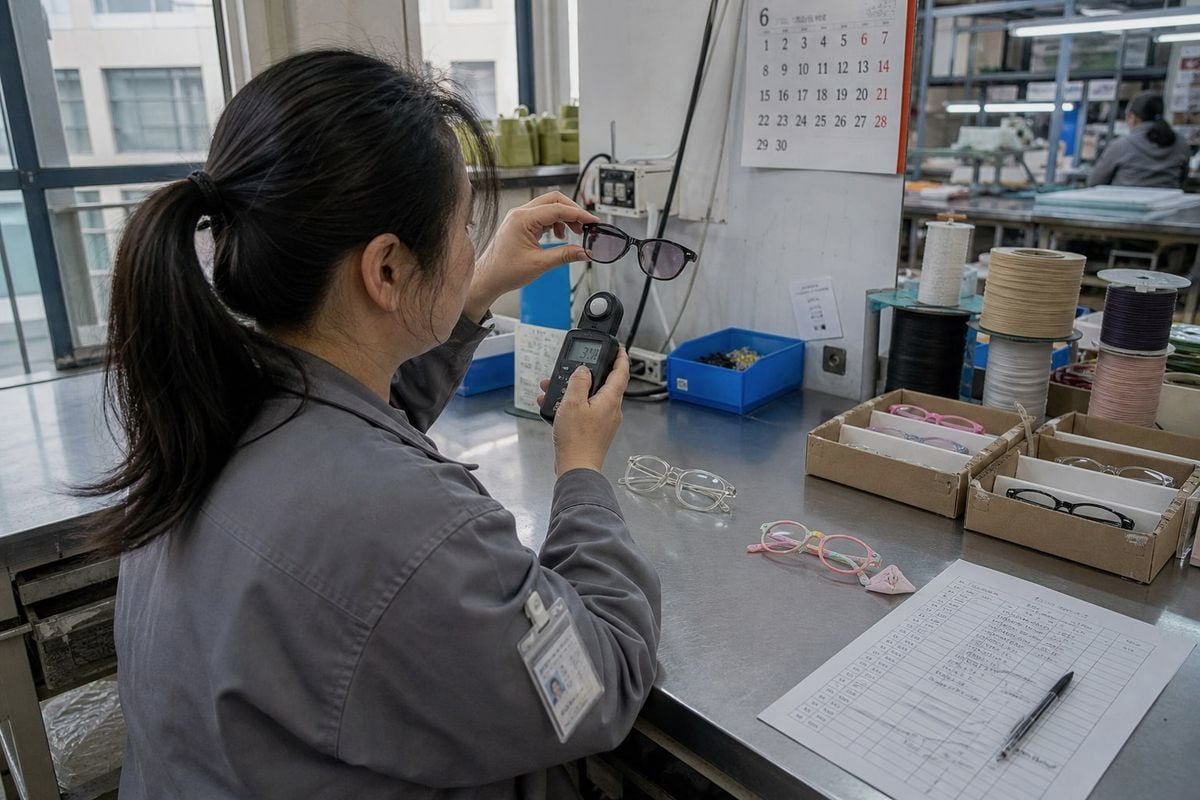
You need accredited laboratory testing of production-spec samples against AS/NZS 1067.1:2016 — covering construction, transmittance, UV protection, and lens category — plus correct labeling showing the supplier identity, lens category number and description, usage information, and any required driving warnings, all completed before import.
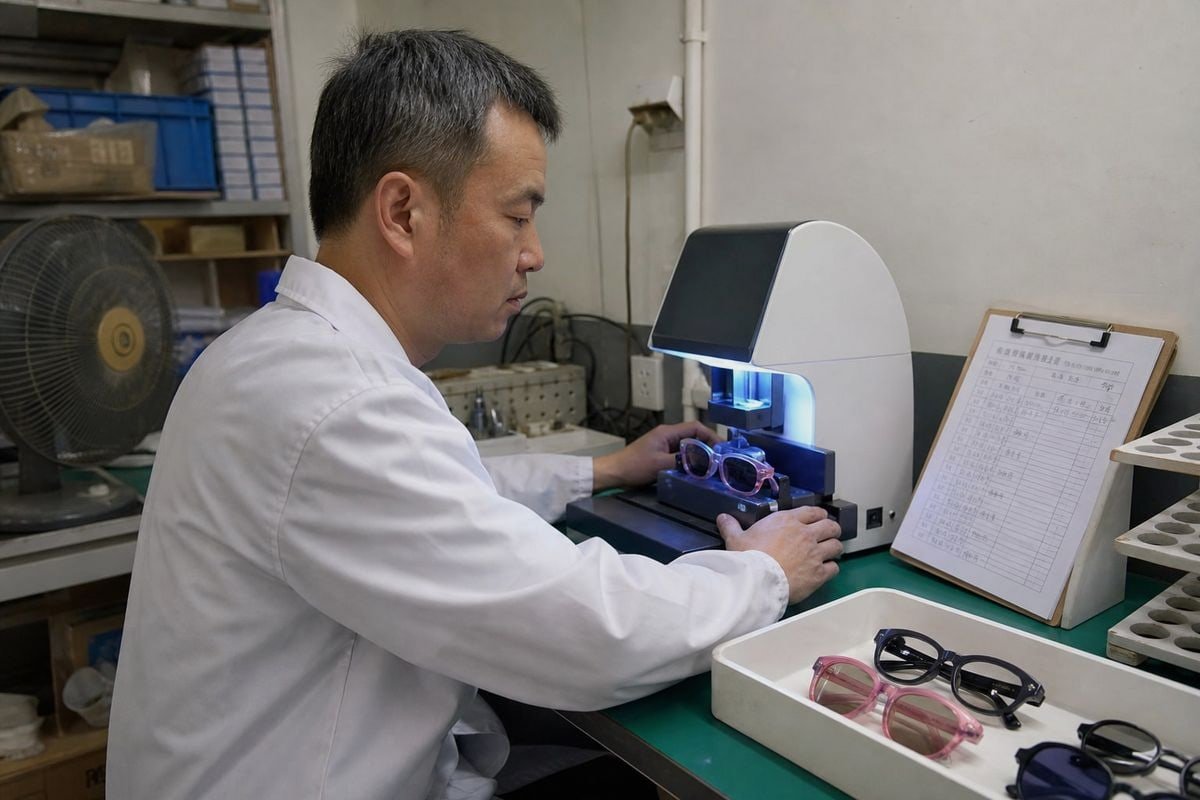
Since 1 July 2019, the Australian mandatory standard for sunglasses and fashion spectacles has been based on AS/NZS 1067.1:2016. Compliance is enforced by the Australian Competition & Consumer Commission 6, and ARPANSA is clear that sunglasses cannot be sold in Australia unless they have been tested to the mandatory safety standard. This is not a paperwork formality. It is a genuine consumer goods safety regime with performance requirements behind it.
What the lab actually tests
The standard goes far beyond a simple UV claim. Testing covers:
| Área de teste | O que verifica |
|---|---|
| Construction and design | Frame integrity, edges, and general build quality |
| Filter material and quality | Lens uniformity, defects, and optical quality |
| Transmittance | Light transmission levels defining the lens category |
| transmitância UV | Blocking across the 280–400 nm range |
| Eye coverage / field of view | Whether the lens area adequately covers the eye |
For children's products, we also recommend attention to impact resistance and frame durability, even where the core standard focuses on optical performance. Kids drop, bend, and sit on their glasses. That is exactly why we build with flexible TPEE and TR90 rather than brittle plastics.
What the label must show
Assembled sunglasses and fashion spectacles must carry:
- The identity of the manufacturer or supplier.
- The lens category number (categories 0–4 based on transmittance).
- The lens category description and usage information.
- Where applicable, the warning that the eyewear is not suitable for driving and road use.
Category symbols are optional, but if you use them, they must follow the standard's rules. Fashion spectacles that do not provide protection must say so on the label. In our experience, more shipments fail on labeling than on lens performance. A lens can pass UV400 protection testing perfectly and the product can still be non-compliant because the swing tag misses the category description. Treat labeling artwork approval as seriously as the lab test itself.
Can my manufacturer help me get AS/NZS 1067.1 test reports and certificates ready for customs and retail?
Fifteen years of exporting children's eyewear to 20-plus countries taught our team one hard lesson: a test report is only useful if it matches the exact SKU being shipped. Early on, a distributor tried reusing a report from a different colorway. The retailer's compliance team rejected it immediately.
Yes, an experienced manufacturer should coordinate accredited third-party testing on your exact production SKUs, supply matching test reports and compliance documents, prepare compliant labels and packaging, and keep batch records — but you, as the importer, remain legally responsible for eyewear compliance at the point of sale.
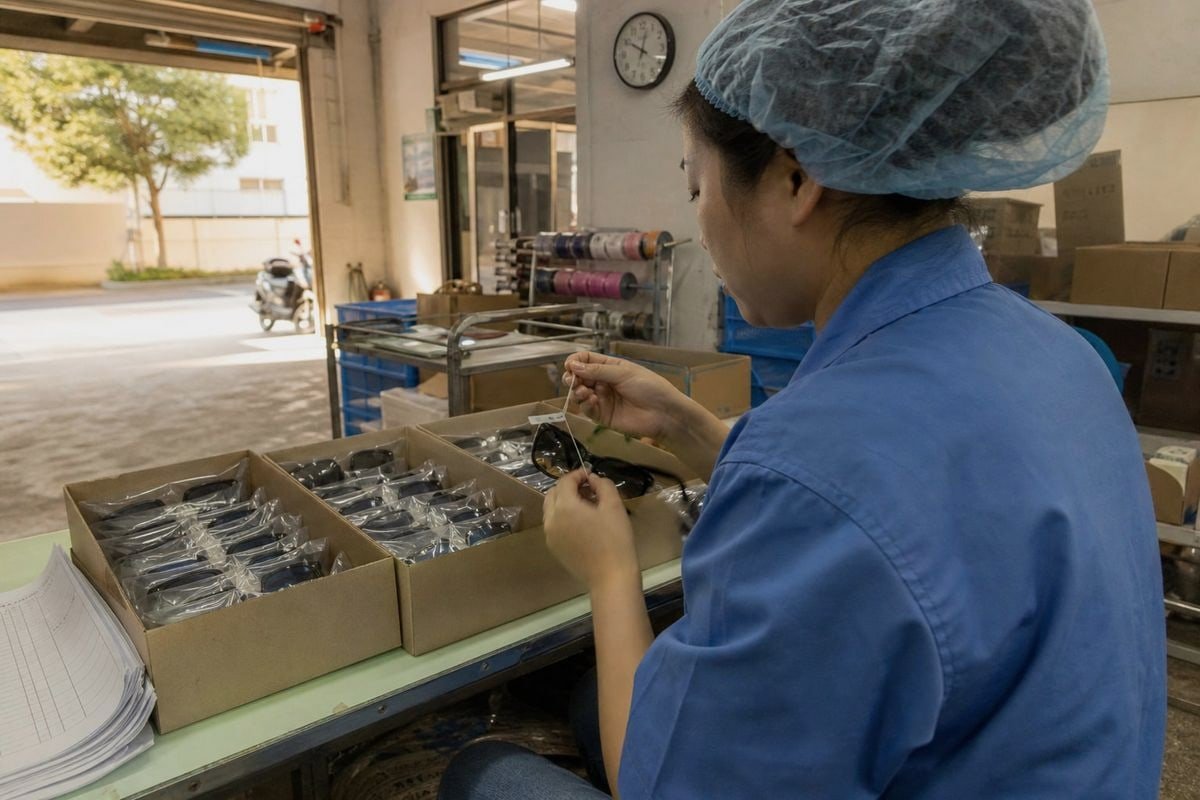
This division of responsibility surprises some new brands. Under Australian import regulations, retailers, distributors, and importers must ensure sunglasses comply with the mandatory standard before sale. Your factory cannot carry that legal duty for you. What a good factory can do is make your compliance workflow smooth, fast, and defensible.
A realistic compliance workflow with your factory
Here is the process we run for Australia-bound kids' sunglasses orders:
- Classify the product together. We confirm whether the style is a children's sunglass, a fashion spectacle, or a genuine optical frame before quoting.
- Lock the lens specification. UV400 protection lenses or polarized options are specified with the target lens category in writing.
- Pull production-spec samples. Testing samples must match final materials, tints, and coatings — not just a similar style from our 800-style catalog.
- Send samples to an accredited laboratory. The lab tests against AS/NZS 1067.1:2016 and issues a product-specific report.
- Approve labeling artwork. We prepare hang tags, lens stickers, and packaging showing supplier identity, category number, description, and any warnings.
- Keep documentation aligned. Test reports, invoices, and product descriptions should reference the same model numbers so customs and retail audits go smoothly.
One warning worth repeating: never rely on a supplier's generic claim or a report issued for a different SKU. Product-specific test reports from accredited laboratories are the only evidence regulators and serious retailers accept. If a supplier waves a single old certificate at you for their entire catalog, treat that as a red flag, not a convenience.
What happens if I sell kids' plano fashion eyeglasses without proper AS/NZS 1067.1 compliance?
A procurement manager once told me she nearly launched a children's line without testing because her previous supplier said "no one checks kids' fashion glasses." We rechecked the scope together, ran the tests, and she later called it the cheapest insurance she ever bought.
Selling non-compliant kids' plano fashion eyeglasses in Australia can trigger ACCC enforcement, fines, mandatory recalls, seized or rejected shipments, retailer delistings, and reputational damage — plus potential liability if a child's eyes are harmed by a product falsely implying UV protection.
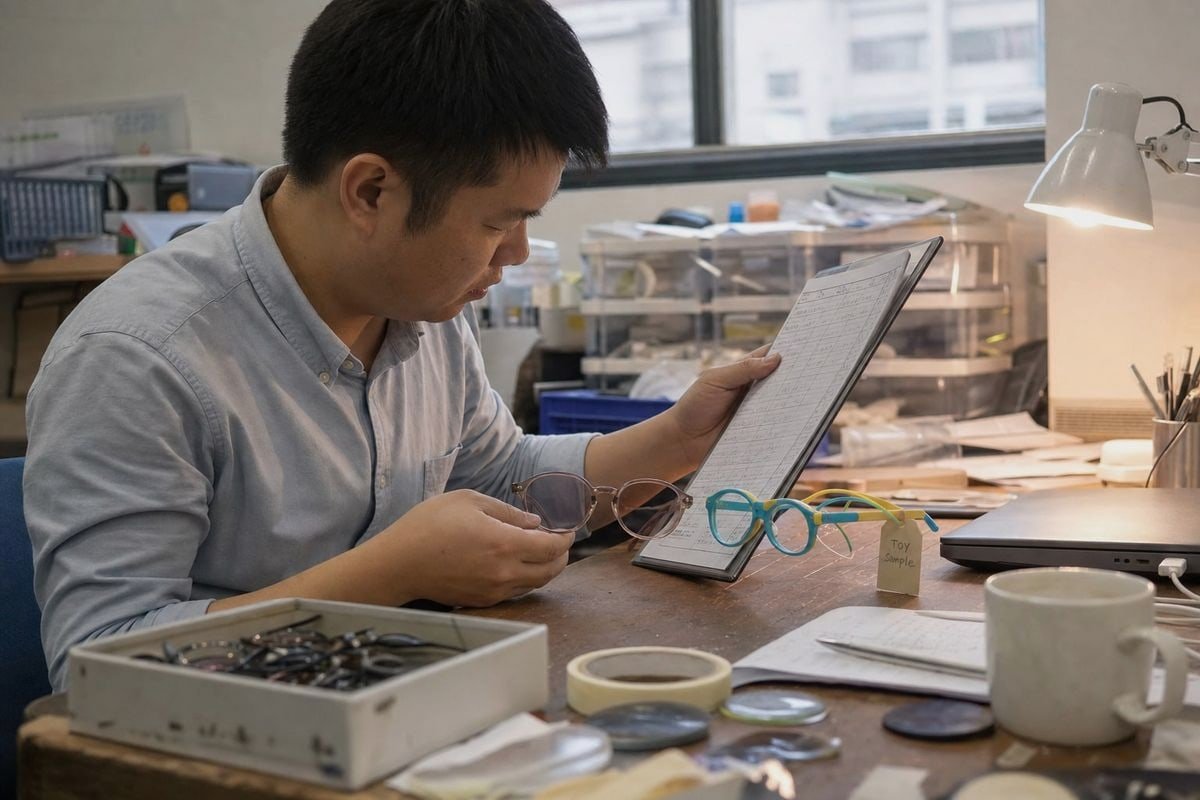
The consequences stack up in layers, and each layer hurts differently. It helps to see them side by side:
| Risk layer | What it looks like in practice |
|---|---|
| Border and customs | Shipments held, inspected, or rejected without valid documentation |
| Regulatory enforcement | ACCC action, penalties, and forced product recalls |
| Retail channel | Delisting by chains and marketplaces that audit product safety standards |
| Commercial | Wasted inventory, refund costs, lost launch windows |
| Reputational | A recall notice attached to a children's brand is hard to outlive |
| Human | A child's eyes exposed to UV through dark, non-protective lenses |
That last row deserves emphasis. Dark tinted lenses without proper UV filtering are worse than no glasses at all. The tint makes a child's pupils dilate, letting more UV radiation reach the retina. This is exactly why the standard demands UV blocking across the 280–400 nm range for non-prescription sunglasses, and why children's sunglasses are explicitly named in the mandatory scope. Kids' eyes are still developing and admit more UV than adult eyes.
The e-commerce blind spot
Private-label and e-commerce brands face extra exposure. Marketplace listings that mention "sun protection," "UV," or show outdoor use create a clear classification as sunglasses. If the underlying product was never tested, the listing itself becomes evidence of non-compliance. Renaming the product a "toy" after the fact does not fix this — the toy exemption requires clear, legible toy labeling on the item, and a toy-labeled product should never carry protection claims.
The economics are lopsided. Testing and labeling for a kids' style costs a small, predictable amount. A recall, a fine, or an injured customer costs orders of magnitude more. Compliance is simply cheaper than the alternative.
Conclusão
Compliance uncertainty stalls launches and risks recalls. The fix is straightforward: classify correctly, test the exact SKU, label properly. Our team at OKAY EYEWEAR helps buyers do exactly that.
Notas de rodapé
1. Official Australian government information on the mandatory standard for sunglasses and fashion spectacles. ↩︎
2. ARPANSA details the mandatory safety standard for sunglasses in Australia and New Zealand. ↩︎
3. Official ARPANSA information on sun protection, including the role of sunglasses. ↩︎
4. Explains the ACCC’s role and powers regarding compulsory product recalls in Australia. ↩︎
5. Explains the importance of UV protection for eye health and the risks of inadequate protection. ↩︎
6. Official information about the ACCC’s role as Australia’s competition and consumer protection regulator. ↩︎
Mais Artigos que Você Pode Gostar
5 de agosto de 2026
Acetato de Celulose Bio-Baseado vs. Regular: Qual a Diferença para Armações Infantis?
5 de agosto de 2026
Quão Recicláveis São os Materiais de Armações Ópticas Infantis e Quais Alternativas Ecológicas Existem?
5 de agosto de 2026
As Armações Ópticas Infantis Branqueiam ou Envelhecem em Armazenamento e Como Controlar as Condições do Armazém?
Procurando um Parceiro Confiável em Óculos Infantis?
Explore mais de 800 estilos prontos e suporte completo OEM/ODM adaptado à sua marca.
Entre em Contato English
  Español de México
  Deutsch
  Français
  日本語
日本語  العربية
  Português do Brasil