How to Tell If Kids’ Sunglasses Sliding Down Is a Sizing or Adjustment Issue?
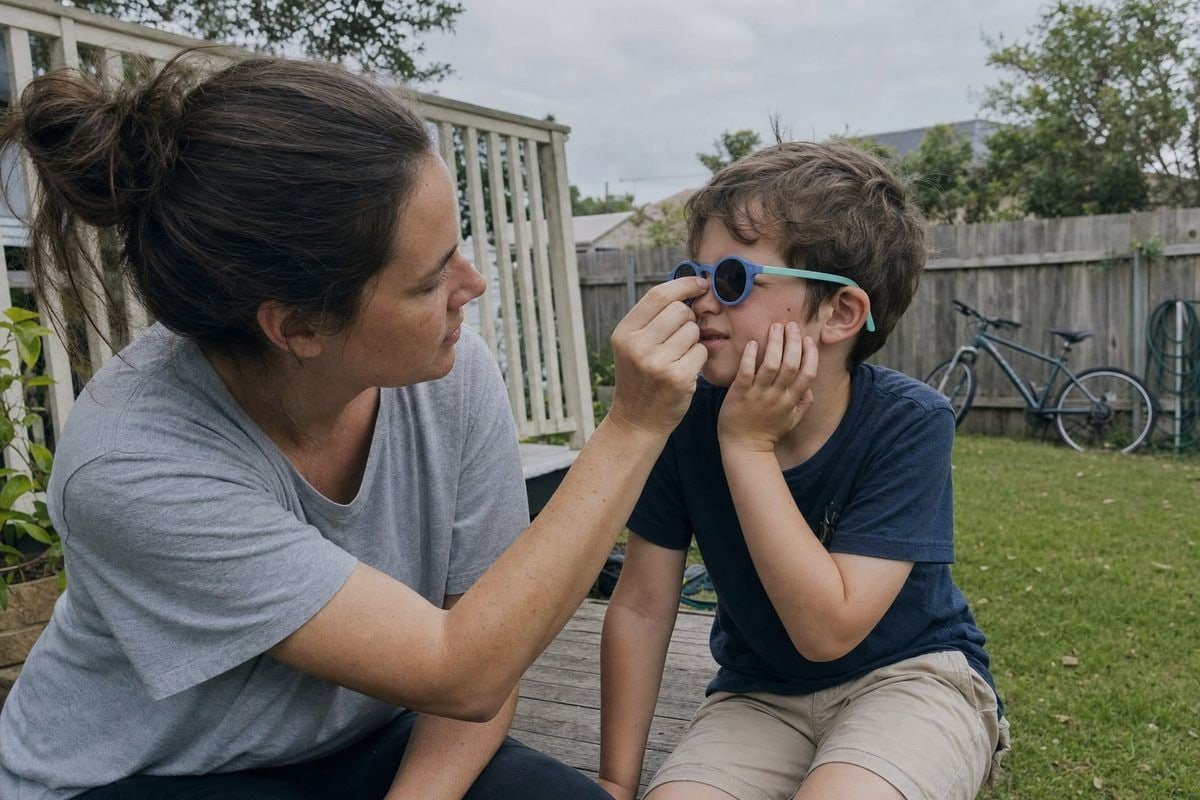
Kids’ sunglasses sliding down is the number one fit complaint we hear from buyers, and after 15 years running our Taizhou eyewear factory, I know why it frustrates parents.
Kids’ sunglasses sliding down is a sizing issue if they slip immediately, look too wide, or leave a bridge gap. It is an adjustment issue if they fit well at first but loosened gradually from worn screws, bent temples, or growth changes over time.
The good news is that you can diagnose this at home in a few minutes. Below, I will walk you through each check, step by step, using the same logic our fitting team applies on the production line.
How can I tell if my kids' sunglasses are the wrong size versus just needing adjustment?
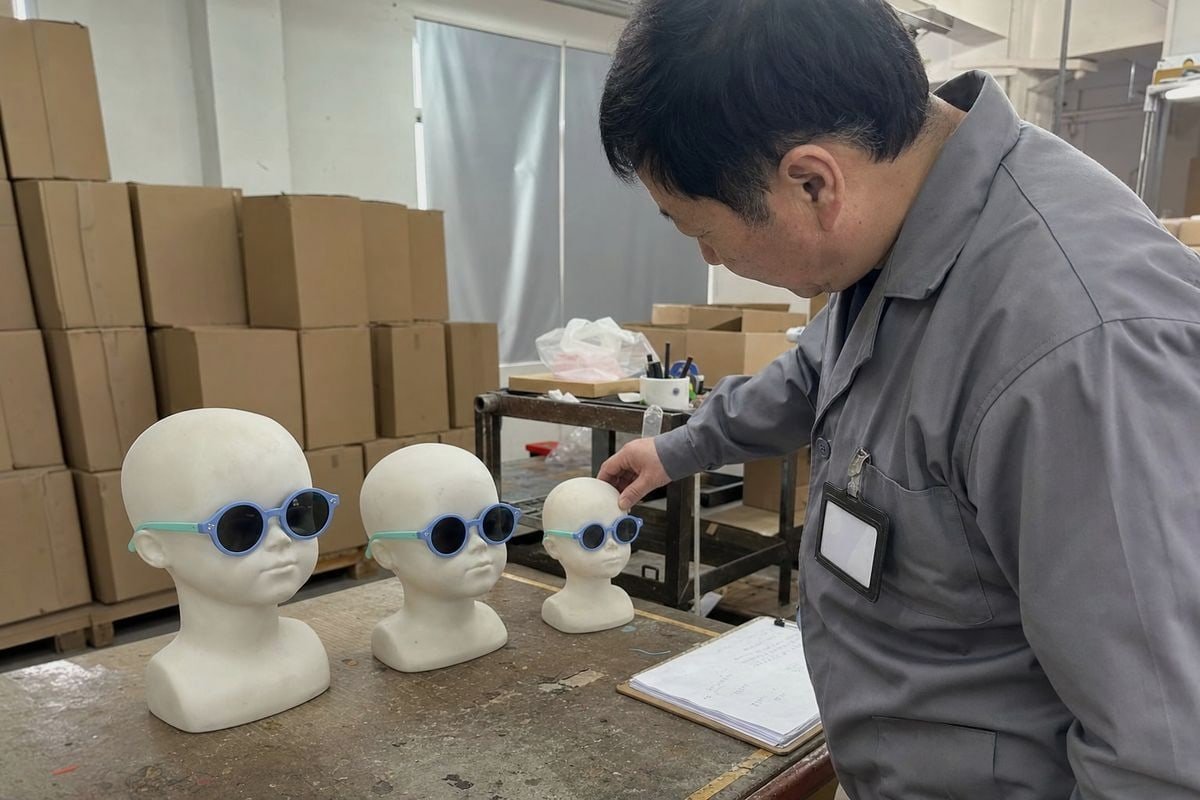
During a QC session last spring, our team pulled a batch of armações TR90 1 and tested them on child head forms of three different sizes. The same frame behaved completely differently on each one.
Watch when the slipping happens. Immediate slipping right after putting them on points to wrong sizing. Gradual slipping that developed over weeks or months points to an adjustment issue, such as loose hinge screws, bent temples, or a child simply outgrowing the frame.
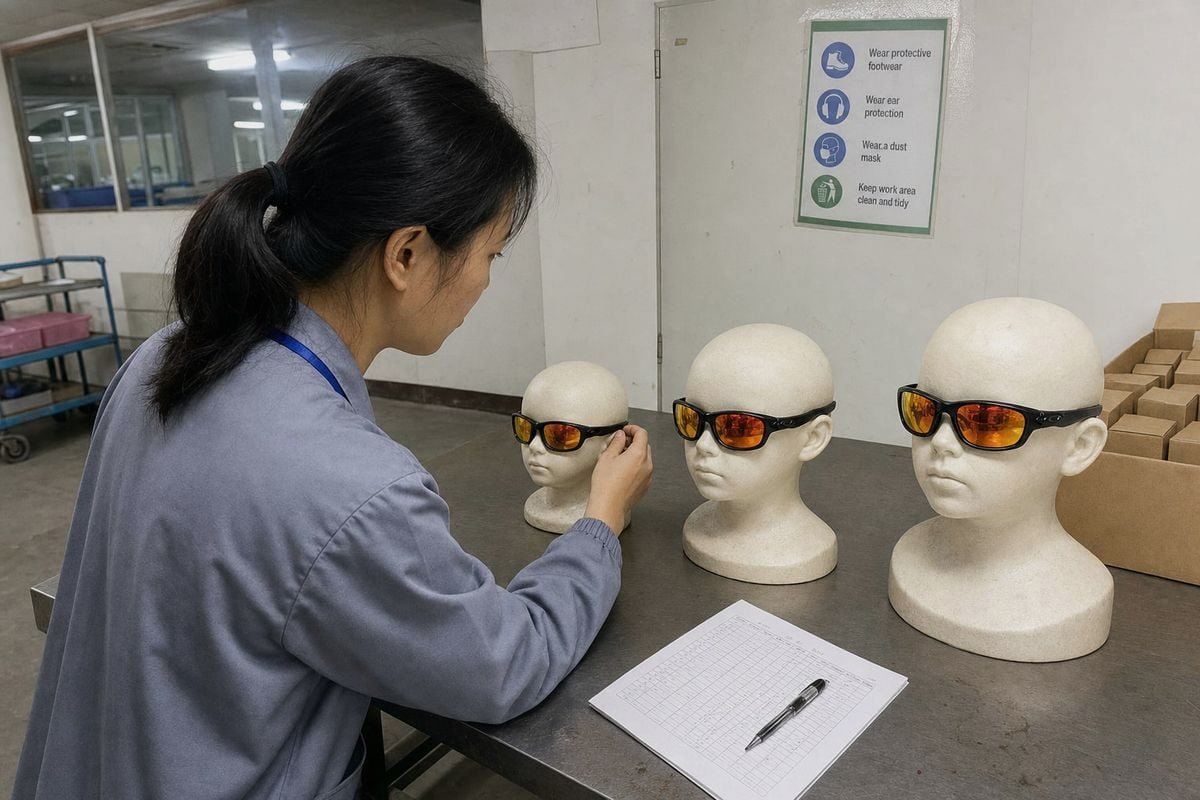
The timing test is the fastest filter, but it is not the only one. In our experience developing children's frames for brands in 20+ countries, sliding almost never has a single cause. It is usually a combination of frame width, bridge fit, temple curve, and hardware condition. So I recommend running a short diagnostic sequence before deciding anything.
The five-minute diagnostic flow
Follow these steps in order. Stop when you find a clear answer.
- Put the sunglasses on the child and wait 30 seconds without movement. If they slide now, suspect sizing.
- Ask the child to shake their head, jump, and look down. If they only slide during motion, suspect grip or adjustment.
- Look at the frame from the front. If the temples extend visibly past the sides of the face, the frame is too wide.
- Check the bridge. A visible gap between the bridge and the nose means the bridge does not match.
- Check the hardware. Wiggle the temples and look for loose hinge screws or worn contact points.
Quick comparison of the two problems
| Symptom | Likely Sizing Issue | Likely Adjustment Issue |
|---|---|---|
| Slips within seconds of wearing | Sim | Não |
| Fit well last season, slips now | Sometimes (growth) | Sim |
| Frame wider than the face | Sim | Não |
| One side sits higher | Não | Sim |
| Loose or wobbly temple arms | Não | Sim |
| Slips only when sweaty or running | Não | Yes (grip fix) |
One more point from our factory floor: children grow fast. A frame that fit perfectly six months ago may now be genuinely too small in temple length even while it still "slides" — because the temples no longer curve behind the ears at the right point. Growth can turn a correct size into a wrong size without anything on the frame changing at all.
What signs show that a frame is genuinely too big or too small for a child's face?
A brand buyer from Australia once sent us photos of her own daughter wearing a sample, asking if the fit looked right. Those photos taught me how much you can diagnose visually.
A frame is too big if the temples extend past the face, the bridge leaves a gap on the nose, or the lenses overlap the cheeks. It is too small if it pinches the temples, leaves red marks, or the child's eyes sit off-center in the lenses.
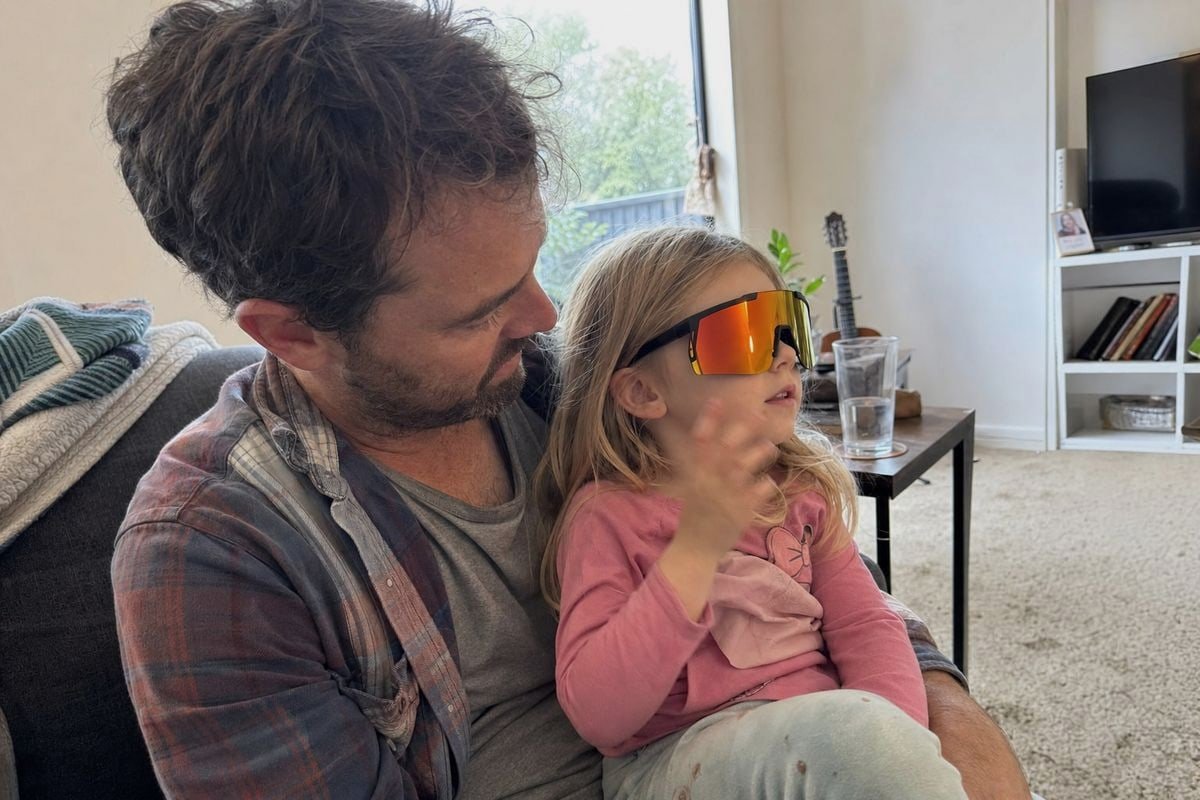
Start with the bridge, because it carries most of the frame's weight. Across every fitting guide and our own sample reviews, bridge mismatch is the most common reason kids' sunglasses sliding down becomes a daily battle. Children's noses 2 are lower and flatter than adult noses, so an adult-proportioned bridge sits on nothing and slides straight off. If you can see daylight between the bridge and the nose, no amount of adjustment will fix that frame.
Next, check the width. Look at the child straight on. The frame front should roughly match the widest part of the face. If the hinges float in the air beyond the temples of the head, the frame is oversized. If the temples bow outward under pressure, it is undersized.
Then look at temple length. Temples that are too long push the hooks far behind the ears, where they hold nothing. Temples that are too short pull the frame forward off the nose.
Visual sizing checklist
| Check Point | Too Big | Correct | Too Small |
|---|---|---|---|
| Bridge | Visible gap, frame drops | Full, even contact | Pinching, red marks |
| Largura da armação | Extends past face edges | Matches face width | Temples splay outward |
| Comprimento da haste | Hooks land behind the ear curve | Curves start right at the ear top | Pressure on ear tops |
| Eye position | Eyes sit high or inward in lens | Eyes near lens center | Eyes near lens edge |
| Cheek contact | Lenses rest on cheeks | Small clearance | Lashes touch lens |
One nuance worth noting: a frame can be too tight in one spot and still slide. We see this with narrow bridges on wide frames. The pinch creates red marks, the child pushes the frame down to relieve pressure, and the parent assumes it is loose. Discomfort plus sliding usually means the overall proportions are wrong, and a different size — not a tune-up — is the answer.
Can flexible materials like TPEE and TR90 fix sliding issues that rigid frames can't?
Material choice was the first big decision when we set up our children's line, and it is still the question buyers ask us most in sampling calls.
Yes, to a meaningful degree. TPEE and TR90 flex to conform to a child's face, add surface grip, and hold their shape after bending, so they reduce slide from minor mismatches. But no material can rescue a frame that is fundamentally the wrong size.
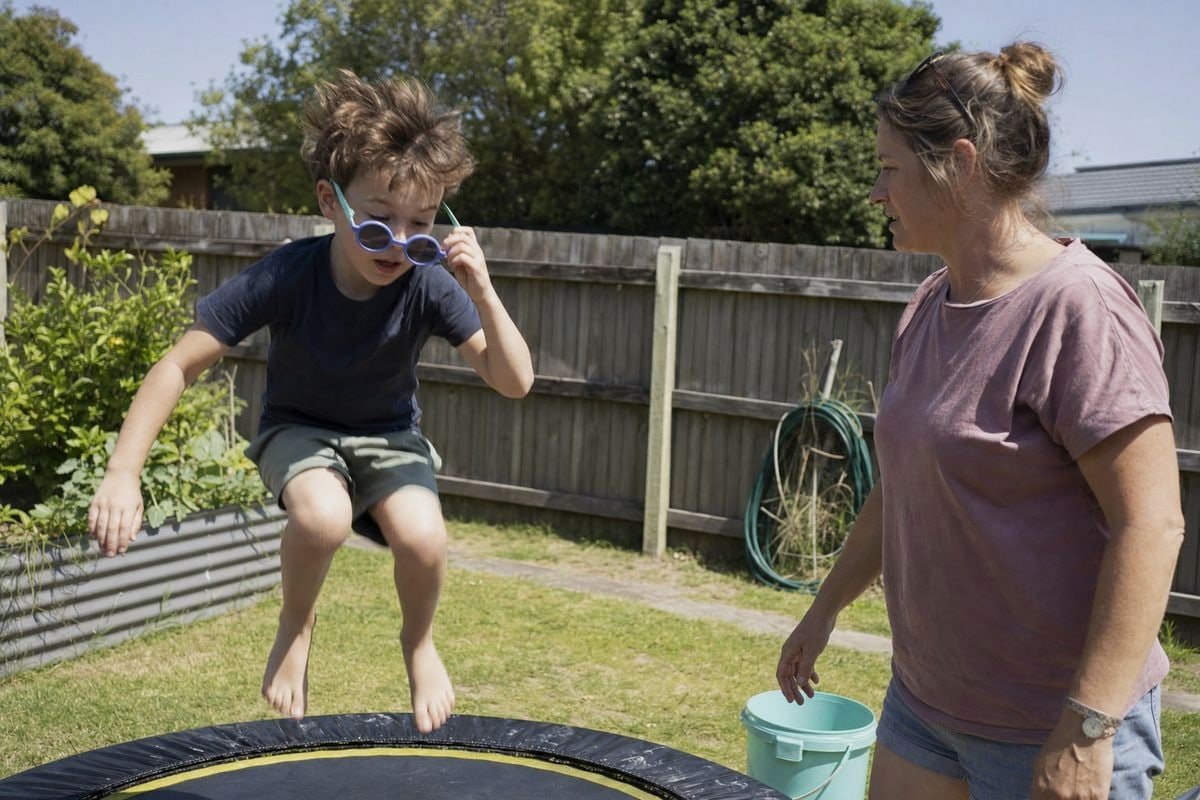
Let me explain why material matters so much here. A rigid frame only touches a child's face at a few hard points. If any of those points is slightly off — and on a growing face, something always is — the frame rocks, tilts, and slides. A flexible frame behaves differently. It bends slightly under wear, spreading contact across more of the nose and temples. More contact means more friction, and more friction means less sliding.
At our factory, most of our roughly 800 existing styles use TR90 fronts, TPEE 3 construction, or a TR90 frame with TPEE temples. That last combination exists for exactly this problem. The TR90 front stays dimensionally stable so the lenses sit correctly, while the softer TPEE temples hug behind the ears and grip the skin instead of resting on it. For active kids who run, jump, and shake their heads all day, that temple grip does more to stop sliding than any screw tightening ever will.
How materials compare on slide resistance
| Propriedade | Rigid Acetate/PC policarbonato 4 | TR90 | TPEE |
|---|---|---|---|
| Flexibilidade | Baixo | Alto | Muito alto |
| Surface grip on skin | Baixo | Médio | Alto |
| Shape memory 5 after bending | Ruim | Excelente | Excelente |
| Peso | Mais Pesado | Muito leve | Muito leve |
| Safety on impact | Can crack | Bends, resists breaking | Bends, resists breaking |
| Tolerance for growing faces | Narrow | Wider | Widest |
Weight matters too. Sport-style shield sunglasses, like the wraparound mirrored styles we produce, carry larger lenses at the front of the frame. On a heavy rigid frame, that front weight drags the glasses down the nose. Lightweight TR90 and TPEE cut the total mass dramatically, so gravity has less to work with. Combine low weight, a curved wraparound geometry 6, and grippy temple tips, and you get frames that stay put through cycling, skiing, and playground chaos.
Still, I want to be honest with you, because this is where some suppliers oversell. Flexible material widens the fit tolerance; it does not eliminate sizing. A TPEE frame that is two sizes too wide will slide just like a rigid one. Material is your safety margin, not your substitute for correct dimensions.
Should I contact my manufacturer about a sizing fix or is this something parents can adjust at home?
A European importer once emailed us about a return spike on one style. Their instinct was a factory defect. The real cause turned out to be a size-guide gap on their product page — a fixable, structural issue on the manufacturing and merchandising side.
Parents can handle home fixes: cleaning oily contact points, tightening hinge screws, adding a strap, or gently warming and re-curving flexible temples. Contact your manufacturer when sliding is widespread across units, tied to bridge or width geometry, or requires a size-range redesign.
The answer depends on who "you" are. If you are a parent, most gradual-loosening problems are safe to fix at home. If you are a brand or importer, repeated sliding complaints are product data, and your factory partner should hear about them.
What parents can safely do at home
Start with the simplest steps first:
- Clean the nose bridge and temple tips with mild soap. Skin oil and sunscreen residue 7 kill grip, especially in summer.
- Tighten the small hinge screws with a mini screwdriver if the temples wobble.
- For TR90 or TPEE temples, warm them briefly in warm (not hot) water and gently increase the curve behind the ears. Flexible materials hold the new shape well.
- For sports, add a soft strap or retainer. This is a functional add-on, not a true fit fix, but it works.
What parents should not attempt: forcing a rigid frame to bend (it may snap), reshaping the bridge, or repeatedly re-bending metal cores. If the bridge gaps or the frame is clearly too wide, replacement is the honest answer. A wrong-size frame adjusted aggressively becomes an uncomfortable wrong-size frame.
What buyers should escalate to their factory
For B2B buyers, sliding complaints follow patterns. If one child's pair slides, that is fit variance. If five percent of a shipment generates the same complaint, that is a design signal. When our OEM/ODM 8 clients bring us this feedback, we can adjust bridge width on existing tooling, swap in higher-grip TPEE temple tips, revise the temple curve angle, or recommend a different base style from our existing range — often without new mold investment. That last option matters for smaller brands testing a market, because it lets them correct fit issues at low risk. A good factory partner treats sliding complaints as free product-development data, and I encourage buyers to share them early rather than absorb returns quietly.
Conclusão
Sliding sunglasses frustrate kids and worry parents, but the diagnosis is simple: immediate slipping means sizing, gradual slipping means adjustment. Check the bridge, width, and temples — then fix or replace accordingly.
Notas de rodapé
1. Provides background on eyewear frame materials and construction terminology used in article. ↩︎
2. NIH resource supports discussion of children’s facial anatomy differences relevant to fit. ↩︎
3. Wikipedia explains thermoplastic elastomer material class referenced as TPEE in the article. ↩︎
4. ISO standards body relevant to eyewear material and safety specifications referenced. ↩︎
5. Wikipedia background on shape memory properties referenced in material comparison table. ↩︎
6. Wikipedia overview of sunglasses design including wraparound sport styles discussed in article. ↩︎
7. FDA consumer guidance relevant to sunscreen residue affecting grip mentioned in home fixes. ↩︎
8. WTO trade services page relev
Mais Artigos que Você Pode Gostar

1 de agosto de 2026
A Fábrica Deve Lidar com a Embalagem e Rotulagem de Óculos de Sol Infantis, ou Usar um Fornecedor Designado?

1 de agosto de 2026
Armazém Próprio vs. Envio Direto do Fornecedor: Qual Reduz os Custos de Devolução para Marcas de Óculos de Sol Infantis?

1 de agosto de 2026
Armazém Direto ao Porto ou Estiva no Exterior: Qual Economiza Mais no Envio de Óculos de Sol Infantis?
Procurando um Parceiro Confiável em Óculos Infantis?
Explore mais de 800 estilos prontos e suporte completo OEM/ODM adaptado à sua marca.
Entre em Contato English
  Español de México
  Deutsch
  Français
  日本語
日本語  العربية
  Português do Brasil