How to Request Production Footage of Kids Optical Frames for Content Marketing?
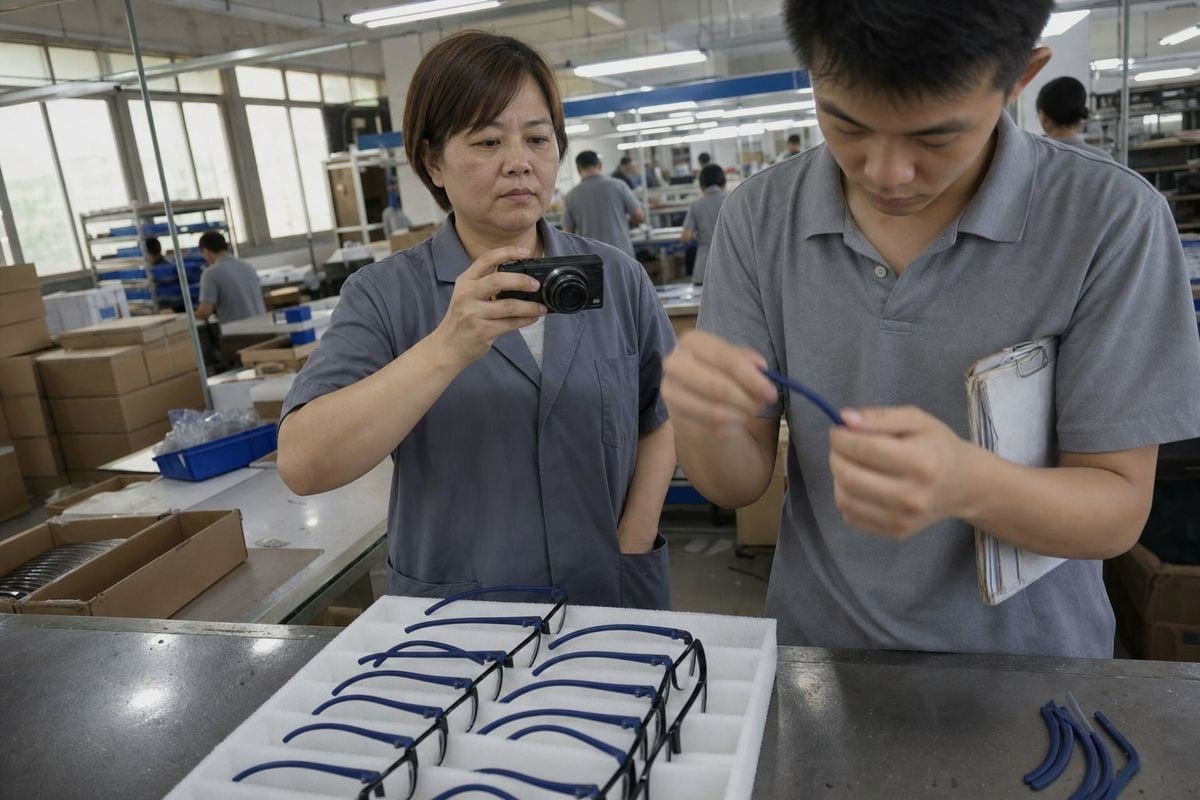
Requesting production footage of kids optical frames is a question our factory in Taizhou hears often written usage rights 1. Many brands struggle to get usable video, and their marketing suffers for it.
To request production footage of kids optical frames, tie your request to specific production milestones — sample approval, TR90 assembly, QC, and packing. Send a short shot list, state the format and platform, confirm usage rights in writing, and let the factory approve sensitive angles.
That is the short answer. Below, I will walk through exactly what to ask for, how to ask, and what to check before you publish anything.
What kind of production footage can I request from a kids optical frames manufacturer?
Last month, a buyer from Australia asked our team for "some factory videos." We sent QC clips, molding shots, and packing footage — and she was surprised how much was available.
You can request footage of material inspection, frame molding, TR90 assembly, hinge and flex testing, lens fitting, logo application, in-process QC, final inspection, and packaging. Most kids eyewear factories already record photos and videos at these stages as part of normal order documentation.
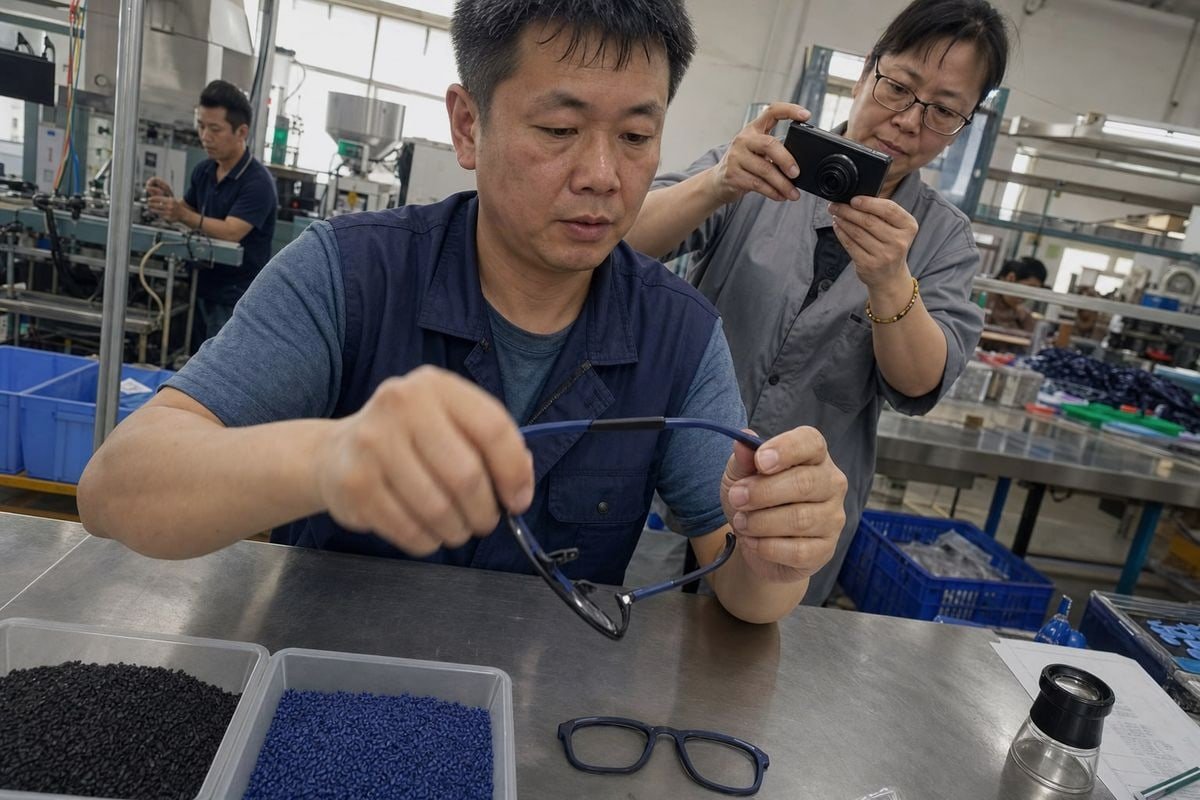
Most buyers do not realize this, but factories like ours already produce documentation footage every week. We film QC checks, sample approvals, and pre-shipment inspections for customers in more than 20 countries. So the raw material for your children's eyewear marketing often exists before you even ask. The real skill is knowing which clips to request.
Verification footage vs. marketing footage
There is an important distinction here. Verification footage proves your product exists and meets spec. Marketing footage persuades a parent or buyer. The best supplier video assets do both — but only if the clips are clean, well-lit, and stable enough to reuse.
Here is how the main footage types compare:
| Footage type | What it shows | Best marketing use |
|---|---|---|
| Material inspection | TR90 / TPEE granules, incoming checks | Safety and material story |
| Molding and assembly | Frame fronts formed, temples attached | Craftsmanship storytelling |
| Flex and hinge testing | Frames bent, twisted, opened repeatedly | Proof of durable frames |
| Lens fitting | UV400 or demo lenses 2 seated by hand | Product education content |
| Final QC | Surface checks under light, fit checks | Trust-building brand storytelling |
| Packing and labeling | Retail-ready boxes, carton marks | E-commerce and wholesale reassurance |
For pediatric glasses specifically, the flex test is gold. When a technician bends a TPEE temple almost flat and it springs back, that single clip answers the number-one question parents ask: will my child break these? Ask for that shot first. Then build outward — a wide shot of the production line, close-ups of hinge assembly, and a neutral-light shot of the finished frame.
How do I ask my supplier to film specific steps like TR90 frame assembly or quality checks?
There is always a trade-off we weigh when a filming request arrives: helping the customer's marketing versus keeping the production line on schedule. The requests that work respect both.
Send a written creative brief tied to an active order: list each shot, the production stage, duration, orientation, and lighting. Time requests around sample approval or final inspection, when staff are already handling your frames, and give the factory at least a week of notice.
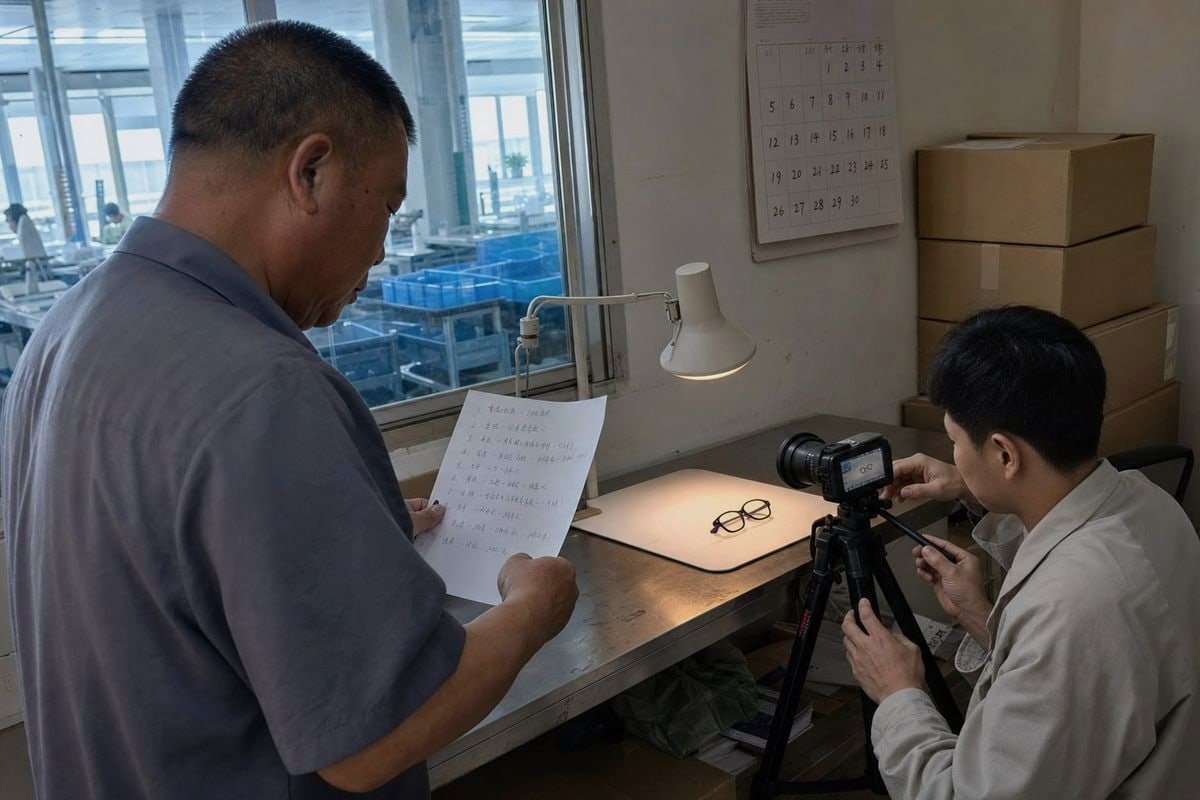
The worst request I have ever received was "please send nice videos of our glasses being made, thanks." We had no idea what platform, what length, or which of the customer's three models to film. The best request was a one-page brief with six numbered shots. We filmed it in forty minutes during a scheduled QC session. The difference was entirely in the asking.
Time your request around existing milestones
Factories organize work around approval checkpoints. Ride those checkpoints instead of creating new ones:
- Pre-production sample approval — request close-ups of the approved sample, logo placement, and color under daylight.
- In-process production — request the TR90 molding, temple attachment, and assembly-line wide shot.
- Final inspection — request hinge open/close testing, surface checks under light, and flex demonstrations.
- Packing — request retail packaging, labeling, and carton marking shots.
What to put in the footage brief
Keep the creative brief to one page. Include the exact model number or a reference photo, the end platform (Amazon, DTC site, trade show, social media video), required orientation and duration, whether you want raw clips or light edits, and whether workers' faces should be excluded. For short-form social, ask for a 15–30 second vertical clip with stable framing. State clearly if your logo, packaging, or the factory signage may appear on screen.
One more practical tip from our production line: ask for each action filmed twice — once wide, once close. It costs the factory an extra minute and doubles your editing options later.
Can I get customized video content that matches my brand's marketing style and needs?
A Japanese baby-brand customer once sent us her brand color palette and asked if our QC video could be shot against a white table instead of the green workbench. Of course it could. Nobody had ever asked.
Yes. Most OEM/ODM kids eyewear factories can film against neutral backgrounds, feature your branded packaging, follow your shot list and pacing notes, and deliver raw vertical or horizontal files that your team edits to match your brand voice, captions, and music.
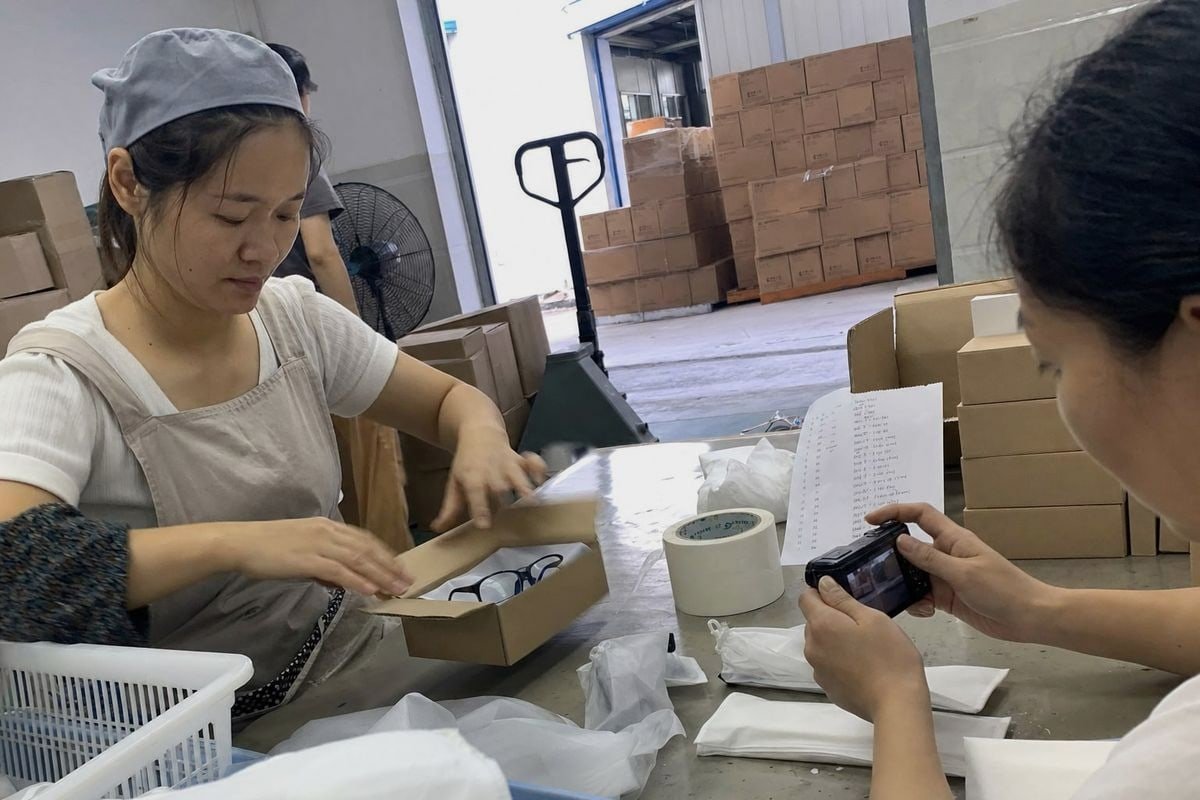
Customization sits at the heart of what we do as an OEM/ODM partner — custom colors, logos, lenses, and packaging — and video simply extends that same logic. If we can put your logo on a temple arm, we can put your packaging in the final frame of a clip. The key is understanding what a factory can realistically deliver versus what your own team should handle.
What the factory can do vs. what your team should do
| Task | Factory side | Brand side |
|---|---|---|
| Raw footage capture | ✔ Best done in-house | — |
| Neutral backgrounds, clean lighting | ✔ With advance notice | — |
| Featuring your packaging and logo | ✔ If confirmed in the brief | — |
| Voiceover, captions, music | Limitada | ✔ Keep in your brand voice |
| Color grading and editing | Basic only | ✔ Match your visual identity |
| Platform-specific cuts | — | ✔ Your editors know your channels |
My honest advice: ask the factory for clean, well-lit, stable raw clips — not finished ads. Product videography is our staff's side skill, not their profession. Your editor will always match your brand tone better than a factory technician can. What we can control precisely is the physical scene: which frame model appears, which hands demonstrate the flex, and whether the shot runs vertical for social or horizontal for your product page.
One flexible-material note worth planning for. Our TPEE temples photograph best in motion. A still image of a bent frame looks broken; a two-second product demonstration video of it springing back looks remarkable. Brief the factory to film flexibility as continuous motion, never as frozen poses.
What should I check before using a factory's production footage in my own marketing materials?
The lesson that shaped our policy came early: a customer published a workshop clip that briefly showed another brand's frames on the same bench. We now review every clip before release — and we recommend buyers run their own checklist too.
Before publishing, confirm written usage rights, verify no other customers' products or proprietary equipment appear, secure releases for any identifiable faces — especially children — check that claims like UV400 or impact resistance are documented, and let the factory approve the final edit.
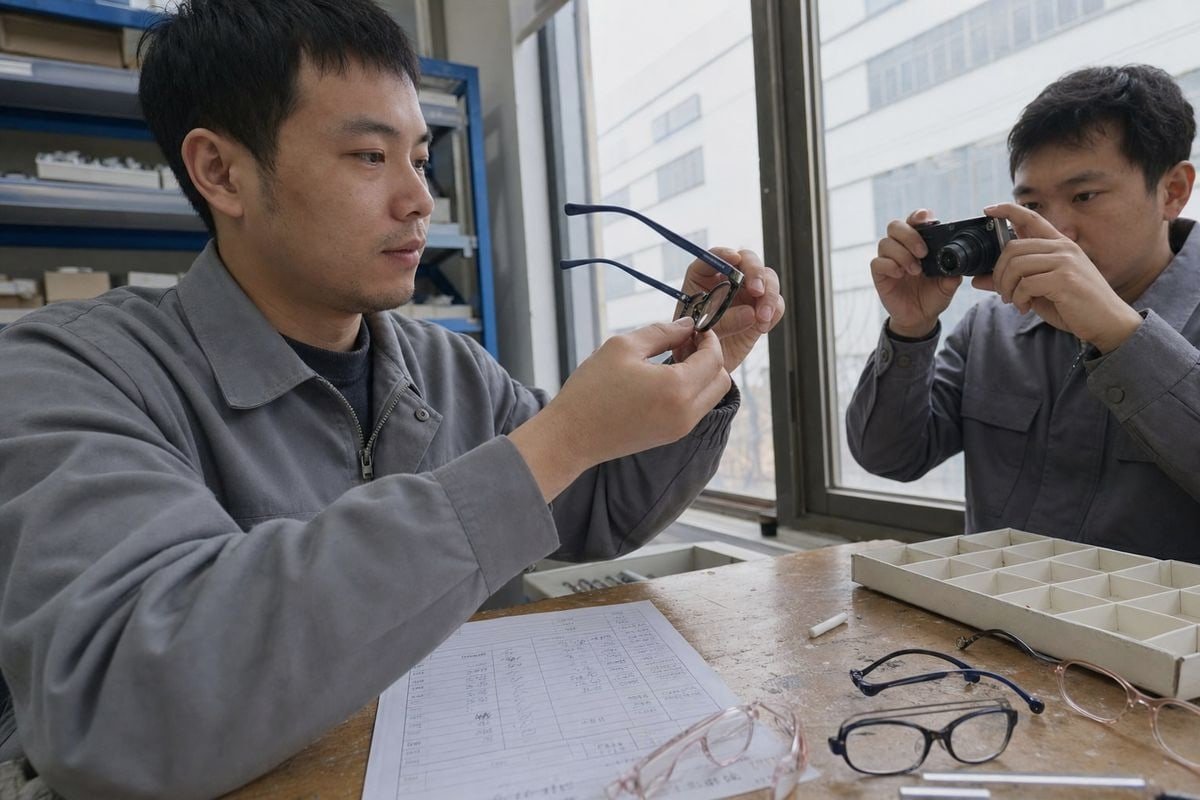
This is the step most content teams skip, and it is where the real risk lives. Footage of pediatric glasses carries extra sensitivities that footage of, say, phone cases does not. Work through the checks below before a single clip enters your digital asset management system 3.
Rights, privacy, and claims: the pre-publication checklist
| Verifique | Por que importa | What to get |
|---|---|---|
| Content licensing / usage rights | The factory shot the footage; ownership is not automatic | Written grant covering platforms, territories, and duration |
| Worker faces | Privacy and courtesy | Factory confirmation or blurred faces |
| Children on camera | Strictest category of all | Written parental releases; verify regional privacy rules before publishing |
| Other customers' products | Confidentiality breaches damage supplier trust | Frame-by-frame review of every clip |
| Proprietary equipment | Factories protect process IP | Let the supplier flag or blur sensitive angles |
| Marketing claims | UV400, impact resistance, and safety claims need backing | Test reports or documentation on file before the claim airs |
| Product accuracy | Footage must match the exact model and age range sold | Model numbers confirmed against your catalog |
Two points deserve emphasis. First, usage rights should be explicit, not assumed. A one-paragraph email agreement — "Brand X may use these clips in web, social, and advertising worldwide, indefinitely" — prevents nearly every future dispute. Second, never imply a medical benefit or safety certification the documentation does not support. Parents trust children's eyewear brands slowly and abandon them fast. Treat these as prudent best practices, and where children appear on camera, get written releases and check the privacy requirements of each market you publish in.
Handled well, one factory visit or one filmed QC session can feed a month of content: a product-page explainer, three social cuts, an email header, and a trust-building blog embed — all from the same twenty minutes of raw footage.
Conclusão
Vague requests get vague footage — and weak marketing. Structured briefs tied to real production milestones get clips that build parent trust and sell frames.
Request footage at sample approval, assembly, QC, and packing. Send a one-page shot list. Confirm usage rights in writing. Exclude children’s faces without releases. Then repurpose every clip across your channels. Our team at OKAY EYEWEAR films these moments for buyers every week — a clear brief is all it takes to turn our production line into your best content source.
Notas de rodapé
1. Explains content usage rights and the importance of written agreements for commercial use. ↩︎
2. Defines UV400 lenses as blocking 100% of UV light up to 400 nanometers. ↩︎
3. Defines a DAM system as a platform for storing, organizing, and managing digital assets. ↩︎
Mais Artigos que Você Pode Gostar
5 de agosto de 2026
Acetato de Celulose Bio-Baseado vs. Regular: Qual a Diferença para Armações Infantis?
5 de agosto de 2026
Quão Recicláveis São os Materiais de Armações Ópticas Infantis e Quais Alternativas Ecológicas Existem?
5 de agosto de 2026
As Armações Ópticas Infantis Branqueiam ou Envelhecem em Armazenamento e Como Controlar as Condições do Armazém?
Procurando um Parceiro Confiável em Óculos Infantis?
Explore mais de 800 estilos prontos e suporte completo OEM/ODM adaptado à sua marca.
Entre em Contato English
  Español de México
  Deutsch
  Français
  日本語
日本語  العربية
  Português do Brasil