How to Plan Rolling Inventory for Kids Optical Frames Using Subscription Renewal Forecasts?
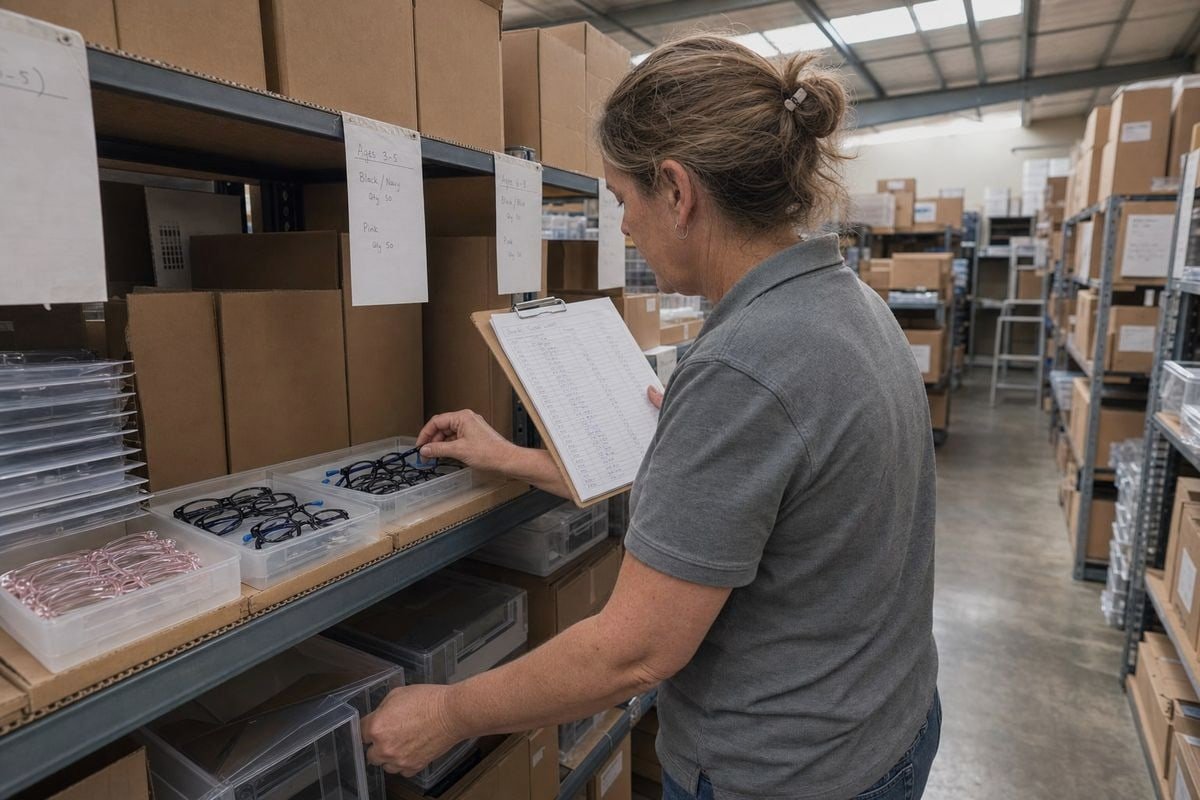
Planning rolling inventory for kids optical frames frustrates many of our brand buyers. They either run out of core sizes or drown in dead stock, and both mistakes cost real money.
Plan rolling inventory for kids optical frames by forecasting subscription renewals for the next 30–90 days, converting expected renewals into unit demand, then setting reorder points, safety stock, and seasonal buys per SKU tier — so replenishment follows predictable renewal waves instead of static stock levels.
Kids’ eyewear demand is not random. It repeats in waves driven by renewals, school timing, and prescription changes. Below, I break down how to turn that pattern into a working inventory plan.
How can I turn subscription renewal data into accurate inventory forecasts?
A buyer from Australia once asked me why her back-to-school order arrived after the rush ended. Her forecast was fine — her conversion math from renewals to units was missing.
Convert subscription renewal data into forecasts by multiplying active pediatric subscribers due for renewal by the expected renewal rate, then by the frame-purchase conversion rate, then by units per order. Adjust for seasonality and historical stockouts, and allocate the total to SKU groups using past sell-through.

The core shift here is moving from sales-velocity thinking to subscriber-based demand forecasting. Traditional optical retail asks, "How fast did this frame sell last quarter?" A subscription model asks, "How many children are due to renew next month, and how many will need new frames?" That second question is far more predictive for pediatric eyewear, because children outgrow frames and change prescriptions on a fairly regular cadence.
The forecast inputs you actually need
From our fifteen years supplying children's eyewear brands, the model only needs a handful of inputs. Keep it simple:
| Forecast Input | What It Tells You | Where It Comes From |
|---|---|---|
| Active pediatric subscribers | Total demand pool | Subscription model analytics |
| Expected renewal rate | How many will return | 12 months of renewal history |
| Frame-purchase conversion | Renewals that buy new frames | POS and exam records |
| Units per order | Pairs per purchasing family | Sales reports |
| Seasonal uplift | Monthly demand multiplier | Prior-year back-to-school data |
| Historical stockout rate | Hidden lost demand | Optical inventory software logs |
A worked example
Say 100 pediatric subscriptions renew next month. If 60% typically buy new frames, you forecast 60 pairs — roughly 2 pairs per working day. That daily figure becomes the backbone of every reorder calculation downstream. Some AI-driven tools now predict churn and renewal probability per subscriber, which sharpens this further, but even a spreadsheet version beats guessing from display space.
One caution I share with every new brand partner: forecast at the category level, not the individual SKU level. Predicting total pediatric demand is reliable. Predicting exactly which pink translucent acetate frame a seven-year-old will pick is false precision. Forecast the total, then allocate to SKU groups using historical sell-through rankings.
What rolling inventory strategy works best for kids optical frames with 800+ style options?
Our catalog holds around 800 existing styles, and I always tell buyers the same thing: never manage that breadth as one pool. Tiering is what makes a large assortment workable.
The best rolling inventory strategy for a large kids' frame assortment is four-tier ABC management: keep core pediatric basics always in stock, replenish renewal-driven styles by forecast, buy seasonal styles ahead of peaks, and hold minimal quantities of niche SKUs with quarterly markdown reviews.
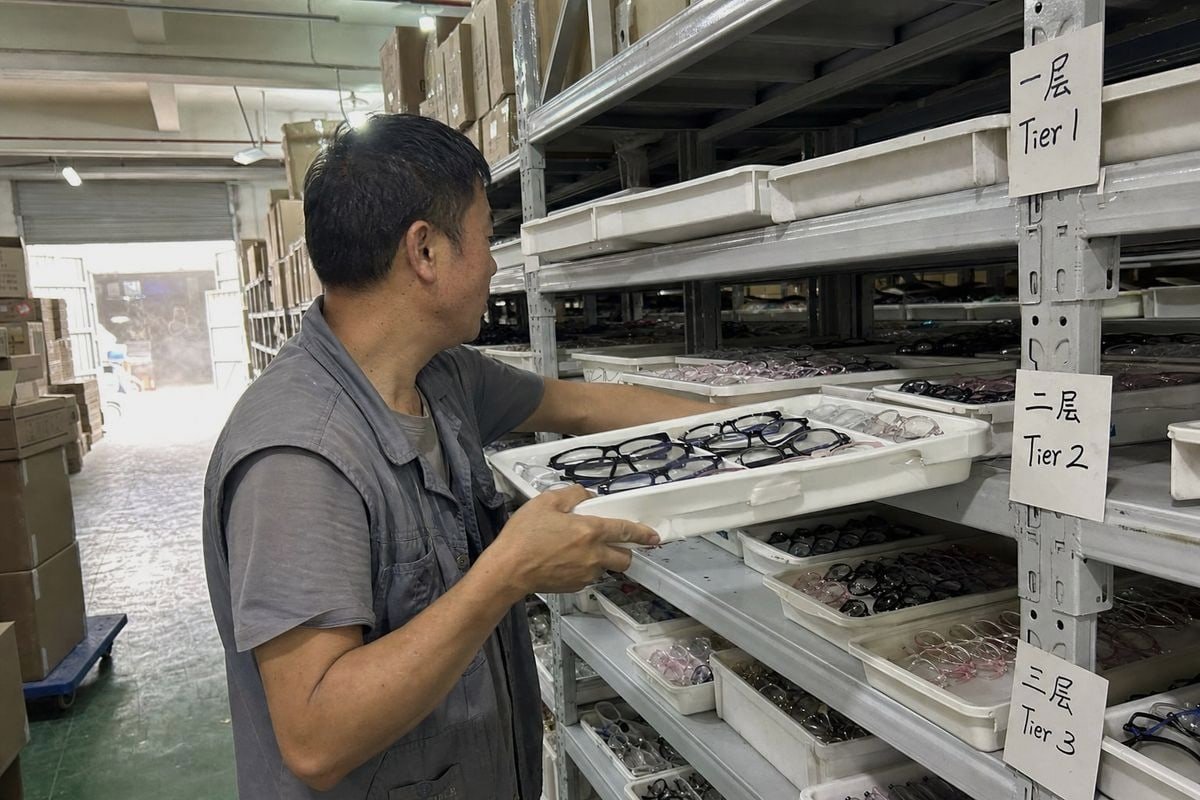
Rolling inventory means the frame board stays continuously refreshed — as units sell through, replacements flow in automatically. With 800+ style options, that only works if each style knows which tier it belongs to. This is standard ABC analysis adapted for eyewear retail operations.
The four-tier framework
| Tier | Description | Inventory Approach |
|---|---|---|
| Core pediatric basics | High-volume, durable, standard colors and sizes | Highest service level, tight reorder points 1, zero tolerated stockouts |
| Growth and renewal styles | Frames tied to recurring subscriber renewals | Forecast-driven replenishment, moderate safety stock 2 |
| Seasonal and promotional styles | Back-to-school picks, bright colors, trend pieces | Buy 4–6 weeks before peaks, clear after |
| Low-velocity niche styles | Unusual colors, specialty fits | Small on-hand quantity, quarterly review, markdown triggers |
Track sizes, not just styles
Here is where children's eyewear differs most from adult fashion frames. A style that sells well for school-age kids may not fit toddlers or preteens at all. So build a matrix inventory by age band — toddler, school-age, preteen — tracking bridge widths and temple lengths, not just brand and color. When we develop armações TR90 3 with TPEE temples for a brand, we often produce the same style in two or three size runs precisely because demand splits by age band, not by design preference.
Use the breadth to your advantage
A large existing-style catalog is actually a risk-reduction tool. New brands can test children's eyewear trends across many styles in small quantities, watch monthly turns per SKU, then concentrate rolling replenishment on proven winners. Monthly review matters here: annual giro de estoque averages hide both your fast movers and your dead stock. Aim for the healthy 3–6 turns per year overall, with core pediatric sizes pushed toward the top of that range because their demand repeats predictably.
How do I balance safety stock levels with cash flow when planning renewal-based orders?
There is a trade-off I discuss on almost every buyer call: every extra buffer unit protects a sale but ties up cash. The honest answer is that the buffer should never be uniform.
Balance safety stock and cash flow by varying buffers per SKU tier: hold generous safety stock only on core pediatric sizes, moderate forecast-based buffers on renewal styles, and minimal stock on niche SKUs — then run monthly turn reviews and 90–180 day clearance triggers to free trapped capital.

Some inventory managers push back on forecasting entirely. They argue simple turn-based rules are easier for a small practice or young brand. I understand the objection — but a rigid, uniform safety-stock policy is exactly what inflates inventory in low-volume pediatric styles while still allowing stockouts on the sizes families need most. Varying safety stock levels by tier resolves both problems at once, and it is not complicated.
A simple tiered buffer approach
- Core basics: buffer covers 2–3 weeks of average daily demand plus lead time variability. A stockout here means a family leaves empty-handed, which damages a subscription relationship far more than the carrying cost of a few extra units.
- Renewal styles: buffer covers roughly 1–2 weeks of forecast demand. The renewal forecast itself absorbs most of the uncertainty.
- Seasonal styles: no ongoing buffer. Buy once ahead of the peak, sized to the seasonal forecast, then clear leftovers.
- Niche styles: minimum display quantity only. Reorder on sale, or not at all.
Cash-flow guardrails that prevent overbuying
Aging inventory management is where cash quietly dies. Set hard rules: flag any frame with no movement in 90 days, and trigger markdown or bundle action at 180 days. Track dead stock percentage monthly alongside sell-through rate and days in inventory. Kids' style preferences shift quickly — a trend color from last spring rarely recovers — while functional core sizes stay stable for years. That asymmetry is exactly why speculative fashion buys deserve small commitments and core sizes deserve protection. Our export customers who follow this discipline typically fund their seasonal buys from cash freed by clearing slow movers, rather than from new working capital.
Which lead time and reorder point calculations should I use for TR90 and TPEE frame components?
When we quote production schedules for TR90 kids optical frames from our Taizhou factory, lead time calculation is usually the first thing serious procurement managers ask about — and rightly so.
Use the standard formula: reorder point = average daily demand × total supplier lead time + safety stock. For imported TR90 and TPEE frames, total lead time includes production, QC, and shipping, so a 2 pairs/day demand with 14-day lead time and 6-unit buffer gives a 34-unit reorder point.

The formula is simple. Getting the inputs honest is the real work, and this is where otimização da cadeia de suprimentos 5 pays off for stockout prevention.
Break lead time into its real parts
For flexible-material children's frames, "lead time" is never just one number. When brands order our TR90 fronts with TPEE temples, the timeline includes injection molding, color and finish work, assembly, QC inspection in our 5S-managed workshop, and then freight. Reorder stock ships faster than first orders because molds, colors, and packaging are already approved.
| Lead Time Component | Typical Consideration | Planning Impact |
|---|---|---|
| Production and assembly | Existing styles run faster than custom OEM work | Base of the calculation |
| Controle de qualidade e embalagem | Flexibility, hinge, and safety checks on every batch | Small but fixed |
| Shipping method | Sea freight is slow and cheap; air is fast and costly | Largest variable |
| Customs and receiving | Varies by destination market | Add a realistic buffer |
Apply the formula per tier
Take the renewal-forecast example: 60 pairs forecast over 30 days equals 2 pairs per working day. With a 14-day total lead time and a 6-unit safety stock, the reorder point is 2 × 14 + 6 = 34 units. When on-hand inventory touches 34, the replenishment order fires. Good optical inventory software automates this trigger with low-stock alerts, which removes manual error from frame board management entirely.
Longer lead times justify bigger buffers — but only on core sizes. Padding every SKU for a long sea-freight cycle bloats the whole assortment. A smarter move is negotiating flexible order terms with your supplier. We routinely hold approved colorways and components for repeat B2B customers, which effectively shortens their reorder lead time without them carrying the stock.
Conclusão
Stockouts lose families; dead stock drains cash. Forecast renewals, tier your SKUs, vary safety stock, and calculate honest reorder points — then review turns monthly and adjust rolling replenishment continuously.
Notas de rodapé
1. Found a working definition of reorder points on an authoritative source (Wikipedia). ↩︎
2. Found a working definition of safety stock on an authoritative source (Wikipedia). ↩︎
3. Provides information on TR90, a thermoplastic material commonly used in eyewear frames. ↩︎
4. Found a working definition of ABC analysis (related to ABC management) on an authoritative source (Wikipedia). ↩︎
5. Defines supply chain optimization as applying processes and tools to improve efficiency. ↩︎
Mais Artigos que Você Pode Gostar
5 de agosto de 2026
Acetato de Celulose Bio-Baseado vs. Regular: Qual a Diferença para Armações Infantis?

5 de agosto de 2026
Quão Recicláveis São os Materiais de Armações Ópticas Infantis e Quais Alternativas Ecológicas Existem?

5 de agosto de 2026
As Armações Ópticas Infantis Branqueiam ou Envelhecem em Armazenamento e Como Controlar as Condições do Armazém?
Procurando um Parceiro Confiável em Óculos Infantis?
Explore mais de 800 estilos prontos e suporte completo OEM/ODM adaptado à sua marca.
Entre em Contato English
  Español de México
  Deutsch
  Français
  日本語
日本語  العربية
  Português do Brasil