How to Negotiate Trade Terms and Delivery Location for Kids’ Optical Frames?

Negotiating trade terms and delivery location for kids’ optical frames confuses many buyers. I see it weekly at our Taizhou factory: buyers chase unit price and ignore terms that quietly destroy margin.
To negotiate trade terms and delivery location for kids’ optical frames, compare FOB, EXW, and DDP quotes on total landed cost, define who carries freight risk at each handoff point, confirm delivery destination options in writing, and package price, payment terms, and shipping into one written agreement.
That single paragraph is the short answer. The longer answer is more useful. Below, I walk through each incoterm, delivery option, and risk trade-off, using real situations from our export work.
How can I negotiate FOB, EXW, or DDP terms with a kids' optical frames manufacturer?
A buyer from Melbourne once asked me why our EXW price looked cheaper than a competitor's FOB quote. It wasn't cheaper. He just hadn't added the inland trucking and export fees yet.
Negotiate FOB, EXW, or DDP by requesting all three quotes side by side, calculating total landed cost for each, and matching the term to your logistics capability. Choose FOB if you have a freight forwarder, EXW only with China-side support, and DDP for simplicity at a premium.

Under Incoterms 2020 1, each term defines exactly where the seller's responsibility ends and yours begins. That handoff point is the real subject of your negotiation, not the sticker price. In our fifteen years of exporting children's eyewear to buyers in more than twenty countries, I have learned that the buyers who understand these handoff points negotiate better deals every single time.
What each term actually covers
| Termo | Fornecedor lida | Você lida | Melhor para |
|---|---|---|---|
| EXW | Goods packed at our factory door | Everything: pickup, export docs, freight, customs clearance, delivery | Buyers with a strong China-based agent |
| FOB | Inland transport, export clearance, loading at port | Ocean/air freight, insurance, import clearance, last mile | Most importers with a freight forwarder |
| DDP | Everything to your door, including import duties | Receiving the goods | New importers, small trial orders |
How to actually negotiate the term
Start by asking for all three quotes. Any serious factory can provide them within a day or two. Then compare on custo de chegada 2, not invoice price. Our EXW price is always the lowest number on paper, but you will pay trucking from Taizhou to Ningbo port, export declaration, and terminal fees on top.
Next, offer something in exchange. If you want DDP convenience, offer predictable repeat orders. If you want a lower FOB price, offer a larger Minimum Order Quantity 3 or flexible lead time so we can slot your production into quieter weeks. Negotiation works best as a give-get exchange, not a demand.
Finally, get the agreed term written on the proforma invoice with the named location. "FOB Ningbo" means something specific. "FOB" alone means a future argument.
What delivery location options should I consider when importing children's eyewear?
Last spring, we shipped the same TR90 optical frames 4 to one client through three different destinations: their 3PL warehouse, their Sydney office, and a retail partner directly. Each route had different costs and paperwork.
Consider four delivery options: port-to-port to your nearest seaport, door delivery to your warehouse or 3PL, direct-to-office for samples and trial orders, and split shipments to multiple retail locations. Confirm each destination's freight cost and customs implications before committing.
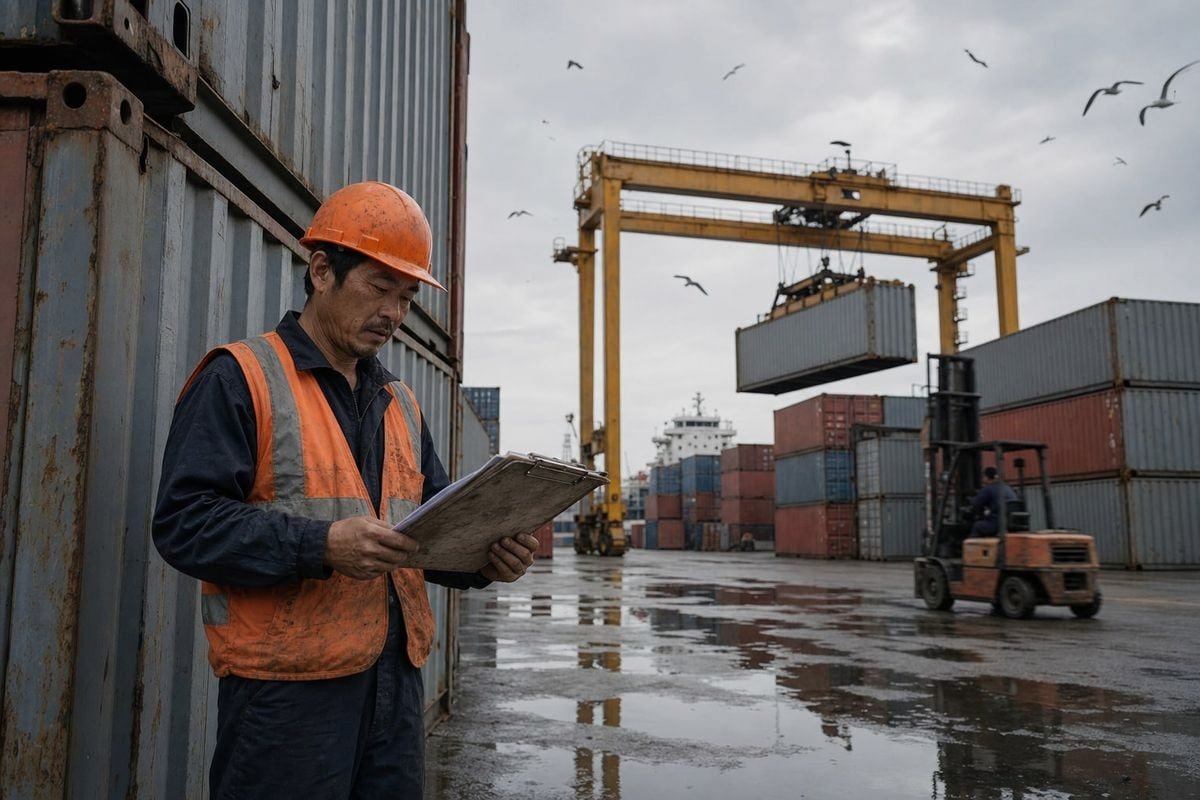
Delivery location sounds like a logistics detail. In practice, it is a negotiation lever that shapes your inventory risk 5, your cash flow, and your speed to market. Modern supply chain logistics gives you more options than most buyers realize, so ask about all of them before you sign.
The four main destination choices
- Nearest seaport (port-to-port). Cheapest per unit for full or large partial containers. You handle customs clearance and inland trucking. Works well if your freight forwarder is strong on your side.
- Your warehouse or 3PL fulfillment center. The most common choice for our brand clients in Australia, Japan, and Europe. One delivery point, one receiving check, simple quality control inspections on arrival.
- Your office or clinic. Ideal for trial orders of 100–200 pieces across 3–5 styles, which is the trial size we recommend before scaling any kids' collection. Air courier direct to your desk lets you check fit, flexibility, and age-grade labeling like "3+" markings before committing to volume.
- Split delivery to multiple locations. Useful for distributors serving several retailers. Expect a per-destination fee, but you avoid double-handling stock.
Questions that change the answer
Ask whether shipping cost changes by destination, whether the factory can support dropshipping or direct fulfillment for e-commerce, and how backorders are delivered if part of your order ships late. Because children's frames are lightweight and compact, air freight to a single warehouse is often more economical than buyers expect. Phased delivery schedules also matter: splitting production into milestone shipments timed to back-to-school peaks reduces your holding costs and spreads risk.
How do I balance cost savings and shipping risks when choosing trade terms?
Here is the trade-off I walk buyers through most often: EXW saves perhaps a few percent on the invoice, but it hands you every risk from our factory gate to your warehouse door. That is rarely a good exchange for a first order.
Balance cost and risk by matching the trade term to your experience level. Take on more responsibility only where you have better rates or control than the supplier. Insure goods from your risk-transfer point, and never accept savings that expose you to customs or damage liability you cannot manage.
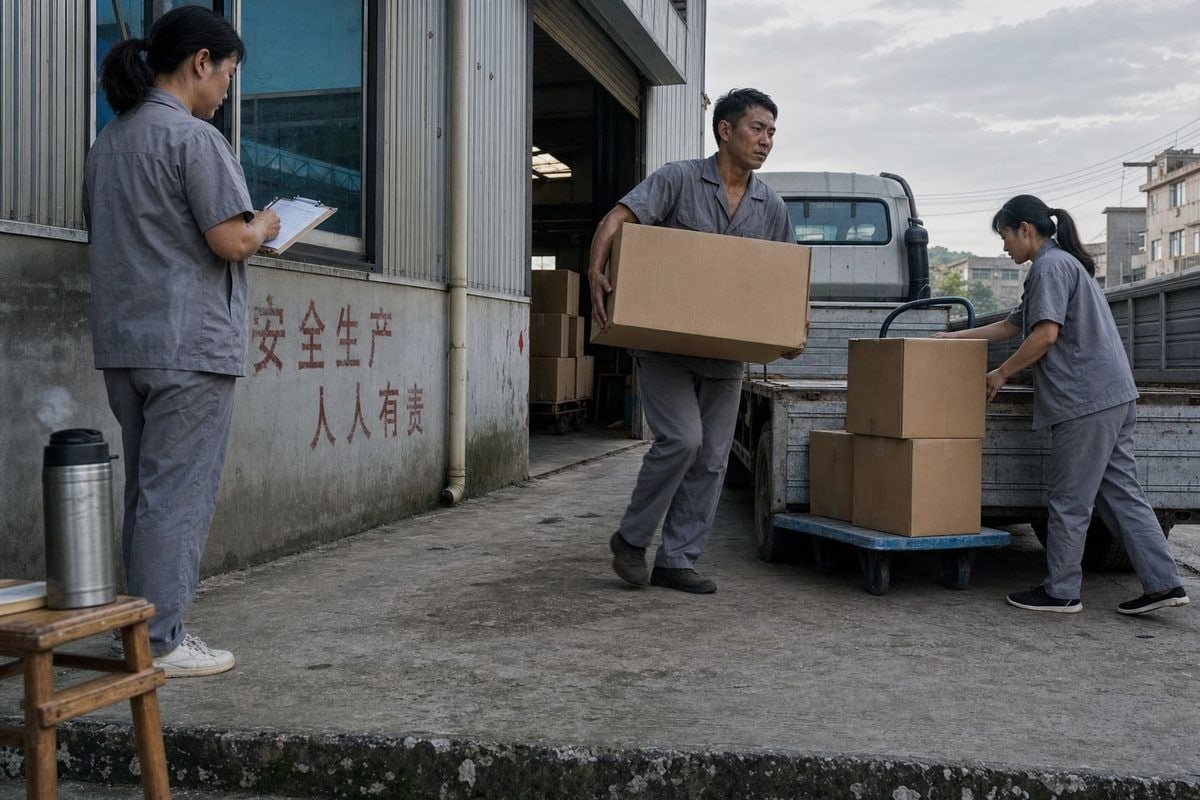
Suppliers will tell you that better terms require higher volume or long-term commitment. There is truth in that, and I say it to buyers myself. But the buyer-side view is equally valid: concessions on freight, payment terms, and returns often matter more than a small unit-price discount. The honest answer is that both sides are right, and the balance point depends on your situation.
A practical risk-versus-savings map
| Decision | Potential saving | Risk you accept | Our recommendation |
|---|---|---|---|
| EXW instead of FOB | 2–5% on invoice | Export clearance errors, inland damage | Only with a trusted China agent |
| Sea instead of air | Significant on freight | Longer lead time, seasonal delays | Yes, if you order 8–10 weeks early |
| Skipping cargo insurance | Small premium | Total loss of shipment value | Never skip it |
| DDP instead of FOB | None; you pay a premium | Less visibility on duty costs | Fine for trial orders |
| Larger single shipment | Bulk discounts on freight | Higher inventory holding cost | Split into phased shipments instead |
Payment terms belong in this calculation
Risk is not only physical. A 30% deposit with balance upon inspection pass protects you far better than full prepayment, because the goods do not leave our factory until quality control inspections are complete. For larger orders, a Letter of Credit 6 shifts risk to the banks on both sides. We accept these structures because they build trust, and trust is what turns a first order into a five-year relationship. Also weigh external context: tariff shifts and freight volatility can move your landed cost more than any negotiated discount, which is exactly why terms deserve more attention than price alone.
What should I clarify with my supplier before finalizing incoterms and delivery schedules?
The hardest lesson from our early exporting years was this: every dispute we ever had traced back to something that was discussed verbally but never written down. Now our team documents everything before production starts.
Before finalizing, clarify in writing: the exact incoterm with named location, production lead time, payment terms, backorder and defect policies, compliance documentation for children's products, packaging standards, and who covers return shipping. Revisit these terms annually, because supplier policies change.
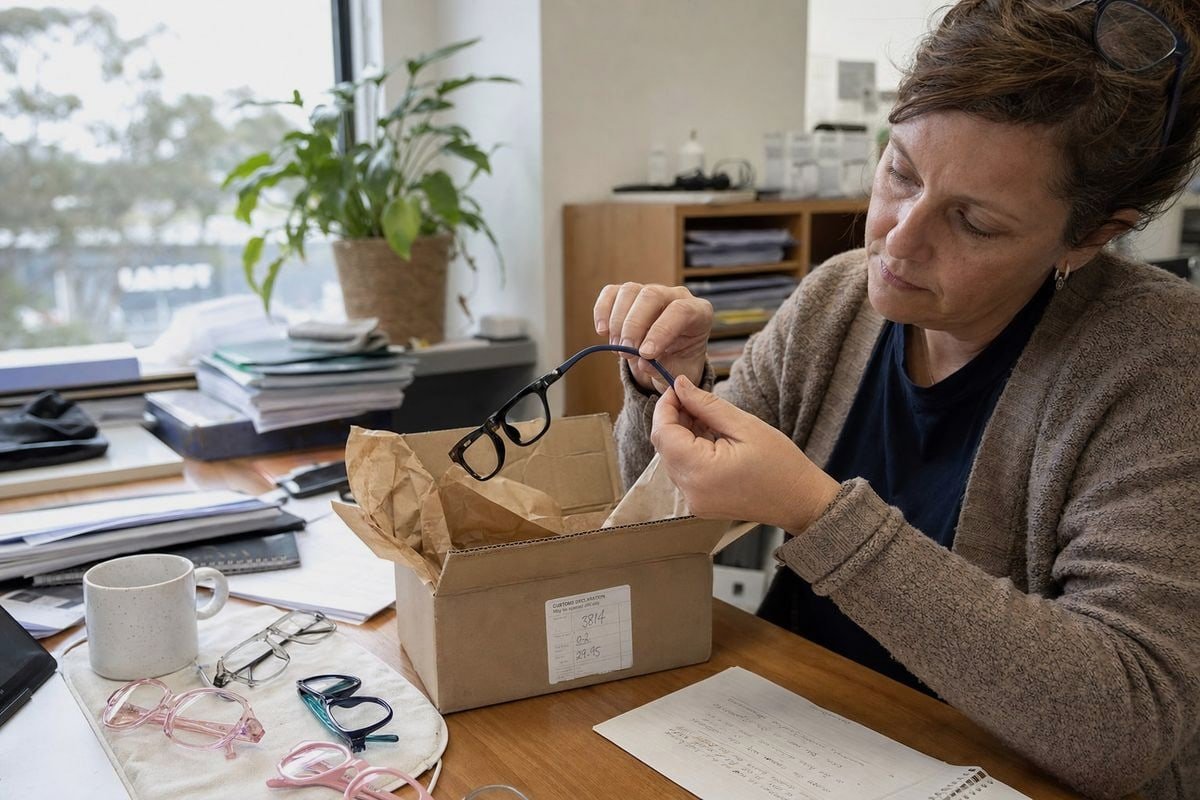
Treat this stage as commercial design, not paperwork. You are building the rules that govern the relationship when something goes wrong, because eventually something always does. A vessel gets delayed. A color runs short. A carton arrives crushed. Written terms turn those moments into routine fixes instead of arguments.
The pre-signature checklist
| Item to clarify | What to ask | Why it matters for kids' frames |
|---|---|---|
| Incoterm + location | "Confirm FOB Ningbo on the PI?" | Fixes the risk-transfer point |
| Prazo de entrega | "Days from deposit to shipment?" | Back-to-school windows are unforgiving |
| Payment terms | "Deposit and balance structure? Net terms later?" | Protects your cash cycle |
| Compliance docs | "Test reports and age-grade labeling included?" | Children's products face stricter rules and recall liability |
| Defect handling | "Replacement or credit? Who pays return freight?" | Kids break frames; parents expect fast fixes |
| Backorders | "Ship partial or hold complete?" | Affects your fill rate and freight cost |
| Embalagem | "Retail-ready? Pre-ticketed? Protective for transit?" | Dual-purpose packaging adds consumer value |
| MOQ flexibility | "Lower MOQ on existing catalog styles?" | Avoids custom tooling cost for trial ranges |
Terms specific to children's eyewear
Push for concessions that fit kids' products. Choosing from an existing catalog — we hold around 800 styles at our factory — lets you negotiate a lower Minimum Order Quantity because no new molds are needed. Ask about warranty handling for breakage, since flexible TPEE and TR90 frames 7 dramatically reduce breakage claims but never eliminate them. Confirm that recall liability and third-party testing responsibilities are stated in the contract, not assumed. And ask whether repeat orders earn queue priority for shorter lead times. A good factory will say yes to loyal buyers, because predictable orders are worth more to us than a slightly higher price.
Conclusão
Chasing unit price alone erodes margin through hidden freight, risk, and delays. Negotiate the whole package — incoterm, delivery location, payment, and returns — in writing, and revisit it yearly.
Notas de rodapé
1. Official international standards for trade terms used to define buyer and seller responsibilities in global commerce. ↩︎
2. Official government guide from the International Trade Administration explaining landed cost components. ↩︎
3. Explains the trade requirement where a supplier specifies the fewest number of units required per order. ↩︎
4. Technical specifications for the high-performance thermoplastic material commonly used in durable children’s eyewear frames. ↩︎
5. Overview of the probability that an entity will be unable to sell its goods or inventory. ↩︎
6. A financial document from a bank guaranteeing that a seller will receive payment from a buyer. ↩︎
7. Technical details on thermoplastic elastomers, which provide the flexibility and durability required for children’s optical products. ↩︎
Mais Artigos que Você Pode Gostar
5 de agosto de 2026
Acetato de Celulose Bio-Baseado vs. Regular: Qual a Diferença para Armações Infantis?

5 de agosto de 2026
Quão Recicláveis São os Materiais de Armações Ópticas Infantis e Quais Alternativas Ecológicas Existem?
5 de agosto de 2026
As Armações Ópticas Infantis Branqueiam ou Envelhecem em Armazenamento e Como Controlar as Condições do Armazém?
Procurando um Parceiro Confiável em Óculos Infantis?
Explore mais de 800 estilos prontos e suporte completo OEM/ODM adaptado à sua marca.
Entre em Contato English
  Español de México
  Deutsch
  Français
  日本語
日本語  العربية
  Português do Brasil