How to Negotiate Compensation Ratios with Suppliers for Kids’ Optical Frames?

Negotiating compensation ratios for kids’ optical frames confuses many buyers. On our production line, I have watched good partnerships collapse because nobody agreed on defect terms before the first shipment left our dock.
To negotiate compensation ratios for kids’ optical frames, agree on a pre-shipment defect allowance of 2–3%, define what counts as a defect in writing, tie final payment to a passed inspection, and set a clear credit or replacement formula before placing your first purchase order.
That is the short answer. The full picture involves defect definition 1s, inspection standards 2, and negotiation tactics. Let me walk you through each part, based on what actually happens between factories and buyers.
What compensation ratio should I expect from a kids' eyewear manufacturer for defective frames?
A few years ago, a buyer from Australia asked me for 100% compensation on any frame with a visible flaw. We had to explain why that number does not exist anywhere in this industry.
Most kids' eyewear manufacturers accept a defect allowance of 2% to 3% per order, covered by automatic credit, free replacement units, or extra parts shipped upfront. Ratios above 5% are rare and usually signal either premium pricing or a supplier overpromising to win your order.

The compensation ratio is simply the percentage of an order's value the supplier will credit or replace when frames arrive defective. It sounds simple. In practice, the number depends on three things: the defect definition, the product category, and your order history.
Kids' frames are a distinct category here. Children's eyewear faces harder use than adult frames. Hinge stress, paint chipping, and temple flex fatigue happen more often because kids drop, bend, and sit on their glasses. At our Taizhou factory, we build with TR90 and TPEE precisely because these flexible materials survive that abuse better than rigid acetate. But even flexible materials have tolerances, so the defect allowance 3 must reflect real-world failure modes, not fantasy perfection.
Typical Ranges by Compensation Type
| Compensation Structure | Typical Ratio | Melhor Para |
|---|---|---|
| Upfront extra units shipped free | 2–3% of order quantity | First orders, new relationships |
| Automatic credit on next invoice | 2–5% of invoice value | Repeat buyers with steady volume |
| Parts-to-frame allowance (temples, screws) | 10% extra spare parts free | High-breakage pediatric lines |
| Case-by-case replacement after photo proof | Varies per claim | Small orders, low trust stage |
Notice the parts-to-frame line. For children's frames, negotiating 10% free spare temples and screws often delivers more real value than a slightly higher cash credit. A snapped temple is the most common failure, and a spare part rescues the sale at retail. We ship spare-part kits with most OEM orders for this exact reason, and buyers who ask for them upfront always negotiate from a smarter position.
Your leverage grows with volume. A buyer committing to quarterly reorders across several of our 800 existing styles can reasonably push for the higher end of these ranges. A one-time trial order cannot.
How do I set fair quality compensation terms before placing my first order?
The trade-off I weigh most often with new buyers is speed versus clarity. Everyone wants to ship fast, but skipping the terms conversation before order one almost guarantees a dispute after delivery.
Set fair compensation terms by defining defects in a written quality assurance standard, agreeing on a 2% defect allowance, structuring payment as a 30/70 deposit-to-balance split contingent on inspection, and adding a defective return allowance clause to your purchase contract before any deposit changes hands.

The single biggest mistake I see is treating compensation as something you discuss when problems appear. By then, you have zero leverage. Your money is spent, your inventory is stuck, and the supplier controls the timeline.
Build the Terms Into the Contract, Not the Email Thread
Your first purchase agreement should scrutinize more than unit price. Here is what belongs in writing:
- A defect definition document with photos. What counts as a critical defect (loose hinge, sharp edge, failed bridge stability) versus a minor cosmetic variance (slight color tone difference within tolerance).
- The compensation formula. Credit, replacement, or extra units, and the trigger threshold.
- Payment structure. A 30/70 deposit-to-balance ratio, with the 70% balance released only after a passed pre-shipment inspection. This is your strongest single protection.
- RMA policy negotiation outcomes. How returns are authorized, who pays freight on confirmed defects, and the claim window after arrival.
- Minimum order quantity and how it interacts with your defect allowance. A tiny MOQ trial with full compensation terms is a fair ask; suppliers who refuse it on principle are telling you something.
Why Kids' Frames Need Extra Clauses
Children's eyewear carries safety obligations 4 adult frames do not. Ask your supplier to share or absorb costs for regional certifications like CPSIA or EN safety testing, and confirm material durability testing 5 records for hinges and flex points. When we develop TPEE-temple frames for European buyers, we handle the compliance documentation as part of the OEM package, because a buyer discovering a compliance gap after import is a compensation dispute no ratio can fix.
Also negotiate inventory markdown protection where you can. A modest return-to-purchase ratio, often 20–30% of slow movers exchangeable for new styles annually, protects you when a size or color underperforms. It is not strictly a defect term, but it belongs in the same conversation.
What quality control steps can reduce compensation disputes with my optical frame supplier?
Fifteen years of running a 5S-managed workshop taught our team one blunt lesson: nearly every compensation dispute traces back to a QC step somebody skipped to save two days.
Reduce compensation disputes by approving a golden sample before production, requiring in-line inspection at hinge assembly and coating stages, commissioning a third-party pre-shipment inspection against a written AQL standard, and documenting everything with photos so both sides judge defects against the same reference.
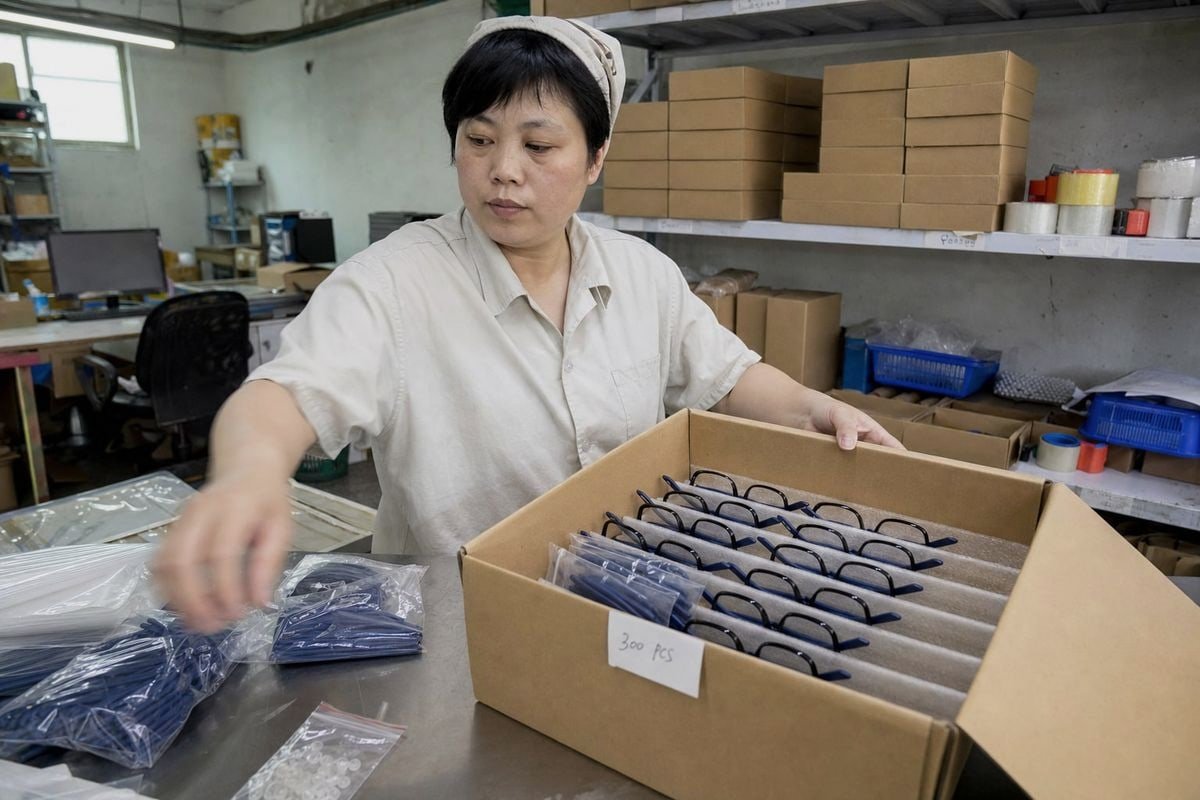
Disputes rarely start because a factory ships garbage. They start because the buyer and the factory hold different pictures of "acceptable." QC steps exist to force those pictures into alignment before money and freight get involved.
The Four Checkpoints That Prevent Most Claims
| Checkpoint | Timing | What It Catches | Who Pays |
|---|---|---|---|
| Golden sample approval | Before mass production | Wrong color, fit, material spec | Supplier (sample cost often credited) |
| In-line inspection | Durante a produção | Hinge torque, coating adhesion, temple flex | Supplier's internal QC |
| Pre-shipment inspection (AQL 2.5) | Before balance payment | Batch-level defect rate, packaging, safety points | Buyer (or shared) |
| Arrival spot check | Within claim window | Transit damage, carton errors | Buyer, refundable if supplier fault |
The golden sample deserves special attention for kids' optical frames. Children's sizing tolerances 6 are tight. A bridge that sits 1mm off on a 42mm frame ruins the fit in a way an adult frame absorbs. We keep signed golden samples for every OEM order in our sample room, and when a claim arrives, that sample settles the argument in minutes instead of weeks.
Testing Kids' Frames Specifically
Ask your supplier what material durability testing they run. For our TR90 and TPEE frames, that means repeated temple flex cycles, hinge open-close cycling, coating adhesion tests, and bridge stability checks. These are the exact failure points a pediatric frame faces in real life. A supplier who cannot describe their test protocol will struggle to honor a defect allowance fairly, because they cannot separate a manufacturing defect from user abuse.
Strong QC also feeds your vendor performance evaluation over time. Track defect rates per shipment. Three consecutive clean inspections justify relaxing inspection frequency and shifting budget elsewhere. A rising trend justifies renegotiating your compensation ratio upward at annual review. Data replaces arguments, and both sides prefer that.
How should I handle compensation negotiations if my supplier disagrees with my defect rate claims?
A distributor in Japan once sent us a claim for a 7% defect rate. Our records showed 1.8%. The gap was not dishonesty on either side — it was two different defect definitions colliding after shipment.
Handle disputed defect claims by presenting photo and video evidence against the agreed defect standard, requesting a joint review of a random sample, escalating to third-party re-inspection if needed, and proposing non-cash settlements like extra units or freight credits to keep the relationship productive.
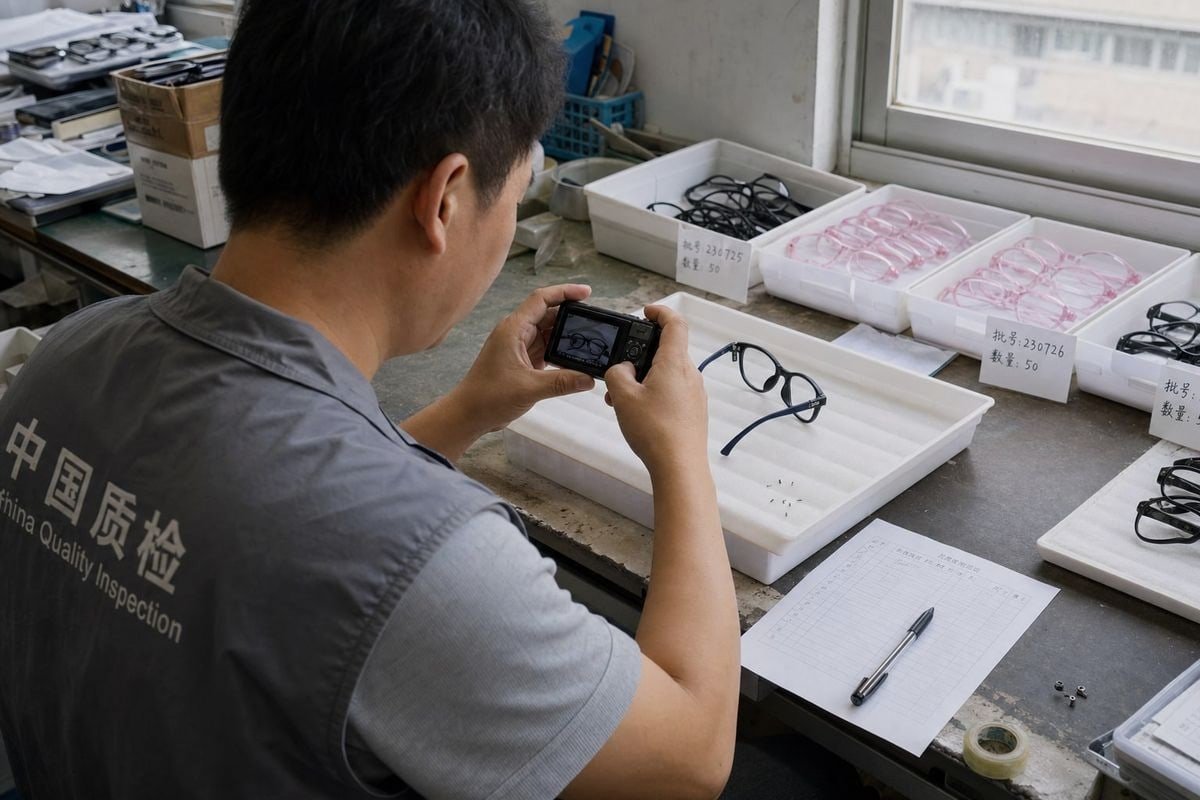
Disagreement is normal. How you structure the disagreement determines whether it costs you a week or a supplier.
A Step-by-Step Dispute Sequence
- Freeze and document. Stop distributing the affected batch. Photograph defects against your agreed standard, with order numbers and carton labels visible.
- Present data, not anger. Send a defect tally by category. "43 units with loose hinges out of 2,000" moves a conversation. "Your quality is bad" does not.
- Offer a joint sample review. Propose that both sides inspect the same random 100 units by video call. In our experience exporting to 20+ countries, this single step resolves most gaps, because it exposes definition mismatches immediately.
- Escalate to neutral re-inspection. If numbers still diverge, split the cost of a third-party inspection. The loser of the re-inspection typically absorbs the fee.
- Settle across the whole deal. If the supplier resists a cash credit, negotiate the bundle instead.
Settlement Options When Cash Credit Stalls
| Settlement Option | Equivalent Value | Relationship Impact |
|---|---|---|
| Extra units on next order | Direct replacement value | Positive — keeps volume flowing |
| Freight or duty absorption | 3–8% of order value | Positive — improves total landed cost |
| Upgraded after-sales service level | Faster spare-part shipping | Positive — protects your retail promise |
| Improved bulk discount thresholds | Compounds over the year | Very positive — long-term gain |
| Extended payment terms next order | Cash-flow relief | Neutral to positive |
This bundle mindset matters. A supplier who genuinely disputes your claim may still gladly improve your wholesale pricing structure 7 or lower bulk discount thresholds to preserve the relationship. From a supply chain risk management view, extracting a small cash win while burning a proven kids' frame supplier is usually a bad trade — requalifying a new factory, re-approving samples, and re-testing safety compliance costs far more than the disputed credit.
Finally, feed every dispute back into your contract. Adjust the defect definition, tighten the inspection standard, or raise the allowance at your annual renegotiation. Good product lifecycle management treats each claim as data for the next contract, not just a bill to collect.
Conclusão
Unclear compensation terms drain margin and trust. Agree on defect definitions, a 2–3% allowance, inspection-linked payments, and dispute steps upfront — then let data, not arguments, govern every claim.
Notas de rodapé
1. Wikipedia article defining product defects and the legal standards for manufacturing and design flaws. ↩︎
2. Wikipedia page explaining the role of technical and inspection standards in ensuring product quality and consistency. ↩︎
3. Authoritative Wikipedia entry explaining AQL standards used to define defect allowances in manufacturing. ↩︎
4. Authoritative overview of the CPSIA, the primary US law governing safety obligations for children’s products. ↩︎
5. Official site for ASTM International, providing global standards for material testing and durability. ↩︎
6. Wikipedia page explaining engineering tolerances and their importance in manufacturing precision. ↩︎
7. Investopedia article defining wholesale pricing and its role in the supply chain. ↩︎
Mais Artigos que Você Pode Gostar

5 de agosto de 2026
Acetato de Celulose Bio-Baseado vs. Regular: Qual a Diferença para Armações Infantis?

5 de agosto de 2026
Quão Recicláveis São os Materiais de Armações Ópticas Infantis e Quais Alternativas Ecológicas Existem?

5 de agosto de 2026
As Armações Ópticas Infantis Branqueiam ou Envelhecem em Armazenamento e Como Controlar as Condições do Armazém?
Procurando um Parceiro Confiável em Óculos Infantis?
Explore mais de 800 estilos prontos e suporte completo OEM/ODM adaptado à sua marca.
Entre em Contato English
  Español de México
  Deutsch
  Français
  日本語
日本語  العربية
  Português do Brasil